Shung Ye Museum of Formosan Aborigines: Taiwan's Indigenous Cultures in Depth
Located steps from the National Palace Museum in Shilin, the Shung Ye Museum of Formosan Aborigines is Taipei's most focused institution for understanding Taiwan's Indigenous peoples. Opened on June 9, 1994, it covers the traditions, material culture, and histories of Taiwan's 16 recognized Indigenous groups across four floors of carefully curated displays.
Quick Facts
- Location
- No. 282, Sec. 2, Zhishan Rd., Shilin District, Taipei City 111
- Getting There
- MRT Shilin Station (Red Line), Exit 1, then bus 255, S18 or S19 to Wèilǐ Nǚzhōng stop (~5 min walk)
- Time Needed
- 1.5 to 2.5 hours
- Cost
- NT$150 adults; NT$100 students & Indigenous visitors; NT$75 seniors (65+) & visitors with disabilities; joint ticket with National Palace Museum NT$320
- Best for
- History enthusiasts, cultural travelers, families with older children, anyone visiting the National Palace Museum
- Official website
- http://www.museum.org.tw
What the Shung Ye Museum Actually Is
The Shung Ye Museum of Formosan Aborigines (順益台灣原住民博物館) opened on June 9, 1994, making it the first private museum in Taiwan dedicated entirely to the island's Indigenous peoples. It sits on Zhishan Road in Shilin, directly across from the main entrance to the National Palace Museum, and the contrast between the two institutions is instructive: where the Palace Museum documents the sweep of Han Chinese imperial culture, Shung Ye focuses on the peoples who inhabited Taiwan long before Han settlers arrived. The two make a natural pairing on the same day.
The museum covers Taiwan's 16 officially recognized Indigenous groups, from the Amis and Atayal of the east coast and northern mountains to the Paiwan and Rukai of the south, the Yami (Tao) of Orchid Island, and smaller groups like the Thao and Kavalan. The collection includes ceremonial clothing, woven textiles, carved wooden objects, hunting tools, musical instruments, and residential reconstructions. The tone is ethnological rather than theatrical: displays favor explanation over spectacle, which means attentive visitors leave with real knowledge rather than surface impressions.
💡 Local tip
Buy the joint ticket (NT$320) if you plan to visit the National Palace Museum on the same day. It saves money compared to separate admissions and is available at either venue.
The Collection: What You Will See Floor by Floor
The museum is compact across four floors, which is a feature rather than a limitation. You will not spend three hours reading wall text in a fog of fatigue. Each floor has a clear thematic focus, and the physical objects are the real draw throughout.
The ground floor introduces the geographic and historical context of Taiwan's Indigenous peoples, explaining the broad divisions between Austronesian-speaking lowland and highland groups, and how centuries of contact with Han settlers and later colonial administrations shaped their trajectories. A reconstructed traditional dwelling here sets the spatial scale immediately: these structures were built for specific highland or coastal environments, using bamboo, rattan, and stone in ways that reflect precise ecological knowledge.
Upper floors move into material culture in detail. Woven textiles from the Atayal and Seediq groups are among the collection highlights: the geometric patterns are not decorative in a casual sense but encode group identity, social status, and cosmological meaning. Similarly, the carved wooden panels from Paiwan culture carry ancestral figures and serpent motifs specific to noble lineages. Labels explain these meanings rather than leaving visitors to admire without understanding, and that interpretive effort is what distinguishes this museum from a simple display of objects.
Musical instruments, including mouth harps, log drums, and nose flutes, appear across several display cases. On select dates the museum hosts live performances and demonstrations; check the official website before your visit to see whether any programming coincides with your trip. On ordinary days, recordings play softly in certain rooms, giving the space a tone that feels respectful rather than commercial.
How the Experience Changes by Time of Day
The museum opens at 09:00. Arriving in the first hour means you will likely have the galleries largely to yourself, especially on weekday mornings outside of school holiday periods. The natural light through the upper-floor windows is cleaner in the morning, which benefits photography of textiles and carved objects. By midday, school groups sometimes arrive, and the ground floor in particular becomes noisier. The museum's sound environment is quiet enough that a single boisterous group is noticeable.
Afternoons from around 13:30 onwards tend to settle again. The museum closes at 17:00, so avoid arriving too close to that time if you want an unhurried visit. Avoid arriving on Mondays (the regular closure day) and during Lunar New Year holidays, when the building shuts entirely. Tuesday through Thursday mornings are consistently the calmest windows for a focused visit.
⚠️ What to skip
The museum is closed on Mondays and during Lunar New Year (Spring Festival) holidays. Verify exact closure dates on the official site if your visit falls near a major holiday period.
Getting Here: Transit and Practical Navigation
The museum is not walking distance from any MRT station, which surprises visitors unfamiliar with the Shilin cultural cluster. The most straightforward route is from MRT Shilin Station (Tamsui-Xinyi Red Line), Exit 1: from the exit, board bus 255, S18, or S19, and ride to the Wèilǐ Nǚzhōng (衛理女中) stop. From there, the museum is roughly a five-minute walk along Zhishan Road. The National Palace Museum entrance is visible on the opposite side of the road, so the area is easy to orient yourself in once you arrive.
Alternatively, from MRT Dazhi Station (Wenhu Brown Line), Exit 3, bus Brown 13 covers the same Wèilǐ Nǚzhōng stop. Buses 304 and 815 stop at the National Palace Museum directly, and from there Shung Ye is a short walk south along the same road. Taxis and rideshare services (Uber operates in Taipei) are a reasonable option if you are already in Shilin at the night market area and want a direct connection, though the road through the museum district can be slow on weekends.
Visiting both museums in one day is very practical given their proximity. For a broader exploration of Shilin and the surrounding area, the Shilin neighborhood guide covers the full district, including Shilin Night Market and the surrounding cultural cluster.
Cultural and Historical Context
Taiwan's Indigenous peoples are Austronesian in origin, part of the same linguistic and cultural family that spread across the Pacific from the Philippines and Indonesia to Hawaii and New Zealand. Genetic and linguistic evidence suggests Taiwan may in fact be the original homeland of Austronesian expansion, a point that gives the island's Indigenous heritage global significance far beyond its borders. The museum touches on this context, situating Taiwan's Indigenous groups within the broader Austronesian world rather than treating them as a local curiosity.
The historical narrative is not sanitized. Displays acknowledge the pressures Indigenous communities faced during Dutch colonial rule in the 17th century, during the Qing Dynasty period of Han migration, during Japanese colonial administration from 1895 to 1945, and during the post-1945 period of the Republic of China government. Each period brought distinct policies toward Indigenous peoples, from military suppression to forced relocation to assimilation campaigns. The museum handles this history with directness, which gives the ethnological displays a moral grounding that purely aesthetic institutions often lack.
For broader context on Taipei's temple architecture and religious culture, including the traditions that coexisted and sometimes conflicted with Indigenous practices during the Han settlement period, the Taipei temples guide provides useful background.
Accessibility, Facilities, and Practical Details
The museum is wheelchair and stroller accessible, with elevators connecting all floors and ramp access at the entrance. Staff are available to assist visitors with mobility needs. The building is air-conditioned throughout, which matters significantly in Taipei's summers when humidity makes outdoor movement uncomfortable. There is no large café on site; if you need a break between museums, the area around the National Palace Museum entrance has small vendors and a few casual eateries.
Photography policies should be confirmed at the entrance desk, as some exhibition sections may restrict flash photography of sensitive textile and organic materials. The gift shop carries books on Taiwan's Indigenous cultures, reproductions of traditional crafts, and items produced in partnership with Indigenous communities. Purchasing here is one of the more direct ways to support the museum's ongoing work.
If your interest in Taiwan's cultural history extends further, the National Palace Museum directly across the road holds one of the world's largest collections of Chinese imperial artifacts and is a full half-day commitment on its own. Planning both in a single day is possible but demanding; the joint ticket makes the combination financially sensible even if you only have moderate time at each venue.
Who Should Reconsider This Visit
The Shung Ye Museum is not an experiential attraction in the theme-park sense. There are no live performances on most ordinary days, no immersive reconstructed villages you walk through, and no dramatic audiovisual spectacles. Visitors who absorb information better through passive visual engagement than through reading will find the label-heavy display style demanding. Young children under around eight years old are unlikely to sustain meaningful interest beyond the first floor, though the residential reconstruction and ceremonial clothing tend to hold brief attention well.
If you are already time-pressed and must choose between this and the National Palace Museum, the Palace Museum's collection is broader and its international reputation makes it the default priority for first-time visitors to Taipei. The Shung Ye Museum rewards a second visit to Taipei more than a first, or a first visit by travelers specifically interested in Indigenous cultures and social history.
Travelers building a wider cultural itinerary around Taipei's museums will find the Taipei museums guide useful for prioritizing across the city's many institutions.
Insider Tips
- The joint ticket with the National Palace Museum (NT$320) is valid for same-day use at both venues. Buy it at whichever museum you visit first and it activates immediately for the second.
- Weekday mornings between 09:00 and 11:30 are the quietest windows. School groups tend to arrive around midday, particularly on Tuesdays and Wednesdays during the school term.
- The gift shop stocks academic titles on Austronesian linguistics and Taiwan Indigenous history that are difficult to find outside Taiwan. If you have specialist reading interests, browse carefully before leaving.
- Ask at the front desk about any scheduled demonstrations or educational programs during your visit. These are not daily, but when they occur they add considerably to the experience, particularly textile weaving and musical instrument sessions.
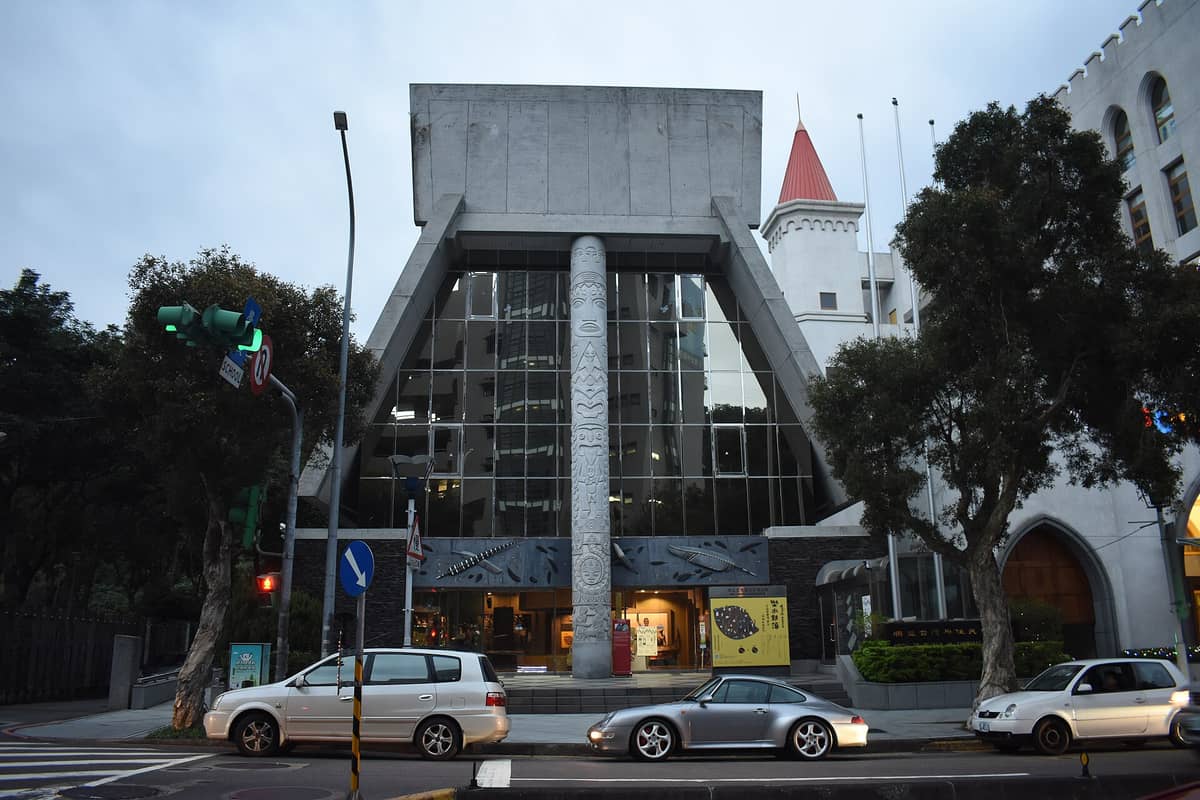
- If you are approaching from the National Palace Museum side, look for the modern building set back slightly from Zhishan Road with a distinctive facade. It is easier to spot than the street signage suggests from the bus stop.
Who Is Shung Ye Museum of Formosan Aborigines For?
- Cultural and history travelers who want depth on Taiwan beyond the standard circuit
- Anyone already visiting the National Palace Museum who has an extra one to two hours
- Students and researchers with interests in Austronesian cultures, ethnology, or colonial history
- Families with children aged roughly 8 and older who are genuinely curious about material culture
- Travelers returning to Taipei who have already covered the major headline attractions
Nearby Attractions
Other things to see while in Shilin District:
- National Palace Museum
The National Palace Museum in Shilin houses one of the largest and most significant collections of Chinese imperial art in the world. From jade carvings to ancient bronzes and delicate ceramics, a visit here offers a depth of history few museums anywhere can match.
- Qixing Mountain (Seven Star Mountain) Trail
The Qixing Mountain Trail (七星山步道) leads to the highest point in Taipei City at 1,120 metres, passing volcanic fumaroles, alpine meadows, and stone-paved ridges inside Yangmingshan National Park. The 4.5 km route is free, well-marked, and achievable in a half-day, making it one of the most rewarding hikes accessible by public bus from central Taipei.
- Shilin Night Market
Shilin Night Market is the largest and most visited night market in Taiwan, with over 500 stalls spread across several streets in Taipei's Shilin District. Free to enter and officially open every day from around 4 PM to midnight, it draws visitors with iconic street food, games, and an atmosphere that builds from early evening to full intensity after 8 PM.
- Taipei Astronomical Museum
The Taipei Astronomical Museum in Shilin District is home to one of Asia's largest planetariums, plus IMAX and 3D theaters, hands-on exhibits, and a public observatory. Main-hall admission starts at just NT$40, which makes it a strong-value stop for families, students, and anyone curious about the cosmos.