Al Wakra sits along Qatar's Gulf coast about 15 kilometres south of central Doha, combining a beautifully restored heritage souq, a 3-kilometre waterfront corniche, and the striking Al Janoub Stadium. It offers a slower, more traditional pace than the capital without sacrificing accessibility, making it an easy and rewarding day trip or overnight stay.
Al Wakra is where Qatar's pearl-diving past meets its World Cup present: a compact coastal town with a restored heritage souq, a dhow-lined harbour, and Zaha Hadid's Al Janoub Stadium all within walking distance of each other. It sits close enough to Doha to reach by metro in under half an hour, yet feels like a different world from the glass towers of West Bay.
Orientation: Where Al Wakra Sits
Al Wakra (also written Al Wakrah) is a coastal city and municipality positioned roughly 15 kilometres south of central Doha along the western shore of the Gulf. It is not a neighbourhood of Doha in the strict administrative sense, but it functions as the nearest historic satellite town to the capital and is directly connected to it by the Doha Metro Red Line. For most travellers, it registers as the most accessible day trip from Doha proper.
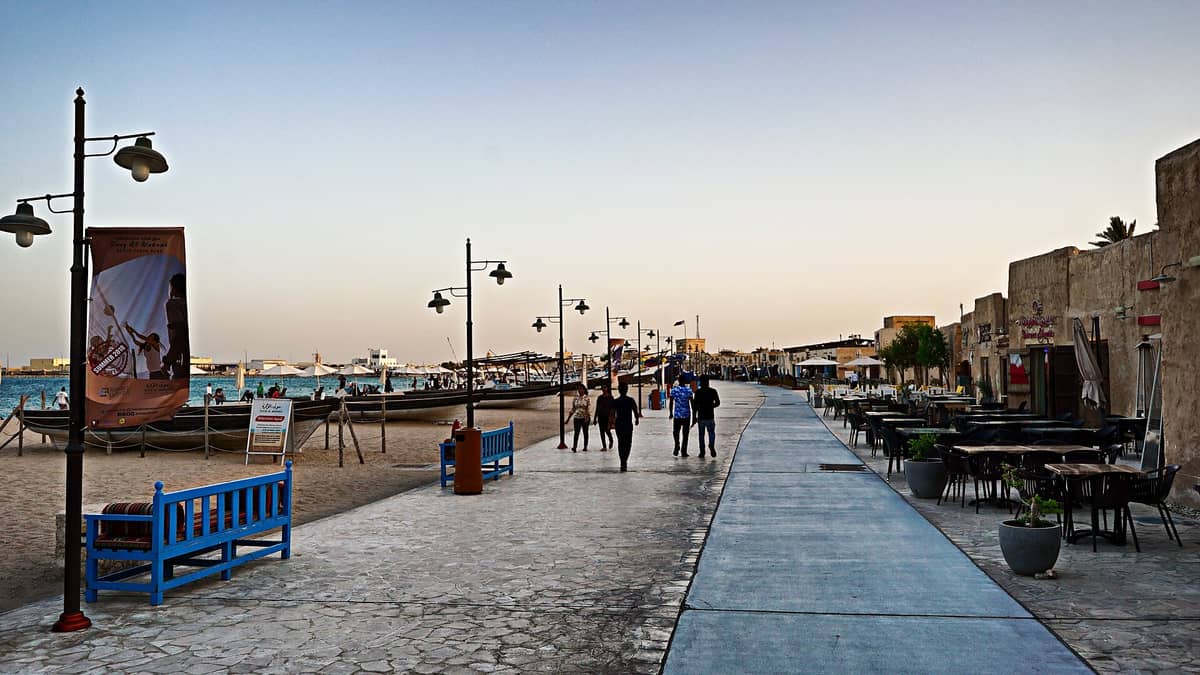
The town centre clusters around Al Wakrah Port and the roughly 2-kilometre Al Wakrah Corniche. The restored Souq Al Wakrah sits at the water's edge at the northern end of this promenade, while Al Janoub Stadium stands a short distance inland to the west. Al Wakrah Road, near its intersection with Ras Bu Funtas Street, is the main approach from Doha and the location of Al Wakra Metro Station, which anchors the town's connection to the wider city.
The municipality extends inland toward the Mesaieed Expressway, encompassing newer residential blocks, industrial areas, and the coastal stretch toward Mesaieed. But for visitors, the relevant geography is tight: the souq, the corniche, the harbour, and the stadium form a triangle you can cover entirely on foot in an afternoon.
ℹ️ Good to know
Al Wakra is its own municipality, not a Doha district. The metro connects it seamlessly to the city, but its administrative identity is separate from Doha proper. This distinction matters practically: it has its own police station, Ministry of Interior service centre, and municipal services.
Character and Atmosphere
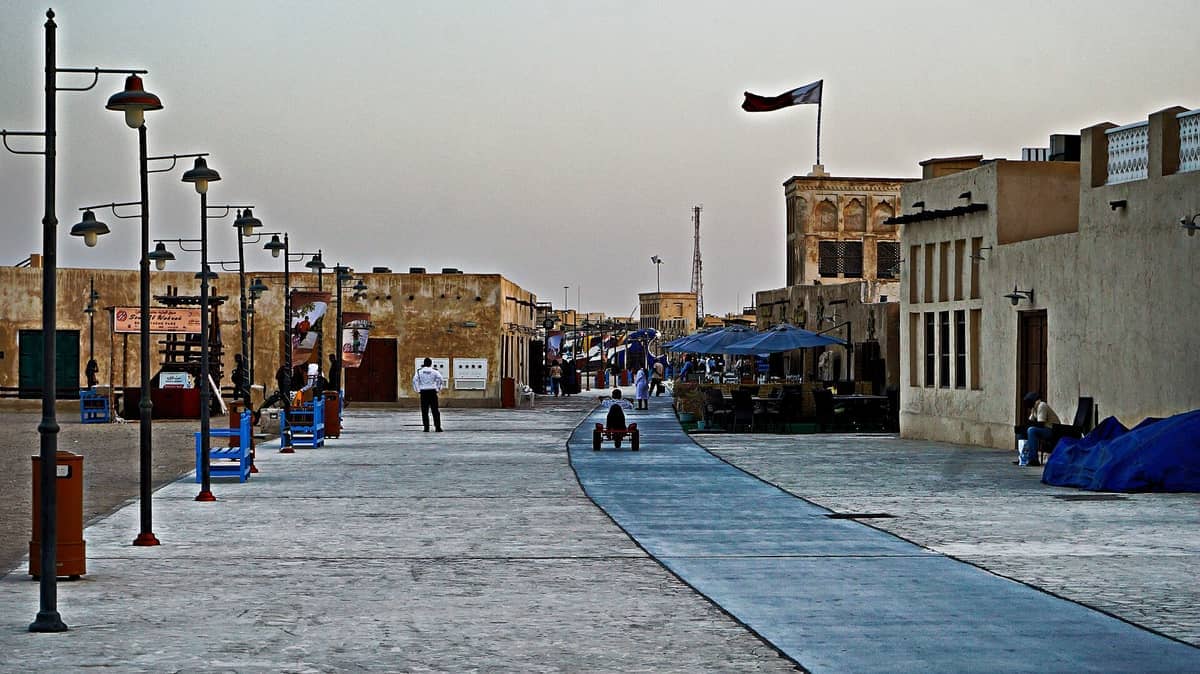
Al Wakra developed over centuries as a fishing and pearl-diving settlement, and unlike much of Qatar's coastline, it still carries the physical traces of that history. The restored heritage village around the souq uses traditional coral-stone architecture, low whitewashed walls, and covered walkways that create deep shade even in late afternoon. The overall effect is one of deliberate calm rather than tourist spectacle.
In the early morning, the area around the fish market near Manaratain Mosque has the functional energy of a working port town. Fishermen unload catch, cats patrol the perimeter of the market stalls, and the smell of salt water and diesel is sharp in the cool air. By mid-morning, the souq's lanes fill with a mix of Qatari families, South Asian residents from nearby neighbourhoods, and day-trippers from Doha. The light is hard and flat, bouncing off the white facades, and the narrow covered passages offer welcome relief.
The Corniche transforms in the late afternoon. Families arrive with children, joggers appear, and the light softens to gold over the Gulf. Dhows moored at the harbour glow amber at sunset. By evening, particularly on weekends, the waterfront and souq fill considerably, with the outdoor seating of cafes and restaurants occupied until late. On weeknights the pace is quieter, and walking the Corniche after dark feels genuinely peaceful rather than deserted.
This is not a place built around extracting money from tourists. Most of the businesses in and around the souq serve a local clientele. You are more likely to sit next to Qatari families and South Asian workers over chai than other visitors. That texture is part of what makes Al Wakra worth the trip.
What to See and Do
The main draw is Souq Al Wakra, a heritage market area that was carefully restored as part of Al Wakrah Heritage Village. Unlike Souq Waqif in Doha, which has become a major tourist destination with correspondingly tourist-oriented commerce, Souq Al Wakra retains a slightly less polished quality that actually works in its favour. Traditional crafts, fabric shops, and small restaurants sit alongside heritage courtyard architecture. The nearby dhow harbour is the most photogenic corner of the entire town: wooden boats in various states of work or rest, the Gulf visible beyond, and almost no crowds.
The former Al Wakrah Museum, once housed inside the Abdulrahman bin Jassim Fort near the waterfront, offered a concise look at the town's pearl-diving and maritime history when it was operating. It is small, but the fort itself, with its watchtowers and courtyard, is worth seeing for the architecture alone. The adjacent Manaratain Mosque is one of the most photographed structures in the area, its distinctive twin minarets appearing in many shots of the harbour.
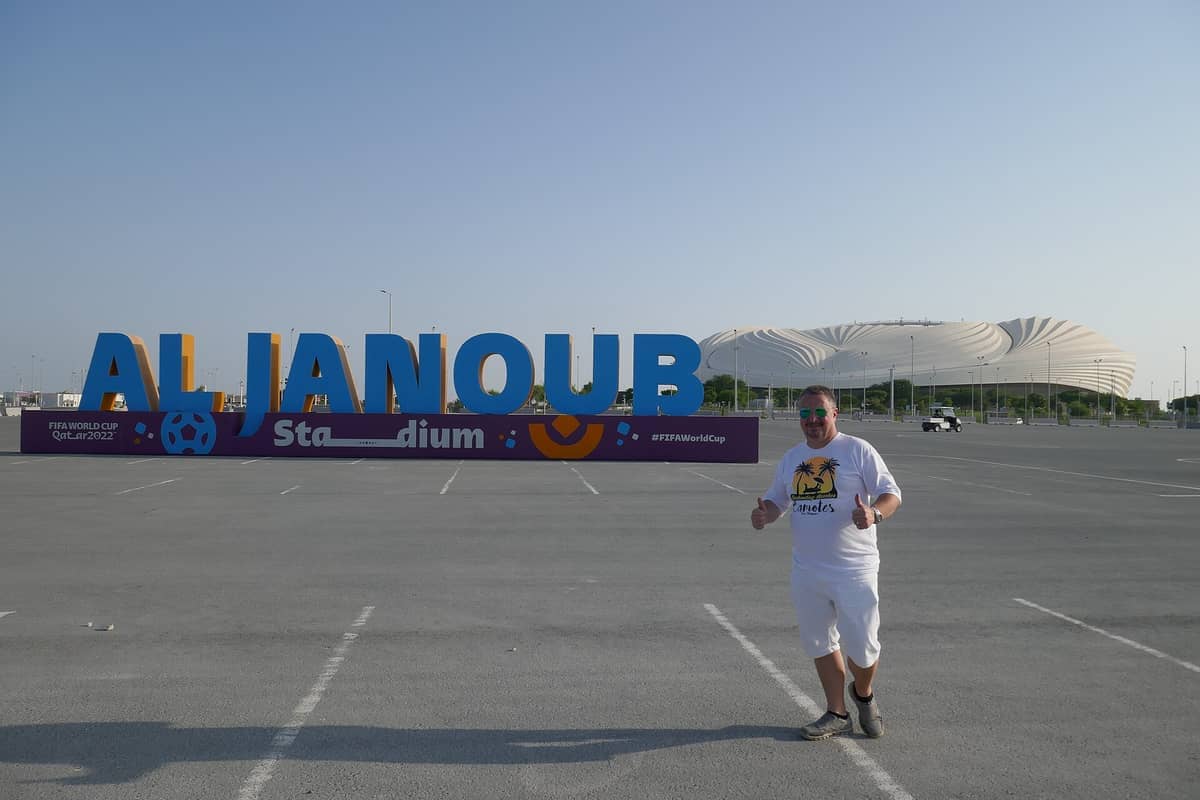
Then there is Al Janoub Stadium, one of Qatar's most architecturally striking buildings. Designed by Zaha Hadid Architects and used as a FIFA World Cup 2022 venue, the stadium's form references the hull of a traditional dhow, its undulating roof visible from the approach road. It hosted group and round-of-16 matches during the tournament. Outside major events, access to the interior is limited, but the exterior alone is worth the detour, particularly in the late afternoon when the light catches the curved canopy.
Souq Al Wakra and the heritage village lanes
Al Wakrah Corniche promenade (3 km, fully walkable)
Dhow harbour at the northern end of the waterfront
Al Wakrah Museum inside Abdulrahman bin Jassim Fort
Manaratain Mosque and the fish market area
Al Janoub Stadium exterior and surroundings
If you have more time, the coastline south of Al Wakra extends toward Mesaieed and eventually the inland sea at Khor Al Adaid. For a longer coastal excursion from Doha, see our guide to the best beaches near Doha which covers options in both directions from the city.
Eating and Drinking
The food scene in Al Wakra is straightforward and honest. The souq area has a cluster of small restaurants and cafes serving Qatari and Middle Eastern food at prices considerably lower than comparable spots in central Doha. Expect machboos (the spiced rice dish that functions as Qatar's national dish), grilled fish given the proximity to the harbour, and simple mezze spreads. Shawarma and grilled meat options are also abundant around the souq entrance.
Seafood is the obvious call here. The fish market near Manaratain Mosque is where local restaurants source their catch. Several small dining spots near the waterfront serve simply grilled hammour, prawns, and other Gulf catches at prices that reflect local rather than tourist-market economics. Lunch here, particularly on a weekday, is one of the more authentic eating experiences available within easy reach of Doha.
Cafe culture around the Corniche has grown steadily, with shisha cafes and tea houses lining parts of the waterfront. These operate mainly in the evenings and are predominantly patronised by local residents. Coffee options are available in the souq area and near the metro station approach. There is no bar scene: Al Wakra is a traditional coastal town and alcohol is not served outside licensed hotel premises, of which there are very few in the immediate area.
💡 Local tip
For the freshest fish, aim for lunch rather than dinner, and head toward the restaurants closest to the fish market near Manaratain Mosque. Prices are lower and quality is higher than spots aimed at evening visitors on the main Corniche strip.
For a wider overview of what to eat across Doha and its surroundings, the guide to Qatari cuisine and where to find it covers the regional dishes worth seeking out, many of which are better represented in places like Al Wakra than in the capital's more international dining scene.
Getting There and Around
Al Wakra Metro Station is the southern terminus of the Doha Metro Red Line, which is as straightforward a connection as exists in Qatar's public transport network. From central Doha, including Souq Waqif area and Msheireb, the journey takes roughly 25 to 30 minutes depending on your boarding point. The station sits on Al Wakrah Road near Ras Bu Funtas Street, about 2 kilometres from the souq and waterfront.
MetroLink feeder buses operate from Al Wakra Station into the surrounding residential neighbourhoods, with stops on streets including Osama Bin Zaid Street, Hassan Bin Thabit Street, and Abha Street. Shuttle services also connect the station to the beach and souq area. For the souq and Corniche specifically, local travel sources note that taxis and ride-hailing apps (including Karwa Taxi) cover the gap between the station and the waterfront quickly and cheaply.
By road, Al Wakra is approximately 15 kilometres south of central Doha on the coastal route. Driving takes 20 to 30 minutes outside peak hours, longer during the Doha evening rush. Parking is available near the souq and along the Corniche approach roads, though the waterfront itself fills on weekend evenings.
💡 Local tip
The metro is the simplest option for most visitors. Take the Red Line to the southern terminus, then grab a taxi or short shuttle to the souq. Return the same way. The whole logistics question resolves in about 10 minutes of planning.
For a broader breakdown of how to move around Doha and its satellite areas by metro, bus, and taxi, the getting around Doha guide covers fares, Doha Metro lines, and practical navigation advice for the whole metropolitan area.
Where to Stay
Al Wakra is not a primary hotel destination in the way that West Bay or The Pearl-Qatar are. Accommodation options are limited compared to central Doha, and most visitors treat it as a day trip from the capital. That said, a small number of hotels operate in the municipality, catering mainly to business travellers, workers in the nearby industrial zones, and visitors attending events at Al Janoub Stadium.
If you want to be based in Al Wakra rather than Doha, the advantages are relative quiet, lower accommodation prices, and direct access to the Corniche and souq without the commute. The disadvantage is fewer options, less nightlife infrastructure, and the need to metro into Doha for the city's major museums, malls, and restaurants. It suits travellers who specifically want a coastal, slower-paced base and are comfortable making a short daily commute into the capital.
For the full range of accommodation choices across Doha and its neighbourhoods, the where to stay in Doha guide maps out which areas suit which types of traveller, from luxury towers in West Bay to the more residential atmosphere of places like Al Wakra.
Practical Notes
Al Wakra follows Qatar's general public behaviour norms. Conservative dress is appropriate in the souq, fish market, and near religious sites. The Corniche is somewhat more relaxed, particularly in the evenings when families are present, but revealing clothing draws attention and is best avoided. The town is safe, with a functioning police station and standard urban administrative presence. No specific safety concerns are flagged in official travel advisories or mainstream travel resources.
The souq and most local restaurants observe Ramadan hours, which affect meal timing and some service availability significantly. During the summer months (June through September), heat makes outdoor exploration between 11am and 4pm genuinely uncomfortable. The Corniche and souq are far better experienced from October through April, when daytime temperatures sit in the comfortable mid-twenties and evenings are cool enough to walk without effort.
⚠️ What to skip
Al Wakra's attractions are largely outdoor and sun-exposed. In summer, plan visits for early morning or after 5pm. The souq's covered lanes provide relief, but the Corniche promenade has limited shade and can be punishing between noon and late afternoon from May onward.
For timing your visit across the year, the best time to visit Doha guide covers seasonal temperatures, humidity, and event calendars that apply equally to Al Wakra as a day trip destination.
Is Al Wakra Worth the Trip?
For travellers spending more than two days in Doha, Al Wakra is one of the most rewarding half-day excursions available. It adds a dimension of coastal history and traditional Qatari urban character that the capital's more developed districts cannot fully replicate. The metro connection removes all logistical friction. The combination of the souq, the harbour, the Corniche at sunset, and the architectural drama of Al Janoub Stadium makes for a full and varied afternoon.
It is not for everyone. Travellers focused entirely on luxury hotels, high-end shopping, and major art institutions will find little here that they cannot find better elsewhere in greater Doha. It is also not a nightlife destination by any measure. But for anyone interested in what Qatar's coastal towns looked like before the skyline-building era, and for those who find the pace of central Doha relentlessly constructed and commercial, Al Wakra offers a genuinely different register.
If you are planning a first trip to Qatar, the Doha first-timer guide will help you prioritise between Al Wakra, central Doha's museums, and further-flung sites like Al Zubarah or the inland sea.
TL;DR
Al Wakra is Qatar's most accessible historic coastal town, 15 km south of central Doha and directly linked by the Metro Red Line's southern terminus.
Souq Al Wakra and the dhow harbour offer a less commercialised version of Qatar's heritage architecture than Souq Waqif in Doha proper.
Al Janoub Stadium, designed by Zaha Hadid for the 2022 FIFA World Cup, is a genuine architectural landmark worth seeing even outside events.
Best visited between October and April; summer heat makes outdoor exploration uncomfortable between mid-morning and late afternoon.
Ideal for travellers wanting a half-day coastal excursion from Doha, or those seeking a quieter, cheaper base than the capital's main hotel districts.
Two full days is genuinely enough to cover Doha's best sights — if you plan smart. This itinerary routes you through the Museum of Islamic Art, Souq Waqif, the National Museum of Qatar, Katara Cultural Village, and the Corniche using the metro and short taxi rides, with honest advice on timing, heat, and what to skip.
Qatar's coastline stretches far beyond its skyline. This guide covers the best beaches in Doha and across Qatar, from calm urban shores perfect for families to wild dune-backed stretches only reachable by 4WD. Whether you want a free afternoon by the sea or a full resort day-pass experience, here is where to go.
Doha has become a serious museum city. From a landmark of Islamic art to a converted fire station showing cutting-edge contemporary work, these are the museums that make Doha worth visiting for culture alone.
Doha's extreme desert climate makes timing your visit critical. This guide breaks down every season honestly, covering temperatures, humidity, hotel prices, and the events calendar so you can pick the right window for your trip.
Doha is unusually rich in visual drama. Between the glittering West Bay skyline reflected across the bay, dhow boats bobbing in the foreground, and architecturally ambitious stadiums rising from the desert, the city rewards anyone who knows where to look. This guide covers the best viewpoints in Doha, from free waterfront promenades to photogenic canal districts and iconic landmark angles.
Doha rewards exploration beyond its skyline. Whether you want towering sand dunes, a UNESCO World Heritage fort, mangrove kayaking, or a quieter coastal town, Qatar packs a surprising range of day-trip experiences into a small country. This guide covers the best escapes within reach of the capital.
Hamad International Airport is one of the world's major transit hubs, and a Doha airport layover can be far more than a waiting game. This guide covers visa rules, sleep options, lounge access, and how to squeeze the best of the city into a short stopover.
Doha's waterfront is best explored from the water. Whether you want a traditional dhow cruise past the West Bay skyline, a kayak through coastal mangroves, or a catamaran ride to a private island, this guide covers every boat ride and water experience worth booking in Qatar's capital.
Doha is a surprisingly compelling destination for couples, blending waterfront promenades, heritage markets, world-class museums, and desert escapes into a genuinely romantic itinerary. This guide covers the best experiences for couples in Qatar's capital, with honest takes on what's worth your time and what to skip.
Qatar's desert safari scene centers on the Sealine dunes and the UNESCO-listed Tentative Site of Khor Al Adaid Inland Sea, just 60-75 minutes from Doha. This guide covers tour types, honest price breakdowns, the best time to go, and what the brochures don't tell you.
Falconry sits at the heart of Qatari identity, and Doha makes it surprisingly accessible to visitors. From the Falcon Souq at Souq Waqif to the world-class falcon hospital and the annual S'hail exhibition at Katara, this guide covers everything you need to experience Qatar's most distinctive cultural tradition.
Doha rewards first-timers who arrive prepared. This guide covers the essentials: how to get from the airport, which neighborhoods to prioritize, what the climate actually feels like, and the cultural norms that matter most. No fluff, just practical knowledge.
The Doha Fish Market at Old Doha Port is one of the city's most authentic local experiences. This guide covers opening hours, what species to look for, how to negotiate, how to get there, and what to do with your catch once you have it.
Winter is Doha's golden season, with mild temperatures, clear skies, and a packed events calendar. This guide covers everything you need to know about visiting Doha from November through March, from what to pack to when to book.
Doha has quietly become one of the world's most compelling destinations for Islamic art and architecture. This guide covers the essential museums, mosques, historic forts, and cultural districts where centuries of Islamic heritage come alive.
Qatar criminalizes same-sex sexual activity, and Doha has no LGBTQ+ venues or legal protections. This guide gives LGBTQ+ travelers an honest, practical breakdown of the legal situation, safety considerations, and what visiting the city actually looks like in practice.
Doha's after-dark scene is more diverse than most visitors expect. From rooftop hotel bars in West Bay to stargazing desert safaris at the Inland Sea, this guide covers everything you need to know about Doha nightlife, including alcohol rules, the best venues by district, and evening alternatives for non-drinkers.
Qatar's capital has a reputation for luxury, but Doha on a budget is genuinely achievable. Free museums, a QAR 6 metro day cap, and no-cost attractions like the Corniche make it possible to see the city without spending a fortune. Here's how to do it smartly.
Doha rewards photographers at every turn, from I.M. Pei's waterfront masterpiece to golden-tiled mosques and shipping-container stadiums. This guide covers the city's 20 most photogenic locations, with advice on the best times to shoot and what to look for at each spot.
Doha is one of the safest cities in the Middle East, with low crime rates and well-monitored public spaces. But safety here is as much about understanding local laws as it is about personal security. This guide covers everything from terrorism advisories and alcohol rules to dress codes, transport safety, and seasonal health risks.
Planning a trip to Doha, Qatar? This guide breaks down exactly who needs a visa, how to get one, what documents to carry, and the common mistakes that trip up first-time visitors at the border.
Doha is a genuinely family-friendly city, with options spanning free waterfront parks, world-class children's museums, indoor adventure parks, and beach day trips. This guide breaks down the best activities by budget, age group, and season so you can plan a practical, stress-free trip with kids.
Qatar's 2022 FIFA World Cup left behind eight architecturally extraordinary stadiums scattered across Doha and its surroundings. This guide covers every venue, how to visit each one, and what to see nearby to make the most of your trip.
Doha is far more affordable than its gleaming skyline suggests. From the 7-kilometre Corniche promenade to free heritage museums and public beaches, this guide covers the best free things to do in Doha — for first-timers and residents alike.
Doha is surprisingly easy to navigate if you know which transport option suits your route. This guide covers the Doha Metro, Karwa taxis, public buses, and airport transfers, with current fares, operating hours, and honest advice on what works and what doesn't.
Doha divides opinion. Some travelers find a world-class city of museums, architecture, and Gulf culture. Others leave underwhelmed. This guide breaks down exactly what Doha offers, what it doesn't, and who should make the trip.
Doha has quietly become one of the world's most ambitious luxury destinations. This guide covers the best 5 star hotels, high-end dining, designer shopping, and cultural experiences, with honest advice on what lives up to the price tag and what doesn't.
Doha delivers one of the Gulf's most complete shopping experiences, from air-conditioned mega-malls with international luxury brands to the spice-scented alleys of Souq Waqif where bargaining is still the norm. This guide covers every major venue, realistic prices, opening hours, seasonal quirks, and the souvenirs actually worth buying.
From the Museum of Islamic Art to the Inland Sea desert, Doha packs serious variety into a compact city. This guide covers the top things to do in Doha with real admission prices, opening hours, seasonal tips, and honest takes on what's worth your time.
Doha's food scene goes far deeper than shawarma and hummus. This guide covers the essential Qatari dishes every visitor should try, from the national dish machboos to the street-side sweet luqaimat, with honest price breakdowns and the best places to eat them.
Doha's food scene spans centuries-old Arab hospitality traditions and some of the most international dining in the Gulf. This guide covers the best areas to eat, what to order, how much to spend, and when to go — with practical details on hours, booking, and seasonal dining patterns.
Doha's neighbourhoods are more distinct than most Gulf cities. This guide breaks down the five key areas to stay, who each suits best, what you'll actually pay, and how to time your booking around weather and events.