Al Janoub Stadium: Qatar's Wave-Shaped World Cup Arena in Al Wakrah
Al Janoub Stadium is Qatar's boldest piece of sports architecture outside central Doha, a structure shaped to echo the hull of a traditional dhow boat. Built for the 2022 FIFA World Cup and now home to Al Wakrah SC, it continues to host major international events in the coastal town of Al Wakrah, roughly 18–22 kilometres south of the capital.
Quick Facts
- Location
- Al Wakrah, Qatar — approx. 18–22 km south of central Doha
- Getting There
- Doha Metro Red Line to Al Wakra station, then taxi (approx. 15 QAR) or shuttle to the stadium
- Time Needed
- 2–4 hours for a match or event day; exterior visit takes 20–30 minutes
- Cost
- Entry by event ticket only; no fixed walk-in admission. Prices vary by event and seating category — check official event platforms before travel
- Best for
- Football fans, architecture enthusiasts, World Cup legacy tourism, families attending events
What Is Al Janoub Stadium?
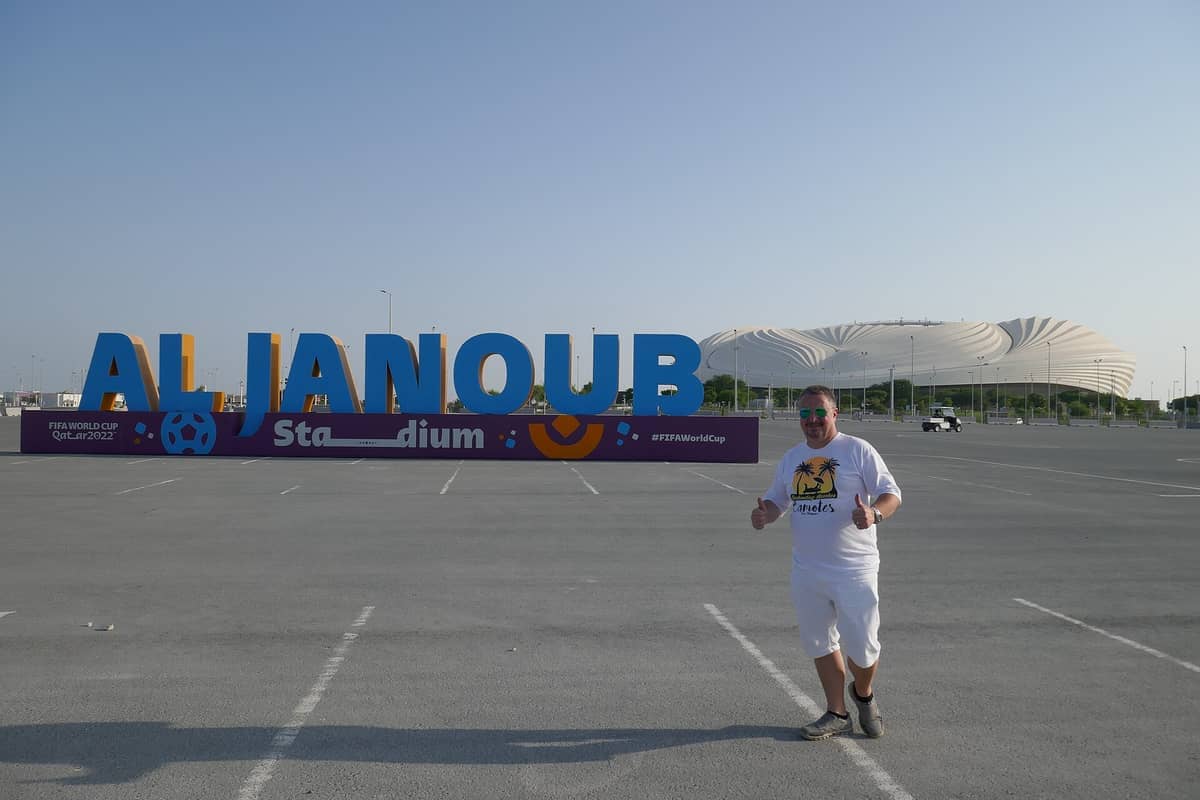
Al Janoub Stadium (formerly known as Al Wakrah Stadium) is a 44,325-capacity sports venue in the coastal town of Al Wakrah, completed in 2019 and used as one of the eight official venues for the 2022 FIFA World Cup. The name translates roughly to 'The South' in Arabic, a reference to its position as the southernmost World Cup stadium in Qatar. After the tournament, capacity has been reduced to around 20,000 for regular club use, with the removed seats donated or earmarked for football development projects abroad.
Until its recent transformation, the stadium was the home ground of Al Wakrah SC, one of Qatar's established football clubs. Beyond domestic football, Al Janoub has shifted toward major international events: in 2026, it reopened as 'Al Janoub Arena' ahead of the FIBA Basketball World Cup Qatar 2027, confirming its role as a multi-sport venue rather than a one-off tournament relic.
ℹ️ Good to know
Al Janoub Stadium does not operate fixed public visiting hours. Entry is only possible during scheduled matches or events. Check official event platforms or Qatar's tourism authority for current programming before making the trip.
The Architecture: A Dhow Hull Rises from the Desert
The design was led by the late Zaha Hadid Architects, and the concept draws directly from Al Wakrah's maritime identity. The town has historically been a centre of pearl diving and fishing along Qatar's Gulf coast, and the stadium's undulating white roof is intended to evoke the curved hull and billowing sails of a dhow, the traditional wooden vessels that once defined the region's economy. Standing at ground level, the roof's sweeping profile is immediately readable, especially in the late afternoon when low sunlight catches the white cladding and throws the curves into sharp relief.
The outer skin is perforated and layered, allowing air to circulate in a structure designed with advanced cooling technology to keep the pitch and lower stands at a regulated temperature despite Qatar's extreme summer heat. The standard pitch dimensions are 105 metres by 68 metres, framed by tiered seating that wraps continuously around the playing surface without the visual breaks common in older stadium designs. The result is an interior that feels surprisingly intimate for a venue of this scale.
For those interested in how this fits into Qatar's broader architectural investment in sports infrastructure, the World Cup stadiums guide covers all eight venues and their design philosophies in one place.
Visiting on Event Day: What to Expect
Stadium gates typically open around two hours before the scheduled start of any match or event. The approach from the drop-off point involves open paved plazas that heat up quickly in daylight, so lightweight, breathable clothing is strongly recommended for daytime events. Evening kick-offs, which are the norm for competitive football in Qatar outside the coolest winter months, offer a more comfortable experience: the air cools quickly after sunset, the stadium's exterior lighting activates, and the dhow-shaped roof takes on a photogenic glow.
Entry is organized through numbered gates. Accessibility is well-considered throughout the venue: the stadium has wheelchair-accessible parking, accessible restrooms, and staff positioned to assist at entrances. Families with pushchairs should confirm gate access in advance via event-specific information, as configurations can vary between tournaments.
Inside, the concourse level offers food and beverage concessions. Qatar's conservative regulations apply: alcohol is not available within the stadium for standard domestic fixtures, though policies during specific international tournaments may differ and should be verified with the event organiser before attending.
💡 Local tip
For evening events, arrive 90 minutes before kick-off rather than the full two hours. The plaza fills gradually and the post-sunset approach, when the stadium is fully lit, is the most rewarding time to take exterior photographs.
Getting to Al Janoub Stadium from Doha
The stadium sits approximately 22–25 kilometres south of central Doha. The most straightforward public transport option is the Doha Metro Red Line to Al Wakra station. From the station, the stadium is not walkable, the distance and road infrastructure make it impractical on foot. Taxis from Al Wakra station cost around 15 QAR and take a few minutes. On event days, official shuttles typically operate between the station and the stadium and are generally the faster, cheaper choice during high-traffic periods.
Driving and using a ride-hailing app are reliable alternatives, particularly for those coming directly from hotels in West Bay or the Corniche area. Allow extra time during event days, as the approach roads can back up in the hour before gates open. Parking is available at the venue but fills quickly for sold-out matches.
If you are planning a broader day in the area, the historic Souq Al Wakra is located in the same town and is worth visiting before an evening match — it is only a short taxi ride away and gives genuine context to the maritime heritage that inspired the stadium's design.
The Legacy Context: Beyond the World Cup
Qatar's 2022 FIFA World Cup left eight purpose-built or significantly upgraded venues across the country, a concentration of world-class sports infrastructure that most cities would struggle to sustain post-tournament. Al Janoub has navigated this challenge more convincingly than many observers expected. Initially right-sized to around 20,000 for club use, it has since been transformed into Al Janoub Arena for basketball, and this multi-sport pivot confirms a deliberate programme of diverse event hosting.
Al Wakrah itself benefits from the association. The town, historically overshadowed by Doha's rapid development, now has an internationally recognised architectural landmark on its southern edge in the form of Al Janoub Arena. For visitors, this means a trip to the venue can combine sports tourism with a genuinely different experience from central Doha, quieter streets, a working fishing harbour nearby, and a traditional souq that has not been rebuilt entirely for tourists.
To understand how Al Janoub fits into the wider picture of Qatar's football infrastructure, the Lusail Iconic Stadium — where the World Cup Final was held — is the logical comparison point, and it operates on a similarly event-driven access model.
Photography and Practical Notes
The exterior of Al Janoub Stadium is photogenic from multiple angles, and visiting on a non-event day for exterior shots is entirely possible, just verify that the area around the stadium is accessible rather than fenced off for event preparation. The best light for photography falls in the hour before sunset, when the white cladding picks up warm tones and the curved lines are defined cleanly without the harsh midday bleaching common under Qatar's high sun.
For those visiting during Qatar's hotter months, April through October, be aware that standing in open plazas under direct sun can become uncomfortable quickly. Light cotton clothing, a hat, and water are essential. The cooler window from November through March is the most comfortable period for both attending events and walking the exterior, when daytime temperatures settle in the low to mid-20s Celsius.
If photography is a primary motivation for your visit to Qatar, the Doha photography guide covers the best vantage points and timing across the city and its surroundings, including several of the World Cup venues.
⚠️ What to skip
There is no fixed museum, exhibition, or stadium tour available to walk-in visitors. Do not make a special journey solely to see the interior unless you have an event ticket. The exterior, while architecturally striking, can be appreciated in under 30 minutes.
Who Might Want to Skip This
Travellers who are not attending a scheduled event and have limited time in Qatar will get more return from other attractions closer to central Doha. The 22-kilometre journey is not a short detour, and without interior access, the experience is essentially an architectural drive-by. If you are working through a two-day itinerary and have not yet seen the Museum of Islamic Art, the Corniche, or Souq Waqif, prioritise those first.
For a tighter Doha itinerary, the 2-day Doha itinerary organises the city's main draws efficiently and can help you decide whether the Al Wakrah detour fits your schedule.
Insider Tips
- On match days, the official shuttle from Al Wakra Metro station is almost always faster than waiting for a taxi, which can be scarce immediately after gates open due to demand spike. Look for the marshalled shuttle zone outside the station exit.
- If you are visiting Al Wakrah town for the souq before an evening match, factor in that taxis between the souq area and the stadium can take 10–15 minutes on event days as local traffic builds. Leave earlier than you think you need to.
- The northern plaza of the stadium faces away from direct sunset glare and gives the clearest unobstructed view of the roof's curvature, making it the better position for exterior photography in the late afternoon.
- Al Janoub's cooling system is most noticeable in the lower bowl seating close to the pitch. If you attend in spring or early autumn when temperatures are still elevated, lower-tier seats are significantly more comfortable than the upper sections, which are exposed to ambient heat above the roofline.
- Ticket prices for Al Wakrah SC domestic fixtures are typically much lower than for international tournaments. If your goal is to experience the stadium's interior rather than a specific event, a regular Qatar Stars League match is the most affordable way in.
Who Is Al Janoub Stadium For?
- Football fans wanting to experience a 2022 FIFA World Cup venue
- Architecture and design enthusiasts drawn to Zaha Hadid's dhow-inspired roofline
- Families attending evening events in a well-organised, accessible venue
- Day-trippers combining an Al Wakrah cultural visit with a stadium experience
- Sports tourists building a World Cup legacy itinerary across Qatar's venues
Nearby Attractions
Other things to see while in Al Wakra:
- Al Wakra Beach
Al Wakra Beach is a free public beachfront in Al Wakrah Municipality, Al Wakra Beach is a free public beachfront in Al Wakrah Municipality, about 30 kilometres south of central Doha.. Calm waters, a family-friendly atmosphere, and proximity to the historic Souq Al Wakra make it one of the more rewarding coastal stops outside the city centre.
- Souq Al Wakra
Located in Al Wakrah, Qatar's second-oldest city, Souq Al Wakra is a restored traditional market where whitewashed coral-stone buildings, wooden fishing boats, and the smell of frankincense create one of the most authentic Gulf experiences near Doha. Entry is free, the pace is slow, and the evenings are genuinely beautiful.