Lusail Iconic Stadium: Inside Qatar's World Cup Centrepiece
Lusail Iconic Stadium hosted the 2022 FIFA World Cup Final and stands as the largest football venue in Qatar. Located 20 km north of central Doha in the purpose-built Lusail City, it combines striking architecture with the weight of football history. Access is by guided tour or event ticket, making it an experience worth planning in advance.
Quick Facts
- Location
- Lusail City, Al Daayen, approx. 20 km north of central Doha
- Getting There
- Doha Metro Red Line to Lusail QNB Metro Station (15–20 min walk to stadium)
- Time Needed
- 1.5–3 hours depending on tour or event
- Cost
- No fixed public admission; entry via event ticket or booked tour (prices vary by organiser)
- Best for
- Football fans, architecture lovers, World Cup history seekers
- Official website
- www.lusail.com/city-football-main/lusail-stadium-fan-zone/
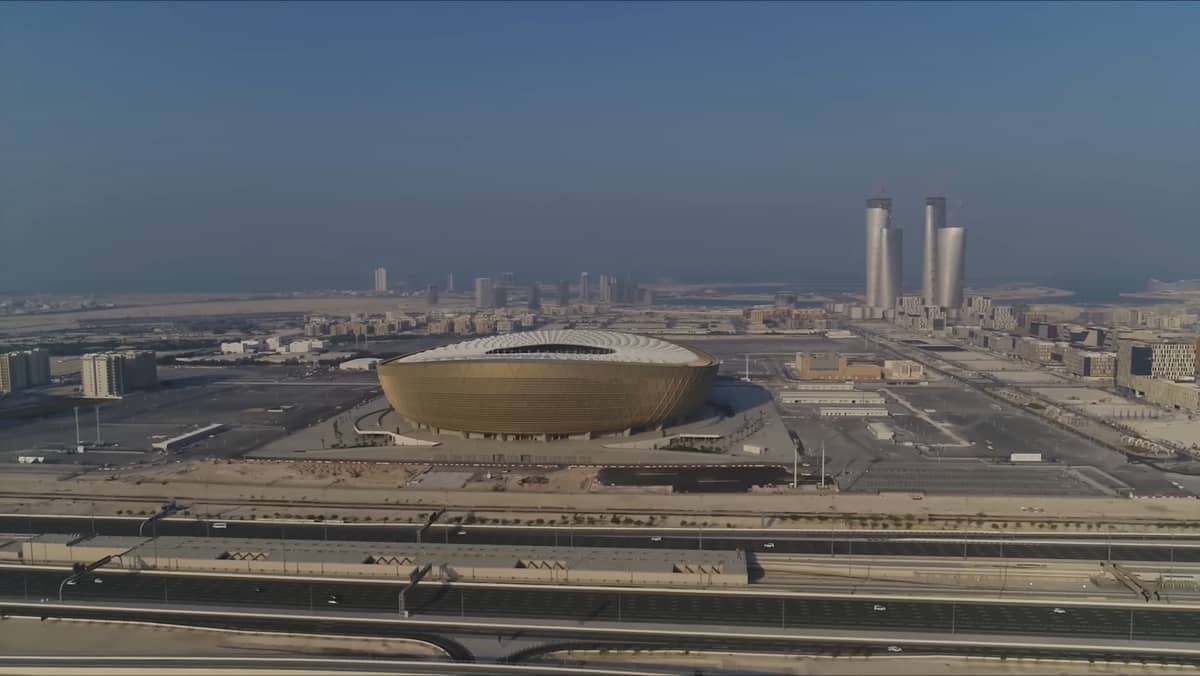
What Is Lusail Iconic Stadium?
Lusail Iconic Stadium is the largest sports venue in Qatar, with a capacity of approximately 80,000 seats in its post-tournament configuration. It served as the centrepiece of the 2022 FIFA World Cup, hosting ten matches including the group stage, knockout rounds, and the final itself on 18 December 2022. That final, between Argentina and France, drew a global television audience of over 1.5 billion people and ended in the most dramatic penalty shootout in World Cup history. For football fans, standing inside this bowl carries genuine weight.
The stadium sits in Lusail City, a planned urban development roughly 20 kilometres north of central Doha along the Persian Gulf coast. Lusail was largely built from scratch in the years preceding the tournament, and the stadium is its defining landmark. Unlike older stadiums embedded in established city fabric, Lusail Iconic Stadium stands in a purpose-designed district, which gives the surrounding area a clean, open character that can feel both impressive and slightly empty depending on when you visit.
ℹ️ Good to know
The stadium is not a walk-in attraction. Access requires either an event ticket or a pre-booked guided tour. Check the Lusail City official site or authorised tour operators for current availability before you travel.
The Architecture: A Bowl Inspired by Islamic Craft
The exterior facade of Lusail Iconic Stadium draws from the visual language of Islamic decorative arts, specifically the intricate geometric patterns found on traditional Arabic bowls and vessels. The golden lattice cladding catches light differently depending on the hour: in the harsh midday sun it reads as a solid metallic shell, but in the softer light of late afternoon it becomes layered and textural, with shadows playing across the perforated panels in ways that reward close inspection.
The roof is a full circular canopy that encloses the bowl almost entirely, which has significant practical implications. The interior is partially sheltered from direct sun and, on event evenings, the enclosed geometry amplifies crowd noise into something physically felt rather than just heard. The playing surface sits below surrounding grade level, so sightlines from most seating tiers are steep and direct. Even from the upper rings, the pitch feels close.
The design was delivered by Foster and Partners in collaboration with MANICA Architecture. At a tournament capacity of 88,966 (with some sources describing its post-tournament capacity as around 80,000), it is the largest stadium ever built for a FIFA World Cup in the Middle East.
Visiting on a Non-Event Day: What to Expect
On quiet days between events, the stadium exterior is freely visible and worth seeing up close. The grounds around the stadium are open pedestrian space, and the scale of the structure only becomes clear when you are standing at its base. The facade rises to a height that makes the building feel more like a civic monument than a sports facility.
Guided tours, when scheduled, take visitors through areas including the pitch-side walkways and player tunnels, and in some configurations the changing rooms. The tunnel walk, moving from the fluorescent quiet of the corridor out into the open bowl, is genuinely striking. The sensory shift from concrete and artificial light to open sky and the green of the pitch is one of those moments that photographs do not fully capture.
💡 Local tip
Photography outside the stadium is unrestricted. For interior shots on a tour, bring a wide-angle lens or use your phone's ultra-wide mode. The curved geometry of the bowl is difficult to capture in a single frame, and standing at pitch-side looking up to the roof canopy is the shot most worth planning for.
On event days, the area activates considerably. Vendors, fan zones, and organised crowd management create a festival atmosphere in the surrounding plazas. If you are arriving by car, check the event’s parking guidance in advance so you can factor it into your departure plans.
Getting There: Transit, Driving, and Parking
The most reliable way to reach the stadium without a car is the Doha Metro Red Line to Lusail QNB Metro Station. From there, the walk to the stadium is approximately 15 to 20 minutes along a pedestrianised route. On event days this walk fills with fans and is straightforward to navigate. On non-event days it is quieter and gives you a useful cross-section of the Lusail City development, including the waterfront boulevard and some of the district's residential towers.
By car, the stadium is accessible via the Lusail Expressway or the Al Khor Coastal Road from central Doha. The drive typically takes 25 to 40 minutes depending on traffic, with congestion being most significant on event evenings. Ride-hailing apps and Karwa taxis operate in the area. For context on navigating Doha's broader transport network, the guide to getting around Doha covers metro fares, bus routes, and taxi options in detail.
⚠️ What to skip
On major event nights, road closures and pedestrian-only zones around the stadium can significantly extend taxi and ride-hailing pick-up times. Plan to walk to the metro or use the designated drop-off zones rather than waiting for a car pickup immediately after large events.
The Lusail City Context: More Than a Stadium Visit
Visiting the stadium gives you a reason to explore Lusail City itself, and that broader visit is increasingly worthwhile. The district includes a marina, retail promenades, and a coastal corniche that is less crowded than its counterpart in central Doha. The scale of urban planning is ambitious: wide boulevards, regulated facades, and waterfront open space designed to accommodate a city that is still growing into itself.
The Place Vendome Mall in Lusail, modelled loosely on the architecture of Paris's famous square, is a short distance from the stadium and offers air-conditioned refuge during warmer months. A more detailed look at that development is in the Place Vendome Mall Lusail guide.
If you are combining the stadium with a broader day in the area, Lusail City rewards unhurried exploration, particularly along the waterfront in the late afternoon when light off the Gulf is at its warmest.
Best Time to Visit
Qatar's climate makes outdoor visits most comfortable between November and March, when daytime temperatures sit in the low to mid-20s Celsius. During this window, spending time around the stadium exterior or walking from the metro is genuinely pleasant. From May through September, temperatures regularly exceed 40°C and humidity rises considerably; any outdoor time should be kept short, and you should plan to be inside air-conditioned spaces for most of the day.
Ramadan affects event scheduling and the atmosphere around hospitality and food vendors. If you are planning a visit around a specific event, check the calendar well in advance. For a fuller seasonal breakdown, the best time to visit Doha guide covers heat, humidity, and major event periods month by month.
Evening visits on event days are the most atmospheric. The illuminated exterior of the stadium at night, with the golden lattice glowing against a dark sky, is visually distinct from any other venue in the Gulf. Arriving about two hours before kick-off gives you time to walk the perimeter, photograph the exterior properly, and absorb the crowd build-up without rushing.
Who Should Think Twice
If you are visiting Doha without a specific interest in football or stadium architecture, the travel time to Lusail and the lack of guaranteed interior access on non-event days may not justify the trip on its own. The exterior is striking but cannot be explored from inside without a tour or ticket. Visitors whose time is limited and whose interests lean toward history, souqs, or waterfront culture will likely find more to engage with in central Doha.
Those interested in the broader World Cup stadium legacy can also visit venues closer to the city centre. The Stadium 974 near the port district has a compelling design story of its own and is more easily combined with other central Doha attractions.
Insider Tips
- Book any stadium tour well in advance rather than showing up and hoping for walk-in access. Tours fill quickly around major events, and the interior simply cannot be accessed without a booking or ticket.
- The golden facade photographs best in the 45 minutes before sunset. At that angle, the geometric lattice catches warm, directional light and the shadows between panels create depth that disappears in flat midday conditions.
- If you are arriving by metro on an event day, exit at Lusail QNB station and follow the crowd flow rather than relying on maps. The walking route is well-signed during events, and following experienced fans is faster than navigating independently.
- Combine the stadium visit with a walk along the Lusail Marina waterfront afterward. Most visitors leave immediately after the final whistle; the promenade clears within an hour and makes for a calm contrast to the post-match crowds.
- Dress modestly for visits to the surrounding public spaces in Lusail City, as with all public areas in Qatar. Shorts and sleeveless tops that might be acceptable at a resort can draw unwanted attention in the stadium precincts and surrounding plazas.
Who Is Lusail Iconic Stadium For?
- Football fans who want to stand on the pitch where Argentina won the 2022 World Cup
- Architecture and design enthusiasts drawn to the Islamic-pattern facade and engineering scale
- Families visiting Doha during an event season with stadium matches on the calendar
- Photography-focused travellers seeking dramatic exterior shots, especially at golden hour
- Visitors spending a day exploring Lusail City's waterfront and retail districts
Nearby Attractions
Other things to see while in Lusail City:
- Place Vendôme Mall
Place Vendôme Mall in Lusail brings together high-end retail, canal-side dining, and choreographed fountain shows inside one of Qatar's most architecturally theatrical shopping destinations. Free to enter, genuinely impressive in scale, and worth the trip north from central Doha — if shopping is your thing.