Souq Al Wakra: The Heritage Market That Doha's Crowds Haven't Reached Yet
Located in Al Wakrah, Qatar's second-oldest city, Souq Al Wakra is a restored traditional market where whitewashed coral-stone buildings, wooden fishing boats, and the smell of frankincense create one of the most authentic Gulf experiences near Doha. Entry is free, the pace is slow, and the evenings are genuinely beautiful.
Quick Facts
- Location
- Al Wakrah city, Qatar — approx. 15–25 min by car from central Doha
- Getting There
- Best reached by car or taxi; approx. 13–14 km from Hamad International Airport
- Time Needed
- 1.5 to 3 hours for a leisurely visit; add time for a waterfront meal
- Cost
- Free entry; individual shops and restaurants charge separately
- Best for
- Architecture lovers, photographers, couples, and anyone wanting a slower Gulf experience
- Official website
- souqalwakra.qa
What Souq Al Wakra Actually Is
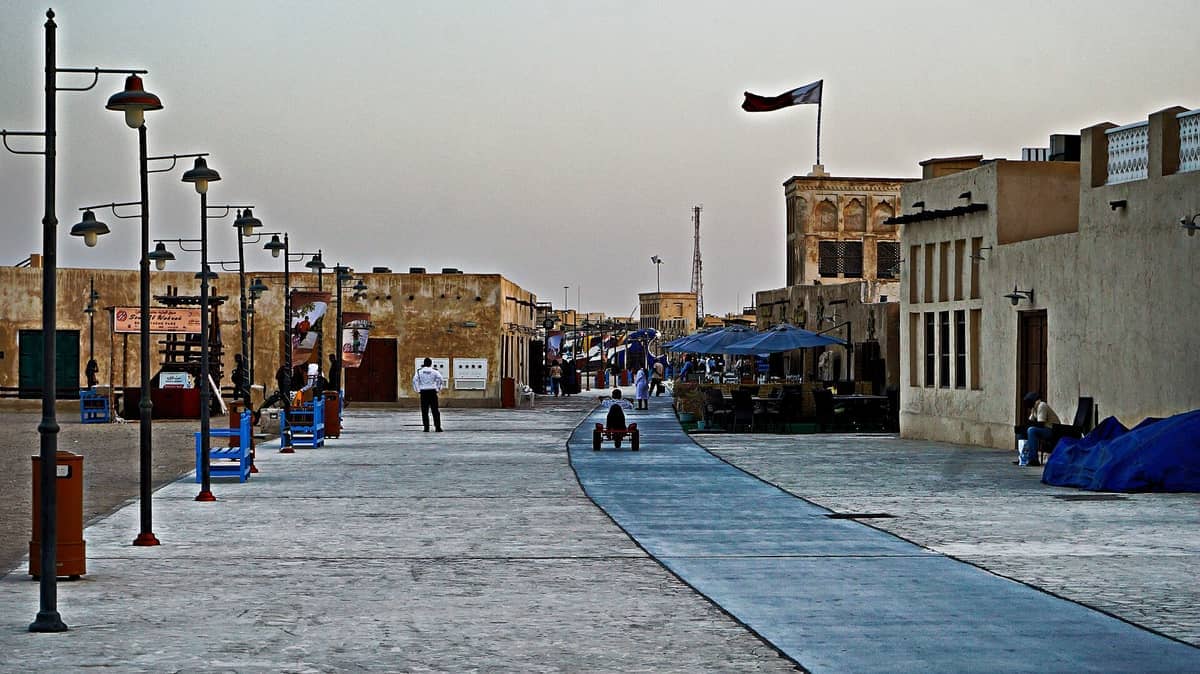
Souq Al Wakra is a restored traditional market in Al Wakrah, a coastal city about 15 to 25 minutes south of central Doha by car. Al Wakrah is documented as Qatar's second-oldest city, and the souq sits at its historic heart, bordered by a dhow harbour and a stretch of open beach. Unlike the more famous Souq Waqif in central Doha, this place does not feel packaged for visitors. The architecture is genuinely old in character, the alleyways are narrow and irregular, and on weekday evenings the primary clientele is local families and residents from the surrounding neighbourhoods.
The souq's buildings follow a style typical of Qatar's pre-oil Gulf architecture: thick walls of coral stone and gypsum plaster painted white, overhanging wooden lattice screens called mashrabiyya, and heavy carved doors that open onto small internal courtyards. The effect is one of compression and shade, a deliberate architectural response to the Gulf heat that no amount of modern air conditioning quite replaces.
💡 Local tip
Come in the evening. Many shops don't open until late afternoon, and the atmosphere after sunset — with string lights over the alleyways and the breeze coming off the water — is a significant improvement over the flat light of midday.
The Walk: From the Harbour to the Inner Lanes
Most visitors arrive from the waterfront side, where a small harbour holds traditional wooden dhows in various states of use and repair. The smell here is a combination of salt water, diesel, and occasionally the sharp note of drying nets. It is worth pausing at the harbour before entering the souq proper — the boats anchored here are the same style used for pearl diving and fishing along this coast for centuries, and the view back toward the sea at dusk, when the sky turns amber over the Gulf, is one of the better unscripted moments in the Al Wakrah area.
From the waterfront, the main souq entrance leads into a series of covered and semi-covered lanes. The inner section holds shops selling textiles, modest souvenirs, local pottery, and household goods. Frankincense and oud are burned openly at several stalls, and the smoke drifts through the alleys in a way that is distinctly not decorative — this is ordinary daily commerce. There are also small coffee and tea vendors positioned at corners, serving cardamom-spiced qahwa in small handle-less cups.
The surrounding neighbourhood of Al Wakrah has its own character beyond the souq itself, and a short walk toward the beachfront reveals a more relaxed coastal atmosphere than you find along the Doha Corniche. The beach adjacent to the souq is a genuine local beach, not a resort, and it's common to see families gathered there on weekend evenings.
Time of Day Makes a Significant Difference
Visiting at midday during the warmer months (roughly April through October) is uncomfortable and mostly counterproductive. The temperature in Doha regularly exceeds 40°C in July and August, and the stone lanes of the souq offer shade but not relief from the heat. Most shops are closed or barely staffed during these hours anyway. The experience flattens considerably.
The transformation begins around 4 to 5 p.m. in winter months, and closer to 6 to 7 p.m. in summer. Shopkeepers reopen their shutters, restaurant terraces start filling, and the harbour promenade comes to life with strolling families. Friday afternoons are busy and festive but can feel crowded in the narrower inner sections. Thursday evenings also draw a significant crowd. If you want the atmosphere without the congestion, Sunday through Tuesday evenings offer the same setting with noticeably more room to move.
ℹ️ Good to know
During Ramadan, the souq takes on a different character entirely: quieter during the day, then intensely social after Iftar, with food stalls operating late into the night. If your visit coincides with Ramadan, evening hours are actually the best time to visit.
Historical and Cultural Context
Al Wakrah's history as a fishing and pearling settlement predates the modern Qatari state by several centuries. Before the oil economy restructured Qatar's coastal towns, Al Wakrah was one of the most economically active ports on the peninsula, with fleets departing for pearling grounds in the Gulf each summer. The souq was the commercial and social centre of that community: a place to sell the catch, trade goods arriving by sea, and conduct the everyday commerce of a small but prosperous maritime town.
The souq was subsequently restored rather than rebuilt from scratch, which matters to the experience. The coral-stone walls, the irregular plot boundaries, and the non-uniform lane widths all reflect the organic growth of a real settlement rather than a themed reconstruction. The restoration work has been praised in regional architecture discussions for prioritising material authenticity — the same cannot always be said of similar projects elsewhere in the Gulf.
For visitors who want deeper context on Qatar's pre-oil material culture, the National Museum of Qatar in Doha covers the pearl-diving and maritime heritage in considerable detail, and pairs well with a visit to Al Wakrah.
Eating and Drinking at the Souq
The restaurant offering here leans toward Gulf and Middle Eastern cuisine, with a handful of South Asian options reflecting Qatar's broader demographic. Several restaurants have terrace seating that faces the harbour or the beach, and these tables are worth requesting specifically. The food quality ranges from ordinary to genuinely good depending on where you sit, and the best approach is to walk the full waterfront stretch before choosing rather than stopping at the first place you see.
For a lighter stop, the small tea and coffee vendors in the inner lanes charge very little and provide a natural pause point. Qatar's traditional qahwa (lightly roasted coffee with cardamom and saffron, served without sugar) is the appropriate drink here, and ordering it at a small stall rather than a hotel lobby is a better experience in every respect.
⚠️ What to skip
Alcohol is not available at the souq or its surrounding restaurants. The nearest licensed venue requires a hotel visit elsewhere. Plan accordingly if this is a consideration.
Practical Information for Visitors
Entry to Souq Al Wakra is free. There is no gate, no ticket, no timed entry system. You walk in. Parking is available nearby, and given that the primary realistic route here is by private car or taxi, this is the detail most visitors will care about. The Doha Metro now extends to Al Wakrah via the Red Line, with Al Wakra station serving the area; visitors can connect from Hamad International Airport T1 or central Doha and then use a short taxi ride or local transport to reach the souq. Confirm current app and station access availability before relying on it, as regional availability can change.
The main promenade and restored lanes are generally manageable for wheelchair users, with relatively flat paving in the newer sections. The older inner alleyways have uneven surfaces and occasional raised thresholds at doorways. Accessible parking and restrooms are noted in visitor reports, though conditions should be confirmed on arrival.
Dress code expectations follow standard Qatari public norms: modest clothing covering shoulders and knees is appropriate, particularly in a traditional market setting. This is not aggressively enforced, but it is worth respecting as a matter of basic courtesy in a working community rather than a tourist zone.
If you are planning a broader trip around Qatar's southern coast, Al Wakrah is a useful base. The Al Wakra Beach is directly adjacent, and the area offers a noticeably different pace from Doha's central districts. For a longer day out, the drive toward Sealine continues south from here. Read more in our guide to day trips from Doha.
Photography
Souq Al Wakra is one of the better photography locations near Doha, precisely because the architecture is photogenic without being self-consciously staged. The blue-painted wooden doors and window screens against white-washed walls are the obvious subject, but the harbour at golden hour, with dhows in silhouette against a coloured sky, is the more rewarding shot. A standard zoom lens handles most situations well. In the narrow inner lanes, a wide-angle lens helps with the compressed geometry.
As with any market in a conservative Gulf city, photograph people only with clear consent. This is not a suggestion born of legal concern alone — it is simply the appropriate behaviour in a place where residents go about their daily lives. For more context on photography in Qatar, see the Doha photography guide.
Insider Tips
- The harbour side of the souq is the more photogenic half, but the inner lanes hold the better shopping. Walk all the way through before buying anything — prices and selection vary considerably between stalls.
- Thursday evening is the most social night, with families gathering at the waterfront and restaurants filling up by 8 p.m. If you want atmosphere over space, come Thursday. If you want space, come Sunday.
- The small tea vendors near the inner lane intersections serve qahwa far better than most of the formal restaurants. Look for the stalls with a thermos and a stack of small handle-less cups — these are not tourist operations.
- The souq is genuinely close to Hamad International Airport (roughly 13–14 km), which makes it a practical stop on arrival or departure if you have a few hours available. It is a more grounded introduction to Qatar than the airport's polished interior.
- Some of the carved wooden doors in the older sections of the souq are original to the pre-restoration buildings. They are worth examining closely — the carving patterns follow traditional Gulf motifs and are not replicated anywhere else nearby.
Who Is Souq Al Wakra For?
- Architecture and heritage travellers who want to understand what Gulf towns looked like before oil wealth
- Couples looking for an evening walk and a waterfront dinner without the crowds of central Doha
- Photographers working in natural light and looking for authentic, non-staged subjects
- Layover travellers at Hamad International Airport with three or more hours to spare
- Visitors who found Souq Waqif too busy and want a version of the same thing at a fraction of the foot traffic
Nearby Attractions
Other things to see while in Al Wakra:
- Al Janoub Stadium
Al Janoub Stadium is Qatar's boldest piece of sports architecture outside central Doha, a structure shaped to echo the hull of a traditional dhow boat. Built for the 2022 FIFA World Cup and now home to Al Wakrah SC, it continues to host major international events in the coastal town of Al Wakrah, roughly 18–22 kilometres south of the capital.
- Al Wakra Beach
Al Wakra Beach is a free public beachfront in Al Wakrah Municipality, Al Wakra Beach is a free public beachfront in Al Wakrah Municipality, about 30 kilometres south of central Doha.. Calm waters, a family-friendly atmosphere, and proximity to the historic Souq Al Wakra make it one of the more rewarding coastal stops outside the city centre.