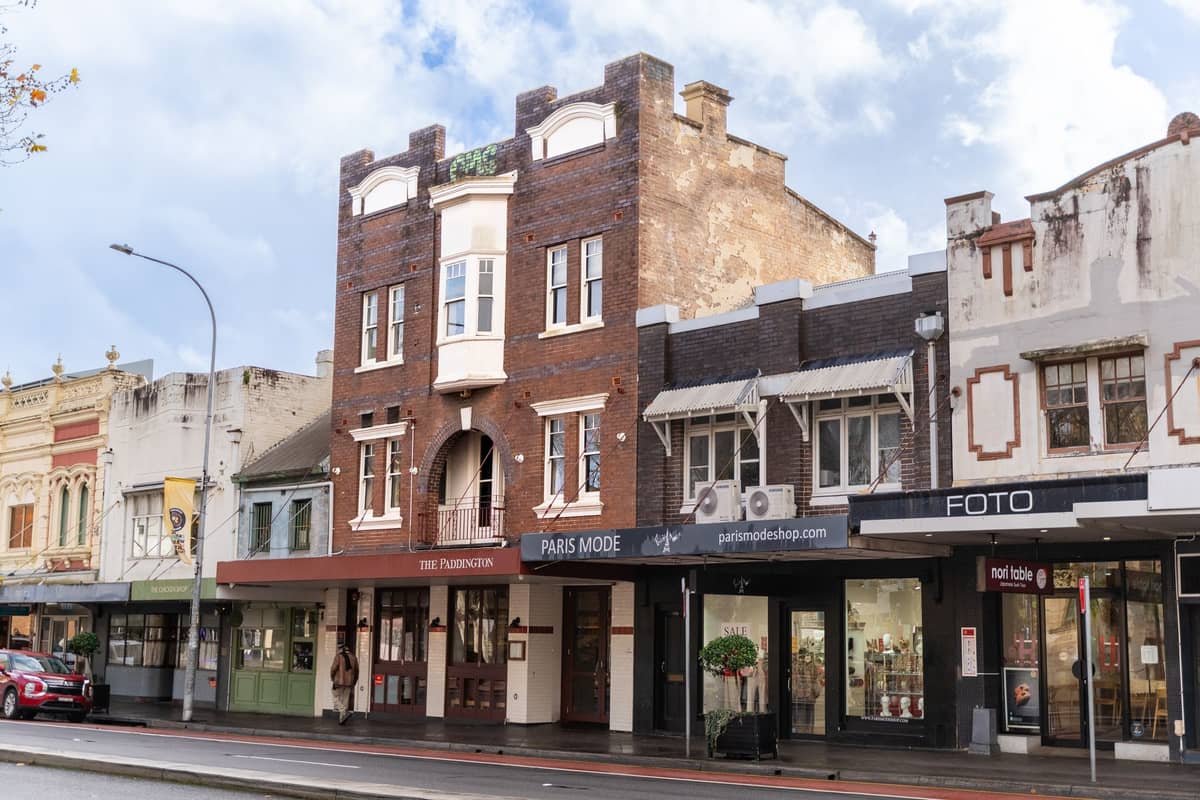
Paddington is one of Sydney's most architecturally distinctive inner-city neighbourhoods, known for its rows of restored Victorian terraces, Oxford Street shopping, independent galleries, and a Saturday market that has run since 1973. It sits close enough to the CBD to visit in a morning but has enough depth to reward a longer stay.
Paddington wears its history on its streetscapes: narrow lanes flanked by iron-lace terraces, corner pubs with worn timber bars, and side streets that open onto leafy village squares. It is a neighbourhood where Sydney's colonial-era fabric has been preserved and polished rather than demolished, making it as photogenic as it is genuinely liveable.
Orientation
Paddington sits roughly 3 kilometres east of the Sydney CBD, occupying a ridge between the city and the eastern suburbs. Oxford Street is its backbone: a long, gently curving corridor that runs from Taylor Square in Darlinghurst all the way through to the gates of Centennial Park. Almost everything in Paddington is within walking distance of Oxford Street, though the terrain is hillier than visitors expect.
The neighbourhood's boundaries are roughly defined by Oxford Street to the north, the parkland corridor of Centennial Park to the east, Moore Park Golf Course to the south, and South Dowling and Flinders streets to the west. This puts Paddington in close proximity to several adjoining precincts: Surry Hills and Darlinghurst are immediately to the west, while the entertainment strip of Moore Park and Fox Studios is a short walk south.
Within the neighbourhood itself, the character shifts noticeably as you move away from Oxford Street. The main strip is commercial and at times loud; one block north or south, the streets become almost entirely residential, with terraces packed tightly along narrow footpaths. Glenmore Road, Five Ways (a five-point junction that functions as the neighbourhood's social centre), and Shadforth Street each have a distinct feel. Learning to navigate by these landmarks rather than simply following Oxford Street gives you a much better sense of what Paddington actually is.
Character & Atmosphere
Paddington is Sydney's best example of Victorian-era residential streetscapes surviving into the 21st century. The terraces that line streets like Glenmore Road and Jersey Road were built primarily between the 1870s and 1890s to house working-class families near the Victoria Barracks. By the mid-20th century, many had fallen into disrepair. The gentrification that followed in the 1970s and 1980s transformed them into some of the city's most sought-after addresses, and the restored ironwork balconies, coloured rendered facades, and small front gardens are now a defining visual identity.
On a weekday morning, Paddington feels genuinely residential. The cafés along Glenmore Road and around Five Ways fill with locals; the quieter streets see dog walkers and parents with prams more than tourists. Light falls at a low angle through the terrace-lined lanes, picking out the ornate cast-iron lacework on balconies that would look completely out of place anywhere else in Sydney. By late morning, the boutiques on Oxford Street begin to attract shoppers from across the city, and the atmosphere shifts toward something more purposeful.
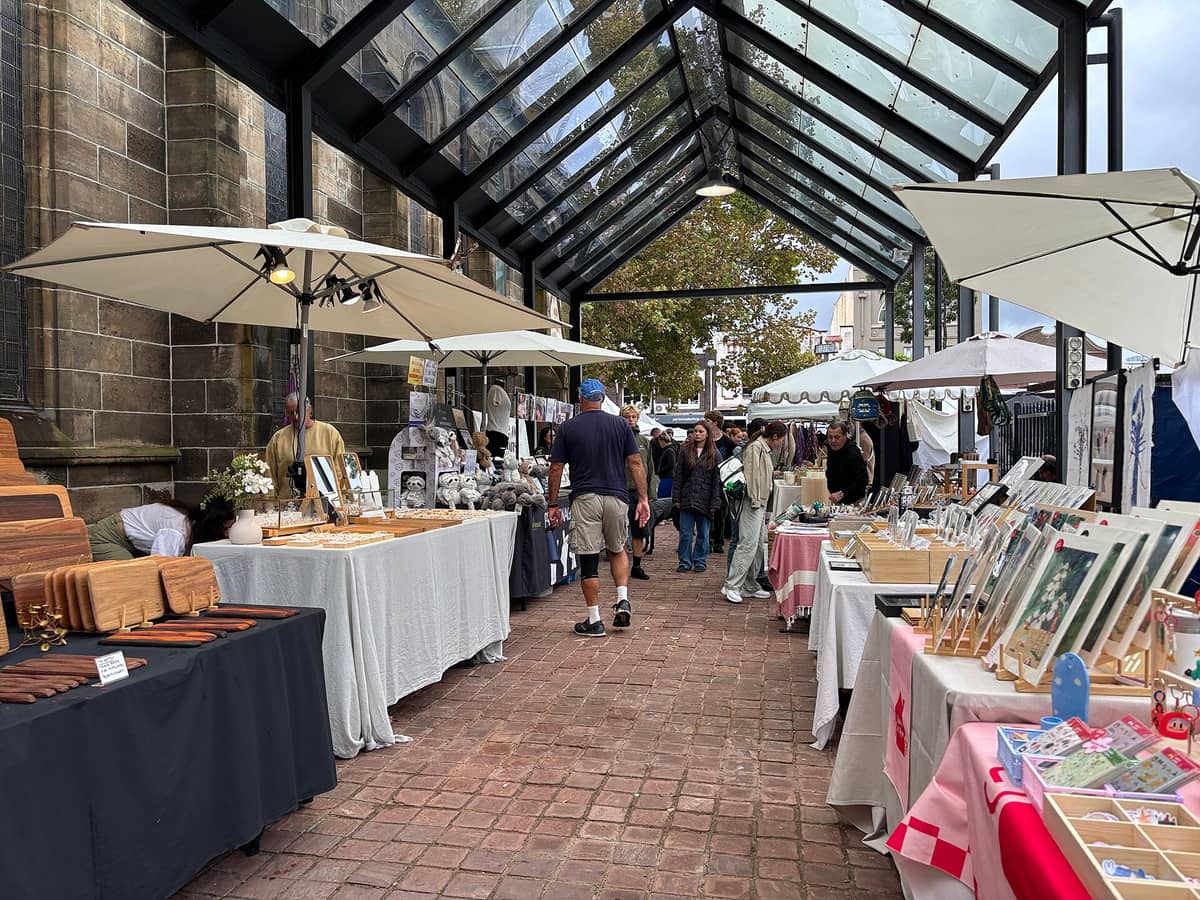
Saturday is the neighbourhood's busiest and most distinctive day. The markets at Paddington Uniting Church draw visitors from across Sydney, and Oxford Street becomes noticeably crowded by mid-morning. The pubs pick up early, and by early afternoon Five Ways has a festival-day energy. If you want to experience Paddington without the crowds, a Tuesday or Wednesday morning is closer to how the neighbourhood actually functions for the people who live there.
After dark, the pub scene along Oxford Street and around Five Ways is relaxed by inner-Sydney standards. Paddington lacks the late-night intensity of Kings Cross or parts of Surry Hills, and most venues settle into a quieter groove after midnight. It is not a neighbourhood with a significant nightclub scene, which is part of what makes it comfortable for a wide range of visitors.
💡 Local tip
Paddington's streets are hilly. If you're walking from Taylor Square end to Centennial Park and back with shopping bags, wear comfortable shoes. The inclines look manageable on a map but add up quickly on foot.
What to See & Do
The most visible landmark in Paddington is Victoria Barracks on Oxford Street, a large sandstone military complex built in the 1840s that remains one of the finest examples of colonial Georgian architecture in Australia. The Australian Army Museum of NSW is located within its grounds. On the same strip, Paddington Town Hall is a handsome Victorian civic building that anchors the streetscape between the barracks and the markets. For a different kind of heritage, the Paddington Markets at the Uniting Church on Oxford Street have operated every Saturday since 1973, making them one of Sydney's longest-running weekend markets.
Paddington Reservoir Gardens is worth finding even if you have no particular interest in industrial heritage. The former underground water reservoir, built in the 1860s and decommissioned in 1899, was converted into a public park in 2009. The partly collapsed brick vaults, exposed ironwork, and open water pools create an atmospheric space that feels unlike anything else in the inner city. It sits on Oxford Street near the corner of Oatley Road, easy to miss if you don't know it's there.
Paddington has long been associated with Sydney's visual arts scene. Oxford Street and the surrounding streets have a concentration of commercial galleries, particularly around the Five Ways end of Glenmore Road. The area's proximity to the historic studio culture of the inner east gave it credibility as an arts precinct from the 1980s onward, and while rents have pushed some smaller galleries out, a strong gallery presence remains.
Centennial Park, accessible from the Oxford Street gates at the eastern end of the neighbourhood, provides the best escape from the urban density. The parklands’ 369 hectares of wetlands, formal gardens, cycling tracks, and open lawns are a significant part of daily life for Paddington residents. It connects further east toward the eastern beaches, making it a useful starting point for longer walks or cycle rides toward Bondi.
Victoria Barracks and the Army Museum of NSW on Oxford Street
Paddington Reservoir Gardens, off Oxford Street near Oatley Road
Paddington Markets every Saturday at Paddington Uniting Church
Paddington Town Hall, a Victorian civic landmark on Oxford Street
Commercial galleries along Glenmore Road and the Five Ways precinct
Centennial Park, entered from the eastern end of Oxford Street
ℹ️ Good to know
Paddington Markets run every Saturday from around 10am to 4pm. They attract a mix of local designers, vintage sellers, and food stalls. Arrive before midday to browse before the peak crowd arrives.
Eating & Drinking
Paddington's food scene reflects its demographics: it skews toward independent cafés, wine bars, and restaurants that take ingredients and technique seriously without necessarily being formal. The Five Ways junction is the best area to start. Several cafés and casual restaurants cluster here, and the strip along Glenmore Road leading toward the junction has a convivial neighbourhood feel that Oxford Street itself, being busier and more commercial, sometimes lacks. For a broader picture of what Sydney's café culture looks like, the Sydney coffee guide covers the city's best precincts in detail.
Oxford Street has a wider range of options: everything from casual Thai and Japanese to brasserie-style dining and pizza. Prices are mid-to-upper range by Sydney standards; this is not a neighbourhood for budget eating unless you're visiting the markets and picking up street food there. The pubs along Oxford Street, including some Victorian-era hotels that have operated on the same sites for well over a century, offer the most accessible price point for lunch and a drink.
Paddington's wine bar scene is strong relative to its size. Several venues operate on a model that suits the area well: small rooms, good Australian and European wine lists, charcuterie and cheese, and a crowd that tends to arrive after 5pm and stay into the evening. The atmosphere at these places on a Friday evening is relaxed rather than rowdy, which suits Paddington's general character.
If you want to compare Paddington's food culture to adjacent precincts, Surry Hills and Darlinghurst offer more density and a wider price range, while the markets-based food stalls on Saturday provide the most casual and affordable eating within Paddington itself. For a broader overview of Sydney's food culture, see the guide to what to eat in Sydney.
Getting There & Around
Paddington does not have a train station. The closest heavy-rail connections are Central Station to the west and Museum Station on the edge of Hyde Park. From Central, the walk to the Taylor Square end of Oxford Street takes around 20 minutes. More practically, buses serve Oxford Street directly and are the standard way to reach the neighbourhood from the CBD. Route 333 and other services connect the city centre to Paddington along Oxford Street; check the current Transport for NSW trip planner for live routes and stops. For general advice on navigating Sydney's transit network, the getting around Sydney guide covers Opal card use, buses, trains, and ferries.
Within the neighbourhood, walking is by far the best option. Oxford Street from Taylor Square to the Centennial Park gates is around 1.5 kilometres, and most points of interest are within a few blocks of it. The terrain is hilly in places, particularly on streets that run north-to-south off Oxford Street. Bikes are practical for reaching Centennial Park, which has dedicated cycling paths, but the streets around Five Ways and along Oxford Street are narrow and busy enough to make cycling on the main road less comfortable.
Rideshare and taxis reach Paddington easily from the CBD, typically in under 15 minutes outside peak traffic. Oxford Street itself can be slow during morning and evening commute hours due to bus traffic and merging lanes. Coming from Sydney Airport, the most practical route is either rideshare directly to Paddington, or airport train to Central Station then bus to Oxford Street; verify current fares and travel times before departure, as both can change.
💡 Local tip
An Opal card (or contactless bank card) covers bus travel to Paddington from the CBD. Tap on and off at each journey to ensure the correct fare is charged. Single-trip fares without a card are higher and not available on all services.
Where to Stay
Paddington is not a large hotel precinct; it suits travellers who prefer boutique accommodation, self-contained apartments, or short-stay lets in converted terraces. The accommodation that does exist here tends to be smaller-scale and more characterful than what you'd find in the CBD. For a broader look at which Sydney neighbourhood suits your accommodation priorities, see the where to stay in Sydney guide.
Staying in Paddington puts you within walking distance of the café strip at Five Ways and a short bus ride from the CBD, Darlinghurst, and Moore Park. It suits independent travellers, couples, and anyone whose priority is neighbourhood character over hotel infrastructure. Families with young children may find the hilly streets and limited large-hotel facilities a reason to look elsewhere; the CBD or Darling Harbour precincts offer more conventional family-oriented options.
Travellers who want coastal access without sacrificing the inner-city setting might also consider Potts Point and Woolloomooloo to the north, which combines proximity to the harbour with a similarly walkable village character. Paddington's strength as an accommodation base is atmosphere and location rather than price or facilities.
Honest Drawbacks
Oxford Street has had a difficult decade. The strip that once anchored a major part of Sydney's LGBTQ+ nightlife and independent retail has seen significant attrition in businesses, partly due to lockout laws that affected the broader inner-city nightlife economy, and partly due to rising rents. What remains is a more mixed and in some sections sparse commercial strip than it was 15 to 20 years ago. The bones are still strong, and the neighbourhood itself remains attractive, but visitors who arrive expecting a continuously animated main street may find stretches that feel quieter than anticipated.
Parking in Paddington is genuinely difficult, particularly on Saturdays near the markets. If you're driving, plan to arrive early or use public transport. The narrow terrace streets and limited kerb space mean that driving here is more stressful than most other inner-city Sydney neighbourhoods.
Paddington is also one of Sydney's more expensive postcodes when it comes to eating and drinking. While the quality tends to justify the prices, visitors on a tight daily budget will find it harder to eat well cheaply here than in Newtown or parts of Surry Hills.
⚠️ What to skip
Saturday crowds around Paddington Markets can make Oxford Street genuinely congested between midday and 3pm. If you want to visit the markets without navigating a shoulder-to-shoulder crowd, arrive before 11am or after 3pm.
Paddington in Context: How It Fits Into Sydney
Paddington sits at a useful midpoint in Sydney's inner-east geography. The Sydney CBD is close enough to visit without making it a project; the eastern beaches are reachable by bus or bike. As a base or as a half-day destination from the city centre, Paddington offers something that very few Sydney neighbourhoods can match: a genuinely intact Victorian streetscape that functions as a living neighbourhood rather than a heritage museum.
For travellers working through Sydney's inner ring of suburbs, a logical circuit combines Paddington with Surry Hills and Darlinghurst to the west and a walk through Centennial Park toward the eastern beaches. The Sydney things to do guide covers how to structure a wider itinerary that includes these precincts alongside the major attractions.
TL;DR
Paddington is best experienced on a Saturday morning: markets, café terraces, and the Victorian streetscape all at their liveliest.
Oxford Street is the main artery, but the neighbourhood's real character lives on the side streets around Five Ways and along Glenmore Road.
No train station means buses are essential; route services from the CBD along Oxford Street are frequent and straightforward with an Opal card.
Best suited to travellers who appreciate architecture, independent retail, food and wine culture, and a neighbourhood that feels lived-in rather than tourist-facing.
Not ideal for budget travellers or anyone who needs large hotel infrastructure; better as a half-day destination or boutique-accommodation base than a budget hub.
Three days is enough to experience Sydney's iconic harbour, golden beaches, historic laneways, and world-class food scene — if you plan well. This itinerary is built for efficiency without sacrificing depth, moving logically between neighbourhoods to save time and maximise what you actually see.
Sydney has more than 100 beaches within the greater metropolitan area, ranging from world-famous surf breaks to calm harbour coves perfect for families. This guide covers the best of them, from Bondi's golden crescent to the white-sand solitude of Palm Beach.
Sydney's museum scene spans 200 years of collecting, from Australia's oldest natural history institution to a world-class gallery of 21st-century Chinese art. This guide covers the city's finest collections, with practical details on free entry, opening hours, and how to plan your visits.
Sydney rewards visitors year-round, but the right timing depends on what you want to do. This guide breaks down Sydney's four seasons by weather, crowds, costs, and major events so you can plan a trip that actually matches your priorities.
Sydney rewards those who seek elevation. Whether you want the classic Opera House and Harbour Bridge framed together, vast ocean panoramas, or Blue Mountains escarpments stretching to the horizon, the city and its surrounds deliver some of the most dramatic viewpoints in the Southern Hemisphere. This guide covers the finest lookouts, from free hilltop perches to ticketed sky-high platforms.
The Blue Mountains is Sydney's most popular day trip, and for good reason: dramatic sandstone escarpments, ancient rainforest valleys, and a train ride straight from Central Station. This guide covers exactly how to get there, what to prioritise, what Scenic World actually costs, and the planning details most visitors overlook.
Sydney's surroundings are as rewarding as the city itself. Within two to three hours you can reach ancient rainforests, world-class wine country, remote surf beaches, and wildlife-filled national parks. This guide covers the best day trips from Sydney, with practical advice on how to get there and what to do when you arrive.
Sydney is one of the world's great cities, and you don't need a big budget to experience it at its best. From free-entry museums and galleries to iconic coastal walks and harbour lookouts, this guide covers 22 of the best free things to do in Sydney.
Sydney's public transport network covers nearly every corner of the city, but it has quirks that trip up first-time visitors. This guide breaks down every option, from the Opal card fare system to ferry routes and airport transfers, so you can move around confidently from day one.
Sydney rewards travellers who spend well. From harbour-view suites at Park Hyatt to degustation menus overlooking the Opera House, this guide breaks down exactly where to stay, eat, and what to do when budget is not the deciding factor.
Seven days is enough time to cover Sydney's iconic landmarks, explore its best neighbourhoods, and still squeeze in a day trip or two. This itinerary is structured around geography to minimise transit time, with honest notes on what to skip and what to prioritise.
Sydney sits on the Country of the Eora Nation, home to Aboriginal peoples whose connection to this land stretches back tens of thousands of years. This guide covers the key heritage sites, cultural tours, museums, and ceremonies that offer genuine insight into First Nations history and living culture across the city.
Sydney's coastline is one of its defining features, and walking it is the best way to understand the city. This guide covers the top coastal walks in Sydney, with clear assessments of difficulty, logistics, and what each route actually delivers.
Sydney has one of the most serious coffee cultures in the world, anchored by the flat white and driven by a generation of specialty roasters and technically obsessed baristas. This guide covers where to drink, what to order, how much to pay, and which neighbourhoods to explore cup by cup.
Sydney's ferry network is one of the most practical and scenic ways to move around the city. This guide covers every route, how to pay, fare caps, seasonal changes, and which journeys are worth doing for their own sake.
Sydney is one of the world's great cities for romance, with a harbour that practically does the work for you. This guide covers the most memorable experiences for couples — from iconic landmarks to quieter corners most visitors never find — with practical details on timing, cost, and what to actually expect.
Sydney's famous icons are worth every visit, but the city's real character lives in its quieter corners. From a free Chinese art gallery in Chippendale to a convict island you can camp on, these are the experiences most visitors overlook.
Sydney Mardi Gras is one of the world's largest LGBTQIA+ celebrations, running across several weeks each late summer. This guide covers the full festival program, parade logistics, neighbourhood highlights, transport tips, and everything visitors need to plan a trip with confidence.
Sydney's market scene covers serious ground, from heritage-listed weekend stalls in The Rocks to one of the Southern Hemisphere's biggest fish markets. This guide breaks down the best markets in Sydney by type, location, and what you actually get for your time.
Sydney New Year's Eve is one of the world's great spectacles, but the difference between a memorable night and a frustrating one comes down to planning. This guide covers the best free and ticketed vantage points around Sydney Harbour, the fireworks schedule, transport logistics, and the practical details that most guides skip.
Sydney's nightlife runs deeper than the Opera House forecourt and a few cocktail bars with harbour views. From the craft-beer pubs of Newtown to late-night rooftops in the CBD and live music venues in Surry Hills, this guide breaks down where to go, what to expect, and what to avoid on a night out in Sydney.
Sydney has a reputation for being expensive, and it's not entirely undeserved. But with the right approach to transport, food, and sightseeing, you can experience the best of this city without spending a fortune. This guide breaks down exactly where to save and where it's worth spending a little more.
Sydney's shopping scene runs deeper than most visitors expect. This guide breaks down the best shopping in Sydney by precinct and purpose, covering everything from grand Victorian arcades in the CBD to independent boutiques in Newtown and Saturday markets in Paddington.
Sydney sits within reach of some of Australia's most accessible wildlife experiences, from koalas and kangaroos at dedicated wildlife parks to humpback whales off the coast. This guide covers the best options, clear trade-offs, and practical logistics for every budget.
Sydney is one of Australia's most family-friendly cities, with a mix of free attractions, world-class wildlife encounters, and outdoor adventures that suit kids of all ages. This guide covers the best activities, honest cost breakdowns, seasonal tips, and transport advice to help you plan a stress-free family visit.
Sydney rewards exploration far beyond the postcard shots. This guide covers the best things to do in Sydney Australia — iconic landmarks, great beaches, cultural highlights, and neighbourhood experiences — with practical detail on timing, costs, and getting around.
Vivid Sydney is one of the Southern Hemisphere's largest light, music, and ideas festivals, turning Sydney Harbour into an annual winter spectacle. This guide covers the Light Walk route, ticketed events, transport logistics, crowd strategy, and what first-timers consistently get wrong.
Sydney's food scene is one of the most diverse and seriously good in the world, shaped by decades of immigration, exceptional local produce, and a coastal geography that puts extraordinary seafood at the centre of the table. This guide covers the dishes, markets, neighbourhoods, and practical tips you actually need.
Choosing where to stay in Sydney shapes your entire trip. This guide breaks down the city's key neighbourhoods by location, vibe, price range, and transport access, so you can pick the right base before you book.