Potts Point and Woolloomooloo sit just minutes from the Sydney CBD, yet feel like a different city entirely. One rises on a sandstone ridge lined with Art Deco apartments and European-style cafes; the other drops to a working harbour with a converted timber wharf and salt-edged streets. Together they form one of Sydney's most layered and walkable inner-city precincts.
Potts Point and Woolloomooloo occupy a narrow ridge and bay directly northeast of the CBD, where Sydney's grandest residential architecture looks down over its most storied waterfront. The contrast between the two is part of the appeal: polished Macleay Street above, the raw timber and salt air of the Finger Wharf below, connected by a flight of sandstone steps that has been in use for over a century.
Orientation
Potts Point sits on a peninsula-like ridge that extends northeast from Kings Cross, dropping steeply on its northern side to Woolloomooloo Bay and on its eastern side toward Elizabeth Bay and Rushcutters Bay. The area covered by the City of Sydney's combined precinct runs from the waterfront at Woolloomooloo Bay in the north to Bayswater Road, Kings Cross Road and William Street in the south, with Yurong Parkway and Sir John Young Crescent forming its western edge.
Macleay Street is the central spine of Potts Point, running roughly north from Kings Cross toward Challis Avenue and the quieter southern fringe of Elizabeth Bay. Woolloomooloo occupies the flat ground below the ridge, facing the bay. The two areas are most dramatically connected by the McElhone Stairs, a long sandstone staircase that descends from the top of Victoria Street down to Woolloomooloo's street level. The walk takes under five minutes, but the gradient is significant.
The broader context matters for navigation. Kings Cross station is at the southern end of Potts Point, which places the whole precinct within a short walk of the Oxford Street corridor in Surry Hills and Darlinghurst and roughly 1.5 kilometres from the eastern edge of the Sydney CBD. The Royal Botanic Garden and Farm Cove are accessible on foot along the waterfront to the west.
Character & Atmosphere
Potts Point moves at a slower pace than its immediate neighbour Kings Cross, and that distinction is felt as soon as you turn off Darlinghurst Road onto Macleay Street. The footpath widens slightly, awnings give way to plane trees, and the buildings change register entirely. The apartment blocks here are among Sydney's finest examples of interwar Art Deco construction: curved balconies, tiled foyers, cream-brick facades catching the afternoon sun at angles that make the whole street look like a film set.
On weekend mornings, Macleay Street belongs to residents collecting coffee and pastries from the neighbourhood's clutch of cafes, then looping back to their buildings past small garden squares. The foot traffic is local and purposeful. By midday, tables fill with a mix of creative-industry workers, longer-term residents and visitors staying in the area's boutique hotels. The energy stays conversational rather than chaotic.
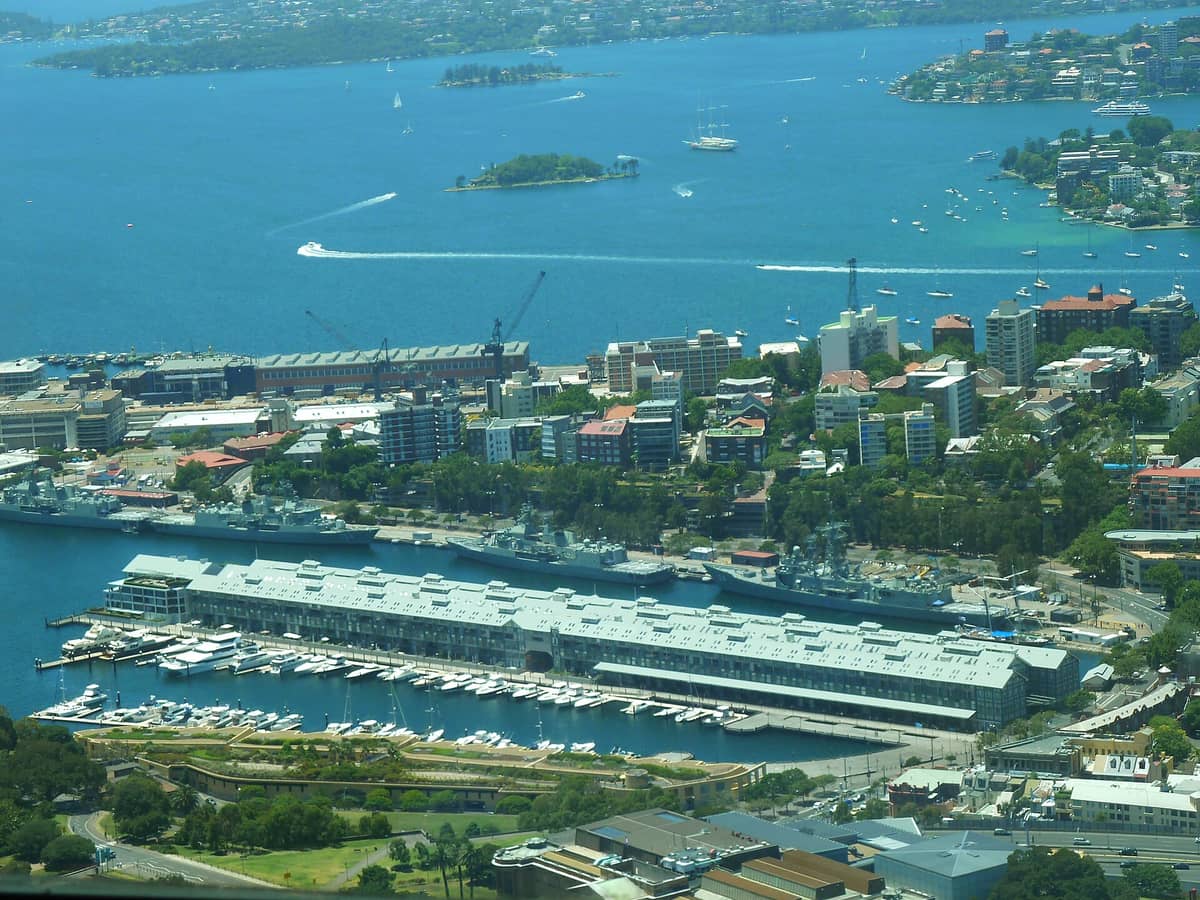
Woolloomooloo, a fifteen-minute walk or a short flight of stairs below, has a completely different register. Its streets are wider, flatter and less polished. The suburb carries traces of its maritime and working-class past in its terrace rows and the scale of its industrial heritage. The Finger Wharf, a timber pier that stretches into Woolloomooloo Bay and was once the longest wooden structure of its kind in the world, now houses upmarket apartments, a hotel and a row of restaurants, but the bones of its working life are still visible in the exposed joinery and the way the structure sits over the water.
After dark, the Finger Wharf restaurants draw a well-dressed crowd, while the streets further back from the water are quiet enough that you can hear the water against the pylons. It is not a late-night area in the way that Kings Cross once was; the atmosphere after 10pm is more waterside supper club than anything else. That said, the proximity to Kings Cross means noise can carry on weekend nights, particularly in accommodation along Victoria Street.
ℹ️ Good to know
The McElhone Stairs connect Potts Point to Woolloomooloo and are worth walking at least once for the view back across the bay. The steps can be slippery when wet. Visitors with mobility limitations or heavy luggage should use a gentler road route or check Transport for NSW for a suitable bus connection.
What to See & Do
The neighbourhood rewards walking rather than ticking boxes. Macleay Street itself is an attraction: spend time looking at the apartment buildings rather than past them. The Cahors, Kingsclere, and Macleay Regis are among the most photographed examples of Sydney's Art Deco residential stock, and they sit alongside Victorian terraces that predate them by decades. The contrast between architectural eras happens block by block.
At the bottom of the McElhone Stairs, the Woolloomooloo Finger Wharf stretches into the bay. Walking its length at low tide, when the water sits well below the decking and the smell of the harbour is strongest, gives a sense of how the precinct functioned as a working port before its conversion. Garden Island, the Royal Australian Navy base that occupies the headland immediately east, is not open to the public, but its presence explains the scale of the surrounding infrastructure.
The Elizabeth Bay House is a short walk toward the harbour from Macleay Street's northern end. This Regency-style colonial mansion, completed in 1839, is one of the finest surviving examples of early Australian domestic architecture and offers guided and self-guided tours. Its saloon and elliptical staircase are genuinely impressive, and the harbour views from the grounds explain why this ridge was so prized by colonial Sydney's elite.
The neighbourhood also sits at a useful starting point for longer walks. Heading west along the harbourfront from Woolloomooloo takes you past the Domain and up toward the Royal Botanic Garden and Mrs Macquaries Chair, one of Sydney's best vantage points for the Opera House and Harbour Bridge together in a single frame.
Walk the full length of Macleay Street from William Street to Challis Avenue, noting the architectural transitions between decades
Descend the McElhone Stairs for the bay view and walk the Finger Wharf
Visit Elizabeth Bay House for context on colonial Sydney's domestic ambitions
Follow the harbourfront path west toward the Royal Botanic Garden and Mrs Macquaries Chair
Explore the quieter streets between Victoria Street and the stairs for Victorian terrace architecture
Eating & Drinking
Macleay Street functions as a neighbourhood dining street rather than a restaurant row aimed at tourists, and the distinction shows in the quality-to-price ratio. There is a concentration of cafes near the Kings Cross end that trade on serious espresso and weekend brunch menus, then the street opens into a more varied stretch of restaurants representing Italian, Japanese, Middle Eastern and modern Australian cooking.
The coffee culture here connects to the wider inner-city scene covered in the Sydney coffee guide. Expect single-origin filters and pour-overs alongside flat whites in most of the cafes along Macleay Street and Challis Avenue. Prices are broadly mid-range: expect to spend AUD 20-35 per person for a sit-down breakfast, AUD 40-70 for a casual dinner without wine.
The Finger Wharf restaurants operate at the upper end of Sydney's dining scale. The setting, over open water with the city skyline behind you, commands a premium, and most venues here are oriented toward special-occasion dinners or long lunches rather than quick meals. The cuisine leans toward modern seafood and international cooking. Booking ahead is advisable, particularly on weekends.
For something more casual in Woolloomooloo, the streets behind the wharf have a handful of neighbourhood pubs and smaller eateries that serve the local residential population rather than the waterfront crowd. These tend to be more affordable and more relaxed in atmosphere. The area is not known for late-night dining options beyond the wharf itself; if you want to continue after dinner, Kings Cross and Darlinghurst are a short walk or cab ride away.
💡 Local tip
Macleay Street's cafe strip is busiest between 8am and noon on weekends. If you want a table without waiting, arrive before 9am or after midday. Most places are walk-in only for breakfast.
Getting There & Around
Kings Cross station on the Sydney Trains T4 line is the primary rail access point for both Potts Point and Woolloomooloo. From Central Station, the journey takes around five minutes. Kings Cross station on the Sydney Trains T4 line is the primary rail access point for both Potts Point and Woolloomooloo. From Central Station, the journey takes around five minutes. From Circular Quay, travel via Martin Place and change to the T4 line. The station exit on Darlinghurst Road puts you at the southern end of the Potts Point precinct; Macleay Street begins a short walk north. For Woolloomooloo, the station is the most practical rail option even though it involves a descent by road or stairs. The station exit on Darlinghurst Road puts you at the southern end of the Potts Point precinct; Macleay Street begins a short walk north. For Woolloomooloo, the station is the most practical rail option even though it involves a descent by road or stairs.
Bus route 311 connects Potts Point and Woolloomooloo with Central Belmore Park and City Millers Point, running through the precinct. It can be a practical public bus option for reaching Woolloomooloo from parts of the CBD without using the train. For broader public transport planning across Sydney, the covers Opal card use, fare zones and network-wide options including the ferry system. For broader public transport planning across Sydney, the getting around Sydney guide covers Opal card use, fare zones and network-wide options including the ferry system.
From the CBD on foot, Woolloomooloo is accessible in around 20-25 minutes walking northeast through the Domain. This route passes through one of Sydney's largest inner-city green spaces before dropping to the waterfront. From Circular Quay, the walk along the harbourfront through the Royal Botanic Garden to Woolloomooloo takes around 30-35 minutes at a moderate pace, but it is a pleasant route with consistent water views.
Within the precinct, walking is the only sensible way to get around. The distances are short, the streets are not car-friendly for parking, and the key transition between Potts Point above and Woolloomooloo below is specifically designed for pedestrians via the McElhone Stairs or the gentler road route down Forbes Street. Rideshare and taxis are readily available for connections to other parts of the city at any hour.
⚠️ What to skip
There is very limited on-street parking in Potts Point and essentially none near the Finger Wharf. If you are driving, allow significant time to find parking or plan to use a rideshare service for the final leg.
Where to Stay
Potts Point has become one of Sydney's more interesting boutique hotel precincts. Several of the area's Art Deco apartment buildings have been converted into small hotels and guesthouses, offering a sense of place that generic city hotels cannot replicate. For broader accommodation context across Sydney's inner-city neighbourhoods, the where to stay in Sydney guide compares options across the CBD, eastern suburbs and inner west.
The Finger Wharf in Woolloomooloo contains a luxury hotel property, which offers direct waterfront access and a level of quiet that is unusual this close to the CBD. The wharf setting is unique in Sydney's accommodation landscape. It suits travellers who want harbour proximity without the intensity of Circular Quay's tourist concentration, and who don't need to be walking distance from nightlife.
Victoria Street in Potts Point runs along the ridge and has a concentration of guesthouses and smaller hotels. The location is convenient for the neighbourhood's cafes and restaurants, but Victoria Street itself can carry noise from Kings Cross on weekend nights, particularly at the southern end. Rooms on higher floors or set back from the street are worth requesting. Travellers who are light sleepers should check the specific address against the Kings Cross entertainment strip before booking.
In general terms, this is a neighbourhood that suits independent travellers, couples and anyone who values character and walkability over corporate hotel facilities. It is not the right base for families with young children who need large rooms and easy access to major attractions with strollers, given the terrain and the steep stairs.
Honest Assessment
Potts Point and Woolloomooloo are genuinely appealing for the right kind of visitor, but they are not the whole picture. The proximity to Kings Cross means that the southern end of the precinct, particularly around Darlinghurst Road, can feel unsettled late at night. The area around Kings Cross has historically had a complex social character that does not simply disappear because the immediate streetscape has improved. Walking confidently and sticking to well-lit routes is the practical approach after midnight.
The terrain is also a real consideration. The ridge-to-waterfront transition is steep, and the McElhone Stairs, while not extreme, are not suitable for everyone. If the physical geography of the walk between Potts Point and Woolloomooloo is a constraint, the road route is always available, but it adds time and is less direct.
For visitors whose primary goals are the Opera House, the Harbour Bridge or the major CBD museums, this precinct is better visited as a half-day addition to a broader itinerary than as the centre of gravity for a stay. Those goals are better served by accommodation closer to Circular Quay and The Rocks. Where Potts Point and Woolloomooloo earn their place is for travellers who want to experience an inner-city neighbourhood that still functions primarily for people who live there, and who are happy to explore on foot.
TL;DR
Best for: independent travellers and couples who want inner-city character, walkable dining and a base that feels local rather than tourist-facing
Potts Point's Macleay Street is one of Sydney's most architecturally coherent streetscapes, defined by interwar Art Deco apartment buildings and a neighbourhood-scale cafe and dining strip
Woolloomooloo's Finger Wharf offers a genuinely distinctive waterfront experience and upscale dining over open water, a short but steep walk below the ridge
Kings Cross station provides rail connections to the CBD; bus route 311 links the area with Central Belmore Park and City Millers Point
Not ideal for: families with young children, visitors prioritising major harbour attractions within walking distance, or light sleepers staying near the Kings Cross end of the precinct
Three days is enough to experience Sydney's iconic harbour, golden beaches, historic laneways, and world-class food scene — if you plan well. This itinerary is built for efficiency without sacrificing depth, moving logically between neighbourhoods to save time and maximise what you actually see.
Sydney has more than 100 beaches within the greater metropolitan area, ranging from world-famous surf breaks to calm harbour coves perfect for families. This guide covers the best of them, from Bondi's golden crescent to the white-sand solitude of Palm Beach.
Sydney's museum scene spans 200 years of collecting, from Australia's oldest natural history institution to a world-class gallery of 21st-century Chinese art. This guide covers the city's finest collections, with practical details on free entry, opening hours, and how to plan your visits.
Sydney rewards visitors year-round, but the right timing depends on what you want to do. This guide breaks down Sydney's four seasons by weather, crowds, costs, and major events so you can plan a trip that actually matches your priorities.
Sydney rewards those who seek elevation. Whether you want the classic Opera House and Harbour Bridge framed together, vast ocean panoramas, or Blue Mountains escarpments stretching to the horizon, the city and its surrounds deliver some of the most dramatic viewpoints in the Southern Hemisphere. This guide covers the finest lookouts, from free hilltop perches to ticketed sky-high platforms.
The Blue Mountains is Sydney's most popular day trip, and for good reason: dramatic sandstone escarpments, ancient rainforest valleys, and a train ride straight from Central Station. This guide covers exactly how to get there, what to prioritise, what Scenic World actually costs, and the planning details most visitors overlook.
Sydney's surroundings are as rewarding as the city itself. Within two to three hours you can reach ancient rainforests, world-class wine country, remote surf beaches, and wildlife-filled national parks. This guide covers the best day trips from Sydney, with practical advice on how to get there and what to do when you arrive.
Sydney is one of the world's great cities, and you don't need a big budget to experience it at its best. From free-entry museums and galleries to iconic coastal walks and harbour lookouts, this guide covers 22 of the best free things to do in Sydney.
Sydney's public transport network covers nearly every corner of the city, but it has quirks that trip up first-time visitors. This guide breaks down every option, from the Opal card fare system to ferry routes and airport transfers, so you can move around confidently from day one.
Sydney rewards travellers who spend well. From harbour-view suites at Park Hyatt to degustation menus overlooking the Opera House, this guide breaks down exactly where to stay, eat, and what to do when budget is not the deciding factor.
Seven days is enough time to cover Sydney's iconic landmarks, explore its best neighbourhoods, and still squeeze in a day trip or two. This itinerary is structured around geography to minimise transit time, with honest notes on what to skip and what to prioritise.
Sydney sits on the Country of the Eora Nation, home to Aboriginal peoples whose connection to this land stretches back tens of thousands of years. This guide covers the key heritage sites, cultural tours, museums, and ceremonies that offer genuine insight into First Nations history and living culture across the city.
Sydney's coastline is one of its defining features, and walking it is the best way to understand the city. This guide covers the top coastal walks in Sydney, with clear assessments of difficulty, logistics, and what each route actually delivers.
Sydney has one of the most serious coffee cultures in the world, anchored by the flat white and driven by a generation of specialty roasters and technically obsessed baristas. This guide covers where to drink, what to order, how much to pay, and which neighbourhoods to explore cup by cup.
Sydney's ferry network is one of the most practical and scenic ways to move around the city. This guide covers every route, how to pay, fare caps, seasonal changes, and which journeys are worth doing for their own sake.
Sydney is one of the world's great cities for romance, with a harbour that practically does the work for you. This guide covers the most memorable experiences for couples — from iconic landmarks to quieter corners most visitors never find — with practical details on timing, cost, and what to actually expect.
Sydney's famous icons are worth every visit, but the city's real character lives in its quieter corners. From a free Chinese art gallery in Chippendale to a convict island you can camp on, these are the experiences most visitors overlook.
Sydney Mardi Gras is one of the world's largest LGBTQIA+ celebrations, running across several weeks each late summer. This guide covers the full festival program, parade logistics, neighbourhood highlights, transport tips, and everything visitors need to plan a trip with confidence.
Sydney's market scene covers serious ground, from heritage-listed weekend stalls in The Rocks to one of the Southern Hemisphere's biggest fish markets. This guide breaks down the best markets in Sydney by type, location, and what you actually get for your time.
Sydney New Year's Eve is one of the world's great spectacles, but the difference between a memorable night and a frustrating one comes down to planning. This guide covers the best free and ticketed vantage points around Sydney Harbour, the fireworks schedule, transport logistics, and the practical details that most guides skip.
Sydney's nightlife runs deeper than the Opera House forecourt and a few cocktail bars with harbour views. From the craft-beer pubs of Newtown to late-night rooftops in the CBD and live music venues in Surry Hills, this guide breaks down where to go, what to expect, and what to avoid on a night out in Sydney.
Sydney has a reputation for being expensive, and it's not entirely undeserved. But with the right approach to transport, food, and sightseeing, you can experience the best of this city without spending a fortune. This guide breaks down exactly where to save and where it's worth spending a little more.
Sydney's shopping scene runs deeper than most visitors expect. This guide breaks down the best shopping in Sydney by precinct and purpose, covering everything from grand Victorian arcades in the CBD to independent boutiques in Newtown and Saturday markets in Paddington.
Sydney sits within reach of some of Australia's most accessible wildlife experiences, from koalas and kangaroos at dedicated wildlife parks to humpback whales off the coast. This guide covers the best options, clear trade-offs, and practical logistics for every budget.
Sydney is one of Australia's most family-friendly cities, with a mix of free attractions, world-class wildlife encounters, and outdoor adventures that suit kids of all ages. This guide covers the best activities, honest cost breakdowns, seasonal tips, and transport advice to help you plan a stress-free family visit.
Sydney rewards exploration far beyond the postcard shots. This guide covers the best things to do in Sydney Australia — iconic landmarks, great beaches, cultural highlights, and neighbourhood experiences — with practical detail on timing, costs, and getting around.
Vivid Sydney is one of the Southern Hemisphere's largest light, music, and ideas festivals, turning Sydney Harbour into an annual winter spectacle. This guide covers the Light Walk route, ticketed events, transport logistics, crowd strategy, and what first-timers consistently get wrong.
Sydney's food scene is one of the most diverse and seriously good in the world, shaped by decades of immigration, exceptional local produce, and a coastal geography that puts extraordinary seafood at the centre of the table. This guide covers the dishes, markets, neighbourhoods, and practical tips you actually need.
Choosing where to stay in Sydney shapes your entire trip. This guide breaks down the city's key neighbourhoods by location, vibe, price range, and transport access, so you can pick the right base before you book.