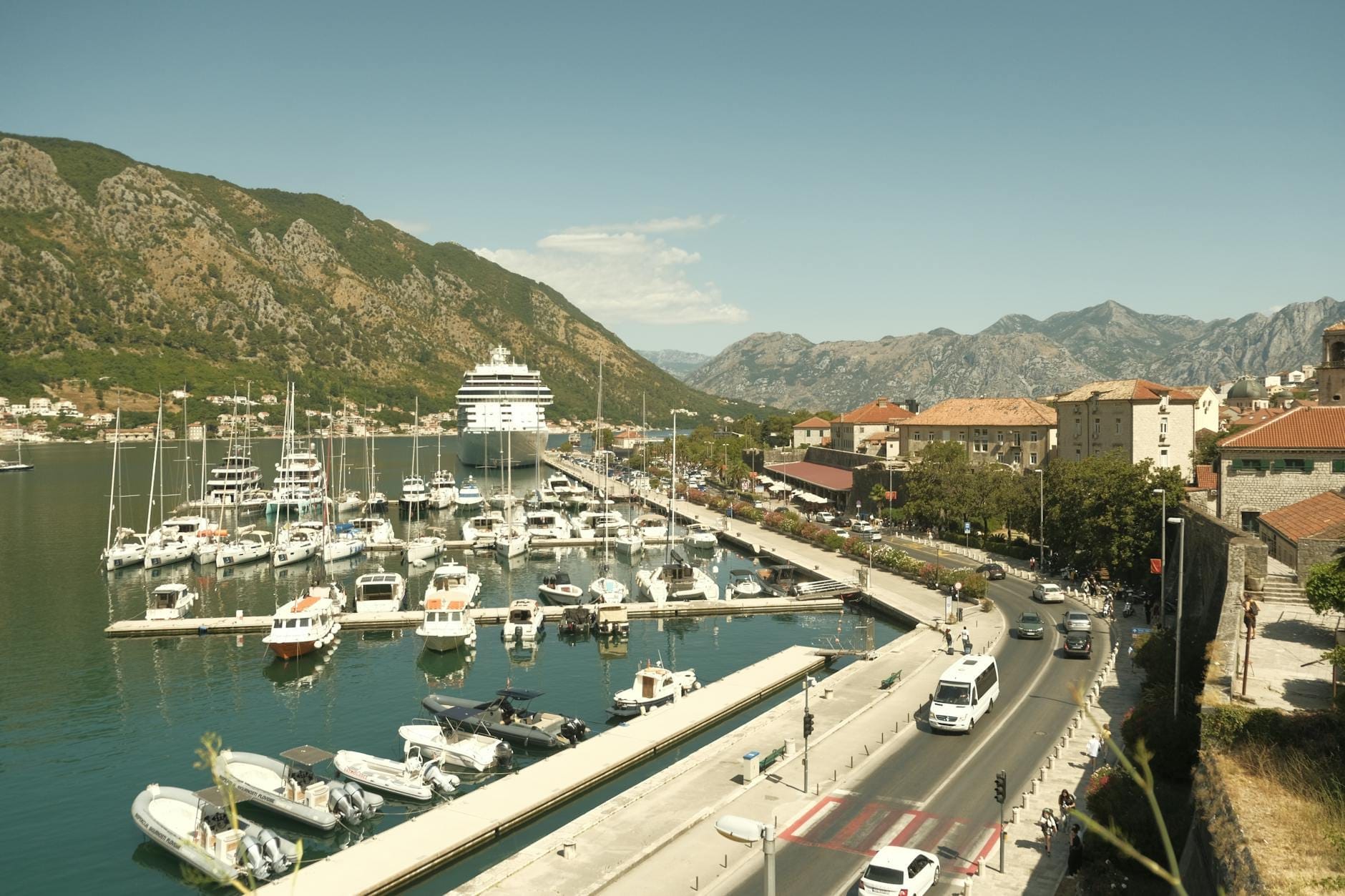
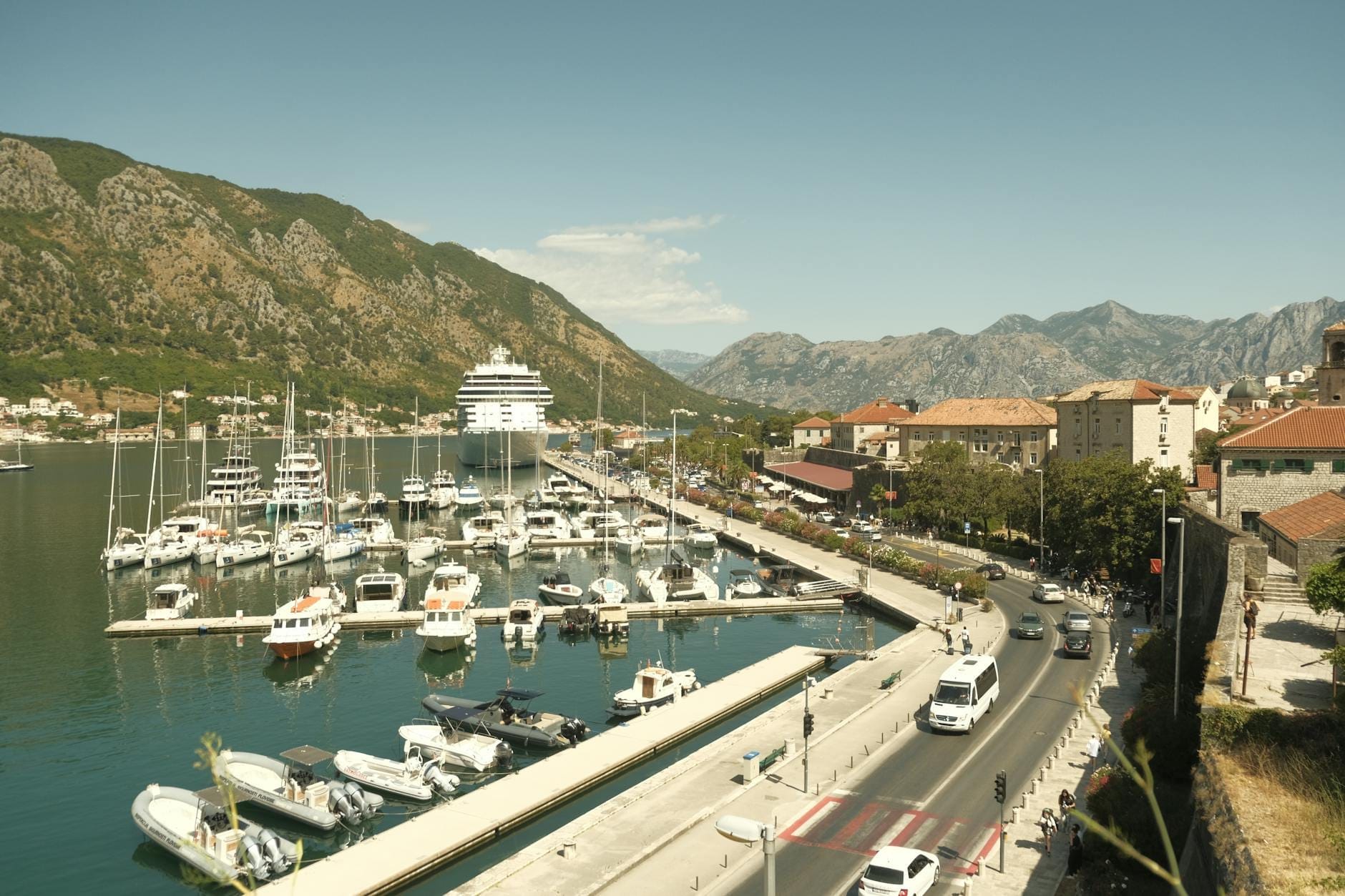
The Kotor Marina and Waterfront district stretches along the edge of the Bay of Kotor, just outside the Old Town walls. It is where the city breathes, where fishermen tie up alongside superyachts, and where the best views of the surrounding mountains meet the water.
Kotor's marina and waterfront sit directly outside the ancient city walls, forming a narrow strip of open sky and water between the medieval stone and the deep blue of the Bay of Kotor. This is where the city transitions from fortress to harbour, from history to the everyday rhythms of a working port. It is less a tourist quarter than an in-between place, and that is precisely what makes it worth understanding.
Orientation
The Kotor Waterfront runs along the western and southern edges of the Old Town, tracing the shoreline of the Bay of Kotor for roughly a kilometre from the Sea Gate in the south to the northern walls near the Gurdic Gate. Between the medieval ramparts and the water, the space widens and narrows at different points, creating a series of distinct zones: an open promenade, a functioning marina basin, a small yacht club area, and the embarkation points for bay boat tours.
To orient yourself, picture the Old Town as a triangle with its base pressed against the water. The waterfront sits along that base. The main coastal road, which connects Kotor to Dobrota to the north and to Škaljari and the wider Bay circuit to the south, runs parallel to the promenade. Everything between that road and the water is, broadly, the marina and waterfront district. The cruise ship terminal sits at the southern end, closest to the Sea Gate, and the marina proper occupies the central and northern sections.
Beyond the waterfront to the north lies the quieter residential suburb of Dobrota, while heading south along the bay brings you quickly toward the road that climbs to Cetinje and Lovćen. The waterfront is not an isolated neighbourhood in the traditional sense: it has no residential streets of its own, no school, no market. It is a transitional layer between Old Town Kotor and the water itself.
ℹ️ Good to know
The waterfront is walkable end to end in under 15 minutes. Most visitors naturally pass through it when arriving at or departing from the Old Town, making it one of the most-seen but least-understood parts of Kotor.
Character & Atmosphere
Early mornings on the Kotor waterfront have a particular quality that disappears by 9am. The light comes from behind the mountains to the east, which means the Bay of Kotor is in deep shadow for the first hours after sunrise, and the water looks almost grey-green rather than blue. Small fishing boats motor back toward the marina. A few locals walk dogs along the promenade. The café terraces are empty, chairs still stacked. The air smells of salt, diesel, and occasionally the faint sweetness of bread from somewhere inside the Old Town walls.
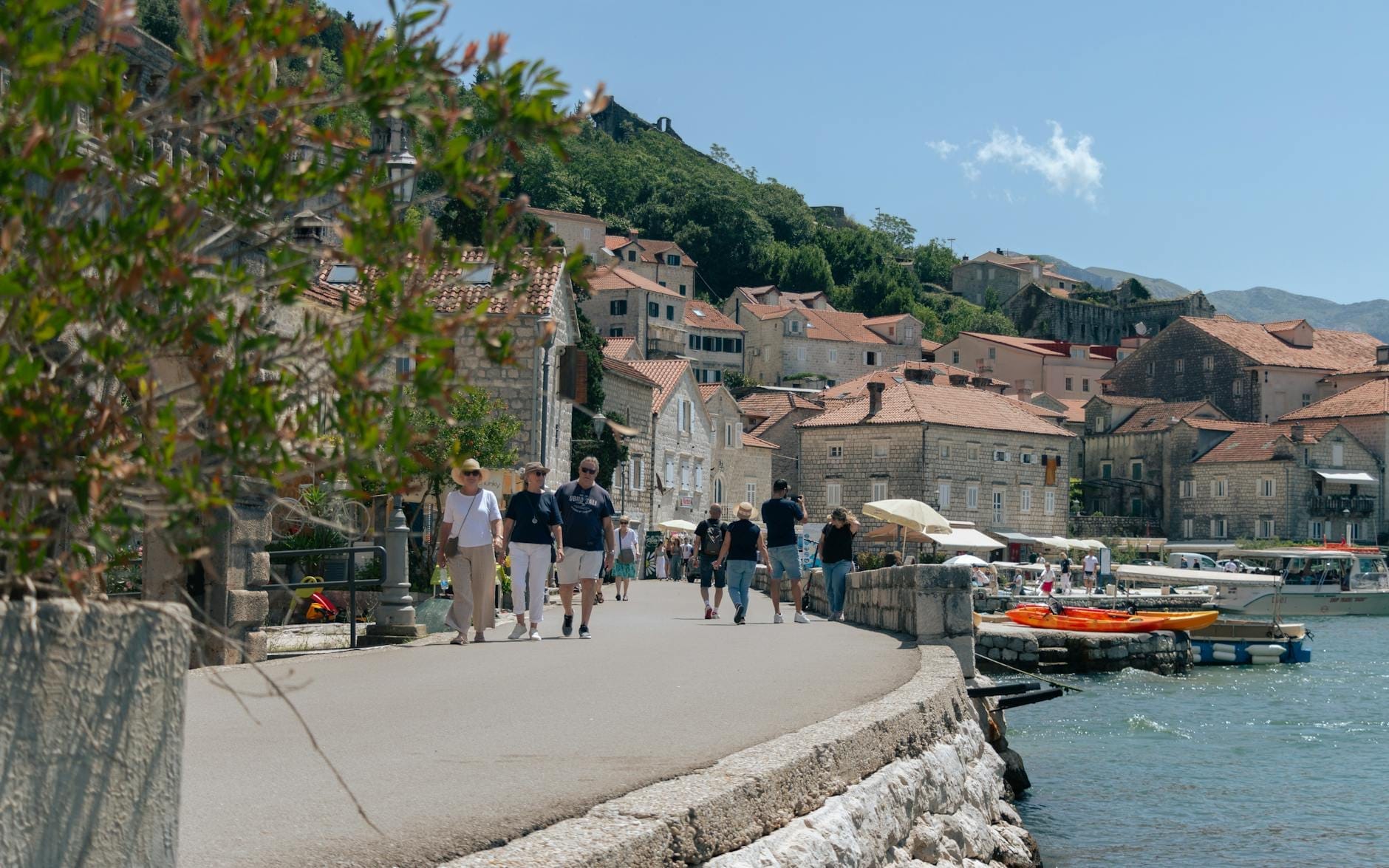
By mid-morning, particularly from May through September, the character shifts completely. Cruise ships dock at the terminal to the south, and their passengers funnel along the waterfront toward the Sea Gate. The promenade becomes a river of movement: tour groups, independent travellers, vendors, and the persistent Kotor cats threading between everyone's feet. The marina fills with noise from boat tour operators calling out departure times for excursions to the Bay. Café terraces fill up fast, and the views across the water toward the mountains of the Vrmac peninsula come into their own as the sun rises high enough to clear the peaks.
Afternoons in summer are intense. The stone of the Old Town radiates heat back toward the waterfront, and there is little shade on the open promenade. The light is flat and harsh. Most experienced visitors use this window for a long lunch or a rest, returning to the waterfront in the early evening when everything changes again. Around 6pm in summer, the light drops toward golden, the cruise ships have typically departed, and the waterfront briefly belongs to a quieter, more local crowd. Families walk the promenade. Couples occupy the better terrace tables. The atmosphere is genuinely pleasant for an hour or two before the late dinner rush begins.
In the shoulder seasons, April and October especially, the waterfront is a different proposition entirely. Cooler temperatures make the promenade comfortable at any time of day. Fewer boats are operating, the marina is less crowded, and the mountains surrounding the bay often carry low cloud that drifts across the water in a way that is more dramatic than any clear-sky summer view. If you want to understand why sailors and painters have been drawn to this bay for centuries, visiting in the shoulder season makes the case far more eloquently than a hot August day.
What to See & Do
The waterfront's primary draw is not a single attraction but the experience of being between the Old Town walls and the bay. That said, the Kotor Seaside Promenade itself is worth treating as a destination rather than just a through-route. Walking its full length, from the area near the northern walls down to the Sea Gate and the small park at the southern tip, gives you the best unobstructed views of the full width of the bay, the Vrmac hills opposite, and the narrow entrance to the inner bay beyond.
The Sea Gate stands at the junction between the waterfront and the Old Town, and it is the most dramatic entrance point into the medieval city. Built during Venetian rule, it carries a relief of the Lion of St Mark above the arch and a plaque marking the liberation of the city in 1944. Most visitors pass through it in a rush without looking up. It deserves a moment.
From the marina, the majority of organised boat excursions depart. If you are planning a day trip around the Bay of Kotor, this is where it begins. The Bay of Kotor boat tours typically include stops at the island church of Our Lady of the Rocks and the old town of Perast, both of which are best reached by water. Morning departures tend to have calmer conditions and better light for photography.
For those who want a view rather than a swim, the Kotor Marina itself is worth a slow walk through. In high season it is packed with sailing yachts and the occasional superyacht, and the contrast between the centuries-old stone walls rising behind and the modern fibreglass hulls is genuinely striking. The marina also serves as the main orientation point for understanding the bay: looking west from the dock puts the full sweep of the surrounding mountains in view.
Walk the full length of the promenade at dusk for the best light on the mountains
Enter the Old Town through the Sea Gate rather than any other entrance for the full historical impact
Book a morning boat tour from the marina for calmer water and better photography conditions
Spend time watching the marina activity without booking anything: the boat culture here is genuinely interesting
Note the Venetian-era fortifications along the wall base as you walk from the Sea Gate north along the waterfront
💡 Local tip
If you are visiting Kotor during cruise ship season (roughly April to October), arrive at the waterfront before 9am or after 5pm. The promenade between the cruise terminal and the Sea Gate becomes genuinely difficult to navigate between late morning and mid-afternoon on heavy ship days.
Eating & Drinking
The waterfront café and restaurant scene is a mixed picture. The terrace tables directly on the promenade command the best views across the bay, and the prices reflect this. Coffee costs more here than fifty metres inside the Old Town walls, and the food at the most prominent waterfront terraces tends toward the generic: grilled fish, pizza, pasta, and international basics calibrated for tourist preferences rather than Montenegrin cooking.
That said, the view while eating is genuinely one of the best in Kotor, and for the right meal at the right time, paying the premium makes sense. For a proper understanding of what local cooking looks like, the Kotor food guide explains the regional specialities worth seeking out: Njeguši prosciutto, the local smoked cheese, seafood dishes from the bay itself, and the coastal preparation of octopus. Fewer of these will appear on the waterfront menus than inside the Old Town or in the residential streets behind the walls.
For drinks, the waterfront terraces come into their own in the early evening. A beer or a glass of local wine with the bay view at sunset is a Kotor experience that is hard to argue against, regardless of the slightly inflated prices. Coffee culture in Montenegro is serious and slow, and even the more tourist-facing cafés here tend to serve genuinely good espresso. The waterfront is not a bar district: there is no cluster of late-night venues here. After 10pm, the action shifts into the Old Town's interior.
For a broader map of where to eat relative to different parts of Kotor, the Kotor restaurant guide covers options across the Old Town and surrounding neighbourhoods, with notes on which venues offer the best value for money versus those that lean primarily on their location.
Getting There & Around
The waterfront is the most naturally arrived-at part of Kotor for most visitors. The main coastal road from Tivat, from the airport, and from the broader Bay of Kotor circuit runs directly alongside it. If you are arriving by car from the south or from Tivat Airport (approximately 8 kilometres away), the road deposits you at the southern end of the waterfront, near the cruise terminal, almost inevitably. Parking is available in the large lot just south of the Sea Gate, though this fills completely during peak season by mid-morning.
Bus services connecting Kotor to Budva, Herceg Novi, Tivat, and Podgorica stop at the main bus station, which sits just south of the waterfront area, a short walk from the Sea Gate. If you are arriving from Budva, the journey takes 30 to 45 minutes by bus. Those arriving by cruise ship disembark directly onto the waterfront at the dedicated terminal, making the promenade the literal first thing they experience of Kotor.
Within the waterfront area itself, everything is on foot. The promenade is flat and paved and fully accessible. The main challenge in high season is navigating the pedestrian density near the Sea Gate, where the flow of cruise ship passengers can effectively block passage for stretches of time. Walking from the waterfront into the Old Town takes seconds through the Sea Gate, or a few minutes around to the northern Gurdic Gate. The fortress wall hike begins from within the Old Town but is clearly visible from the waterfront, the zigzag path up the hillside unmistakable from the marina.
For those planning to explore beyond Kotor by water, the marina is the departure point for bay excursions to Perast and beyond. Taxi boats also operate informally from the dock for shorter trips across the bay. If you are planning a broader day trip to destinations like Perast or Our Lady of the Rocks, book your boat trip the evening before during peak season.
⚠️ What to skip
The coastal road running alongside the waterfront carries fast-moving traffic, including large buses serving the cruise terminal. There is a clear pedestrian promenade separated from the road, but crossing between the parking areas and the waterfront requires care, particularly with children.
Where to Stay
There is limited accommodation directly on the waterfront strip itself, as the zone is narrow and largely given over to commercial uses and the road. The closest options are typically hotels and apartments positioned along the main road facing the marina, which offer bay views from their upper floors and immediate access to both the waterfront and the Old Town. These properties tend to sit at the mid-to-upper end of Kotor's price range, with the premium being primarily for the view and the location.
For most travellers, the question of where to stay in Kotor is best answered by deciding whether proximity to the Old Town or peace and quiet matters more. The waterfront-adjacent options offer maximum convenience for sightseeing but come with the sounds of a working port and, in summer, early morning cruise ship activity. The Kotor accommodation guide covers the full range of options across different neighbourhoods and price points, which is worth reading before committing.
Staying within the Old Town walls, a short walk from the waterfront but set back from the road noise, can be a better compromise for light sleepers. The waterfront itself is best thought of as a daytime and evening destination rather than a residential base, unless you specifically want to wake up to immediate bay access and are comfortable with the activity level that comes with it.
Honest Assessment: Who the Waterfront Is For
The Kotor waterfront is not a neighbourhood in the sense that most travel writing uses the word. It has no residential community, no local market, no school run. What it has is the best unobstructed views of the Bay of Kotor from within Kotor itself, the most convenient access to boat tours, and a promenade that functions as the city's primary social connector between the Old Town and the water.
If you are travelling through quickly, arriving by cruise ship, or spending a single day in Kotor, the waterfront is where you will naturally spend a portion of your time, and that is fine. If you are staying longer, it is worth treating the waterfront as a morning and evening destination rather than an all-day base: the midday hours in summer are genuinely uncomfortable on the open promenade, and the café prices do not justify sitting out the heat there when the shaded streets of the Old Town are a few metres away.
Those who want to go deeper into Kotor, to understand the city's history rather than just photograph it, will find more reward inside the walls, particularly at places like St Tryphon's Cathedral, the Maritime Museum, and by doing the fortress wall hike up to San Giovanni. The waterfront is where you start and end those experiences, not where you linger for their own sake.
TL;DR
The Kotor Marina and Waterfront is the city's most scenic transitional zone, connecting the Old Town walls to the Bay of Kotor along a flat, walkable promenade.
Best experienced at dawn or dusk: mornings are quiet and atmospheric, evenings are social and well-lit; midday in summer is crowded and harsh.
The departure point for all Bay of Kotor boat excursions, including trips to Perast and Our Lady of the Rocks.
Café and restaurant prices are higher here than inside the Old Town, with quality that is generally good but geared toward international visitors; the bay view compensates significantly.
Ideal for: first-time visitors, cruise passengers, those wanting panoramic bay views, and travellers using it as a base for exploring the wider bay by water. Less suited to those seeking a quiet local atmosphere or value-for-money dining.
Two days in Kotor is enough to cover the essentials without feeling rushed, but only if you plan smartly. This itinerary takes you through the walled Old Town, up to the fortress, out onto the Bay of Kotor, and into the best local restaurants — with honest advice on what to skip and when to go.
The Bay of Kotor is one of the most dramatic stretches of water in the Adriatic, and exploring it by boat is genuinely rewarding. But not all tours are equal. This guide breaks down every major option, from group cruises to private speedboats, so you spend your money on the right one.
Kotor rewards visitors differently depending on when you go. This guide cuts through the hype to tell you exactly which months suit which travel styles, what the weather actually feels like inside those medieval walls, and when to avoid the cruise ship crush.
Kotor is a superb base for exploring the Bay of Kotor and the Montenegrin coast. This guide covers the best day trips from Kotor, with real logistics, honest rankings, and the options that most visitors overlook.
The journey from Dubrovnik to Kotor is one of the most scenic short trips in the Adriatic. Here is a complete breakdown of every transport option, realistic timings, border crossing realities, and how to make the most of the route.
Kotor's medieval old town is walkable in under 20 minutes, but the surrounding Bay of Kotor stretches across 28 kilometres of coastline. This guide covers every transport option, with honest advice on what works, what doesn't, and how to move around Montenegro like someone who's done it before.
Kotor Montenegro gets enormous hype, but the reality is more nuanced than the Instagram photos suggest. This guide cuts through the noise with honest takes on the crowds, costs, highlights, and the cases for and against making the trip.
The Blue Cave near Kotor is one of Montenegro's most photographed natural attractions, but getting there takes planning. This guide covers every practical detail: tour options, pricing, seasonal conditions, and what the experience is actually like.
The Kotor Cable Car climbs from Dub, inland from the Old Town, to Kuk on Mount Lovćen at 1,348 metres in 11 minutes. This guide covers fares, hours, how to reach the lower station, what waits at the top, and how the ride differs from hiking Kotor's fortress walls.
Kotor, Montenegro has one of the most celebrated cat cultures in the world. This guide covers the history behind the city's feline reputation, where to spot cats in the Old Town, the dedicated Cat Museum, how to interact responsibly, and what to buy at cat-themed shops.
Kotor is one of the most rewarding cruise stops in the Adriatic. This guide covers everything from where your ship docks to what to prioritize when time is short, including the Old Town walls, viewpoints, day trip options, and practical logistics for first-time visitors.
The hike up Kotor's medieval fortress walls to the Fortress of San Giovanni is one of the most rewarding climbs in the Adriatic. This guide covers the full route, ticket costs, timing advice, what to bring, and honest tips on what the experience is actually like.
Summer is Kotor's peak season, and it shows. Cruise ships, scorching heat, and packed streets define July and August, but the Bay of Kotor is genuinely spectacular in warm weather. This guide breaks down exactly what to expect and how to plan smart.
A detailed self-guided walking tour through Kotor Old Town, covering the best squares, churches, city walls, and hidden corners of Montenegro's UNESCO-listed medieval town. Includes route logistics, timing tips, and honest advice on what to skip.
Kotor and its surrounding bay offer some of the most dramatic scenery in the Mediterranean. This guide covers every worthwhile viewpoint, from the city walls above the old town to the mountain peaks of Lovćen, so you know exactly where to go and when to get there.
Kotor packs an extraordinary range of experiences into a small area: a UNESCO-listed medieval old town, medieval churches, vertiginous fortress hikes, and boat trips to baroque villages across the bay. This guide covers the 18 best things to do in Kotor, organized by theme so you can plan your time well.
Kotor's food scene is shaped by its geography: Adriatic seafood from the bay, slow-cooked mountain meat from the Montenegrin interior, and centuries of Venetian influence layered into everything. This guide covers what to order, where to eat it, and what to skip.
Kotor's food scene punches well above its size. This guide covers the best restaurants, local dishes worth ordering, bars for evening drinks, and the tourist traps to avoid in the Old Town and beyond.
Choosing where to stay in Kotor shapes your entire trip. This guide breaks down every main area, from the medieval Old Town to the quieter bay villages, with honest advice on who each neighborhood suits, what to expect at different price points, and which options to skip.