Kotor Old Town Self-Guided Walking Tour: The Definitive Guide
A detailed self-guided walking tour through Kotor Old Town, covering the best squares, churches, city walls, and hidden corners of Montenegro's UNESCO-listed medieval town. Includes route logistics, timing tips, and honest advice on what to skip.
Plan and book this trip
Tools from our partner Travelpayouts help you compare flights and hotels. If you book through them, we may earn a commission at no extra cost to you.
Flights
Hotels map
TL;DR
- Kotor Old Town is compact enough to cover on foot in 2-3 hours, but a full day lets you absorb the detail without rushing.
- The route below starts at the Sea Gate and loops through the town's major squares, churches, and alleyways before connecting to the city walls for panoramic views.
- Arrive before 9am or after 5pm to avoid cruise ship crowds, which can swell the old town to uncomfortable levels between roughly 10am and 4pm.
- Entry to the old town itself is free; the Fortress of San Giovanni charges an entrance fee (€15 per adult, children under 12 free).
- Comfortable shoes with grip are non-negotiable: the old town's limestone cobblestones become slippery when wet.
Why Walk Kotor Old Town Yourself
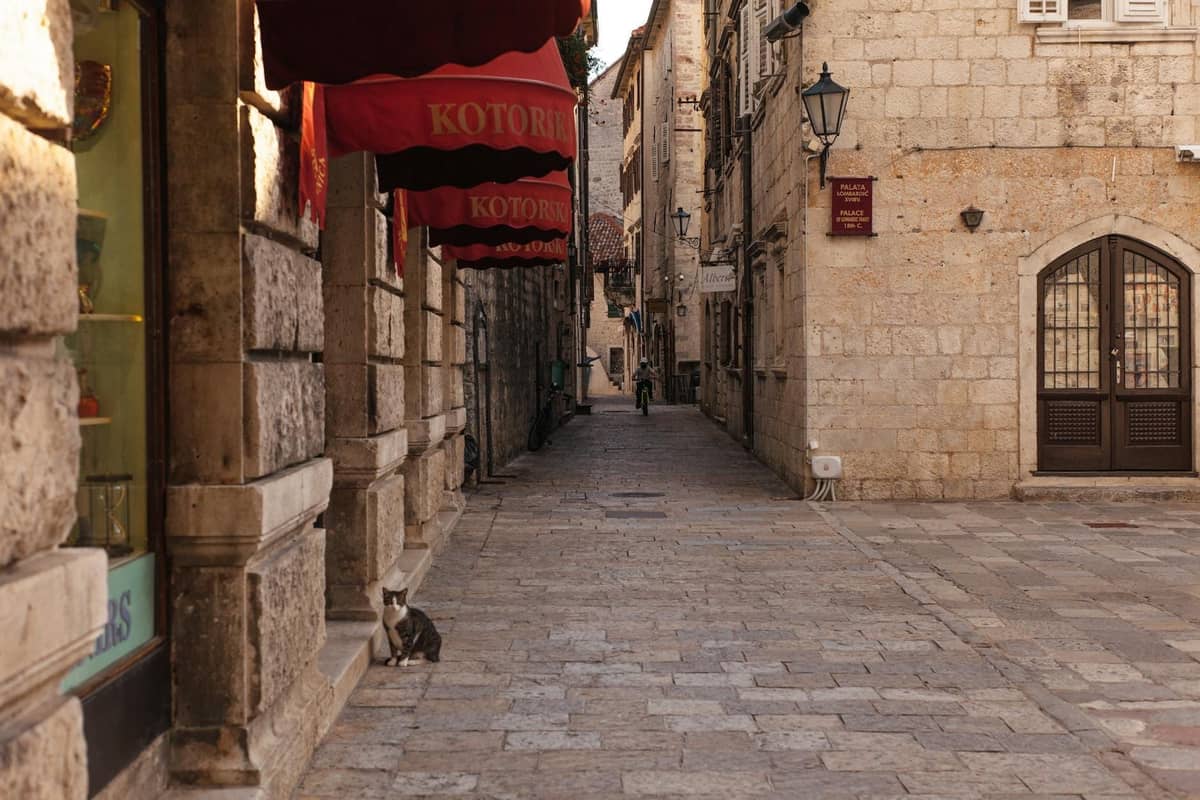
Kotor Montenegro earns its UNESCO World Heritage status not through a single landmark but through the accumulation of detail: a 12th-century cathedral beside a Baroque clock tower, cats sleeping on Roman-era stone, Venetian coats of arms carved above doorways. Guided tours cover the highlights efficiently, but they move at someone else's pace and can't linger where you want to. A self-guided approach gives you the freedom to duck into Church of St. Luke when the light is right, or wait out a shower under a loggia with a coffee.
The old town itself measures roughly 450 metres from the Sea Gate to the River Gate, and about 150 metres at its widest point. That small footprint means every attraction is within easy walking distance of every other, and there is no wrong direction once you are inside the walls. The route below provides structure without being rigid: treat it as a framework, not an itinerary to execute on a stopwatch.
💡 Local tip
Download an offline map before you enter the old town. The labyrinthine alleyways between the main squares don't always show up correctly in navigation apps, and mobile data can be patchy inside the thick medieval walls.
Starting Point: The Sea Gate and Square of Arms
Every walking tour of Kotor Old Town logically begins at the Sea Gate, the main entrance on the western waterfront. Built by the Venetians in 1555, it features the winged lion of St. Mark above the arch alongside a plaque commemorating the Battle of Lepanto. Step through the gate and you enter the Square of Arms, the old town's largest public space and its historical commercial heart.
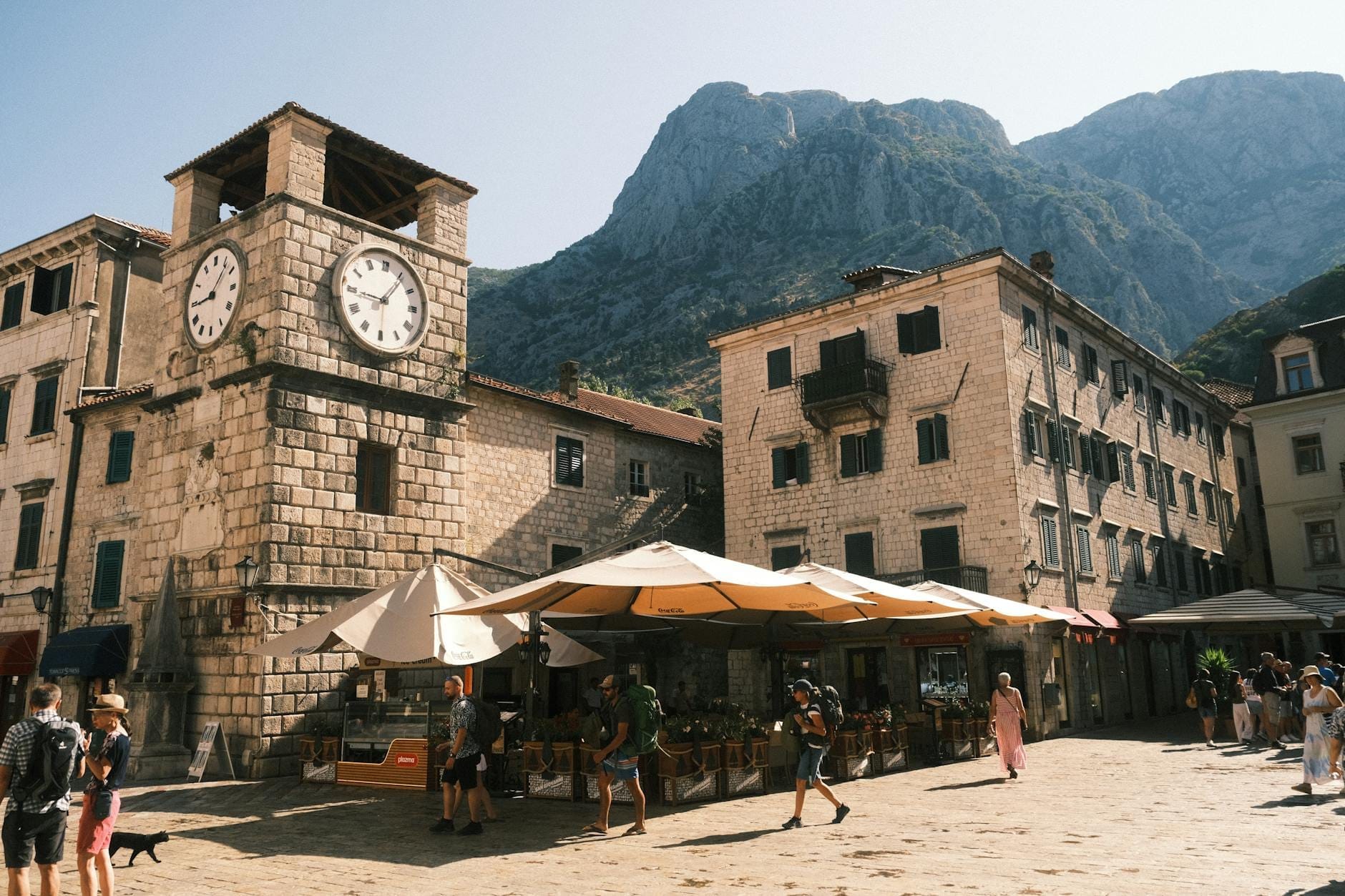
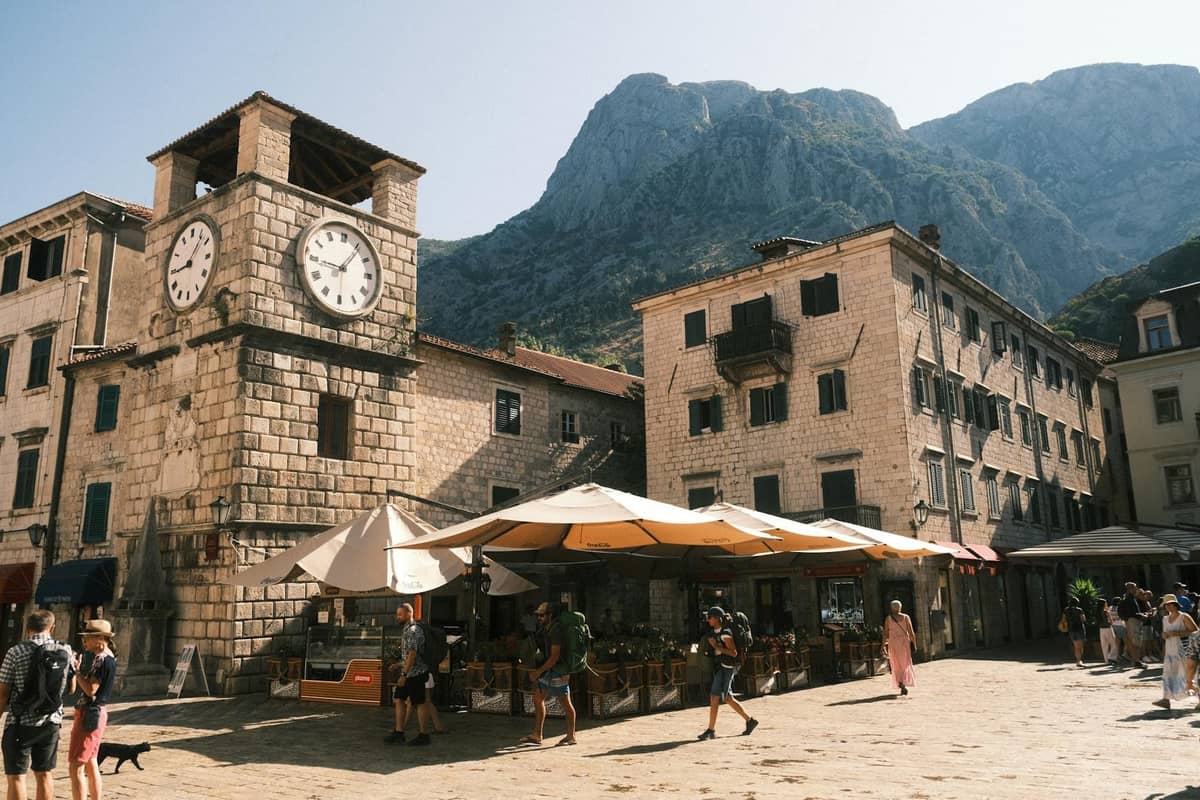
The Square of Arms is framed by the Venetian Arsenal building on one side and the Baroque clock tower at its centre, built in 1602. The pillar beside the clock tower is the so-called Shame Pillar, where citizens were publicly punished in earlier centuries. It is easy to walk past without registering its history. In the morning, before the cafes fill and the tour groups arrive, the square has a genuinely medieval atmosphere that disappears by mid-morning in summer.
The Cathedral Quarter: Churches Worth Your Time
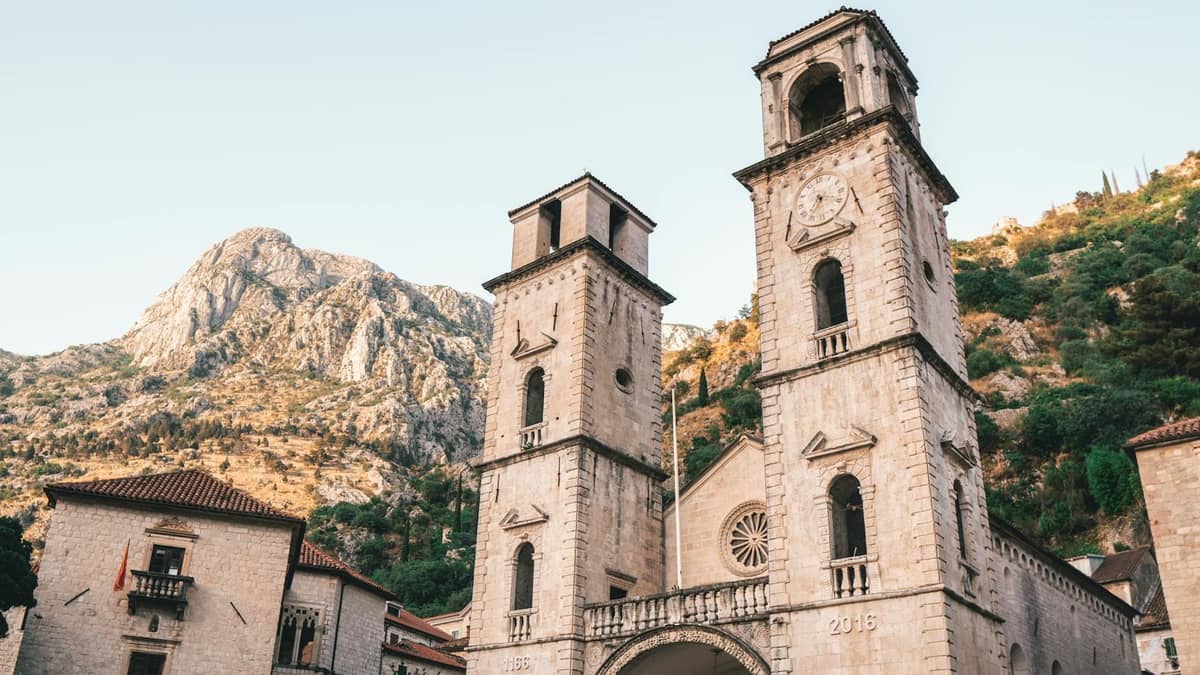
Kotor's dense medieval fabric contains a remarkable number of churches for a town this size, a legacy of its centuries under Venetian rule and its position as a wealthy Adriatic trading port. The most important is St. Tryphon's Cathedral, a Romanesque structure consecrated in 1166 and rebuilt after the 1667 earthquake. Its twin bell towers are the defining silhouette of the old town from the bay.
The cathedral interior holds a 14th-century bas-relief ciborium and a treasury of religious art, goldwork, and relics. The entry fee is modest (around €2-3) and the relative calm inside contrasts sharply with the crowds outside. Directly opposite, St. Mary's Collegiate Church is older still, dating from the 6th century in its original form, though what you see today reflects later rebuilding. It often sits unlocked but unstaffed, which means a quieter experience.
Further into the old town, St. Nicholas Church represents the Orthodox presence in what was historically a predominantly Catholic town. Built in 1909, it lacks the medieval pedigree of the cathedral but contains gilded iconostases and a peaceful courtyard worth pausing in. The contrast between Kotor's Catholic and Orthodox heritage is one of the genuinely interesting cultural layers of the town.
ℹ️ Good to know
Most of Kotor's churches observe a midday closure, typically between 12pm and 5pm in summer. Plan your cathedral visits for the morning to avoid finding locked doors. St. Tryphon's Cathedral is generally the most reliably open, with posted hours on the entrance gate.
Hidden Corners and Local Life
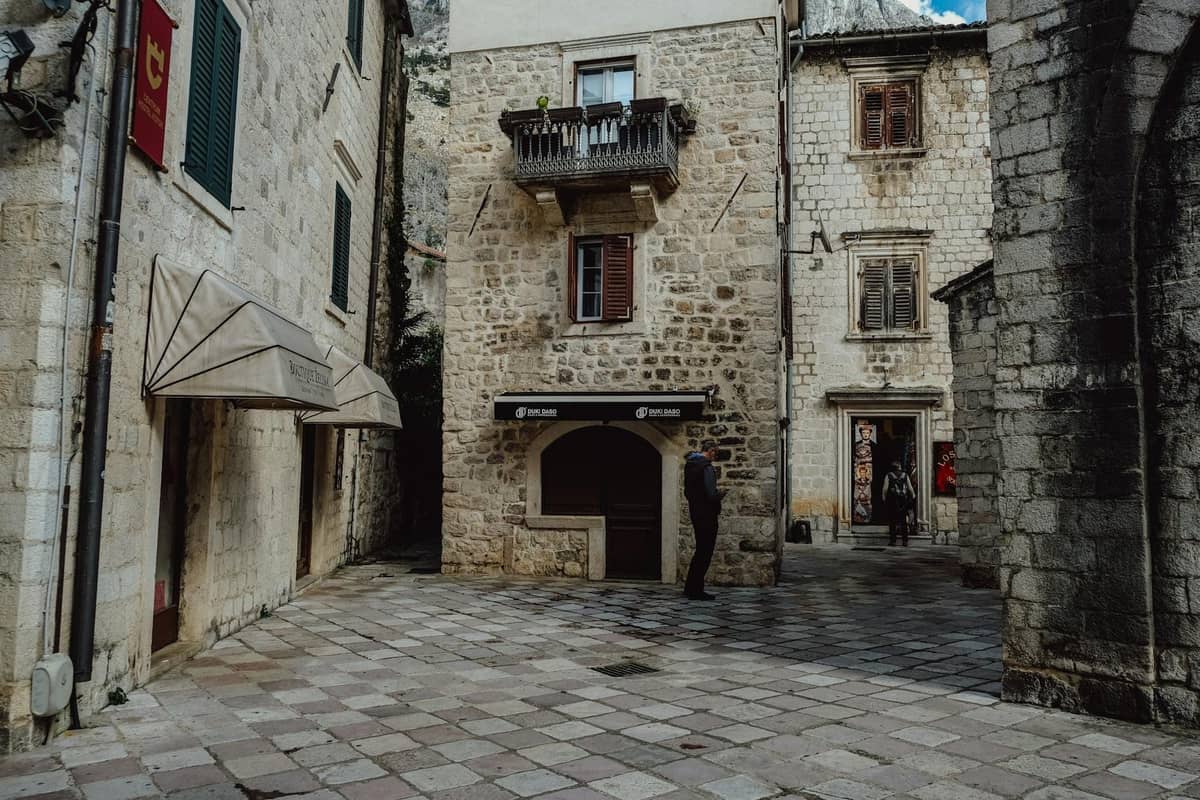
The sections of Kotor Old Town that most visitors miss are the residential quarters in the northern half of the walled area, away from the main tourist axis connecting the Sea Gate to the cathedral. These alleys, some barely wide enough for two people to pass, contain laundry lines strung between ancient windows, neighbourhood shrines, and cats in extraordinary numbers. Kotor has a genuine feline population with semi-official protected status, and the cats are woven into the identity of the town in a way that goes beyond cute marketing.
If you have any interest in this side of Kotor's character, the Cats Museum is a small but earnest institution dedicated to the town's relationship with cats. It is not a major attraction, but it is charming and takes about 20-30 minutes. More broadly, the cats of Kotor are a legitimate cultural phenomenon worth reading about before you visit.
The Maritime Museum occupies the Grgurina Palace and covers Kotor's history as a seafaring town within the Venetian empire. It's well-curated by Montenegrin museum standards, with ship models, navigational instruments, and documentation of the Boka Kotorska maritime tradition. Budget around 45 minutes and expect to pay around €4 entry.
- Square of Arms The old town's main square. Start here, check the clock tower and Shame Pillar, then orient yourself toward the cathedral.
- St. Tryphon's Cathedral Kotor's defining Romanesque church, with a notable treasury. Visit in the morning before crowds peak.
- Church of St. Luke A smaller 12th-century church that has served both Catholic and Orthodox congregations at different points in its history.
- St. Nicholas Church The main Orthodox church, notable for its gilded iconostases. Quieter than the Catholic cathedral.
- Maritime Museum Best museum in the old town for understanding Kotor's historical context as an Adriatic trading power.
- Cats Museum Small, low-key, and genuinely representative of a real local tradition. Worth 20 minutes if you're curious.
- Northern residential quarter No specific landmark, just the best area for authentic old-town atmosphere away from tour group traffic.
The City Walls and Fortress: Adding the Climb
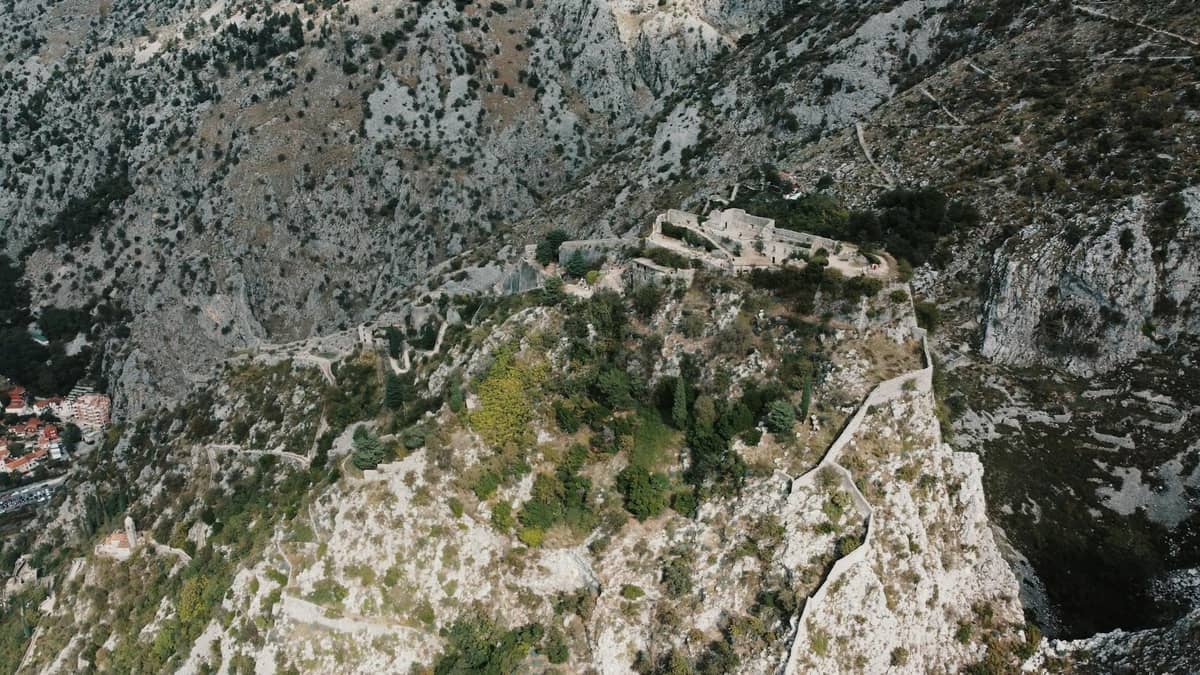
No walking tour of Kotor Old Town is complete without at least a partial ascent of the city walls. The full route climbs approximately 1,350 steps to the Fortress of San Giovanni at 260 metres above sea level, passing through towers, gateways, and open sections of wall with increasingly dramatic views over the Bay of Kotor. The climb takes 45-90 minutes depending on fitness and how often you stop for photographs.
The wall access point most visitors use is through the old town itself, either from near the Sea Gate area or from a gate close to the north end of the walls. There is an entry fee, €15 per adult (children under 12 free). For a detailed breakdown of the route, timing, and what to expect at the top, the Kotor fortress wall hike guide covers everything you need to know before committing to the ascent.
⚠️ What to skip
Do not attempt the wall climb between 11am and 3pm in July and August. The exposed limestone reflects heat intensely, there is almost no shade on the upper sections, and the steps are steep. People have needed medical assistance after underestimating the climb in peak-summer conditions. Go early morning or late afternoon when temperatures are lower and the light is better for photography anyway.
Practical Logistics: Timing, Crowds, and What to Skip
Kotor old town sits at the end of the Bay of Kotor and receives cruise ships on most days between April and October. On heavy cruise days, two or three large ships can deposit 5,000-8,000 passengers into a walled enclosure designed for a medieval population. The cruise port schedule is publicly available and worth checking if you have flexibility in your timing. The absolute peak congestion window is 10am-2pm when tour groups are active.
If your visit overlaps with a cruise day, the most practical mitigation is an early start. The old town is accessible around the clock and the atmosphere at 7-8am on a summer morning, before the day heats up and the crowds arrive, is genuinely excellent. The evening window after 5pm is the second-best option: cruise passengers generally return to their ships before dinner, the light softens, and the restaurants and bars of the old town fill with overnight visitors rather than day-trippers.
For those with limited time, the 2 days in Kotor itinerary provides a structured approach to balancing the old town walk with day trips to the rest of the bay. If you only have a few hours, prioritize the Sea Gate, Square of Arms, St. Tryphon's Cathedral, and at least a partial wall climb to the first viewpoint. That circuit takes about 90 minutes at a reasonable pace.
- Wear proper walking shoes with a sole that grips. The limestone cobblestones in the old town are genuinely hazardous when wet.
- Bring water, especially if you plan to do the wall climb. There are cafes inside the old town but nothing on the walls themselves.
- The old town has no car access. The nearest parking is in the large lot just outside the Sea Gate on the waterfront.
- ATMs are available inside the old town but they run out on busy cruise days. Withdraw cash beforehand.
- Most churches require covered shoulders and knees. A light scarf in your bag solves this without effort.
- Midday prices for coffee and food inside the old town run 20-30% higher than in the surrounding area. Factor this in if you're watching your budget.
Beyond the Walls: Natural Extensions to Your Walk
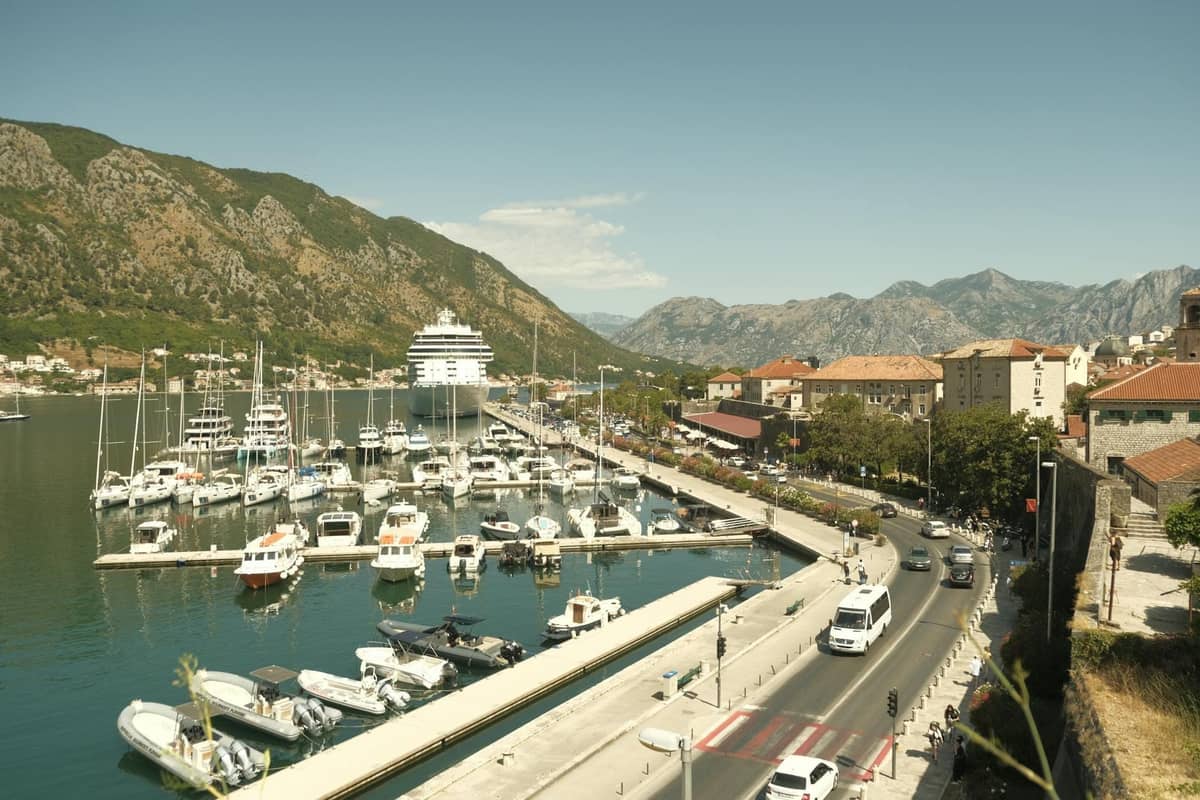
Once you have covered the old town, the immediate surrounding area rewards further exploration. The Kotor seaside promenade runs along the waterfront beyond the old town walls and offers an easy, flat walk with views across the bay. It connects to the marina area and is a pleasant way to decompress after the intensity of the walled town.
If your schedule allows, the nearby village of Perast is the most rewarding short excursion from Kotor, reachable in about 20 minutes by local bus or taxi. It shares the same Venetian architectural DNA as Kotor but without the crowds, and it sits directly on the water with views of the two famous islets including Our Lady of the Rocks. The day trips from Kotor guide covers Perast and several other worthwhile excursions in detail.
FAQ
How long does it take to walk around Kotor Old Town?
The old town alone takes 1.5-2.5 hours if you visit the main churches and squares without rushing. Add 1-1.5 hours if you include the city wall climb to the fortress. A full, unhurried day is ideal if you want to visit the museums and explore the quieter residential lanes.
Is there an entrance fee for Kotor Old Town?
Walking through the old town itself is free. The city walls and fortress have a separate entry fee, €15 per adult (children under 12 free). Individual churches and museums charge their own modest fees, usually €2-4 each.
What is the best time of day to visit Kotor Old Town?
Early morning (7-9am) is the best time: cool temperatures, excellent light for photography, and minimal crowds. The late afternoon after 5pm is a strong second option. Avoid 10am-3pm on cruise ship days, when the old town becomes genuinely congested.
How do I get to Kotor Old Town from Dubrovnik?
The journey from Dubrovnik to Kotor takes approximately 2-2.5 hours by road, crossing the border between Croatia and Montenegro. Regular buses run this route, and private transfers and day tours are also widely available. The drive along the coast is scenic in its own right.
Is Kotor Old Town suitable for visitors with mobility limitations?
The flat areas around the main squares and the lower streets of the old town are manageable for most mobility levels, though the cobblestones are uneven and can be challenging for wheelchairs or anyone with significant joint issues. The city wall climb involves 1,350 steps with no elevator alternative and is not accessible for anyone with mobility limitations.