Fortress of San Giovanni: Kotor's Hilltop Fortress Above the Old Town
Perched 260 metres above sea level on a steep limestone ridge, the Fortress of San Giovanni is Kotor's defining landmark. The climb is demanding, the views are extraordinary, and the medieval fortifications reveal centuries of Venetian, Byzantine, and Ottoman history layered into a single hillside.
Quick Facts
- Location
- Above Kotor Old Town, accessed via the city walls on the northeast side
- Getting There
- Enter through the North Gate (Gurdić Gate) or from the River Gate area inside the Old Town; no public transit directly to the fortress
- Time Needed
- 2 to 3 hours round trip including time at the top
- Cost
- City walls ticket required (approximately €15 for the fortress hike including the Church of Our Lady of Remedy); verify current prices at the gate
- Best for
- Panoramic views over the Bay of Kotor, history enthusiasts, and hikers who want a rewarding climb
What Is the Fortress of San Giovanni?
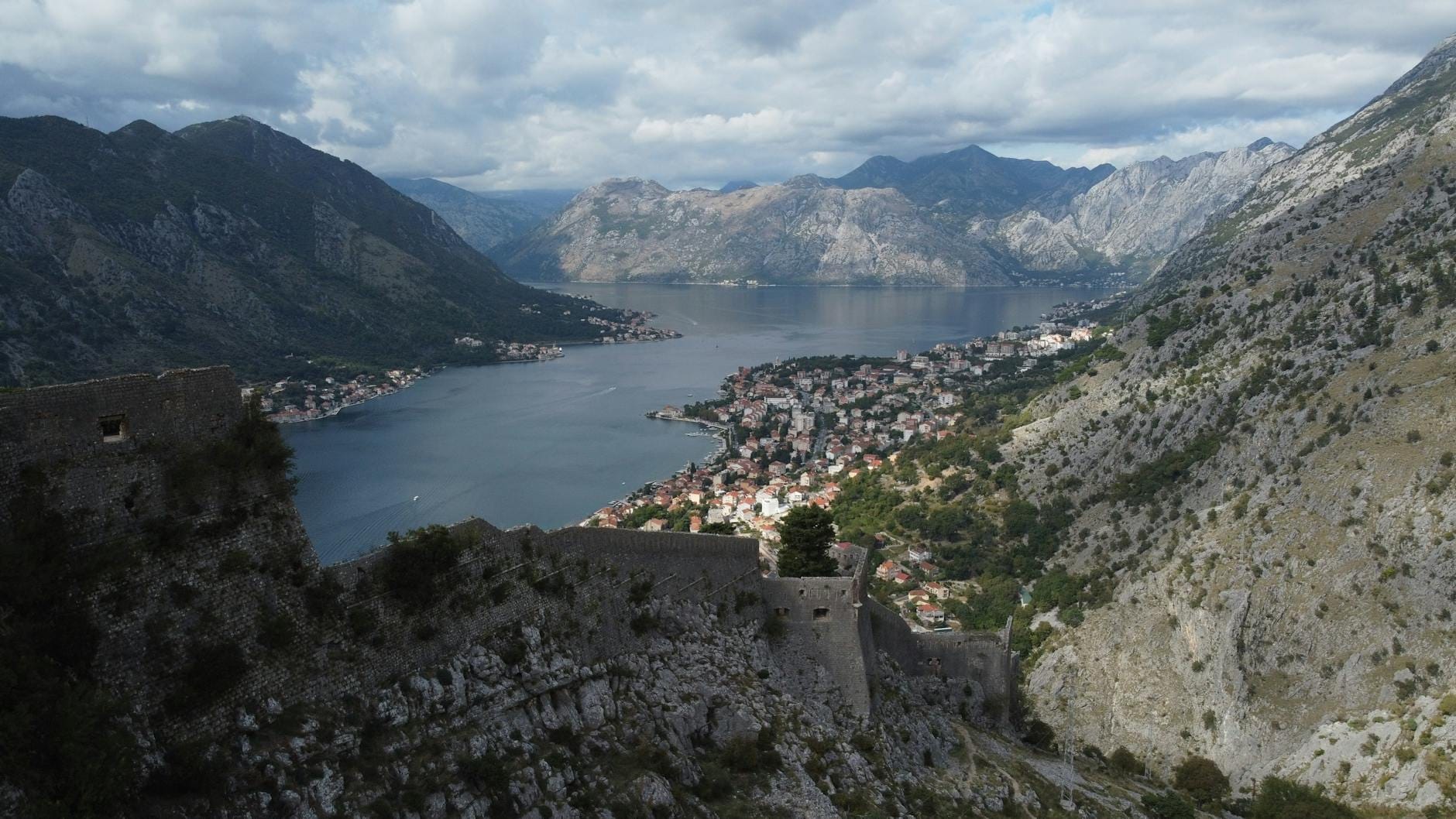
The Fortress of San Giovanni, also known as the Castle of San Giovanni or simply St. John's Fortress, is a medieval fortification that crowns the rocky ridge directly above Kotor's Old Town. At roughly 260 metres above sea level, it is the highest and most architecturally significant point of the defensive circuit that encircles Kotor, and it forms the visual anchor of the entire walled city when seen from the bay.
The fortress is not a standalone building you visit from the outside. It is the culmination of a continuous climb along Kotor's famous city walls, which wind up the mountain through towers, terraces, and ruined chapels before reaching the summit fortification. You gain context for the fortress by reading the walls on the way up, not by arriving at a single entrance gate.
Visiting the fortress means engaging with Kotor's city walls as a whole. The walls stretch for approximately 4.5 kilometres and include around 20 towers. The San Giovanni fortress at the top is the point at which those walls converge, and standing inside its ruined keep gives you the clearest sense of how comprehensively the medieval builders controlled this valley.
The Climb: What to Expect on the Way Up
The ascent begins inside the Old Town, typically from the northern section near the Church of Our Lady of Remedy, which sits partway up the hillside and marks roughly the halfway point of the climb. The path is constructed almost entirely of stone steps, estimated at around 1,350 in total, though sections of the wall near the top transition to rough stone slabs and uneven terrain that requires more careful footing.
⚠️ What to skip
The steps are uneven, occasionally steep, and can be slippery when wet. Wear closed-toe shoes with grip. Sandals and flip-flops make the descent genuinely risky, particularly on the upper sections.
The lower third of the climb passes through shaded sections with stone walls on both sides, which makes it more manageable in the heat. The middle section opens up onto the hillside, where you begin to see the rooftops of the Old Town below and the first proper views of the bay spreading westward. This is also where most visitors stop for their first real rest. The air carries the smell of wild herbs growing from the limestone cracks, sage and thyme prominent in summer, and the sound of the city below becomes a distant hum.
The upper third is the most exposed and the most dramatic. The walls here are in partial ruin but the scale becomes clear: these were serious fortifications built to withstand sustained military assault. The final approach to the San Giovanni fortress itself passes through a narrow gate and opens into a roofless but largely intact stone enclosure with views in every direction.
💡 Local tip
Start the climb no later than 8:00 AM in summer to avoid the peak heat. The upper sections have no shade, and midday temperatures on the exposed limestone can be punishing. Morning light also makes for better photography.
Tickets & tours
Hand-picked options from our booking partner. Prices are indicative; availability and final rates are confirmed when you complete your booking.
Half-day Blue Cave adventure
From 45 €Instant confirmationFree cancellationMontenegro Canyons private tour from Kotor
From 68 €Instant confirmationFree cancellationLovćen national park and Budva city full-day private tour
From 150 €Instant confirmationFree cancellationDubrovnik walking tour from Kotor
From 59 €Instant confirmationFree cancellation
History: From Byzantine Citadel to Venetian Stronghold
The origins of fortification on this ridge are Byzantine. Early defensive structures appear to have existed here from at least the 6th century, making use of the natural advantage of the steep limestone hillside. Kotor passed through the control of several powers over the following centuries, including periods under Serbian medieval rulers, before the city came definitively under Venetian rule in 1420.
The Venetians were the most consequential builders of the fortress and the city walls as they exist today. Over the course of their rule, which lasted until 1797, Venice expanded and reinforced the fortifications repeatedly, responding to the persistent Ottoman threat. The San Giovanni fortress was central to this defensive strategy: control of the hilltop meant control of the entire valley, and the walls sweeping down both sides of the ridge connected the fortress to the sea-level gates of the city.
The fortifications proved their worth during the Siege of 1539, when Ottoman forces failed to take the city despite a sustained assault. That episode is commemorated annually in Kotor and remains a source of civic pride. For more on the history of the walled city and how its streets reflect those столетия конфликтов, the Kotor Old Town walking tour covers the key sites at ground level.
After the fall of the Venetian Republic, the fortress passed to the French briefly under Napoleon, then to the Austro-Hungarian Empire, which made additional modifications before the city became part of Yugoslavia in the 20th century. The fortress today is an unrestored ruin, which is precisely what makes it compelling. There are no reconstructed interiors or museum displays. What remains is stone, views, and the weight of the site's history.
The View from the Top: What You Actually See
The panorama from the San Giovanni fortress is the most complete view available of the Bay of Kotor from any point directly above the Old Town. To the west, the inner bay stretches toward Perast, its two islets visible on clear days as small dark patches on the grey-green water. To the south, the Adriatic coastline extends beyond the bay's narrow southern mouth. The red-tiled rooftops of Kotor's Old Town spread directly below, compressed into a tight geometric pattern by the steep perspective.
To the north, the slopes of Mount Lovćen rise sharply, and on clear mornings you can see the faint outline of the Mausoleum of Petar II Petrović Njegoš near the summit. That monument is visible from here as a pale speck against the grey rock. For those interested in making the trip up to Lovćen itself, the Lovćen mountain viewpoint and Lovćen National Park offer a complementary perspective looking back down toward Kotor.
The light changes significantly across the day. Early morning brings a soft, directional light that picks out the texture of the rooftops and walls below. Midday flattens everything and the heat haze can reduce visibility across the bay. Late afternoon, particularly in the hour before sunset, casts long shadows across the valley and turns the water a deep bronze. Sunset from the fortress is spectacular, but the descent in fading light is a different challenge altogether.
💡 Local tip
If you plan to stay for sunset, bring a headlamp or phone torch for the descent. The steps are unlit and the lower sections of the walls become genuinely dark after dusk.
Practical Details: Getting In and Navigating the Site
The Fortress of San Giovanni is accessed as part of the city walls ticket, which covers the entire wall circuit including all towers and the summit fortress. The ticket is purchased at the wall entrance points inside Kotor Old Town. The most commonly used entry point for the fortress climb is near the Church of Our Lady of Remedy, reached by walking northeast through the Old Town from the main Square of Arms.
There are no facilities at the top: no toilets, no food vendors, no shade structures. Water is essential. One litre per person is the minimum for the climb in moderate weather; carry more in summer. The walls are typically open from early morning until around 11:00 PM in summer, with reduced hours outside peak season. Confirm current hours at the ticket booth, as they can change.
Accessibility is limited. The steep, uneven stone steps make this route unsuitable for wheelchairs and difficult for visitors with mobility limitations or young children in pushchairs. Older children who are steady on their feet manage the climb well, but the upper sections require confidence on rough terrain.
ℹ️ Good to know
An alternative entry to the wall circuit exists at the southern Gurdić Gate, which allows you to join the walls lower down and approach the fortress from a slightly different angle. This route is less crowded in the morning.
Honest Assessment: Is the Climb Worth It?
The Fortress of San Giovanni is the single most rewarding physical experience Kotor offers, but it is not for everyone. The climb takes between 45 minutes and 90 minutes depending on fitness and how long you pause. The steps are relentless, the upper section is exposed to direct sun, and descending on tired legs on uneven stone requires concentration. None of this is dangerous for a reasonably fit adult, but it is more strenuous than many visitors expect based on photos alone.
Visitors who find the climb too demanding can still access excellent views of the bay from lower points on the wall circuit, or from other vantage points around Kotor. The Kotor viewpoints guide covers alternatives including viewpoints reachable without a significant climb.
For those who do make it to the top: the fortress delivers. There is a particular satisfaction in reaching the summit and looking down at the walled city you have spent the morning exploring at street level. The scale of the fortifications only becomes intelligible from up here, and the view across the Bay of Kotor on a clear morning is genuinely difficult to forget.
The lack of restoration is also a feature rather than a flaw. The fortress is not a theme park version of a medieval citadel. It is the actual thing, worn and crumbling and magnificent, with none of the interpretive boards or audio guides that would domesticate the experience. You are left to make sense of the walls and towers yourself, which rewards visitors who come prepared with some knowledge of the history.
Insider Tips
- The crowds peak between 10:00 AM and 2:00 PM when cruise ship passengers fill the Old Town. Starting the climb before 8:30 AM puts you above most of the foot traffic before the day heats up, and you will have large sections of the wall to yourself.
- The Church of Our Lady of Remedy, roughly halfway up, is a legitimate rest stop with a shaded alcove and a water point nearby at the base of the walls. It also marks the point where the view first opens up significantly, making it a natural first photography stop.
- Bring more water than you think you need. The climb back down in summer sun is often harder on the body than the ascent because you are already depleted. 1.5 litres per person is a safer minimum in July and August.
- The walls on the descent offer different views from those you saw going up. Walking slowly on the way down, particularly on the sections facing east toward the Škurda River gorge, reveals a completely different perspective on the topography that most visitors miss by rushing back to the Old Town.
- If you are combining the fortress with a broader day in Kotor, do the climb first thing before the heat builds, then reward yourself in the Old Town afterwards. Reversing this order means climbing in the midday heat after you have already been on your feet for hours.
Who Is Fortress of San Giovanni (Castle of San Giovanni) For?
- Hikers and active travellers looking for a physically rewarding experience with genuine historical depth
- Photography enthusiasts who want the most comprehensive aerial perspective of the Bay of Kotor
- History buffs interested in Venetian military architecture and the medieval defensive systems of the Adriatic
- Visitors spending two or more days in Kotor who want to understand the city beyond street level
- Early risers who want to see Kotor before the cruise ship crowds arrive
Nearby Attractions
Other things to see while in Kotor Old Town (Stari Grad):
- Cats Museum Kotor
Tucked inside Kotor's medieval Old Town, the Cat Museum is a compact, quirky gallery dedicated to the city's beloved cats. It's part souvenir shop, part folk art collection, and wholly representative of why Kotor and cats have become inseparable in the popular imagination.
- Kotor City Walls
The Kotor City Walls stretch approximately 4.5 kilometers across the steep slopes of Mount St. John, enclosing the UNESCO-listed old town and climbing to the Fortress of San Giovanni above. This is one of the most physically rewarding urban walks in the entire Mediterranean region, combining medieval architecture, sweeping bay views, and a genuine sense of altitude.
- Kotor Clock Tower
Rising above the Square of Arms at the entrance to Kotor's Old Town, the Clock Tower is one of the most photographed landmarks in Montenegro. Small in scale but central to the character of the square, it has marked time here for centuries and remains an essential orientation point for anyone exploring the old town.
- Maritime Museum of Montenegro
Housed in a 18th-century Baroque palace in the heart of Kotor's Old Town, the Maritime Museum of Montenegro tells the story of a city that once commanded the Adriatic. From ornate naval uniforms to model warships and ancient navigational tools, it's one of the most coherent and quietly impressive small museums on the entire Montenegrin coast.