The Cat Museum Kotor: Small Space, Surprisingly Charming
Tucked inside Kotor's medieval Old Town, the Cat Museum is a compact, quirky gallery dedicated to the city's beloved cats. It's part souvenir shop, part folk art collection, and wholly representative of why Kotor and cats have become inseparable in the popular imagination.
Quick Facts
- Location
- Kotor Old Town, Montenegro
- Time Needed
- 20–40 minutes
- Cost
- Small entry fee (typically a few euros; confirm on-site)
- Best for
- Cat lovers, families with children, souvenir hunters
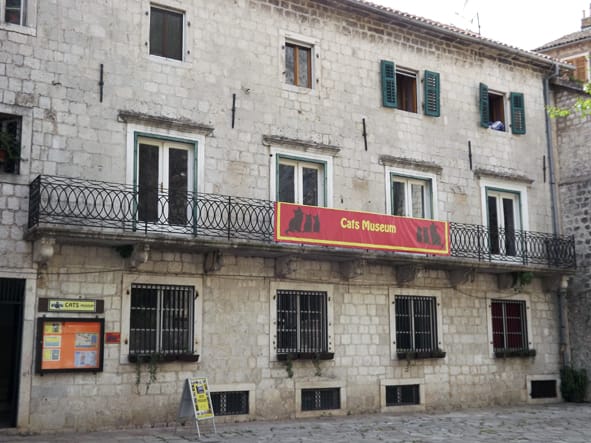
What Is the Cat Museum Kotor?
The Cat Museum Kotor is a small, independent gallery lodged in one of the Old Town's stone-walled buildings, devoted entirely to the cat as a cultural symbol, art subject, and civic icon. It's not a shelter, not a petting café, and not a scientific exhibit. Think of it as a lovingly assembled private collection made public: ceramics, illustrations, photographs, painted tiles, miniature sculptures, and folk art pieces, all centered on the cat as muse.
Kotor's relationship with cats runs deep. For centuries, cats were kept aboard merchant and naval vessels docked in the Bay of Kotor, prized for keeping rodents away from cargo and food stores. When sailors came ashore, the cats followed, and over generations they became part of the urban fabric of the Old Town. Today, free-roaming cats are as much a feature of Kotor's limestone alleys as the medieval walls themselves. The museum gives that relationship a proper context. For a broader look at why these animals are so culturally significant here, the Kotor cats guide covers the history and best spots to find them in detail.
💡 Local tip
The museum doubles as a gift shop. If you're planning to buy cat-themed souvenirs in Kotor, this is one of the better-curated options, housed in a former monastery on Kino Square — the items here tend to be more original than the mass-produced trinkets sold on the main squares.
Inside the Museum: What You'll Actually See
The collection spans several interconnected rooms, which in Old Town terms means stone archways, low ceilings, and uneven floors that add an unintentional atmosphere. The pieces range from antique postcards and illustrated manuscripts to contemporary folk paintings, ceramic figurines, and hand-painted wall tiles. Some items are clearly old; others are local artisan work sold alongside the exhibits with no particularly strict line between display and retail.
The lighting is on the dim side, typical for Old Town interiors with limited natural light. Bring your reading glasses if you want to study any of the smaller written descriptions. The layout is easy to follow even without a formal guide, and the staff are generally happy to explain specific pieces or point out items of particular interest.
One section typically displays historical photographs and archive images of Kotor's street cats across different eras, which grounds the collection in something genuinely documentary. Seeing how consistently cats appear in images of the Old Town across decades gives the museum more substance than you might expect from the premise.
Tickets & tours
Hand-picked options from our booking partner. Prices are indicative; availability and final rates are confirmed when you complete your booking.
Montenegro Canyons private tour from Kotor
From 68 €Instant confirmationFree cancellationDubrovnik walking tour from Kotor
From 59 €Instant confirmationFree cancellationBudva private tour from Kotor
From 58 €Instant confirmationFree cancellationOstrog Monastery private tour from Kotor
From 35 €Instant confirmationFree cancellation
How the Experience Changes by Time of Day
Morning visits, especially before the first cruise ship groups arrive, are quieter and more comfortable. The museum's small rooms can feel cramped when more than a dozen people are inside at once. By midday in summer, the Old Town's narrow streets fill considerably, and the museum can see a sharp spike in foot traffic, particularly from guided tours that include it as a stop.
Late afternoon tends to strike a good balance: the peak midday crowd has thinned, the light in the courtyard outside is warm, and you can take your time. If you visit in the cooler months (November through March), the museum is considerably less crowded at any hour, though it's worth checking current opening hours in advance, as seasonal adjustments are common.
⚠️ What to skip
Kotor Old Town gets extremely crowded on cruise ship days, typically late morning through early afternoon. If you're visiting primarily for the museum, check the port schedule and aim for an early morning or early evening visit on those days.
Historical and Cultural Context
Kotor was a significant maritime republic during the medieval period, and its port was a central node in Adriatic trade networks. The cats that came with that maritime traffic became semi-domesticated over centuries, tolerated and eventually celebrated by the local community. Today, Kotor's city walls and its street cats are arguably the two things most frequently photographed by visitors, and the museum capitalizes on that association with some intelligence.
The museum also sits within a broader cultural moment: Kotor has leaned into its cat identity as a piece of soft civic branding. The image of the Kotor cat appears on local products, street art, and postcards. Whether you find this charming or commercial depends on your tolerance for place-based marketing, but the museum itself leans toward the genuine end of that spectrum, with enough historical material to feel like more than pure novelty.
Getting There: Location and Navigation
The museum is located inside Kotor Old Town, which is a pedestrian-only medieval walled city. You enter through one of the main gates, most commonly the Sea Gate on the western wall, and navigate the interior stone lanes from there. The Old Town is compact, but its lanes are genuinely labyrinthine, so a quick look at a map before entering will save you time.
If you're arriving by bus or car, parking is available near the old town perimeter and along the waterfront. The Sea Gate entrance is the most straightforward starting point for navigating to the museum. Wear flat, closed-toe shoes: the cobblestones inside the Old Town are uneven and can be slippery, particularly after rain.
ℹ️ Good to know
The Cat Museum is not always clearly signposted from the main squares. Look for hand-painted signs with cat illustrations on the walls of surrounding lanes, or ask any local or nearby shop owner — they'll point you in the right direction without hesitation.
Photography and Accessibility
Photography inside is generally permitted, though it's polite to confirm with staff on entry. The interiors are low-light, so your phone camera's night mode will come in handy. The stone archways and ceramic displays photograph well, and you'll likely find a few framed pieces that make for more interesting images than the standard souvenir shot.
Accessibility is limited by the building's age. The stone floors are uneven, doorways are narrow by modern standards, and there are steps between some sections. Strollers and wheelchairs will face real difficulty. This is a structural limitation of Old Town buildings generally, not something specific to this museum.
Is It Worth Your Time? An Honest Assessment
The Cat Museum Kotor takes 20 to 40 minutes depending on how closely you engage with the collection. At that investment, it delivers well. It's not a major cultural institution and shouldn't be treated as one. But for anyone curious about why this particular city has such an enduring association with cats, or for families with children who need a short, engaging stop between larger sights, it earns its modest entry fee.
Visitors who are primarily interested in Kotor's architectural history, coastal scenery, or hiking will find the time better spent at the Cathedral of Saint Tryphon or on the fortress wall hike up to San Giovanni. But those who appreciate folk collections, unusual museums, or the intersection of animal culture and urban history will find this a genuinely worthwhile half-hour stop.
Those with no particular interest in cats and little patience for small, informal galleries will likely find it underwhelming. The collection is charming rather than scholarly, and the retail element will feel intrusive to anyone expecting a clean museum experience.
Insider Tips
- Visit before 10am if you want the museum nearly to yourself. Old Town foot traffic increases sharply once the main squares fill with tour groups.
- The shop section sells some items made by local Montenegrin artists that you won't find in the large souvenir stalls near the Square of Arms. Worth a look even if you're not buying.
- Combine this stop with a walk through the back lanes of the Old Town after your visit. The same streets where the real Kotor cats live are within a two-minute walk of the museum, and the contrast between the exhibit and the actual animals outside is part of the experience.
- If you have children under 10, this is one of the few genuinely child-friendly indoor stops in the Old Town that doesn't require extended attention spans. The ceramic animals and illustrated pieces hold younger visitors' interest well.
- Check the museum's current opening hours before visiting, especially outside of peak season (June to September). Like many small private museums in Montenegro, hours can shift in the shoulder and winter months.
Who Is Cats Museum Kotor For?
- Cat enthusiasts and those curious about Kotor's feline heritage
- Families with young children looking for a short indoor activity
- Travelers interested in folk art, ceramics, and local craft traditions
- Souvenir shoppers wanting more original options than the street stalls offer
- Anyone building a full day in Kotor Old Town who wants variety between the major religious and historical sites
Nearby Attractions
Other things to see while in Kotor Old Town (Stari Grad):
- Fortress of San Giovanni (Castle of San Giovanni)
Perched 260 metres above sea level on a steep limestone ridge, the Fortress of San Giovanni is Kotor's defining landmark. The climb is demanding, the views are extraordinary, and the medieval fortifications reveal centuries of Venetian, Byzantine, and Ottoman history layered into a single hillside.
- Kotor City Walls
The Kotor City Walls stretch approximately 4.5 kilometers across the steep slopes of Mount St. John, enclosing the UNESCO-listed old town and climbing to the Fortress of San Giovanni above. This is one of the most physically rewarding urban walks in the entire Mediterranean region, combining medieval architecture, sweeping bay views, and a genuine sense of altitude.
- Kotor Clock Tower
Rising above the Square of Arms at the entrance to Kotor's Old Town, the Clock Tower is one of the most photographed landmarks in Montenegro. Small in scale but central to the character of the square, it has marked time here for centuries and remains an essential orientation point for anyone exploring the old town.
- Maritime Museum of Montenegro
Housed in a 18th-century Baroque palace in the heart of Kotor's Old Town, the Maritime Museum of Montenegro tells the story of a city that once commanded the Adriatic. From ornate naval uniforms to model warships and ancient navigational tools, it's one of the most coherent and quietly impressive small museums on the entire Montenegrin coast.