Kotor City Walls: Scaling One of the Adriatic's Most Dramatic Fortifications
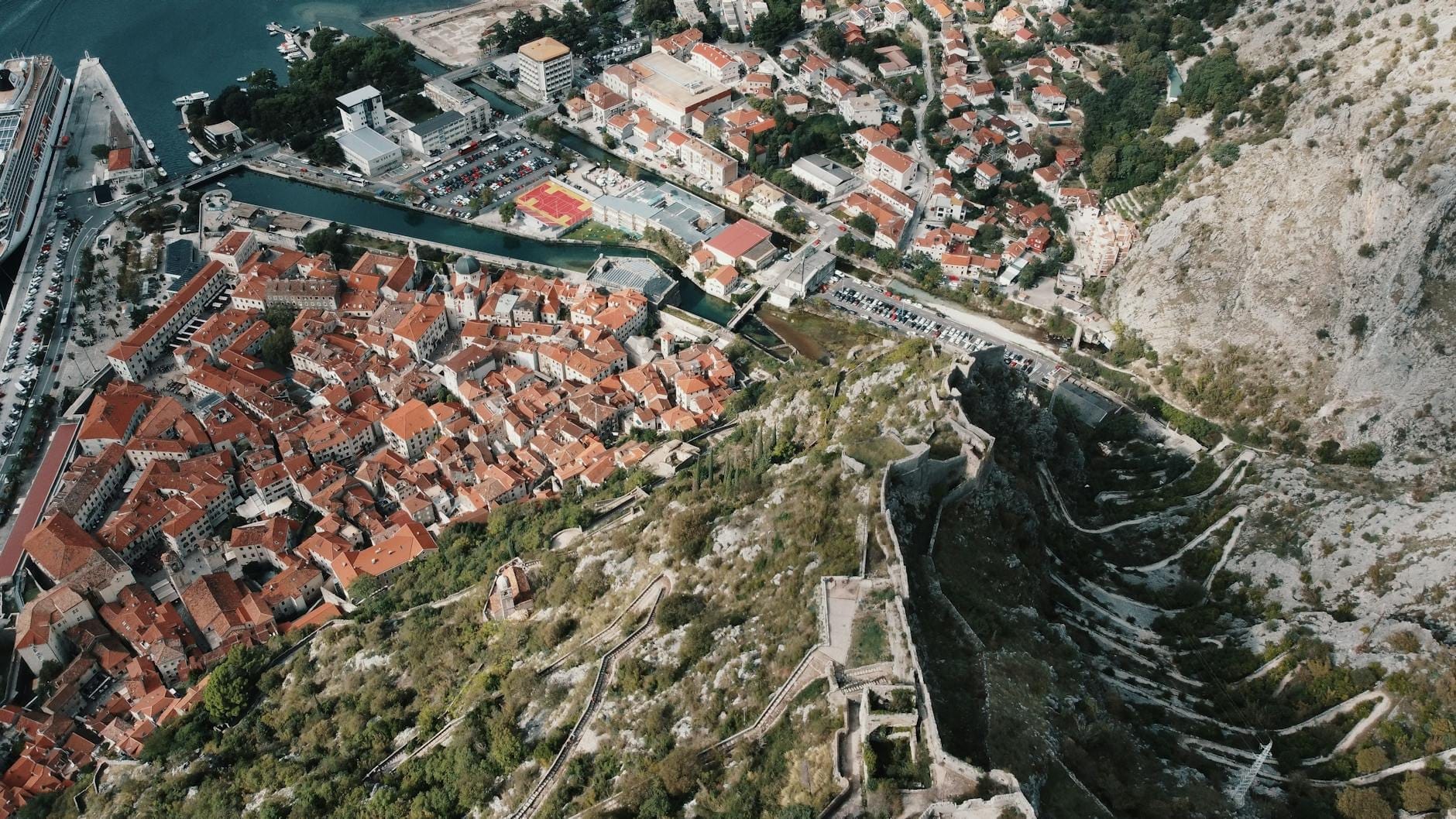
The Kotor City Walls stretch approximately 4.5 kilometers across the steep slopes of Mount St. John, enclosing the UNESCO-listed old town and climbing to the Fortress of San Giovanni above. This is one of the most physically rewarding urban walks in the entire Mediterranean region, combining medieval architecture, sweeping bay views, and a genuine sense of altitude.
Quick Facts
- Location
- Kotor Old Town, Montenegro. Main entrance near the Sea Gate on the northern waterfront.
- Getting There
- Walk from Kotor Bus Station (10 min). No direct road access to the walls themselves — all on foot from the old town.
- Time Needed
- 1.5 to 3 hours depending on pace and how high you climb.
- Cost
- Entrance fee applies (price varies; verify at ticket booth upon arrival).
- Best for
- History enthusiasts, photographers, hikers, and anyone wanting the best views over the Bay of Kotor.
What the Kotor City Walls Actually Are
The Kotor City Walls are not simply a ring around a medieval town. They are a layered defensive system that climbs nearly 260 meters vertically up the craggy limestone face of Mount St. John, connecting the walled old town at sea level to the Fortress of San Giovanni at the summit. The total length of the wall network is approximately 4.5 kilometers, making it one of the best-preserved medieval fortification systems in the Balkans. The walls range from two to sixteen meters thick in places, and the climb reaches approximately 260 to 280 metres above sea level.
Construction began under Byzantine rule and was substantially reinforced during the centuries of Venetian administration from 1420 to 1797. The Venetians in particular treated Kotor as a critical eastern Adriatic stronghold, and their engineering investment shows in the quality of the stonework. Look for the carved stone plaques and relief shields embedded in the walls at various points: these mark Venetian-era restorations and additions. The walls also incorporate natural rock formations, with sections of the mountain face serving as part of the barrier itself.
ℹ️ Good to know
The walls suffered significant damage in the 1979 earthquake. Much of what you walk today represents careful post-earthquake restoration, though the core structure in many sections remains original medieval stonework.
The Climb: What to Expect Step by Step
Entry points are located near the River Gate and behind Trg od Salate, as well as near the Sea Gate. Tickets are purchased here. From the gate, stone steps immediately begin to rise. The path is irregular: some sections have well-worn smooth steps, others are rougher and steeper, and a few narrow passages require ducking slightly. There are no handrails on most of the ascent.
A significant resting point is the Chapel of Our Lady of Health (Crkva Gospe od Zdravlja). It is a small, simple church with a stone terrace that offers the first genuinely breathtaking views over the old town's terracotta rooftops and out across the bay. Many visitors stop here and turn back, which is a reasonable choice if the heat is fierce or if anyone in your group has mobility concerns.
Continuing past the chapel, the path becomes steeper and more exposed. The final stretch climbs via approximately 1,350 steps to reach San Giovanni Fortress. At the top, the views expand dramatically: the full sweep of the inner bay, and on clear days, the outline of the Croatian coast across the water. The ruins of the fortress itself are minimal but evocative. Wind is often strong at the summit even on calm days below.
⚠️ What to skip
Wear proper footwear. Sandals and flip-flops make the upper sections genuinely dangerous. The stone becomes extremely slippery when wet, and sections of the path are uneven enough to cause ankle injuries in poor shoes. There is no evacuation service on the walls.
You can descend the same way you came up, or use an alternative exit on the eastern side of the walls that deposits you near the Fortress of San Giovanni and the outer neighborhoods. This loop approach adds variety and avoids retracing the same steps.
Tickets & tours
Hand-picked options from our booking partner. Prices are indicative; availability and final rates are confirmed when you complete your booking.
Montenegro Canyons private tour from Kotor
From 68 €Instant confirmationFree cancellationDubrovnik walking tour from Kotor
From 59 €Instant confirmationFree cancellationBudva private tour from Kotor
From 58 €Instant confirmationFree cancellationOstrog Monastery private tour from Kotor
From 35 €Instant confirmationFree cancellation
Time of Day and Seasonal Experience
Early morning, roughly 8am to 10am, is the best window by a significant margin. The light hits the walls at a low angle, the stone glows warm rather than bleached-white, and the town below is still quiet enough that you can hear the water. Most importantly, the cruise ships have not yet disgorged their passengers. By 10:30am in high summer, the main staircase can be heavily congested with large tour groups moving slowly in both directions.
Late afternoon, after 4pm, offers a second good window. The worst heat has passed, the midday crowds thin out, and the light on the bay turns golden as the sun drops toward the Vrmac ridge. This timing pairs well with a visit to the Square of Arms afterward, when the old town comes alive in the evening.
In July and August, the walls at midday are genuinely punishing. The stone retains heat, shade is almost nonexistent above the chapel level, and temperatures on exposed sections can feel ten degrees hotter than the town below. There is no drinking water available on the walls. Bring at least half a liter per person regardless of the season, and a full liter in summer.
💡 Local tip
Visit in shoulder season if possible. In May, June, September, and October, the walls are far less crowded, the temperature is manageable, and the vegetation on the hillside is often in much better condition, adding color to photographs.
Historical and Cultural Context
Kotor's fortifications were never purely decorative. The town withstood sieges by the Ottomans in 1538 and 1657, and the walls played a direct role in those defenses. The topography was deliberate: by anchoring the walls to the near-vertical cliff face, defenders could concentrate force at the narrow accessible points rather than spreading thin across a perimeter. The result is a fortification that feels designed by someone who had to fight for their life, rather than designed to impress visitors.
The walls form the physical container for what UNESCO designated as a Natural and Culturo-Historical Region in 1979. This designation covers not just the town itself but the broader fortification network and the relationship between the built environment and the surrounding karst landscape. Inside those walls, you will find a remarkable concentration of medieval religious architecture, including St. Tryphon's Cathedral, which dates to 1166, and St. Nicholas Church, an Orthodox counterpoint from the early 17th century.
The walls also carry a social history. For centuries, the fortification was not just military infrastructure but a boundary that defined citizenship, trade rights, and social status. The town that grew within the walls was among the wealthiest on the eastern Adriatic coast, and the prosperity is still readable in the quality of the stone buildings that survive today.
Photography: Getting the Best Shots
The walls offer three distinct categories of photographic subject. First, the aerial views of the old town: these are best from the chapel terrace and from the first significant ridge above it, where the terracotta rooftops form a dense, geometric pattern framed by the bay behind. A wide-angle lens makes the most of this composition.
Second, the walls themselves as subject: the texture of the stone, the narrow staircases disappearing upward, the contrast between ancient fortification and modern marina below. These work best in the angled light of early morning or late afternoon, when shadows give the stonework depth. Midday light flattens everything.
Third, the panoramic summit view including the full bay. For this, you need clear weather and ideally a polarizing filter to cut haze on the water. The Kotor viewpoints guide covers additional vantage points for bay photography if the walls alone don't satisfy your requirements.
Practical Details and Accessibility
The walls are not accessible to wheelchair users or anyone with significant mobility limitations. The stepped, uneven path and the absence of handrails make them unsuitable for pushchairs as well. Children who are steady on their feet can manage the route to the chapel without difficulty; the upper section above the chapel requires more caution with younger or less confident children.
Tickets are sold at the entrance gate. There is no online advance booking system as of recent reports. The entrance is typically open from early morning through to early evening, but hours vary by season. Combine your visit with a walk through Kotor Old Town to make the most of the entry fee, since the same ticket covers access to the walled area itself in some configurations. Verify the current pricing and hours at the ticket booth on arrival.
For visitors arriving by cruise ship, the walls are technically walkable within a port call, but the upper section and return will take more time than most shore excursion windows comfortably allow unless you start immediately on disembarkation. The chapel terrace is achievable within 45 minutes from the gate at a reasonable pace.
💡 Local tip
The walls are included in many city walking tour itineraries. However, most group tours only reach the chapel level. If reaching the summit fortress is your goal, plan to go independently rather than with a guided group.
Insider Tips
- Start walking no later than 8:30am in July and August. By 9:30am, tour groups from overnight cruise ships begin arriving in volume, and the narrow staircase sections become genuinely difficult to navigate against the flow.
- The west-facing wall sections, visible from the marina waterfront, photograph best at sunset — but you need to be inside the walls, not outside them, to capture the golden stonework. Plan your descent to finish around 6pm in summer for the best light on the upper terraces.
- Bring cash for the entrance ticket. Card payment is not always available at the ticket booth, and there are no ATMs inside the walls.
- The vegetation along the walls includes wild fig, caper plants growing directly from the stone, and rosemary. In spring, the hillside is green and flowering; by August, it is dry and brown. The visual character of the walk changes substantially with the season.
- If you want solitude at the summit, consider visiting on a day when cruise ships are not in port. The Kotor cruise schedule is publicly available and widely referenced online. Wall traffic drops dramatically on non-cruise days.
Who Is Kotor City Walls For?
- History and architecture enthusiasts wanting direct contact with medieval Venetian fortification engineering
- Photographers seeking elevated views of the old town roofscape and the inner Bay of Kotor
- Hikers and active travelers who want physical engagement with a site rather than passive sightseeing
- Travelers with a half-day to spend in Kotor who want a single experience that combines exercise, views, and historical context
- Couples and solo travelers comfortable moving at their own pace without a guide
Nearby Attractions
Other things to see while in Kotor Old Town (Stari Grad):
- Cats Museum Kotor
Tucked inside Kotor's medieval Old Town, the Cat Museum is a compact, quirky gallery dedicated to the city's beloved cats. It's part souvenir shop, part folk art collection, and wholly representative of why Kotor and cats have become inseparable in the popular imagination.
- Fortress of San Giovanni (Castle of San Giovanni)
Perched 260 metres above sea level on a steep limestone ridge, the Fortress of San Giovanni is Kotor's defining landmark. The climb is demanding, the views are extraordinary, and the medieval fortifications reveal centuries of Venetian, Byzantine, and Ottoman history layered into a single hillside.
- Kotor Clock Tower
Rising above the Square of Arms at the entrance to Kotor's Old Town, the Clock Tower is one of the most photographed landmarks in Montenegro. Small in scale but central to the character of the square, it has marked time here for centuries and remains an essential orientation point for anyone exploring the old town.
- Maritime Museum of Montenegro
Housed in a 18th-century Baroque palace in the heart of Kotor's Old Town, the Maritime Museum of Montenegro tells the story of a city that once commanded the Adriatic. From ornate naval uniforms to model warships and ancient navigational tools, it's one of the most coherent and quietly impressive small museums on the entire Montenegrin coast.