St Nicholas Church: Kotor's Orthodox Heartland in Stone
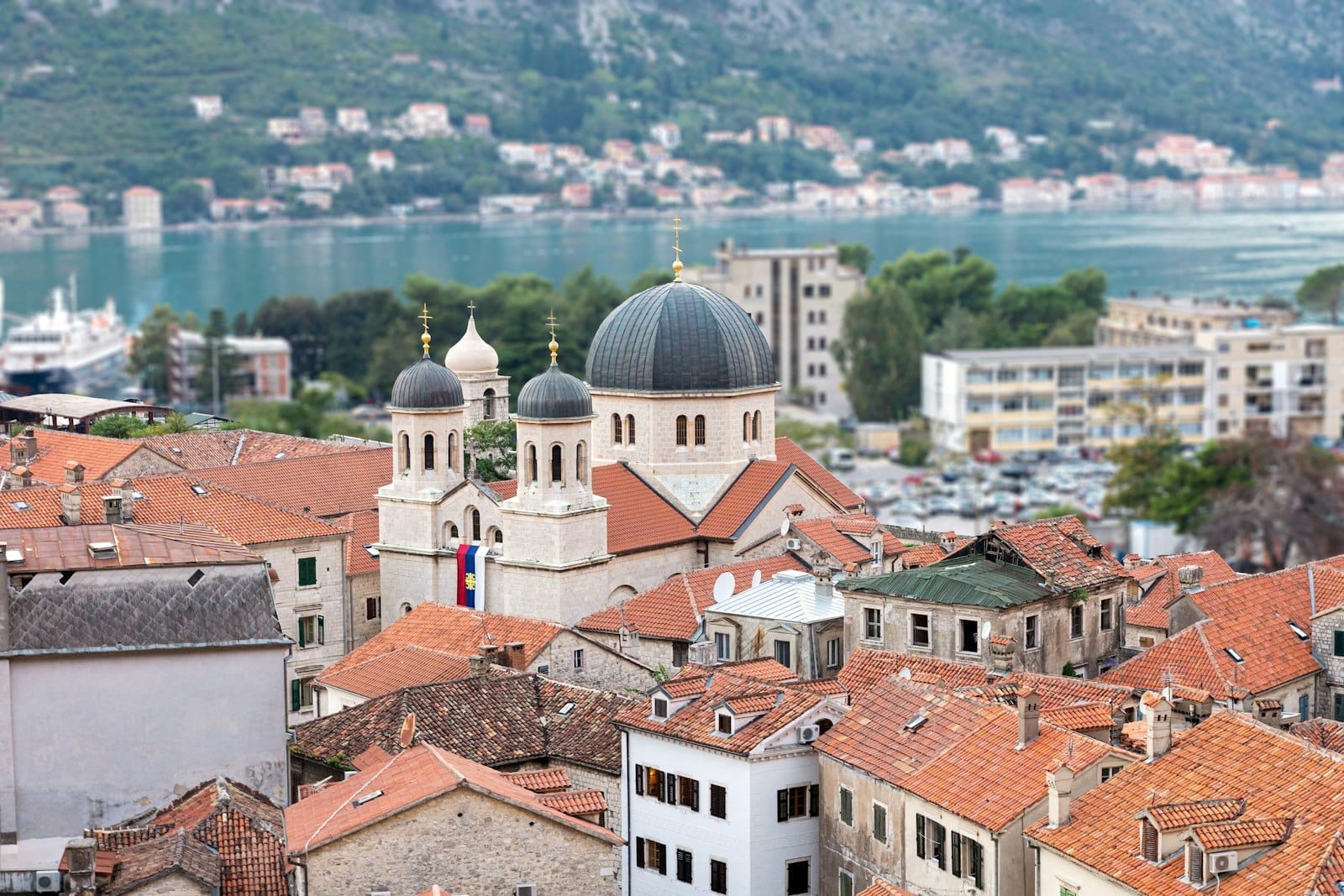
St Nicholas Church stands as a prominent Orthodox church in Kotor's Old Town, a dignified Renaissance-Baroque building that has anchored the Serbian Orthodox community here for centuries. Inside, a richly gilded iconostasis and dim candlelight create a genuinely contemplative atmosphere that contrasts sharply with the busy square just outside. It is one of the few places inside the walls where quiet is genuinely available.
Quick Facts
- Location
- Trg Sv. Nikole, Kotor Old Town, Montenegro
- Getting There
- Enter Old Town via the Sea Gate; the church is a short walk from the Square of Arms
- Time Needed
- 20–40 minutes
- Cost
- Free entry; donations welcomed
- Best for
- Architecture lovers, Orthodox Christian heritage, anyone seeking quiet inside the walls
What Is St Nicholas Church?
St Nicholas Church (Crkva Sv. Nikole in Montenegrin) is the most prominent Serbian Orthodox church in Kotor, and the largest place of Orthodox worship within the old walled city. It sits on its own square, Trg Sv. Nikole, a modest open space that provides a rare moment of breathing room away from the compressed medieval lanes surrounding it. The building you see today dates primarily from 1909, though it stands on ground with a far older Orthodox religious tradition, and its interior reflects layer upon layer of devotional investment over the twentieth century.
In a city where the Roman Catholic St Tryphon's Cathedral tends to attract the most tourist attention, St Nicholas holds its own as a living, functioning church for the local Orthodox population. The distinction matters: this is not a museum piece. Candles burn, incense lingers, and on Orthodox feast days or Sunday mornings the nave fills with worshippers. Visitors are welcome, but that living religious character deserves respect.
💡 Local tip
Dress modestly before entering: shoulders and knees should be covered for both men and women. A light scarf or layer carried in your bag solves the problem quickly.
The Architecture: Reading the Building from Outside In
From the outside, St Nicholas Church presents a twin-towered Romanesque-Revival facade in warm honey-coloured stone, the same Korčula limestone used throughout the old town. The towers, which were never fully completed to their intended height, give the church a slightly unfinished but honest character. There is none of the ornamental excess of some late nineteenth-century religious architecture; the proportions are deliberate and grounded.
Step through the entrance portal and the atmosphere shifts completely. The interior is darker than you expect after Kotor's sun-bleached streets, and your eyes take a moment to adjust. What emerges is a wide nave with tall arched windows that filter light in warm amber tones during the afternoon. The floor is cool stone, the walls plain by comparison to the focal point that draws every gaze: the iconostasis.
The iconostasis is a floor-to-ceiling carved wooden screen heavily applied with gold leaf, populated with icons depicting Christ, the Virgin, St Nicholas, and an array of saints arranged in the formal hierarchy of Orthodox tradition. It separates the nave from the sanctuary behind it, as is standard in Eastern Orthodox churches. The craftsmanship is intricate, and even visitors with no background in Orthodox iconography tend to stop and study it for longer than they planned.
The church also houses a small collection of ecclesiastical artifacts, vestments, and historic icons, some of which predate the present building significantly. For a deeper comparison, the nearby Maritime Museum of Kotor offers additional context on the cultural history of the Bay of Kotor region, including religious and civic life across different communities.
Tickets & tours
Hand-picked options from our booking partner. Prices are indicative; availability and final rates are confirmed when you complete your booking.
Montenegro Canyons private tour from Kotor
From 68 €Instant confirmationFree cancellationDubrovnik walking tour from Kotor
From 59 €Instant confirmationFree cancellationBudva private tour from Kotor
From 58 €Instant confirmationFree cancellationOstrog Monastery private tour from Kotor
From 35 €Instant confirmationFree cancellation
The Experience at Different Times of Day
Morning is the best time to visit, particularly between 8 and 10am. The old town's narrow streets are still cool and relatively quiet, the light through the church windows is soft, and if you arrive before the first wave of cruise-ship visitors the square outside will be nearly empty. Inside, an attendant is usually present, candles are freshly lit, and the incense smell is strongest, a sweet resinous warmth that settles into the stone walls.
By midday, particularly in summer, the old town reaches peak pedestrian density. The church itself stays quieter than the lanes outside precisely because most day-trippers do not enter, but the square in front becomes a transit point for tour groups moving between landmarks. If you are visiting in July or August and want genuine peace inside, arrive early or return after 5pm when the cruise crowds have largely returned to their ships.
⚠️ What to skip
The church may be closed during active religious services. If you find the doors closed, wait 15–20 minutes; services rarely run longer than an hour, and the doors open again once worship concludes.
Late afternoon light is particularly rewarding for photography of the exterior. The sun drops behind the old town's western walls and creates a warm, even light on the church facade without harsh shadows. The square itself, flanked by modest stone buildings, frames the twin towers cleanly.
Historical and Cultural Context
Kotor has been a meeting point between Eastern and Western Christianity for centuries, a consequence of its geographic position on the Adriatic and its layered history under Byzantine, Serbian medieval, Venetian, and later Austro-Hungarian rule. The Serbian Orthodox community in Kotor was historically concentrated in this quarter of the old town, while the Roman Catholic community built and maintained St Tryphon's Cathedral on the opposite side of the walled city.
This coexistence was rarely frictionless, and the size and ambition of St Nicholas Church, commissioned and built in the early twentieth century during a period of rising Serbian national consciousness, reflects a deliberate statement of presence and permanence. Understanding that backdrop makes the building more than an architectural object. For a broader sense of how the old town fits together spatially and historically, the Kotor Old Town walking tour guide maps out the key landmarks and their relationships to one another.
St Nicholas is the patron saint of sailors, a deeply appropriate dedication for a city whose wealth and identity were built entirely on maritime trade. The church's namesake patron connects it directly to the seafaring culture documented in detail at the Maritime Museum a few minutes walk away. The two sites together tell a coherent story about how Kotor's communities understood themselves and their place in the world.
Practical Walkthrough: How to Visit
The most logical approach is to enter Kotor's old town through the Sea Gate, walk through the Square of Arms, and follow the main pedestrian lane roughly northward. St Nicholas Church is signposted and reachable in under five minutes on foot from the main square. The church sits slightly off the primary tourist circuit, which is partly why its atmosphere is calmer than you might expect.
There is no formal ticket booth. Entry is free, and a donation box is placed near the entrance for those who wish to contribute to the church's upkeep. Photography is generally permitted inside, but avoid using flash around active worshippers or in front of the iconostasis during services. When in doubt, observe what others are doing and follow the tone of the space.
The church is accessible at ground level with no significant steps at the main entrance, though the interior floor is uneven stone. Visitors with mobility concerns should check the immediate approach, as the surrounding lanes are typical of old-town cobblestone surfaces throughout the Bay of Kotor.
ℹ️ Good to know
St Nicholas Church is an active place of worship. Visits during services are possible but should be conducted quietly and without disruption. Step to the sides of the nave if a service is in progress, and save photography for before or after.
Who This Attraction Suits, and Who It Doesn't
St Nicholas Church rewards visitors who come with some curiosity about Orthodox Christian art and architecture, or about how Kotor's two religious communities shaped the city's physical and social landscape. It also functions well as a pause point in a walking day, somewhere to step out of the heat and noise into cool dim stone and candlelight for twenty minutes.
Visitors who are primarily chasing Kotor's most dramatic views or outdoor experiences may find a single church interior less compelling than the panorama from the Fortress of San Giovanni above the town. And travelers on a very short itinerary, perhaps arriving by cruise ship with three hours ashore, may reasonably prioritize St Tryphon's Cathedral given its longer documented history and the small museum it contains. St Nicholas does not require a long visit, but it does benefit from a visitor who arrives ready to look rather than simply pass through.
Children can be brought in comfortably; the space is calm and the visual complexity of the iconostasis tends to hold attention. It is not, however, an interactive or exhibit-driven experience, so very young children who need stimulation may be restless inside.
Insider Tips
- Visit on a Sunday morning or an Orthodox feast day if your schedule allows. The church is transformed by the presence of the local congregation, choir singing, and the full ceremonial use of incense. This is the building as it was designed to be experienced.
- The square in front of the church (Trg Sv. Nikole) is one of the calmer open spaces inside the walls. It makes a good spot to sit for a few minutes with water and a map before or after your visit, away from the main pedestrian flow.
- The exterior towers photograph best from the far end of the square in the late afternoon, when the stone takes on a warm golden tone. The angle from the southwest corner of the square includes both towers without distortion.
- If you are interested in comparing the two main churches of the old town side by side, allocate about ninety minutes total and visit St Tryphon's Cathedral first (earlier in the morning when it is cooler), then walk to St Nicholas afterward as the morning warms.
- A small number of icons inside the church predate the 1909 building and were brought from earlier Orthodox places of worship in Kotor. Ask the attendant if any explanatory materials are available; occasionally English-language leaflets are provided near the entrance.
Who Is St Nicholas Church For?
- Architecture and art history enthusiasts interested in Orthodox iconography and ecclesiastical design
- Travelers exploring the religious and cultural duality between Orthodox and Catholic communities in Kotor
- Anyone who wants a genuinely quiet ten to thirty minutes away from the old town crowds
- Visitors pairing a walking tour of the old town with deeper stops at its historic buildings
- Photographers seeking warm-stone architecture and interior candlelit compositions
Nearby Attractions
Other things to see while in Kotor Old Town (Stari Grad):
- Cats Museum Kotor
Tucked inside Kotor's medieval Old Town, the Cat Museum is a compact, quirky gallery dedicated to the city's beloved cats. It's part souvenir shop, part folk art collection, and wholly representative of why Kotor and cats have become inseparable in the popular imagination.
- Fortress of San Giovanni (Castle of San Giovanni)
Perched 260 metres above sea level on a steep limestone ridge, the Fortress of San Giovanni is Kotor's defining landmark. The climb is demanding, the views are extraordinary, and the medieval fortifications reveal centuries of Venetian, Byzantine, and Ottoman history layered into a single hillside.
- Kotor City Walls
The Kotor City Walls stretch approximately 4.5 kilometers across the steep slopes of Mount St. John, enclosing the UNESCO-listed old town and climbing to the Fortress of San Giovanni above. This is one of the most physically rewarding urban walks in the entire Mediterranean region, combining medieval architecture, sweeping bay views, and a genuine sense of altitude.
- Kotor Clock Tower
Rising above the Square of Arms at the entrance to Kotor's Old Town, the Clock Tower is one of the most photographed landmarks in Montenegro. Small in scale but central to the character of the square, it has marked time here for centuries and remains an essential orientation point for anyone exploring the old town.