Kotor's Famous Cats: Everything You Need to Know
Kotor, Montenegro has one of the most celebrated cat cultures in the world. This guide covers the history behind the city's feline reputation, where to spot cats in the Old Town, the dedicated Cat Museum, how to interact responsibly, and what to buy at cat-themed shops.
Plan and book this trip
Tools from our partner Travelpayouts help you compare flights and hotels. If you book through them, we may earn a commission at no extra cost to you.
Flights
Hotels map
TL;DR
- Kotor's cats have lived in the Old Town for centuries, originally kept to protect sailors' goods from rodents on ships.
- The dedicated Cats Museum of Kotor is small but charming — worth 20-30 minutes of your time and a few euros entry.
- Cats roam freely throughout Kotor Old Town; you'll find the highest concentrations near St. Tryphon's Cathedral and the main squares.
- Feed only designated cat food (available locally) and avoid disturbing resting cats in summer heat — temperatures regularly exceed 35°C.
- Cat-themed souvenirs are everywhere, but quality varies. Stick to shops near the Square of Arms for better-crafted options.
Why Kotor Is Synonymous with Cats
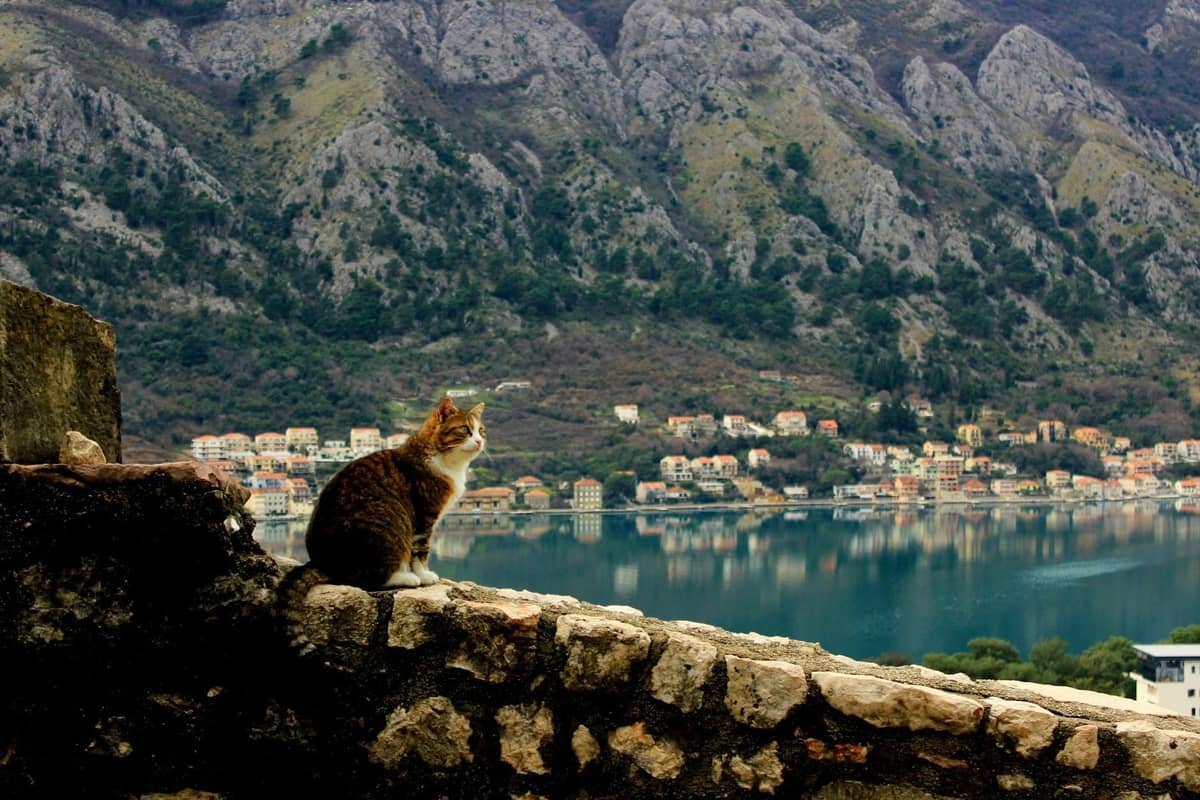
Kotor's relationship with cats stretches back to the height of the Venetian Republic, when the city served as a key Adriatic port for over four centuries. Ships arriving from across the Mediterranean brought not only goods but also rats, and cats were the practical solution. Sailors kept them aboard to protect cargo from rodent damage, and when ships docked in Kotor Bay, cats came ashore and never left. Over generations, they became woven into the city's identity.
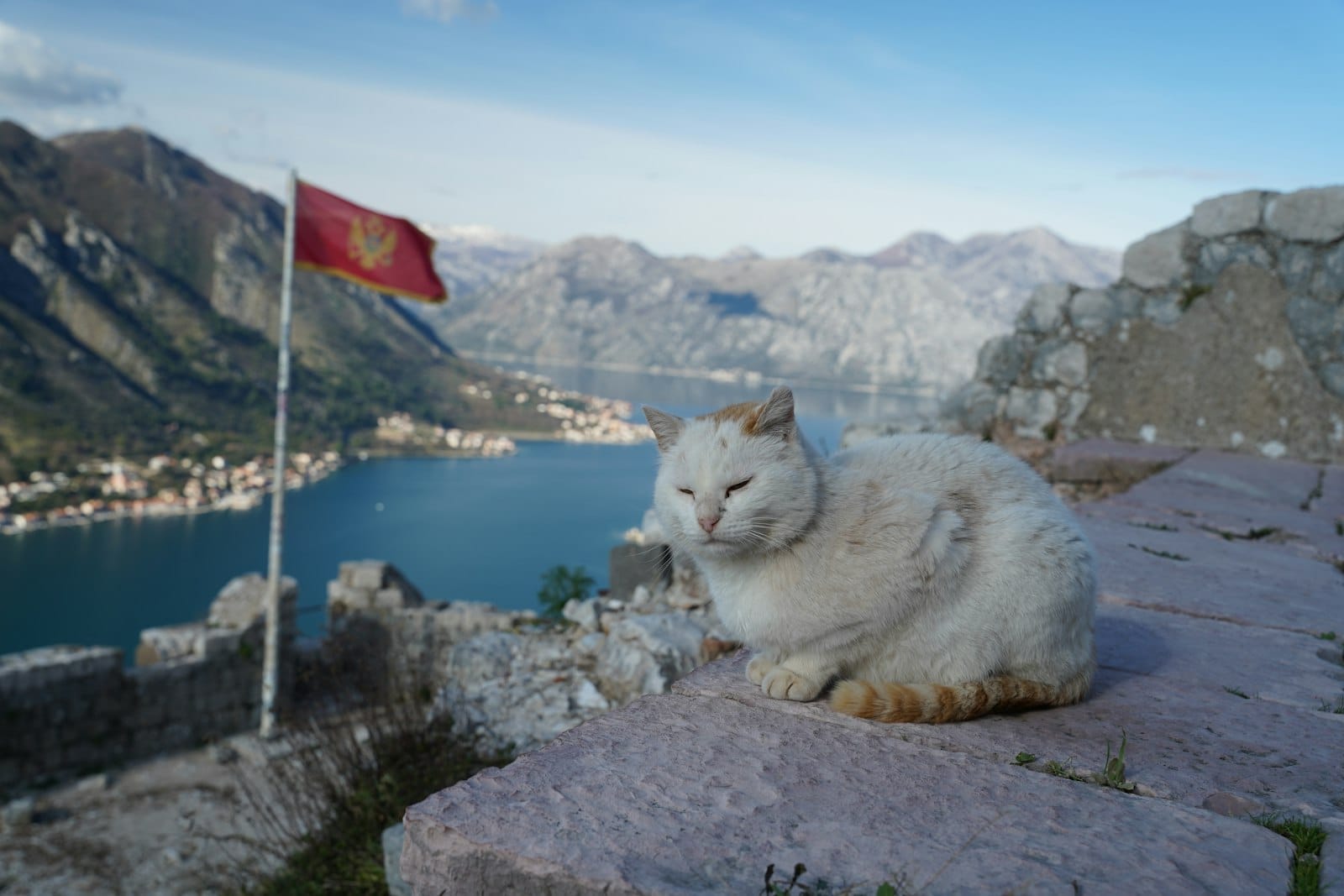
Today, Kotor Montenegro is recognized internationally as one of the world's great 'cat cities', alongside Istanbul and Rome. The cats here are not strays in the conventional sense: they are community animals, fed and monitored by local residents and several active volunteer organizations. The Kotor Old Town functions as their territory, and most of them are remarkably comfortable around tourists.
ℹ️ Good to know
Kotor's cats are protected by a network of local volunteers and the municipality. Several non-profit groups run trap-neuter-return (TNR) programs to maintain population health. If you see an injured cat, locals near the Cathedral Square can point you toward the right contacts.
Where to Find Cats in Kotor Old Town
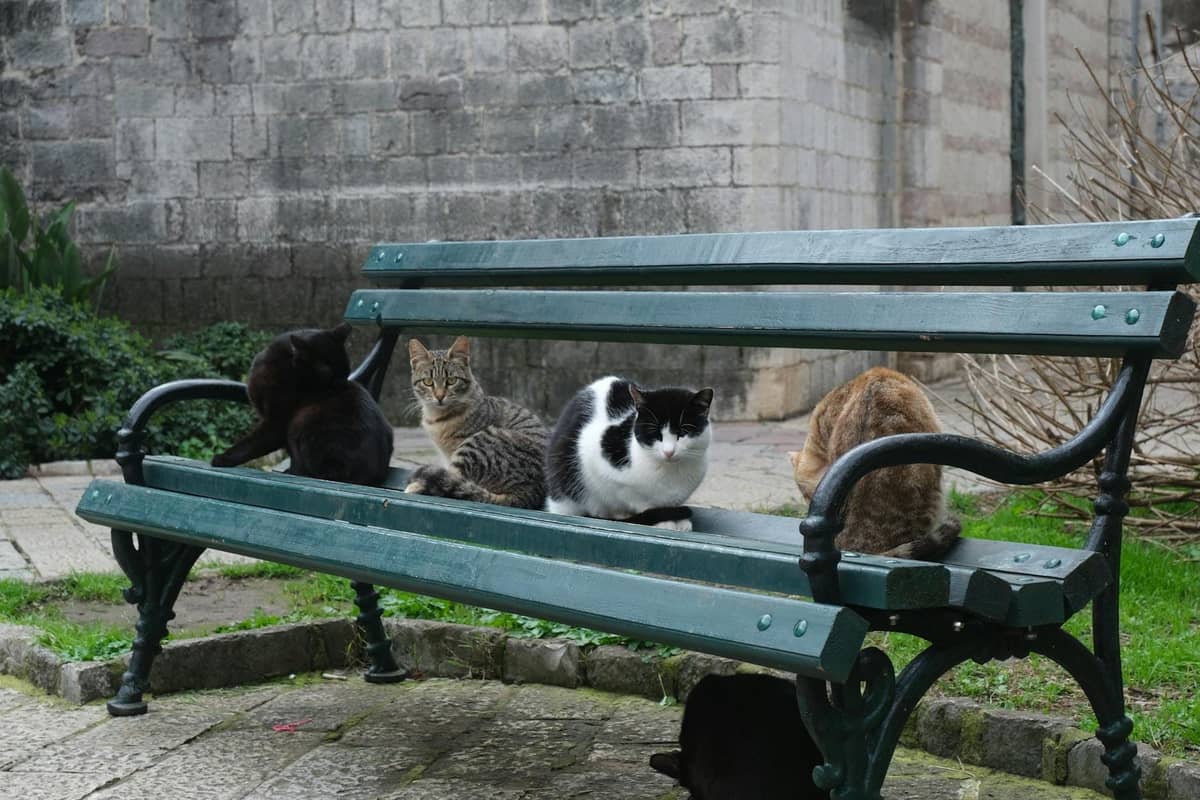
The cats are not evenly distributed. They cluster in specific spots, usually where shade, food sources, and foot traffic intersect. Knowing where to look saves time, especially in summer when cats retreat from the midday sun and can be harder to spot.
- St. Tryphon's Cathedral surroundings The area around the cathedral and its small square is arguably the densest cat zone in the Old Town. Stone ledges, cool archways, and decades of tourist feeding make this a reliable spot at almost any hour.
- Square of Arms (Trg od Oružja) The main entrance plaza sees a rotating cast of cats throughout the day. Early morning, before cruise ships disembark, you'll often find four or five cats basking on the stone pavement.
- The Cats Museum alley and surroundings The street leading to the museum has become a focal point for cat-spotting, with resident cats practically serving as unofficial greeters outside the entrance.
- City walls and stairways Cats use the stairways of the fortification walls as thoroughfares. Climbing toward the Fortress of San Giovanni, you'll pass cats resting on warm stone steps, particularly in the late afternoon.
- Café terraces and side streets Cats are practiced opportunists. Restaurants that leave water bowls out attract regulars, and the quieter back streets away from the main tourist flow are where you'll find the least skittish animals.
💡 Local tip
The best time to photograph Kotor's cats is early morning (7-9am) or late afternoon (5-7pm). Midday in summer is too hot — most cats are hidden in deep shade or behind closed gates. Morning light also makes for far better photos against the Old Town's warm stone walls.
The Cats Museum of Kotor: What to Expect
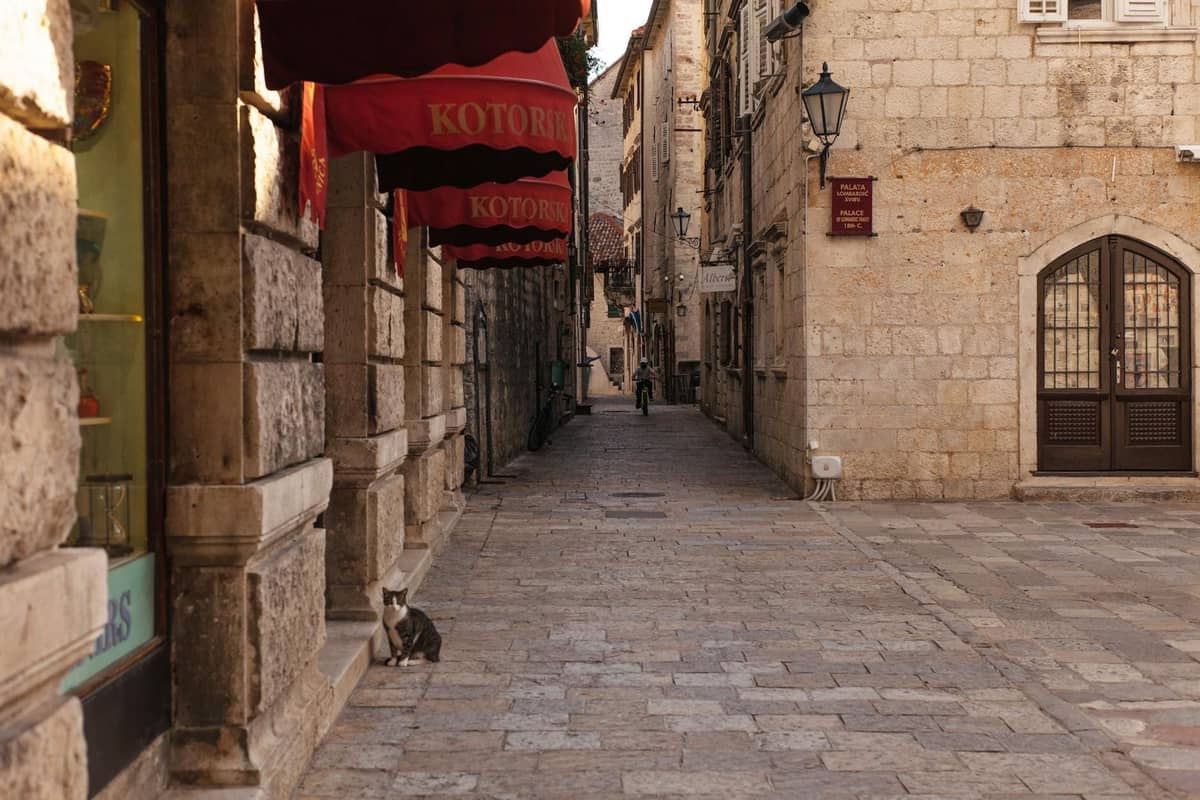
The Cats Museum of Kotor opened in 2017 and occupies a narrow stone building inside the Old Town. It is small by museum standards — most visitors spend 20 to 40 minutes inside — but it is genuinely well-curated for its size. The collection spans centuries of cat-related art, artifacts, and documents connected to Kotor's maritime and feline history. There are vintage cat figurines, illustrated manuscripts, postcards, stamps, and explanatory panels in English and Montenegrin.
Entry costs €1 for adults, making it one of the most affordable attractions in the city. Children generally get in for free or at a reduced rate. The museum also operates a small gift shop where proceeds support local cat welfare programs. It is honest about what it is: a niche, love-letter attraction rather than a major cultural institution. If you have children with you or are genuinely charmed by the city's cat culture, it earns its entry fee easily. If you are short on time, it can be skipped without regret.
⚠️ What to skip
The Cats Museum has variable opening hours and occasionally closes for private events or in the low season. Check for a sign on the door on arrival — there is no reliable online booking system. Visiting between 10am and 5pm on weekdays gives you the best chance of finding it open.
How to Interact with Kotor's Cats Responsibly
Most visitors want to pet and photograph the cats, and that is generally fine. The vast majority are socialized and will approach humans on their own terms. The problems arise when tourists treat them as props rather than animals: picking them up without consent, waking sleeping cats for photos, or feeding them inappropriate food. All of these are common, and all cause real harm.
- Let the cat approach you first. Crouching down and extending a hand is the right move; grabbing a cat that is not seeking interaction is not.
- Feed only dedicated cat food, available at small shops near the museum and at some supermarkets inside the Old Town. Human food, especially processed snacks, disrupts their diet and attracts larger crowds of cats that can become aggressive with each other.
- Do not wake a sleeping cat for a photo. In summer heat, sleep is how cats survive the afternoon. An annoyed, overheated cat is also more likely to scratch.
- Avoid flash photography at close range, especially in low-light alleys where cats are resting.
- If you want to contribute financially to cat welfare, buy from shops that advertise donations to local TNR programs, or give directly to volunteers you may encounter feeding cats in the Old Town.
Cat-Themed Shopping: What's Worth Buying
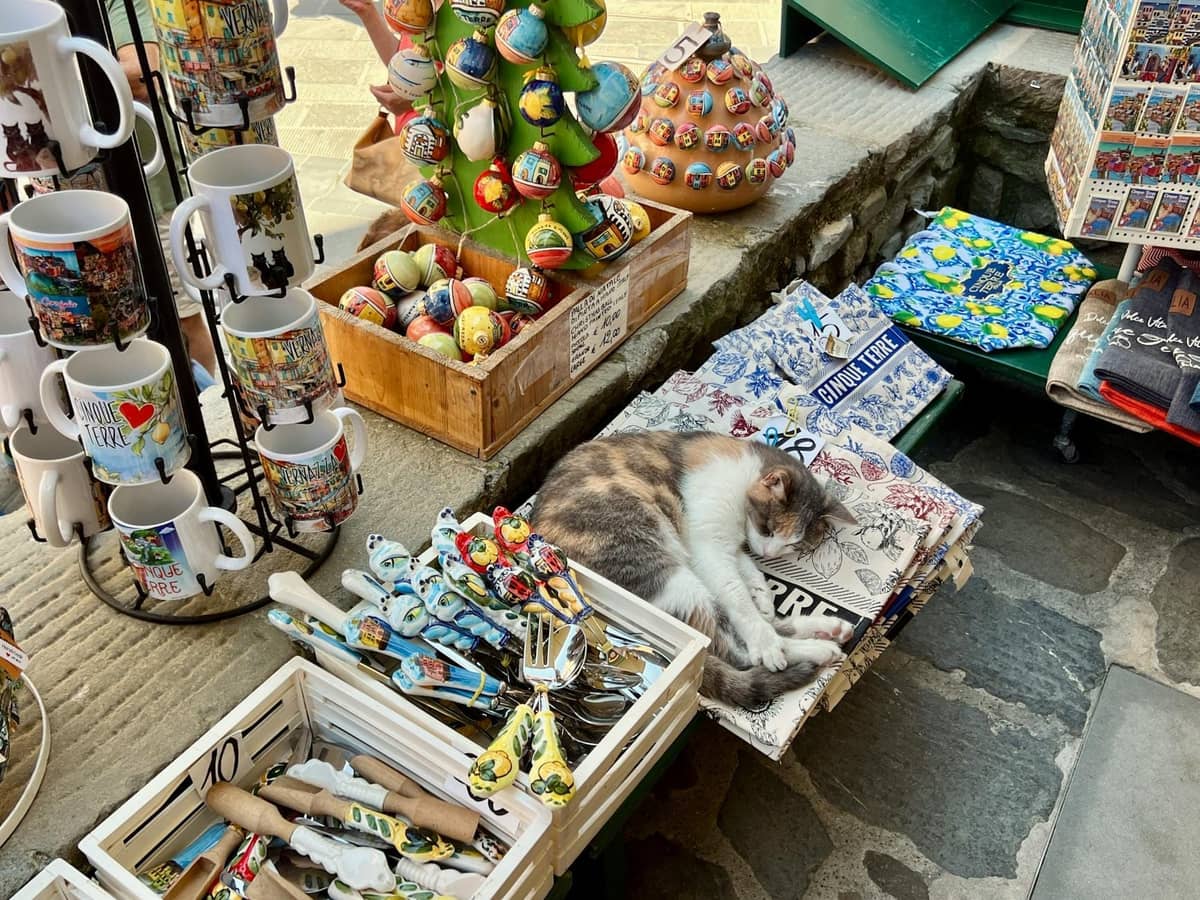
Kotor has fully leaned into its feline reputation commercially. Cat-themed merchandise fills dozens of shops inside the Old Town, ranging from beautifully crafted local artwork to mass-produced tourist trinkets imported from Asia. The quality gap is significant, and knowing the difference saves money and supports local artisans.
The best cat souvenirs tend to be watercolor prints and illustrations by local Montenegrin artists, ceramic pieces made regionally, and handmade jewelry featuring cat motifs. Several small studios near St. Tryphon's Cathedral sell original artwork for 10-40 euros, which is fair for a genuinely hand-produced piece. The museum gift shop is also a reliable source of quality items, and purchases there contribute to cat welfare funding.
Avoid the laminated fridge magnets, plastic figurines, and screen-printed t-shirts sold at high-volume shops near the Sea Gate entrance. These are indistinguishable from tourist-trap merchandise found in any European city. Price is not always an indicator of quality here: some overpriced shops sell identical mass-produced items to cheaper ones. The tell is whether the shop owner can tell you who made what you're holding.
Cats in Context: Kotor Beyond the Feline Fame
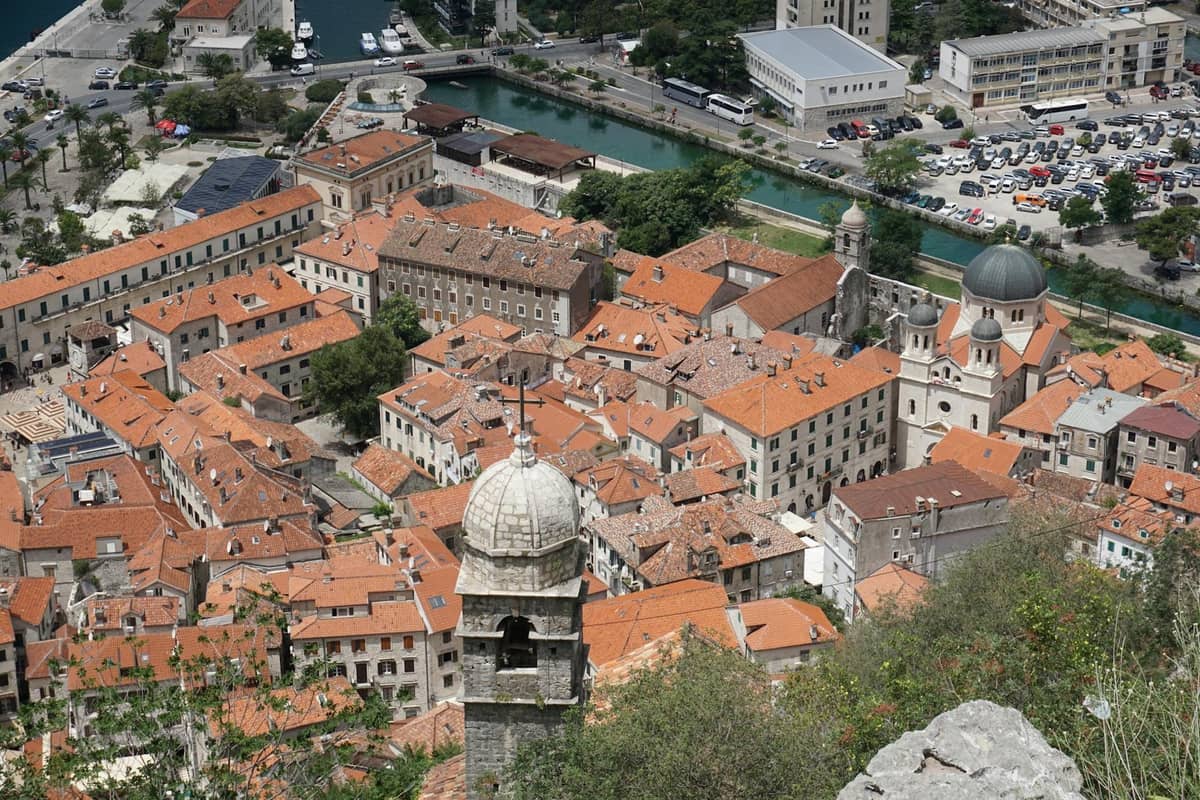
The cats are a genuine and charming part of Kotor's identity, but they are one layer of a city with serious historical depth. Kotor Montenegro is a UNESCO World Heritage Site with intact medieval fortifications, Romanesque churches, and a maritime history that shaped the entire Adriatic. If you are planning a full visit, the Kotor city walls hike to the Fortress of San Giovanni takes 1-2 hours and rewards with panoramic views over the Bay of Kotor that no photograph fully captures.
Equally, Kotor is an excellent base for exploring the surrounding region. Perast, a Baroque village 12 kilometers north, is reachable by bus or taxi in under 30 minutes and offers a completely different pace. The bay's famous island church, Our Lady of the Rocks, sits just offshore and is accessible by boat from Perast's waterfront.
For those arriving from Croatia, the Dubrovnik to Kotor route takes around 2.5 hours by bus or shuttle and passes through some of the most scenic coastal terrain in the Adriatic. It is a common day trip from Dubrovnik, though the city deserves at least one full night to experience it properly after the cruise crowds depart.
✨ Pro tip
Kotor's cats are most visible and most relaxed after 6pm, once the afternoon heat breaks and cruise passengers have returned to their ships. An evening walk through the Old Town — when it belongs mostly to overnight guests and locals — is the best cat-spotting session you'll have, and the atmosphere is significantly quieter.
FAQ
Why is Kotor famous for cats?
Kotor's cat population has Venetian-era roots. For centuries, cats were kept on ships docked in Kotor Bay to protect cargo from rats. Over time, they established permanent colonies in the Old Town and became part of local culture. Today, active volunteer networks and the municipality maintain their welfare through TNR programs.
How many cats live in Kotor Old Town?
Estimates vary, but hundreds of cats within the Old Town walls are commonly cited by local welfare organizations. The number fluctuates with the success of TNR programs and seasonal movements.
Is the Cats Museum in Kotor worth visiting?
For most visitors, yes. Entry costs €1, it takes 20-40 minutes, and proceeds support local cat welfare. It is a niche attraction rather than a major cultural institution, but it is charming and genuinely well-curated for its size. It can be skipped if you are very short on time.
Can I feed the cats in Kotor?
Yes, but only with appropriate cat food, which is sold at small shops in the Old Town. Feeding human food, especially processed snacks, disrupts their diet and can cause digestive problems. Many locals feed the cats daily as part of community care routines.
What is the best time to see cats in Kotor?
Early morning (7-9am) and evening (after 6pm) are the best times. In summer, cats retreat to deep shade during the hottest part of the day (noon to 4pm) and are much harder to spot. Evening is particularly good: the crowd thins out after cruise passengers leave, and the cats become noticeably more active and relaxed.