Lovćen Mountain Viewpoint: Montenegro's Most Breathtaking Panorama
Perched high above the Bay of Kotor, the Lovćen Mountain Viewpoint delivers one of the most dramatic landscapes on the entire Adriatic coast. The vertiginous ascent, the sweeping views of the bay and old town below, and the raw alpine atmosphere of Lovćen National Park make this a serious destination in its own right, not just a photo stop.
Quick Facts
- Location
- Lovćen National Park, above Kotor, Montenegro
- Getting There
- By car or scooter via the Kotor serpentine road (25 switchbacks); organized tours available from Kotor
- Time Needed
- 2–4 hours including drive and exploration
- Cost
- National Park entry fee applies; driving is free. Tour costs vary by operator.
- Best for
- Photographers, hikers, scenic drives, panoramic views of the Bay of Kotor
What the Lovćen Mountain Viewpoint Actually Is
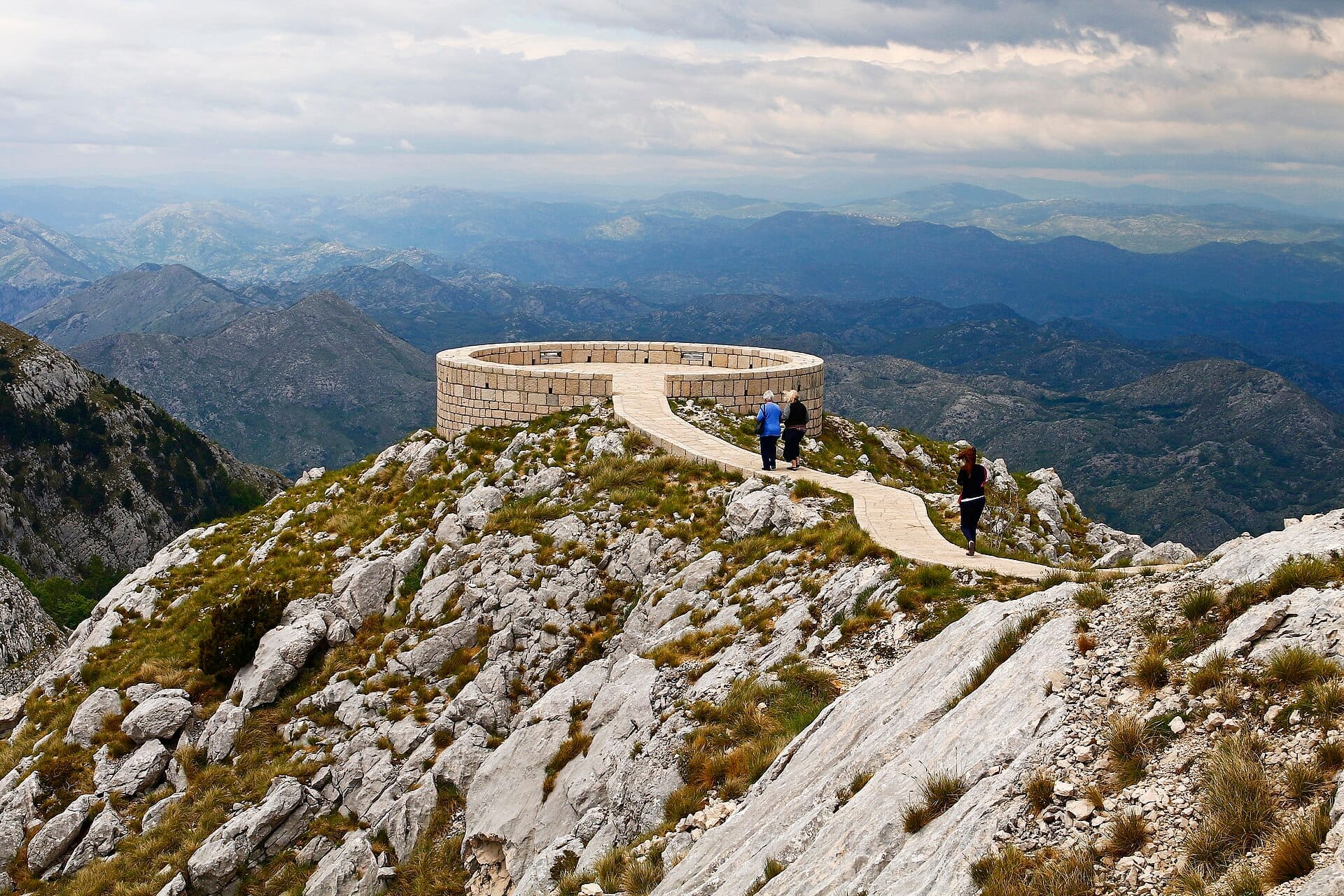
The Lovćen Mountain Viewpoint is not a single platform with a railing and a sign. It is a collection of elevated perspectives along the upper roads and peaks of Lovćen National Park, with the most celebrated view looking directly down onto Kotor's old town and the inner bay. The most accessible and dramatic of these vantage points is reached via the famous serpentine road that climbs from Kotor through 25 hairpin bends, gaining roughly 1,000 metres of altitude in under 10 kilometres of road distance.
At the top of the serpentine, the landscape shifts completely. The narrow Adriatic coastal strip and the medieval town that looked large and solid from sea level are suddenly reduced to a toy-like geometry far below, ringed by dark water and pale limestone ridges. It is one of those views that takes a moment to process. The scale is genuinely difficult to absorb in a single glance.
For a deeper orientation to the whole Lovćen area before you go, the Lovćen National Park overview covers the park's scope, entry points, and what else you can combine with the viewpoint visit.
The Ascent: Driving the Serpentine Road
The serpentine road above Kotor is one of the most extraordinary drives in the Balkans. It begins just outside the old town walls and climbs in relentless zigzags up the limestone face of Mount Lovćen. Each switchback opens a slightly higher window onto the bay below, and by the time you reach the upper bends, you are looking almost straight down at the red-roofed maze of the old town and the silvery expanse of water stretching toward Risan and Perast.
The road is narrow. Two vehicles can pass with care, but in summer, tour buses and rental cars move slowly and stops for photography create brief traffic bunches near the best bends. The surface is generally maintained, but steep gradients mean brake confidence matters. Scooters are popular with visitors wanting a slower, more open-air experience, and the wind at the upper bends is cool and sharp even on hot days.
💡 Local tip
If you are driving a manual car, the descent is harder than the ascent. Stay in low gear and avoid riding the brakes continuously. Early morning mid-week sees the lightest traffic on the bends.
The serpentine is one of the key viewpoints above Kotor and forms the natural starting point for anyone exploring the mountain properly.
Tickets & tours
Hand-picked options from our booking partner. Prices are indicative; availability and final rates are confirmed when you complete your booking.
Half-day Blue Cave adventure
From 45 €Instant confirmationFree cancellationMontenegro Canyons private tour from Kotor
From 68 €Instant confirmationFree cancellationLovćen national park and Budva city full-day private tour
From 150 €Instant confirmationFree cancellationDubrovnik walking tour from Kotor
From 59 €Instant confirmationFree cancellation
The View Itself: What You Are Looking At
From the upper viewpoints, the Bay of Kotor unfolds in its full complexity. The bay is technically a submerged river canyon, not a fjord in the geological sense, though the visual impression is unmistakably fjord-like. Three inner bays connect through narrow straits, and from altitude you can trace the entire structure at once: the Risan Bay to the northwest, the Kotor Bay directly below, and the entrance channel near Verige. On clear days, the limestone ridges of Croatia are faintly visible beyond the mouth of the outer bay.
Closer in, the detail is just as compelling. Kotor's old town walls thread up the hillside toward the Fortress of San Giovanni in a pattern that only becomes fully legible from above. The marina, the cruise terminal, the thin strip of coastal road ringing the bay, the small churches on tiny islands — all of it clicks into context. Photographers with zoom lenses can pick out individual towers and rooftops from the upper road bends.
If the view from here has you curious about what those walls and towers look like up close, the Fortress of San Giovanni is the high point of Kotor's own defensive system, and the climb to it from inside the old town gives you an entirely different vertical perspective.
Time of Day and Seasonal Conditions
The light on the bay shifts dramatically through the day, and your timing changes the character of the view significantly. Morning visits, especially in the first hour or two after sunrise, tend to produce the clearest air and the softest light on the water. Mist sometimes pools in the inner bay in autumn and early spring, which at altitude creates a striking effect: the peaks emerge above a white sea with just the highest ridges and the rooftops of Perast visible as islands.
Midday in summer is the least rewarding time for photography. The light turns flat and harsh, haze builds over the water, and the road is at its most congested. Late afternoon through golden hour reverses all of this. The low sun catches the limestone walls of the old town directly, turning them amber, and the water surface below deepens to a dark greenish-blue. Sunset from the upper viewpoints can be spectacular, though the timing means driving the descent in fading light — factor that into your planning.
⚠️ What to skip
In winter and after heavy rain, the upper sections of the road can be icy or obscured by low cloud. The viewpoint becomes entirely meaningless inside thick fog. Check local weather before making the drive.
For a full breakdown of how seasons affect a Kotor trip, the best time to visit Kotor explains month-by-month conditions including mountain weather patterns.
Beyond the View: Lovćen National Park
Most visitors stop at the serpentine bends and turn back. Those who continue into Lovćen National Park encounter a completely different Montenegro: cool air, dark pine and beech forests, shepherd tracks, and the silence of high plateau country. The park covers 6,220 hectares and rises to two summits, Štirovnik (1,749 m) and Jezerski Vrh (1,657 m). The Njegoš Mausoleum sits at the top of Jezerski Vrh, reached by 461 steps from the car park, and its terrace offers one of the highest publicly accessible viewpoints in the country.
The mausoleum itself is a significant piece of 20th-century monumental architecture and contains the tomb of Petar II Petrović Njegoš, the poet-prince of Montenegro. A separate page covers the Njegoš Mausoleum in full detail, including the climb and what to expect at the top.
Wildlife in the park includes golden eagles, chamois, and a dense bird population in the forested lower elevations. In spring, wildflowers cover the upper meadows and the smell of pine resin and wet limestone is particularly strong in the hour after rain. The park has marked hiking trails of varying difficulty, and the combination of a viewpoint drive and a short hike to the mausoleum makes for a well-rounded half-day from Kotor.
Getting There and Practical Logistics
The most direct route from Kotor is the serpentine road itself, signposted from the northern edge of the old town. The drive to the first major viewpoint bends takes around 20 minutes from the city gate. Continuing to the Jezerski Vrh car park adds another 30–40 minutes of driving through the park interior.
Organized day trips from Kotor typically combine the Lovćen viewpoint with stops in Cetinje and sometimes Perast on the return. These are a reasonable option if you do not have a vehicle, but they compress the time at each location significantly. Renting a scooter from one of the agencies near the Kotor marina gives you the freedom to stop at every bend without blocking traffic.
For those combining this with broader itinerary planning, day trips from Kotor covers Lovćen alongside other half-day and full-day excursions in the region.
ℹ️ Good to know
There is no public bus service to the upper viewpoints. Taxis can be hired for a return trip from Kotor, but agree the price before departure and confirm whether the driver will wait.
Who Should Skip This
Anyone with severe motion sickness should think carefully. The serpentine road involves continuous sharp bends over a significant altitude gain, and even passengers who are not usually affected sometimes find 25 back-to-back switchbacks more than expected. Travelling early in the morning on an empty stomach is not advisable.
Visitors looking for a quick photo opportunity from a well-signed platform with facilities nearby may find the experience less polished than expected. The viewpoints are not developed with railings, kiosks, or visitor infrastructure in the way that comparable sites in Western Europe often are. That rawness is part of the appeal for many people, but it is worth knowing in advance.
Insider Tips
- The best single viewpoint on the serpentine is not the highest bend but roughly the 18th to 20th switchback, where the angle opens directly onto the old town rooftops and the full inner bay simultaneously.
- Bring a layer regardless of the season. Air temperature drops sharply with altitude, and the wind on exposed bends can make a 30-degree day in Kotor feel quite cold at the top.
- If you want the road almost to yourself, arrive at the first bend by 7am in summer. By 9am, tour groups and rental cars are already creating slow stretches near the best photo spots.
- The viewpoint experience pairs extremely well with a visit to the Njegoš Mausoleum on the same outing. The additional 461-step climb to the mausoleum terrace adds another 50–100 metres of altitude and a 360-degree view that goes well beyond the bay.
- On the descent, watch for a small roadside spring roughly halfway down on the right side. Locals fill bottles there and it is a useful place to cool off and collect yourself before the lower bends.
Who Is Lovćen Mountain Viewpoint For?
- Photographers chasing the classic aerial view of Kotor's old town and bay
- Road trip travellers who want one of the most scenic mountain drives in the western Balkans
- Hikers wanting to combine a panoramic viewpoint with trails in Lovćen National Park
- History and culture travellers combining the view with the Njegoš Mausoleum
- Visitors who want perspective on Kotor's extraordinary geography before exploring the old town at ground level
Nearby Attractions
Other things to see while in Lovćen National Park:
- Njegoš Mausoleum
The Njegoš Mausoleum crowns the second-highest peak of Mount Lovćen at 1,657 meters, honoring Montenegro's greatest poet-prince. Reaching it requires climbing 461 steps, but the reward is a 360-degree panorama stretching from the Bay of Kotor to the Adriatic and Albanian Alps.