Njegoš Mausoleum: Montenegro's Most Sacred Summit
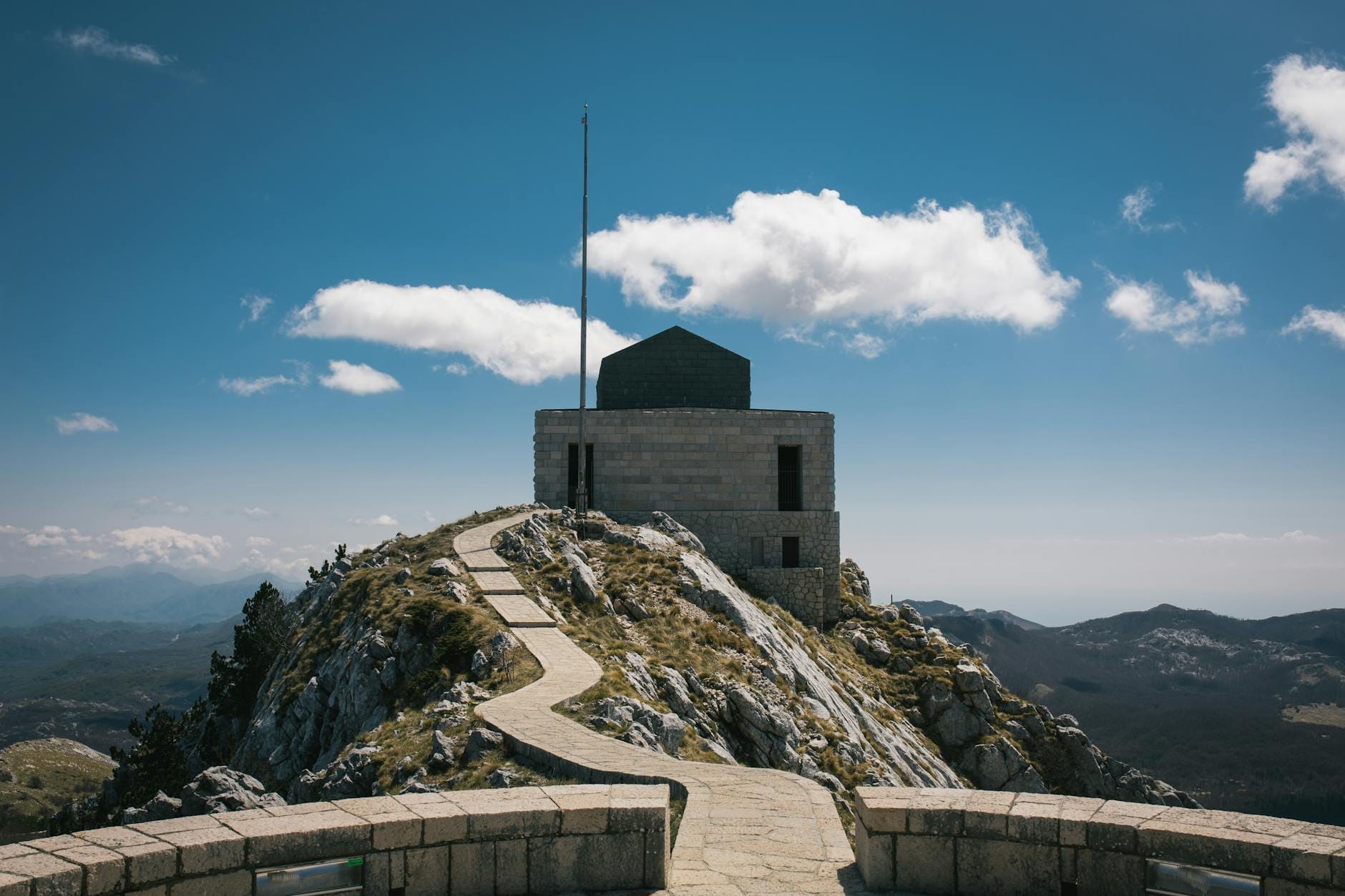
The Njegoš Mausoleum crowns the second-highest peak of Mount Lovćen at 1,657 meters, honoring Montenegro's greatest poet-prince. Reaching it requires climbing 461 steps, but the reward is a 360-degree panorama stretching from the Bay of Kotor to the Adriatic and Albanian Alps.
Quick Facts
- Location
- Jezerski vrh, Lovćen National Park, Montenegro
- Time Needed
- 2–3 hours including the stair climb and park drive
- Cost
- Park entrance fee applies; mausoleum entry fee charged separately (verify current rates on arrival)
- Best for
- History lovers, panoramic views, photography, understanding Montenegrin identity
What Is the Njegoš Mausoleum?
The Njegoš Mausoleum is the burial monument of Petar II Petrović-Njegoš, the prince-bishop of Montenegro who lived from 1813 to 1851. He is simultaneously Montenegro's most celebrated poet, its most consequential 19th-century ruler, and a near-mythological figure in the national consciousness. The mausoleum sits on Jezerski vrh, the second-highest peak of Mount Lovćen, at 1,657 meters above sea level. It is not a casual roadside stop. Getting there demands effort, and that effort is part of what makes arrival feel significant.
The current structure was designed by the Croatian sculptor Ivan Meštrović and completed in 1974, replacing an earlier chapel that had stood on the same site since Njegoš's death. Meštrović's vision is monumental: two granite caryatid figures guard the entrance, a gilded mosaic ceiling covers the interior chamber, and a colossal golden statue of Njegoš himself sits enthroned in the rock. The entire complex was carved directly into the mountaintop, which gives it a quality unlike any conventional mausoleum. It feels more geological than architectural.
ℹ️ Good to know
The mausoleum sits inside Lovćen National Park. You pay a combined entrance fee at the park gate before reaching the summit parking area. Bring cash as card acceptance can be unreliable at the entrance points.
The Climb: 461 Steps to the Summit
From the parking area below Jezerski vrh, a stone staircase of 461 steps winds up the exposed ridge to the mausoleum entrance. The ascent takes 15 to 25 minutes depending on your pace, and there is no elevator or alternative route. The path is well-maintained but steep in places, and the handrail sections are welcome when a mountain wind picks up. Wear shoes with grip. On warm days, the southern-facing slope bakes in direct sun, so bring water and start early if you are visiting in July or August.
The staircase itself frames the experience deliberately. As you climb, the landscape opens incrementally: first the forest canopy of Lovćen, then the ridge lines, then the full sweep of the Bay of Kotor far below. By the time you reach the entrance tunnel, you have already experienced the geography that shaped everything Njegoš wrote about. The isolation, the stone, the proximity to sky.
⚠️ What to skip
The summit is exposed and can be significantly colder and windier than the coast, even in summer. A light jacket is recommended year-round. In winter and early spring, the steps may be icy and the park road can close due to snow. Check conditions before driving up.
Tickets & tours
Hand-picked options from our booking partner. Prices are indicative; availability and final rates are confirmed when you complete your booking.
Half-day Blue Cave adventure
From 45 €Instant confirmationFree cancellationMontenegro Canyons private tour from Kotor
From 68 €Instant confirmationFree cancellationLovćen national park and Budva city full-day private tour
From 150 €Instant confirmationFree cancellationDubrovnik walking tour from Kotor
From 59 €Instant confirmationFree cancellation
Inside the Mausoleum: Meštrović's Vision in Stone and Gold
The interior is reached through a carved rock tunnel that adds to the sense of entering somewhere apart from ordinary experience. Inside the main chamber, the atmosphere is cool and dim, the air carrying the faint mineral smell of cut stone. The golden mosaic above Njegoš's sarcophagus is the visual centerpiece: Byzantine-influenced, covering the entire dome, and lit in a way that makes it appear to glow independently of the light source. It is genuinely striking, even for visitors who arrive skeptical of nationalist monuments.
The colossal seated statue of Njegoš, carved from a single block of black granite and gilded, commands the chamber without feeling theatrical. Meštrović made the figure contemplative rather than triumphant, which suits Njegoš's literary legacy better than a conquering pose would. The two granite caryatids flanking the entrance outside are among Meštrović's finest large-scale works, worth examining slowly before you head back down.
Photography inside the chamber is a matter of available light and your camera's low-light capability. Flash is generally not permitted. The golden mosaic photographs well in the existing ambient glow, but the statue itself sits in shadow and requires patience. Outside, the caryatids photograph best in the diffused light of early morning or overcast conditions, when the mountain's harsh midday shadows are absent.
The View: Why the Panorama Justifies Everything
Even if the architecture left you cold, the view from the summit terrace would make the journey worthwhile. On a clear day, the panorama covers the entire Bay of Kotor below to the southwest, the Adriatic coast stretching toward Croatia in the northwest, and the mountain ranges of Albania to the southeast. The scale is disorienting in the best possible way. Towns that feel substantial at ground level, Kotor, Perast, Herceg Novi, appear as pale clusters at the edge of an enormous blue expanse.
The best views come in the morning before haze builds over the coast, typically before 10 or 11am in summer. Sunset visits are atmospheric but visibility over the water diminishes as the light flattens. For a broader guide to the mountain's perspectives, the Lovćen mountain viewpoint page covers the other key vantage points accessible from the national park road.
💡 Local tip
Arrive at the parking area by 8:30am to have the staircase and terrace largely to yourself. Cruise ship passengers from Kotor begin arriving by mid-morning, and the narrow staircase becomes congested by 10am on peak-season days.
Historical and Cultural Context
Understanding why Montenegrins treat this place with the seriousness of a national shrine requires some context. Petar II Petrović-Njegoš ruled Montenegro at a time when the country was a small, landlocked mountain theocracy surrounded by the Ottoman Empire. His epic poem 'The Mountain Wreath', published in 1847, is considered the foundational text of Serbian and Montenegrin literature: a meditation on freedom, identity, sacrifice, and the relationship between a people and the stone landscape they inhabit. It is still studied in schools across the former Yugoslavia.
Njegoš himself requested burial on Lovćen's summit, and a simple chapel was built there after his death. During World War II, Austro-Hungarian forces destroyed the chapel, and his remains were briefly relocated. After Yugoslav unification, Josip Broz Tito commissioned Meštrović to design a permanent monument befitting the site's symbolic weight. The project took decades to complete. The result is unusual for a communist-era monument: deeply religious in feeling if not in doctrine, and unmistakably rooted in the Orthodox tradition Njegoš himself embodied.
The mausoleum sits within Lovćen National Park, which protects 6,400 hectares of karst mountain terrain, beech forest, and glacial lakes. Combining the mausoleum visit with a walk in the park or a stop at Ivanova Korita, the park's central recreational plateau, makes for a full day away from the coast.
Getting Here from Kotor
The mausoleum is most commonly visited as a day trip from Kotor. The drive from Kotor takes approximately 40 to 50 minutes via the serpentine mountain road, which climbs through 25 switchbacks above the old town before entering the national park. This road, which offers extraordinary coastal views on its own, is part of what makes the Kotor mountain access routes so worthwhile to plan carefully. The road is paved throughout but narrow in places, and large campervans or vehicles towing trailers should be aware that passing oncoming traffic on some bends requires care.
There is no scheduled public bus to the mausoleum. Options are: renting a car, booking an organized tour from Kotor, or hiring a taxi for the round trip. Organized tours often combine the mausoleum with the old royal capital of Cetinje, which lies on the other side of Lovćen and adds context to the Petrović dynasty that Njegoš led. If driving yourself, a standard car handles the road without difficulty in dry conditions.
For those planning a broader itinerary, the mausoleum fits naturally into a loop that includes Perast and the Bay of Kotor on the way back. The day trips from Kotor guide outlines how to structure this efficiently.
Who Should Skip This
The Njegoš Mausoleum is genuinely not for everyone. The 461-step climb on an exposed ridge, with no alternative access, rules it out for visitors with significant mobility limitations, knee problems, or a fear of heights on open staircases. Families with very young children may find the ascent manageable but the interior chamber, which is small and reverent in atmosphere, less engaging for kids than outdoor alternatives in the national park.
Travelers with no interest in the literary or political history of the Western Balkans may find the monument's scale impressive but emotionally inert. The site rewards those who arrive knowing something about Njegoš and what he represents. It is less of a tourist attraction and more of a pilgrimage site that happens to be open to visitors.
Insider Tips
- The park road from Kotor occasionally closes for resurfacing work or after heavy snow with little advance notice online. Call the national park office or ask your accommodation the morning of your visit if conditions are uncertain.
- Cetinje, Montenegro's old royal capital, is 20-25 minutes from the mausoleum by car and contains the National Museum of Montenegro. Combining both in a single day gives the mountain history much more coherence.
- The stone tunnel leading into the mausoleum chamber can feel cold even in summer. Sensitivity to confined spaces is worth knowing about in advance, though the tunnel is short and well-lit.
- Binoculars are worth carrying to the summit terrace. The Bay of Kotor's layered geography, islands, fortifications, and the Verige Strait, resolves into something extraordinary with magnification.
- Morning visits in May and September offer the sharpest air clarity and the least competition for space on the staircase. These months also catch the national park's beech forest at its most photogenic.
Who Is Njegoš Mausoleum For?
- History and literature travelers who want to understand the roots of Montenegrin national identity
- Photographers seeking a panoramic view that captures both mountain and Adriatic in a single frame
- Architecture and sculpture enthusiasts familiar with Ivan Meštrović's broader body of work
- Hikers and outdoor visitors combining the summit with a walk through Lovćen National Park
- Travelers on a multi-day itinerary who want to move beyond the coast into the mountain interior
Nearby Attractions
Other things to see while in Lovćen National Park:
- Lovćen Mountain Viewpoint
Perched high above the Bay of Kotor, the Lovćen Mountain Viewpoint delivers one of the most dramatic landscapes on the entire Adriatic coast. The vertiginous ascent, the sweeping views of the bay and old town below, and the raw alpine atmosphere of Lovćen National Park make this a serious destination in its own right, not just a photo stop.