Kotor Cable Car to Lovćen: Everything You Need to Know
The Kotor Cable Car climbs from Dub, inland from the Old Town, to Kuk on Mount Lovćen at 1,348 metres in 11 minutes. This guide covers fares, hours, how to reach the lower station, what waits at the top, and how the ride differs from hiking Kotor's fortress walls.
Plan and book this trip
Tools from our partner Travelpayouts help you compare flights and hotels. If you book through them, we may earn a commission at no extra cost to you.
Flights
Hotels map
TL;DR
- The Kotor Cable Car climbs from Dub, about 5 km inland from the Old Town, to Kuk on Mount Lovćen at 1,348 metres — 3.9 km of cable covered in 11 minutes.
- It is an attraction in its own right rather than a shortcut to the fortress wall hike: the gondola runs up Lovćen, well away from the walls above the Old Town.
- Standard adult fares are €25 return and €14 one-way, with children aged 2 to 12 at €7 return. Tickets are sold online and at the Dub ticket desks.
- Official shuttle buses reach the lower station from Kotor, Budva and Tivat, and parking at Dub costs €1.30 per hour.
- At the top there is a restaurant, a panoramic bar and a cluster of mountain rides on the edge of Lovćen National Park.
What Is the Kotor Cable Car?
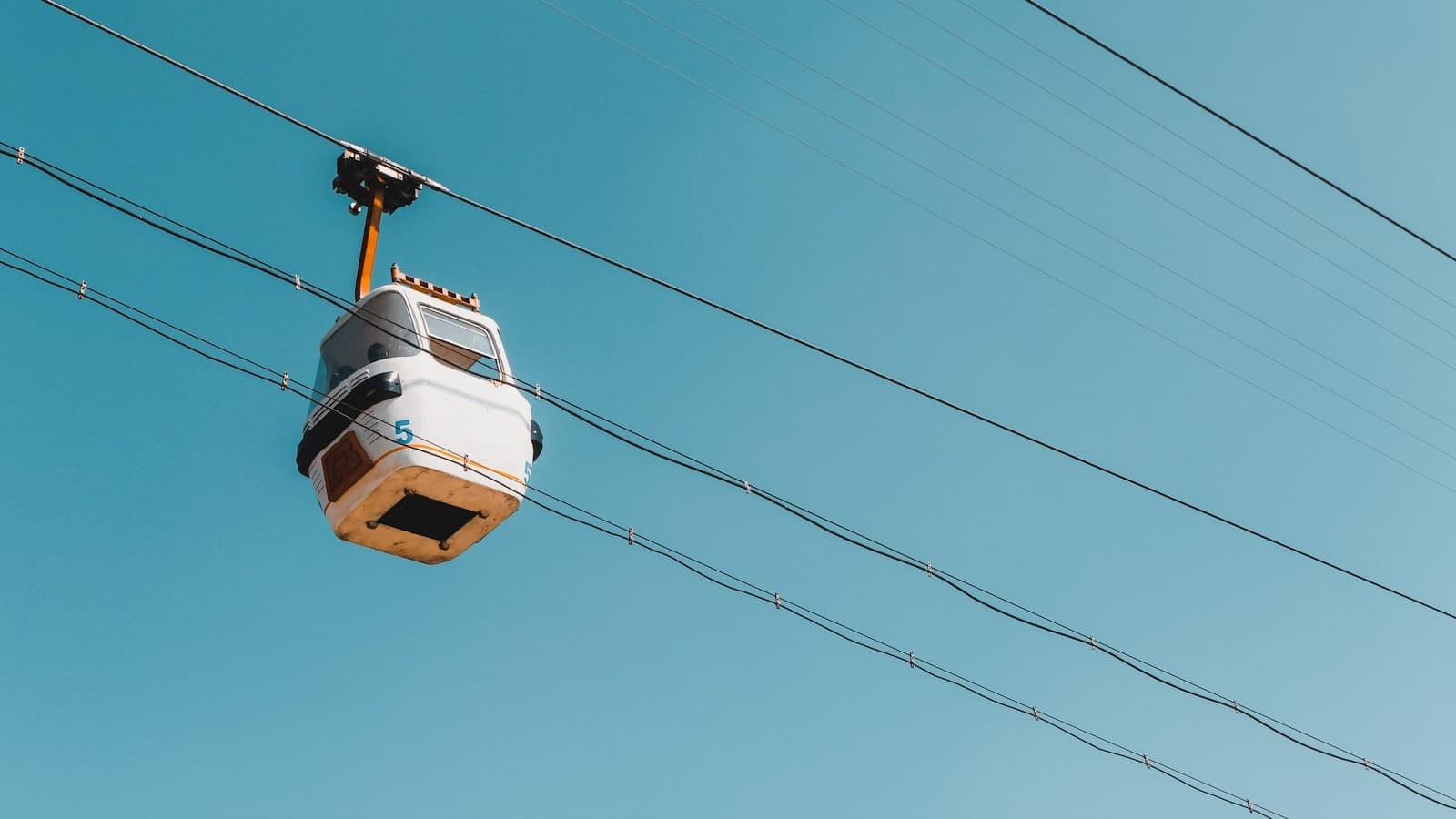
Montenegro's newest gondola opened in 2023 and does something very few cable cars anywhere manage: it lifts you from almost sea level to a high mountain plateau in one unbroken span. The lower station at Dub sits 32 metres above the Adriatic, the upper station at Kuk stands at 1,348 metres on Mount Lovćen, and between them run 3.9 kilometres of cable and 1,316 metres of vertical gain. The ride takes 11 minutes in fully glazed ten-person cabins, 48 of them, with capacity for up to 1,200 passengers an hour.
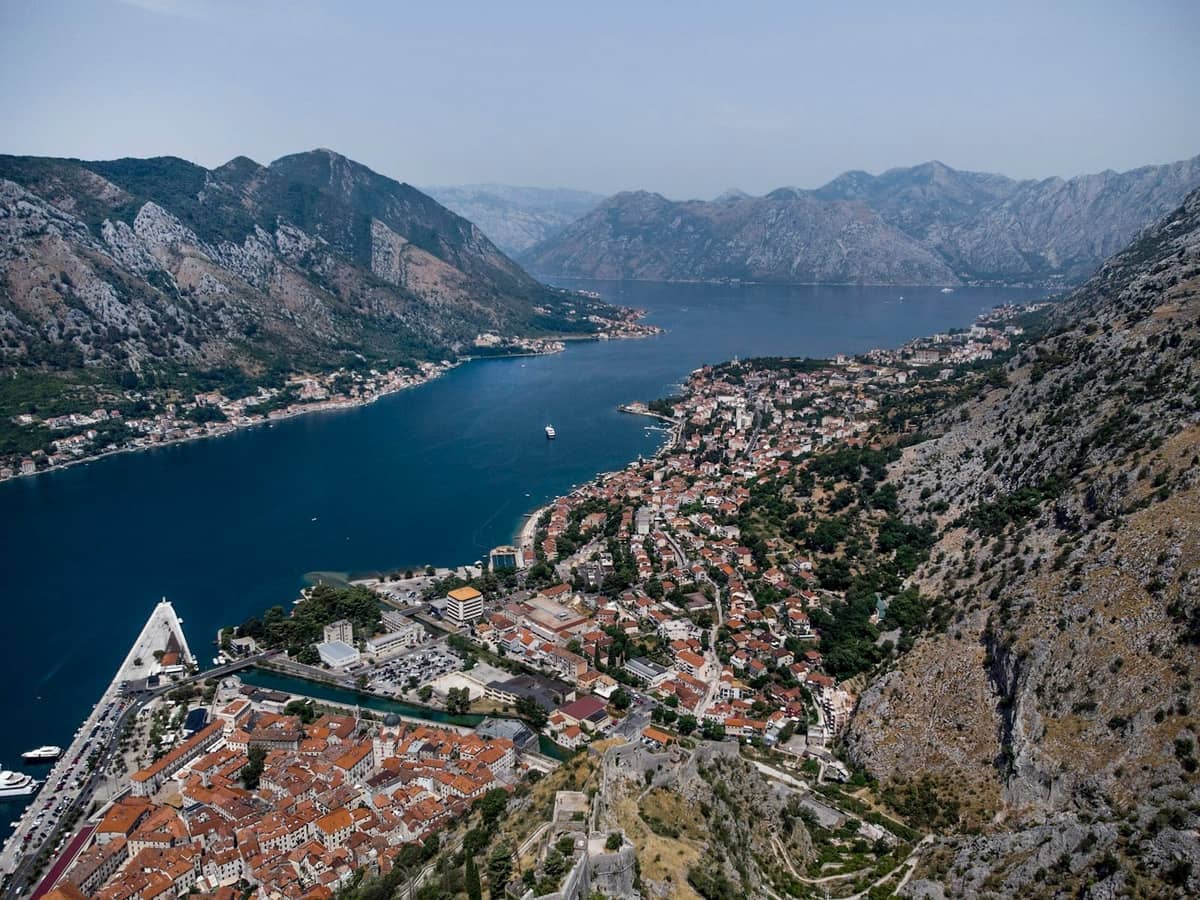
The name causes some confusion, so it is worth getting the geography straight before you plan the day: neither station is in the Old Town. Dub lies inland in the Kotor municipality, roughly 5 km from the town walls and about 200 metres off the Budva–Tivat road, so you will need a shuttle, taxi or car to reach it. Kuk, at the far end, sits on Lovćen at the edge of Lovćen National Park, around 18 km from Cetinje. The Fortress of San Giovanni that appears in every photograph of Kotor is a separate place on a separate hillside, 260 metres above the Old Town and reached on foot from inside the walls.
ℹ️ Good to know
The gondola's published hours are 9:00 to 21:00, with a later 10:30 start on Tuesdays; the last ride up is at 20:30 and the last down at 21:00. The timetable shortens as the days do, and high wind or poor visibility can halt the cabins at short notice.
Tickets, Hours, and Practical Logistics
Tickets are sold online on the operator's website and at the ticket desks at the Dub station, where both cards and cash are accepted. A standard adult return costs €25 and a one-way €14 at the time of writing. Children aged 2 to 12 pay €7 return or €4 one-way, and visitors with disabilities pay €12 return or €7 one-way. There are also combined packages that bundle the shuttle bus with a return gondola ticket, which are worth comparing if you are coming from Kotor, Budva or Tivat without a car.
- Operating Season The gondola works to a seasonal timetable that broadly covers late spring through October. It does not run through the winter months.
- Daily Hours 9:00 to 21:00, starting later at 10:30 on Tuesdays. Last ascent 20:30, last descent 21:00.
- Fares (Adult) €25 return, €14 one-way. Children aged 2 to 12 pay €7 return; reduced fares apply for visitors with disabilities.
- Journey Time 11 minutes each way. The 48 cabins circulate continuously, so queues keep moving even when the station is busy.
- Parking Paid parking at the Dub station costs €1.30 per hour for cars and €15 for three hours for buses. Parking at the Kuk station is free.
⚠️ What to skip
The ride is only as good as the visibility. The cabins keep running in cloud and light rain, but at 1,348 metres a heavily overcast day means arriving inside the cloud with nothing to look at. Check the forecast and the operator's channels on the morning you plan to go.
What You'll Find at the Top
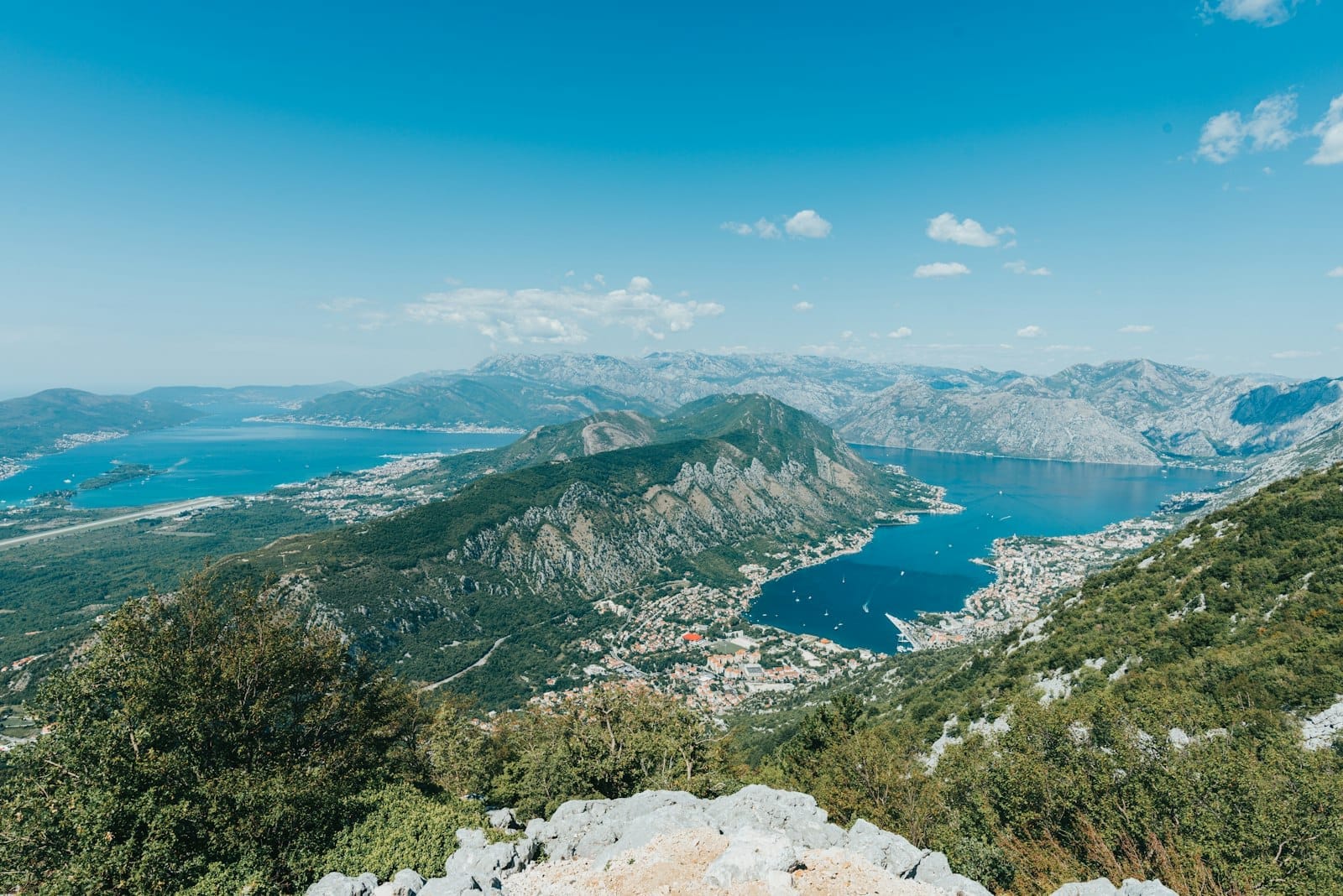
Kuk is a built-up mountain station rather than a bare summit. From its terraces the Bay of Kotor opens up far below, with the Vrmac ridge, the Tivat peninsula and the open Adriatic beyond it on clear days, and the grey limestone of the Lovćen massif rising behind you. Lovćen National Park begins effectively at the station door and the road on to Cetinje passes close by, which makes the upper station a useful starting point for the mountain rather than only a viewpoint.
There is proper food up here, not just a kiosk. Forza Kuk, next to the upper station exit, is a full restaurant with panoramic views, and Monte1350bar occupies the very top with a wide terrace built for lingering over a drink. Down at the Dub station, Station Stanica serves olives, prosciutto and cheese alongside a short drinks list, and Booka Gelato makes small-batch ice cream if you have time before boarding.
Kuk doubles as a small mountain activity park, with each ride ticketed separately from the gondola. The Alpine Coaster runs 1,056 metres of track down the hillside at a speed you control, taking three to five minutes for €12, with a minimum rider height of 105 cm. The Falcon Fly and the Aerobar, a 35-metre platform ride with a drink included, cost €15 each, and there is a playground for children and an open-air performance stage. Children under 12 ride the gondola accompanied by an adult, and there is no height requirement for the cabins themselves.
✨ Pro tip
Kuk stands more than 1,300 metres above the coast and is reliably cooler and windier than the waterfront, whatever the forecast says down in town. A light layer is the difference between a quick look and an unhurried hour on the terrace, and trainers rather than sandals make the paths around the station a good deal easier.
Cable Car or Fortress Walls? Two Separate Attractions
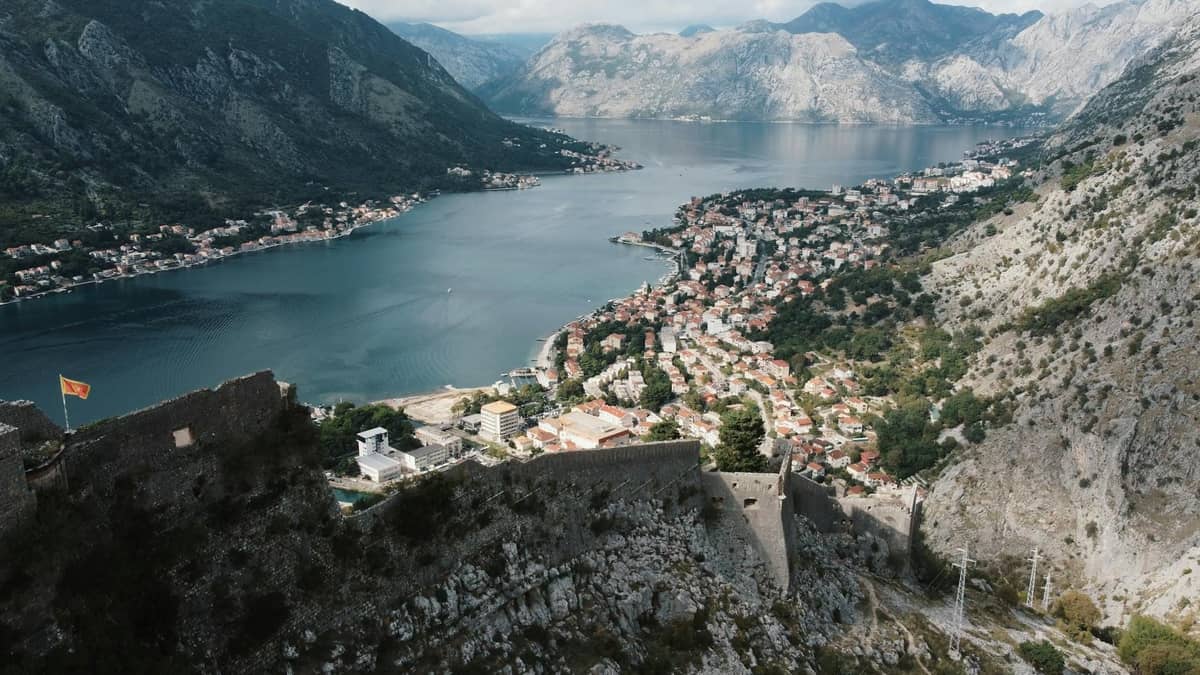
These are the two classic ways to get above Kotor, and they are genuinely separate outings in separate places — one is not a shortcut to the other. The full fortress wall hike starts inside Kotor Old Town and climbs roughly 1,350 stone steps to the Fortress of San Giovanni at 260 metres, on a €15 city walls ticket, which takes most people 45 to 90 minutes upward. The gondola starts 5 km away at Dub and finishes 1,348 metres up on Lovćen. There is no cable car to the fortress and no route between the upper station and the walls.
What you get out of each is different, too. The walls are a close-range encounter with Kotor's medieval defences: towers, gateways, a hillside chapel, and the town tightening into its grid below you, close enough to pick out individual rooftops and church domes. The gondola trades that detail for scale, ending on a mountain where the whole bay reads as a single shape and the view carries out to open sea. The logistics differ as much as the experience — the walls need only your legs and a ticket booth a few minutes from the main square, while the gondola needs a transfer out of town.
- Pick the gondola if you want the wide mountain panorama, you are travelling with young children or anyone who cannot manage steep steps, or you are visiting in the July and August heat.
- Pick the walls if the fortifications themselves are the draw, you want the view that frames the Old Town directly beneath you, and you are comfortable with a long climb on uneven stone.
- Do both if you have the time — they work best as two separate half-days, one beginning in the Old Town and the other beginning with the ride out to Dub.
Best Time to Ride: Crowds, Light, and Weather
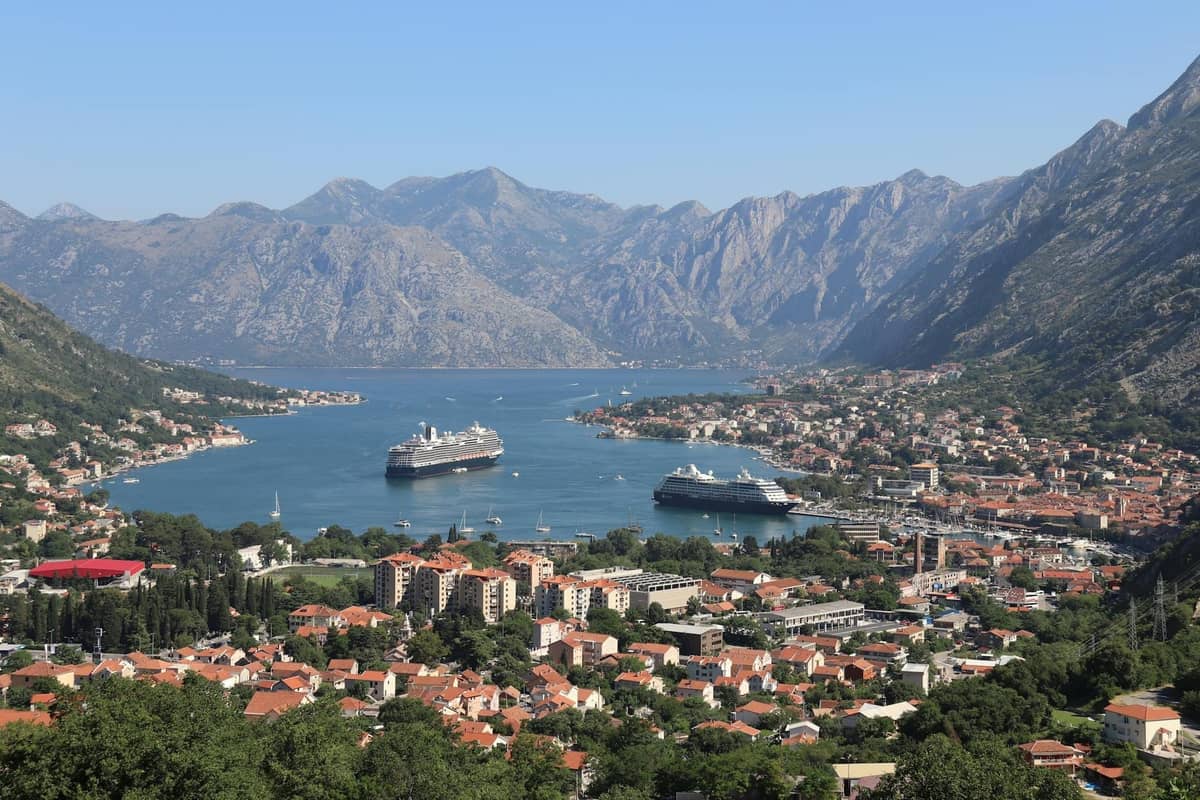
Kotor's summer is shaped by cruise traffic, and the gondola feels it: on days with ships in port, organised transfers and tours concentrate arrivals in the middle of the day. Early morning and the last couple of hours before closing are noticeably calmer. For which days are busy in the first place, the Kotor cruise port guide tracks arrival patterns and how to plan around them.
Light matters more here than at most viewpoints, because you are looking down onto water. Late afternoon sun comes in from the west and gives the bay a depth and colour that flat midday light erases, which is why the final rides of the day are the photographers' choice. If you are collecting perspectives over the bay, the Kotor viewpoints guide covers the other elevated options, including those you can reach by road.
Seasonally, May, June and September strike the best balance: the terrace is warm enough to enjoy, the mountain air at the top is pleasant rather than cold, and the queues are shorter than in high summer. The best time to visit Kotor guide goes deeper into month-by-month weather and crowd cycles.
Getting to the Lower Station in Dub
Without a car, the operator's official shuttle is the simplest way there. Shuttle buses run to the Dub station from the Kotor Main Bus Station, from Budva and from Tivat, with private van transfers available for groups that want their own timings, and tickets are sold online as well as at the Kotor bus station. Ordinary public buses do not serve the station, so the shuttle or a taxi is the realistic choice if you are staying in the Old Town.
Driving is straightforward. Dub is a 10 to 15 minute drive from the Old Town and roughly 10 km from Tivat, set 200 metres off the Budva–Tivat road, with a large paid car park at the station. You can also ride the line in the other direction: the Kuk station is about 18 km from Cetinje and its car park is free, which suits anyone approaching from Podgorica or the mountain side. Coming from further afield, the Dubrovnik to Kotor route is a popular day trip, and the gondola realistically takes half of that day once the transfer out to Dub is counted.
💡 Local tip
Allow about three hours door to door from Kotor: the transfer each way, 22 minutes of riding, and an unhurried hour at the top before anything feels rushed. Add time if you plan to eat at Forza Kuk or ride the Alpine Coaster, and treat the Old Town as its own block of the day rather than something to squeeze around the gondola.
FAQ
Is the Kotor cable car worth it?
For the view, yes — provided the weather is clear. Eleven minutes takes you from the coast to a plateau at 1,348 metres with the whole Bay of Kotor laid out below, and the restaurant, bar and rides at Kuk turn it into a half-day rather than a quick look. It is not cheap at €25 return for an adult, and on a heavily overcast day you are paying to sit inside a cloud, so it rewards a little timing.
How long does the Kotor cable car take?
Eleven minutes each way, so 22 minutes of riding in total. Allow around three hours door to door from Kotor, including the transfer out to Dub and back and an hour at the top. Add more if you want a meal at Forza Kuk or a run on the Alpine Coaster.
Does the Kotor cable car go to San Giovanni Fortress?
No. The gondola links Dub, about 5 km inland from the Old Town, with Kuk on Mount Lovćen at 1,348 metres. The Fortress of San Giovanni stands 260 metres above the Old Town and is reached on foot, up roughly 1,350 steps from inside the walls on a city walls ticket. They are two separate attractions in two separate places.
Does the Kotor cable car run in winter?
No. The gondola works to a seasonal timetable that broadly covers late spring through October and closes for the winter. Hours also shorten through the autumn as daylight does.
Where exactly is the Kotor cable car station?
The lower station is at Dub, in the Kotor municipality about 5 km from the Old Town and 200 metres off the Budva–Tivat road — a 10 to 15 minute drive, or a ride on the official shuttle bus from the Kotor Main Bus Station. The upper station is at Kuk, 1,348 metres up on Mount Lovćen, where parking is free for anyone arriving from the Cetinje side.