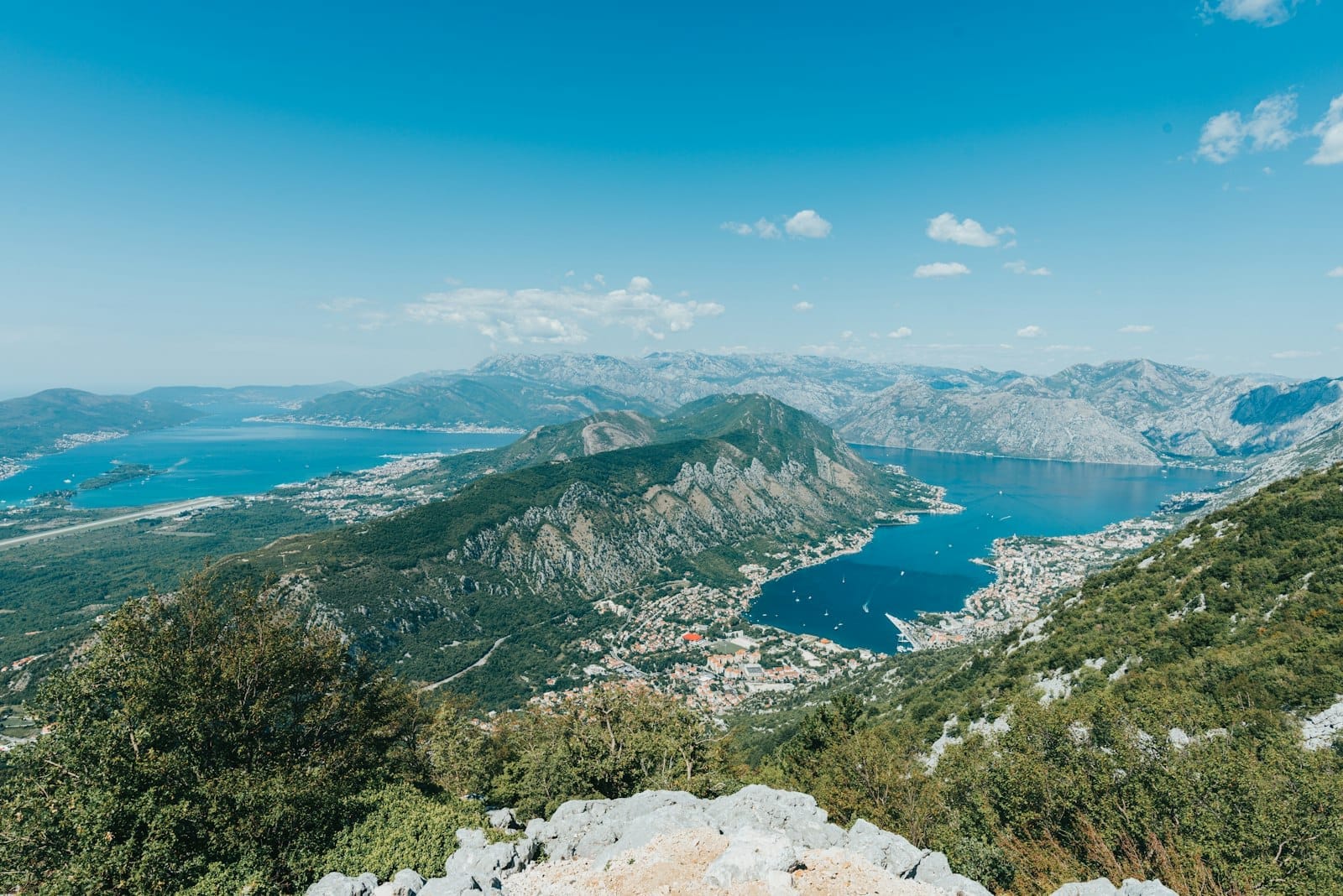
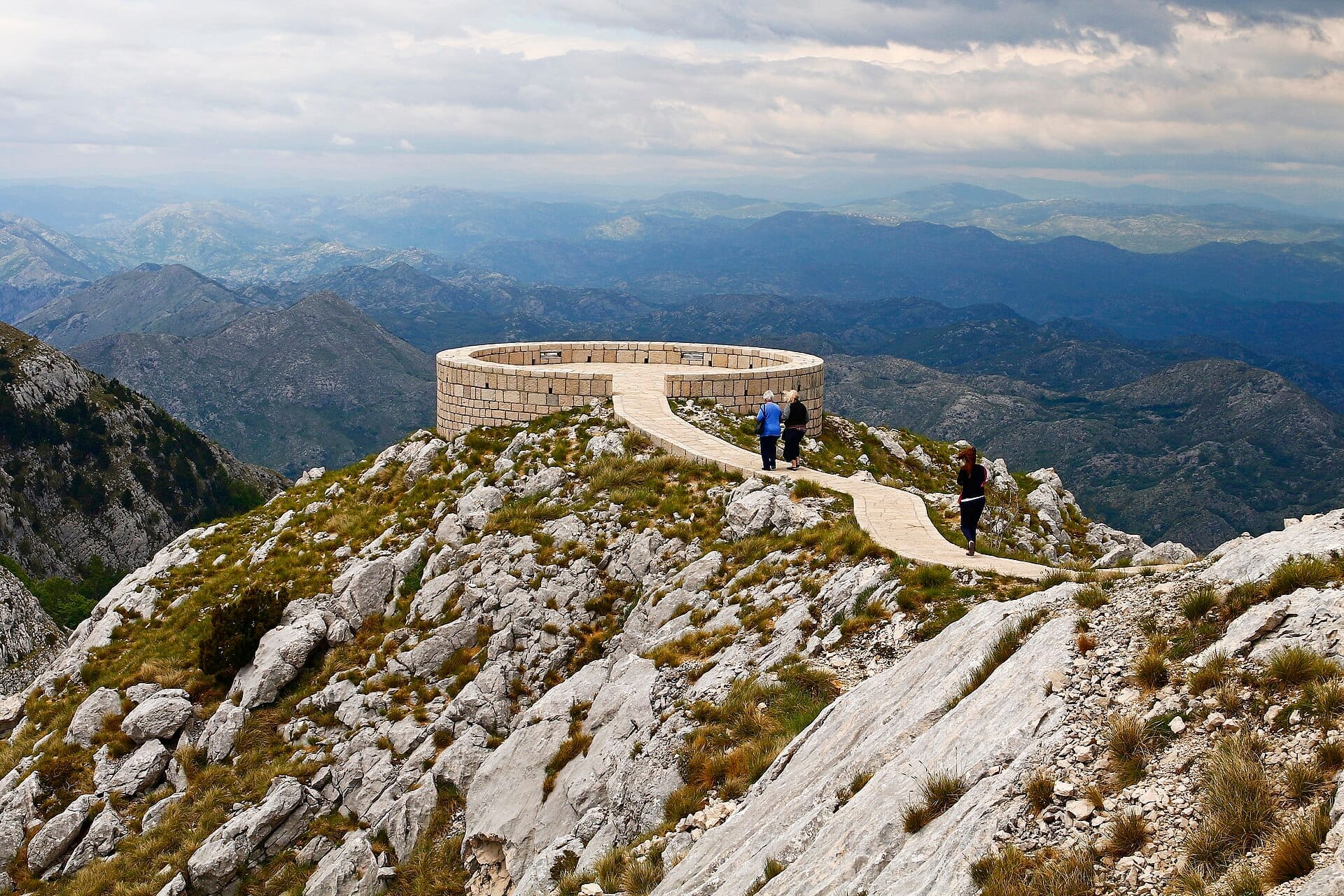
Rising sharply above the Bay of Kotor, Lovćen National Park is Montenegro's most symbolic mountain range, offering vertiginous viewpoints, centuries-old monasteries, and one of the Adriatic's most dramatic road ascents. It is both a day trip from Kotor and a destination in its own right.
Lovćen National Park looms over Kotor like a dark wall, its limestone peaks cutting into the sky at over 1,700 metres. This is the mountain that shaped Montenegro's identity, gave the country its name (Crna Gora means Black Mountain), and still holds the tomb of its greatest poet-prince. For anyone staying in Kotor, it is an unmissable presence on the horizon and a half-day journey that completely reframes the city below.
Orientation
Lovćen National Park sits directly above and behind Kotor, forming the steep mountain backdrop that is visible from almost every point in the Old Town and along the bay. The park covers roughly 6,220 hectares across two primary massifs: Štirovnik, the highest peak at 1,749 metres, and Jezerski Vrh at 1,657 metres, where the Njegoš Mausoleum stands. The town of Cetinje, Montenegro's historic royal capital, sits on the plateau just beyond the park's inland boundary, making Lovćen a natural bridge between the coastal world of the Bay of Kotor and the interior highlands.
From Kotor's Sea Gate, the park entrance road begins to climb almost immediately after leaving the city limits. The famous serpentine road, known locally as the Kotor-Lovćen road, consists of 25 numbered hairpin turns and gains over 1,200 metres of altitude in roughly 12 kilometres. This road is one of the defining drives in the western Balkans: narrow, occasionally vertiginous, and offering increasingly spectacular views of the Bay of Kotor with every switchback. The village of Njeguši, birthplace of the Petrović-Njegoš dynasty and famous throughout Montenegro for its smoked ham and cheese, sits partway along the route on the inland plateau.
The park is administratively separate from Kotor but functionally tied to it as the city's most accessible mountain wilderness. It connects naturally with day trips to Perast and the Bay of Kotor on one axis, and to Cetinje and the interior of Montenegro on the other. For a fuller picture of how the park fits into a broader itinerary, the day trips from Kotor guide covers the logistics in detail.
Character & Atmosphere
The shift in atmosphere as you leave Kotor and climb toward Lovćen is rapid and striking. Within twenty minutes of departing the Old Town, the noise of the waterfront drops away, the air cools noticeably, and the landscape turns from Mediterranean stone and terracotta to exposed limestone karst, scrub oak, and black pine forest. On clear mornings, the mountain above the first few switchbacks is often still in shadow while the bay below glitters in full sun, giving the road a theatrical quality that few mountain approaches anywhere in Europe can match.
Higher up, near the summit plateau and the mausoleum, the mood shifts again. The wind picks up, the air carries the scent of pine and cold stone, and on overcast days the peaks can disappear entirely into low cloud. This is genuinely Alpine territory despite being visible from a beach resort. Midday in summer sees the most visitor traffic at the mausoleum, with tour groups and rental cars filling the small car park near the summit. Early morning arrivals, particularly those who reach the mausoleum before 9 am, will often have the terrace and the 360-degree views almost entirely to themselves.
The village of Njeguši, sitting at around 900 metres on the plateau between the coastal ascent and the higher peaks, operates at a pace that feels disconnected from both Kotor's tourist activity and the park's summit drama. A handful of family-run roadside restaurants serve the local specialties here: smoked prosciutto, aged sheep's milk cheese, and bread baked over open coals. These are not tourist reconstructions but actual products that Njeguši families have been curing and aging for generations, supplied to markets across Montenegro.
💡 Local tip
Aim to reach the mausoleum car park by 9 am if you want the summit terrace with minimal crowds. By 11 am in summer, tour buses begin arriving in waves that can make the 461-step staircase uncomfortably congested.
What to See & Do
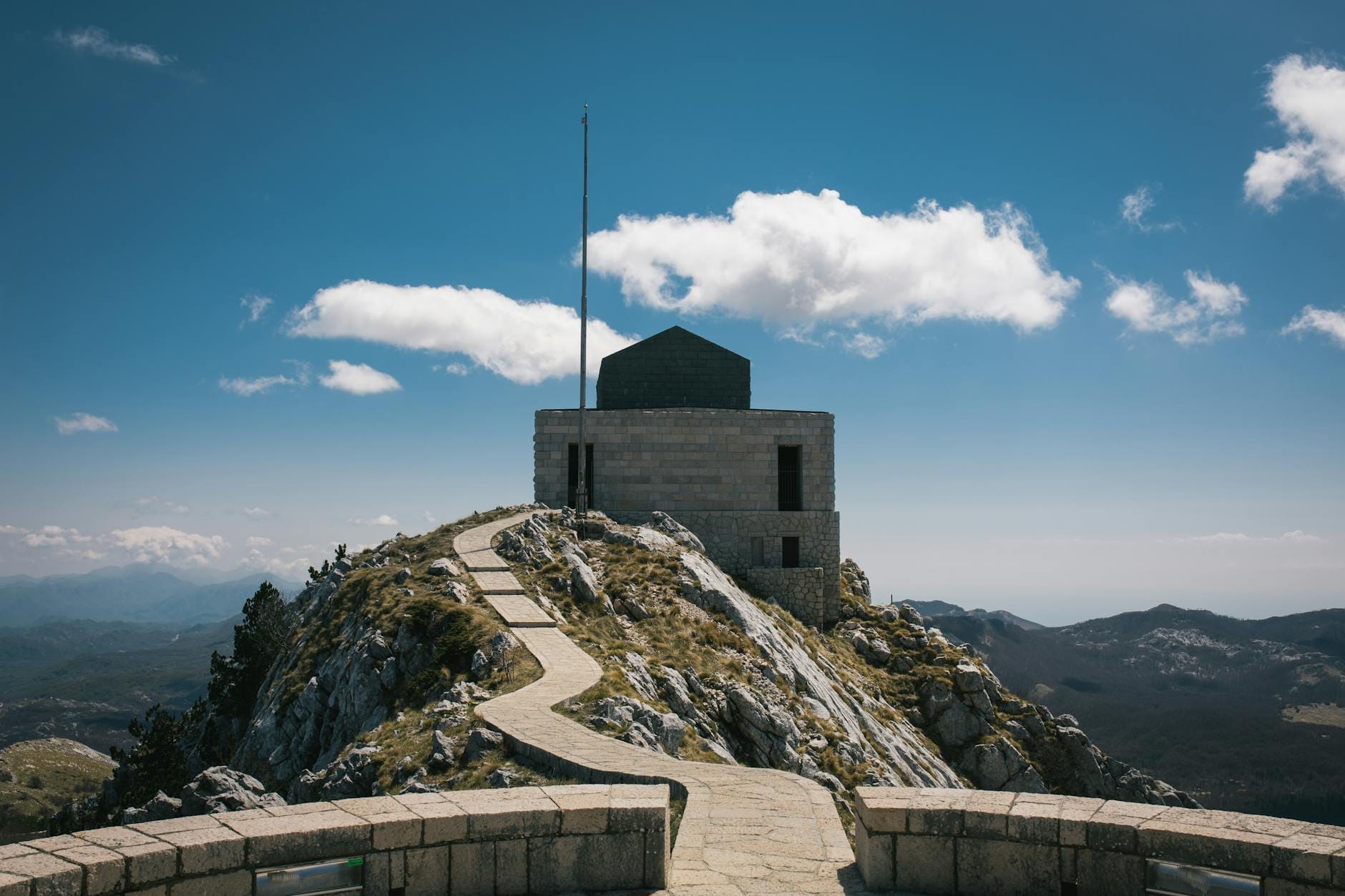
The centerpiece of Lovćen National Park is the Njegoš Mausoleum on the summit of Jezerski Vrh. Built by the Croatian sculptor Ivan Meštrović and completed in 1974, the mausoleum replaced an earlier chapel and houses the tomb of Petar II Petrović-Njegoš, the poet-prince-bishop who ruled Montenegro in the mid-19th century and remains the country's most revered cultural figure. Reaching the mausoleum requires climbing 461 stone steps carved into the rock face from the car park below. The ascent takes around 20 to 30 minutes at a steady pace, and the reward at the top is a panoramic terrace with views stretching from the Bay of Kotor to the Adriatic and, on clear days, to the mountains of Albania and Croatia.
Inside the mausoleum itself, Meštrović's golden mosaic of Njegoš dominates a circular chamber of black granite. The atmosphere is intentionally ceremonial: cool, dim, and silent except for the wind outside. Below the mausoleum, the Lovćen mountain viewpoint platforms offer the most famous aerial perspective of the bay, showing Kotor's Old Town as a compact medieval grid surrounded by water and mountain from directly above.
Beyond the mausoleum, the park contains a network of marked hiking trails ranging from short summit loops to multi-hour traverses connecting Lovćen to Cetinje. The trail from the village of Krstac over the ridge to Ivanova Korita, the park's main recreational area, is one of the most accessible half-day hikes, passing through beech and pine forest with regular views back toward the coast. Ivanova Korita itself, a flat highland meadow at around 1,450 metres, has a small hotel and restaurant that functions as a base for longer explorations.
Njegoš Mausoleum: summit of Jezerski Vrh, 461 steps from the car park, open daily
Summit viewpoint terrace: 360-degree panorama including the Bay of Kotor
Njeguši village: smoked ham and cheese tasting at family roadside stops
Ivanova Korita: highland meadow with hiking trail access and accommodation
Krstac viewpoint: the most photographed perspective of the 25 serpentine bends from above
Mountain bike trails: a network of routes managed through the park administration
ℹ️ Good to know
The mausoleum is open daily. Entry costs around €3.50. The car park below the summit staircase charges a separate parking fee of €2-3. Bring layers regardless of the season: the summit is consistently 8-12°C cooler than Kotor.
Eating & Drinking
The food options within Lovćen National Park are limited but specific. Njeguši village is the one stop that every visitor should make, and it rewards those who pause here rather than treating it as a checkpoint on the way to the summit. The village's smoked prosciutto, known as Njeguški pršut, is dry-cured for months in a combination of sea salt, smoke, and mountain air. It is categorically different from Italian prosciutto or Spanish jamón: darker, denser, and with a smokier, more mineral character. Local families sell it by the slice at roadside stops along the main road through the village.
The restaurants in Njeguši tend to serve simple, mountainous Montenegrin food: grilled meats, polenta, smoked cheese platters, and local wine. Prices are lower than in Kotor's Old Town, and the portions are generous. The setting, a plateau of farmland and stone walls with Lovćen's peaks behind, makes even a basic lunch feel like an event. For a deeper look at what and where to eat across the wider Kotor area, the what to eat in Kotor guide covers the regional specialties in detail.
At Ivanova Korita, the park's highland recreation area, there is a small restaurant attached to the mountain lodge that serves coffee, grilled meat, and basic Montenegrin dishes. It is best treated as a functional rest stop for hikers rather than a destination meal. There are no cafés or bars at the mausoleum summit car park, so carry water and snacks if you plan to spend time on the trails.
Getting There & Around
There is no public bus service from Kotor directly to Lovćen National Park or the Njegoš Mausoleum. The practical options are: renting a car, hiring a taxi, joining an organized tour, or cycling if you are an experienced rider. The drive from Kotor to the mausoleum car park takes around 40 to 50 minutes depending on traffic on the serpentine road. The getting around Kotor guide has current taxi fare estimates and rental car advice.
Taxis from Kotor to the mausoleum and back, with a wait of one to two hours at the top, typically cost €40-60 for the round trip. Negotiate the total price before departing, including the waiting time. Licensed taxi drivers in Kotor are familiar with the route and can recommend the best stops.
Organized tours from Kotor usually combine Lovćen with a stop in Njeguši and a visit to Cetinje, running for roughly five to six hours. These are booked through the many tour operators along Kotor's waterfront or from accommodation providers. The advantage is that a guide can explain the Njegoš legacy and the park's ecology in context, which significantly enriches the mausoleum visit. The serpentine road itself is manageable in a standard rental car, but drivers who are uncomfortable with narrow, hairpin mountain roads should consider a guided tour with a driver.
Cycling the 25 bends from Kotor is possible and popular among serious cyclists, but it is a hard climb: roughly 1,200 metres of altitude gain over 12 kilometres with almost no flat sections. The descent is fast and requires confidence on narrow roads. Several Kotor-based operators rent performance road bikes and offer guided cycling ascents with a support vehicle.
⚠️ What to skip
The serpentine road has no guardrails on many sections and is wide enough for only one car in places. Drive slowly, use your horn before blind corners, and pull over to let vehicles pass on the uphill side. In winter and early spring, ice and snow can make sections impassable without chains.
Where to Stay
Most visitors to Lovćen National Park stay in Kotor and make a day trip to the mountain. This is the most convenient arrangement, particularly if you also want access to the Old Town, the waterfront, and the wider Bay of Kotor. However, staying within the park or nearby is a genuine option for travelers who want quieter nights, cooler summer temperatures, and early access to the trails before day-trip traffic arrives.
Ivanova Korita, the highland meadow at 1,450 metres inside the park, has a small mountain lodge with basic rooms. It is primarily used by hikers and school groups, and advance booking is essential in summer. The village of Njeguši has a handful of private rooms and small guesthouses that offer a more authentic rural Montenegrin experience than anything available in Kotor's tourist center. For the full range of Kotor-area accommodation options, the where to stay in Kotor guide gives an honest breakdown by neighborhood and budget.
Cetinje, on the inland plateau just beyond the park boundary, offers more accommodation variety than anywhere within the park itself: small hotels, guesthouses, and apartments with easy access to both Lovćen's trails and Montenegro's historic royal capital. The drive from Cetinje to the mausoleum car park is around 20 minutes, making it a logical base for anyone planning multiple days of hiking.
Lovćen in the Context of a Kotor Visit
Understanding Lovćen changes how you see Kotor. The medieval walls that wrap around the Old Town are not the city's primary defense: the mountain behind them was. The Kotor city walls and the Fortress of San Giovanni high above the town are themselves a transition point between the coastal city and the mountain world above. Looking down from Lovćen's summit, you can trace this logic directly: Kotor is compressed into a tiny triangle of land, completely encircled by water and rock, surviving for centuries because the mountain made it unassailable from the landward side.
The park also provides the best answer to one of the most common questions about Kotor: what do you do on a second day? If day one covers the Kotor Old Town walking tour and the walls, day two almost always belongs to Lovćen and, if time allows, Cetinje. The contrast is complete: the coastal, Mediterranean, Venetian character of the Old Town against the austere, Slavic, deeply landlocked feel of the mountain and the royal capital beyond it. Together they represent the two faces of Montenegro in a single manageable itinerary.
For a broader sense of how to structure your time, the 2 days in Kotor itinerary integrates the Lovćen visit into a realistic schedule. And if you are weighing whether the region as a whole is worth the trip, is Kotor worth visiting addresses the broader question with similar honesty.
TL;DR
Lovćen National Park rises directly above Kotor, reachable in 40-50 minutes by car via the dramatic 25-bend serpentine road.
The Njegoš Mausoleum on Jezerski Vrh summit is the park's main draw: 461 steps, a black granite chamber, and panoramic views of the Bay of Kotor.
No public buses serve the park; getting there requires a rental car, taxi, organized tour, or serious cycling ability.
Best for: travelers who want altitude, mountain hiking, and Montenegrin cultural depth beyond the Old Town; the view from the summit reframes everything you have seen at sea level.
Not ideal for: those with limited mobility (the 461-step climb is unavoidable), visitors on cruise ship port stops with only a few hours, or anyone expecting resort-style facilities within the park.
Two days in Kotor is enough to cover the essentials without feeling rushed, but only if you plan smartly. This itinerary takes you through the walled Old Town, up to the fortress, out onto the Bay of Kotor, and into the best local restaurants — with honest advice on what to skip and when to go.
The Bay of Kotor is one of the most dramatic stretches of water in the Adriatic, and exploring it by boat is genuinely rewarding. But not all tours are equal. This guide breaks down every major option, from group cruises to private speedboats, so you spend your money on the right one.
Kotor rewards visitors differently depending on when you go. This guide cuts through the hype to tell you exactly which months suit which travel styles, what the weather actually feels like inside those medieval walls, and when to avoid the cruise ship crush.
Kotor is a superb base for exploring the Bay of Kotor and the Montenegrin coast. This guide covers the best day trips from Kotor, with real logistics, honest rankings, and the options that most visitors overlook.
The journey from Dubrovnik to Kotor is one of the most scenic short trips in the Adriatic. Here is a complete breakdown of every transport option, realistic timings, border crossing realities, and how to make the most of the route.
Kotor's medieval old town is walkable in under 20 minutes, but the surrounding Bay of Kotor stretches across 28 kilometres of coastline. This guide covers every transport option, with honest advice on what works, what doesn't, and how to move around Montenegro like someone who's done it before.
Kotor Montenegro gets enormous hype, but the reality is more nuanced than the Instagram photos suggest. This guide cuts through the noise with honest takes on the crowds, costs, highlights, and the cases for and against making the trip.
The Blue Cave near Kotor is one of Montenegro's most photographed natural attractions, but getting there takes planning. This guide covers every practical detail: tour options, pricing, seasonal conditions, and what the experience is actually like.
The Kotor Cable Car climbs from Dub, inland from the Old Town, to Kuk on Mount Lovćen at 1,348 metres in 11 minutes. This guide covers fares, hours, how to reach the lower station, what waits at the top, and how the ride differs from hiking Kotor's fortress walls.
Kotor, Montenegro has one of the most celebrated cat cultures in the world. This guide covers the history behind the city's feline reputation, where to spot cats in the Old Town, the dedicated Cat Museum, how to interact responsibly, and what to buy at cat-themed shops.
Kotor is one of the most rewarding cruise stops in the Adriatic. This guide covers everything from where your ship docks to what to prioritize when time is short, including the Old Town walls, viewpoints, day trip options, and practical logistics for first-time visitors.
The hike up Kotor's medieval fortress walls to the Fortress of San Giovanni is one of the most rewarding climbs in the Adriatic. This guide covers the full route, ticket costs, timing advice, what to bring, and honest tips on what the experience is actually like.
Summer is Kotor's peak season, and it shows. Cruise ships, scorching heat, and packed streets define July and August, but the Bay of Kotor is genuinely spectacular in warm weather. This guide breaks down exactly what to expect and how to plan smart.
A detailed self-guided walking tour through Kotor Old Town, covering the best squares, churches, city walls, and hidden corners of Montenegro's UNESCO-listed medieval town. Includes route logistics, timing tips, and honest advice on what to skip.
Kotor and its surrounding bay offer some of the most dramatic scenery in the Mediterranean. This guide covers every worthwhile viewpoint, from the city walls above the old town to the mountain peaks of Lovćen, so you know exactly where to go and when to get there.
Kotor packs an extraordinary range of experiences into a small area: a UNESCO-listed medieval old town, medieval churches, vertiginous fortress hikes, and boat trips to baroque villages across the bay. This guide covers the 18 best things to do in Kotor, organized by theme so you can plan your time well.
Kotor's food scene is shaped by its geography: Adriatic seafood from the bay, slow-cooked mountain meat from the Montenegrin interior, and centuries of Venetian influence layered into everything. This guide covers what to order, where to eat it, and what to skip.
Kotor's food scene punches well above its size. This guide covers the best restaurants, local dishes worth ordering, bars for evening drinks, and the tourist traps to avoid in the Old Town and beyond.
Choosing where to stay in Kotor shapes your entire trip. This guide breaks down every main area, from the medieval Old Town to the quieter bay villages, with honest advice on who each neighborhood suits, what to expect at different price points, and which options to skip.