Where to Eat in Kotor: Best Restaurants, Local Food & Bars
Kotor's food scene punches well above its size. This guide covers the best restaurants, local dishes worth ordering, bars for evening drinks, and the tourist traps to avoid in the Old Town and beyond.
Plan and book this trip
Tools from our partner Travelpayouts help you compare flights and hotels. If you book through them, we may earn a commission at no extra cost to you.
Flights
Hotels map
TL;DR
- Kotor's best food is found in small konobas (family-run taverns) just outside the most tourist-heavy squares.
- Adriatic seafood dominates: grilled fish, black risotto, and buzara-style mussels are the dishes to prioritize — see also what to eat in Kotor for a full breakdown.
- Budget a rough €15-25 per person for a sit-down meal with wine at a mid-range konoba; terrace spots on the Square of Arms charge noticeably more for the view.
- The Old Town has great atmosphere but some overpriced spots aimed at cruise passengers — knowing which to avoid saves money and disappointment.
- For evening drinks, the bars along the Kotor seaside promenade and inside the Old Town walls offer very different vibes — both worth exploring.
Understanding Kotor's Food Scene
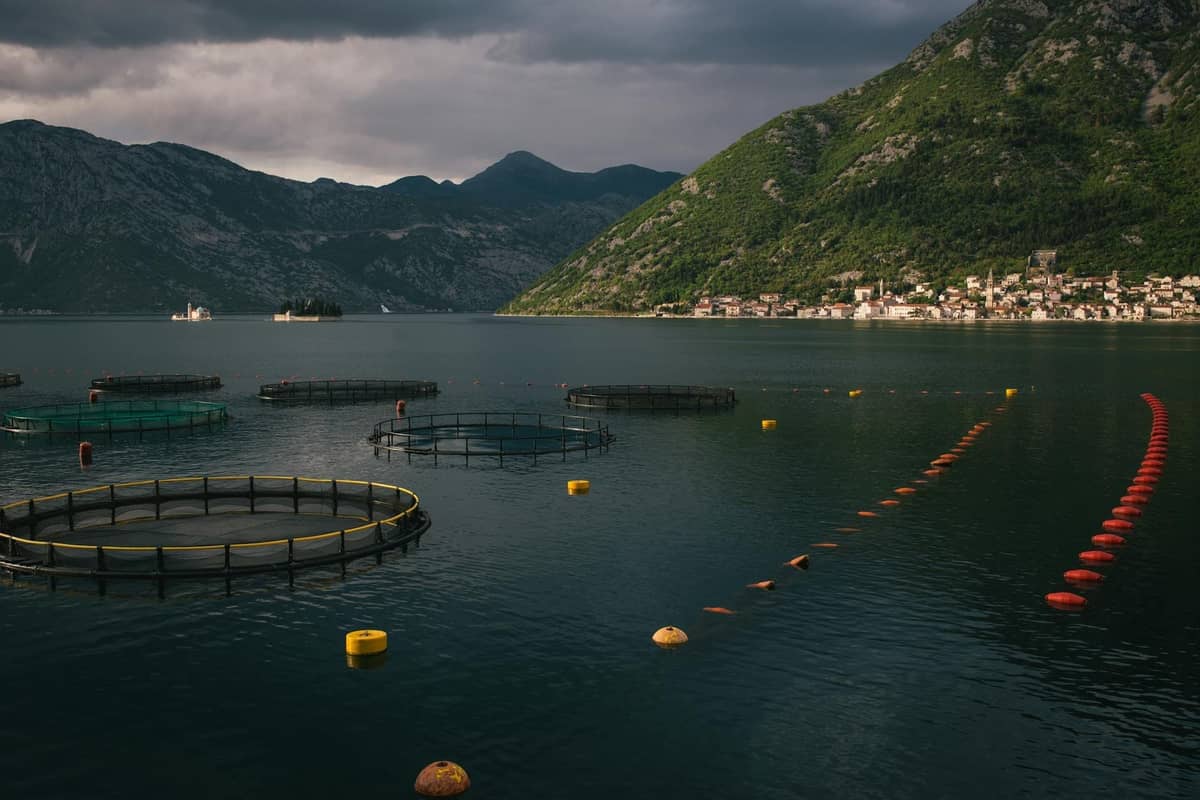
Kotor sits at the intersection of Montenegrin highland cooking and Adriatic coastal cuisine, which makes eating here genuinely interesting. The Bay of Kotor's sheltered waters produce excellent mussels — farmed right in the bay near Stoliv and Ljuta — and local restaurants receive fresh catches daily. Inland influences bring slow-cooked lamb, smoked prosciutto from the Njeguši village, and aged cheeses that appear on almost every menu as starters.
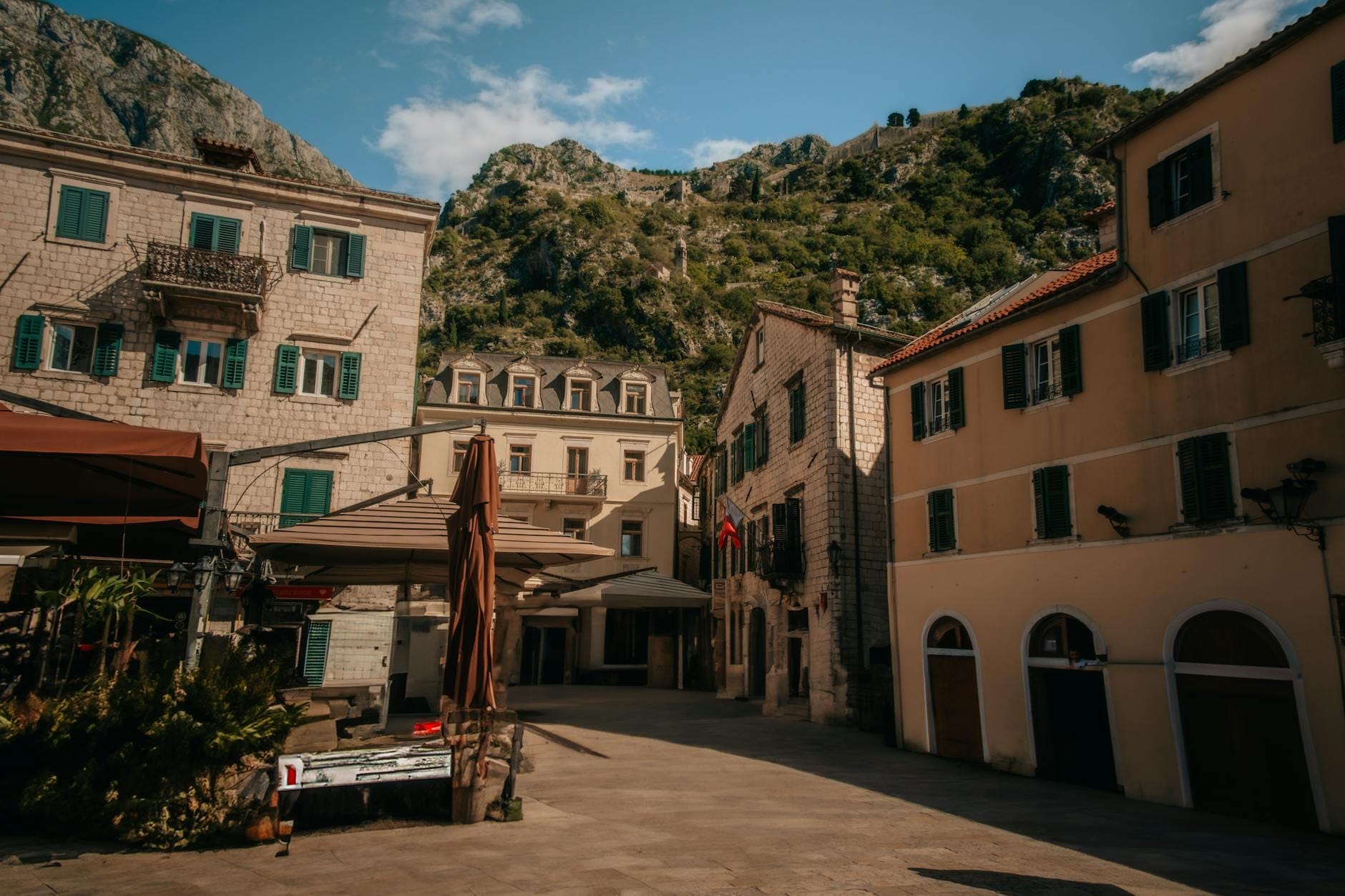
The word to know is konoba, meaning a traditional family-run tavern. These are where you eat best and spend least. The contrast with the terrace restaurants immediately surrounding the Square of Arms is stark: similar dishes can cost 30-40% more the closer you get to the main tourist flow. A five-minute walk deeper into the Old Town's side streets, or crossing outside the Sea Gate to the marina district, changes the pricing and quality considerably.
⚠️ What to skip
Restaurants on and directly around the Square of Arms cater heavily to cruise ship passengers who have limited time and budget less carefully. The menus look attractive but portion sizes and ingredient quality often disappoint relative to price. Locals rarely eat there.
What to Order: The Dishes That Define Kotor
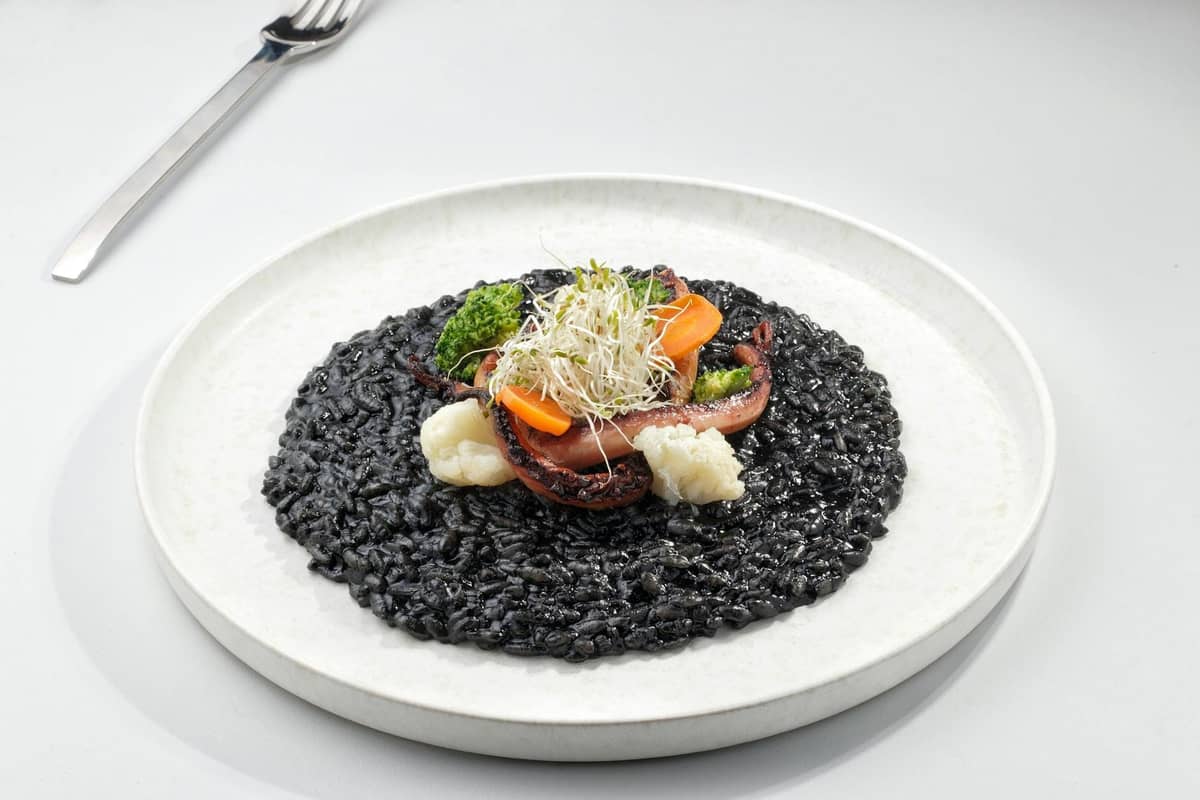
Black risotto (crni rižoto) made with cuttlefish ink is a benchmark dish — order it and you immediately know whether a kitchen is serious. Good versions are intensely savory and slightly briny, not gluey. Grilled brancin (sea bass) and orada (gilt-head bream) are served whole and priced by weight, typically around €18-28 per kilogram depending on the restaurant. Buzara is a coastal preparation of shellfish — usually mussels or prawns — cooked in white wine, garlic, olive oil, and breadcrumbs. It's one of the best value dishes on any menu.
For meat, lamb slow-roasted under a peka (a domed cast-iron lid covered with embers) is extraordinary but requires advance ordering at most restaurants — at least a few hours ahead, sometimes the day before. Njeguški pršut, a dry-cured ham from the mountain village above Kotor, appears on charcuterie boards and rivals Dalmatian prosciutto for quality. Pair it with the local semi-hard cheese (sir) and you have a proper starter.
- Black Risotto (Crni Rižoto) Cuttlefish ink risotto — the coastal kitchen's signature. Rich, savory, and worth ordering at every serious restaurant to compare.
- Grilled Fresh Fish Priced by weight. Sea bass and bream are best. Ask what came in that day rather than ordering blindly from the menu.
- Mussels in Buzara Bay of Kotor mussels are farmed locally and excellent. Buzara (white wine and garlic) is the classic preparation; avoid restaurants offering them fried.
- Njeguški Pršut Smoke-cured ham from the mountain village of Njeguši. Slightly different from Dalmatian prosciutto — denser and smokier. Order as a starter.
- Lamb Under Peka Slow-roasted under embers. Pre-order required at most places. One of the most satisfying meals in the region if you plan ahead.
- Priganice Light fried dough balls served with honey or sour cream, eaten as a breakfast item or snack. Easy to find in the Old Town in the mornings.
Best Areas to Eat in Kotor
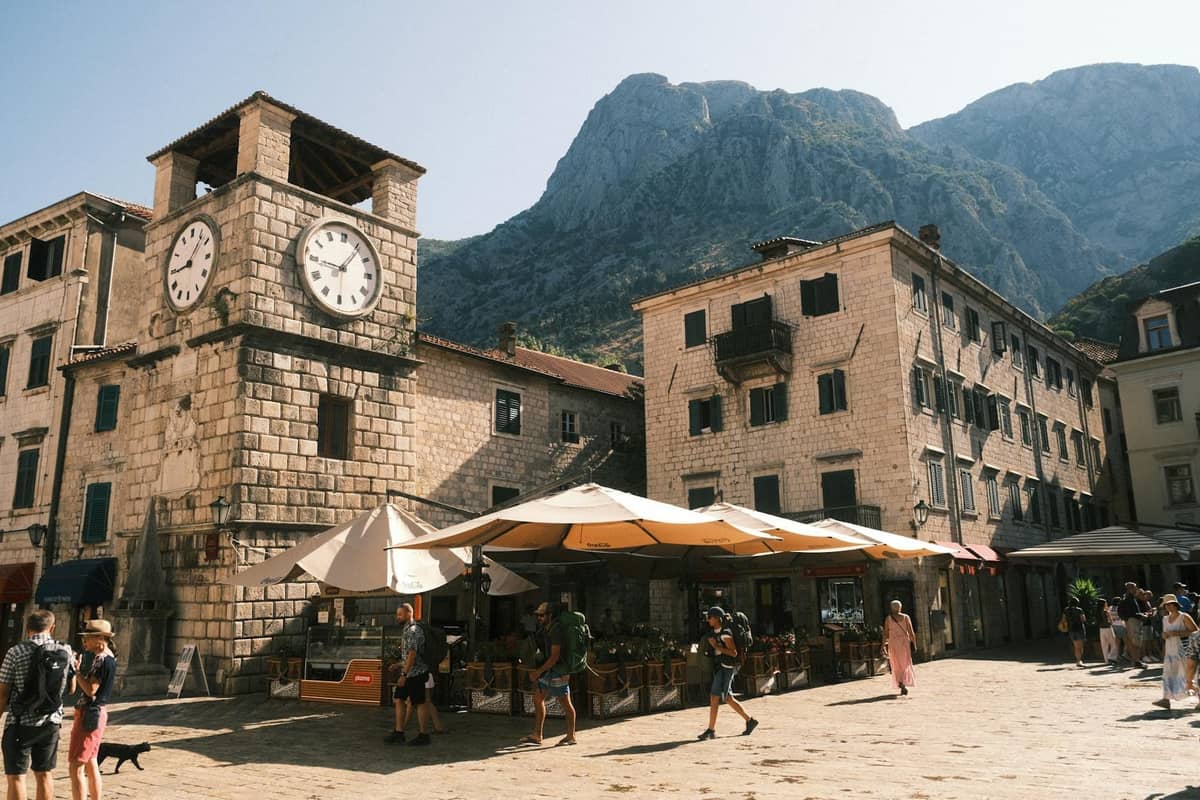
The Kotor Old Town has the highest concentration of restaurants, but quality varies enormously by location within it. The inner streets north and west of the Cathedral of St. Tryphon consistently outperform the main square restaurants. Look for places without laminated photo menus displayed at the entrance — a reliable heuristic for avoiding tourist-trap kitchens.
Outside the walls, the Kotor marina waterfront strip has several strong options with genuine sea views and better value than the Old Town squares. Tables face the bay directly, service is typically faster, and the clientele is a more local mix. This area picks up from late afternoon and is particularly good for dinner as the sun drops behind the Vrmac ridge.
The town of Perast, about 12 kilometers north along the bay, deserves a dedicated food trip if your schedule allows. Its waterfront restaurants serve the same Adriatic cuisine but with views of the bay's open stretch and the island church of Our Lady of the Rocks as backdrop. Prices are comparable to Kotor's mid-range. The drive or boat trip adds to the experience rather than detracting from it.
✨ Pro tip
Book dinner reservations at any sit-down restaurant in high season (July-August) — especially on weekends. Walk-in availability drops sharply after 7:30pm when cruise passengers have departed and the evening crowd fills the Old Town. A quick call or message earlier in the day is usually enough.
Cafes, Breakfast & Daytime Eating
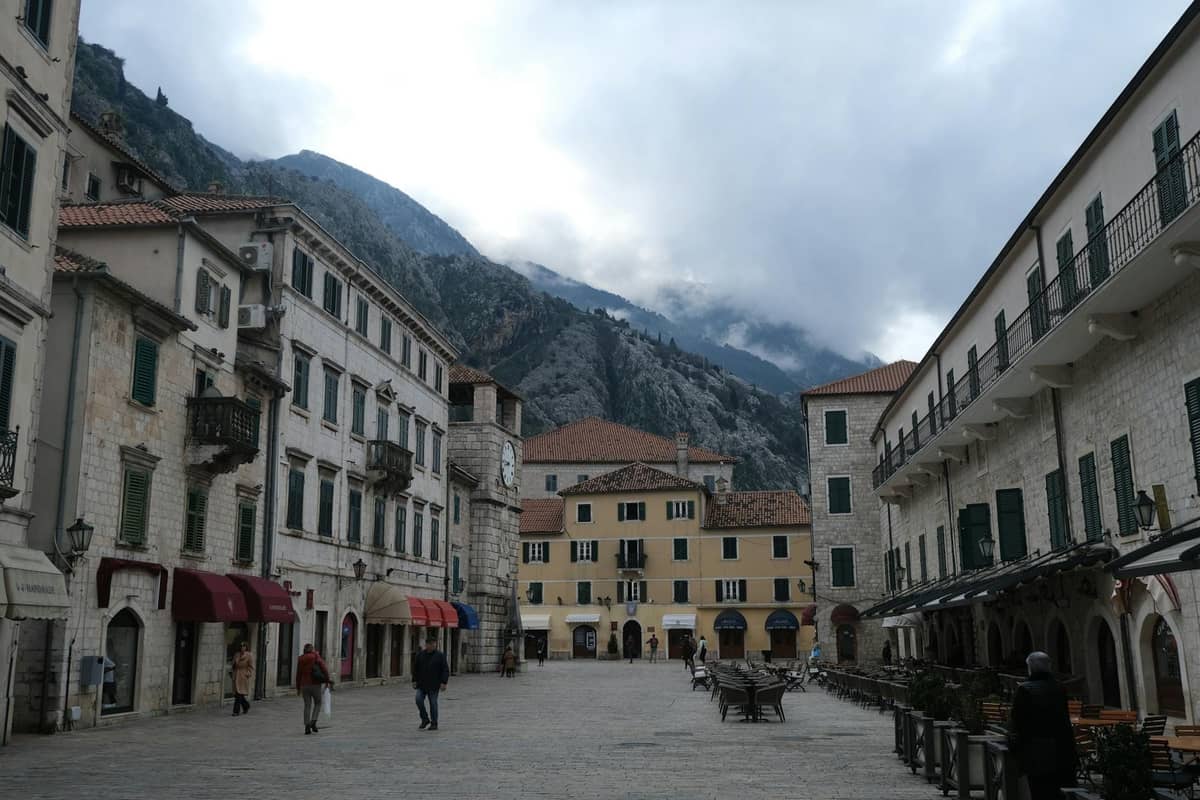
Kotor's cafe culture follows the Balkan pattern: strong espresso, outdoor seating, and long unhurried sits. Most cafes open by 8am and serve food through the afternoon. A standard Montenegrin breakfast is burek — a flaky pastry filled with cheese (sir burek) or meat (mesni burek) — bought from a pekara (bakery) and eaten standing or at a small table. Several bakeries operate near the Old Town's northern gate and along the streets just outside the Sea Gate.
For something more substantial at breakfast, larger cafes inside the Old Town serve eggs, yogurt with honey, and toasted bread from around 8:30am. Coffee prices are a genuine bargain by Western European standards: a double espresso runs €1.50-2.50 in most places. The square-facing terraces charge a small premium for the setting but it rarely exceeds €1 extra.
💡 Local tip
If you're an early riser, the Old Town before 9am belongs almost entirely to locals and hotel guests. Cafe tables fill slowly, cats claim the better sunny spots, and the light on the medieval facades is at its best. It's the most underrated time of day to eat or drink in Kotor.
Bars & Evening Drinks in Kotor
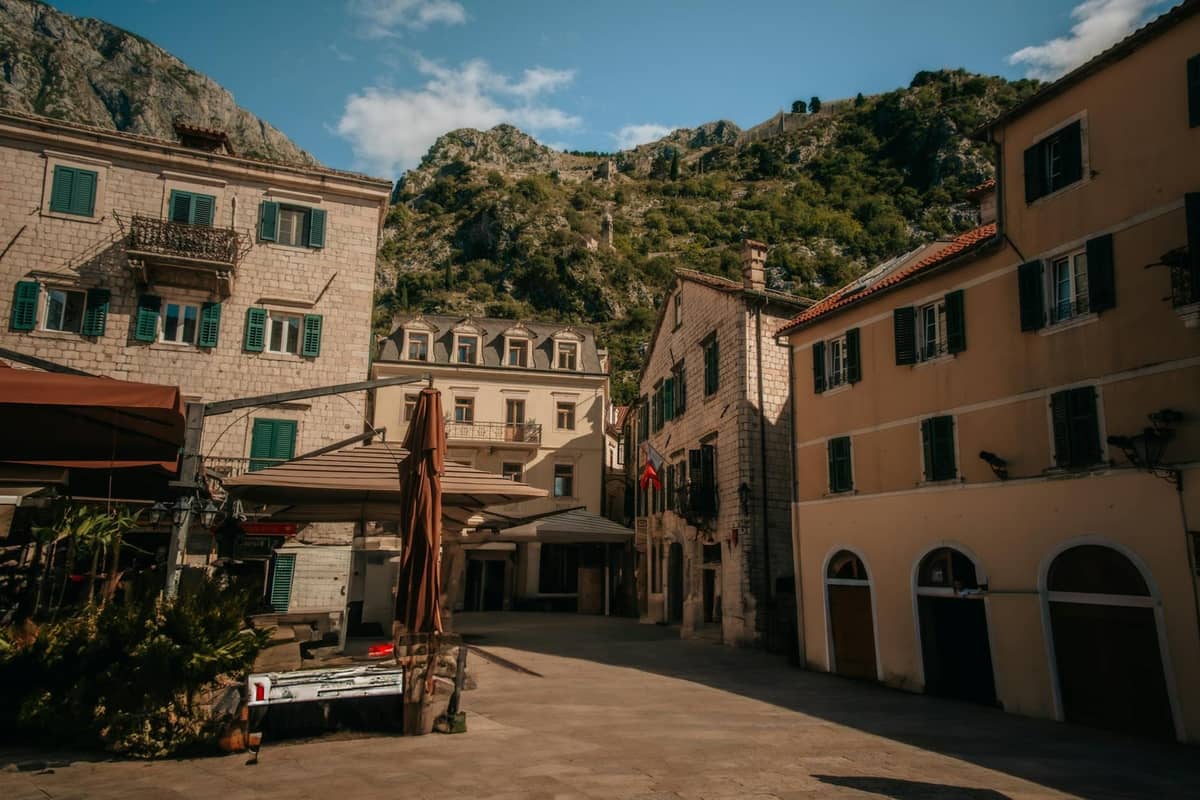
Kotor's bar scene is small but well-suited to long, easy evenings. The Old Town contains a cluster of atmospheric bars built into medieval stone buildings, several of which have no natural light in summer (making them cool and pleasant on hot nights). The main strip of drinking establishments runs along the walls near the northern end of the Old Town, roughly toward the River Gate. Expect a mix of craft beer, Montenegrin wine, and the local grape spirit loza.
Montenegrin wine deserves more attention than it gets on most tourist itineraries. The indigenous Vranac grape produces robust, deeply colored reds that pair well with red meat and hearty dishes. Krstač is the main white variety, lighter and floral. House wine in konobas is almost always local, poured from unlabeled carafes, and perfectly drinkable at €3-5 for 2 deciliters. A full bottle of a decent labeled Vranac typically runs €10-20 depending on the producer.
- Loza: The local grape spirit, similar to grappa. Drunk before or after meals. Never refuse a glass when offered by locals.
- Vranac: Montenegro's signature red grape. Robust, full-bodied, and widely available. Plantaže is the largest producer; small-estate bottles are worth seeking out.
- Nikšićko Pivo: The national beer, brewed in Nikšić. A reliable, easy-drinking lager available everywhere for €2-3 per bottle.
- Craft beer: A small but growing craft scene has established itself in Kotor. Look for bars advertising local microbreweries, particularly in the Old Town's northern section.
- Domaći sok: Homemade fruit cordials, often served in cafes. Cherry, sour cherry, and rose hip are common. Non-alcoholic and genuinely good.
Practical Tips: Budget, Timing & Getting It Right
Budget planning: a budget traveler eating burek for breakfast, a market lunch, and a konoba dinner should spend €25-35 per day on food and drink. Mid-range comfortable eating with two proper sit-down meals, wine included, runs €45-65 per person per day. The top end, factoring in seafood by weight, quality wine, and Old Town terrace restaurants, can reach €80-100 without difficulty.
Timing matters in summer. Restaurants near the Sea Gate and along the waterfront fill between 7pm and 9pm, which coincides with the post-cruise-ship evening crowd and independent travelers finishing afternoon activities. Eating early at 6pm or late at 9:30pm avoids the peak, gives better service, and sometimes unlocks quieter seating. For lunch, the window between 1pm and 2:30pm sees the heaviest traffic; going before noon or after 2:30pm is noticeably calmer.
For travelers spending multiple days, combining meals in Kotor with a day trip to Perast for lunch gives a meaningful change of scenery and a slightly different menu focus (Perast restaurants tend to emphasize whole fish and shellfish even more than Kotor's Old Town). It's one of the more rewarding food detours available on a short trip. Check out options for day trips from Kotor to build a logical itinerary.
FAQ
What is the local food in Kotor, Montenegro?
Kotor's cuisine blends Adriatic seafood with Montenegrin highland cooking. Key dishes include crni rižoto (black cuttlefish risotto), grilled fresh fish priced by weight, mussels in buzara (white wine and garlic), slow-roasted lamb under peka, and Njeguški pršut, a smoked cured ham from the village above Kotor. Priganice, light fried dough served with honey, is a popular local snack.
Where should I eat in Kotor Old Town without getting ripped off?
Avoid restaurants on and immediately around the Square of Arms — these target cruise passengers and charge premium prices for average food. Instead, walk deeper into the Old Town's side streets north and west of St. Tryphon's Cathedral, or exit through the Sea Gate to the marina waterfront. Konobas without laminated photo menus at the entrance are generally the safer bet. Prices drop and quality improves with just a few minutes of walking.
How much does it cost to eat in Kotor?
A sit-down meal at a mid-range konoba, including a starter, main course, and a glass of local wine, typically costs €15-25 per person. Budget eating, with burek from a bakery and simple lunches, can be done for €10-15 per day on food alone. Waterfront and Old Town square restaurants average €25-40 per person with drinks. Grilled fish priced by weight can push costs higher at upscale spots.
What are the best bars in Kotor Old Town?
The best bars cluster in the northern section of the Old Town, near the River Gate area, housed in medieval stone buildings. For outdoor evening drinking, the marina waterfront strip outside the walls offers sea views and a more relaxed atmosphere. Montenegrin wine (particularly Vranac red), local loza spirit, and Nikšićko lager are the standard drinks. A craft beer scene has started emerging, with a handful of bars stocking local microbreweries.
Do I need to book restaurants in Kotor in advance?
In July and August, booking for dinner is strongly advised, especially for groups of three or more. The 7:30pm-9pm window fills quickly once cruise ship crowds disperse into evening mode. A phone call or message earlier in the day usually secures a table. Outside peak summer, walk-ins are rarely a problem, though popular spots can still fill on weekends in May, June, and September.