Is Kotor Worth Visiting? An Honest Assessment
Kotor Montenegro gets enormous hype, but the reality is more nuanced than the Instagram photos suggest. This guide cuts through the noise with honest takes on the crowds, costs, highlights, and the cases for and against making the trip.
Plan and book this trip
Tools from our partner Travelpayouts help you compare flights and hotels. If you book through them, we may earn a commission at no extra cost to you.
Flights
Hotels map
TL;DR
- Kotor is genuinely impressive: a UNESCO-listed medieval old town inside dramatic Adriatic fjord scenery, unlike anything else in the region.
- Crowds are the biggest drawback, especially June through August when cruise ships dock daily. April, May, and September are the sweet spot for manageable crowds and good weather.
- Budget travelers can do Kotor cheaply; mid-range travelers will find solid value compared to Dubrovnik, which is the most direct alternative.
- Two full days is the right amount of time for most visitors. See the two-day Kotor itinerary for how to structure the time.
- If you hate tourist crowds, cannot handle steep terrain, or are visiting in July and August without patience for peak-season chaos, temper your expectations accordingly.
What Makes Kotor Actually Special
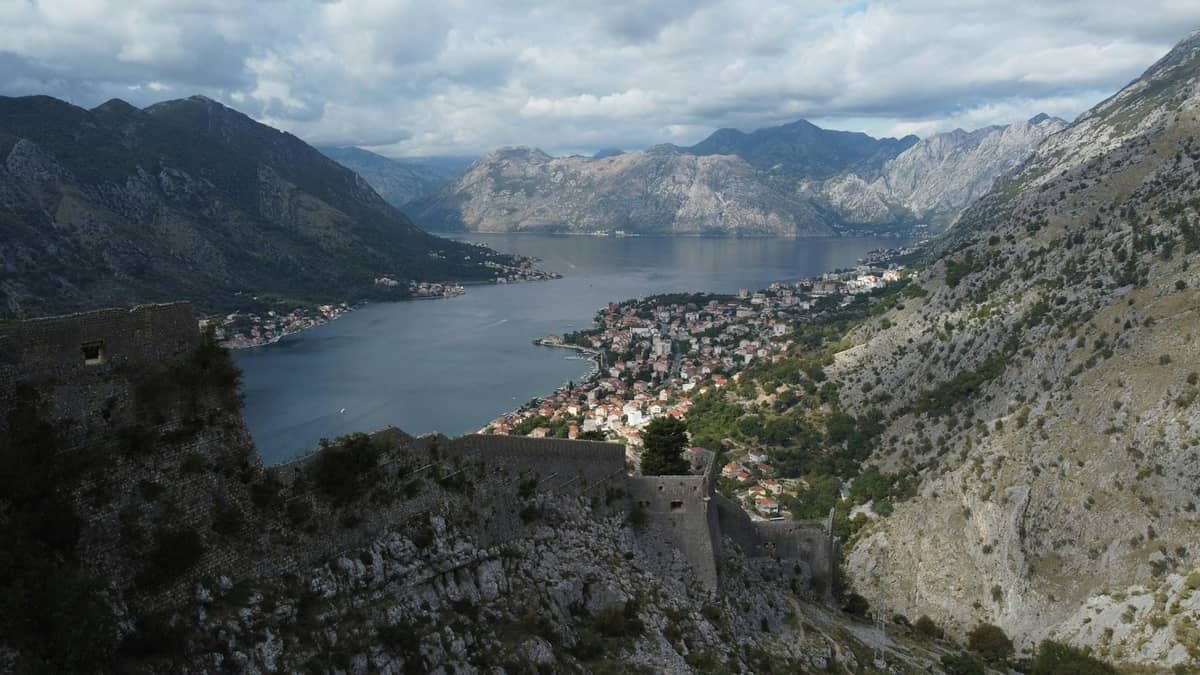
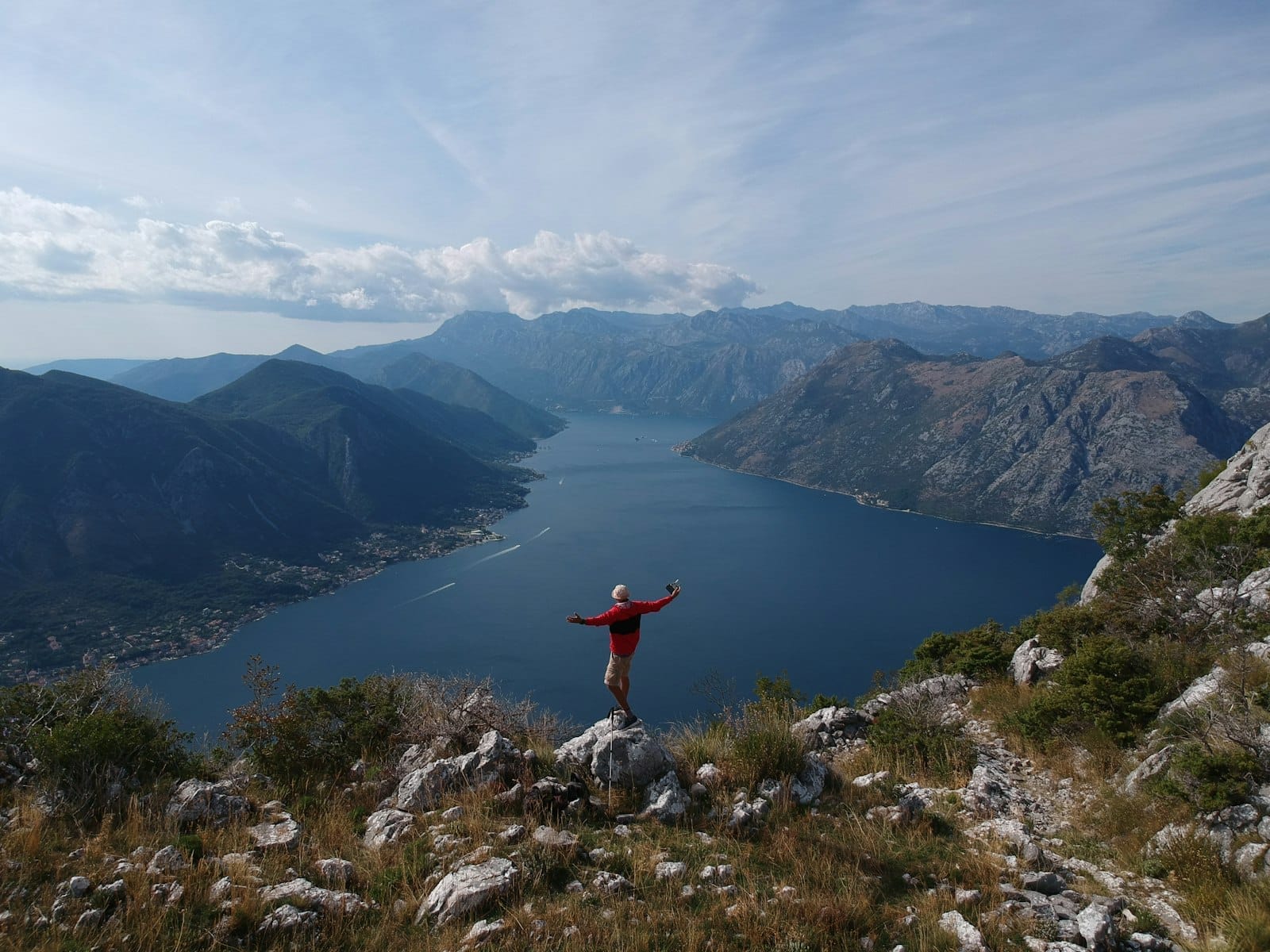
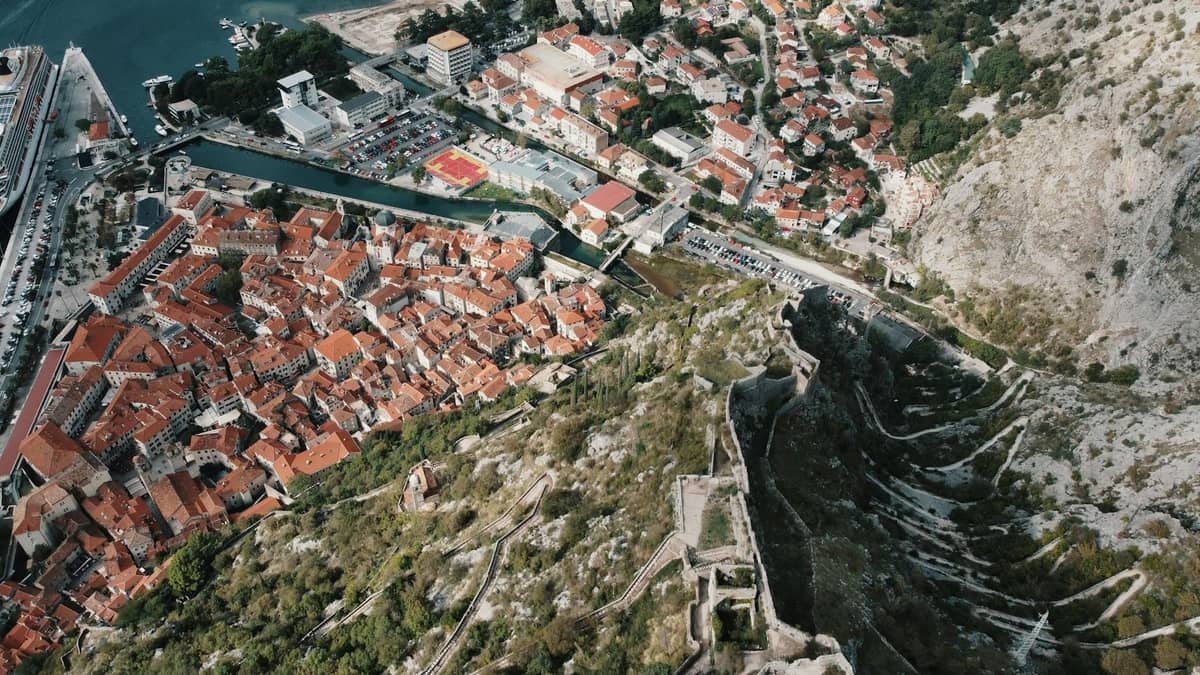
Kotor Montenegro sits at the innermost point of the Bay of Kotor, a drowned river canyon (technically a ria, not a true fjord) that is often called the southernmost fjord in Europe. That geography alone sets the scene apart: limestone mountains drop almost vertically into flat, still water, and the old town huddles at their base, enclosed by approximately 4.5 kilometers of medieval walls that climb the cliff behind it. On a clear morning before 9am, the light hits the walls and water simultaneously and it is, without overstating it, one of the most striking urban landscapes in the Mediterranean.
Inside the walls, Kotor rewards slow exploration. The Kotor Old Town is compact but genuinely layered: Venetian loggia, Romanesque churches, Byzantine stonework, and Ottoman-era traces all coexist within a few hundred meters. The Cathedral of Saint Tryphon, dating to the 12th century, is a legitimate architectural standout. The Maritime Museum of Montenegro offers real historical depth for anyone interested in the Adriatic's seafaring past. None of this is theme-park reconstruction; it is a working, inhabited town that has been continuously occupied for over two millennia.
ℹ️ Good to know
Kotor's old town is a UNESCO World Heritage Site, inscribed in 1979 as part of the Natural and Culturo-Historical Region of Kotor, recognized alongside the entire natural and cultural-historical region of Kotor. The walls, churches, and palaces inside are the genuine article, not a reconstruction.
The Honest Case Against Visiting Kotor
Let's get the negatives on the table. Kotor is not a secret. During peak season, typically late June through late August, the old town receives cruise ship passengers on top of overnight tourists, and the narrow streets can feel genuinely unpleasant by mid-morning. The Square of Arms, the main piazza just inside the Sea Gate, can be so packed that moving through it feels like navigating an airport terminal. Restaurants near the main square raise prices noticeably during this period, and service quality often drops.
The walls hike is the other point of honest discussion. The climb to the Fortress of San Giovanni involves approximately 1,350 steps over roughly 1.2 kilometers. In summer heat, starting after 9am, it is a genuinely punishing experience. Several people require assistance on the descent each week. The views are extraordinary, but the physical reality needs to be stated plainly. If you are visiting with mobility limitations or during July-August heat, the walls are either a very early morning commitment or something to skip.
Kotor is also not a beach destination. The waterfront is a promenade, not a swimming beach. The closest decent beaches require a drive or boat ride. If your Montenegro trip is primarily beach-focused, Budva, about 25 kilometers south, serves that purpose far better. Kotor is a history and landscape destination first.
⚠️ What to skip
Cruise ship schedules significantly affect Kotor's crowd levels. On days when two or three ships dock simultaneously, the old town can receive thousands of additional visitors between 10am and 4pm. If you can check cruise schedules in advance and adjust your visit to early morning or evening on heavy ship days, the experience is dramatically better.
How Kotor Compares to Dubrovnik
The most common question about Kotor is how it stacks up against Dubrovnik, the Croatian coastal city about 90 kilometers to the northwest. The comparison is worth addressing directly because many travelers choose between the two or visit both on the same trip.
Dubrovnik has a more polished old town and more tourist infrastructure, but it is significantly more expensive and, during peak season, more crowded. Kotor is smaller, rougher around the edges, and feels closer to an actual working town. The journey from Dubrovnik to Kotor takes around 2 to 2.5 hours by bus or car, and the coastal road along the Bay of Kotor is itself one of the most scenic drives in the Balkans. Doing both is realistic in a one-week trip and the contrast between the two places is part of what makes the itinerary satisfying.
- Cost Kotor is noticeably cheaper than Dubrovnik. Accommodation, food, and activities all run roughly 20-35% lower for comparable quality.
- Crowds Both receive heavy cruise traffic, but Dubrovnik's walls and old town are more congested on average during summer.
- Scenery Kotor's bay setting is more dramatic. Dubrovnik's sea views are more classically Mediterranean. Different aesthetics, both genuinely impressive.
- Day trips Kotor's surrounding area, including Perast, Lovcen, and the blue cave, offers more variety for multi-day exploration than central Dubrovnik.
- Food Dubrovnik has more fine dining options. Kotor has better value and a more authentic local restaurant scene away from the old town center.
What You Can Actually Do in Kotor
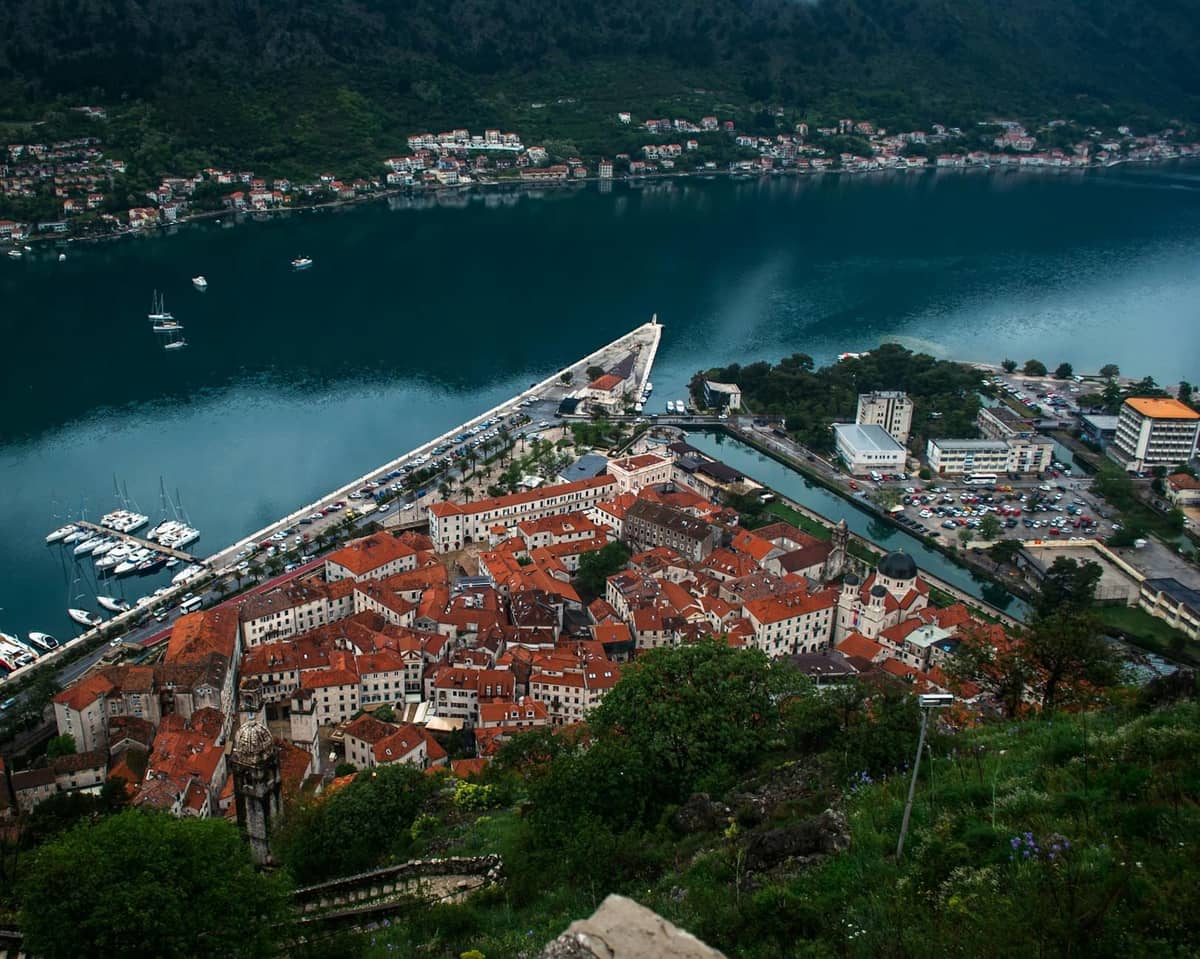
The activities in Kotor split into two categories: things inside the old town, and things in the broader bay region. Inside the walls, the essentials are the Sea Gate and the main squares, the Cathedral of Saint Tryphon, the Church of Saint Nicholas, and the city walls climb. Budget two to three hours for the walls if you do them properly, including time at the fortress at the top. The Kotor Old Town walking tour covers the interior highlights systematically if you prefer structure.
Beyond the old town, the Bay of Kotor rewards exploration. Perast, a tiny Baroque village 12 kilometers northwest, is one of the most photogenic spots in Montenegro and reachable by local bus or boat tour. The island church of Our Lady of the Rocks sits in the bay just off Perast and is reached by a short boat ride. For adventure-oriented travelers, bay boat tours offer swimming stops, cave access, and views of the bay from the water, which is the perspective that makes the scale of the landscape fully comprehensible.
Mount Lovcen, directly above Kotor, is worth a half-day trip for the views and the Njegos Mausoleum. The best viewpoints around Kotor include spots both on the walls and on the road above the old town, which you can reach by car or taxi without the full walls hike. For the famous cats of Kotor, a genuine local fixture rather than a marketing invention, the Kotor cats guide explains where to find them and the cultural background behind their presence.
Practical Considerations: Costs, Logistics, and Staying
Montenegro uses the euro despite not being an EU member. Kotor is not an expensive destination by Western European standards. A decent sit-down meal with drinks in a restaurant outside the immediate old town center typically runs 12-20 euros per person. Accommodation ranges from around 40-70 euros per night for a solid guesthouse or apartment, up to 120-200 euros for a boutique hotel with views. Staying inside the old town is atmospheric but expect noise until midnight or later in summer, and some properties involve hauling luggage up stairs through narrow alleys.
Getting around requires some planning. Kotor has no internal public transport, and the old town is pedestrian-only. The bay towns are connected by local buses that run frequently but not always on schedule. Renting a car opens up the surrounding region significantly, including easy access to Lovcen National Park and the Adriatic coast toward Budva. For details on moving around the region, the getting around Kotor guide covers buses, taxis, ferries, and car hire options.
- Enter the old town at dawn (before 8am) on summer mornings for uncrowded streets and the best photography light.
- Buy the city walls entry ticket directly at the gate rather than through third-party aggregators to avoid markup fees.
- Eat lunch and dinner outside the old town's main tourist corridor; the streets behind the Cathedral of Saint Tryphon and toward the north gate have better value.
- The ferry crossing at Kamenari (crossing the bay) saves about 45 minutes of driving and costs around 5 euros per car; useful if you're continuing toward Herceg Novi.
- Check the weather before the walls hike; the descent on wet limestone steps is genuinely dangerous and there is no shelter on the upper sections.
✨ Pro tip
If you are visiting Kotor on a cruise stop with limited time, prioritize the Sea Gate entrance, the Cathedral of Saint Tryphon, and at minimum the first 200 steps of the walls for an elevated view. Skip the rushed guided group tour and self-navigate; the old town is small enough that you will not get lost, and you will spend your time actually seeing things rather than waiting.
The Verdict: Who Should Visit Kotor and Who Should Think Twice
Kotor is genuinely worth visiting for travelers who value history, architecture, and dramatic natural scenery over beach time or nightlife. The combination of a real medieval town and fjord-scale mountain scenery is rare in Europe, and the surrounding bay region multiplies the value considerably. Two days gives you enough time to see the old town properly, do the walls hike, and take at least one excursion to Perast or the Blue Cave.
It is worth reconsidering if you are visiting in July or August with no tolerance for tourist infrastructure, if physical terrain is a significant limitation, or if beach access is a primary travel priority. None of these are disqualifying for everyone, but they should factor into expectations. Kotor is not a place that rewards being rushed or resented for its popularity. Arrive early, stay at least overnight, and the town reveals a quality that the midday cruise crowds never get to see.
FAQ
Is Kotor worth visiting for just one day?
One day is enough to see the old town highlights and do the walls hike, but it is tight and does not allow for day trips to Perast or the bay. If one day is all you have, arrive early, prioritize the Cathedral of Saint Tryphon and the walls climb, and leave the crowds behind by exploring the quieter northern section of the old town near the River Gate.
Where exactly is Kotor, and how do I get there?
Kotor is in southwestern Montenegro, at the head of the Bay of Kotor on the Adriatic coast. The nearest airport is Tivat, about 8 kilometers away, with regular flights from European cities. Dubrovnik Airport in Croatia (around 90 kilometers by road) offers more flight options. From Dubrovnik, the overland journey takes 2 to 2.5 hours by bus or car via the Herceg Novi coastal route.
Is Kotor worth visiting in winter?
Winter Kotor, roughly November through February, is a genuinely different experience: very few tourists, lower prices, and an atmospheric quiet that the summer version never achieves. Many restaurants and some guesthouses close, and the walls hike is best avoided in wet or icy conditions. That said, for travelers who want to experience a real Montenegrin coastal town without the crowds, winter can be the most rewarding time to come.
Is Kotor better than Budva for a base?
Kotor and Budva serve different purposes. Kotor is the better base for history, culture, and bay exploration. Budva is the better base if beaches and nightlife are priorities. Kotor tends to attract a slightly older, more culture-focused traveler; Budva skews younger and more resort-oriented. They are close enough (25 kilometers apart) that you can easily visit both from either base.
How crowded does Kotor actually get during summer?
On the heaviest cruise days in July and August, the old town can feel genuinely overwhelming between 10am and 5pm. The streets around the Square of Arms and the Cathedral become difficult to navigate. Before 8:30am and after 6pm, the atmosphere changes completely as day visitors depart. If you are staying overnight during summer, you have access to the town at its best. Day-trip visitors arriving mid-morning during peak season will have a noticeably worse experience.