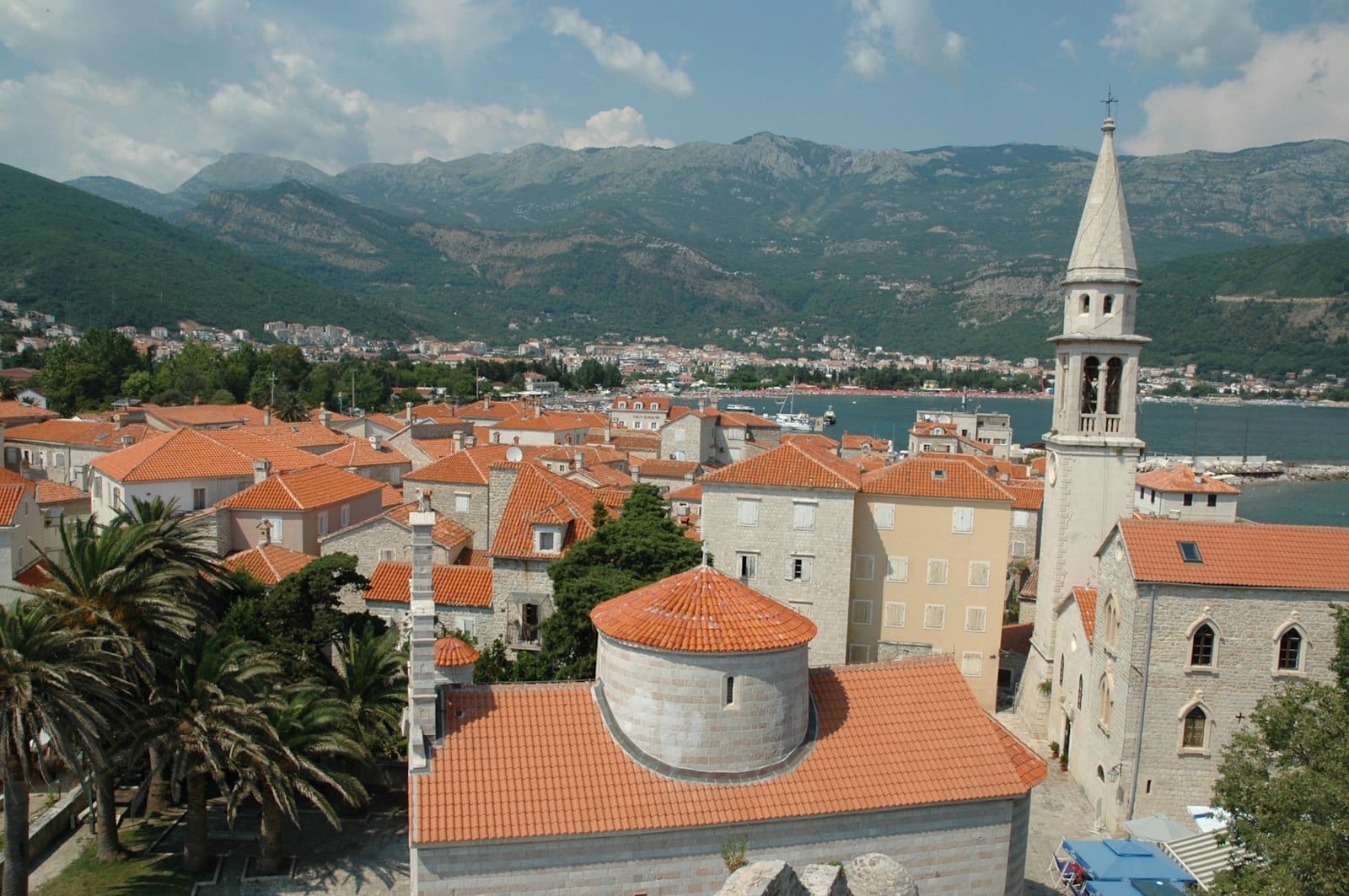
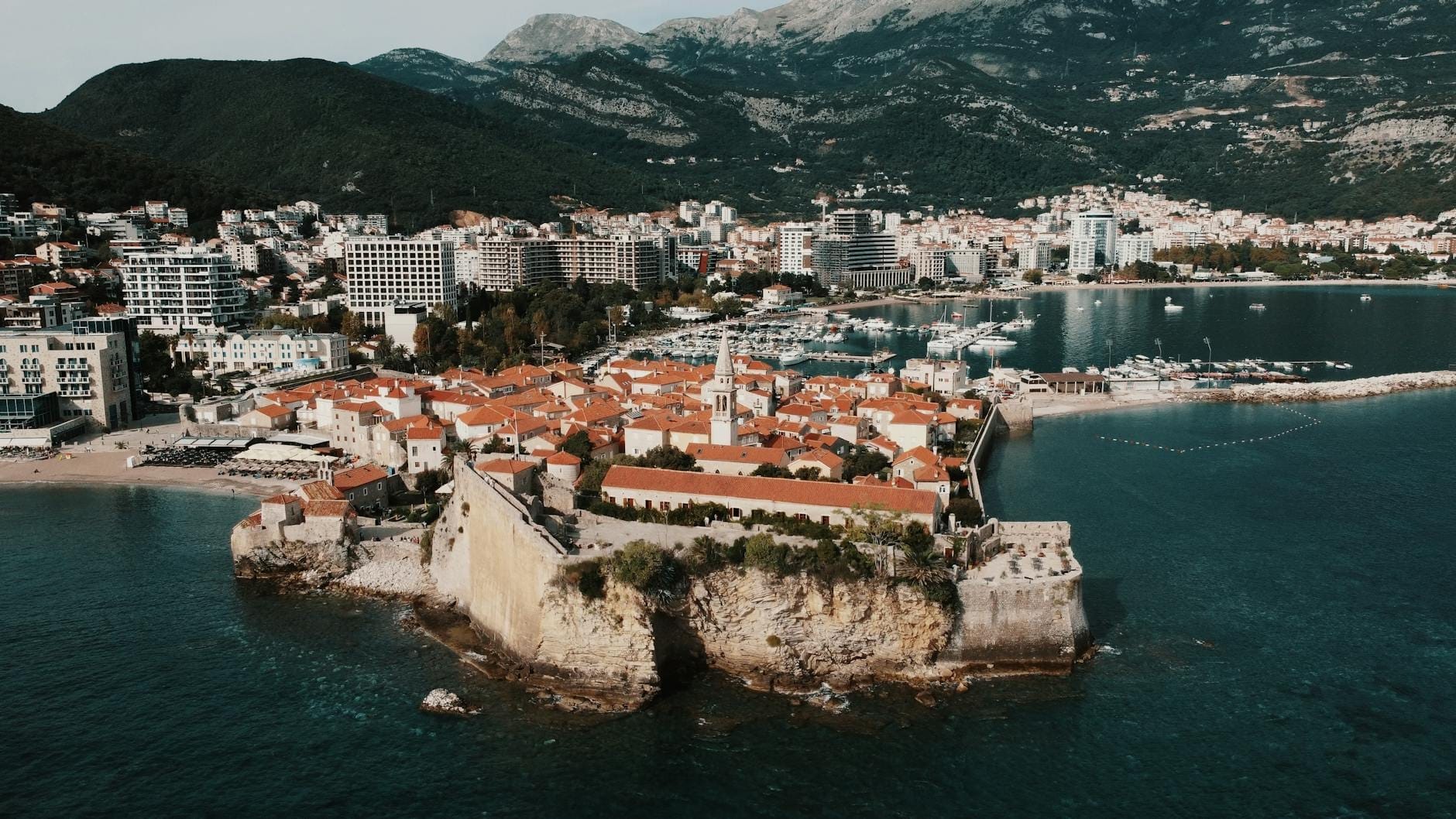
Budva sits approximately 25 kilometers south of Kotor along the Adriatic coast, offering a completely different energy to its quieter neighbor. A medieval old town ringed by Venetian walls meets a modern resort strip of beaches and bars, making Budva the most visited destination on the Montenegrin coast.
Budva is not a neighborhood within Kotor but a separate coastal town approximately 25 kilometers to the south, and understanding that distinction matters. Where Kotor feels intimate and contained, Budva is louder, larger, and more overtly geared toward beach tourism. It rewards a day trip or overnight stay with a medieval walled core, a string of sandy beaches, and a nightlife scene that runs well past midnight in summer.
Orientation
Budva occupies a small rocky peninsula on the Adriatic coast in central Montenegro, approximately 25 kilometers south of Kotor by road. The town divides neatly into two zones that feel almost disconnected from each other. The old town, called Stari Grad, sits on the original peninsula, enclosed by medieval walls that drop directly into the sea. The modern resort area, known as the Budva Riviera, fans out north and south from this core along a series of beaches: Slovenska Plaza, the main town beach, stretches north, while smaller coves like Mogren Beach sit to the south of the walls.
The main bus station handles connections from Kotor, Podgorica, and the rest of the coast. From the station, the old town is about a 10-minute walk southwest. The coastal promenade links the old town to the beach hotels to the north, and this strip is where most of the resort infrastructure concentrates. If you are arriving from Kotor, you will likely approach through the modern town before reaching the historic center.
ℹ️ Good to know
Budva is a standalone town, not a district of Kotor. Visitors often treat it as a day trip from Kotor, but it also functions as an independent base for exploring Montenegro's central coast. Travel time from Kotor is 35 to 45 minutes by bus, or around 30 minutes by car, depending on traffic.
Character & Atmosphere
Budva operates on a seasonal clock more extreme than most Adriatic towns. From late June through August, the town runs at full volume: the beaches fill by 9am, restaurant terraces are packed by noon, and the bars along Slovenska Obala stay noisy until 3 or 4 in the morning. Outside those peak months, particularly from October through April, much of the resort infrastructure closes down and Budva becomes a quieter, more local place. Shoulder season, particularly May and September, hits a useful middle point where the weather is warm, the crowds are manageable, and most businesses are open.
The old town carries a different atmosphere from the resort strip. Its stone lanes are narrow enough that two people can barely pass side by side, the buildings are painted in shades of yellow and terracotta, and the light in the late afternoon turns everything golden before the shadows fill in quickly from the enclosing walls. Mornings in Stari Grad are genuinely peaceful: the tourist crowds arrive after 10am, and before that the alleys belong to the few residents who still live inside the walls and the occasional bakery opening its shutters.
The resort promenade north of the old town is a different proposition entirely. It is unambiguously built for tourism: rows of sun loungers, beach bars with amplified music, souvenir shops, and restaurants serving grilled fish and pizza at similar quality regardless of where you sit. This strip does what it does efficiently, but it does not pretend to be anything other than a resort. Travelers expecting the quiet charm of Kotor's old town may find the contrast jarring.
What to See & Do
The old town is the main reason to come to Budva. The Budva Old Town Citadel sits at the southwestern tip of the peninsula, offering panoramic views over the Adriatic and back across the bay toward the mountains. It is the highest point within the walls and the logical place to begin any walk through Stari Grad. The citadel itself contains a small library, an open-air stage used for summer performances, and a rooftop terrace from which you can see the coast stretching in both directions.
Inside the old town walls, the streets are dense with medieval churches, small squares, and remnants of Venetian and Ottoman influence layered over an even older Greek and Illyrian settlement. Budva's history as a settlement stretches back roughly 2,500 years, making it one of the oldest towns on the Adriatic. The Archaeological Museum near the main square holds a good collection of finds from the surrounding region if you want context for what you are walking through.
Beyond the walls, Mogren Beach is a 10-minute walk south from the old town along a coastal path. It is actually two adjacent coves connected by a short tunnel through the rock, and it tends to be less crowded than Slovenska Plaza to the north. For swimming, Mogren is the better option if you want some separation from the resort strip.
Walk the full circuit of the old town walls for the best views over the sea
Visit the Budva Citadel early in the morning to avoid peak crowds
Take the coastal path south of the old town toward Mogren Beach
Browse the small galleries and craft shops inside Stari Grad in the afternoon when the light is best for photography
Check for live performances at the citadel open-air stage during summer
Eating & Drinking
The food in Budva ranges from genuinely good to firmly tourist-grade, and knowing which is which saves both money and disappointment. Restaurants directly on Slovenska Obala tend toward high prices and inconsistent quality. For a better experience, walk one or two blocks inland from the beachfront strip or head into the old town, where smaller konoba-style restaurants serve Montenegrin standards at more honest prices. Grilled fish, lamb, and local prosciutto-style ham called njeguški pršut are staples worth ordering. Montenegrin coastal cuisine shares the same Adriatic traditions you find in Kotor, with fish caught the same day and served simply with olive oil and lemon.
The old town has a higher density of worthwhile cafes and bars per square meter than the resort strip. In the evening, the narrow lanes fill with people spilling out of wine bars and small restaurants, and the atmosphere is relaxed rather than aggressively commercial. Budva also has a genuine nightlife infrastructure that Kotor largely lacks: clubs operating out of converted spaces along the waterfront draw large crowds in summer, particularly in July and August.
💡 Local tip
For coffee and breakfast, look for bakeries and local cafes away from the seafront. A burek (flaky pastry with cheese or meat) from a pekara costs a fraction of what a cafe on the promenade charges for toast, and the quality is far better.
Wine drinkers should note that Montenegro produces good local varieties, particularly Vranac, a full-bodied red from the interior that appears on most restaurant wine lists. Asking for the house wine by the glass is usually the best value. Rakija, the regional fruit brandy, is served everywhere and typically arrives complimentary at the end of a meal in traditional restaurants.
Getting There & Around
From Kotor, Budva is reachable by bus on a route that runs throughout the day. Buses depart from Kotor's bus station near the old town entrance and take 35 to 45 minutes depending on traffic and route variations. The fare is inexpensive, typically under 3 euros each way. For full logistics on moving around the region, the getting around Kotor guide covers transit options across the Bay of Kotor and the southern coast in detail.
Taxis and ride-share apps operate in Budva, though prices can spike during peak summer evenings when demand is high. Within Budva itself, the old town is entirely pedestrian once inside the walls, and the beachfront promenade is flat and easy to walk. Renting a scooter or bicycle gives access to the smaller beaches and coves south of town that are harder to reach by bus.
Budva also works well as a departure point for wider exploration. Day trips from Kotor that include Budva often pair it with a stop at Sveti Stefan, the famous island hotel visible from the coast road just 5 kilometers to the south. The drive along the coast between Budva and Sveti Stefan is one of the most photographed stretches of road in Montenegro.
⚠️ What to skip
Parking in Budva during July and August is severely limited and expensive. If you are driving from Kotor, consider taking the bus and avoiding the hassle entirely. The bus drops you within walking distance of both the old town and the main beach.
Where to Stay
For travelers deciding between Budva and Kotor as a base, the choice comes down to priorities. Budva has more hotels, more beaches, and more nightlife, but it lacks the concentrated historic atmosphere that makes Kotor's old town so distinct. The where to stay in Kotor guide goes into this comparison in detail and helps frame the decision based on travel style.
Within Budva, accommodation inside the old town walls gives the best atmosphere but comes at a premium and involves some trade-offs: the lanes are lively in the evening, stone buildings can be hot in summer without air conditioning, and noise carries through old walls. Hotels north of the old town along Slovenska Plaza are more modern, often have pools, and sit directly on the beach, but the environment is generic resort territory.
Budget travelers find good value in private rooms and apartments rented through the usual platforms in the streets immediately behind the beachfront but away from the main tourist spine. These neighborhoods are quiet, walkable to everything, and rarely promoted by tour operators, which keeps prices reasonable. Booking well in advance is essential for any July or August travel, as Budva fills quickly and prices rise sharply with late reservations.
Budva vs. Kotor: How They Compare
Travelers based in Kotor often wonder whether Budva is worth the trip. The short answer is yes, but with calibrated expectations. Budva adds a dimension of beach culture and nightlife that Kotor does not offer, and the old town has genuine historic depth. But it does not replace Kotor's experience of walking fortification walls above a fjord-like bay or sitting at a cafe inside a medieval square that feels unchanged for centuries. For the full picture of what each town offers, is Kotor worth visiting frames the wider question of how to spend time in the region.
If your trip includes only a few days in Montenegro, Budva works best as a single full day from Kotor rather than an independent base. Arrive by mid-morning, explore the old town before the heat and crowds peak, spend early afternoon on Mogren Beach, walk the citadel in the late afternoon light, and take an evening bus back after dinner. That rhythm lets you experience both sides of Budva without committing to an overnight stay. The two days in Kotor itinerary incorporates this kind of day trip logic into a practical schedule.
TL;DR
Budva is a separate town approximately 25km south of Kotor, not a district within it, best reached by bus in under 45 minutes
The medieval old town (Stari Grad) is the strongest draw, with a citadel, ancient churches, and atmospheric stone lanes that reward early morning visits
Beach and nightlife infrastructure is the best on the Montenegrin coast, but the resort strip is generic and crowded in peak summer
Best suited to travelers who want beaches alongside history, or those whose travel priorities include nightlife
Works well as a full-day trip from Kotor; staying overnight only makes sense if beaches and evening entertainment are high priorities for you
Two days in Kotor is enough to cover the essentials without feeling rushed, but only if you plan smartly. This itinerary takes you through the walled Old Town, up to the fortress, out onto the Bay of Kotor, and into the best local restaurants — with honest advice on what to skip and when to go.
The Bay of Kotor is one of the most dramatic stretches of water in the Adriatic, and exploring it by boat is genuinely rewarding. But not all tours are equal. This guide breaks down every major option, from group cruises to private speedboats, so you spend your money on the right one.
Kotor rewards visitors differently depending on when you go. This guide cuts through the hype to tell you exactly which months suit which travel styles, what the weather actually feels like inside those medieval walls, and when to avoid the cruise ship crush.
Kotor is a superb base for exploring the Bay of Kotor and the Montenegrin coast. This guide covers the best day trips from Kotor, with real logistics, honest rankings, and the options that most visitors overlook.
The journey from Dubrovnik to Kotor is one of the most scenic short trips in the Adriatic. Here is a complete breakdown of every transport option, realistic timings, border crossing realities, and how to make the most of the route.
Kotor's medieval old town is walkable in under 20 minutes, but the surrounding Bay of Kotor stretches across 28 kilometres of coastline. This guide covers every transport option, with honest advice on what works, what doesn't, and how to move around Montenegro like someone who's done it before.
Kotor Montenegro gets enormous hype, but the reality is more nuanced than the Instagram photos suggest. This guide cuts through the noise with honest takes on the crowds, costs, highlights, and the cases for and against making the trip.
The Blue Cave near Kotor is one of Montenegro's most photographed natural attractions, but getting there takes planning. This guide covers every practical detail: tour options, pricing, seasonal conditions, and what the experience is actually like.
The Kotor Cable Car climbs from Dub, inland from the Old Town, to Kuk on Mount Lovćen at 1,348 metres in 11 minutes. This guide covers fares, hours, how to reach the lower station, what waits at the top, and how the ride differs from hiking Kotor's fortress walls.
Kotor, Montenegro has one of the most celebrated cat cultures in the world. This guide covers the history behind the city's feline reputation, where to spot cats in the Old Town, the dedicated Cat Museum, how to interact responsibly, and what to buy at cat-themed shops.
Kotor is one of the most rewarding cruise stops in the Adriatic. This guide covers everything from where your ship docks to what to prioritize when time is short, including the Old Town walls, viewpoints, day trip options, and practical logistics for first-time visitors.
The hike up Kotor's medieval fortress walls to the Fortress of San Giovanni is one of the most rewarding climbs in the Adriatic. This guide covers the full route, ticket costs, timing advice, what to bring, and honest tips on what the experience is actually like.
Summer is Kotor's peak season, and it shows. Cruise ships, scorching heat, and packed streets define July and August, but the Bay of Kotor is genuinely spectacular in warm weather. This guide breaks down exactly what to expect and how to plan smart.
A detailed self-guided walking tour through Kotor Old Town, covering the best squares, churches, city walls, and hidden corners of Montenegro's UNESCO-listed medieval town. Includes route logistics, timing tips, and honest advice on what to skip.
Kotor and its surrounding bay offer some of the most dramatic scenery in the Mediterranean. This guide covers every worthwhile viewpoint, from the city walls above the old town to the mountain peaks of Lovćen, so you know exactly where to go and when to get there.
Kotor packs an extraordinary range of experiences into a small area: a UNESCO-listed medieval old town, medieval churches, vertiginous fortress hikes, and boat trips to baroque villages across the bay. This guide covers the 18 best things to do in Kotor, organized by theme so you can plan your time well.
Kotor's food scene is shaped by its geography: Adriatic seafood from the bay, slow-cooked mountain meat from the Montenegrin interior, and centuries of Venetian influence layered into everything. This guide covers what to order, where to eat it, and what to skip.
Kotor's food scene punches well above its size. This guide covers the best restaurants, local dishes worth ordering, bars for evening drinks, and the tourist traps to avoid in the Old Town and beyond.
Choosing where to stay in Kotor shapes your entire trip. This guide breaks down every main area, from the medieval Old Town to the quieter bay villages, with honest advice on who each neighborhood suits, what to expect at different price points, and which options to skip.