Budva Old Town & Citadel: The Walled City on Montenegro's Adriatic Coast
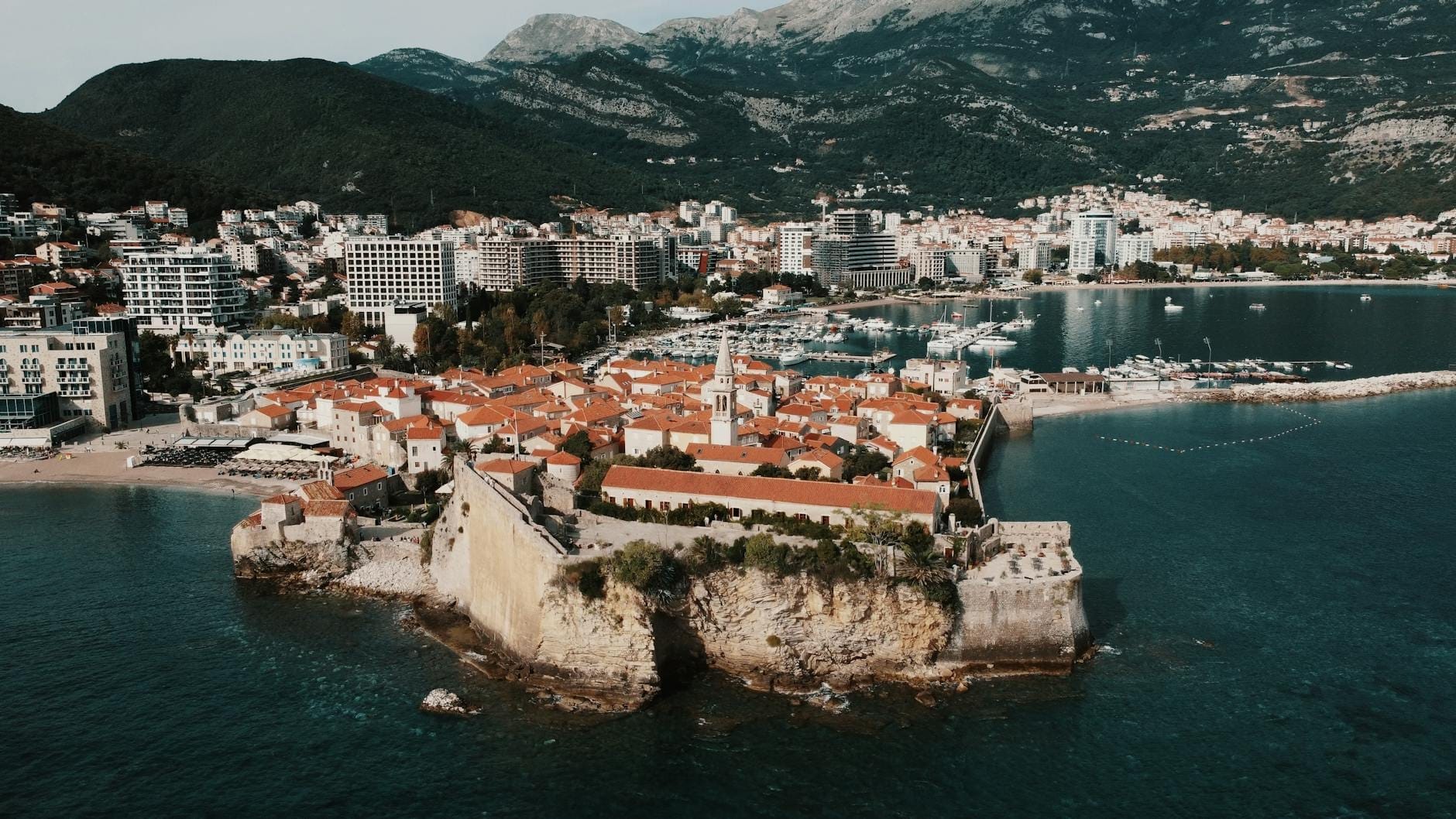
Budva Old Town is one of the best-preserved walled settlements on the Adriatic, a compact medieval quarter surrounded by 15th-century Venetian fortifications and backed by the sea. At its southern tip, the Citadel rises above the water with views stretching toward Sveti Stefan and the open Adriatic. It's worth the short walk from the beach resorts, but timing matters.
Quick Facts
- Location
- Budva, Montenegro's central Adriatic coast, ~25 km south of Kotor
- Getting There
- Regular buses from Kotor bus station (approx. 45–60 min). Walk from Budva bus station: ~10 min to Old Town gates
- Time Needed
- 1.5–3 hours for Old Town + Citadel combined
- Cost
- Old Town streets: free to enter. Citadel: paid admission (verify current price at gate)
- Best for
- History lovers, photography, sea views, day trips from Kotor
What Budva Old Town Actually Is
Budva Old Town is a walled medieval settlement that sits on a small peninsula jutting into the Adriatic Sea. The walls encircle a dense grid of narrow stone lanes, Venetian-era churches, and low buildings that crowd together in a way that makes the whole quarter feel sealed off from the modern resort city pressing in on all sides. That contrast is immediate and striking: you pass through a gate and the noise of traffic, beach bars, and tourist shops drops away, replaced by echoing footsteps and the faint sound of water.
The settlement itself has roots stretching back over 2,500 years. Greek and Illyrian communities occupied this coastal position long before the Romans, and the town passed through Byzantine, medieval Serbian, and Venetian hands before the architecture that defines it today took shape. The Venetians held Budva from 1420 to 1797 and left a clear imprint: the stone construction style, the fortified walls, and the loggia-style civic buildings all carry that influence. A catastrophic earthquake in 1979 leveled much of the Old Town, and what visitors see today is a careful reconstruction completed through the 1980s. The stones are old; the mortar, in many places, is not.
ℹ️ Good to know
The 1979 earthquake destroyed roughly 80% of the buildings inside the walls. The reconstruction was meticulous, but it's worth knowing you're seeing a restored town, not an unchanged medieval one. Original fabric survives primarily in the churches and sections of the wall itself.
Walking the Old Town: What You'll Actually See
The Old Town is small enough to cover fully in under an hour at a comfortable pace, but the point is not to cover it quickly. The street layout is irregular and pleasantly disorienting. There are no dead ends that waste your time, just short lanes that curve and reconnect in unexpected ways. The main pedestrian artery runs roughly north to south, lined with cafes, jewelry sellers, and souvenir shops. The parallel side streets are quieter and more atmospheric.
Three churches define the Old Town's religious character. The Cathedral of Saint John the Baptist, built in the 7th century and rebuilt over subsequent centuries, sits at the heart of the settlement and is the largest structure inside the walls. The Church of Santa Maria in Punta, with origins dating to 840 AD, stands near the southern end. The Church of the Holy Trinity, a 19th-century Serbian Orthodox structure, adds a different architectural voice to a streetscape otherwise dominated by Catholic buildings. None of these are large, but stepping inside any of them offers a moment of cool, dark quiet that the midday streets do not.
The town walls themselves are walkable in sections. The views from the ramparts over the Adriatic and back over the terracotta rooftops are among the best you'll get without paying for the Citadel. For those who want a more structured route through the streets, the Kotor Old Town walking tour guide offers useful orientation that applies broadly to walled Adriatic towns, including Budva.
Tickets & tours
Hand-picked options from our booking partner. Prices are indicative; availability and final rates are confirmed when you complete your booking.
Lovćen national park and Budva city full-day private tour
From 150 €Instant confirmationFree cancellationBudva private tour from Kotor
From 58 €Instant confirmationFree cancellationBudva city and Lipa Cave full-day private tour
From 165 €Instant confirmationFree cancellationSelf-guided discovery walk in Kotor - medieval streets of Old Town
From 28 €Free cancellation
The Citadel: Budva's Best Viewpoint
The Citadel occupies the southernmost point of the Old Town peninsula, built on a rocky promontory where the walls meet the sea. It was used as a military fortification from antiquity through to the 20th century, and the layered construction reflects that long history: Illyrian foundations, medieval additions, Venetian reinforcement, and later Austro-Hungarian modifications.
Inside, a small museum displays archaeological finds from the surrounding area, including amphorae, coins, and weapons recovered from the seafloor and nearby excavations. There is also a library and a small open-air theater used during summer cultural events. But the real reason to pay the admission fee is the rooftop terrace.
From the top of the Citadel, the view extends south toward the island of Sveti Stefan and north along the curve of Budva's main beach. On a clear day, you can see far down the coast. The Adriatic below is a specific shade of blue that photographs well in morning light, when the sun comes from the east and hits the water at a low angle. By afternoon, the sun is in your eyes if you're looking south, and the light flattens. Morning visits to the Citadel produce better photographs by a significant margin.
💡 Local tip
Arrive at the Citadel within the first hour of opening. The terrace is small and can feel crowded quickly in high season. Early visitors often have the top deck nearly to themselves for 20–30 minutes.
How the Experience Changes by Time of Day
In the early morning, before 9 AM, the Old Town is close to deserted. Local residents cross the streets on their way to work, a few cats occupy warm patches of stone, and the cafes are just opening their chairs. The light is soft and the shadows long in the narrow lanes. This is when the reconstruction quality stops mattering and the atmosphere takes over.
By mid-morning, organized tour groups begin arriving, often from cruise ships docked further along the coast or from resort hotels on the beach. The main pedestrian street becomes difficult to navigate unhurried. From roughly 11 AM to 3 PM in peak season (June through August), the Old Town is at maximum density. The lanes trap heat, the souvenir stalls push into the walking space, and the cafes fill completely.
Late afternoon to early evening brings a second, more pleasant window. The day-trippers and cruise passengers leave, the air cools slightly, and the golden hour light against the pale stone is exceptional. Dinner tables appear outside on the small squares. The town feels like it belongs to its visitors again, if briefly. Night brings a different crowd, louder and centered on the bar scene that occupies the southern part of the Old Town near the Citadel walls.
⚠️ What to skip
In July and August, midday temperatures inside the Old Town can exceed 35°C (95°F). The walls block any sea breeze. Wear light clothing, bring water, and plan your visit for before 10 AM or after 5 PM if visiting in peak summer.
Getting There from Kotor
Budva is accessible from Kotor by regular bus services that depart from Kotor's main bus station multiple times daily. The journey takes between 45 minutes and one hour depending on traffic, which can be heavy on the coastal road in summer. From Budva's bus station, the Old Town gates are about a ten-minute walk south. This is a natural and easy day trip from Kotor, easily completed in a half day if you're focused, or a full day if you want to add beach time.
Driving is possible but parking near the Old Town is limited and fills early in summer. Visitors arriving by car should use the designated parking areas to the north of the Old Town and walk in. Note that Budva itself is a separate, sizable coastal city, not a small village — it's Montenegro's primary beach resort destination, and the area around the Old Town reflects that, with modern hotel blocks and beach infrastructure on all sides. This context is worth understanding before arrival so the setting doesn't feel jarring. For planning the broader trip, the best time to visit the Bay of Kotor region guide also covers seasonal conditions along the full Montenegrin coast.
Honest Assessment: What Works and What Doesn't
Budva Old Town is genuinely worth visiting. The fortifications are intact and dramatic, the sea setting is exceptional, and the Citadel viewpoint earns its entrance fee on a clear day. The churches are small but authentic in character.
The limitations are real, though. The reconstruction means that much of the fabric is 1980s stonework, well done but lacking the accumulated texture of a town that was never destroyed. The commercial pressure inside the Old Town is high: souvenir shops and tourist restaurants occupy nearly every ground-floor space on the main lanes. You will not find a quiet local bar or a non-tourist lunch spot inside the walls. The crowds in peak season are substantial, and the Old Town's small scale means there is nowhere to escape them once you're inside.
Travelers who find Kotor's Old Town satisfying but want to extend their understanding of Adriatic coastal architecture will find Budva interesting as a comparison. Those who prioritize authenticity and minimal tourist infrastructure may find the balance here less favorable.
For those weighing whether to add Budva to a Montenegro itinerary, the is Kotor worth visiting guide offers a useful framework for thinking about how to prioritize stops along this coast. If time is tight, Kotor's Old Town is denser with history and better preserved; Budva is a worthwhile second stop, not a replacement.
Practical Notes
- Old Town streets are free to enter through the main gates at any hour.
- The Citadel has paid admission; verify the current price at the entrance gate.
- Wear comfortable, flat-soled shoes — the stone lanes are uneven.
- Photography is unrestricted in public areas. The view from the Citadel terrace faces east and south, best in morning light.
- The Old Town is partially accessible on flatter main lanes, but side streets and the Citadel interior involve steps.
- Most signs inside the Old Town are in Montenegrin and English.
- Bring cash for the Citadel entrance and smaller cafes; card acceptance varies.
Insider Tips
- The best unobstructed view of the Old Town and its walls from the outside is from the beach promenade to the north, in the early morning before umbrellas and crowds fill the beach. Walk out a short distance and look back south.
- The small square in front of the Church of the Holy Trinity, toward the eastern side of the Old Town, tends to stay quieter than the main pedestrian lane even at peak hours. Useful for a break.
- If you want a coffee inside the Old Town without paying inflated tourist prices, look for locals rather than menus displayed in four languages outside. The ratio of local to tourist cafes is low, but they exist on the less-trafficked eastern lanes.
- The Citadel occasionally hosts evening events and performances during summer cultural festivals. Check local listings before your visit — evening entry during a performance gives you the viewpoint in golden or dusk light, which can be superior to daytime.
- Budva's main beach (Budva Beach / Slovenska plaža) runs directly north of the Old Town walls and is accessible in minutes. Combining a morning Old Town visit with a beach afternoon is a logical and efficient way to structure the day.
Who Is Budva Old Town & Citadel For?
- Day-trippers from Kotor wanting a second Adriatic walled town for comparison
- Photographers prioritizing coastal fortification and sea views
- History-oriented travelers with an interest in Venetian and medieval Adriatic architecture
- Couples looking for a scenic evening walk with dinner options inside the walls
- First-time visitors to Montenegro wanting a broad sense of the coast in one location