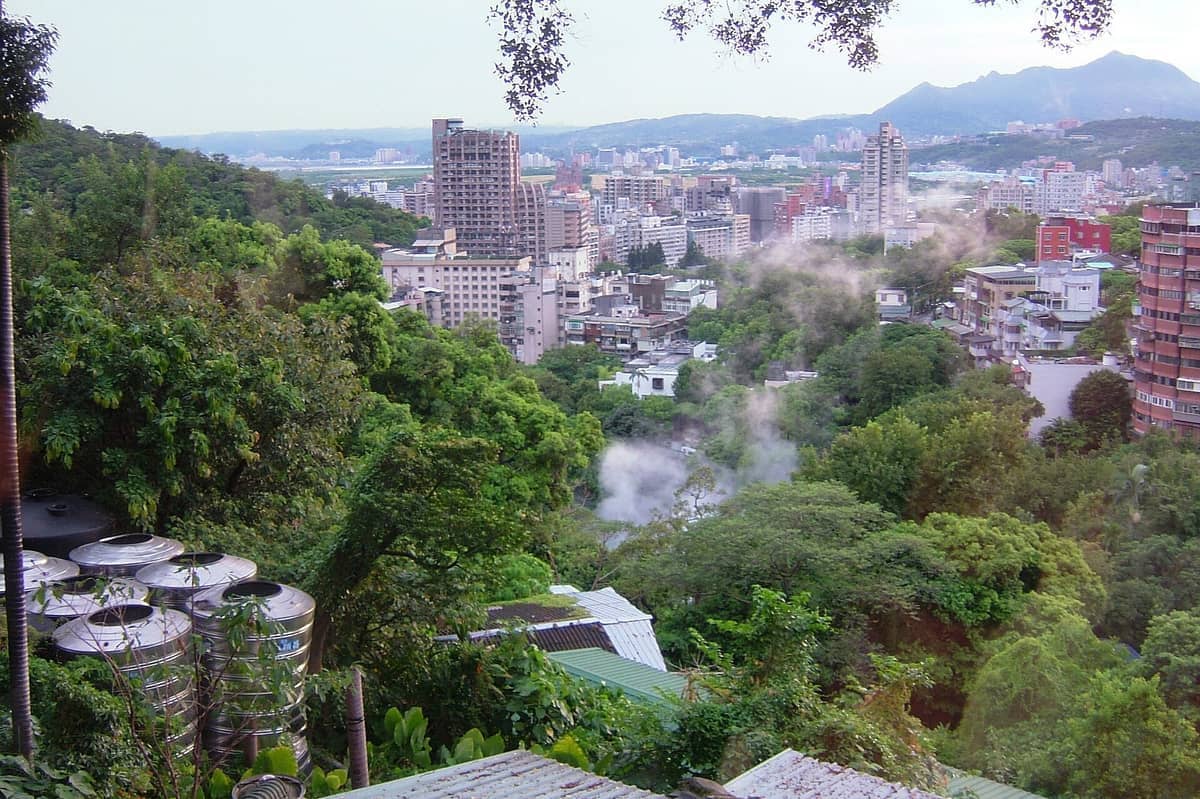
Beitou District sits at the northern edge of Taipei, where the city gives way to volcanic hills and steaming hot-spring valleys. It is best known for its Japanese-era bathhouse architecture, geothermal public baths, and the leafy Xinbeitou precinct that surrounds them. For travelers who want a break from the urban core without leaving the city limits, Beitou offers a genuinely different rhythm.
Beitou is where Taipei exhales. A short MRT ride from the city center deposits you in a district of forested hills, geothermal streams, and wooden Japanese-era buildings that have survived more than a century intact. It is the city's original hot-spring resort, and it still feels like one.
Orientation
Beitou District occupies the northernmost corner of Taipei City, covering roughly 56.82 square kilometers of terrain that rises from river-level plains into the volcanic slopes of Yangmingshan. Its western boundary follows the Tamsui River toward Guandu, while the Keelung River traces part of its southern and eastern edges. To the south lies Shilin District; to the west, across the Tamsui River, is New Taipei City.
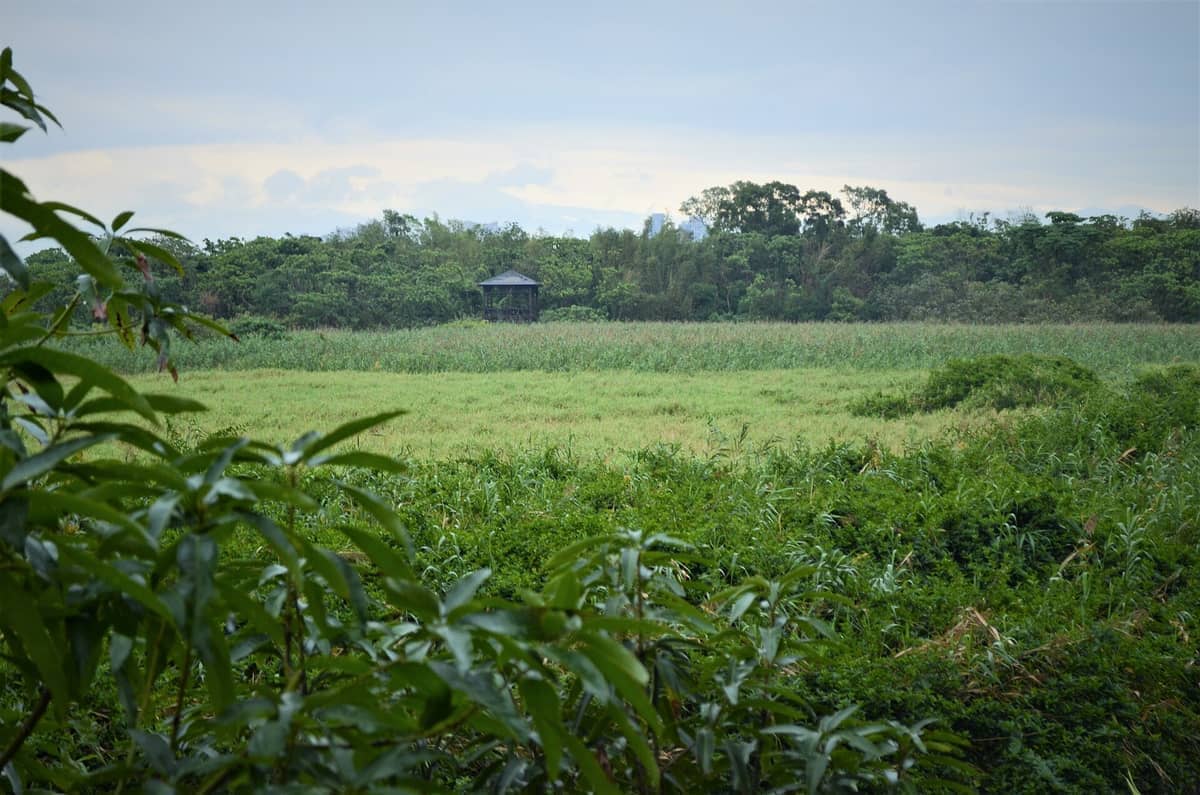
For most visitors, Beitou means one specific area: Xinbeitou, a compact hot-spring precinct about a kilometer uphill from Beitou Station. The two are connected by a dedicated MRT branch line, making the logistics simple. The broader district extends well beyond this tourist core, stretching north into Yangmingshan National Park and west through quieter residential and agricultural areas around Guandu Village.
Understanding Beitou requires separating the district from the precinct. Beitou Station is a transit hub where the Tamsui-Xinyi Line and the Xinbeitou Branch Line meet. From here, you branch left toward the hot-spring valley, or continue north along the main line toward Tamsui at the river mouth. The hot-spring area itself is essentially a single valley: Zhongshan Road and Youya Road are the two main arteries running uphill through it, lined with bathhouses, small hotels, and the key heritage buildings.
Character & Atmosphere
Arriving at Xinbeitou Station on a weekday morning, the first thing you notice is the quiet. Compared to the compressed noise of central Taipei, the air here feels different: cooler, with a faint mineral sulfur trace that sharpens as you walk uphill along Zhongshan Road toward the creek. The street is lined with low buildings, some in aging Japanese wooden style, others in later concrete construction. Small hotels post their bathing options on signboards. A public park runs alongside the hot-spring creek, where the water visibly steams through the trees.
By late morning, tour groups begin arriving, mostly domestic visitors from other parts of Taiwan and day-trippers from the city. The Beitou Hot Spring Museum draws the most consistent foot traffic. The area peaks on weekends and public holidays, when hotels fill and the public bath facilities see queues. On weekday afternoons, however, the precinct settles into a slower register: older residents doing tai chi in the park, a few solo travelers reading at a café, the creak of wooden floorboards in one of the heritage buildings.
After dark, Beitou transforms again. This is primarily a bathing resort, not a nightlife district. Most activity concentrates in hotels and private bathhouse facilities. The streets near Xinbeitou Station are quiet by 10pm. This is not a place for bar-hopping, but if you want to soak in a private hot-spring room late at night, several hotels offer this precisely because the evenings here are so unhurried.
ℹ️ Good to know
Beitou sits at elevation and faces north, which means it can feel noticeably cooler than central Taipei in winter. This makes it particularly appealing from October through March, when soaking in hot-spring water in cool air is genuinely comfortable rather than overwhelming.
What to See & Do
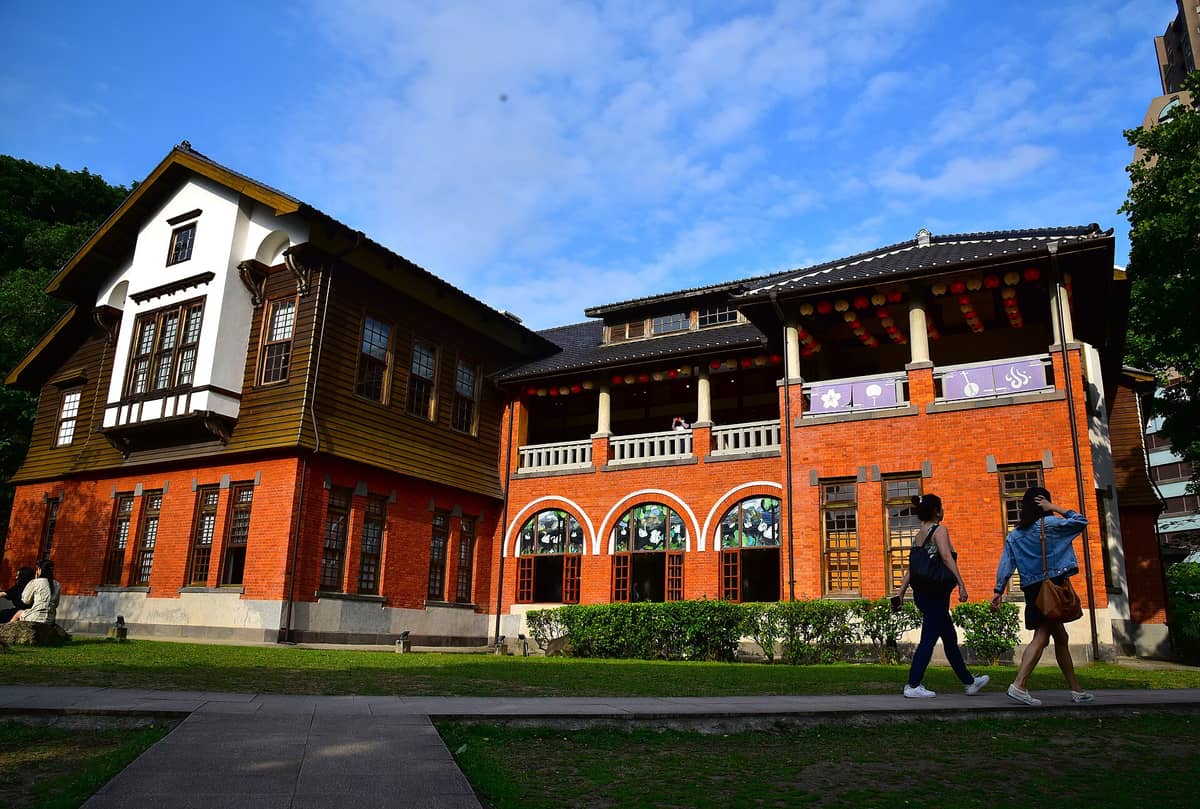
The Beitou Hot Spring Museum is the district's anchor attraction, and rightly so. Completed in 1913 at No. 2, Zhongshan Road, the building was originally Beitou Public Bathhouse, once considered the largest public hot-spring facility in East Asia. Today it is a designated Taipei municipal historic site, and its two-story wooden structure with Roman arches, stained glass, and a tiled bathing hall on the ground floor reads as a document of Japanese colonial ambition in Taiwan. Admission is free. The museum explains the geology of Beitou's geothermal system alongside the social history of bathhouse culture.
A short walk further up Youya Road brings you to the Beitou Museum, housed in the former Kaizan Ryokan, a two-story Japanese wooden inn built in 1921. The building itself is the attraction: dark timber interiors, tatami-style rooms, and a garden that looks as though it has barely changed in decades. It operates as a private museum and events venue; check current opening hours before visiting.
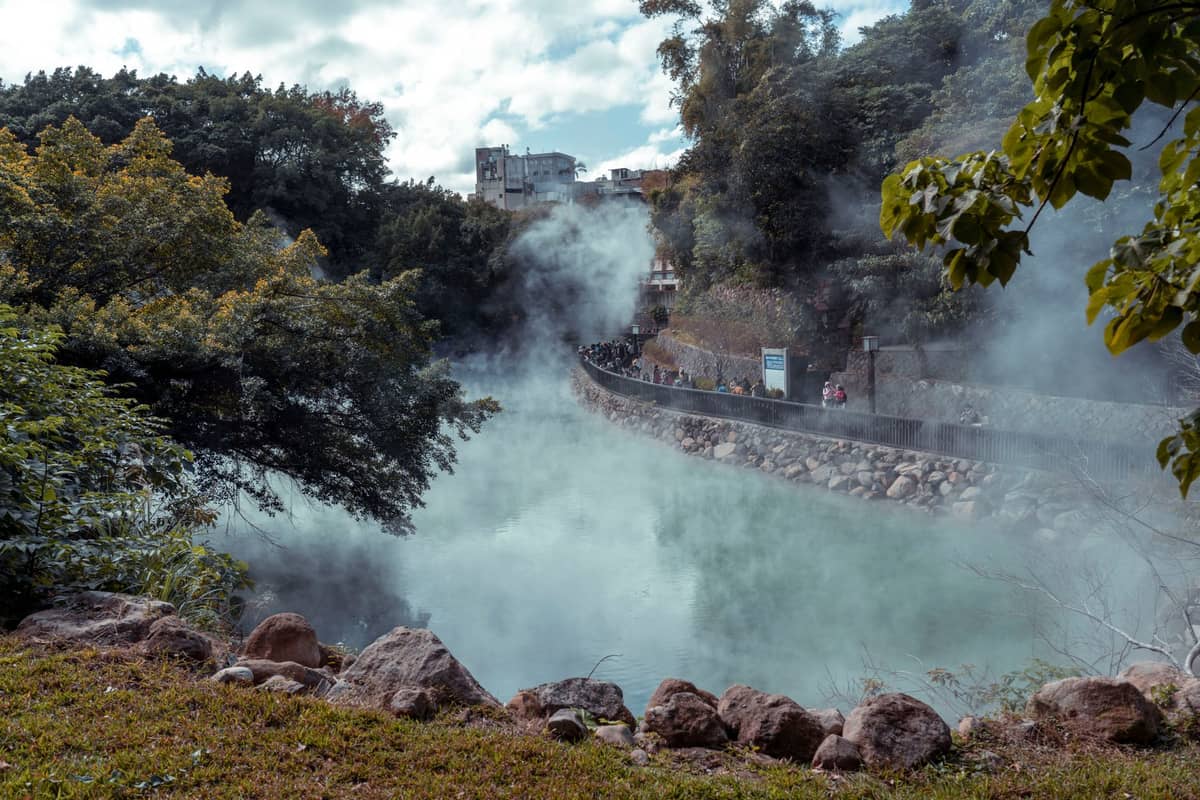
Thermal Valley, known locally as Hell Valley (Diyu Gu), sits near the upper end of Zhongshan Road. The turquoise-blue, highly acidic geothermal pool typically reaches temperatures in the 80–100°C range and has a distinctive unearthly color caused by radium and other dissolved minerals. The surrounding park is free to visit. The visual effect is striking, particularly on cooler mornings when the steam rises thick over the water.
⚠️ What to skip
At Thermal Valley, follow posted signs and stay behind barriers. The water temperature exceeds 90°C and the pool is highly acidic. This is a standard safety measure for geothermal sites, not an overstatement.
Beitou also serves as a gateway to Yangmingshan National Park, which begins where the developed hot-spring precinct ends. Buses from Beitou Station carry hikers up into the park's volcanic terrain, passing crater lakes, hot-spring streams, and open grassland ridges. This is one of the more accessible national park experiences in the greater Taipei area, and combining a morning hike with an afternoon soak in Beitou is a well-worn itinerary for good reason.
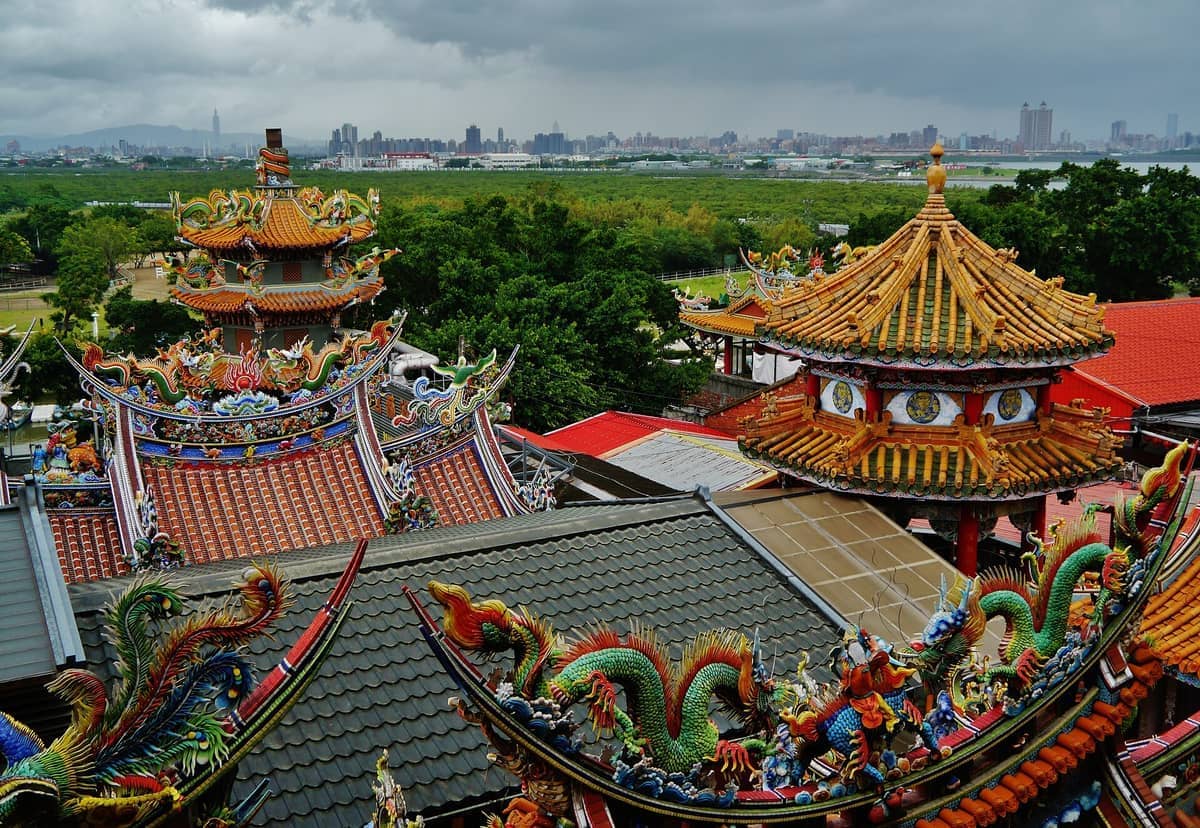
On the western edge of the district, near the confluence of the Tamsui and Jilong rivers, Guandu Temple is one of the oldest temples in northern Taiwan, built into a hillside with remarkable interior grottoes. It makes a logical half-day extension if you are already in Beitou, accessible by MRT on the main Tamsui-Xinyi line.
Beitou Hot Spring Museum: free entry, best on weekday mornings when it is least crowded
Beitou Museum (former Kaizan Ryokan): Japanese wooden inn on Youya Road, check hours in advance
Thermal Valley (Hell Valley): free geothermal pool park, spectacular in cool-weather fog
Xinbeitou Hot Spring area: multiple public and private bathing facilities along Zhongshan Road
Yangmingshan National Park: hiking access by bus from Beitou Station
Guandu Temple: hillside temple with cave grottoes, western end of the district
Eating & Drinking
Beitou's food scene is modest by Taipei standards, shaped primarily by the resort character of the Xinbeitou precinct. Most of the eating happens in hotel restaurants or small local establishments within a short walk of Xinbeitou Station. The area is not a culinary destination in the way that Yongkang Street or Ningxia Road are, but there is enough to eat well without leaving the district.
The streets immediately around Xinbeitou Station and the lower end of Zhongshan Road have a cluster of small Taiwanese restaurants, noodle shops, and convenience stores. Prices are generally reasonable, and portions tend toward the generous. A few café-style spots near the hot-spring park cater to visitors who want to sit with a drink after a soak rather than head straight back to the city.
For something more substantial, the larger hotels in the valley offer full-service dining rooms, usually with set menus at prices that reflect the resort context. If you are visiting on a weekend, note that popular spots near the museum and park can be busy at lunchtime. A practical approach is to eat early or late, or bring food from the convenience stores near Beitou Station before taking the branch line up.
💡 Local tip
The public market area near Beitou Station (on the main Tamsui-Xinyi Line side, not Xinbeitou) has local breakfast vendors and fruit stalls that open from early morning. If you are arriving for a morning soak, this is a good place to eat before heading up the branch line.
Getting There & Around
Beitou is served directly by the Taipei MRT system, which makes access from central Taipei straightforward. The Red Line (Tamsui-Xinyi Line) runs from Taipei Main Station northward; Beitou Station (R22) is approximately 30 minutes from Taipei Main Station by direct train. From Beitou Station, the Xinbeitou Branch Line connects to Xinbeitou Station (one stop, around 2 minutes), which deposits you at the edge of the hot-spring precinct. The entire journey from the city center costs a few TWD using an EasyCard. For more on navigating Taipei's transit network, see the getting around Taipei guide.
Once in Xinbeitou, most of the key sites are walkable within a 15- to 20-minute radius of the station. Zhongshan Road runs directly uphill from Xinbeitou Station through the hot-spring park to Thermal Valley. Youya Road branches off to the right and passes the Beitou Museum. The grade is gentle enough for most visitors, though it is a continuous uphill walk in the direction of Thermal Valley.
For Yangmingshan and Guandu, additional bus connections run from Beitou Station and Xinbeitou Station. Bus routes including the 128, 216, 223, and 224 serve various parts of the district. Guandu Temple is most conveniently reached from Guandu Station (R25) on the main Tamsui-Xinyi Line, which is on the same line but in the direction of Tamsui rather than the city center.
Taxis and ride-hailing services (including Uber) can reach Beitou, though the narrow lanes in the upper hot-spring valley mean that walking is often faster once you are in the area. If you are arriving from Shilin or planning a combined trip, note that Shilin District sits directly to the south and shares the Red Line corridor.
Where to Stay
Beitou is a genuine option for accommodation if you prioritize access to hot springs and a quieter setting over proximity to central Taipei's main attractions. Staying here makes most sense for travelers who plan to spend significant time in the district, or who are combining Beitou with day trips to Yangmingshan or along the Tamsui corridor. For those whose itinerary is focused on central-city attractions, the daily MRT commute from Beitou adds around 30-35 minutes each direction. For a broader overview of where to stay across Taipei, consult the where to stay in Taipei guide.
The Xinbeitou hot-spring area has the greatest concentration of hotels, ranging from budget guesthouses to mid-range resorts with private in-room soaking tubs. The key distinction within this zone is location along the valley: properties closer to Xinbeitou Station are more convenient for transit but further from Thermal Valley and the quieter upper section, while those higher up the valley feel more removed and tend to be quieter at night.
Most hot-spring hotels in Beitou offer both room-based soaking (private bathtubs fed with geothermal water) and shared communal bathing floors. If private soaking is important to you, confirm the arrangement before booking; not all properties include it at the base rate. Weekend and public-holiday rates are noticeably higher than weekday prices across most of the precinct.
Practical Notes
Beitou is generally a low-risk area for visitors. The Xinbeitou precinct is well-lit, sees consistent tourist traffic during the day, and presents no particular safety concerns after dark beyond the usual common sense. The district is considered safe for solo travelers. For general safety guidance in Taipei, see the Taipei safety tips guide.
Beitou is at its most rewarding in the cooler months. The combination of cool air and hot-spring water is the defining sensory experience of the district, and it works best from October through March. Summer visits are possible but the heat and humidity make outdoor walking between sites less comfortable, and soaking in hot water when the air temperature is already high is a less appealing proposition. For timing a Taipei trip more broadly, see the best time to visit Taipei guide.
If you are traveling with children, Beitou has more to offer than the hot-spring focus might suggest. The Thermal Valley park is visually dramatic and free to enter. The hot-spring museum is accessible and well-explained. For specific family-oriented planning, the Taipei with kids guide has relevant suggestions.
TL;DR
Beitou is Taipei's hot-spring district, built around a well-preserved Japanese colonial bathhouse precinct in a volcanic valley about 30 minutes from the city center by MRT.
The Beitou Hot Spring Museum, Thermal Valley, and the former Kaizan Ryokan (now the Beitou Museum) are the main draws; most are free or low-cost to enter.
Best visited October through March, when cool temperatures make soaking in geothermal water genuinely pleasurable rather than an endurance exercise.
Accommodation here suits travelers who want resort-style quiet and hot-spring access; the daily MRT commute to central Taipei is manageable but adds real time to a city-focused itinerary.
Not an area for nightlife or serious food tourism, but a rewarding half-day or full-day excursion, and a credible overnight base for those who want a different pace from urban Taipei.
Taipei's humid subtropical climate means the difference between a miserable typhoon-soaked August and a crisp, sunny November can be dramatic. This guide breaks down every month's weather, crowd levels, and key events so you can pick the ideal window for your trip.
Taipei sits within easy reach of mountains, coastlines, hot spring valleys, and historic mining towns. These are the day trips that reward the effort, whether you have a few hours or a full day to spare.
Taipei is one of Asia's most budget-friendly capitals, with an impressive number of world-class attractions that are completely free. From grand ceremonial plazas and centuries-old temples to volcanic national parks and lively night markets, here's how to see the best of Taipei without spending a cent on entry fees.
Taipei has one of the most efficient urban transport networks in Asia. This guide covers everything you need to navigate the city confidently: the MRT system, city buses, Taoyuan Airport connections, EasyCard setup, and the common mistakes that trip up first-time visitors.
Taipei is served by two airports with very different roles. Taiwan Taoyuan International Airport handles nearly all international traffic, while Taipei Songshan Airport serves domestic and select regional routes. This guide breaks down every transport option, with fares, journey times, and clear guidance on which route suits your trip.
Taipei is a strong remote-work base: fast fiber internet, coworking spaces at every budget, a world-class food scene, and a cost of living that still undercuts Tokyo or Singapore. This guide covers what you need to know before you land.
Taipei's food culture runs deep, from neighborhood beef noodle shops and temple-front snack stalls to dumpling houses with decades of history. This guide covers the essential dishes to try, where to find them, what to pay, and how to navigate the city's famous night markets without the rookie mistakes.
Taipei is one of Asia's most walkable cities, and its hiking scene is just as impressive as its food and temples. From quick city-fringe scrambles with skyline payoffs to full-day volcanic summit routes, these are the best trails in and around Taipei, organized by type and difficulty.
Taipei is one of Asia's great hot spring cities, with soaking options ranging from NT$60 public baths to hillside resort ryokans. This guide covers the best hot spring areas, scenic hikes through volcanic terrain, and nearby attractions to round out a full day trip.
Spring in Taipei runs from February through April and delivers cherry blossoms, flower festivals, and some of the most comfortable weather of the year. This guide breaks down exactly when things bloom, which events are worth your time, and what practical realities to plan around.
Taipei's winter is cooler and damper than most visitors expect, but rarely cold enough to slow you down. This guide covers month-by-month weather, what to wear, the best seasonal activities, Lunar New Year logistics, and straightforward notes on crowds and costs.
Three days is enough time to get a genuine feel for Taipei — its historic temples, modern skyline, legendary food scene, and surprisingly accessible nature. This itinerary is structured by neighborhood logic, not wishful thinking, so you spend less time commuting and more time eating.
Everything you need to plan a DIY day trip from Taipei to Jiufen Old Street, Jinguashi's Gold Museum, and the dramatic Gold Coast. Covers transport routes, fares, opening hours, seasonal conditions, and a realistic itinerary to get the most out of your Taiwan trip.
The Taipei Lantern Festival, the Pingxi Sky Lantern Festival, and daily lantern releases at Shifen are three separate events that confuse even experienced Taiwan travelers. This guide breaks down the differences, dates, logistics, and crowd realities so you can plan the right experience for your trip.
Taipei is a serious museum city. From one of the world's great repositories of Chinese art to intimate colonial-era buildings turned into creative spaces, these are the best museums in Taipei across history, art, science, and culture.
Taipei's night markets are the city's social and culinary heartbeat. This guide covers the best markets for food, atmosphere, and local culture, from the city's largest to its most intimate neighborhood spots.
Taipei after dark offers far more than club music and cocktails. From steaming night market stalls to underground DJ sets and rooftop bars with views of Taipei 101, this guide covers every layer of the city's after-hours scene — with specific districts, realistic timing, and a frank take on what's worth your night.
The Taipei north coast loop — Yehliu Geopark, Shifen on the Pingxi Line, and Keelung's Miaokou Night Market — is one of Taiwan's most rewarding full-day excursions. This guide covers transport logistics, admission prices, realistic timing, and what to skip.
Taipei is one of Asia's most wallet-friendly capitals, but only if you know where the savings actually are. This guide breaks down transport passes, free attractions, budget eats, and the seasonal pricing patterns that most travelers miss.
Seven days is enough time to see Taipei's historic core, explore its best neighborhoods, take a day trip or two, and still slow down enough to actually enjoy it. This itinerary is built around the MRT, real opening hours, and clear priorities — not a checklist of every attraction in the city.
For a dense capital, Taipei keeps a surprising amount of green space within easy reach: volcanic national parks, botanical gardens, and 112 kilometers of riverside cycling trails. This guide covers the best parks and outdoor spaces for every pace.
Taipei Pride draws over 150,000 people to the streets of Taipei, Taiwan every October, making it the largest LGBTQ+ pride event in Asia. This guide covers everything: parade dates, routes, costs, accommodation tips, and how to make the most of the full weekend.
Taipei consistently ranks among the safest major cities in Asia, with major Western governments advising only normal precautions. That said, scams, weather risks, and a few specific situations are worth knowing about before you arrive. This guide covers everything honestly.
Taipei rewards shoppers at every budget, from street-food stalls and vintage clothing lanes to flagship department stores stacked around Taipei 101. This guide breaks down where to shop, when to go, and what's actually worth your time.
Taipei sits at the heart of one of the world's great tea cultures. This guide covers everything from riding the Maokong Gondola to the hilltop teahouses of Wenshan District, the correct gongfu cha brewing ritual, and where to find Taiwan's finest Tieguanyin and Baozhong oolong. Practical, specific, and free of fluff.
Taipei's temple culture runs deep. This guide covers the city's most rewarding temples, from the incense-thick halls of Longshan to the serene courtyards of the Confucius Temple, with practical advice on when to go and how to get there.
Taipei rewards those who look up and climb high. From the world-famous observatory at Taipei 101 to free sunset hikes on Elephant Mountain, this guide covers every angle of the city's skyline, from polished paid decks to wild volcanic summits.
Taipei rewards walkers more than almost any other Asian capital. This guide breaks down the best self-guided walking routes by district, with realistic distances, timing advice, where to pick up free maps, and frank notes on what to skip.
Two days in Taipei is enough to see the city's iconic skyline, explore its best temples and night markets, and eat very well. This guide lays out a practical, district-by-district itinerary with real logistics, current prices, and frank notes on what's worth your limited time.
Taipei is one of Asia's most underrated family destinations. Affordable attractions, an easy metro system, and a culture that genuinely welcomes children make it a smooth trip for families of all ages. This guide covers the best things to do in Taipei with kids, with current pricing, practical logistics, and seasonal advice built in.
Taipei packs an extraordinary range of experiences into 271 km²: world-class museums, mountain hikes accessible by MRT, some of Asia's best street food, and century-old temples sitting next to glass skyscrapers. This guide cuts through the noise with specific prices, clear assessments, and practical logistics so you can spend less time planning and more time exploring.
Choosing where to stay in Taipei shapes your entire trip. This guide breaks down the city's key neighborhoods by budget, vibe, and MRT access, with candid trade-offs for every type of traveler.