Guandu Nature Park: Taipei's Urban Wetland and Birdwatching Sanctuary
Sitting at the confluence of the Tamsui and Keelung rivers in northern Taipei, Guandu Nature Park (關渡自然公園) protects one of Taiwan's most important urban wetlands. With boardwalk trails, observation hides, and seasonal waves of migratory birds, it offers a rare pocket of quiet nature inside the city limits for under NT$60.
Quick Facts
- Location
- No. 55 Guandu Road, Beitou District, Taipei City
- Getting There
- Guandu Station (MRT Red Line / Tamsui-Xinyi Line), then bus R35 or S23 to Guandu Nature Park Stop
- Time Needed
- 2–3 hours; half a day if birdwatching seriously
- Cost
- NT$60 general / NT$40 group (30+ people) / NT$30 discounted; certain categories of visitors are free
- Best for
- Birdwatchers, nature lovers, families with children, photography
- Official website
- gd-park.org.tw/en/frontpage
What Is Guandu Nature Park?
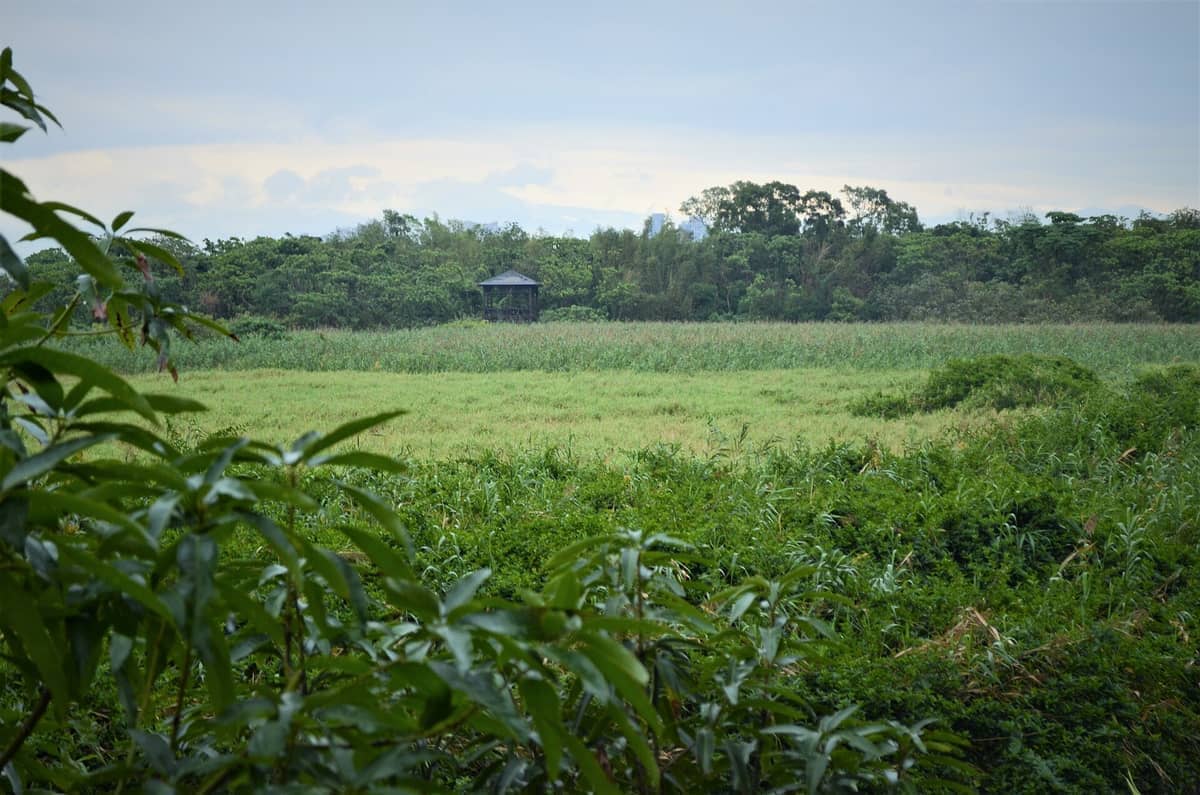
Guandu Nature Park (關渡自然公園) occupies a sweep of tidal wetland at the point where the Tamsui River meets the Keelung River in Beitou District, at the far northern edge of Taipei. The park was established to protect one of the last intact urban wetland habitats in Taiwan, and it functions today as both a conservation reserve and a public nature education center. The contrast with central Taipei is sharp: within 40 minutes of leaving the city core, you are standing on a timber boardwalk surrounded by reed beds, with egrets picking through shallow water and the distant ridge of Guanyinshan softening the horizon.
The park covers roughly 57 hectares and is managed by a private foundation under Taipei City Government oversight. It is not a large-scale national park, and it should not be confused with nearby Yangmingshan. This is a flat, slow-moving space designed for observation rather than exercise. There are no dramatic peaks or waterfalls. The draw is quiet attention: water, birds, seasonal change, and the particular atmosphere of a tidal marsh at different hours.
ℹ️ Good to know
Opening hours: daily except Mondays, 09:00–17:00. Closing time adjusts slightly by season, so check the official site before visiting in the shortest or longest days of the year. The park is closed every Monday.
The Wetland Ecosystem: Why This Place Matters
The wetland at Guandu sits within the East Asian–Australasian Flyway, one of the world's major bird migration corridors linking breeding grounds in Siberia and northern China with wintering areas in Southeast Asia and Australia. For birds making that crossing, the Tamsui River estuary and adjacent wetlands serve as a critical refueling and resting stop. Guandu Nature Park formally protects a portion of this habitat, making it scientifically significant beyond its modest footprint.
Resident and seasonal bird species recorded at the park number in the hundreds. Migratory shorebirds arrive from roughly late July through October, filling the mud flats during tidal exposure. Winter months bring larger wading birds including herons and egrets in greater concentration, while spring draws smaller passerine migrants passing through the reed margins. The park's nature center maintains updated sighting boards inside the main building, which gives arriving visitors a practical shortcut to knowing what is active that day.
Beyond birds, the wetland supports populations of fiddler crabs and mudskippers visible on tidal flats, as well as water plants including mangrove-adjacent species along the river margins. The smell of the park shifts with the tide: at low tide, the rich organic scent of exposed mud is present and noticeable, not unpleasant but definitively not a manicured garden. That is part of the point.
What the Visit Actually Looks Like
Entry is through a single ticket gate adjacent to the main visitor center, which houses the nature education exhibits, the bird sighting board, toilets, and the small cafe. The exhibits inside are informative and presented in both Chinese and English, covering wetland ecology, migratory bird species, and the history of land use in the Guandu area. Families with younger children often spend 20–30 minutes here before heading outside.
From the visitor center, a network of trails fans out across the reserve. The main boardwalk route runs over the reed and water marsh and provides the clearest views of open water and bird activity. Several covered observation hides sit at intervals along the boardwalk; these are simple wooden structures with horizontal viewing slots and benches. In the hides, the noise of the city drops away almost entirely, and you are close enough to the water that binoculars reveal individual bird behavior rather than just general presence.
A separate trail section follows the outer perimeter through more densely vegetated terrain. This route is shadier and slightly more humid, with a different bird community dominated by perching species in the shrubs and trees. The two trails together form a loop that most visitors complete in 90 minutes to two hours at a relaxed pace. Serious birders who station themselves in hides during active feeding periods will want considerably longer.
💡 Local tip
Bring binoculars if you have them. The park does not rent binoculars, and without them, many of the waterbirds are simply distant shapes on the mud. A 8x42 or 10x42 pair makes an enormous difference to what you can identify and enjoy.
Best Times to Visit: Morning, Season, and Tide
Morning visits between 09:00 and 11:00 are consistently better for bird activity than afternoons. Birds feed most actively in early morning and again in late afternoon, but since the park closes at 17:00, the morning window is the practical sweet spot. On overcast mornings the light is flat and even, which makes photography of birds on the water more consistent than in harsh midday sun. Weekend afternoons bring significantly more visitors, including school groups and families, which increases noise and reduces birdwatching quality.
Seasonally, the park has two distinct peaks. The first is autumn migration, roughly September through November, when the largest numbers of shorebird species pass through and the reed beds take on a golden-brown color. The second is winter, December through February, when resident and wintering waterbirds are concentrated on the remaining open water. Spring and summer are quieter for birds, though the park remains green and pleasant. Summer visits carry the caveat of Taipei's heat and humidity: by 10:30 on a July morning, the boardwalk is hot underfoot and the sun over the open marsh is direct and strong.
Tidal timing also affects what you see. At low tide, mud flats are exposed and shorebirds spread across them to feed. At high tide, the same area is underwater and birds disperse to roost. If you can check a tide table for the Tamsui estuary and time arrival roughly one to two hours before low tide, the birdwatching payoff improves substantially. This level of planning is optional but makes a real difference if birds are the primary reason for visiting.
Getting There and Getting Around Inside
The most straightforward public transit route is the MRT Red Line (Danshui-Xinyi Line) to Guandu Station, followed by bus R35 or S35 to the Guandu Nature Park Stop. The bus ride from the station takes approximately 10 minutes. The full journey from central Taipei takes around 45 to 55 minutes. Guandu is also the station closest to Guandu Temple, one of Taiwan's most significant riverside temples, which sits a short walk away and is worth combining into the same visit if your schedule allows.
Inside the park, all paths are flat and paved or boarded. Wheelchair rental is available at the main entrance, and accessible toilets are provided. A nursing room and water dispensers are also on site. The flatness of the terrain makes this one of the more genuinely accessible nature sites in Taipei for visitors with limited mobility. Strollers move through without difficulty.
There is limited parking near the park entrance for visitors arriving by car or scooter, but transit is more practical given Guandu's position at the end of an MRT line. The surrounding road approaching the park passes through a narrow village-like streetscape with small food stalls, which is where most visitors grab a snack before or after.
Photography at Guandu Nature Park
The park is a popular destination for wildlife photographers, and the hides are designed with photography in mind: the horizontal slots sit at a useful height for a lens resting on a monopod or the wooden ledge. Long telephoto lenses (400mm and above, or super-zoom compacts) are the most useful tools given the typical distances involved. Mirrorless and DSLR cameras with 100–400mm zoom range cover most practical situations.
Overcast mornings produce the most consistent light, eliminating harsh shadows on the water. Direct afternoon sun from the west creates strong glare across open water and makes exposure difficult. Dawn light, technically before the park opens, is not accessible to most visitors, but the first hour after 09:00 in autumn and winter is genuinely good. Smartphone cameras can produce satisfying landscape and reed-bed shots but are limited for bird identification-quality images of distant subjects.
⚠️ What to skip
Tripods with extended legs are awkward on the narrow boardwalk sections and can block other visitors. A monopod or a small travel tripod used considerately is more practical. Be aware that other visitors, including people with young children, share the hides and trails.
Who Should Think Twice Before Visiting
Visitors expecting something comparable to Yangmingshan National Park in terms of scenic drama or physical activity will find Guandu Nature Park underwhelming. The park is entirely flat, the views are horizontal rather than panoramic, and there is no hiking to speak of. If your primary interest is landscape photography, viewpoints, or getting a workout in nature, the park does not serve those goals well. Similarly, travelers on a short itinerary who want maximally varied experiences may find the hour-plus transit time from central Taipei hard to justify for a two-hour flat walk, unless birdwatching or wetland ecology is genuinely of interest.
The experience on a rainy day is workable rather than ideal: the covered boardwalk sections provide some shelter, and birds are often more active in light rain. But heavy rain makes the outdoor trails unpleasant and reduces visibility significantly. Check forecasts and plan accordingly. For context on how Taipei's rain patterns might affect your trip overall, the best time to visit Taipei guide explains seasonal patterns clearly.
Insider Tips
- The bird sighting board inside the visitor center lists recent observations by park staff — check it immediately on arrival to know which hides and trail sections are most productive that day.
- Combine the visit with Guandu Temple, about a 10–15 minute walk away. The temple complex occupies a hillside position with a distinct atmosphere compared to the flat wetland, and the combination makes the transit time feel much more worthwhile.
- Arrive close to 09:00 on weekdays in autumn or winter, when the park is nearly empty. By 10:30 on weekends, school groups begin arriving and the boardwalk hides can be crowded.
- Low-tide morning visits in October and November offer the best shorebird variety. If you can find a tidal prediction table for the Tamsui River and coordinate your arrival, the difference in bird numbers on exposed mud is substantial.
- The small food stalls on Guandu Road just outside the park entrance serve hot congee and simple Taiwanese breakfast dishes in the mornings. This is a more atmospheric and cheaper option than eating at the visitor center cafe.
Who Is Guandu Nature Park For?
- Birdwatchers and wildlife photographers looking for accessible urban wetland habitat
- Families with children who want an educational nature outing away from city streets
- Photographers interested in wetland landscapes and water birds with a telephoto lens
- Travelers combining the visit with Guandu Temple for a full half-day in northern Beitou
- Anyone wanting a slow, quiet contrast to Taipei's dense urban energy
Nearby Attractions
Other things to see while in Beitou District:
- Beitou Hot Spring Museum
Built in 1913 as the largest public bath in East Asia, the Beitou Hot Spring Museum is a rare surviving piece of Japanese colonial architecture in Taipei. Admission is free, the building is extraordinary, and it pairs perfectly with a soak at one of Beitou's nearby bathhouses.
- Guandu Temple
Founded in 1712 and dedicated to Mazu, the sea goddess, Guandu Temple is the oldest Mazu temple in northern Taiwan. Built into a hillside at the northern edge of Beitou District, it draws local worshippers, pilgrims, and curious travelers in roughly equal measure. Entry is free, the atmosphere is genuine, and the surrounding wetlands add a scenic reward that most temple visits in Taipei simply cannot match.
- Xinbeitou Hot Spring Area
Tucked into the green hills of Beitou District, the Xinbeitou Hot Spring Area is Taipei's most accessible thermal bathing destination. From a NT$60 public outdoor pool to private ryokan-style bathhouses, this compact district blends Japanese-era architecture, volcanic geology, and genuine neighborhood character into a half-day escape from the city.