Beitou Hot Spring Museum: Inside Taipei's Most Beautiful Bathhouse
Built in 1913 as the largest public bath in East Asia, the Beitou Hot Spring Museum is a rare surviving piece of Japanese colonial architecture in Taipei. Admission is free, the building is extraordinary, and it pairs perfectly with a soak at one of Beitou's nearby bathhouses.
Quick Facts
- Location
- No. 2, Zhongshan Rd., Beitou District, Taipei City 112, Taiwan
- Getting There
- MRT Red Line to Beitou, transfer to Xinbeitou Station (1 stop), then 5–10 min walk
- Time Needed
- 45–90 minutes for the museum; half a day if combining with Beitou's hot spring area
- Cost
- Free admission (optional guided tours available; check current details on-site or via the official website)
- Best for
- Architecture enthusiasts, history buffs, and anyone making a half-day trip to Beitou
- Official website
- hotspringmuseum.taipei/en
What the Beitou Hot Spring Museum Actually Is
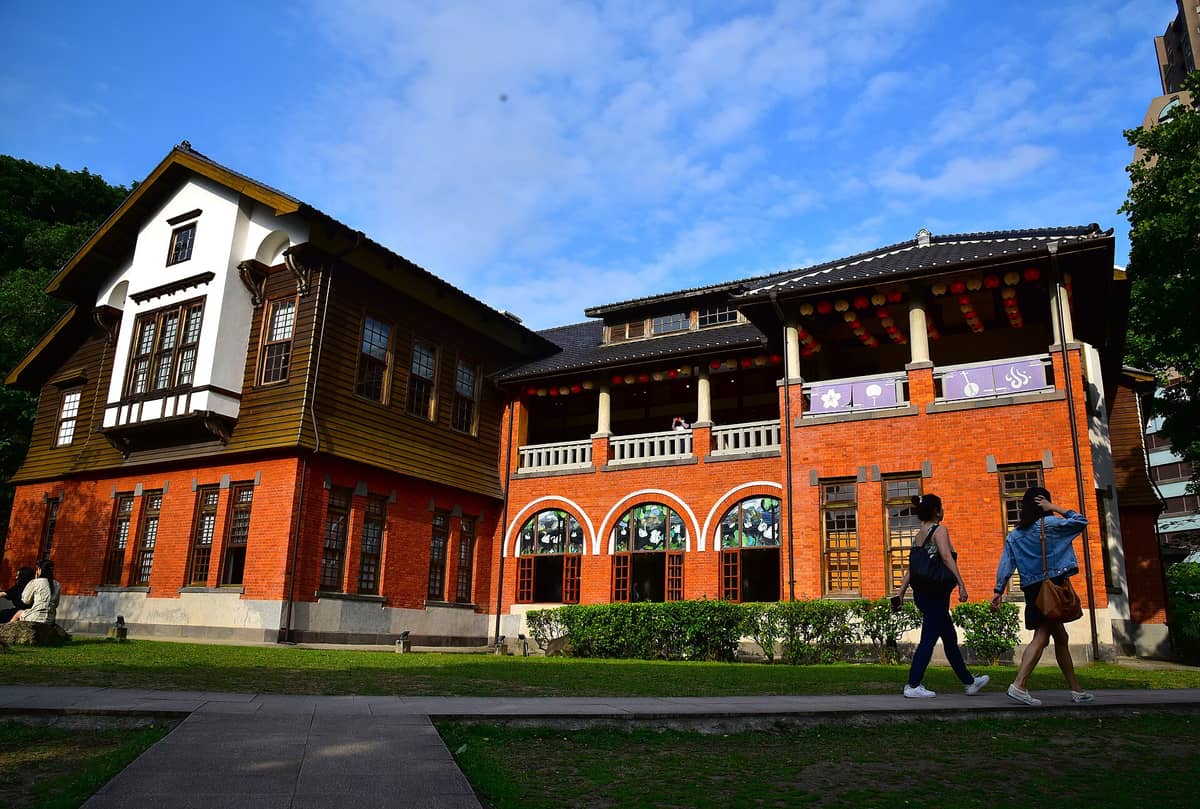
The Beitou Hot Spring Museum occupies a two-story timber and brick building that has stood beside Beitou Creek since 1913. It was designed in a hybrid Japanese-and-Western public bathhouse style of the Japanese era, with a stained glass clerestory and a Roman-style tiled pool on the ground floor that could accommodate large numbers of bathers at once. At the time of its construction, it was reportedly the largest public bath in East Asia.
The building fell into disuse and disrepair over the decades following Japanese colonial rule. Local teachers and elementary school students petitioned for its preservation in the mid-1990s, and after restoration work, it reopened in 1998 as a municipal historic site dedicated to Beitou's hot spring culture and Japanese colonial history. That civic campaign is itself worth knowing about: this museum exists because residents insisted it should.
It functions today as both an architectural exhibit and a cultural history museum. Unlike many preserved buildings in Taipei that feel emptied of meaning, this one tells a coherent story about why Beitou developed the way it did. For a broader picture of similar sites around the city, the Taipei museums guide covers the full range of the city's heritage institutions.
The Architecture: What to Look at and Why It Matters
The exterior is immediately striking. The building uses a combination of reddish brick on the lower story and white-painted rendered walls above, topped with green glazed roof tiles more common to the Japanese colonial period than to any European precedent. The overall effect is Mediterranean filtered through a Japanese lens, which reflects the architectural eclecticism that defined Meiji-era public buildings across Taiwan.
Step inside and the ground floor opens into the former bathing hall, a long rectangular room lined with small green and white tiles that still carry a faint mineral scent from the decades when hot spring water flowed through them. The Roman-style pool is no longer filled, but the surrounding tiled walls and iron railings give a clear sense of how grand and formal public bathing was treated at the time. Natural light comes through the stained glass windows at the far end, casting muted colors across the floor in the morning hours.
The upper floor is a tatami room with polished wooden floors and sliding shoji-style partitions, used in the colonial period as a resting area for bathers. It now houses rotating historical exhibits and a small reading area. The timber structure, with exposed beams and wide verandas overlooking Beitou Park, is one of the better-preserved examples of this building type remaining in Taipei.
💡 Local tip
Morning light between 9:00 and 11:00 comes through the stained glass on the ground floor at the best angle. If architectural photography matters to you, arrive early in the week when crowds are lightest.
The Exhibits: Hot Spring Culture and Colonial History
The permanent collection is modest in scale but purposeful. Panels trace the geological origins of Beitou's hot springs, which are fed by the volcanic activity of the Tatun Mountain group to the north. Beitou's water is notably acidic, classified in part as "green sulfur spring" (青磺), a type not commonly found worldwide. The exhibits explain this without requiring any prior knowledge of geology.
A second strand of the collection covers the social history of the bathhouse during the Japanese colonial period, including its role as a site of leisure for Japanese officers and, later, as a medical facility. Photographs, maps, and period objects fill the cases on the ground floor corridor. English labeling is present throughout, though some panels offer more detail in Mandarin.
The museum does not attempt to cover the full scope of Beitou's development. For that, the surrounding district provides the context: the wooden inn facades along the creek path, the steam rising from Beitou Creek itself, and the newer public facilities nearby all fill in what the exhibits cannot. The Xinbeitou hot spring area is a 10-minute walk away and offers the immersive, living version of what the museum describes historically.
How the Experience Changes by Time of Day and Week
On weekday mornings, the museum is genuinely quiet. The park paths leading to it are occupied mainly by older residents doing morning exercises, and the building itself often has fewer than a dozen visitors inside. This is when the tatami room upstairs feels most like the resting space it once was: cool, still, and faintly fragrant with old timber.
Weekend afternoons are a different experience. The museum is free and well-known, which means Saturday and Sunday see a steady flow of visitors, particularly families and Taiwanese tourists making a Beitou day trip. The bathing hall becomes crowded, selfie sticks come out around the pool, and the upper tatami room fills with people sitting on the floor looking at their phones. The building absorbs this reasonably well, but if contemplative exploration matters to you, a Tuesday or Wednesday morning is a different category of visit.
⚠️ What to skip
The museum is closed on Mondays and on some public holidays. Opening hours are listed as Tuesday to Sunday, generally 10:00 to 18:00 with occasional extended weekend hours; confirm directly with the museum or via the official website before visiting, especially during national holidays.
In cooler months, October through February, the contrast between the chilly outside air and the warm mineral smell lingering in the ground floor hall is noticeably pleasant. Summer visits are entirely manageable, since the thick walls and high ceilings keep the interior cool, but the walk from Xinbeitou Station through the park can be humid and slow.
Getting There and Fitting It Into a Day
The most straightforward approach is the MRT. Take the Red Line (Tamsui–Xinyi Line) to Beitou Station, then board the Xinbeitou branch line for one stop to Xinbeitou Station. From the station, follow the signs through Beitou Park, a pleasant green corridor with hot spring creek views on one side. The museum is on Zhongshan Road at the far end of the park, about a 5 to 10 minute walk depending on how often you stop along the way.
The museum works well as the first stop on a Beitou half-day. After visiting, walk north along the creek toward the hot spring area to explore the bathhouse inns and public facilities. The Taipei hot springs guide covers which bathhouses suit different budgets and preferences, which saves time on the day itself.
Beitou is also a straightforward addition to any itinerary that already includes northern Taipei. Yangmingshan National Park is accessible from Beitou by bus, making it possible to combine both into a full day out of the city center without backtracking.
Practical Details: What to Bring and What to Expect
No ticket purchase is needed because admission is free. Walk in, pick up the English-language map at the entrance, and explore at your own pace. Photography is permitted in most areas; a few specific exhibits ask visitors not to photograph individual artifacts, and these are marked.
The building is noted as wheelchair accessible, though the upper tatami floor involves a change in floor level. Visitors with specific mobility requirements should contact the museum in advance for detailed information about lift access and viewing options.
Shoes must be removed before entering the tatami room upstairs. This is clearly indicated at the room entrance, and lockers or shelves are provided. Wear comfortable shoes that slip off easily, particularly in winter when socks become an obvious priority.
ℹ️ Good to know
Optional guided tours are available at the museum, some at an additional cost. Check the official website for the current schedule, as English-language guided sessions are not available every day.
Is It Worth Your Time? An Honest Assessment
For architecture alone, yes. There is no comparable public bathhouse building surviving in this condition anywhere else in Taipei, and the combination of European, Japanese, and local influences in a single structure is genuinely rare. Even visitors with no particular interest in history tend to find the ground floor tiled hall impressive.
As a standalone museum with deep scholarly content, it is more modest. The exhibits are informative but not exhaustive, and a thorough read-through of all the panels takes under 30 minutes. This is not a place to spend three hours absorbed in archival material. It works best as one part of a longer Beitou afternoon rather than as a destination in itself.
Visitors looking only for a hot spring experience, rather than the history behind it, might spend their time more directly at one of the bathhouses nearby. But at free admission, the case for stopping in is strong for anyone already in Beitou.
If you are planning a wider cultural day, the Taipei walking tours section includes a Beitou route that sequences the museum alongside the creek walk, the public bath, and the hillside streets in a logical order.
Insider Tips
- The stained glass windows on the ground floor are best photographed from inside, facing the windows with the pool in the foreground. This only works well when morning light is coming through from the east side, roughly between 9:00 and 11:00.
- The tatami room upstairs is often overlooked by visitors who stay on the ground floor. The room's wide wooden veranda has views over Beitou Park and is one of the quieter spots in the building even on busy weekends.
- Beitou Creek runs directly behind the museum and produces visible steam in cooler months. A short walk along the creek path takes you past the steam vents and toward the outdoor hot spring footbath in Beitou Fuxing Park, which is free to use.
- The branch MRT line to Xinbeitou uses a dedicated two-car train on a short loop that runs every few minutes. It is noticeably different from the main network and worth the small detour even just for the ride.
- If you plan to soak at a bathhouse after the museum, carry a small towel and a change of underwear. Most Beitou bathhouses rent towels but the cost adds up, and having your own makes the logistics cleaner.
Who Is Beitou Hot Spring Museum For?
- Architecture and design enthusiasts interested in Japanese colonial-era public buildings
- Travelers combining a Beitou hot spring afternoon with cultural context
- Families with older children curious about Taiwan's history under Japanese rule
- Budget travelers: free entry means even a 45-minute visit costs nothing
- Photographers looking for interior architectural shots with natural light and strong geometry
Nearby Attractions
Other things to see while in Beitou District:
- Guandu Nature Park
Sitting at the confluence of the Tamsui and Keelung rivers in northern Taipei, Guandu Nature Park (關渡自然公園) protects one of Taiwan's most important urban wetlands. With boardwalk trails, observation hides, and seasonal waves of migratory birds, it offers a rare pocket of quiet nature inside the city limits for under NT$60.
- Guandu Temple
Founded in 1712 and dedicated to Mazu, the sea goddess, Guandu Temple is the oldest Mazu temple in northern Taiwan. Built into a hillside at the northern edge of Beitou District, it draws local worshippers, pilgrims, and curious travelers in roughly equal measure. Entry is free, the atmosphere is genuine, and the surrounding wetlands add a scenic reward that most temple visits in Taipei simply cannot match.
- Xinbeitou Hot Spring Area
Tucked into the green hills of Beitou District, the Xinbeitou Hot Spring Area is Taipei's most accessible thermal bathing destination. From a NT$60 public outdoor pool to private ryokan-style bathhouses, this compact district blends Japanese-era architecture, volcanic geology, and genuine neighborhood character into a half-day escape from the city.