Tamsui (Danshui) sits at the mouth of the Tamsui River where it meets the Taiwan Strait, roughly 35–40 minutes north of central Taipei on the MRT Red Line. A former colonial trading port with Dutch, Spanish, and Japanese-era architecture, it draws day-trippers with its riverside boardwalk, historic forts, and a busy old street lined with traditional snacks. The combination of water views, layered history, and easy transit access makes it one of the most rewarding half-day or full-day excursions from the city.
Tamsui is where Taipei's urban energy dissolves into sea air, river light, and the faded grandeur of a port town that once handled trade from across Asia and Europe. Set at the northern terminus of the MRT Red Line, this historic district of New Taipei City rewards visitors with colonial-era forts, a lively waterfront promenade, and some of the best sunset views in the greater Taipei area.
Orientation
Tamsui District sits at the northwestern tip of the Taipei metropolitan area, in New Taipei City, where the Tamsui River empties into the Taiwan Strait. Administratively, it is separate from Taipei City proper, but functionally it sits within easy reach of central Taipei via the MRT and is treated by most visitors as part of the wider Taipei day-trip circuit.
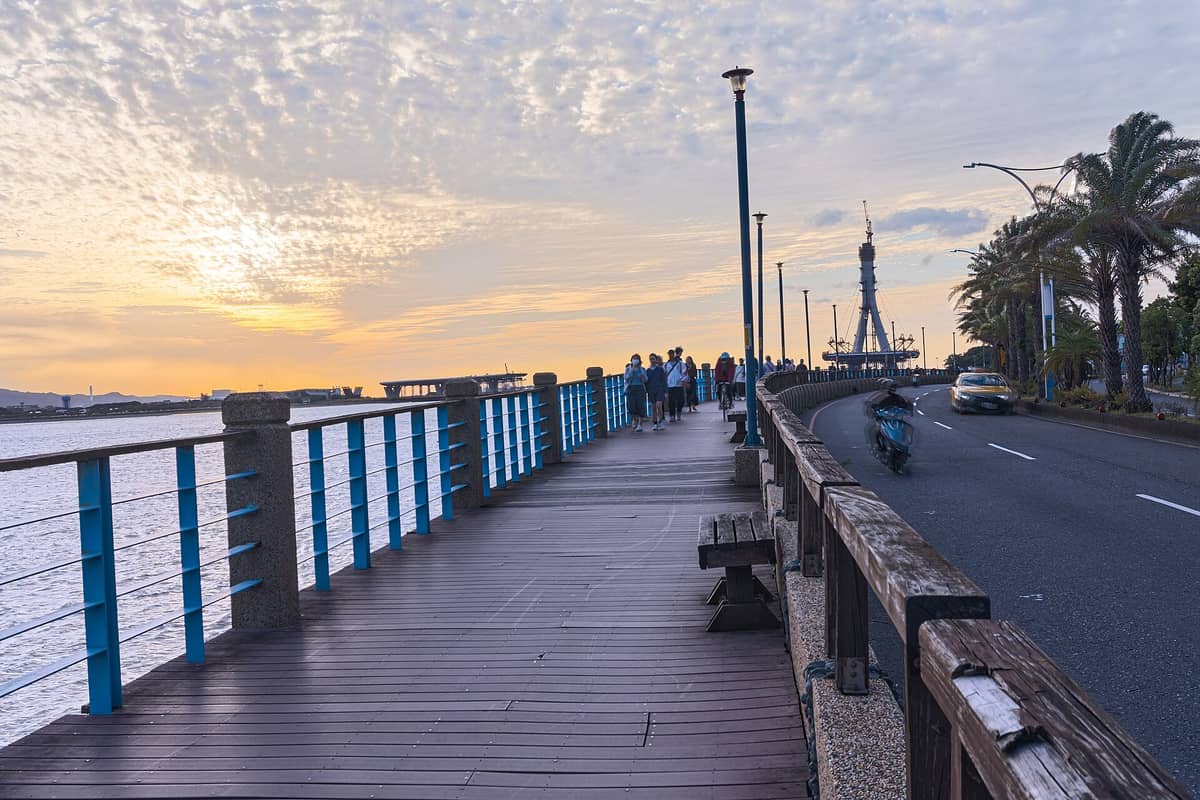
The area most visitors come to explore occupies a narrow strip along the northern riverbank. Zhongzheng Road is the spine of this zone, running roughly parallel to the water from Tamsui MRT Station westward toward the old port area and Fisherman's Wharf. The streets directly around the station are the most concentrated for food stalls and souvenir shops, while the terrain rises slightly to the north and east toward hillside neighborhoods and fort viewpoints.
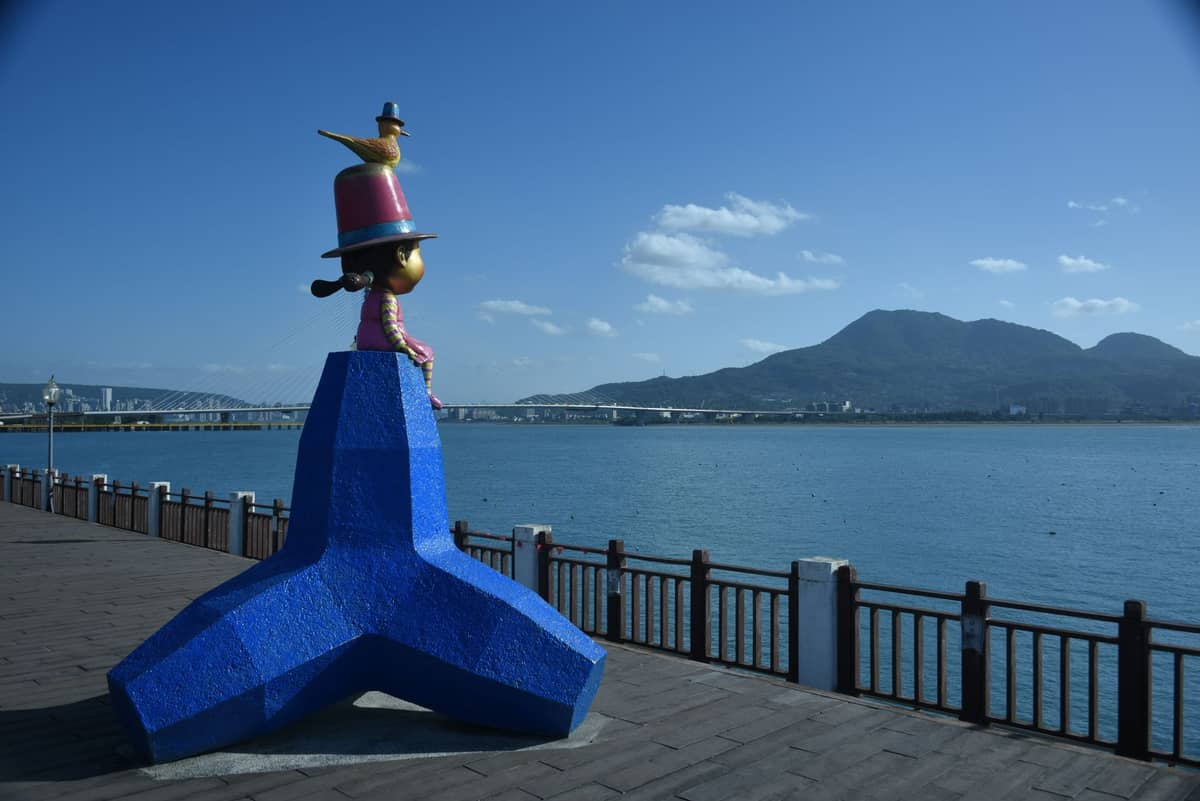
Across the river to the southwest, Guanyin Mountain looms above the opposite bank, providing a dramatic backdrop for the sunset. Behind Tamsui to the north and east, Datun Mountain and the foothills of Yangmingshan frame the inland edge of the district. This geography, water on one side and mountains on the other, is why the light here is so distinct from central Taipei. For context on how Tamsui fits into a wider northern Taiwan itinerary, the Taipei north coast day trip guide covers the full sweep of destinations along this coastline.
Character & Atmosphere
Tamsui moves at a pace that few parts of the greater Taipei area can match. On weekday mornings, the riverfront is quiet enough to hear the water. Local residents walk dogs along the promenade, older men sit outside tea shops on plastic stools, and the smell of iron eggs, a local specialty slow-cooked in soy and spices, drifts from stalls that have barely changed their signage in decades. The stretch of Zhongzheng Road closest to the MRT station is the commercial heart, where vendors set up early and the rhythm is steady but unhurried.
By early afternoon on weekends, the atmosphere shifts considerably. Tour groups arrive by MRT, the boardwalk fills with families and couples, and the stalls on Tamsui Old Street run at full capacity. This is not a place that hides its popularity. The main waterfront strip can feel genuinely crowded between about 1pm and 5pm on Saturdays and Sundays, particularly in spring and autumn when the weather is ideal and visitor numbers peak.
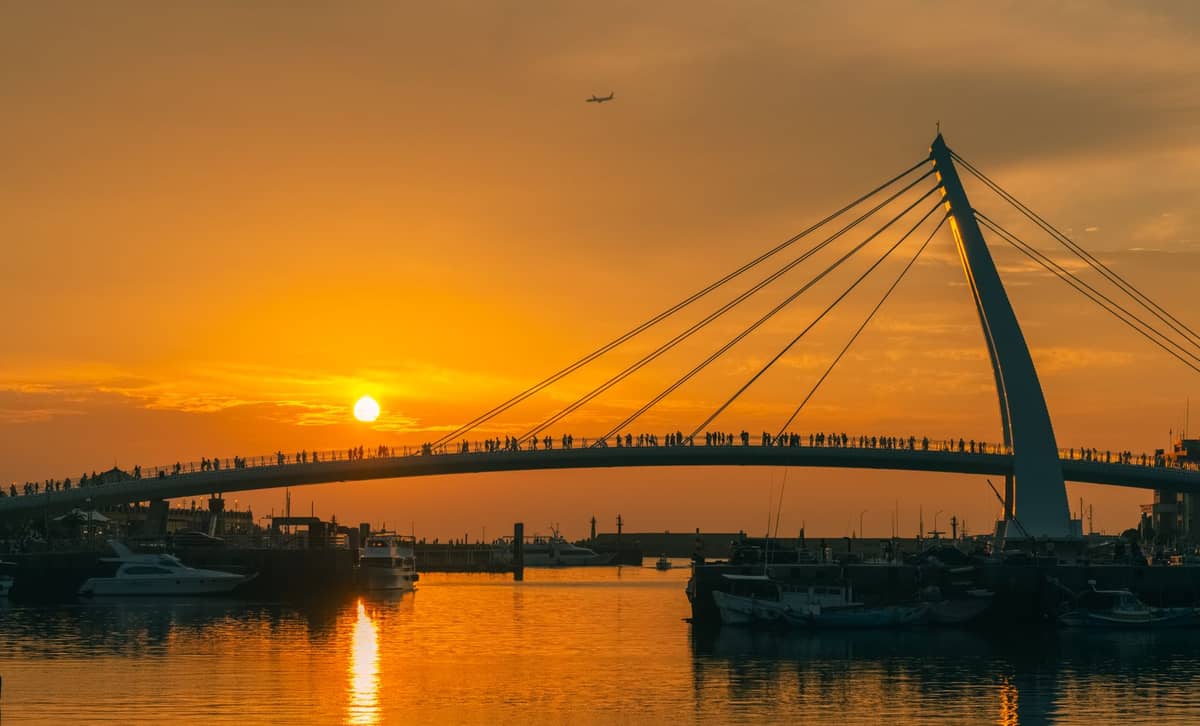
The real payoff comes in the late afternoon. As the light shifts toward gold and the sun drops toward Guanyin Mountain across the river, the old port transforms. The crowds begin to thin near the fort areas above town while the boardwalk still buzzes. Sunset here is legitimately spectacular on clear evenings, and it is the single biggest draw for first-time visitors. After dark, the old street stays lively until around 9pm or 10pm, with lantern-lit stalls and a relaxed evening atmosphere that feels more like a riverside town than a tourist attraction.
💡 Local tip
For the best of both worlds, arrive on a weekday before noon to explore the historic sites in relative quiet, then stay for the sunset. On weekends, consider arriving before 11am to beat the largest crowds on Tamsui Old Street.
What to See & Do
The historic core of Tamsui contains one of the densest concentrations of colonial-era architecture in northern Taiwan. The district passed through Spanish, Dutch, and Japanese control at various points in its history before becoming a major treaty port in the 19th century, and the buildings left behind by that layered past are the main reason to spend more than an hour or two here.
Fort San Domingo, known locally as Hongmao Cheng or Red-Haired Fort, sits on a promontory above the river a short walk west of the main old street. Originally built by the Spanish in the early 17th century (1628–1629) and later rebuilt by the Dutch, it served subsequently as a British consulate for over a century. The compound includes the original fort structure, consular residence buildings, and sweeping views over the river mouth. Nearby, the English consulate annex building offers a clear example of colonial-era administrative architecture. The Fisherman's Wharf sits further west along the riverbank, connected by a ferry service and a continuous waterfront path, and is best known for the suspension footbridge called the Lover's Bridge, which is particularly photogenic at dusk.
The Mackay Heritage Zone near the center of town includes the former Oxford College building and Mackay Memorial Church, both associated with Canadian missionary George Leslie Mackay, who was a significant figure in 19th-century Tamsui. The Tamsui Old Street waterfront itself is worth walking end to end, not just for the food stalls but for the older shophouse facades, some of which retain their original decorative plasterwork.
Fort San Domingo (Hongmao Cheng): Dutch-era fort with consular buildings and river views
Fisherman's Wharf and the Lover's Bridge: best visited at sunset for the full effect
Tamsui Old Street (Zhongzheng Road): the main commercial riverside strip
Mackay Heritage Zone: colonial-era missionary buildings and church
Tamsui Art Wharf: converted warehouse space with local art exhibitions and waterfront cafe terraces
Hobe Fort: smaller Qing-dynasty artillery fort closer to the river mouth, less visited than Fort San Domingo
ℹ️ Good to know
A ferry service connects Tamsui's main pier to Fisherman's Wharf, taking about 10 to 15 minutes on the water. This is both a practical way to reach the wharf and a pleasant short river cruise that avoids retracing your steps along the road.
Eating & Drinking
Tamsui has a genuine food identity that predates its current status as a day-trip destination. Several of its signature snacks have been produced here for generations and are difficult to find with the same quality elsewhere in Taipei. Walking Zhongzheng Road in the afternoon, you will encounter consistent repetition of the same items across multiple stalls, which can feel overwhelming at first, but the competition keeps quality surprisingly high.
Iron eggs, a-gei, and fish crackers are the three items most closely associated with Tamsui. Iron eggs are quail eggs braised and dried repeatedly in a spiced soy brine until they turn dark, chewy, and intensely savory. A-gei is a local invention: fried tofu pockets stuffed with glass noodles and sealed with fish paste, typically served with a sweet chili sauce. Fish crackers of various shapes and flavors fill most of the souvenir shops along the waterfront. None of these are expensive, and grazing through several vendors is the way most visitors approach lunch here.
Beyond street food, the waterfront has sit-down restaurants serving seafood, and a number of cafes have opened in repurposed warehouse spaces near the art wharf. Prices for a seafood meal with river views are moderate by Taipei standards. For travelers building a broader sense of Taipei's food landscape, the Taipei food guide covers street food traditions across multiple neighborhoods and provides useful context for what makes Tamsui's snack culture distinct.
Iron eggs (鐵蛋): the definitive Tamsui snack, sold vacuum-packed for takeaway
A-gei (阿給): stuffed tofu, best eaten fresh from a stall near the old street
Fish crackers (魚酥): fried fish snacks in multiple flavors, popular as souvenirs
Tamsui fish balls: sold in soup form at noodle stalls throughout the old street
Seafood restaurants along the waterfront: mid-range pricing, better quality toward Fisherman's Wharf
⚠️ What to skip
Many of the stalls on Tamsui Old Street cater primarily to domestic day-trippers and operate cash only. Keep small bills on hand. English menus are uncommon outside the larger sit-down restaurants.
Getting There & Around
The MRT is by far the most practical way to reach Tamsui from central Taipei. Tamsui Station is the northern terminus of the Red Line (Line R), and the journey from Taipei Main Station takes approximately 35 to 40 minutes, depending on whether you take an express or local service. From Zhongshan Station it is around 30 minutes, and from Jiantan, the stop nearest Shilin District, it is roughly 20 minutes. The guide to getting around Taipei has full detail on using the MRT network with an EasyCard.
From Tamsui Station, the old street and riverside are a 5-minute walk heading west and south toward the river. Signage in English points clearly toward the main attractions from the station exit. Fort San Domingo is about a 15-minute walk from the station, or you can take a local bus from the stop directly outside the station for the uphill section.
The Danhai Light Rail (LRT) connects Tamsui Station with Fisherman's Wharf and the newer Danhai New Town residential development to the north. The line has two branches: one runs to Fisherman's Wharf, which is the relevant connection for most visitors. The LRT departs from a stop directly adjacent to Tamsui MRT Station and takes around 10 to 15 minutes to Fisherman's Wharf. Alternatively, the river ferry from the main pier to Fisherman's Wharf takes roughly 20 minutes and offers views of both riverbanks.
Buses from Taipei City also serve Tamsui, but given the convenience and frequency of the MRT, they are rarely the first choice for visitors. Within the old street area, everything is walkable. The terrain between the waterfront and the fort district involves a modest uphill stretch but nothing strenuous. Cycling along the riverside path toward Fisherman's Wharf is a popular option, with rental stands near the station.
Where to Stay
Tamsui is overwhelmingly a day-trip destination rather than a base for exploring Taipei. The vast majority of visitors come from central Taipei in the morning and return in the evening, and the transit connection makes this entirely logical. Hotels in Tamsui tend to serve local business travelers and weekend visitors looking for a slower pace than the city center offers. For travelers deciding where to base themselves in the wider Taipei area, the guide to where to stay in Taipei covers all major neighborhoods with recommendations for different traveler types.
That said, staying overnight in Tamsui has one significant advantage: you get the waterfront almost entirely to yourself in the early morning and the late evening, when the day-trippers have gone. The area around the old street and the streets behind the riverfront have guesthouses and smaller hotels at prices generally below what you would pay in Zhongshan or Xinyi Districts. If your itinerary includes the north coast, Yangmingshan, or a day trip further up toward Keelung, staying in Tamsui can reduce travel time compared to returning to central Taipei each night.
For travelers interested in combining Tamsui with a broader northern Taiwan circuit, the districts of Beitou and its hot spring resorts are 20 to 25 minutes away on the Red Line, offering a completely different kind of stay within easy reach of the same transit corridor.
Tamsui in Context: Day Trip Planning
Tamsui pairs naturally with several other destinations along the northern reaches of the MRT network. Beitou, the hot spring district, sits on a branch of the Red Line and takes about 35 to 40 minutes from Tamsui with one transfer at Beitou Station for the Xinbeitou branch. The Shilin District, home to the National Palace Museum and the famous Shilin Night Market, is about 20 minutes south on the same line. A well-structured day could combine a morning at Tamsui with an evening at Shilin Night Market without ever changing transit lines.
From Tamsui, the north coast of Taiwan, including Yehliu Geopark, Jiufen, and the old gold mining towns around Jinguashi, is accessible by bus. The journey to Yehliu takes roughly an hour. These routes make Tamsui a logical starting point for a full day along the coast rather than just a riverside stroll. The Jiufen day trip guide covers the logistics of reaching the northeast coast from Taipei, and some routes pass through or near Tamsui.
For hikers, the trails of Yangmingshan National Park begin roughly 20 kilometers to the east of Tamsui. While the direct connection requires a bus transfer, the visual relationship between Tamsui's coastline and the volcanic peaks behind it is part of what makes the area geographically interesting. The Taipei hiking guide covers trail options in the national park in detail.
Honest Assessment: Who Tamsui Is For
Tamsui is a legitimate destination with real historical depth, not just a pretty riverfront backdrop for photos. The colonial architecture, particularly around Fort San Domingo and the Mackay sites, is genuinely worth time and attention. The food culture has roots that go well beyond the current tourist economy. And the sunset, on a clear evening in October or November, is as good as anything the broader Taipei area offers.
At the same time, Tamsui has real limitations for certain travelers. The main old street is heavily commercialized and can feel repetitive after the first pass. Weekends between noon and 5pm are crowded in a way that makes leisurely exploration difficult. There is no world-class museum, no nightlife scene worth staying late for, and limited options for travelers who want to move beyond the standard tourist circuit. If you have already visited once, there is little obvious reason to return unless you are deliberately seeking the slower morning pace or using Tamsui as a stepping stone to the north coast.
For first-time visitors to Taipei with two or three days in the city, Tamsui earns its place on the itinerary as a half-day or full-day excursion. The MRT connection makes it almost frictionless to reach, and the combination of history, scenery, and food gives it more substance than most urban day trips.
TL;DR
Tamsui is the northern terminus of the MRT Red Line, about 35-40 minutes from Taipei Main Station, making it one of the easiest day trips from central Taipei.
The historic core along Zhongzheng Road and the riverfront combines Dutch-era forts, colonial consular buildings, and a lively old street with famous local snacks including iron eggs and a-gei.
Sunset views over Guanyin Mountain and the Taiwan Strait from the waterfront or Fisherman's Wharf are the single biggest draw, and clear autumn evenings deliver outstanding light.
Weekends between noon and 5pm are heavily crowded on the main old street; arriving before 11am or visiting on a weekday significantly improves the experience.
Best suited for first-time Taipei visitors building a day trip itinerary, history and architecture enthusiasts, and travelers using Tamsui as a gateway to the north coast of Taiwan.
Taipei's humid subtropical climate means the difference between a miserable typhoon-soaked August and a crisp, sunny November can be dramatic. This guide breaks down every month's weather, crowd levels, and key events so you can pick the ideal window for your trip.
Taipei sits within easy reach of mountains, coastlines, hot spring valleys, and historic mining towns. These are the day trips that reward the effort, whether you have a few hours or a full day to spare.
Taipei is one of Asia's most budget-friendly capitals, with an impressive number of world-class attractions that are completely free. From grand ceremonial plazas and centuries-old temples to volcanic national parks and lively night markets, here's how to see the best of Taipei without spending a cent on entry fees.
Taipei has one of the most efficient urban transport networks in Asia. This guide covers everything you need to navigate the city confidently: the MRT system, city buses, Taoyuan Airport connections, EasyCard setup, and the common mistakes that trip up first-time visitors.
Taipei is served by two airports with very different roles. Taiwan Taoyuan International Airport handles nearly all international traffic, while Taipei Songshan Airport serves domestic and select regional routes. This guide breaks down every transport option, with fares, journey times, and clear guidance on which route suits your trip.
Taipei is a strong remote-work base: fast fiber internet, coworking spaces at every budget, a world-class food scene, and a cost of living that still undercuts Tokyo or Singapore. This guide covers what you need to know before you land.
Taipei's food culture runs deep, from neighborhood beef noodle shops and temple-front snack stalls to dumpling houses with decades of history. This guide covers the essential dishes to try, where to find them, what to pay, and how to navigate the city's famous night markets without the rookie mistakes.
Taipei is one of Asia's most walkable cities, and its hiking scene is just as impressive as its food and temples. From quick city-fringe scrambles with skyline payoffs to full-day volcanic summit routes, these are the best trails in and around Taipei, organized by type and difficulty.
Taipei is one of Asia's great hot spring cities, with soaking options ranging from NT$60 public baths to hillside resort ryokans. This guide covers the best hot spring areas, scenic hikes through volcanic terrain, and nearby attractions to round out a full day trip.
Spring in Taipei runs from February through April and delivers cherry blossoms, flower festivals, and some of the most comfortable weather of the year. This guide breaks down exactly when things bloom, which events are worth your time, and what practical realities to plan around.
Taipei's winter is cooler and damper than most visitors expect, but rarely cold enough to slow you down. This guide covers month-by-month weather, what to wear, the best seasonal activities, Lunar New Year logistics, and straightforward notes on crowds and costs.
Three days is enough time to get a genuine feel for Taipei — its historic temples, modern skyline, legendary food scene, and surprisingly accessible nature. This itinerary is structured by neighborhood logic, not wishful thinking, so you spend less time commuting and more time eating.
Everything you need to plan a DIY day trip from Taipei to Jiufen Old Street, Jinguashi's Gold Museum, and the dramatic Gold Coast. Covers transport routes, fares, opening hours, seasonal conditions, and a realistic itinerary to get the most out of your Taiwan trip.
The Taipei Lantern Festival, the Pingxi Sky Lantern Festival, and daily lantern releases at Shifen are three separate events that confuse even experienced Taiwan travelers. This guide breaks down the differences, dates, logistics, and crowd realities so you can plan the right experience for your trip.
Taipei is a serious museum city. From one of the world's great repositories of Chinese art to intimate colonial-era buildings turned into creative spaces, these are the best museums in Taipei across history, art, science, and culture.
Taipei's night markets are the city's social and culinary heartbeat. This guide covers the best markets for food, atmosphere, and local culture, from the city's largest to its most intimate neighborhood spots.
Taipei after dark offers far more than club music and cocktails. From steaming night market stalls to underground DJ sets and rooftop bars with views of Taipei 101, this guide covers every layer of the city's after-hours scene — with specific districts, realistic timing, and a frank take on what's worth your night.
The Taipei north coast loop — Yehliu Geopark, Shifen on the Pingxi Line, and Keelung's Miaokou Night Market — is one of Taiwan's most rewarding full-day excursions. This guide covers transport logistics, admission prices, realistic timing, and what to skip.
Taipei is one of Asia's most wallet-friendly capitals, but only if you know where the savings actually are. This guide breaks down transport passes, free attractions, budget eats, and the seasonal pricing patterns that most travelers miss.
Seven days is enough time to see Taipei's historic core, explore its best neighborhoods, take a day trip or two, and still slow down enough to actually enjoy it. This itinerary is built around the MRT, real opening hours, and clear priorities — not a checklist of every attraction in the city.
For a dense capital, Taipei keeps a surprising amount of green space within easy reach: volcanic national parks, botanical gardens, and 112 kilometers of riverside cycling trails. This guide covers the best parks and outdoor spaces for every pace.
Taipei Pride draws over 150,000 people to the streets of Taipei, Taiwan every October, making it the largest LGBTQ+ pride event in Asia. This guide covers everything: parade dates, routes, costs, accommodation tips, and how to make the most of the full weekend.
Taipei consistently ranks among the safest major cities in Asia, with major Western governments advising only normal precautions. That said, scams, weather risks, and a few specific situations are worth knowing about before you arrive. This guide covers everything honestly.
Taipei rewards shoppers at every budget, from street-food stalls and vintage clothing lanes to flagship department stores stacked around Taipei 101. This guide breaks down where to shop, when to go, and what's actually worth your time.
Taipei sits at the heart of one of the world's great tea cultures. This guide covers everything from riding the Maokong Gondola to the hilltop teahouses of Wenshan District, the correct gongfu cha brewing ritual, and where to find Taiwan's finest Tieguanyin and Baozhong oolong. Practical, specific, and free of fluff.
Taipei's temple culture runs deep. This guide covers the city's most rewarding temples, from the incense-thick halls of Longshan to the serene courtyards of the Confucius Temple, with practical advice on when to go and how to get there.
Taipei rewards those who look up and climb high. From the world-famous observatory at Taipei 101 to free sunset hikes on Elephant Mountain, this guide covers every angle of the city's skyline, from polished paid decks to wild volcanic summits.
Taipei rewards walkers more than almost any other Asian capital. This guide breaks down the best self-guided walking routes by district, with realistic distances, timing advice, where to pick up free maps, and frank notes on what to skip.
Two days in Taipei is enough to see the city's iconic skyline, explore its best temples and night markets, and eat very well. This guide lays out a practical, district-by-district itinerary with real logistics, current prices, and frank notes on what's worth your limited time.
Taipei is one of Asia's most underrated family destinations. Affordable attractions, an easy metro system, and a culture that genuinely welcomes children make it a smooth trip for families of all ages. This guide covers the best things to do in Taipei with kids, with current pricing, practical logistics, and seasonal advice built in.
Taipei packs an extraordinary range of experiences into 271 km²: world-class museums, mountain hikes accessible by MRT, some of Asia's best street food, and century-old temples sitting next to glass skyscrapers. This guide cuts through the noise with specific prices, clear assessments, and practical logistics so you can spend less time planning and more time exploring.
Choosing where to stay in Taipei shapes your entire trip. This guide breaks down the city's key neighborhoods by budget, vibe, and MRT access, with candid trade-offs for every type of traveler.