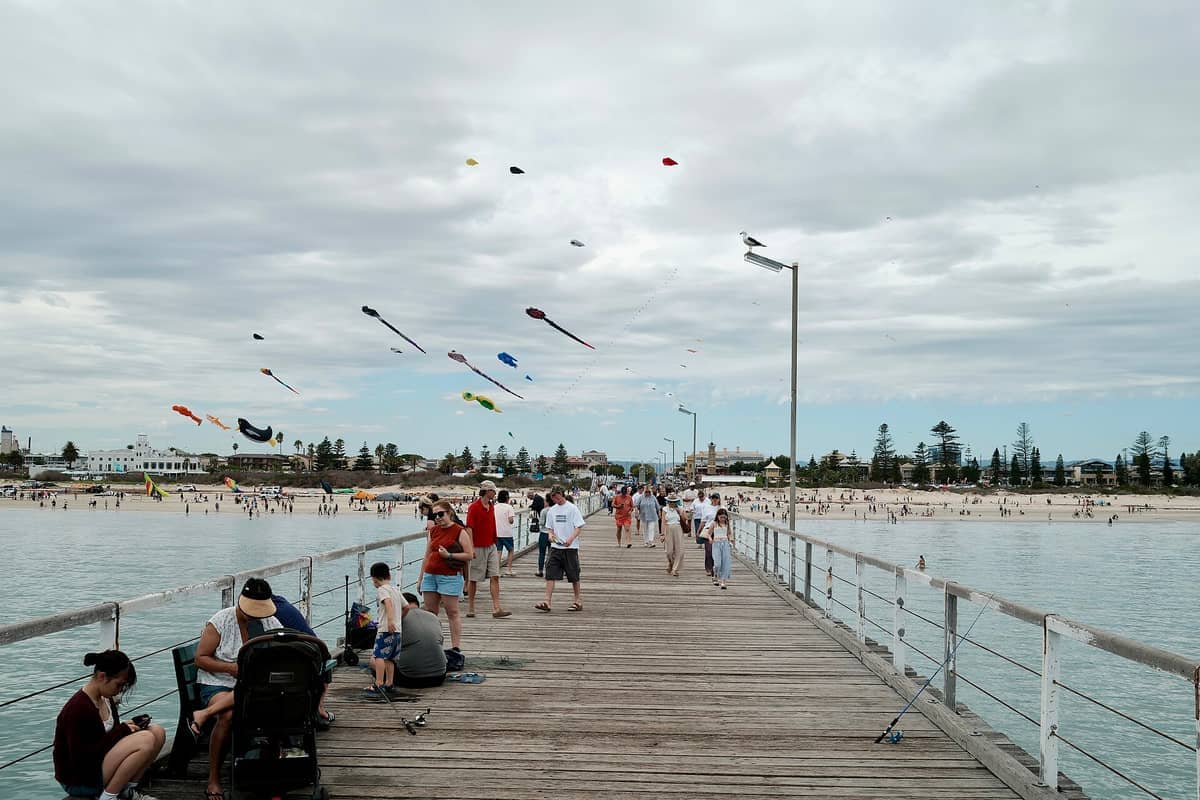
Semaphore is a coastal suburb on the Lefevre Peninsula, about 14 kilometres northwest of Adelaide's city centre. It combines a long sandy beach, a historic jetty, and an Edwardian-era shopping strip into a genuinely relaxed day out or beachside base that feels worlds away from the CBD.
Semaphore sits on the eastern shore of Gulf St Vincent, where wide sandy beaches meet a heritage-listed streetscape that has changed surprisingly little since the early twentieth century. It is the kind of suburb where the pace slows noticeably the moment you step off the bus onto Semaphore Road, and where locals arrive early on summer mornings to claim a spot of sand before the heat sets in.
Orientation
Semaphore occupies a narrow strip of the Lefevre Peninsula, facing west across Gulf St Vincent. The suburb is formally bounded by Union and Hargrave streets to the north, Hart Street to the south, the gulf foreshore to the west, and Woolnough Road and Swan Terrace to the east. In practical terms, almost everything a visitor needs sits within a few blocks of Semaphore Road, the main commercial strip that runs east-west from the beach inland.
The suburb is roughly 14 kilometres northwest of the Adelaide CBD by road, placing it closer to Port Adelaide than to the city centre. That proximity to Port Adelaide is part of what shaped Semaphore historically: it developed as a seaside retreat for workers in the port precinct, and its architecture and street rhythms still carry that working-class resort character. Walking north along the foreshore path from Semaphore, you can reach Largs Bay; walking south takes you toward Semaphore South and eventually toward Glanville.
If you are building a mental map of the broader region, Semaphore sits on the opposite side of the city from the popular beach suburb of Glenelg. The two beaches attract different crowds: Glenelg is more commercial and tourist-oriented, while Semaphore retains a quieter, more neighbourhood-oriented feel.
Character & Atmosphere
On a weekday morning, Semaphore Road is quiet enough to hear the sea. A handful of cafés have their doors open, the smell of coffee drifting out onto footpaths shaded by the verandahs of Victorian and Edwardian shopfronts. The buildings along the strip are low, mostly two storeys at most, with decorative ironwork and painted timber facades that give the precinct a faded elegance rather than a polished heritage-tourism feel. Shops sell ice cream, fish and chips, and surf supplies, interspersed with small restaurants and the occasional independent boutique.
By mid-morning on a weekend in summer, the dynamic shifts. Families arrive with bags and umbrellas, the car parks on Military Road fill up, and the beach below the jetty gets busy. But Semaphore's beach is long enough that it never feels truly crowded outside of public holidays. The light on the water in the late morning is sharp and white, the kind that makes you squint looking west. By late afternoon, the sun drops toward the horizon over the gulf, turning the water copper and drawing people back to the foreshore even after the beach crowd has thinned.
After dark, Semaphore Road quiets down significantly. A few restaurants and the pub stay open, but this is not a late-night suburb. There is nothing threatening about it at night, but travellers looking for a lively evening scene will not find it here. The suburb's strength is in its daytime and early evening atmosphere, particularly on warm weekends.
ℹ️ Good to know
Semaphore experiences Adelaide's Mediterranean climate: hot, dry summers (December to February can bring days above 35°C) and mild, wetter winters. The beach is most usable from October through April, with peak activity in January.
What to See & Do
Semaphore Jetty is the suburb's defining structure. The current jetty extends several hundred metres into the gulf and is a popular spot for fishing, walking, and watching the sun set over the water. It is free to walk and accessible most of the day, though swimmers should note that the jetty pylons create currents and swimming directly off the jetty is not recommended. The jetty has been a feature of this coastline since the nineteenth century, when Semaphore served as a signal station and a seaside destination.
The beach itself stretches both north and south of the jetty, with the main patrolled swimming area situated between the red and yellow flags when lifesavers are on duty. Conditions are generally calm, but the gulf's shallow gradient and occasional rips make it important to check whether lifesavers are present before entering the water. The sand is fine and pale, and the beach is wide enough at low tide that there is ample space even on busy summer days.
Just south of the main Semaphore area, Fort Glanville is a nineteenth-century coastal fortification that runs heritage open days, including rides on a historic steam train. It is one of those genuinely unusual local attractions that most visitors walk straight past. For a broader look at the peninsula's maritime past, the Port Adelaide Maritime Museum is less than ten minutes away by bus and provides essential context for the whole region.
Walk the full length of Semaphore Jetty at sunset for views back to the Adelaide Hills on clear days
Swim in the patrolled area between the flags during lifesaver hours
Explore the Edwardian shopfronts along Semaphore Road on foot
Visit Fort Glanville for heritage open days and the steam train experience
Cycle the foreshore path north toward Largs Bay or south toward Glanville
💡 Local tip
Fort Glanville Conservation Park runs open days on selected Sundays and some public holidays, not daily. Check the Friends of Fort Glanville website before making it the centrepiece of a visit.
Eating & Drinking
Semaphore Road is the full extent of the suburb's food and drink scene, and it is more concentrated than extensive. The strip does, however, deliver most of what you need for a beach day: good coffee in the morning, a proper lunch, and an ice cream for the walk back to the jetty. The overall tone is relaxed and affordable, with nothing approaching fine dining but plenty of solid casual options.
Fish and chips are something of a local tradition here, as in most Adelaide beach suburbs. Several takeaway spots operate within a block of the beach, and eating on the foreshore lawn or the jetty itself is standard practice. Cafés along the Semaphore Road strip serve breakfast and brunch through to early afternoon on weekends, with menus heavy on eggs, açaí bowls, and café classics. A handful of restaurants offer more substantial sit-down lunches and dinners, including Italian and pub-style food.
The Semaphore pub is a reliable local institution, offering cold drinks and reliable meals in a setting that feels genuinely local rather than tourist-facing. For specialty coffee, several of the independent cafés on the strip take their coffee seriously. Price points throughout are moderate: expect to pay AUD 15 to 25 for a café lunch, and AUD 10 to 15 for a standard fish and chip serve.
⚠️ What to skip
Most cafés on Semaphore Road reduce their hours or close on weekday afternoons, particularly outside summer. If you are arriving after 2 pm on a weekday, options will be limited. The pub and a couple of takeaway spots maintain the most consistent hours year-round.
Getting There & Around
Semaphore is served by Adelaide Metro buses, including routes 157 and 333. The closest train station is Largs, on the Outer Harbor line. From Adelaide Railway Station, the Outer Harbor line runs through Port Adelaide and out to Largs.
From the Adelaide CBD, the total journey by public transport takes approximately 40 to 50 minutes depending on connections. Rideshare services operate in the area and are a practical option for returning from an evening meal when bus frequency drops. For a full guide to navigating the city's public transport network, see getting around Adelaide.
Driving from the CBD takes around 25 to 30 minutes via Port Road or the Northern Expressway, depending on traffic. Parking along Military Road and the side streets near the beach is generally available, though it fills up quickly on summer weekends and public holidays. Arriving before 10 am on a busy day makes parking considerably easier. The foreshore itself is flat and easy to navigate on foot or by bicycle, with a shared path running along the coast.
Semaphore works well as a half-day or full-day trip combined with a visit to Port Adelaide, which is about ten minutes by bus or car to the south. The two areas complement each other: the maritime history and industrial heritage of Port Adelaide pairs naturally with an afternoon on the Semaphore foreshore.
Where to Stay
Semaphore is not a suburb with a large accommodation stock. There are no major hotels on the Semaphore Road strip, and the suburb's offering is primarily holiday apartments, short-stay rentals, and a small number of guesthouses. For visitors who want to wake up steps from the beach, checking short-term rental platforms for properties on or near the foreshore is the most reliable approach.
For visitors who want a wider range of accommodation options while still having access to Semaphore by transit, staying in the Adelaide CBD and taking the bus or train out to the beach for the day is often more practical. The CBD has extensive hotel options across all price ranges and connects to Semaphore in under an hour. For travellers prioritising beach access above all else, this guide to where to stay in Adelaide covers the full range of neighbourhoods, including beachside options.
Semaphore suits self-contained travellers well: those with a car, cooking facilities, and an interest in spending multiple days on this stretch of coastline will find the quiet neighbourhood rhythm genuinely appealing. For those on a single-night stay or a tight itinerary, the limited dining and nightlife options after 8 pm may feel restrictive.
Beaches & Safety
Semaphore Beach is one of several accessible beaches on Adelaide's western coastline. Conditions on Gulf St Vincent are generally calmer than ocean-facing beaches, but rips can still form, particularly around the jetty pylons and after storms. The beach is patrolled by volunteer lifesavers during peak periods, predominantly summer weekends and public holidays. Always swim between the red and yellow flags when they are set, and check the BeachSafe website for current patrol information before your visit. For a broader overview of Adelaide's coastal options, the guide to the best beaches in Adelaide sets Semaphore in context alongside Glenelg, Henley Beach, and others.
The beach at Semaphore is not patrolled daily outside of the summer season. Outside those peak periods, swimming is at your own risk. The jetty area, in particular, should be avoided for swimming due to unpredictable currents around the structure's pylons. Dogs are allowed on the beach subject to seasonal rules: during daylight saving, they must be on-leash from 10 am to 8 pm; outside daylight saving, they may be off-leash under effective control.
TL;DR
Semaphore is a heritage coastal suburb on the Lefevre Peninsula, about 14 kilometres northwest of Adelaide's CBD, best suited to beach days, jetty walks, and relaxed café mornings.
The suburb's Edwardian streetscape, long sandy beach, and historic jetty give it a distinct character that is more local and low-key than Glenelg.
Getting there without a car requires patience: the closest train station (Largs) is a 14-minute walk away, and the bus journey from the city takes 40 to 50 minutes.
Dining and nightlife are limited, particularly outside summer and on weekday afternoons, so plan accordingly.
Best for: families, beach-seekers who prefer a quieter vibe, day-trippers combining the area with Port Adelaide, and travellers with their own transport.
Three days is enough time to get a genuine feel for Adelaide, from its North Terrace cultural corridor and Central Market to coastal beaches and the Adelaide Hills. This itinerary cuts through the noise and gives you a day-by-day plan that locals would actually approve of.
Adelaide sits on the traditional lands of the Kaurna people, one of the oldest continuous cultures on Earth. This guide covers the key places, experiences, and context you need to engage meaningfully with Aboriginal culture and heritage across the city.
Adelaide is one of Australia's busiest festival cities. From one of the world's largest open-access arts festivals to a globally respected world-music event, this guide covers the major dates, ticket prices, crowd warnings, and practical logistics.
Adelaide has a concentrated, high-quality food-market scene. Whether you're after fresh produce, artisan cheeses, or a weekend breakfast ritual, this guide covers the city's top markets, their hours, and how to get the most out of each visit.
Adelaide rewards couples with an extraordinary range of romantic experiences: coastal sunsets, world-class wine country, historic gardens, and intimate cultural corners. This guide covers the best of them, from the Adelaide Hills to the foreshore.
Adelaide Fringe is the world's second-largest arts festival, running across February and March each year. This guide covers dates, ticketing, venues, getting around, what to expect from the heat, and practical tips that turn a good trip into a great one.
Adelaide sits on the doorstep of some of South Australia's finest walking country. These are the best hikes near Adelaide, from a quick gorge walk 10km from the CBD to long-distance trail sections through the Mount Lofty Ranges.
Adelaide offers high-end wine, dining, and tours without east-coast price inflation. This guide covers premium experiences and neighbourhoods — with a clear view of what's worth the spend and what to skip.
Adelaide's nightlife is smaller than the east-coast capitals but easier to navigate. From Hindley Street live music to East End craft-beer bars and late-night clubs, this guide covers the best spots, realistic prices, and practical logistics.
Adelaide is one of Australia's more affordable capitals. From the free city tram zone and produce markets to no-cost museums and parklands, this guide covers how to stretch your AUD further.
Seven days is enough time to experience Adelaide's food and culture, drive through two wine regions, explore the Adelaide Hills, and reach Kangaroo Island. This guide breaks it down day by day with logistics, timing, and no filler.
Adelaide is a stronger shopping destination than many visitors expect. From a Victorian-era arcade and a major fresh market to independent boutique strips and creative food halls, this guide covers where to shop, browse, and buy.
Adelaide's West End is the city's most culturally layered precinct, anchored by a 155-year-old food market and surrounded by a dense concentration of bars, live music venues, theatres, and independent restaurants. This guide covers what to eat, where to drink, what to see, and how to plan your visit.
South Australia is unusually rich in accessible wildlife. From holding a koala in the Adelaide Hills to watching wild sea lions on Kangaroo Island, these are the best animal encounters the region has to offer, ranked so you can plan the trip.
Adelaide sits at the centre of one of the world's great wine landscapes. This guide breaks down the closest regions, what each grows best, how far they are from the city, and what to know before you visit a cellar door.
Adelaide is one of Australia's most family-friendly cities, with free museums, wildlife parks, beaches, and outdoor adventures spread across the city and its surrounding hills. This guide covers the best things to do in Adelaide with kids, from toddlers to teenagers.
The Barossa Valley sits about 70 km northeast of Adelaide and packs world-class Shiraz, historic villages, and serious food into a single day. This guide covers every practical angle: how to get there, what to do, where to eat, and what most visitors get wrong.
Adelaide's coastline stretches along Gulf St Vincent with calm, warm water and a string of distinct beach suburbs, each with its own character. This guide covers the best beaches near Adelaide, from family-friendly foreshores to secluded clifftop bays worth the drive.
Adelaide has a concentrated museum culture for a city its size. This guide covers art, natural history, migration, railways, aviation, and living history, with practical details to help you plan your visit.
Adelaide's Mediterranean climate makes it approachable year-round, but the experience varies dramatically by season. This guide covers temperatures, rainfall, major events, crowd levels, and practical tips to help you choose the right time for your trip.
Adelaide rewards the curious with sweeping views from multiple angles: the Mount Lofty Ranges to the east, the Gulf St Vincent coast to the west, and a compact city skyline in between. This guide covers the best viewpoints in and around Adelaide, from iconic hilltop lookouts to waterfront vantage points and one genuinely thrilling rooftop climb.
Adelaide sits at the centre of one of Australia's most rewarding day-trip networks. Within two hours you can be walking among sea lions on Kangaroo Island, tasting century-old Tawny Port in the Barossa, or swimming below limestone cliffs on the Fleurieu Peninsula. This guide covers the best day trips from Adelaide, organised by region and type.
Adelaide has an unusually strong set of free attractions. From North Terrace museums to hilltop views, beaches, and one of Australia's finest botanic gardens, this guide covers the best no-cost experiences in the city and its surrounds.
Adelaide is one of Australia's most navigable cities, but knowing which services are free, when to walk versus drive, and how to reach the beaches and hills makes a real difference. This guide covers every transport option in practical detail.
Adelaide divides opinion. Some travellers find it a low-key, surprisingly rich destination. Others leave feeling underwhelmed. This guide breaks down exactly what Adelaide offers, who it suits, and what to realistically expect before you book.
Kangaroo Island is South Australia's most rewarding day trip or short break from Adelaide. This guide covers every way to get there, the best time to go, what to do once you arrive, and the practical details that most travel sites skip.
Adelaide offers more than its size suggests. This guide covers the city's best experiences across culture, food, nature, and day trips — plus a clear view of what's worth your time, what to skip, and how to get around without wasting money.
Adelaide rewards walkers more than almost any other Australian city. From the 19.5km Park Lands loop to a gentle stroll along the River Torrens or a gorge trail ending at a waterfall, these are the best walks in Adelaide for every pace and preference.
Adelaide is a serious food city. With nearby wine regions, a legendary central market, and a dining scene shaped by Greek, Italian, Vietnamese, and Chinese communities, knowing where and what to eat here makes a real difference.
Choosing where to stay in Adelaide shapes your entire trip. This guide breaks down every major neighbourhood by location, transport links, price range, and who it suits best — so you can book with confidence.