South Australian Maritime Museum: Port Adelaide's Window onto the Sea
Housed in historic bond stores dating to 1854 and 1857 on the Port Adelaide waterfront, the South Australian Maritime Museum tells the story of how the sea shaped a colony and a state. From navigational instruments to full-scale vessels, it rewards both history enthusiasts and curious families.
Quick Facts
- Location
- 126 Lipson Street, Port Adelaide SA 5015
- Getting There
- Short walk from Port Dock train station; local bus stops nearby
- Time Needed
- 1.5 to 2.5 hours
- Cost
- Adult A$23.50 | Concession A$18.50 | Child A$9.50 | Under 5 free | Family A$57.50
- Best for
- Maritime history, family outings, photography of heritage architecture
- Official website
- maritime.history.sa.gov.au
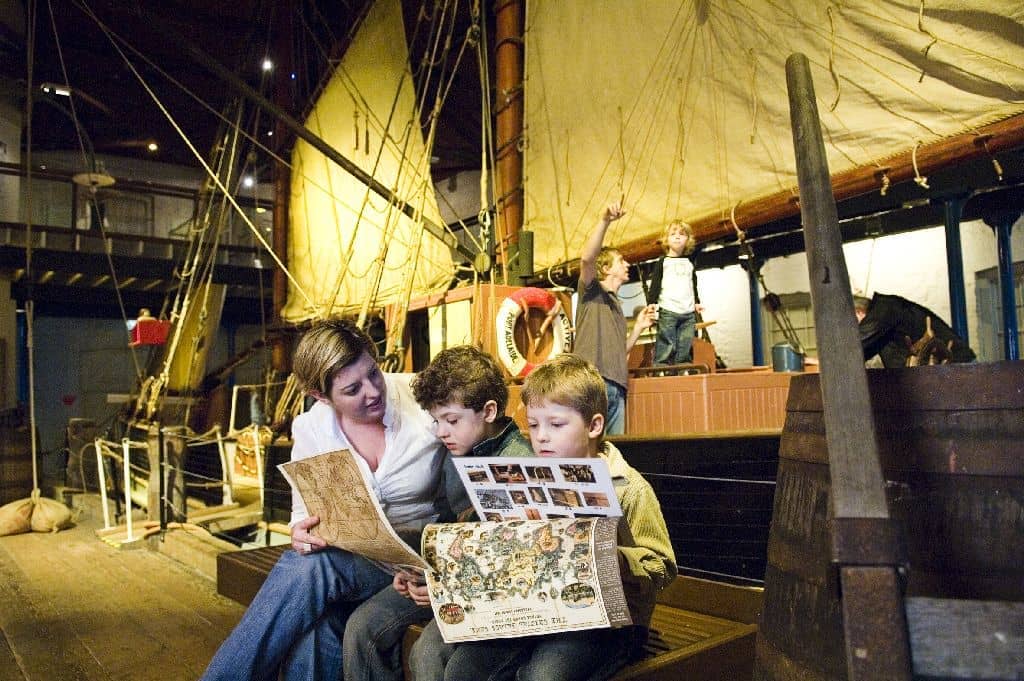
What the South Australian Maritime Museum Actually Is
The South Australian Maritime Museum sits on Lipson Street in the heart of Port Adelaide's heritage precinct, occupying two substantial warehouses built in 1854 and 1857. These were working warehouses once, thick-walled and cool inside, built to hold dutiable goods under Customs lock until taxes were paid. That provenance matters: the buildings are not a decorative backdrop but a genuine part of the story the museum tells. The smell of old timber and stone is the first thing you notice when you step through the entrance, and it sets the tone for everything that follows.
The museum is operated by History Trust of South Australia and opens daily from 10 am to 5 pm; it is closed on Christmas Day. Admission is A$23.50 for adults, A$18.50 for concessions, A$9.50 for children, and free for under-fives. Family tickets are available at A$57.50, with a concession family rate of A$45.50. These prices were verified from the museum's official visit page in October 2026, but confirm current rates before you travel.
💡 Local tip
Arrive close to opening at 10 am on weekdays for the quietest experience. School groups tend to arrive mid-morning, so independent visitors who get there first have the galleries largely to themselves.
The Buildings and the Waterfront Setting
Port Adelaide is one of the oldest port districts in Australia, and the streetscape around the museum still reads as a working harbour town rather than a polished tourist zone. Cranes are visible across the water. The Lipson Street footpath has the slightly rough texture of a district that never fully gentrified, which is precisely what makes it interesting. The bond store facades, with their thick sandstock brick and timber-shuttered openings, are architecturally significant in their own right.
The surrounding precinct rewards the visitor who arrives with time to spare. The Port Adelaide Lighthouse is within walking distance, and the broader Port Adelaide neighbourhood contains heritage streetscapes, local cafes, and the National Railway Museum. If you are making a day of it, build in at least ninety minutes outside the museum itself.
Tickets & tours
Live prices and dates from our booking partner. If you book, we may earn a commission at no extra cost to you.
Ultimate Adelaide and Hahndorf full-day tour
From 94 €Instant confirmationFree cancellationAdelaide kayak tour with expert instructors
From 51 €Instant confirmationFree cancellationTrue Crime Tour in Adelaide
From 21 €Instant confirmationFree cancellationAdelaide city guided tour
From 37 €Instant confirmationFree cancellation
What You See Inside: The Permanent Collection
The collection spans navigational instruments, ship models, figureheads, maritime charts, diving equipment, and personal objects belonging to sailors and lighthouse keepers. The scale varies dramatically: a tiny brass compass sits in one display case; a historic lighthouse stands nearby at McLaren Wharf, tall enough to be genuinely impressive. The historic lighthouse nearby is worth pausing at. It is reconstructed to convey what it felt like to be a keeper, and the curatorial choices around light and sound make it more atmospheric than a typical static exhibit.
Ship models are displayed throughout, ranging from small carved working models to large exhibition-quality reconstructions. For anyone interested in the craft of shipbuilding, these repay close attention. Labels and interpretive text are written at a level accessible to non-specialists, without being condescending to adults. Children tend to move quickly through text-heavy sections but slow down noticeably near the full-scale vessels and the interactive elements.
The museum also maintains historic vessels that can be viewed externally at the wharf. Access to specific vessels may vary depending on conservation work and seasonal programs, so check the museum's website for current vessel access before your visit.
ℹ️ Good to know
The museum has lift access to all floors and most spaces are accessible by wheelchair or mobility scooter. Ambulant toilets are available, sensory bags can be requested at reception, and guide and assistance dogs are welcome.
How the Experience Changes Through the Day
The bond store walls are thick, which keeps the interior cool even on Adelaide's summer days when temperatures can reach into the high twenties or beyond. This makes it a genuinely good option in February and March, when outdoor activity in the port district becomes uncomfortable by midday. The interior lighting is calibrated for the collections, which means some galleries are deliberately dim. Bring reading glasses if you need them for small labels.
By early afternoon on weekends, family numbers increase and the galleries become noticeably livelier. If you want a contemplative visit, weekday mornings are the clear choice. Late afternoon, in the hour before closing, the light shifts as it enters through upper windows and the crowd thins again. The museum is not large enough that timing feels critical, but it does affect the atmosphere considerably.
Getting There and Practical Logistics
Port Adelaide is accessible by Adelaide Metro rail from the city centre. Port Dock station is a short walk from the museum on Lipson Street. Adelaide Metro operates buses, trains and trams across metropolitan Adelaide; check current timetables and fares via the South Australian Government's transport portal before you travel. For full guidance on moving around the city, the getting around Adelaide guide covers all transport options in detail.
Driving is straightforward and free all-day and two-hour street parking is available in the area, though availability varies on weekends. The museum address is 126 Lipson Street, Port Adelaide SA 5015. Rideshare services including Uber operate in Adelaide and can drop directly to the museum entrance, which is useful if you are travelling with young children or have mobility considerations.
⚠️ What to skip
The museum is closed on Christmas Day. Verify current opening hours and any temporary closures on the official website before making a dedicated journey, particularly on public holidays.
Photography and What to Bring
The interior lighting is museum-standard, meaning it is designed to protect objects rather than to flatter cameras. Phone cameras generally handle the conditions well in the main galleries; dedicated cameras benefit from a lens that performs at wider apertures in low light. The lighthouse tower interior is one of the more photogenic spots in the building, with strong vertical lines and controlled light. The external bond store facades photograph well in morning light, when shadows fall across the brick texture.
There is no specific dress requirement. In summer, the cool interior means a light layer is useful if you plan to spend an extended time inside. The museum has toilets, a gift shop, and a reception area where staff can answer questions. There is a privately run cafe directly across the road, as well as several other food options in the Port Adelaide precinct.
Who This Museum Suits and Who Might Pass
The South Australian Maritime Museum works well for anyone with an interest in colonial history, seafaring, or South Australia's development as a state. It also works for families with children who are old enough to engage with exhibits, roughly six years and above. For the broader Port Adelaide experience, pairing the museum visit with a walk through the heritage streets, a look at the National Railway Museum, and lunch at a local cafe makes for a satisfying half-day out of the city centre.
Visitors looking primarily for interactive, high-stimulation experiences may find the pace too measured. The museum is predominantly object-based and interpretive rather than immersive in the technology-driven sense. Travellers with very limited time in Adelaide and a broad sightseeing agenda might prioritise the South Australian Museum or the Art Gallery of South Australia in the CBD instead, as those institutions are larger and more centrally located. The Maritime Museum is worth the journey to Port Adelaide, but the journey itself needs to be part of the plan.
For travellers building a fuller picture of Adelaide's cultural institutions, the best museums in Adelaide guide provides a comparative overview that helps with prioritising.
Insider Tips
- Check the museum's website for any temporary exhibitions before you visit. The permanent collection is well worth the admission on its own, but special exhibitions occasionally shift the balance and can extend your visit significantly.
- Port Dock station is the most convenient rail stop, but if your Adelaide Metro app shows a service disruption on the Port Adelaide line, bus connections along Port Road also serve the precinct. Check Adelaide Metro's real-time information on the day.
- The museum's gift shop stocks nautical-themed items and South Australian history publications that are genuinely harder to find elsewhere in the city. Worth a browse even if you are not a habitual gift-shop visitor.
- If you have children with sensory sensitivities, sensory bags can be requested at the front desk. This is not widely advertised, so ask directly at reception rather than assuming the option is unavailable.
- Combine the visit with a walk along the Port Adelaide waterfront after you leave the museum. The working harbour atmosphere, heritage warehouses, and resident pelicans along the waterway provide a fitting extension of the themes inside the galleries.
Who Is South Australian Maritime Museum For?
- History enthusiasts interested in South Australia's colonial and maritime past
- Families with school-age children looking for an educational but accessible day out
- Architecture and heritage building photographers
- Travellers making a dedicated day trip to Port Adelaide's heritage precinct
- Visitors seeking an indoor option during Adelaide's hot summer afternoons
Nearby Attractions
Other things to see while in Port Adelaide:
- National Railway Museum
The National Railway Museum in Port Adelaide is Australia's largest undercover railway museum, spread across a 3.5-hectare working site. From hulking steam engines to ornate colonial-era carriages, it rewards anyone curious about how railways shaped the Australian continent.
- Port Adelaide Lighthouse
The Port Adelaide Lighthouse is a 21-metre cast-iron tower with a history spanning three locations and over 150 years. Operated through guided tours by the South Australian Maritime Museum, it offers one of Adelaide's most intimate encounters with colonial-era engineering and the story of a working port.
- South Australian Aviation Museum
The South Australian Aviation Museum in Port Adelaide houses The South Australian Aviation Museum in Port Adelaide houses a substantial collection of historic aircraft, from propeller-era warbirds to early jet age hardware. from propeller-era warbirds to early jet age hardware. It is a genuinely rewarding destination for aviation enthusiasts and curious families alike, set in a working-class port district that adds its own layer of industrial character to the visit.
Planning a trip? Discover personalized activities with the Nomado app.