National Railway Museum: Australia’s Largest Undercover Railway Museum
The National Railway Museum in Port Adelaide is Australia's largest undercover railway museum, spread across a 3.5-hectare working site. From hulking steam engines to ornate colonial-era carriages, it rewards anyone curious about how railways shaped the Australian continent.
Quick Facts
- Location
- 76 Lipson Street, Port Adelaide SA 5015
- Getting There
- Port Dock Railway Station (adjacent to the museum)
- Time Needed
- 2 to 3 hours for a thorough visit
- Cost
- Adult A$19 | Concession A$12 | Child (5–15) A$7 | Family A$44
- Best for
- Rail enthusiasts, families with children, history buffs
- Official website
- nrm.org.au
What the National Railway Museum Actually Is
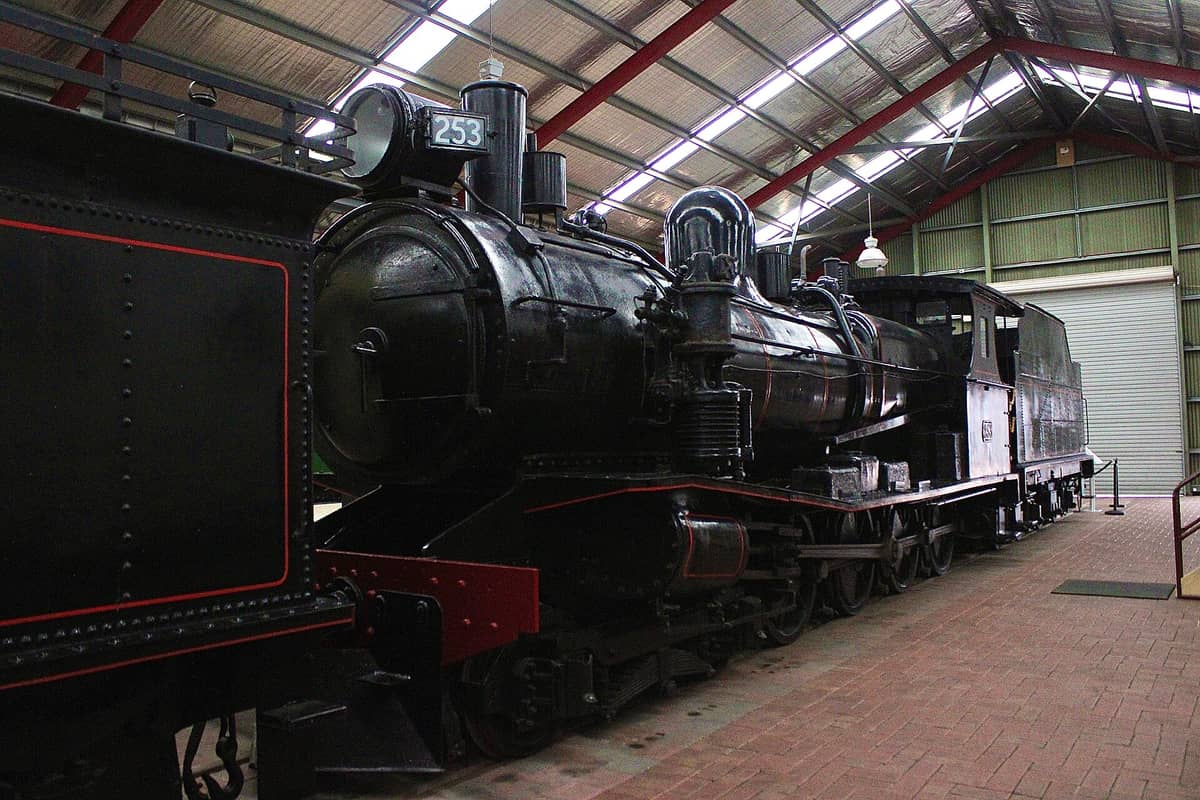
The National Railway Museum is Australia's largest undercover railway museum, and it earns that title without much argument. officially opened at its current Port Adelaide site on 10 December 1988 after an earlier incarnation at Mile End, the museum now covers 3.5 hectares and displays more than 100 major exhibits: steam locomotives, diesel engines, passenger carriages, freight wagons, and the kind of heavy infrastructure that once held the continent together.
This is not a glass-case museum. Many of the exhibits sit outdoors on tracks or inside vast sheds, exposed enough to feel operational rather than archived. The scale is genuinely impressive on first entry: standing beside a broad-gauge steam locomotive, you understand in a physical way why railways were the dominant technology of their era. The sheer mass of these machines is part of the experience.
💡 Local tip
The museum is open daily 10:00 am to 4:30 pm, except Christmas Day (closed) and ANZAC Day (opens at noon). Arrive by 2:30 pm at the latest if you want a full two-hour visit without rushing.
The Collection: What You Will See
The locomotives are the centrepiece. Several South Australian and national-gauge steam engines are preserved here in various states: some restored to working or cosmetic condition, others kept in the weathered state in which they were retired from service. The contrast between gleaming restored machines and their stripped-down counterparts tells its own story about the economics of preservation.
The passenger carriages are a particular strength of the collection. Colonial-era first-class cars with upholstered compartments and brass fittings sit alongside humbler third-class vehicles and the functional sleeper cars that carried passengers across the Nullarbor. Walking through them, you get a tangible sense of class stratification in Australian travel and how long the journey from Adelaide to the eastern states once took.
Freight and working equipment rounds out the displays: mail vans, goods wagons, track-laying machines, and signal infrastructure. For visitors who are not dedicated rail enthusiasts, this section can feel slower-paced, but the interpretive signage contextualises why this equipment mattered to Australia's economic development. Children, on the other hand, tend to find the sheer variety of shapes and sizes endlessly interesting.
ℹ️ Good to know
Some locomotives and carriages are not accessible to visitors using wheelchairs due to the nature of the exhibits. The museum does provide free wheelchair loan, accessible parking, and accessible toilets. Support dogs are welcome.
Tickets & tours
Live prices and dates from our booking partner. If you book, we may earn a commission at no extra cost to you.
Ultimate Adelaide and Hahndorf full-day tour
From 94 €Instant confirmationFree cancellationHalf-day Lofty Descents tour by bike
From 89 €Instant confirmationFree cancellationAdelaide kayak tour with expert instructors
From 51 €Instant confirmationFree cancellationTrue Crime Tour in Adelaide
From 21 €Instant confirmationFree cancellation
How the Experience Changes Through the Day
Morning visits, particularly on weekdays, are noticeably quieter. The large outdoor areas and shed interiors feel almost meditative at this hour: the smell of aged timber and machine oil is more pronounced, the acoustics less crowded. Light entering the corrugated iron sheds from high windows falls across the locomotives in a way that photographers will appreciate. Bring a wide-angle lens if you shoot stills; the scale of the interiors defeats standard focal lengths.
Weekends and school holidays bring families in numbers, particularly in the mid-morning to early afternoon window. This is not a problem if you have children with you; the energy suits the exhibits. But if you are visiting for contemplative interest in the history, a Tuesday or Wednesday morning in the shoulder seasons of autumn or spring will give you a very different quality of experience.
Afternoons in summer require some preparation. Several of the main display areas are under cover, but the outdoor tracks and some sheds get hot by early afternoon in the December-to-February period. Wear light clothing, carry water, and consider that the admission includes re-entry on the same day if you want to take a break and return once temperatures ease.
Historical and Cultural Context
Railways were not merely transport in colonial South Australia: they were the mechanism by which a geographically isolated colony connected its agricultural hinterland to the port. Port Adelaide itself was the commercial gateway for the colony, and the railways that fed into it from the Barossa, the Fleurieu, and the far north were the arteries of the economy. The museum's location in Port Adelaide is, in this sense, historically exact.
The South Australian railway network was notable for operating on multiple gauges simultaneously, a legacy of colonial-era decisions that created logistical complications lasting well into the twentieth century. The museum's collection reflects this complexity, with exhibits spanning broad, standard, and narrow gauge. For a broader understanding of how Port Adelaide fit into South Australia's development, the Port Adelaide Maritime Museum covers the shipping side of the same story and is within easy walking distance.
The museum opened at its current Lipson Street site on 10 December 1988 after receiving an Australian Bicentennial commemorative grant. The Port Adelaide location gave the collection room to expand beyond what had been possible at Mile End, and the proximity to Port Dock Railway Station maintained a working rail connection to the site that remains meaningful today.
Getting There and Getting Around the Site
Port Adelaide is roughly 14 kilometres northwest of Adelaide's city centre. The most direct public transport route uses the Outer Harbor or Grange train lines from the Adelaide CBD, alighting at Port Dock Railway Station, adjacent to the museum. Check Adelaide Metro route and fare information before you travel, as services and prices can change.
Driving is practical: parking is available on-site. The museum address is 76 Lipson Street, Port Adelaide SA 5015. Rideshare services operate in Port Adelaide, and a drop-off at the museum entrance is straightforward.
Inside the museum, flat paved paths connect the major shed areas and outdoor tracks, making navigation manageable with a pram or wheelchair. The site is large enough that comfortable footwear is worth thinking about; there is more ground to cover than a typical indoor museum.
💡 Local tip
Combine the National Railway Museum with the Port Adelaide Maritime Museum and the South Australian Aviation Museum on the same day. All three are within a few kilometres of each other in Port Adelaide, and together they make a coherent half-day or full-day exploration of the area's industrial heritage.
Who This Museum Suits, and Who Might Find It Limited
Families with children aged roughly five to twelve tend to get the most out of the visit: the combination of large machines, open spaces, and the ability to board some carriages holds attention well. Rail enthusiasts of any age will find the collection depth rewarding, particularly given the range of gauges and eras represented. History-focused travellers interested in how Australia's infrastructure shaped its economy will find worthwhile context here, especially when combined with a visit to Port Adelaide's wider heritage precinct.
Travellers with very limited time in Adelaide and a primary interest in contemporary culture, food, or beaches are unlikely to find this their highest priority. The museum is specific in its subject matter and does not try to be otherwise. If you are on a one-day itinerary focused on the city centre, the effort of reaching Port Adelaide and spending two to three hours here may be more than your schedule allows.
For those with two or more days in Adelaide, however, Port Adelaide as a whole deserves a half-day. Pair the railway museum with lunch at one of the waterfront spots in the precinct, and you have a day that feels genuinely different from the Adelaide Central Market and city-centre circuit that most short itineraries follow. The 3-day Adelaide itinerary includes Port Adelaide as a recommended half-day excursion for exactly this reason.
Photography Notes
The corrugated iron shed interiors present a challenging but rewarding mix of strong directional light and deep shadow. A camera or phone that handles mixed light well will produce better results than one that struggles with high dynamic range. Morning light, when it enters the shed ends at a low angle, is particularly good for picking out texture on the locomotive boilers and wheel assemblies.
Outdoor exhibits photograph well in the softer light of overcast days, which are most common in Adelaide between May and August. Harsh summer afternoon sun creates flat, washed-out tones on the painted metalwork. Early morning on a clear autumn day is probably the single best combination of conditions for outdoor photography here.
⚠️ What to skip
Flash photography inside the display sheds may be restricted during special events. Check with museum staff on arrival if you are planning detailed equipment photography.
Insider Tips
- Admission includes re-entry on the same day, so you can leave for lunch at the waterfront and return without paying again. Several cafes and takeaway spots are within a ten-minute walk of the museum.
- The museum runs special steam and diesel locomotive event days where engines are operational. These events sell out and carry different admission prices. Check the museum's event calendar before your visit if this is your primary interest.
- Children aged 5–15 pay $7. The family ticket covers two adults and up to three children aged five to fifteen, making it worth calculating before you buy individual tickets at the gate.
- Wheelchairs are available to borrow at no extra cost: arrange this at the front desk on arrival rather than assuming availability will be there when you need it.
- The Port Dock Railway Station adjacent to the museum was itself part of the historic Port Adelaide rail network. Even if you arrive by car, the station precinct is worth a few minutes of attention before entering the museum.
Who Is National Railway Museum For?
- Families with children aged five and older who respond well to large-scale, hands-on exhibits
- Rail and industrial heritage enthusiasts wanting depth and variety in a single collection
- History travellers exploring how South Australia's infrastructure shaped its colonial economy
- Photographers interested in industrial architecture and aged machinery
- Day visitors building a Port Adelaide heritage itinerary across multiple museums
Nearby Attractions
Other things to see while in Port Adelaide:
- Port Adelaide Lighthouse
The Port Adelaide Lighthouse is a 21-metre cast-iron tower with a history spanning three locations and over 150 years. Operated through guided tours by the South Australian Maritime Museum, it offers one of Adelaide's most intimate encounters with colonial-era engineering and the story of a working port.
- South Australian Maritime Museum
Housed in historic bond stores dating to 1854 and 1857 on the Port Adelaide waterfront, the South Australian Maritime Museum tells the story of how the sea shaped a colony and a state. From navigational instruments to full-scale vessels, it rewards both history enthusiasts and curious families.
- South Australian Aviation Museum
The South Australian Aviation Museum in Port Adelaide houses The South Australian Aviation Museum in Port Adelaide houses a substantial collection of historic aircraft, from propeller-era warbirds to early jet age hardware. from propeller-era warbirds to early jet age hardware. It is a genuinely rewarding destination for aviation enthusiasts and curious families alike, set in a working-class port district that adds its own layer of industrial character to the visit.
Planning a trip? Discover personalized activities with the Nomado app.