Semaphore Beach and Jetty: Adelaide's Most Underrated Coastal Escape
Semaphore Beach stretches along a quiet foreshore north of the Adelaide CBD, anchored by a timber jetty that once reached 652 metres into the Gulf St Vincent. The suburb has a genuinely unhurried character, a palm-lined esplanade, and a beach that rarely feels overcrowded, even on summer weekends.
Quick Facts
- Location
- Semaphore Road at The Esplanade, Semaphore, South Australia
- Getting There
- Adelaide Metro buses serve Semaphore Road and Military Road; Glanville railway station is the nearest train stop
- Time Needed
- 1.5 to 3 hours for a relaxed visit; longer if you stay for sunset
- Cost
- Free; no admission charge for the beach or jetty
- Best for
- Sunset photography, a slow morning walk, family beach days, and escaping city crowds
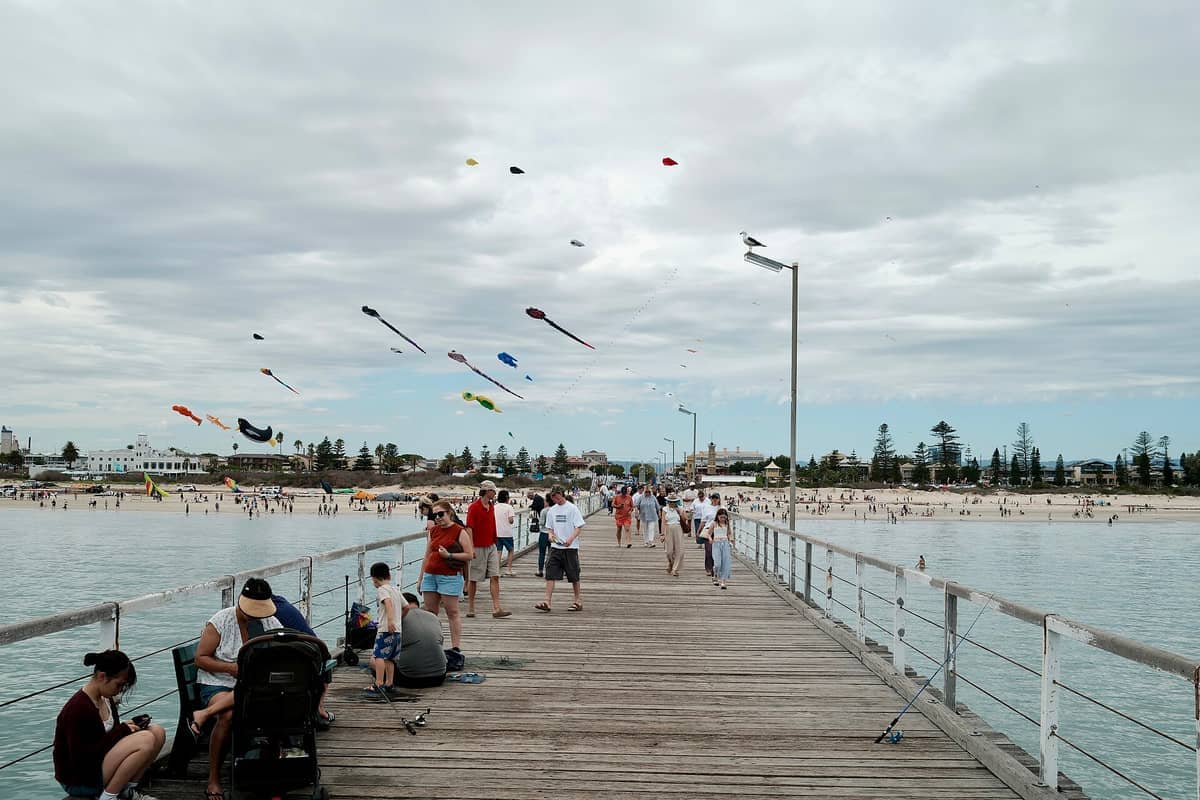
What Semaphore Actually Is
Semaphore Beach is a long sandy foreshore in the suburb of Semaphore, roughly 14 kilometres northwest of the Adelaide CBD. The defining feature is Semaphore Jetty, one of South Australia's oldest surviving coastal piers. The jetty extends about 585 metres into the Gulf St Vincent, offering an unobstructed view back to the low-rise suburb and, on clear days, a long sweep of coastline toward Port Adelaide to the south and the LeFevre Peninsula to the north.
The beach itself is wide, pale-sand, and backed by a sealed esplanade lined with Norfolk Island pines and dated fairground-style amusements that feel genuinely retro rather than contrived. This is not the polished, resort-style foreshore of Glenelg. Semaphore has a working-class seaside character that has been preserved more by geography than deliberate effort: it is simply far enough from the city centre that it never attracted the same level of commercial development.
💡 Local tip
The beach is patrolled by surf lifesavers during summer weekends. Always swim between the flags, and check conditions locally before entering the water.
The Jetty: History and Structure
Semaphore Jetty was completed in April 1860, initially measuring approximately 580 metres in length and just 2.7 metres wide. It was extended to 652 metres in 1874; the jetty is now about 585 metres long. For much of the nineteenth century, the jetty served as a commercial landing point for cargo and passengers, and the suburb itself was named after a semaphore signalling station that once operated in the area to communicate ship arrivals to the port authorities.
Today the jetty is recreational rather than commercial, but its length still gives it a purposeful feel. Walking to the end takes roughly eight to ten minutes at a comfortable pace, and the planking, railings, and gentle creak underfoot give it a texture that poured-concrete replacements elsewhere have lost. At the seaward end, you will typically find a handful of anglers with handlines or rods, some perched on folding chairs with flasks of tea, unbothered by the wind.
For a broader sense of the area's maritime past, Port Adelaide Maritime Museum is about 10 minutes south by car and covers the full story of the port's commercial shipping history.
Tickets & tours
Live prices and dates from our booking partner. If you book, we may earn a commission at no extra cost to you.
Ultimate Adelaide and Hahndorf full-day tour
From 94 €Instant confirmationFree cancellationHalf-day Lofty Descents tour by bike
From 89 €Instant confirmationFree cancellationAdelaide kayak tour with expert instructors
From 51 €Instant confirmationFree cancellationTrue Crime Tour in Adelaide
From 21 €Instant confirmationFree cancellation
How the Experience Changes Through the Day
Early morning at Semaphore is genuinely peaceful. The esplanade draws dog walkers, joggers, and older residents doing slow circuits before the heat builds. The light at this hour is flat and soft, the gulf water often glassy, and the only sounds are waves, bicycle tyres on the path, and the occasional shriek of a silver gull. If you are visiting in the warmer months between December and February, early morning is also the most comfortable time to be here: Adelaide's Mediterranean climate means summer afternoons can exceed 35°C with little shade on the jetty itself.
By late morning on weekends from around November through March, families arrive and the beach fills steadily. Children use the tidal shallows for wading. The fairground amusements along the esplanade open, and the smell of fried food from the kiosk near the jetty head drifts across the foreshore. This is pleasant but no longer quiet.
Late afternoon and sunset is when Semaphore earns its strongest argument. The suburb faces almost due west, and the jetty becomes a natural platform for watching the sun descend into the Gulf St Vincent. The light turns the water copper and the sand amber, and the silhouettes of anglers at the jetty's end make for an easy, uncomplicated photograph. In autumn and spring, sunset arrives at a sociable hour rather than late evening, and the temperature is comfortable enough to linger.
ℹ️ Good to know
Semaphore faces west, making it one of the few Adelaide beaches where the full sunset falls directly over the water rather than being blocked by land. Arrive at least 30 minutes before sunset for the best light on the jetty.
The Esplanade and Semaphore Road
The sealed foreshore path runs parallel to the beach for several hundred metres and connects easily to the jetty access point at the foot of Semaphore Road. The path is used by cyclists and pedestrians, and while it is generally smooth, travellers with mobility requirements should note that the available information does not confirm step-free access onto the jetty itself. The beach is accessible from the esplanade via gentle ramps at several points.
Semaphore Road, which runs perpendicular to the foreshore, is the suburb's low-key main street. It has a scatter of cafes, a couple of old hotels, an ice cream shop that gets a long queue on hot days, and a few antique and second-hand stores that are worth a slow browse. The street has an end-of-the-line quality that can feel either charmingly isolated or slightly tired depending on your expectations. It is honest, at any rate.
If you want to combine a beach visit with the broader atmosphere of the area, the adjacent Port Adelaide district is worth an afternoon. It has heritage buildings, a working harbour, and several museums within a short drive or bus ride.
Getting to Semaphore
Adelaide Metro buses serve Semaphore Road and nearby Military Road; check current timetables on the Adelaide Metro website before travelling, as service frequency varies by day and time. Glanville railway station on the Outer Harbor line is the nearest train stop, placing Semaphore within walking distance for those comfortable with a moderate walk along the foreshore. Car access is straightforward: foreshore car parks are accessible from The Esplanade, and parking is generally easier here than at Glenelg on busy summer days.
If you are planning a full day on the northern coast, consider pairing Semaphore with Henley Beach to the south, which has a similarly relaxed character and its own jetty.
⚠️ What to skip
In summer, shade on the beach and jetty is minimal. Bring sunscreen (SPF 50+ is standard in South Australia), a hat, and water. The UV index regularly reaches extreme levels between November and March.
Who Will Not Enjoy Semaphore
Visitors expecting the facilities and energy of Glenelg will find Semaphore underwhelming. There is no major shopping strip, no trendy restaurant row, and the amusements along the esplanade are aimed squarely at children and nostalgia. If you need reliable dining options within a short walk of the beach, the choice here is limited: a couple of cafes, takeaway food, and pub meals. For a broader and more polished dining scene, Glenelg is the better base.
Travellers whose primary interest is swimming in well-patrolled conditions may also want to plan carefully. The beach is patrolled during summer weekends, but this is not a year-round or daily service. Check current patrol schedules with Surf Life Saving SA before your visit if swimming safety is a concern.
For a more complete picture of Adelaide's coastal options, the best beaches in Adelaide guide compares Semaphore against Glenelg, Henley, Brighton, and the other main foreshore options across the metropolitan area.
Insider Tips
- Walk the full length of the jetty rather than stopping partway. The view from the seaward end back toward the suburb is more interesting than the view from the shore, and the angling community at the end is worth observing for a few minutes.
- The Norfolk Island pines along the esplanade cast useful shade in the mid-morning before the sun moves overhead. Position yourself near them if you plan to sit on the beach for any length of time on a hot day.
- The jetty is longest at low tide visually: the exposed sand flats on either side create a more dramatic frame for photographs. Checking a tide chart before your sunset visit is worth the two minutes it takes.
- Semaphore Road's second-hand and antique stores are not heavily signposted. Look for the cluster of shopfronts between the jetty end and the hotel about halfway up the street; they tend to open late morning rather than at 9am.
- If you are travelling with the Adelaide Metro rail network, the Outer Harbor line also stops at Outer Harbor itself, which has a working harbour atmosphere that is worth a brief detour if you have time before the return journey.
Who Is Semaphore Beach & Jetty For?
- Photographers and anyone prioritising sunset over the water, given Semaphore's rare west-facing orientation
- Families with young children who want a beach without crowds and with shallow, calm tidal water for wading
- Visitors who want a genuine taste of old-fashioned Australian seaside culture rather than a resort strip
- Travellers combining a coastal walk with a visit to Port Adelaide's maritime history precinct
- Anyone looking for a free, low-key afternoon away from the Adelaide CBD with easy public transport access
Planning a trip? Discover personalized activities with the Nomado app.