Karangahape Road
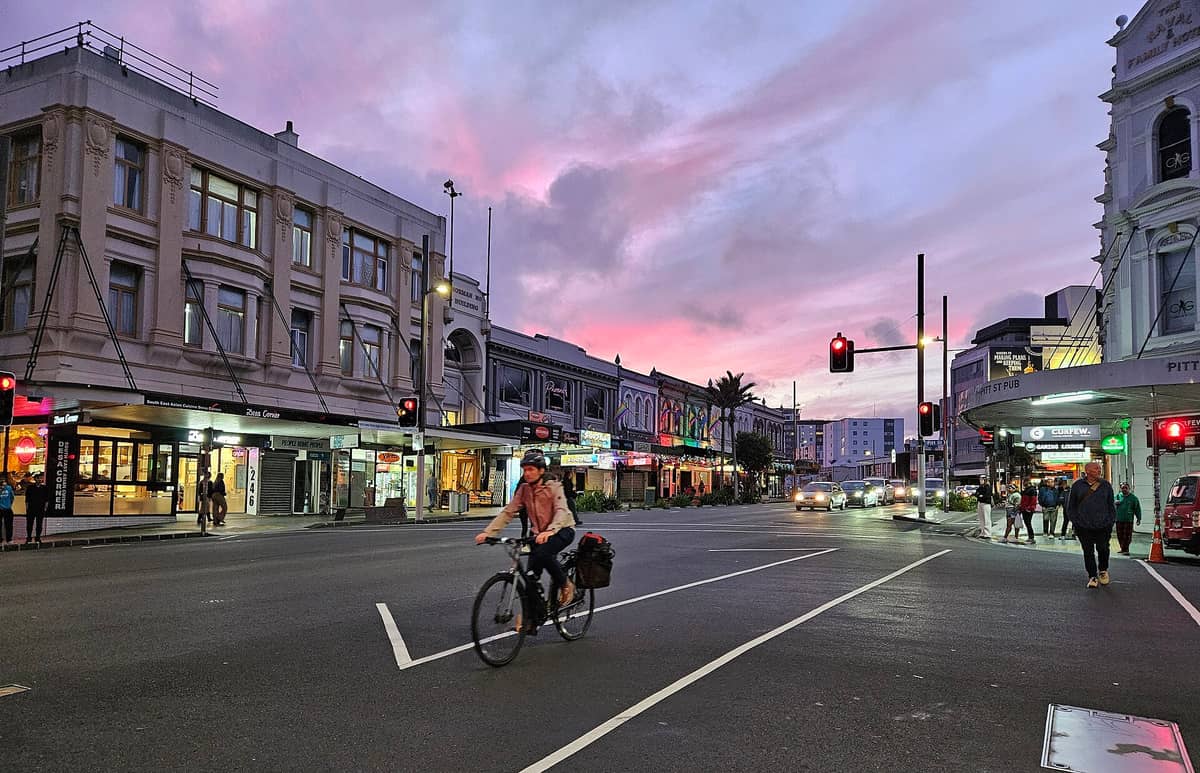
Karangahape Road, known to locals simply as K Road, runs along a ridge at the southern edge of central Auckland, linking Ponsonby in the west to Grafton in the east. It is one of the city's most culturally layered streets, where heritage arcades sit beside drag bars, Pacific Island churches, independent record shops, and some of Auckland's most interesting restaurants. No other strip in Tāmaki Makaurau Auckland carries this much history, contradiction, and creative energy in a single kilometre.
Located in Auckland
Overview
Karangahape Road is the street that Auckland's creative class has always returned to, no matter how many times the property market threatened to push them out. It is gritty in places, unapologetically itself in others, and unlike anywhere else in the city. If you want to understand Auckland beyond the waterfront postcards, this is the road to walk.
Orientation
Karangahape Road follows a natural ridge that defines the southern boundary of Auckland's central city. At its western end it meets Ponsonby Road, where the street transitions into Great North Road heading toward Grey Lynn and beyond. At its eastern end, Grafton Bridge carries the road over the deep gully of Grafton before descending toward Newmarket and the Domain. The ridge itself is old geology: the road follows the spine between the Waitemata Harbour watershed to the north and the Manukau catchment to the south, and pre-European Māori routes tracked this same high ground.
The commercial core of K Road is roughly 800 metres long, concentrated between Ponsonby Road and the Grafton Bridge end. North of the ridge, the land drops steeply toward Newton and the motorway interchange. South of the ridge, Myers Park occupies the gully below, with St Kevin's Arcade providing a pedestrian link down from the street itself. This topography matters: the streets that branch off K Road often change character within a single block as the land falls away, and the road itself sits noticeably above the surrounding neighbourhoods, giving it a slightly commanding, self-contained feel.
K Road borders several distinct districts. Walk west along Ponsonby Road and you are quickly in the territory covered by the Ponsonby neighborhood guide. Head east over Grafton Bridge and you approach Parnell and the Auckland Domain. To the north, a short downhill walk reaches the edge of the Auckland CBD and the motorway corridor. This central position means K Road can function as a base for exploring multiple inner-city areas on foot.
Character & Atmosphere
K Road has spent much of its history being underestimated. In the late nineteenth and early twentieth centuries it was one of Auckland's premier shopping and entertainment strips, lined with department stores and cinemas drawing crowds from across the city. As the motorways were built and retail migrated to suburban malls, the road went through a long period of decline. That decline turned out to be its salvation: low rents attracted artists, sex workers, Pacific Island community organisations, LGBTQIA+ venues, and migrant-owned businesses, producing a density of subcultures that resisted easy gentrification.
Today the street is in transition again, but its underlying character holds. In the morning, the road is quiet in the way that late-night places always are at dawn. The cafés in and around St Kevin's Arcade open early for the creative-sector crowd who seem to treat the arcade's courtyard as a second living room. Light comes from the north across the ridge, hitting the Art Deco and Edwardian shopfronts that survive between the newer fills. The smell of coffee and, occasionally, fresh bread from a nearby bakery carries on the uphill breeze.
By afternoon the street fills out. Independent fashion boutiques, vinyl record shops, tattoo studios, and galleries draw a mix of locals and visitors. The foot traffic is noticeably different from the CBD: younger on average, more likely to be carrying a portfolio or a skateboard, less likely to be in corporate dress. Pigeon Park, the small triangle at the K Road and Queen Street intersection, becomes a gathering point. The Karangahape Rocks sculpture here has become an informal landmark where people wait and meet.
After dark is when K Road most fully becomes itself. The bars and music venues open, drag performers advertise shows on sandwich boards outside, and the footpath crowds thicken around the corner of Beresford Square. The LGBTQIA+ scene here is not a single-venue enclave but is distributed across multiple bars and clubs that each carry their own personality. On weekends the energy can be considerable, particularly after midnight. This is one of the few parts of Auckland that genuinely feels alive at 2am.
ℹ️ Good to know
K Road has a strong LGBTQIA+ history and remains one of Auckland's most openly welcoming streets for the queer community. Several of the city's most long-running LGBTQIA+ venues and community organisations are based here or nearby.
What to See & Do
St Kevin's Arcade is the street's most architecturally distinctive feature and worth slowing down for even if you are just passing through. The 1924 building connects Karangahape Road at street level to Myers Park below via a covered walkway and staircase. The arcade houses independent shops and cafés, and the transition from the bustle of the road to the calm of the park below is one of those small Auckland experiences that sticks with you. The park itself, with its stands of trees and a fountain, provides a genuine escape from the ridge above.
The art scene on K Road is decentralised and constantly shifting, but several galleries have maintained consistent presences here. Studio and project spaces occupy converted shopfronts and upper floors throughout the strip. If you want a concentrated introduction to Auckland's contemporary art output, an afternoon walking between the galleries along K Road and into the nearby Karangahape Road environs will show you more than most ticketed venues.
Grafton Bridge, at the eastern end of the road, is worth pausing on for views down into the Grafton Gully and across to the city. From the bridge you can also see how sharply the land drops away from the K Road ridge. If you are interested in Auckland's broader network of walking paths, the Coast to Coast Walkway passes through this area, connecting the Waitemata Harbour with the Manukau Harbour and taking in volcanic cones along the way.
Samoa House and the Pacific Island community institutions along K Road carry significant cultural weight. The Samoan, Tongan, Niuean, and other Pacific communities have shaped this street's identity for decades, running churches, community organisations, and businesses that remain part of the fabric even as the demographics of the area's residents have shifted. Some of the best Pacific food in Auckland is found in modest spots along or just off K Road.
- St Kevin's Arcade and the staircase descent to Myers Park
- Pigeon Park and the Karangahape Rocks sculpture
- Contemporary art galleries and studio spaces along the strip
- Grafton Bridge for views over the gully
- Independent record shops and vintage clothing stores
- Street art and murals on building sides and laneways
💡 Local tip
The Auckland Lantern Festival is held at Manukau Sports Bowl, not Myers Park. Check the Auckland events calendar if you are visiting in February or March.
Eating & Drinking
The food scene on Karangahape Road is genuinely independent. You will not find chain restaurants dominating here the way they do in parts of the CBD or Newmarket. Instead, the street and its immediate side streets carry a mix of Pacific Island eateries, Korean and South-East Asian spots, specialty coffee cafés, and several restaurants that have developed real followings among Auckland food writers. For a broader picture of the city's dining, see the Auckland food guide, but K Road deserves its own visit on eating grounds alone.
Breakfast and brunch culture is strong here. The cafés around St Kevin's Arcade attract a loyal crowd on weekday mornings, and on weekends the wait for a table at the more popular spots can stretch. Coffee standards are high, which is consistent with the broader Auckland specialty coffee scene. Expect to pay NZD 6 to 8 for a flat white at most places.
For lunch and dinner, the range widens considerably. Budget options exist in the form of noodle bars and takeaway spots, where a filling meal can cost NZD 12 to 18. Mid-range restaurants on the strip offer more considered cooking at NZD 25 to 45 per main. Some of the most interesting cooking in the area happens in small, unlabelled-looking spots on side streets, so looking up rather than down from menus displayed in windows is a useful habit.
The bar scene is the other reason to be on K Road after dark. The strip has a higher concentration of interesting bars per block than almost anywhere else in Auckland. You will find craft beer, cocktail bars with serious programmes, and dive bars that have been operating in the same format for thirty years and show no signs of changing. Many bars have live music or DJ nights on weekends. The overall atmosphere skews inclusive and relatively unpretentious compared to the bottle-service venues of the CBD waterfront.
💡 Local tip
If you are on a budget, K Road is one of Auckland's more accessible inner-city strips for eating well cheaply. Look for lunch specials at the smaller Pacific and Asian eateries, which regularly offer full meals at prices well below the city average.
Getting There & Around
The Karanga-a-Hape train station, opened as part of the City Rail Link project, places K Road directly on Auckland's main rail network for the first time in its modern history. The station has entrances at Mercury Lane and Beresford Square, both of which open onto the street within easy walking distance of the main commercial strip. From Waitematā, one stop east via the City Rail Link takes you directly to Karanga-a-Hape station, making K Road accessible from the waterfront within a few minutes.
Bus services have long connected K Road to the wider network. The CityLink and InnerLink routes serve Karangahape Road and nearby Pitt Street, linking the strip to the CBD, Ponsonby, and Newmarket. The AT HOP card and contactless bank cards both work on Auckland's buses. For general transit planning across the city, the getting around Auckland guide covers all the major options including ferries and the rail network.
Walking is practical for reaching K Road from several central locations. From the upper end of Queen Street near Aotea Square, the walk up to Karangahape Road takes around 10 minutes on foot, rising steadily as you go. From Ponsonby Road at the western end of K Road, the two streets meet at a junction that functions as a natural anchor point: Ponsonby Road heads north toward Richmond Road, while K Road heads east along the ridge. From Grafton Bridge at the eastern end, Parnell is roughly 15 minutes' walk downhill.
Parking on K Road itself is limited and metered during the day. Side streets off the ridge have some residential parking, but driving is the least efficient way to approach the strip. If you are coming from further afield, the train is now an easy option; check Auckland Transport’s journey planner for the journey from Newmarket.
Where to Stay
Accommodation directly on K Road is limited compared to the CBD waterfront or Ponsonby, but the street's central position on the ridge means that staying nearby gives easy access to multiple neighbourhoods. Visitors who want to use K Road as a base are better served by looking at options on the CBD side of Newton or along the lower end of Ponsonby Road. For a full overview of where accommodation is clustered and which areas suit different travel styles, the where to stay in Auckland guide breaks down the options across all central neighbourhoods.
K Road is best suited for travellers who value independent culture, nightlife, and proximity to the arts over polished hotel infrastructure. If you are travelling solo, as a couple, or in a small group with an interest in the creative and LGBTQIA+ scene, staying within ten minutes' walk of K Road makes sense. Families with young children or visitors whose priority is the waterfront precinct may find the CBD or Britomart area more convenient as a base.
⚠️ What to skip
K Road is a genuine nightlife strip, which means noise on Thursday, Friday, and Saturday nights until the early hours. If you are staying in accommodation near the main commercial section of the road, check that your room faces away from the street, or bring earplugs. Light sleepers should factor this in when booking.
Honest Assessment: Is K Road Right for You?
K Road is not the most immediately comfortable street in Auckland. Parts of it are scruffy; the retail mix is uneven; and on weekday mornings outside café hours it can feel quieter than its reputation suggests. The nightlife scene is real and can be loud. If you are visiting Auckland primarily for the harbour, the volcanic cones, or the ferry to Waiheke, K Road can feel like a detour from the main event.
But if you want to understand what Auckland is beyond its scenic geography, K Road is essential. The street has absorbed successive waves of immigration, community organising, artistic movements, and commercial pressure without losing its fundamental identity. The arrival of the Karanga-a-Hape train station has increased foot traffic and brought new investment, but the street's character is resilient. It remains one of the few places in the city where the full range of Auckland's cultural life is legible in a single walk. For context on what else the city offers across its different neighbourhoods, the things to do in Auckland guide provides a broader framework.
TL;DR
- Karangahape Road is Auckland's most culturally layered inner-city strip, running east-west along a ridge between Ponsonby and Grafton.
- The Karanga-a-Hape train station (City Rail Link) now connects K Road directly to Waitematā and the wider rail network, making it easier to reach than ever before.
- Best visited in the afternoon and evening: the café scene starts early, independent shops open from mid-morning, and bars and music venues run until late on weekends.
- Strong LGBTQIA+ culture, a serious independent arts and music scene, and some of Auckland's most honest Pacific Island and multicultural food make this a priority for culturally curious travellers.
- Not ideal for families seeking quiet or travellers whose focus is the waterfront; nighttime noise and the general scruffiness of parts of the strip will not suit every visitor.
Related Travel Guides
- Best Adventure Activities in Auckland: The Complete Guide
Auckland delivers serious adventure on land, sea, and from the top of a 328-metre tower. This guide covers the best adventure activities in Auckland with real pricing, practical logistics, seasonal advice, and clear warnings about what to watch out for before you book.
- Auckland Airport: Arrivals, Transfers & Getting to the City
Auckland Airport (AKL) sits 21 km south of the city centre in Māngere. This guide covers everything from navigating arrivals to choosing the right transport option, so you can get moving the moment you land.
- Auckland Events & Festivals: The Complete Annual Calendar
Auckland's event calendar runs from summer beach festivals through winter film screenings to spring heritage tours. This guide covers the major annual events, what they cost, when crowds peak, and how to plan around them — with candid notes on what's worth your time.
- What to Eat in Auckland: A Food Lover's Guide
Auckland's food scene reflects the city it sits in: diverse, seafood-forward, and shaped by Māori, Pacific, and Asian influences alongside a confident modern New Zealand kitchen. This guide breaks down what to eat, where to eat it, and which food experiences are genuinely worth your time.
- 3 Days in Auckland: The Perfect Itinerary
Three days is enough time to get a genuine feel for Tāmaki Makaurau Auckland — its volcanic landscape, Māori heritage, waterfront culture, and island escapes. This itinerary cuts through the noise and tells you exactly where to go, when, and why.
- Māori Culture in Auckland: Experiences & Heritage Sites
Auckland sits on land with deep Māori roots. This guide covers the most meaningful cultural experiences in Tāmaki Makaurau, from museum performances and waterfront heritage spaces to guided tours led by descendants of the city's founding chief. Learn what to see, what to pay, and how to engage respectfully.
- Best Markets in Auckland: Farmers' Markets, Night Markets & Weekend Finds
Auckland's market scene spans inner-city farmers' markets, rotating suburban night markets, and rural day trips worth planning your weekend around. This guide covers the best markets in Auckland by type, location, and what to expect when you arrive.
- Auckland Nightlife: Best Bars, Clubs & After-Dark Experiences
Auckland's nightlife is more compact than its size suggests, but the quality runs deep. From waterfront cocktail bars to Karangahape Road's late-night underground, this guide covers the key precincts, practical logistics, and what to realistically expect on a night out in Tāmaki Makaurau.
- Auckland on a Budget: How to Visit for Less
Auckland has a reputation for being expensive, and that reputation is partly earned. But the city also has a surprising number of genuinely free and low-cost experiences — volcanic walks, world-class beaches, free museum entry, and excellent public markets. This guide breaks down exactly how to visit Auckland without burning through your travel fund.
- Shopping in Auckland: Best Areas and Markets Guide
Auckland's shopping scene runs from polished waterfront precincts and heritage high streets to Saturday morning farmers markets and sprawling suburban malls. This guide breaks down where to shop, when to go, and what to skip, so you spend your time and money well.
- Auckland to Queenstown: How to Get There and What to Expect
Flying is the only practical way to travel from Auckland to Queenstown, and the route is well-served by two airlines year-round. This guide covers your transport options, realistic flight costs, seasonal disruptions, and how to get oriented once you land in Queenstown.
- Auckland's Volcanic Cones: A Complete Guide to the Tūpuna Maunga
Auckland sits on one of the world's most unusual urban landscapes: a live volcanic field with over 50 cones scattered across the city. This guide covers the most significant maunga, their cultural importance, practical access details, and what to expect when you visit.
- Auckland's West Coast Beaches: Piha, Muriwai & Beyond
Auckland's west coast delivers something the sheltered harbour beaches simply cannot: raw, wind-scoured black-sand shorelines, serious surf, and dramatic coastal scenery within 45 minutes of the city. This guide covers every major beach, how to get there, when to go, and how to stay safe on some of New Zealand's most powerful surf.
- Auckland Wine Regions: Waiheke Island, Kumeū & Matakana Explained
Auckland sits within striking distance of three distinct wine regions, each with its own character, grape varieties, and logistical quirks. This guide covers what to expect at Waiheke Island, Kumeū, and Matakana — including real transport costs, how to structure a day trip, and which cellar doors are worth your time.
- Auckland with Kids: The Best Family Activities in Tāmaki Makaurau
Auckland delivers a surprisingly rich range of experiences for families, from world-class wildlife encounters and hands-on museums to beach days and island adventures. This guide picks the best activities for kids of all ages, with practical tips on what to expect at each stop.
- Best Beaches in Auckland: Black Sand, Surf, and Harbour Bays
Auckland sits on an isthmus between two harbours, with the Tasman Sea to the west and the Hauraki Gulf to the east, giving the city an extraordinary range of beaches within an hour of the CBD. This guide covers the best of them, from dramatic west coast surf breaks to sheltered harbour swimming spots.
- Best Hikes and Walks in Auckland: Volcanic Summits, Coastal Trails, and Forest Tracks
Auckland sits on a volcanic field, between two harbours, and beside one of New Zealand's great forested ranges. Whether you want a 30-minute summit stroll or a full-day coastal traverse, the city delivers. These are the walks worth lacing your boots for.
- Best Museums in Auckland: Art, History, Science & More
Auckland punches well above its weight for museum culture. Whether you're after Māori taonga, Pacific art, colonial history, or vintage technology, the city has a collection to match. This guide covers the best museums in Auckland across every interest and budget.
- Best Parks in Auckland: 18 Green Spaces Worth Visiting
Auckland sits on an isthmus surrounded by two harbours, and its parks reflect that geography in remarkable variety. This guide covers the best parks in Auckland, from volcanic cones and ancient forest to coastal reserves and formal city gardens.
- Best Time to Visit Auckland: A Season-by-Season Breakdown
Auckland is a year-round destination, but the right time to visit depends entirely on what you want to do. This guide breaks down every season, covering weather patterns, crowd levels, major events, and the practical details that generic guides skip.
- The Best Views and Viewpoints in Auckland
Auckland sits on an isthmus studded with volcanic cones, harbour headlands, and elevated parks, making it one of the world's most view-rich cities. This guide covers the finest viewpoints across the city, from the Sky Tower's observation deck to wild clifftop lookouts, with practical advice on how to reach each one.
- Best Day Trips from Auckland: Islands, Hinterland & Coast
Auckland sits at the centre of one of the most day-trip-rich regions in the Southern Hemisphere. Whether you want a 25-minute ferry to a volcanic island or a full-day drive to Hobbiton, this guide covers logistics, costs, and practical recommendations so you can pick the right trip for your time.
- Free Things to Do in Auckland: 20 Ways to Explore the City Without Spending a Dollar
Auckland is one of the most naturally dramatic cities in the world, and a surprising amount of what makes it great costs nothing. From volcanic summit walks and black-sand beaches to free art galleries and gannet colonies, here are 20 genuinely rewarding free experiences across the city and region.
- Getting Around Auckland: The Complete Transport Guide
Auckland sprawls across an isthmus with two harbours, dozens of suburbs, and islands in the gulf. This guide breaks down every practical way to navigate the city, from AT HOP card fares to ferry routes, rental cars, and the airport transfer options that are actually worth your time.
- Hauraki Gulf Islands: Which One Should You Visit?
The Hauraki Gulf holds more than 50 islands within reach of Auckland, but not all of them suit every traveller. This guide breaks down the four main options by experience, ferry logistics, cost, and what you actually get when you arrive — so you can choose without guessing.
- Hobbiton Day Trip from Auckland: How to Visit the Shire
Hobbiton is one of New Zealand's most popular attractions, and it makes for a very doable day trip from Auckland. This guide covers every practical detail: how to get there, which tour to book, what it costs, and how to make the most of your visit.
- Is Auckland Worth Visiting? An Honest Assessment
Auckland divides opinions: some travellers race through it en route to Queenstown or the Bay of Islands, others find it one of the most rewarding cities in the Southern Hemisphere. This guide cuts through the brochure language and gives you a clear-eyed picture of what Tāmaki Makaurau Auckland actually offers, who it suits best, and what genuinely isn't worth your time.
- Things to Do in Auckland: The Definitive Guide
Auckland spans two harbours, 53 volcanic cones, and one of the Pacific's most diverse cities. This guide covers the best things to do in Auckland across nature, culture, food, and island escapes — including what is worth your time and what is not.
- Waiheke Island Day Trip from Auckland: The Complete Guide
Waiheke Island is one of Auckland's most rewarding day trips, combining world-class vineyards, sheltered beaches, and easy ferry access into a single compact island. This guide covers everything you need to know: how to get there, where to eat and drink, how to get around, and when to go.
- Where to Stay in Auckland: The Best Neighbourhoods and Hotels for Every Traveller
Choosing where to stay in Auckland shapes your entire trip. This area-by-area guide covers the CBD waterfront, Ponsonby, Parnell, Devonport, and beyond — with clear assessments of who each neighbourhood suits, what to budget, and how to get around once you're there.