Hove is the western half of the city of Brighton and Hove, offering a longer stretch of quieter beach, wide residential avenues lined with late-Victorian and Edwardian architecture, and a shopping and café scene that feels decisively local rather than tourist-facing. It sits directly adjacent to central Brighton but has a noticeably different tempo.
Hove sits immediately west of Brighton's centre, sharing the same seafront but operating at a completely different pitch. Where Brighton leans into its reputation for noise and spectacle, Hove pulls in the opposite direction: wider pavements, calmer beaches, and streets that feel like they belong to the people who actually live here.
Orientation
Hove occupies the western portion of the city of Brighton and Hove, stretching from the seafront promenade in the south to the residential streets climbing towards the A27 in the north. To the east, the boundary with Brighton runs broadly through the central seafront and inner-city streets. To the west, Boundary Road separates Hove from Portslade, the next distinct settlement along the coast.
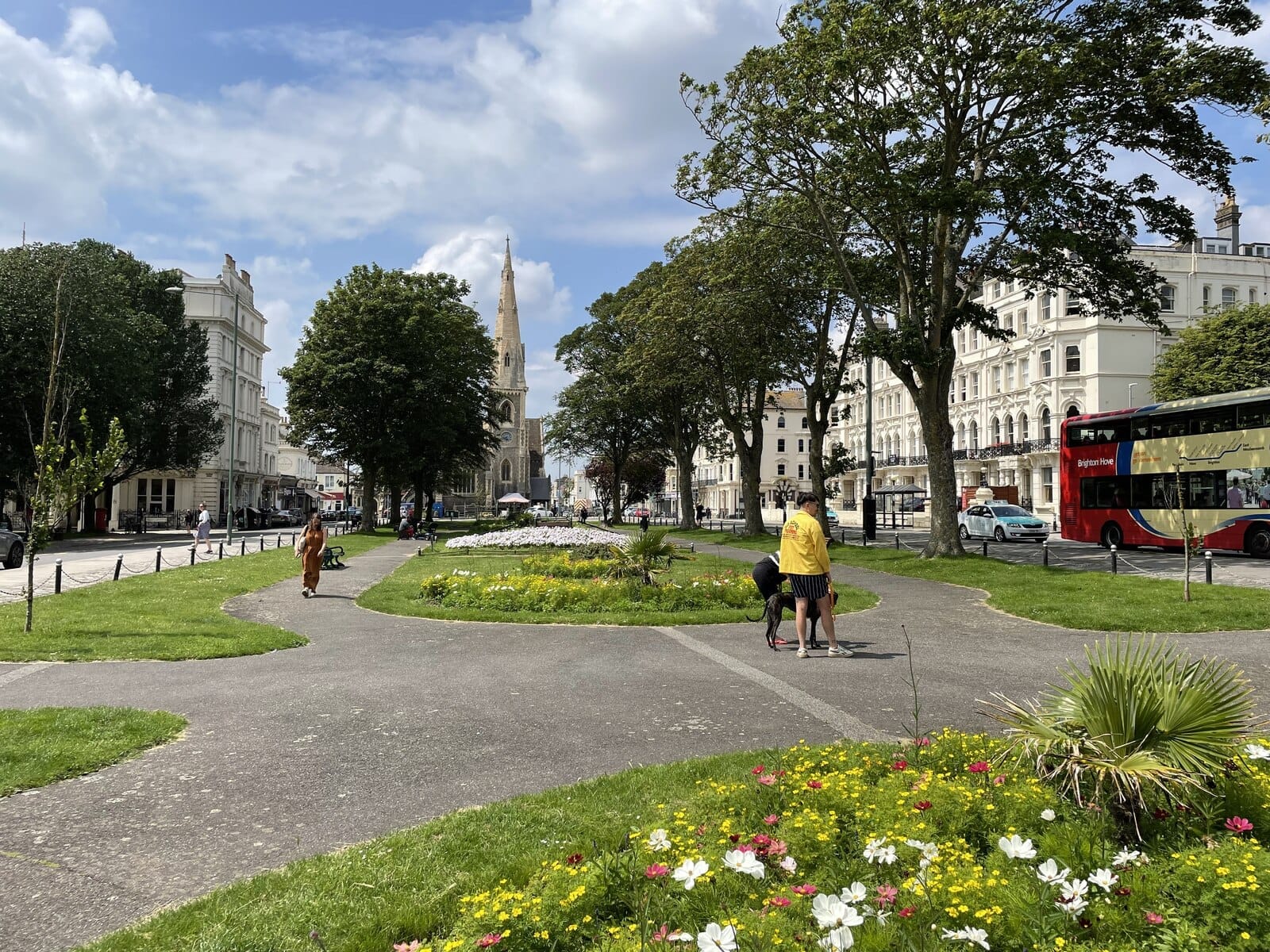
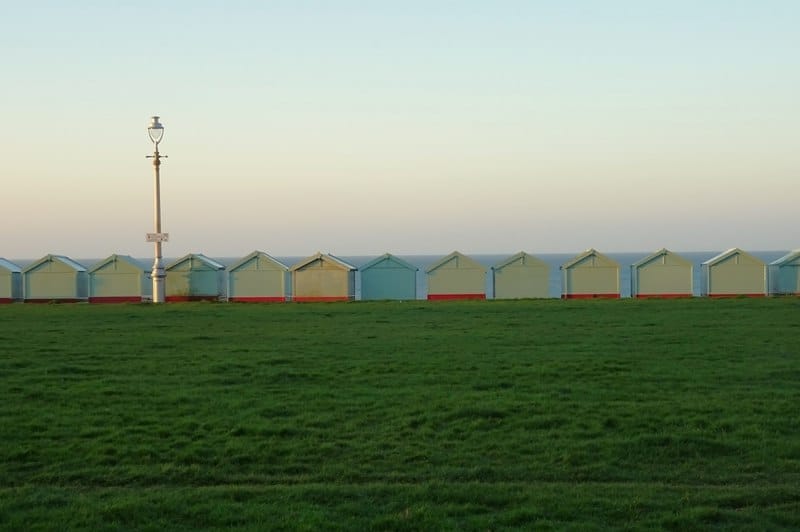
The layout is relatively straightforward. The seafront runs east to west along the southern edge, backed by Hove Lawns, a long stretch of open grass that separates the beach from the residential streets behind it. Moving north from the seafront, the streets follow a Victorian grid pattern, widening as you move inland. Church Road is the main commercial spine, running roughly parallel to the seafront to the north, with a second cluster of activity around George Street. Further north still, the streets become almost entirely residential.
Hove railway station sits roughly in the middle of the neighbourhood, providing the clearest anchor point. From there, it is a short walk south to the seafront, a walk east to the boundary with central Brighton, and a similar distance west along Church Road to the heart of Hove's independent retail and café scene. For a broader sense of how Hove connects to the rest of the city, the getting around Brighton guide covers the full transit picture.
Character & Atmosphere
The local joke is that Hove is where people move when they want Brighton but without the stag parties. There is truth in it. The residential streets between the seafront and Church Road are predominantly late-Victorian and Edwardian terraces, many converted into flats, with front gardens and wheelie bins and the general evidence of people actually living here. It is not precious or particularly gentrified in the way some London neighbourhoods wear their identity on their sleeve, but it is clearly prosperous and established.
Early mornings on the seafront have a specific quality that Brighton's busier central beach rarely matches. The promenade west of the Peace Statue is wide and relatively quiet on weekday mornings. Joggers and dog walkers move in both directions, and the sound shifts from wind and sea to the distant hum of the city only gradually as you move east. The light in the morning comes off the water at a low angle and catches the white-painted facades of the seafront houses in a way that makes the whole street look freshly washed.
By midday, Church Road is doing its work as a local high street. The mix is exactly what you would want: a butcher between a wine bar and a yoga studio, independent coffee shops with queue-out-the-door reputations on weekends, and the kind of deli that sells things you did not know you needed until you saw them. The tourist infrastructure that defines the central Brighton seafront is almost entirely absent here. There are no amusement arcades, no chain-heavy pier approaches, no groups in matching sashes.
After dark, Hove is quieter than central Brighton but not dead. The restaurant and bar scene along Church Road and the surrounding streets sustains a reliably adult evening. This is not a neighbourhood for nightclubs or late-night venues, and visitors expecting that energy will be disappointed. What it does offer is a genuinely pleasant evening out without the volume and crowding that central Brighton delivers, especially in summer.
💡 Local tip
If you are visiting Brighton in July or August and want to use the beach regularly, staying in Hove gives you access to a noticeably less crowded stretch of seafront than the section directly in front of Brighton Pier.
History & Context
Hove's origins are as a small fishing village, entirely separate from Brighton and with its own distinct parish. Throughout most of the medieval and early modern period, it was a quiet agricultural and coastal settlement of little significance. The transformation began in the early 19th century when Brighton started attracting wealthy visitors and residents following the construction of the Royal Pavilion and the subsequent fashion for sea-bathing. Landowners in Hove saw the same opportunity and began developing the open fields west of Brighton's boundary for residential use.
The result was a planned residential expansion built around wide, tree-lined avenues and Brunswick Square, which remains one of the finest Regency squares in the south of England. Hove grew quickly through the Victorian period, acquiring borough status and its own civic institutions, including the town hall that still stands on Norton Road. It maintained a separate identity from Brighton for over a century, and the two towns were only formally merged into the single unitary authority of Brighton and Hove in 1997, with city status granted in 2001.
That separate history gives Hove a slightly different DNA. It was developed with a more specifically residential intention than Brighton, planned for people who wanted to live beside the sea in comfort rather than visit it for entertainment. The result is a neighbourhood with wide streets, solid housing stock, and a civic character that feels more settled and less performative than Brighton's centre.
What to See & Do
The seafront is the obvious starting point. Hove Lawns and beach stretches west from the Peace Statue, offering the same shingle beach as central Brighton but with considerably more space. The promenade here is broad and largely flat, making it suitable for cycling and wheelchair use in a way that some of Brighton's more crowded seafront sections are not. The beach itself shelves into the sea at a gradual angle and the water is generally calmer than the exposed section further east.
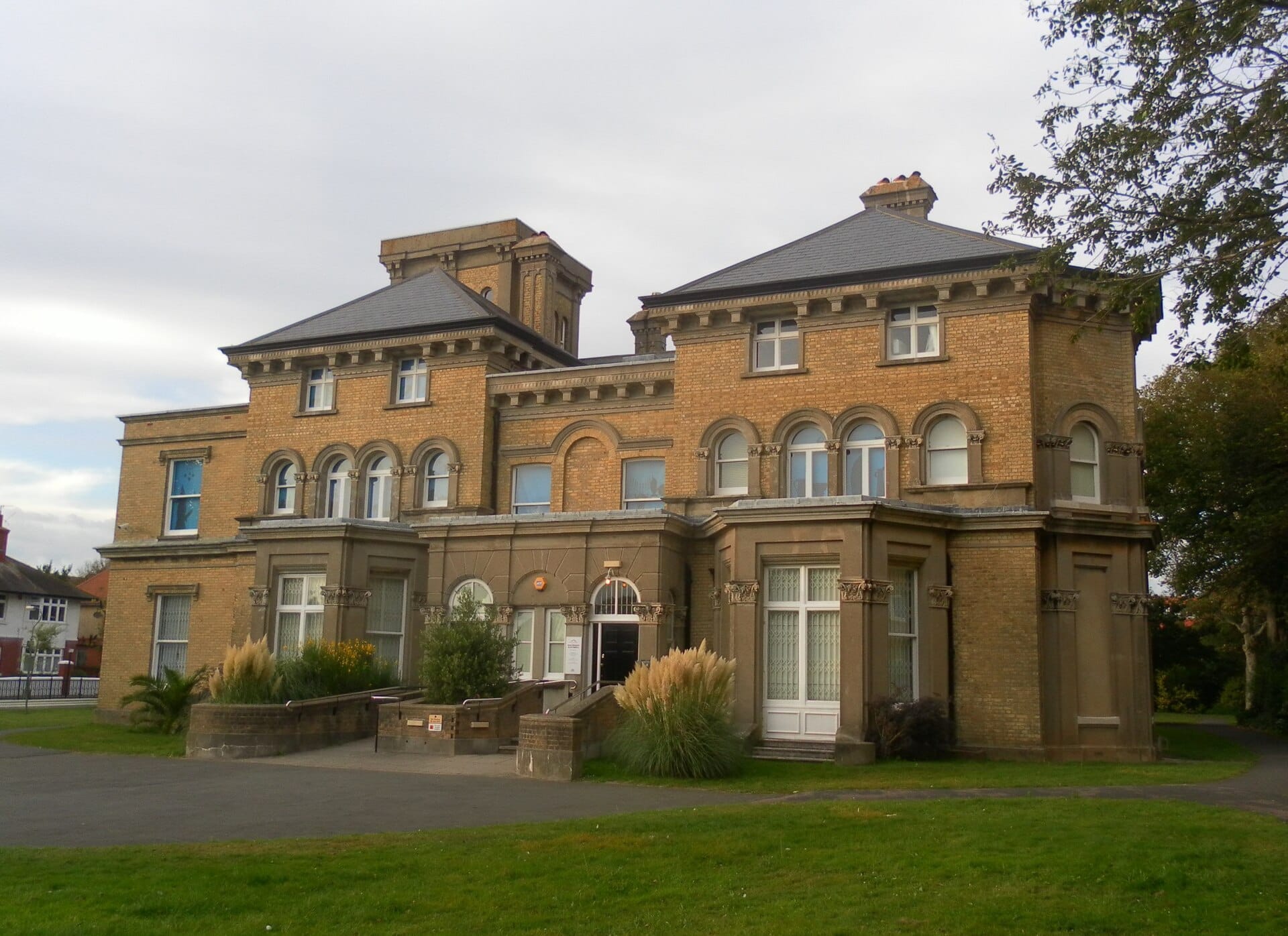
The Hove Museum and Art Gallery on New Church Road is worth considerably more of your time than its modest exterior suggests. Housed in a Victorian villa, it holds collections covering local history, early film and cinema, craft objects, and a substantial art collection with particular strengths in 20th-century British work. Admission is free. It also has one of the more thoughtful museum gift shops in the city.
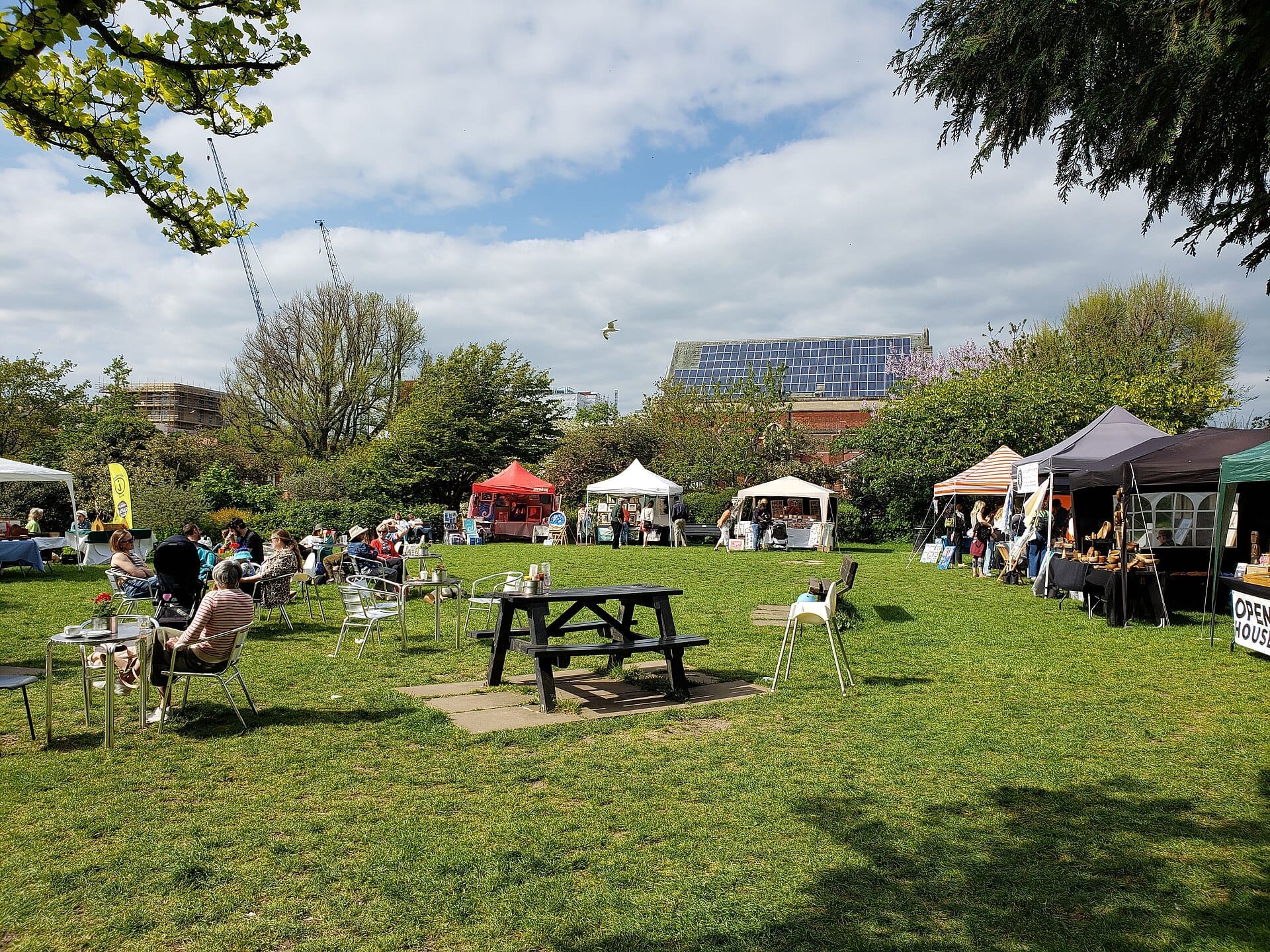
St Ann's Well Gardens, a short walk north of Church Road, is a Victorian park with a genuine neighbourhood feel. It has a tennis club, a café, and enough mature trees to create real shade in summer. It connects thematically with the broader network of green spaces across Brighton and Hove, though St Ann's Well Gardens itself is specifically worth visiting for the formal garden layout and the way it sits almost entirely off the tourist radar.
Walk west along the promenade from the Peace Statue to get a sense of the full scale of Hove's seafront
Brunswick Square and Brunswick Terrace: a notable surviving example of Regency planned development in the area
Hove Museum and Art Gallery: free entry, genuinely good collections
St Ann's Well Gardens: local park with a Victorian layout and a working café
Church Road and George Street: the independent retail and dining core of the neighbourhood
ℹ️ Good to know
Brunswick Square is not an attraction with opening hours but a residential square, so walking through it is simply a matter of being there. The Regency architecture is best appreciated on foot, moving from the square south towards the seafront along Brunswick Terrace.
Eating & Drinking
Hove's food and drink scene is well above what you might expect from a neighbourhood of this size. The concentration of good independent places along Church Road and its surrounding streets is one of the reasons people choose to stay in Hove rather than central Brighton. For a wider picture of eating options across the city, the what to eat in Brighton guide covers the full range.
Coffee is taken seriously here. Several independent roasters and cafés have opened along the Church Road corridor over the past decade, and the competition has kept quality high and prices reasonable by comparison with central Brighton. Weekend mornings see genuine queues at the better-regarded spots, which are mostly doing brunch menus alongside filter coffee and espresso.
The restaurant offer skews towards relaxed neighbourhood dining: wine bars with short menus, Italian and Mediterranean places with loyal local followings, and a growing number of venues doing thoughtful plant-based cooking. Hove has a notably strong showing in the city's wider vegetarian and vegan scene, which you can read about in the vegan and vegetarian Brighton guide.
Prices across the board sit in the mid-range: slightly higher than the cheapest central Brighton options but well below London equivalents. An evening meal with wine at a mid-range restaurant will typically come to around £35 to £50 per head. The George Street area, which runs south off Church Road, has a slightly more concentrated cluster of evening venues if you want to be able to walk between options.
💡 Local tip
The farmers and local produce markets in and around Hove run on weekends, typically along the seafront and at various local venues. Check Visit Brighton's events calendar for current dates before you travel, as timings shift seasonally.
Getting There & Around
Hove railway station is on the West Coastway Line and handles services both to Brighton (a few minutes east) and westward along the coast to Worthing, Chichester, and Portsmouth. It also has connections northward to London via Gatwick Airport on some services, though Brighton station handles significantly more frequent London services. From Brighton station to Hove station takes only a few minutes by train. Verify current timetables and fares via National Rail before travelling, as services change seasonally and are subject to disruption.
Brighton and Hove Buses run frequent services along the main corridors through Hove, including Western Road and Church Road. Several routes connect Hove to central Brighton and points east and west, though specific route numbers should be confirmed via the Brighton and Hove Buses website as schedules are updated regularly. Bus stops are well-signed and the network is reliable during daytime hours.
On foot, the seafront promenade provides a direct and flat walking route between Hove and central Brighton in around 20 minutes or a little more, depending on your starting point within Hove. Walking along the promenade is generally preferable to the inland route for orientation purposes, and gives you a clear sense of how the two parts of the city relate to each other spatially. The Peace Statue, visible from a distance on the seafront, is a reliable landmark marking the approximate border.
Cycling is practical in Hove given the relatively flat terrain and the dedicated cycle path along the seafront promenade. Bike hire is available at various points along the Brighton and Hove seafront. Ride-hailing apps including Uber and Bolt operate across Brighton and Hove. Taxis can also be flagged on Church Road and Western Road during daytime and evening hours.
Where to Stay
Hove offers a genuine alternative to staying in central Brighton, particularly for visitors who want seafront access without the noise and weekend crowds that the area around Brighton Pier generates. For a full overview of options across the city, the where to stay in Brighton guide covers all the main neighbourhoods.
The accommodation offer in Hove is a mix of mid-range and upscale hotels, a smaller number of boutique guesthouses, and a significant volume of self-catering apartments. The conversion of large Victorian houses into apartments has created a good supply of self-contained accommodation within easy walking distance of both the seafront and Church Road's amenities. This makes Hove particularly practical for longer stays or for groups and families who want a base with a kitchen.
The seafront strip of Hove, particularly the area around Brunswick Square and the adjacent terraces, is the most sought-after location within the neighbourhood. Properties here tend to carry a premium and book up quickly in summer. The streets immediately behind Church Road offer slightly more accessible pricing while remaining walkable to all the main points of interest.
⚠️ What to skip
Hove is noticeably quieter than central Brighton after dark, which suits many travellers well but may feel isolating if you are planning to socialise late into the night. Walking back from central Brighton to Hove is straightforward and well-lit along the seafront, but the walk is around 25 minutes or more. Factor this into your plans if you are staying in Hove and intending to spend evenings in the centre.
Practical Notes
Hove is a generally safe residential neighbourhood, but as with any urban area, standard precautions apply after dark. Sussex Police and Brighton and Hove City Council publish area-specific crime data which is the appropriate reference for current safety conditions. The seafront is well-lit and used by joggers and dog walkers into the evening, and the Church Road corridor remains active through dinner service hours.
Parking in Hove is controlled in most residential areas and metered on the main commercial streets. If you are arriving by car, check the current parking zone rules via Brighton and Hove City Council before travelling. The neighbourhood is not designed around car access and most of what you would want to do is within walking distance of the railway station or the seafront promenade.
Hove's beach is part of the same shingle coastline as central Brighton. Bathing water quality on Brighton and Hove's beaches is monitored by the Environment Agency and information is published on their bathing water data pages. For what to expect from the seafront more broadly, the Brighton seafront area guide covers the full coastal strip from Hove to Kemp Town.
TL;DR
Hove is Brighton's western half: same seafront, considerably calmer character, and a local food and café scene that outperforms its profile.
Best suited to travellers who want beach access and city amenities without the noise and crowds of central Brighton, particularly families, couples, and those on longer stays.
The seafront promenade connects Hove to central Brighton on foot in around 20 to 25 minutes, making it a practical base even if you plan to spend time in the centre.
Hove railway station provides direct services to Brighton, Gatwick, and along the coast, reducing dependence on buses or taxis.
Not the right choice if you are primarily interested in Brighton's nightlife, the Lanes, or the Royal Pavilion area: those are all in the eastern part of the city and a walk or bus ride away.
Brighton's coastline is one of England's most famous, but there's far more to it than the main pebble beach by the pier. This guide covers the best beach spots in Brighton and Hove, plus the coastal walks and waterfront attractions that make the most of the seafront.
Brighton has a strong museum culture for a coastal city. From a royal palace to a Victorian toy trove and a natural history collection currently closed for essential works, here are the finest museums the city has to offer, covering art, history, heritage, and the sea.
Brighton rewards visitors differently depending on the season. This guide breaks down the weather, crowds, events, and costs month by month so you can pick the right time for your trip — whether you want sunshine on the beach, festival energy, or a quiet winter escape.
At roughly 47 miles and one hour by train, Brighton is London's most accessible seaside escape. This guide covers every transport option, the best things to do in a single day, and the practical details that make the difference between a good trip and a great one.
Brighton Festival and Brighton Fringe run simultaneously across three weeks each May, turning the city into one of England's most concentrated arts events. This guide covers the key differences between the two, how tickets work, where events happen, and how to plan your visit without the usual confusion.
Brighton rewards those who look beyond the pier and Pavilion. From Victorian curiosities under railway arches to dramatic chalk cliff walks, these lesser-known attractions reveal a city of real depth and character.
Brighton in summer draws hundreds of thousands of visitors to its shingle beach, Regency architecture, and independent neighbourhoods. This guide covers what the weather actually delivers, when crowds peak, what to book ahead, and how to get the most from the city between June and August.
Brighton in winter is quieter, cheaper, and surprisingly rewarding. This guide covers what stays open, what closes, what the weather actually feels like, and how to make the most of a visit between November and February.
Brighton has a reputation for being pricey, but the reality is more nuanced. From free beaches and seasonal pier admission (often free for residents) to paid museums with resident discounts and a walkable city centre, this guide covers every practical angle for stretching your pounds further on the Sussex coast.
Brighton Pride is the UK's largest Pride festival, drawing hundreds of thousands of people over the first weekend of August. This guide covers the 2026 dates and headline acts, how to get tickets before they sell out, travel logistics, road closures, and the honest breakdown of what costs money and what doesn't.
Brighton holds one of the most complete collections of Regency architecture in Britain, from John Nash's exotic Royal Pavilion to Charles Busby's sweeping Brunswick Town terraces. This self-guided tour walks you through the key buildings, explains what makes each significant, and gives you the practical information to plan your visit.
Brighton sits at the centre of one of England's most varied day-trip networks. Within two hours you can reach chalk cliffs, medieval towns, Roman ruins, and island ferries, most of it without a car. This guide covers the best options by transport type, season, and budget.
Brighton is one of the easiest UK cities to navigate without a car. This guide covers every transport option — from the city's excellent bus network to bike share, taxis, and rail connections — with clear guidance on what works, what to skip, and how to keep costs down.
Brighton is a strong shopping city for independents. The Lanes and North Laine together offer hundreds of independent boutiques, vintage dealers, and artisan makers within walking distance of the seafront. This guide covers the best spots to browse, buy, and discover across every corner of the city.
Brighton packs more into 82 square kilometres than almost any seaside city in England. This guide covers the iconic attractions, the best neighbourhoods for exploring, seasonal considerations, and clear guidance on what to skip — everything you need to plan a trip that actually delivers.
Brighton has a very high concentration of vegan and vegetarian restaurants in the UK, with well over 150 plant-based listings. This guide covers the best spots across every neighbourhood, budget, and food style, from fine dining to vegan junk food.
Brighton is one of the UK's best cities for vintage shopping, with dozens of shops, indoor markets, and antique dealers concentrated around North Laine, Kemptown, and Hove. This guide covers where to go, what to expect to pay, and how to plan your visit season by season.
Brighton packs a remarkable amount into a small area: a historic pier, a Regency palace, independent shopping streets, serious restaurants, and one of England's most distinctive seafronts. This two-day itinerary cuts through the noise and tells you exactly how to spend 48 hours in the city, season by season.
Brighton's food scene is unusually strong for a coastal city of its size. This guide covers the essential dishes, best neighbourhoods for eating, market options, plant-based dining, and practical tips for every budget — from a quick seafront chippy to a full evening meal in Kemp Town.
Choosing where to stay in Brighton shapes your entire trip. This guide breaks down every major neighbourhood by character, price range, and who it suits best, so you can book with confidence rather than luck.