Hove Lawns & Beach: Brighton's Quieter Seafront Escape
Stretching along the Kingsway in Hove, Hove Lawns is a wide ribbon of seafront green space backed by a pebble beach. Less crowded than the Brighton Palace Pier end, it draws dog walkers, picnickers, swimmers, and anyone who wants open sky over the English Channel without the amusement arcade noise. The area is undergoing a significant upgrade with the newly named Hove Beach Park, voted into existence in 2024.
Quick Facts
- Location
- Kingsway, Hove, East Sussex, BN3 2WW — western end of Brighton & Hove's seafront
- Getting There
- Brighton railway station is roughly three-quarters of a mile inland from the seafront. Brighton & Hove Buses serve Kingsway directly. Disabled parking available near Hove Street.
- Time Needed
- 1–3 hours for a relaxed visit; longer if you hire a beach hut for the day
- Cost
- Free to access. Privately owned beach huts here are not generally available for public day hire; check current council and tourism information if any hire schemes are introduced.
- Best for
- Families wanting space, dog walkers, swimmers seeking calmer water, picnickers, those escaping the crowds of central Brighton
What Hove Lawns Actually Is
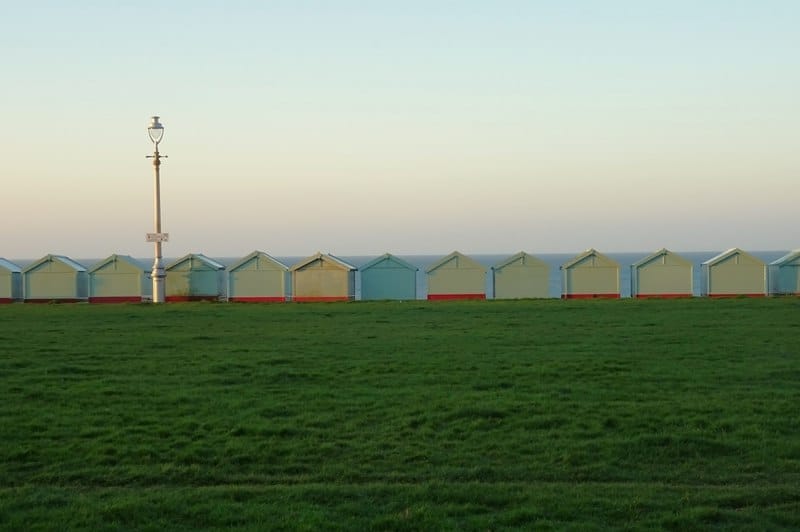
Hove Lawns is the long, grassy seafront strip running along the Kingsway in Hove, the western half of the Brighton and Hove city unitary authority. The lawns sit directly behind a shingle beach, separated from the road by a wide promenade. It is public open space: no gates, no ticket barriers, no closing time listed by the council. You simply walk in from any direction.
The beach itself is pebble — standard for the Sussex coast — and the water is English Channel, meaning it is refreshing rather than warm even in summer. Hove Lawns runs broadly between the i360 observation tower to the east and Hove Lagoon toward the west, with the King Alfred Leisure Centre marking the western end of the main lawns area. Brighton Palace Pier is about a mile to the east, which is far enough that the acoustic signature of that end of the seafront — arcade noise, recorded music, crowds — barely registers here.
In 2022 Brighton & Hove City Council approved a redevelopment of the West Hove seafront section. By 2024 a public vote chose the name Hove Beach Park for the newly upgraded area as part of the ongoing regeneration project. The redevelopment has brought improved landscaping, new seating, and better facilities to this western portion of the lawns.
💡 Local tip
Beach wheelchair hire is available from the Brighton and Hove Seafront Office. A slipway provides beach access for wheelchairs and mobility aids, and disabled parking bays are located near Hove Street.
How the Lawns Change Through the Day
Early morning is the most atmospheric time to arrive. The promenade belongs to runners, cyclists, and dog walkers, and the lawns carry a low mist on cooler days that lifts slowly as the sun clears the roofline behind you. The light on the water before 9am is flat and silver, and the only sounds are the drag of shingle as small waves pull back from the shore and the occasional cry of a herring gull overhead. This is when the beach feels genuinely peaceful.
By mid-morning in summer the picture shifts. Families start arriving with cool boxes and windbreaks. The broad lawns absorb people well — this is one of the genuine advantages over the narrower stretches closer to Brighton Pier, where on warm weekends the shingle can feel shoulder-to-shoulder. On Hove Lawns there is nearly always a patch of grass or beach to claim as your own, even on a busy August Saturday.
Afternoons bring out the sea swimmers, particularly in summer. The beach shelves gradually, and while there are no lifeguards stationed here as a matter of routine (always check current safety provision before swimming), the relatively calm water and the gentle slope make it a popular choice for confident swimmers. The westerly location means the beach catches afternoon sun well, and shadows from the seafront buildings do not arrive until later in the day than on the Brighton Pier side.
By early evening, especially in late May through September, the lawns take on a different character. Groups gather with picnics. Kite flyers appear on windier evenings. The beach hut occupants are wrapping up for the day as hire runs until 8pm, and the light turns the sea from grey-green to something close to gold. If you want to photograph the seafront without crowds in the frame, the hour before sunset in midsummer gives you options.
Tickets & tours
Live prices and dates from our booking partner. If you book, we may earn a commission at no extra cost to you.
Brighton city lights flight with welcome drink
From 21 €Instant confirmationCycle along the beachfront with Brighton Beach Bikes hire
From 7 €Instant confirmationFree cancellationTour Brighton's highlights with an exploration game mobile app
From 10 €Instant confirmationFree cancellationExplore Brighton self-guided walking tour using an app
From 11 €Instant confirmation
The Beach Huts: A Practical Draw
The coloured beach huts along this stretch are a recognisable feature of Hove's seafront character. Most huts here are privately owned and licensed by the council; they are not routinely available for public day hire, so you should check with Visit Brighton or the Seafront Office for any current hire schemes.
A hired hut gives you a base for the day: somewhere to store bags and towels, a windbreak by default, and a focal point for a family visit. They are particularly useful with young children who need a dry, sheltered spot between beach sessions. Demand is predictably high in July and August, so booking ahead is advisable rather than hoping to walk up on the day during peak season.
ℹ️ Good to know
Beach hut hire contact and booking: Visit Brighton lists Brighton seafront beach chalets for day hire. Huts on Hove Promenade are generally privately owned and not routinely let by the day, so any hire options and prices should be confirmed directly with Visit Brighton or the Seafront Office before planning your visit.
The Seafront Walk: Connecting Hove to Brighton
One of the best uses of Hove Lawns is as a starting or ending point for the classic seafront walk into central Brighton. The promenade is flat, continuous, and open in both directions. Heading east from the lawns, you pass through the Kings Road Arches area, where independent food traders and workshops occupy the Victorian arches beneath the upper road, before reaching the West Pier ruins and the i360. Brighton Palace Pier is further east still. The full walk from Hove Lagoon to Brighton Pier takes roughly 40–50 minutes at a relaxed pace.
The western end of the Lawns connects toward Hove Lagoon, which is worth knowing about if you are visiting with children: the lagoon offers watersports and a different character from the open beach. Heading inland from Kingsway puts you into Hove's residential streets, which are notably quieter than Brighton's city centre. The architecture along the roads immediately behind the seafront is largely late Victorian and Edwardian, wide-fronted and handsome.
Weather and Seasonality
The Sussex coast has a temperate maritime climate. Summers are mild rather than hot — expect average highs of 19–21°C in June through August, with sea breezes that can make it feel cooler than the temperature suggests. A layer you can pull on is always worth packing, even in July. The beach is at its most enjoyable from late May through September, when daylight is long and rainfall is lower than the autumn and winter months.
Winter is a different proposition. The lawns are largely empty, the light is low and lateral, and the sea takes on a pewter quality that some people find genuinely beautiful. It is not a sunbathing destination in January, but the promenade walk remains possible in dry weather and the seafront has a stripped-back quality that summer visitors never see. If you are curious about Brighton in the colder months, the Brighton in winter guide covers what to expect and what still works well in the off-season.
⚠️ What to skip
The beach has no formal lifeguard provision as standard — check current arrangements before swimming, particularly with children. Sea conditions on the Sussex coast can change quickly, and shingle beaches can have a steeper drop-off at the water's edge than they appear.
Who This Is Right For — and Who Should Look Elsewhere
Hove Lawns works best as a destination if you want space, relative quiet, and easy access to a clean beach without paying for anything. It is well suited to families who want room to breathe, people visiting Brighton specifically to swim or walk, and anyone who wants a slower pace than the Brighton Palace Pier end of the seafront provides.
If you are looking for amusement attractions, a concentration of food and drink options, or evening entertainment, the central Brighton seafront delivers more in that respect. Hove Lawns has cafes and seasonal food stalls, but it is not a destination for nightlife or a dense cluster of things to do in the way that the Pier area is. First-time visitors to Brighton who have limited time and want to see the most iconic parts of the seafront should probably head east first. Hove Lawns rewards a second visit, or a deliberate choice to trade spectacle for space.
Travellers who want to understand Brighton's seafront fully — its history, its range, and what lies between the piers and beyond — will find context in the best beaches in Brighton guide, which covers the character differences between the various stretches of the coast.
Insider Tips
- The westernmost section of Hove Lawns, near the newly named Hove Beach Park, tends to be quieter than the stretch immediately west of the i360 — if maximum space is the priority, walk a little further from central Brighton before setting up.
- Beach hut hire books up quickly on sunny summer weekends. Midweek bookings in June or early September offer better availability and the beach at its least crowded.
- The promenade cycle lane runs the full length of the seafront, but the west-facing stretches near Hove Lawns are where cyclists and pedestrians share space most comfortably due to the wider path. Keep to the pedestrian side when walking.
- If you are a sea swimmer, the water here is slightly calmer than the Brighton Pier end on days with an easterly swell, because the beach orientation and the reduced fetch from that direction makes conditions marginally more sheltered.
- The light in the two hours before sunset hits the seafront buildings and the water from an angle that makes photography significantly more interesting than midday, when the light is flat and overhead. The Hove end of the seafront, with fewer vertical structures blocking the western sky, gives you cleaner sunset compositions.
Who Is Hove Lawns & Beach For?
- Families with young children who need space and the option of a beach hut base
- Sea swimmers looking for a reliable pebble beach with a gradual shelving and fewer crowds
- Walkers doing the full seafront promenade from Hove into central Brighton
- Dog owners — dogs are permitted year-round on parts of Hove beach, though beach-use bylaws and signage should be checked for any seasonal restrictions
- Visitors who want a genuine sense of the quieter, residential character of Hove rather than the tourist concentration of central Brighton
Nearby Attractions
Other things to see while in Hove:
- Hove Museum & Art Gallery
Formerly known as Hove Museum & Art Gallery, Hove Museum of Creativity occupies a handsome Victorian villa on New Church Road and covers an unusually wide range of subjects: early cinema, studio craft, decorative arts, and rotating contemporary exhibitions. It is one of the quieter, more rewarding cultural stops on the western side of the city.
- St Ann's Well Gardens
St Ann's Well Gardens is a free public park in Hove with roots stretching back to an 18th-century chalybeate spring. Spread across a green wedge about half a mile from the seafront, it offers tennis courts, a scented garden, a fish pond, children's play areas and a café, all within a surprisingly calm residential setting.
Planning a trip? Discover personalized activities with the Nomado app.