St Ann's Well Gardens: Hove's Quiet Historic Park Worth Knowing
St Ann's Well Gardens is a free public park in Hove with roots stretching back to an 18th-century chalybeate spring. Spread across a green wedge about half a mile from the seafront, it offers tennis courts, a scented garden, a fish pond, children's play areas and a café, all within a surprisingly calm residential setting.
Quick Facts
- Location
- Somerhill Road, Hove, Brighton & Hove, BN3 1RP
- Getting There
- Brighton & Hove Buses serve Hove; the park is walkable from central Hove streets
- Time Needed
- 45 minutes to 2 hours depending on pace and café stop
- Cost
- Free entry. Café prices apply separately.
- Best for
- Families, local walkers, anyone wanting a peaceful green break near Hove
What St Ann's Well Gardens Actually Is
St Ann's Well Gardens is a free public park in Hove, owned and managed by Brighton & Hove City Council, sitting about half a mile back from the shore. It is not a grand formal garden in the Victorian showpiece sense. What it offers instead is something increasingly rare in an urban seaside city: a genuinely quiet, multi-layered green space that serves the local community without trying too hard to impress visitors.
The park takes its name from a chalybeate spring, an iron-bearing natural water source, that sits at the heart of its history. The spring, known as St Ann's Well, gave the site significance long before it became a public park. Today the gardens cover a modest but well-maintained area entered from three sides: Nizells Avenue, Furze Hill and Somerhill Road.
💡 Local tip
The park is always open according to Brighton & Hove City Council, with no gate closing time listed. However, the café has its own opening hours, so if a coffee stop is part of the plan, check current hours before visiting.
The History Behind the Well
The site's origins trace back to the 18th century, when chalybeate springs were fashionable across Britain. Dr Richard Russell (1687 to 1759), the physician whose promotion of seawater bathing helped transform a fishing village into the resort now known as Brighton, is also associated with recommending the mineral waters at this spring for health purposes. That connection placed St Ann's Well within a broader cultural moment when the entire stretch of Sussex coast was being reinvented as a destination for cure and leisure.
For much of the 19th century the site operated commercially, attracting visitors to take the waters. The transition to a public park came in 1908, when the gardens were opened to the wider community. The park celebrated its centenary in 2008. A community Spring Festival has since been held in the gardens, drawing local residents for music, community activities and seasonal celebration, and giving the park a social function beyond passive greenery.
Tickets & tours
Live prices and dates from our booking partner. If you book, we may earn a commission at no extra cost to you.
Brighton city lights flight with welcome drink
From 21 €Instant confirmationCycle along the beachfront with Brighton Beach Bikes hire
From 7 €Instant confirmationFree cancellationTour Brighton's highlights with an exploration game mobile app
From 10 €Instant confirmationFree cancellationExplore Brighton self-guided walking tour using an app
From 11 €Instant confirmation
What to Expect When You Walk In
The atmosphere shifts depending on when you arrive. On weekday mornings the gardens are calm, with dog walkers using the paths, older residents sitting near the fish pond and occasional parents pushing prams through the quieter corners. The scent of the planting in the scented garden is most noticeable at this time of day, when foot traffic is low and there is little wind to dissipate it.
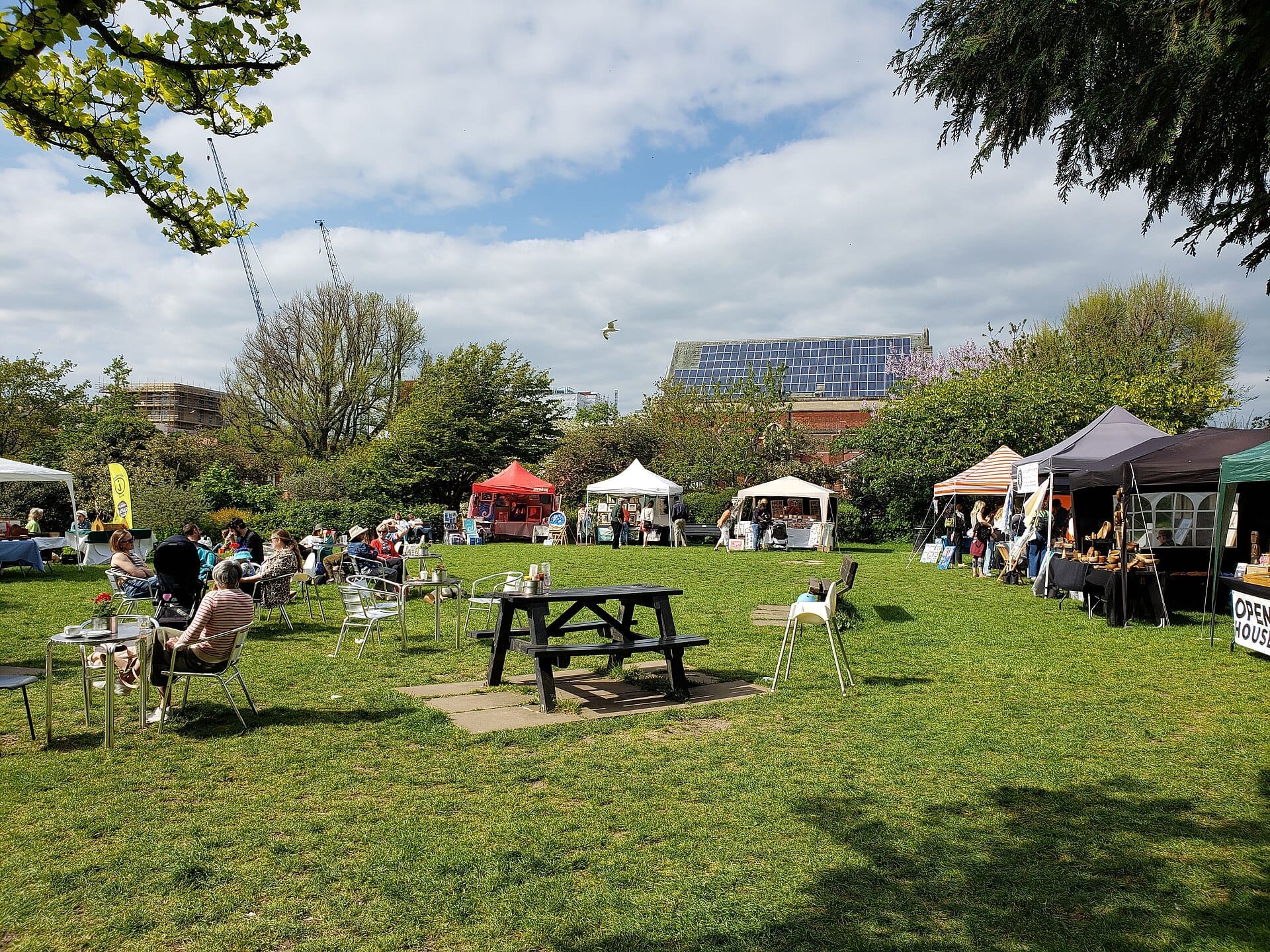
By weekend afternoons, particularly in spring and summer, the character changes. The eight tennis courts fill up, children occupy the playgrounds, and the café terrace becomes the social centre of the park. There is a comfortable local-park energy rather than a tourist-attraction energy: most people here are from the surrounding streets, not visiting from elsewhere in the city.
The fish pond is a consistent draw for children and a restful focal point for adults. It sits naturally within the landscape without being overly manicured. The conservation areas within the park add some ecological texture, with planting choices that favour wildlife alongside human use.
ℹ️ Good to know
Dogs are welcome throughout most of the park but are not permitted in the children's play areas. The park is designed with mixed use in mind, and the separation of spaces works well in practice.
The Scented Garden and Sensory Provision
One of the park's more considered features is its scented garden, developed with blind and visually impaired visitors in mind. The planting here prioritises texture and fragrance over purely visual appeal, making it one of the few genuinely sensory-first spaces in the Brighton and Hove park network. Even visitors without any visual impairment find it a noticeably different kind of garden experience: you pay attention differently when the design asks you to use smell and touch as primary senses.
This element of the gardens is easy to walk past without understanding its purpose. If you approach it knowing what it was designed for, the planting choices make much more sense and the space rewards slower movement.
Practical Details for Visiting
Brighton & Hove Buses provide coverage across Hove, and the park is within walking distance of several bus routes connecting to central Brighton and the seafront. The Hove neighbourhood itself is well served by local bus services; for route planning, check Brighton & Hove Buses directly before your visit as timetables are subject to change.
There is no parking facility within the park itself. Street parking is available on surrounding residential roads, though restrictions apply on some streets during weekday hours. The most straightforward approach for visitors coming from central Brighton is on foot or by bus along the seafront, then cutting north into the residential grid.
Entry is free at all times. The café is the only paid element within the park, and its prices align with a neighbourhood café rather than a tourist venue. Toilets are available within the park, which is a practical detail worth noting given how few green spaces in the city provide this.
⚠️ What to skip
In wet weather the grass areas can become heavy underfoot. The paths are usable but some corners of the park lose their appeal significantly in persistent rain. Autumn and winter visits are quieter and can be pleasant on dry days, but the park's best qualities are summer and spring ones.
Honest Assessment: Who This Park Is Really For
St Ann's Well Gardens sits comfortably within a half-day itinerary of Hove, particularly if you are already exploring Hove Lawns and the beach nearby. The combination of seafront and this inland green space gives a fuller picture of what Hove actually offers as a place to spend time.
Visitors arriving expecting a destination park on the scale of a major botanical garden or a heritage estate will be disappointed. This is a neighbourhood park with heritage, not a heritage attraction with a park attached. The distinction matters. If what you want is a well-maintained, genuinely calm green space that does not charge admission, has facilities including tennis, a café and toilets, and sits within a pleasant residential area, St Ann's Well Gardens delivers all of that reliably.
For those planning a broader Brighton and Hove itinerary, the park pairs well with a visit to the Hove Museum and Art Gallery, which is within walking distance and free to enter. Combining both gives a few hours of low-cost, genuinely local activity in the western part of the city.
If you are mapping out a full day in Hove and want more context on what the area offers, the Brighton hidden gems guide covers several Hove-side spots that most visitors miss entirely.
Insider Tips
- The scented garden is planted with fragrance and texture in mind, designed for visually impaired visitors. Slow down here rather than walking through quickly; the lavender, rosemary and other aromatic plants reward attention at close range.
- The Spring Festival held in the gardens is a free community event with music and activities. If your visit falls in late spring, check whether the festival is running that year as it gives the park a very different energy from a regular weekend.
- The tennis courts are popular and available to use, but may require booking during peak summer periods. Check the council's parks pages or arrive early on weekday mornings when courts are typically quieter.
- The fish pond is on the quieter, less-used side of the park. If you arrive and the main areas feel busy, it is worth walking through to find this corner, which tends to stay calm even on a summer Saturday.
- Combine this park with the Hove seafront and Hove Museum in a single morning or afternoon to make the most of the western side of the city without spending anything beyond café costs.
Who Is St Ann's Well Gardens For?
- Families with young children looking for playgrounds, open grass and café facilities in a relaxed setting
- Dog owners wanting a green space with good paths and open areas, away from the busier parks closer to central Brighton
- Visitors with an interest in local history who want to see the site connected to Brighton's 18th-century spa heritage
- Travellers exploring Hove as a distinct area of the city rather than just the seafront strip
- Anyone who needs a genuine rest stop with toilets, shade and a café between other activities in the Hove area
Nearby Attractions
Other things to see while in Hove:
- Hove Lawns & Beach
Stretching along the Kingsway in Hove, Hove Lawns is a wide ribbon of seafront green space backed by a pebble beach. Less crowded than the Brighton Palace Pier end, it draws dog walkers, picnickers, swimmers, and anyone who wants open sky over the English Channel without the amusement arcade noise. The area is undergoing a significant upgrade with the newly named Hove Beach Park, voted into existence in 2024.
- Hove Museum & Art Gallery
Formerly known as Hove Museum & Art Gallery, Hove Museum of Creativity occupies a handsome Victorian villa on New Church Road and covers an unusually wide range of subjects: early cinema, studio craft, decorative arts, and rotating contemporary exhibitions. It is one of the quieter, more rewarding cultural stops on the western side of the city.
Planning a trip? Discover personalized activities with the Nomado app.