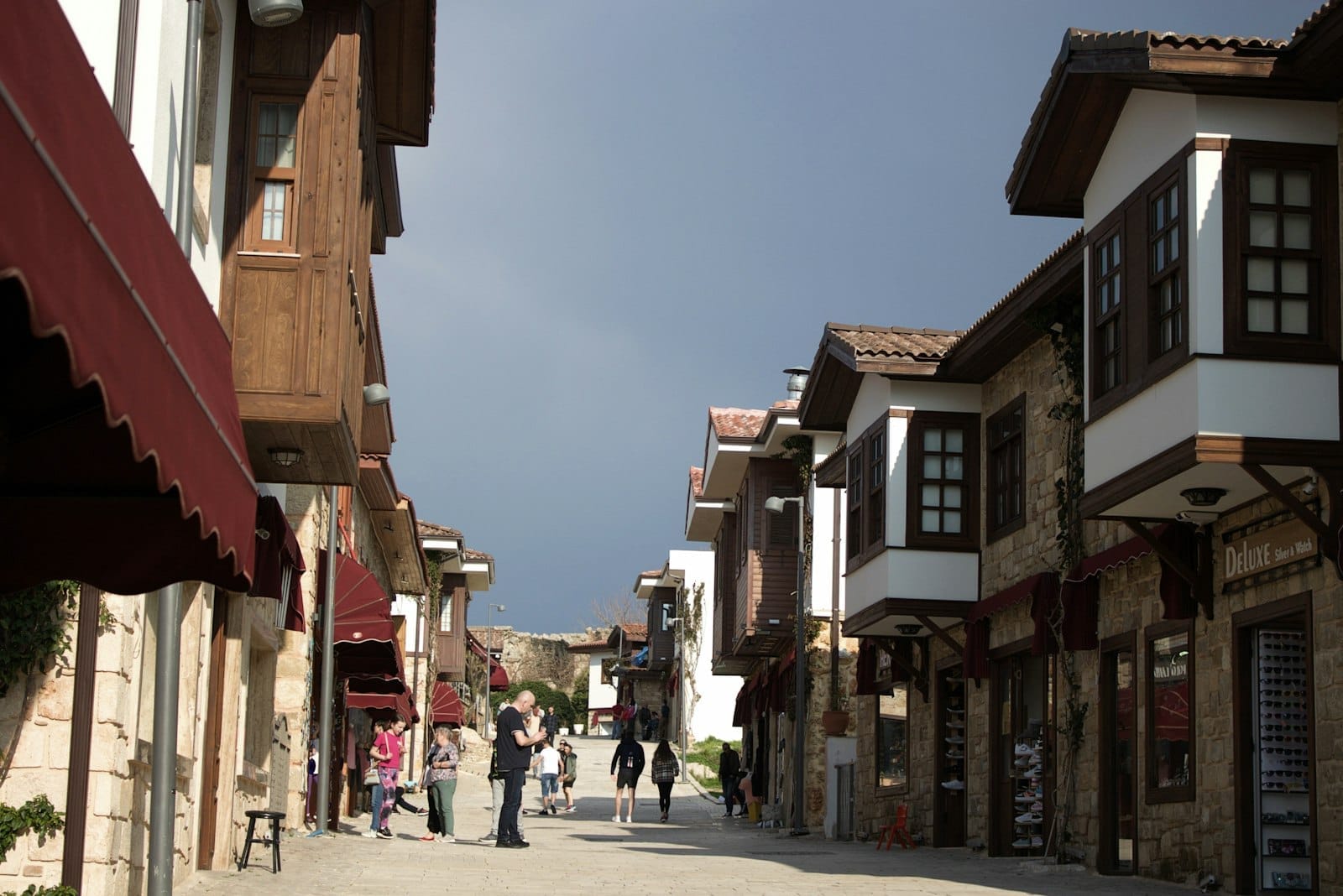
Antalya's city center is anchored by Kaleiçi, the ancient walled quarter that has been the heart of this Mediterranean city since Roman times. From Hadrian's Gate to the yacht harbor, it mixes layers of history with a lively present-day street life that keeps locals and visitors moving through the same narrow lanes.
Antalya's city center is where the city's oldest stones meet its most-walked streets. The Kaleiçi district, ringed by Roman-era walls and opening onto a harbor that has seen Hellenistic, Roman, Byzantine, Seljuk, and Ottoman hands, gives the center a depth that most Turkish coastal cities simply don't have. It's not a perfectly preserved museum quarter, either: the cafés are full, the lanes are loud on summer evenings, and the Clock Tower end bleeds into modern retail in a way that keeps the whole area feeling lived in.
Orientation
Antalya city center sits on a low cliff above the Mediterranean coast in the Muratpaşa district, which is the administrative core of a central urban area of roughly 1.5 million people. The wider urban area is large and sprawling, but for visitors, the meaningful center is compact: a rough triangle bounded by Atatürk Boulevard to the north, the cliff edge and harbor to the south, and Karaalioglu Park to the southeast.
Kaleiçi, literally 'inside the castle', is the old town within that triangle. Its outer limit is most clearly marked at the Clock Tower on Kalekapısı Square, which sits at the intersection of Cumhuriyet Street and the entrance lanes to the old bazaar. From the Clock Tower, the old city wall runs roughly south and southeast. Walking downhill from any direction in Kaleiçi eventually leads you to the Roman harbor, now operating as a marina full of gulet boats and restaurant terraces.
Just east of Kaleiçi, Karaalioglu Park stretches along the cliff top and connects the old town to the lower city without requiring you to navigate traffic. West of the center, Konyaaltı and its beach district begin after the Falez cliffs. East, the city extends toward Lara, where the large resort hotels concentrate. For a broader overview of how all these pieces fit together, the Antalya city guide covers the full map.
Character & Atmosphere
Antalya city center shifts dramatically depending on the hour. Early morning, before 9am, Kaleiçi belongs almost entirely to residents: shopkeepers unlocking iron shutters, men carrying tea glasses between the small neighborhood mosque near the marina and the surrounding buildings, cats moving between the Ottoman-era stone foundations that line the narrower lanes. The light at this hour comes low from the east, and the pale limestone walls of the old houses glow in a way they simply don't at midday.
By mid-morning, tour groups arrive at Hadrian's Gate, and the lane between the gate and the Yivli Minaret fills with the slow rhythm of guided walks. The streets between Uzun Çarşı and the harbor turn commercial. Souvenir shops push their displays out onto the cobblestones. The smell here is a mix of spices, leather goods, and coffee from the café tables that appear in every courtyard. It is, at peak summer, genuinely crowded. The lane widths were designed for foot traffic and the occasional donkey, not for tour groups of thirty.
Afternoons in July and August bring serious heat. The limestone surfaces radiate it. The smarter approach is to retreat to Karaalioglu Park, which sits at the cliff edge under old pines and catches a sea breeze that the enclosed old town lanes do not. By late afternoon, the park fills with families from the surrounding neighborhoods, and the café kiosks do steady business with local office workers heading home.
After dark, the center rebalances. The tour groups leave, the light softens, and the restaurant terraces around the marina fill with a mix of Turkish families, European couples, and younger locals. Atatürk Street, lined with its tall palms and facing west toward the water, is the place to be for an evening walk when the sea air finally arrives. The old town lanes around the boutique hotels stay active until well past midnight in summer.
💡 Local tip
If you're visiting Kaleiçi in summer, plan your walking tours for before 10am or after 5pm. The midday heat between the stone walls is punishing, and you'll also avoid the peak tour-group traffic at the main gates.
What to See & Do
The single most impressive landmark in the center is Hadrian's Gate, a triple-arched triumphal arch built in 130 AD to mark a visit by Emperor Hadrian. It stands at the eastern edge of Kaleiçi, where the old city wall meets Atatürk Street, and despite being surrounded by modern city life on one side and tourist lanes on the other, it retains a genuine scale and presence. The columns and carved detail hold up well even against comparison to other Roman sites in the region.
Walk uphill from Hadrian's Gate along the inside of the old wall and you reach the Yivli Minaret, the fluted 13th-century Seljuk tower that appears on almost every image of Antalya. It was built by Sultan Alaaddin Keykubad, and while the minaret itself is the visual draw, the adjacent mosque and medrese complex around it tell the story of how the city shifted from Byzantine to Seljuk hands. The view from the small square below the minaret, looking south toward the harbor, is one of the cleaner compositions in the city.
At the southern tip of Kaleiçi, near the marina entrance, the Hıdırlık Tower stands on the cliff edge. Its original function is debated, with theories ranging from a lighthouse to a Roman mausoleum, but it frames the harbor approach in a way that makes it worth the short walk. From the same area, the path along Karaalioglu Park's cliff-top edge runs northeast and is one of the genuinely pleasant walks in the city.
The Old Bazaar in Kaleiçi occupies a warren of lanes off Kazım Özalp Caddesi, accessed through a vaulted stone entrance. It sells the full spectrum of tourist goods (ceramics, textiles, evil eye pendants, leather bags) alongside a few genuine antique dealers and jewelry shops that serve local customers. Uzun Çarşı, the Long Bazaar Street, runs east-west and is lined with both traditional traders and more recent café conversions.
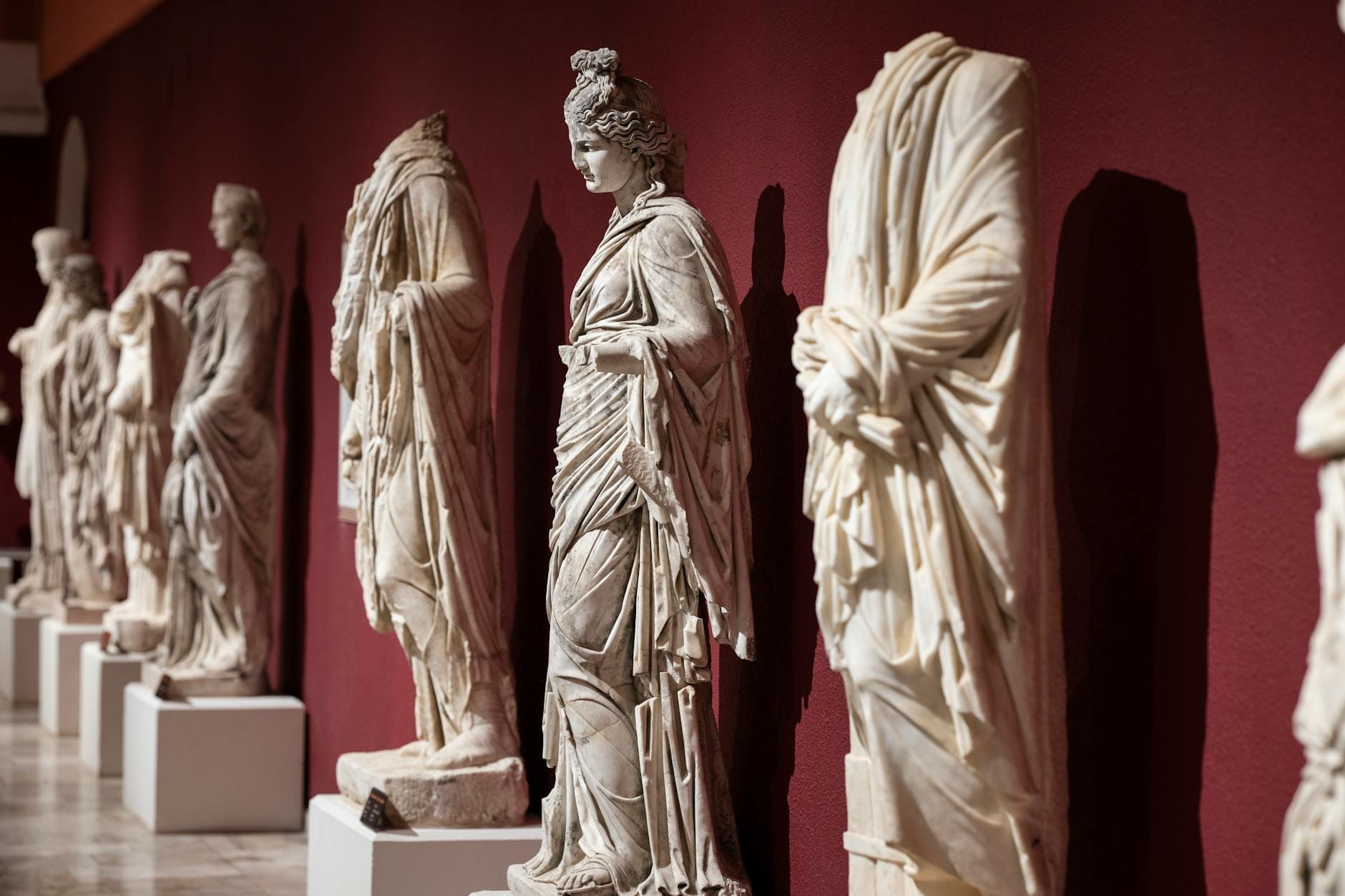
For those who want context before walking the streets, the Antalya Museum sits about 2 kilometers west of Kaleiçi on Konyaaltı Street and holds one of the most significant archaeological collections in Turkey. The hall of gods alone, featuring large-scale Roman statuary from Perge, makes the trip worthwhile. It is not within walking distance of Kaleiçi for most visitors, but the tram connects directly.
Hadrian's Gate: free to enter, always accessible from the street
Yivli Minaret and mosque complex: small entry fee applies to the medrese
Hıdırlık Tower and cliff walk: free, best at sunset
Old Bazaar lanes: free to wander, open from morning to evening
Karaalioglu Park: free, open all hours
Antalya Museum: paid entry, closed Mondays
ℹ️ Good to know
The Mawlawi Lodge Museum (Mevlevihane) inside Kaleiçi, near the Yivli Minaret, is a small but worthwhile stop for understanding the city's Seljuk and Ottoman religious history. It is often overlooked because of its position off the main tourist circuit.
Eating & Drinking
The food scene in Antalya's center splits cleanly into two registers. Around the marina and along the main lanes of Kaleiçi, restaurants target tourists with English menus, aggressive touts, and prices that reflect the location rather than the quality. Some of these places are perfectly decent. Most serve standard Turkish grill menus: kebabs, mezes, fresh fish in season, pide. The Antalya restaurant guide covers specific recommendations across the city.
For something closer to how locals actually eat in this part of the city, move away from the marina terraces and toward the streets immediately behind the Clock Tower and up toward Atatürk Boulevard. This zone has lahmacun and pide shops that operate at lunchtime, kebab counters without tourist pricing, and small muhallebici (milk pudding shops) that serve the kind of rice pudding and sutlaç that Turks have been eating as afternoon snacks for generations.
Çay (tea) culture is central here. Small tea gardens operate in several of the courtyards inside Kaleiçi, particularly around the Mevlevihane area, and in Karaalioglu Park itself. A glass of çay costs almost nothing and comes with the expectation of no particular hurry. Coffee options have expanded significantly in recent years, with specialty coffee shops appearing along the streets between Hadrian's Gate and the Clock Tower, catering to a younger local clientele as much as to visitors.
For evening dining, the marina terrace restaurants are the visual choice, and a meal there at night with harbor lights does have a real appeal, even if the food rarely matches the setting. Those willing to walk slightly out of the old town find better value in the streets between Kaleiçi and the Konyaaltı direction. Street food around the city center runs to simit (sesame bread rings sold from carts near Atatürk Boulevard), corn grilled on roadside stands near the park, and midye dolma (stuffed mussels) from mobile carts that appear after dark. For a full picture of what and where to eat across Antalya, including regional specialties, see the guide to Antalya food.
⚠️ What to skip
The touts outside marina-area restaurants can be persistent and occasionally misleading about prices. Ask to see a menu with prices before sitting down, and confirm whether service charges are included. These are not scams exactly, but they are a predictable friction that catches visitors off guard.
Getting There & Around
Antalya Airport (IATA: AYT) sits approximately 13 kilometers east of the city center. The most practical public transport option from the airport is the Antalya tram, known as AntRay, which connects to the city center via a transfer at the main bus terminal (Otogar) or directly on certain extended routes. Taxis and shuttle services are also widely available from the terminal, though fares should be agreed in advance or confirmed via meter. Journey time to Kaleiçi is roughly 30 to 45 minutes depending on traffic.
Within the center, the AntRay tram line is the most useful public transit option. It runs from the museum quarter in the west through the city toward the eastern suburbs, with stops that serve the main Cumhuriyet Square area near Kaleiçi. The tram runs frequently during daylight hours and requires a rechargeable AntalyaKart transit card, available at kiosks near most stops.
Kaleiçi itself is entirely pedestrian once you pass through one of the main gates. Vehicles are restricted, which makes it genuinely pleasant to walk but means that if you are staying inside the old town with luggage, you will be rolling bags over cobblestones for at least a few hundred meters from wherever you are dropped off. The Clock Tower gate on Kalekapısı Square is the most practical arrival point.
Taxis are available throughout the center. In Turkey, the standard ride-hailing app is BiTaksi, which provides metered fares and eliminates negotiation. For a full breakdown of transport options across the city and how to move between neighborhoods, the guide to getting around Antalya is the most complete reference.
Where to Stay
Staying inside Kaleiçi puts you in the most atmospheric part of Antalya's center. The accommodation here is dominated by boutique hotels and small pansiyons converted from Ottoman-era townhouses, most of them built around small courtyards. The trade-offs are real: rooms are often small, noise from the lanes carries easily at night in summer, and parking is essentially impossible. For visitors who value walkability to the historic sites above all else, it's still the right choice. The guide to where to stay in Antalya maps out options across all the city's neighborhoods.
The quieter pocket of Kaleiçi is the area around the Hıdırlık Tower and the southern cliff edge, away from the main tourist lanes. Hotels here tend to have sea-facing terraces and are a short walk from the activity of the marina without being directly in the noise corridor. The northern end of the old town, closer to the Clock Tower and the bazaar entrance, is more convenient for transit but noisier on weekend nights.
For travelers who want modern amenities, air conditioning that actually works in August heat, and proximity to the center without the cobblestone limitations, the streets immediately north of Kaleiçi along Atatürk Boulevard have mid-range and business hotels at more consistent quality standards. These add a 10 to 15-minute walk to reach the old town gates, but they are served directly by the tram.
Practical Notes
Dress codes matter around the religious sites within Kaleiçi. Shoulders and knees should be covered when entering the Sultan Alaaddin Mosque or the Tekeli Mehmet Paşa Mosque. Scarves are available at the entrances of most mosques for those who need them. Elsewhere in the center, standard summer clothing is fine.
Tap water in Antalya is not recommended for drinking. Bottled water is cheap and available everywhere, including small shops inside Kaleiçi. The emergency number across Turkey is 112. The country dialing code is +90. Currency is the Turkish Lira (TRY); the city center has ATMs at all major access points, including near Kalekapısı Square and along Atatürk Boulevard.
Visitors should be aware that some of the touts and shopkeepers near the main tourist lane between Hadrian's Gate and the marina operate with high-pressure sales techniques. Nothing illegal, but the atmosphere in these specific lanes can feel wearing if you are not prepared for it. Knowing this in advance makes it easier to navigate without stress. The Antalya safety and scams guide covers the specific situations visitors encounter most often.
TL;DR
Antalya's city center and Kaleiçi district are best for travelers who want to walk directly from their hotel to Roman gates, Ottoman bazaars, and a working harbor with real historical depth.
The area is genuinely crowded in summer, and the main tourist lanes between Hadrian's Gate and the marina can feel commercial. Moving even one street off that circuit changes the atmosphere significantly.
Best suited to independent travelers, history-focused visitors, and couples looking for atmospheric boutique accommodation. Less suited to families needing accessible streets with strollers or travelers who prioritize beach access above everything else.
Beaches are not in the city center itself. Konyaaltı Beach is about 2 kilometers west, and Lara Beach is east of the center, both reachable by tram or taxi.
Spring (April-May) and autumn (September-October) are the best seasons: warm enough for the harbor and the outdoor terraces, cool enough to walk the stone lanes comfortably.
Three days is enough time to cover Antalya's best layers: Roman gates and Ottoman lanes in Kaleiçi, world-class ruins at Aspendos and Perge, pebble beaches, dramatic waterfalls, and west-coast viewpoints over the bay. This itinerary is built around smart sequencing so you spend less time backtracking and more time actually seeing things.
Antalya sits at the heart of ancient Pamphylia, surrounded by some of the Mediterranean world's most remarkable ruins. This guide covers the best Roman theaters, Greek temples, mountain citadels, and archaeological sites within reach of the city.
Antalya has hundreds of properties marketed as all-inclusive, from basic meal-plan hotels to full ultra all-inclusive resorts on Lara Beach. This guide cuts through the marketing to explain what you actually get, which resorts deliver value, and when going all-inclusive makes sense in Antalya.
The Aspendos International Opera and Ballet Festival is one of the world's most extraordinary performance settings: grand opera and classical ballet staged inside a 2,000-year-old Roman theatre near Antalya. This guide explains when the festival usually runs, how to verify the current schedule, how to get tickets, and how to handle transport on performance nights.
Antalya's coastline stretches from urban pebble beaches backed by the Taurus Mountains to remote sandy coves tucked between ancient ruins. This guide covers the best beaches in and around Antalya, with honest notes on what each one actually offers.
Everything you need to navigate Antalya city with confidence. From the Roman walls of Kaleiçi to the tram lines connecting the coast, this guide covers neighborhoods, transport, seasonal planning, and the practical details most travel sites skip.
Antalya is far more than a beach resort. This guide breaks down the most rewarding romantic experiences for couples, from Kaleiçi's Roman-era streets and boat tours on turquoise bays to waterfall hikes, ancient theatre evenings, and canyon adventures. Practical, specific, and honest about what actually delivers.
Belek, Turkey's golf capital, packs more than 15 championship courses into a compact stretch of Mediterranean coastline 30km east of Antalya city. This guide covers the standout courses, realistic costs, the best time to book, and what the brochures don't tell you.
Summer in Antalya means scorching heat, packed beaches, crystal-clear sea, and some of the best value sun holidays on the Mediterranean. This guide covers the weather reality, the best things to do in June, July, and August, how to handle the crowds, and what most visitors get wrong about a summer trip.
Antalya's after-dark scene spans ancient-walled cocktail bars in Kaleiçi, open-air mega-clubs at the marina, foam parties in Kemer, and sophisticated shisha lounges. This guide covers the best venues by district, what to expect in each season, dress codes, realistic drink prices, and smarter alternatives to the obvious tourist traps.
Kaleiçi is Antalya's Roman-era old town, packed with 2,000 years of layered history inside ancient walls. This self-guided walking tour covers the essential stops, the best route order, what to skip, and how to time your visit to avoid the worst of the crowds.
Antalya has a reputation as a luxury resort destination, but the reality is far more accessible. This guide breaks down exactly what budget travel looks like in Antalya, from hostel options and free attractions to transport hacks and the best time of year to keep costs down.
Antalya is one of Turkey's most-visited cities, and for good reason. But like any major tourist destination, it has its share of scams and petty pitfalls. This guide breaks down exactly what to watch for, where the real risks are, and how to travel confidently without being caught off guard.
The journey from Antalya to Cappadocia is one of Turkey's great cross-country trips, covering around 540-586 kilometers through Central Anatolia. This guide breaks down every transport option, what guided tours actually include, and how to make the most of the route whether you have two days or five.
Antalya sits at the edge of the Taurus Mountains, and the rivers rushing down from those peaks create some of the Mediterranean coast's most dramatic waterfalls. This guide covers the Upper and Lower Düden falls, the forested Kurşunlu nature park, and the best natural sites to pair them with for a full day outdoors.
Antalya is one of Turkey's most family-friendly destinations, with options ranging from massive water theme parks to free coastal waterfalls and Roman ruins. This guide covers the best things to do in Antalya with kids, broken down by age group, season, and budget — with honest assessments of what delivers and what disappoints.
Antalya delivers sun almost year-round, but timing your visit correctly makes a significant difference. This guide breaks down every season by temperature, crowds, cost, and what you can actually do — so you arrive at the right moment for your priorities.
A boat trip along the Turquoise Coast is one of the best things you can do in Antalya. This guide breaks down every tour type, realistic pricing, departure logistics, and honest advice on what's worth your money and what isn't.
Antalya sits at the center of one of Turkey's richest regions for day-tripping. Within two hours in any direction you'll find world-class Roman ruins, national parks, underground cave systems, and ancient seaside towns. This guide covers the best excursions, organized by type, with practical advice on timing and how long each takes.
Antalya Airport (AYT) is one of Europe's busiest summer gateways. This guide covers which airlines fly there, how the terminals work, how to get into the city, and how to avoid the most common arrival headaches.
Antalya rewards travelers who explore on foot. From a perfectly preserved Roman triumphal gate to clifftop parks overlooking the Mediterranean, the city's best experiences are largely free. This guide covers the top no-cost attractions across the old town, coastline, and beyond.
Antalya Airport (AYT) handles millions of arrivals each year, and getting from the terminal to your hotel shouldn't eat into your first day. This guide covers every realistic transport option — public buses, private transfers, trams, taxis — with honest cost comparisons and seasonal tips.
Antalya draws over 10 million tourists a year, but is it actually worth your time and money? This guide cuts through the resort-brochure hype to give you a clear-eyed look at what the city delivers, what it oversells, and who it suits best.
Köprülü Canyon is Antalya's top rafting destination, offering a 14 km run through a gorge up to 400 metres deep on the Köprüçay River. This guide covers everything from pricing and booking to what to pack, when to go, and how to avoid common mistakes.
Antalya rewards shoppers who know where to look. This guide covers the best markets and bazaars, the most worthwhile things to buy, honest price expectations, and the practical details that help you shop smarter across one of Turkey's most visited coastal cities.
Antalya packs ancient ruins, dramatic waterfalls, world-class beaches, and serious adventure into one destination on Turkey's Mediterranean coast. This guide cuts through the noise to show you exactly what's worth your time, what to skip, and how to plan it all without overpaying.
Antalya has a distinct food culture that goes well beyond kebabs and baklava. This guide covers the city's signature dishes, where locals actually eat, what things cost, and which spots to skip. Whether you have one meal or two weeks, eat like you know what you're doing.
Antalya's food scene runs deeper than the all-inclusive buffet. This guide breaks down the best neighborhoods to eat in, specific restaurants worth your time, what dishes to order, and which spots to skip — so you eat well every meal.
Choosing where to stay in Antalya shapes your entire trip. This guide breaks down the four main areas, their real trade-offs, current price ranges, and exactly who each neighborhood suits best.