Old Bazaar (Kaleiçi): Antalya's Ancient Market Quarter
The Old Bazaar in Kaleiçi is Antalya's most atmospheric trading district, threading through centuries-old cobblestone lanes between Roman walls and Ottoman facades. Free to enter and rich with spice stalls, leather workshops, and ceramic vendors, it rewards those who arrive early and wander without a plan.
Quick Facts
- Location
- Kazım Özalp Street (Şarampol Caddesi), Kaleiçi, Antalya
- Getting There
- AntRay tram to İsmetpaşa or Iplik Pazarı station, then a short walk into the old town
- Time Needed
- 1.5 to 3 hours depending on pace and shopping interest
- Cost
- Free to enter; budget varies by purchases
- Best for
- Shoppers, history lovers, photographers, and slow travellers
What the Old Bazaar Actually Is
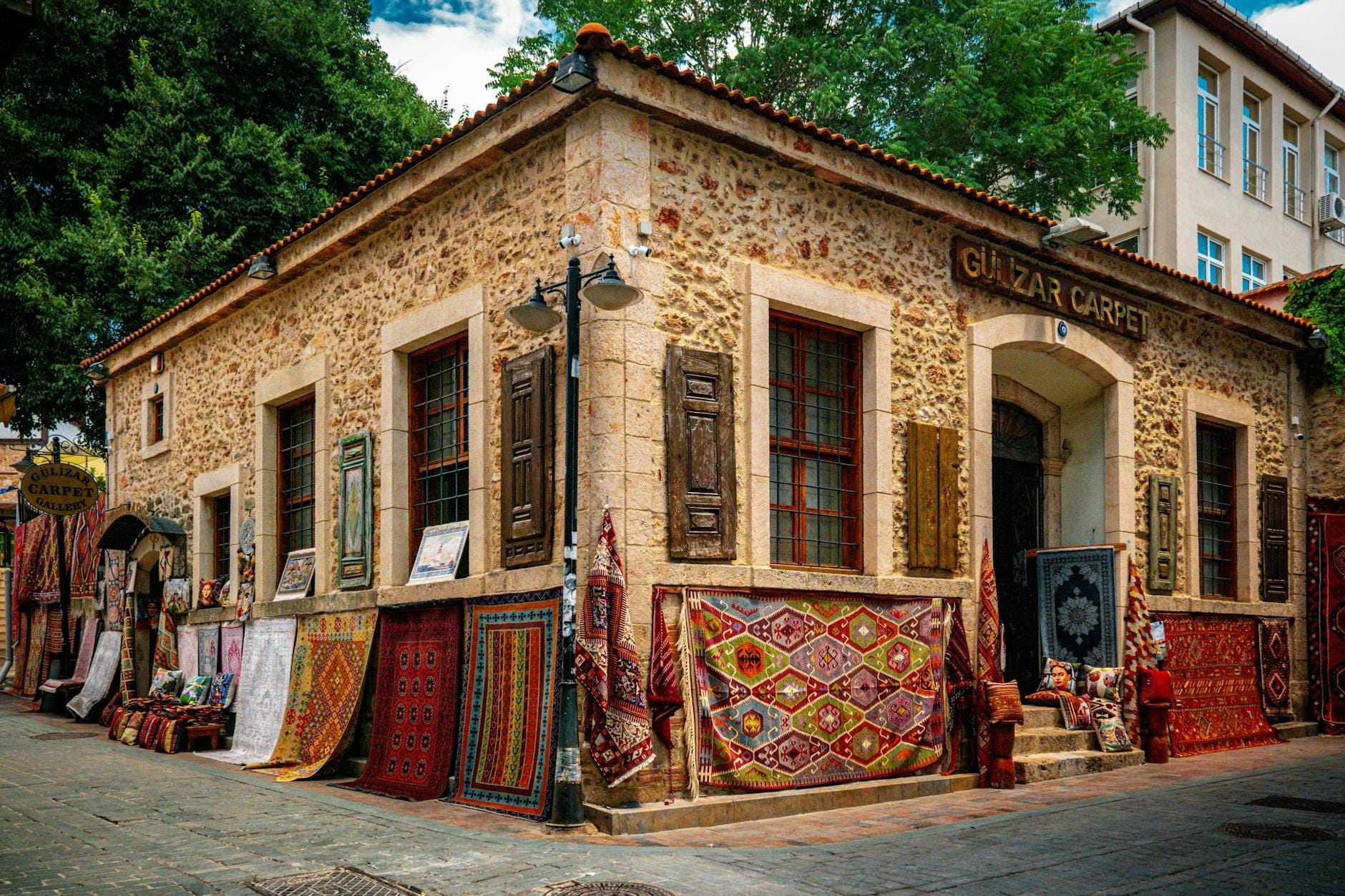
The Old Bazaar Antalya, known locally as Kaleiçi Çarşısı, is not a single covered hall or a theme-parked souvenir strip. It is a working commercial district spread across several interlocking lanes in Kaleiçi, Antalya's UNESCO-recognised historic core. The primary artery is Kazım Özalp Street, the former Şarampol Caddesi, which runs roughly parallel to the ancient Roman walls and feeds into smaller alleys packed with shops, workshops, and street vendors.
Trading has happened in this district since Roman times, and the layers of subsequent history are visible in the architecture: Roman stonework at ground level, Byzantine modifications, and Ottoman-era timber-framed buildings stacked above. The overall effect is not a museum diorama but a genuinely lived-in commercial space where local residents buy produce alongside tourists browsing hand-painted ceramics.
ℹ️ Good to know
The Old Bazaar is a public marketplace with no admission charge. Some individual shops open only on certain weekdays, so if you are visiting for a specific type of goods, confirm operating days in advance.
How It Feels at Different Times of Day
Arrive before 9 AM on a weekday and the bazaar belongs to locals. Shopkeepers roll up shutters slowly, the smell of fresh bread from a nearby bakery drifts through the lanes, and the cobblestones are still damp from overnight coolness. Vendors arranging spice pyramids will often talk without the pressure that comes later in the day. The light at this hour is also soft and directional, cutting between the buildings at a low angle that makes the stone walls glow amber.
By mid-morning, tour groups from the coastal resort hotels typically arrive. The lanes narrow perceptibly as foot traffic builds. Leather sellers and carpet merchants become more assertive. If you are uncomfortable with repeated verbal invitations to enter a shop, this window between roughly 10 AM and 2 PM is the hardest to navigate calmly. That said, a firm but polite acknowledgement and continued walking is universally understood.
Late afternoon, roughly 4 PM onward, brings a second quieter phase. The harshest heat has passed, the tour groups have retreated to their hotels, and the bazaar takes on a more unhurried quality. Locals reappear for evening errands. The goldsmiths' section in particular repays a late visit, when light from the setting sun catches polished metal in the display cases.
Tickets & tours
Hand-picked options from our booking partner. Prices are indicative; availability and final rates are confirmed when you complete your booking.
Tazı Kanyon, Safari, Rafting, Buggy Safari, and Zipline in Turkey
From 65 €Instant confirmationFree cancellationAntalya guided city tour with lunch
From 45 €Instant confirmationFree cancellationTraditional Turkish bath experience in Antalya
From 45 €Instant confirmationFree cancellationTurkiye village small group guided tour from Side or Belek
From 39 €Instant confirmationFree cancellation
What to Look For: The Layout and the Goods
The bazaar has no formal map or entrance gate, which is both its charm and its occasional frustration. Navigation is intuitive once you accept that getting briefly disoriented is part of the experience. The main spine of Kazım Özalp Street connects to the area near Hadrian's Gate at one end and extends toward the marina side at the other. Branching alleys off this spine each tend to specialise informally: one will cluster spice and dried goods vendors, another textiles and scarves, another leather jackets and bags.
Ceramics in the Kaleiçi bazaar run the quality spectrum. The better pieces feature hand-applied Iznik-style patterns in cobalt, turquoise, and terracotta; the tourist-grade items are machine-printed. The difference is clear if you look at the underside for brush stroke irregularities, which indicate handwork. For context on the surrounding historic district, the Kaleiçi walking tour guide traces the full architectural circuit that frames these market lanes.
Spices are genuinely good value here compared to supermarket prices. Saffron, sumac, dried rose petals, and various pepper blends are sold loose by weight. The smell alone as you pass a well-stocked spice stall, a dense layering of cumin, dried mint, and something faintly resinous, is one of the more reliable sensory markers of the bazaar. Taste before buying when offered; reputable vendors expect it.
Leather goods require more caution. Turkey produces excellent leather and some of the jackets and bags in this market are genuine quality, but there is also a significant volume of lower-grade imports priced as though domestic. If leather is a priority purchase, ask directly about origin and feel the interior lining for thickness and finish consistency.
Historical and Cultural Context
Kaleiçi as a whole is recognised for its exceptional layering of civilisations. The district sits within Roman walls whose outline still defines the neighbourhood's boundaries. The bazaar occupies a position that has been commercially active since at least the Roman period, when the harbour below made Antalya, then called Attaleia, a significant Mediterranean trading port. Ottoman merchants formalised much of the market's current structure, and the traditional hans, caravanserai-style courtyard buildings used for wholesale trade and traveller lodging, can still be found in adapted forms off the main lanes.
The street immediately to the west leads past Hadrian's Gate, the triumphal arch built in 130 AD to mark Emperor Hadrian's visit to the city. The visual contrast of walking from the gate's three marble arches directly into the compact commercial lanes is one of the more striking transitions in the old town.
Nearby, the Yivli Minaret rises above the roofline and is visible from several bazaar lanes, providing a consistent orientation landmark. The minaret dates to the 13th century Seljuk period and marks the site of one of Antalya's oldest mosques.
Practical Walkthrough: Getting There and Getting Around
The most straightforward approach by public transit is the AntRay tram to İsmetpaşa station, which puts you within a few minutes' walk of the old town perimeter. From there, follow signs toward Kalekapısı (the clock tower square) and continue on foot into the bazaar lanes. The walk from the tram stop takes approximately 10 minutes at a relaxed pace.
Driving into Kaleiçi is not practical. The lanes are pedestrian-only, enforcement is inconsistent but the physical width of most streets makes vehicles impossible regardless. Park in the municipal car parks near Cumhuriyet Square or on the approach roads above the old town and walk down.
💡 Local tip
Wear flat, rubber-soled shoes. The cobblestones in the bazaar lanes are uneven and polished smooth by decades of foot traffic. In wet weather they become genuinely slippery. This is also a practical reason to visit in dry seasons.
Accessibility is limited by the physical environment. Narrow lanes, stepped thresholds, and cobblestone surfaces throughout Kaleiçi make the bazaar difficult for wheelchair users and pushchairs. There are no accessible routes through the market itself; this is a structural feature of the historic district rather than an oversight.
If the market represents just one stop on a longer Kaleiçi visit, budget accordingly. The Antalya Museum is a short taxi or tram ride west of the old town and pairs well as a half-day combined itinerary, providing the archaeological backstory for the Roman and Hellenistic artefacts whose context you encounter walking the bazaar's ancient streets.
Weather and Seasonal Considerations
Summer in Antalya is genuinely hot, with temperatures regularly exceeding 35°C from late June through August. The bazaar lanes offer some shade from overhanging buildings and fabric awnings, but they also trap heat and restrict airflow. If you visit in peak summer, the early morning window before 9 AM is not just preferable, it is significantly more comfortable. Carry water, as shops in the bazaar sell it but often at elevated prices.
Spring and autumn are the most comfortable seasons for the bazaar. April through early June and September through October offer warm but manageable temperatures and lower tourist volumes. Winter brings rain and occasional cold days, but the bazaar remains partially active and the crowds drop substantially. For a broader view of how seasonality affects the whole destination, the best time to visit Antalya guide breaks down each month in detail.
Negotiating and Shopping: What to Know
Bargaining is expected and accepted in most of the bazaar's non-food shops. The standard approach is to express genuine interest, ask for the price, and counter at roughly 60 to 70 percent of the opening figure. Walking away calmly often produces a better offer. However, this dynamic does not apply universally: small spice vendors selling by weight and established ceramics workshops with marked prices often do not negotiate.
Payment in Turkish Lira is preferred and almost always results in a better effective price than paying in euros or dollars, even when vendors readily accept foreign currency. Card payment is increasingly available in the larger shops but not universal in the market stalls.
⚠️ What to skip
Be cautious of vendors who approach you on the street with unsolicited invitations to a 'free tea' in a carpet or jewellery shop. This is a well-documented sales tactic in Turkish bazaars. Accepting tea creates no legal obligation, but the social pressure dynamic is real. Enter on your own terms.
Insider Tips
- Walk the full length of Kazım Özalp Street before buying anything. The same category of goods repeats across multiple vendors, and prices and quality vary more than you would expect. A full reconnaissance lap takes about 20 minutes and usually pays off.
- The smaller alleys branching off the main lane often have better prices and more original goods than the storefronts directly on the tourist path. They are also quieter.
- If you want to photograph the bazaar seriously, weekday mornings before 9 AM give you largely empty lanes, which is rare in a market context. The low angle of early morning sun also creates strong shadow contrast on the stone architecture.
- Check whether your specific target shops are open on the day you plan to visit. Certain vendors, particularly those selling fresh produce and speciality goods, operate only on specific weekdays rather than daily.
- The hans (historic caravanserai courtyards) tucked off the main lanes are worth finding even if you are not buying anything. Several have been converted into small craft workshops or courtyard cafes, and the architecture is among the best-preserved Ottoman commercial building fabric in the city.
Who Is Old Bazaar (Kaleiçi) For?
- Shoppers looking for authentic Turkish textiles, ceramics, and spices rather than mass-produced souvenirs
- History-focused travellers who want to walk a genuinely ancient commercial district rather than a reconstructed market
- Photographers, particularly those who prioritise early morning light on stone architecture
- Slow travellers comfortable with wandering without a fixed agenda
- Budget-conscious visitors who want an immersive Antalya experience with no entrance cost
Nearby Attractions
Other things to see while in Kaleiçi (Old Town):
- Antalya Marina
Kaleiçi Yat Limanı, known to visitors as Antalya Marina, is a semi-circular harbor carved into the limestone cliffs of the old town. Built during the Hellenistic period and used continuously through Roman, Byzantine, Seljuk, and Ottoman times, it now anchors a strip of seafood restaurants, craft shops, and boat tour operators. Admission is free, and the harbor is open around the clock.
- Antalya Boat Tours
Departing from the ancient Kaleiçi Marina, Antalya boat tours take you along dramatic limestone cliffs and into clear turquoise bays. Whether you want a full-day swim-and-lunch cruise or a shorter evening sail, here is everything you need to decide if it is worth your time.
- Clock Tower
Standing at the edge of Antalya's ancient walls, the Saat Kulesi is a 14-metre Ottoman clock tower built in 1901 with a pentagonal stone base dating back to the 9th century. Free to visit at any hour, it marks the gateway between the modern city and the cobbled lanes of Kaleici's old quarter.
- Hadrian's Gate
Built in 130 CE to honor Emperor Hadrian's visit to the ancient city of Attaleia, Hadrian's Gate is a triple-arched Roman triumphal monument in white marble and granite. Free to enter at any hour, it marks the main threshold between Atatürk Boulevard and the winding lanes of Kaleiçi old town.