Antalya Museum: Turkey's Archaeological Crown Jewel
The Antalya Museum, officially the Antalya Archaeological Museum, is one of the largest and most significant museums in Turkey. Spanning 30,000 square metres across 13 exhibition halls and an open-air gallery, it holds some of the finest Roman-era sculptures and ancient artifacts recovered from the surrounding region. For anyone seriously interested in the classical world, this is the most important stop in the city.
Quick Facts
- Location
- Konyaaltı Caddesi No: 88, Muratpaşa, Antalya (Konyaaltı district)
- Getting There
- Accessible by city bus along Konyaaltı Caddesi or by taxi from Kaleiçi (approx. 25–30 min drive)
- Time Needed
- 2–4 hours depending on depth of interest
- Cost
- Verify current price on muze.gov.tr (approx. 10 USD); verify current pricing before visiting as TRY rates fluctuate
- Best for
- History enthusiasts, archaeology fans, families seeking a break from beach heat
Why the Antalya Museum Matters
The Antalya Museum is not simply a regional repository. It is one of Turkey's foremost archaeological institutions, holding artifacts recovered from some of the most important ancient sites in the eastern Mediterranean: Perge, Aspendos, Termessos, and sites across the broader Antalya province. The collection spans prehistoric tools, Bronze Age pottery, Hellenistic sculpture, Roman imperial statuary, Byzantine coins, and Ottoman ethnographic objects, all under one roof.
The museum's founding history adds a layer of meaning that guidebooks often skip. It was established in 1922, a direct response to the looting of regional artifacts during the Italian occupation of 1919 to 1922. That origin story, of a collection built to protect what was nearly lost, gives the place a quiet sense of purpose. The institution moved to its current purpose-built structure on Konyaaltı Caddesi in 1972, underwent major reorganisation in 1985, and in 1988 received the European Council Special Prize for its contributions to cultural heritage. Those are not honorary plaques. They reflect a genuine standard of curation that puts many larger European museums to shame.
💡 Local tip
Arrive at opening on weekday mornings to have the sculpture halls nearly to yourself. By mid-morning during summer, tour groups fill the main galleries and the ambient noise makes it harder to linger.
What You'll Actually See Inside
The museum contains 13 exhibition halls plus an open-air gallery, with over 5,000 artifacts on display and an estimated 25,000 to 30,000 more in storage. The scale can feel overwhelming if you arrive without a loose plan. The most compelling rooms for most visitors are the Hall of Gods, the Hall of Emperors, and the Sarcophagus Hall.
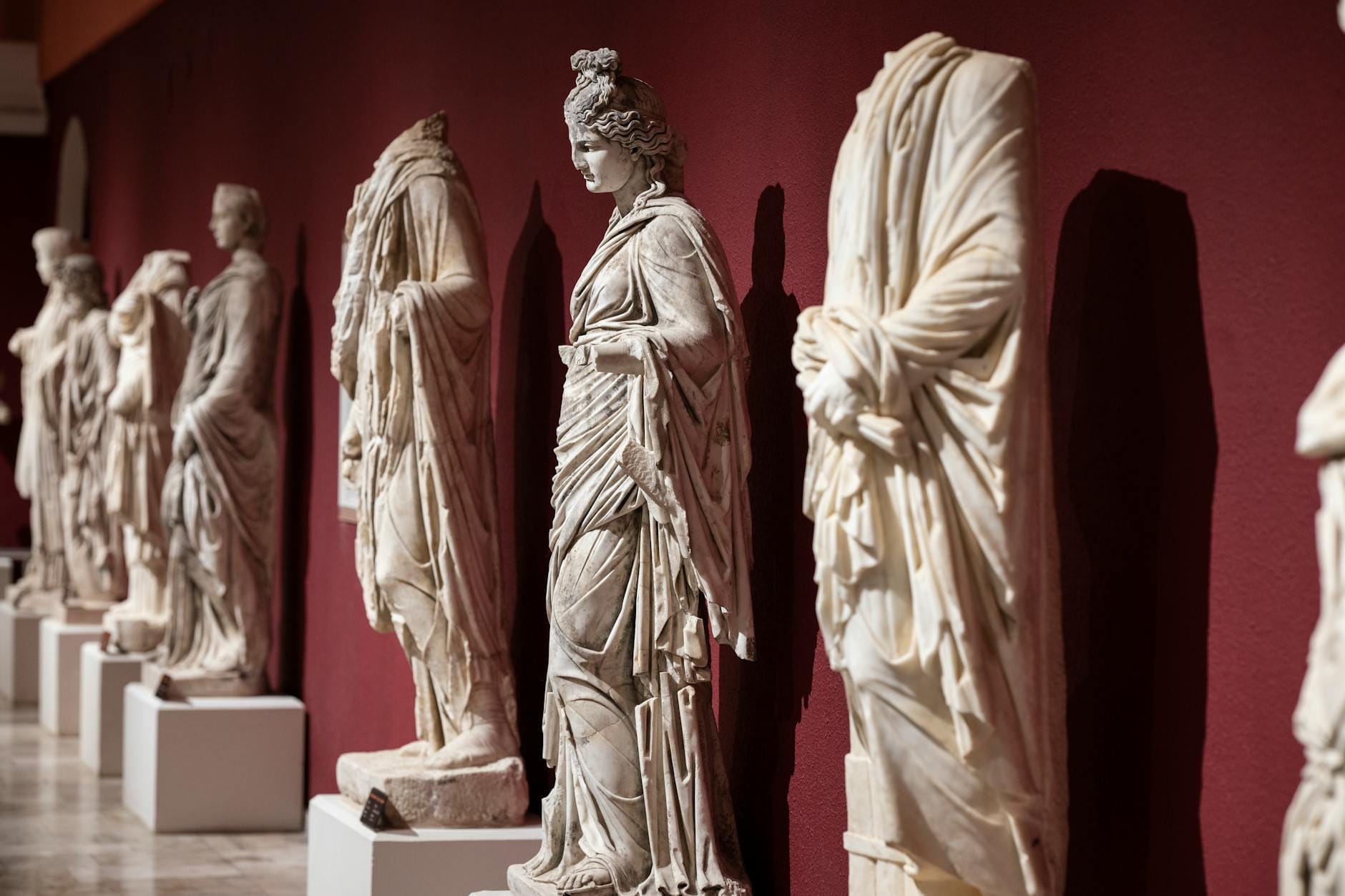
The Hall of Gods contains a series of large marble statues excavated primarily from Perge, dating to the 2nd century AD. The craftsmanship is exceptional: Apollo, Artemis, Hermes, and others stand at near life-size or larger, their surfaces worn to a warm ivory tone under carefully calibrated lighting. The silence in this room in the early morning, the faint smell of climate-controlled air and old stone, makes it one of the genuinely affecting rooms in Turkish museology.
The Hall of Emperors presents marble portrait busts and statues of Roman emperors, also largely from Perge. Hadrian, Trajan, and others are represented with a degree of individuality that underscores how politically important portraiture was in the Roman world. These are not generic toga figures; they are specific, recognisable individuals.
The Sarcophagus Hall holds elaborately carved stone coffins, several of which rival anything you would see in Rome or Athens. The level of relief carving, mythological scenes, hunting motifs, and garland work preserved on some examples is remarkable. If you have visited Perge Ancient City before coming here, the connection between site and museum snaps into focus clearly: you walk the ruins, then you see what was found beneath them.
Tickets & tours
Hand-picked options from our booking partner. Prices are indicative; availability and final rates are confirmed when you complete your booking.
Antalya guided city tour with lunch
From 45 €Instant confirmationFree cancellationTraditional Turkish bath experience in Antalya
From 45 €Instant confirmationFree cancellationPamukkale and Hierapolis day trip from Antalya-Kemer with meals
From 40 €Instant confirmationFree cancellationMevlana Museum and Whirling Dervishes Show from Antalya, Belek, Side
From 109 €Instant confirmationFree cancellation
The Open-Air Gallery and Ethnography Section
Beyond the main sculpture halls, the museum also houses a substantial ethnography section covering the Ottoman period and traditional Anatolian life: embroidered textiles, carved wooden panels, metalwork, and domestic objects. This section receives less attention from international visitors but provides useful context for anyone spending several days in the region.
The open-air gallery displays larger architectural fragments, column capitals, mosaic sections, and inscribed stone blocks that could not easily be accommodated indoors. On warm days, the garden area is a pleasant place to pause. The stones are arranged without heavy interpretation, so you'll appreciate this section more if you've already looked at the indoor halls for context.
There is also a hall dedicated to mosaics and another covering the prehistoric and proto-historic periods. The prehistoric section is small but includes objects from excavations in the Antalya region going back tens of thousands of years, a useful reminder that the area was not simply a Roman invention.
Visiting by Time of Day: How the Experience Changes
Antalya Museum opens at 08:30 and closes at 20:00 daily. Those hours are generous compared to most Turkish state museums. The morning window, particularly between 08:30 and 10:30 on weekdays, is objectively the best time to visit. The halls are quiet, the lighting in the sculpture rooms feels more atmospheric before full overhead brightness kicks in, and the staff are unhurried. You can stand in front of the Perge statues without anyone nudging past.
By late morning and noon in peak summer, the museum fills with tour groups, particularly from all-inclusive resorts along the coast. The audio in the halls becomes a layered mix of Turkish, German, Russian, and English commentary. The experience is still worthwhile but noticeably different. Afternoons in summer can be swelteringly hot outside, which makes the museum a logical refuge, but you'll be sharing it with many people who had the same idea.
ℹ️ Good to know
The museum is fully indoors and air-conditioned, making it an excellent option during the peak summer heat of July and August when outdoor sightseeing between 11:00 and 15:00 becomes uncomfortable.
Late afternoon visits, around 16:00 to 18:00, can be surprisingly calm as tour groups depart. The evening hours before 20:00 closing are underused by tourists entirely. If you are basing yourself in the city rather than a resort, the evening slot is worth considering. For broader context on timing your trip, the best time to visit Antalya guide covers seasonal patterns across the city.
Getting There and Practical Logistics
The museum is located on Konyaaltı Caddesi in the Konyaaltı district, roughly 3 kilometres west of the Kaleiçi old town. It sits at address Bahçelievler Mahallesi, Konyaaltı Caddesi No: 88. From Kaleiçi, a taxi takes around 10 to 15 minutes and costs a modest fare in Turkish lira. City buses running along Konyaaltı Caddesi stop nearby, making the museum accessible without private transport.
If you are combining the museum with a walk to Konyaaltı Beach, the two are close enough to do in the same half-day. The beach is approximately a 10 to 15 minute walk west of the museum. Plan the museum first while you are fresh, then the beach after.
Admission is currently listed at 200 TL. Given Turkey's currency fluctuations, the TRY figure is the price to verify before arrival; the approximate USD equivalent has varied considerably over recent years. Museum Card (Müzekart) holders enter free, which makes the card an excellent investment if you plan to visit multiple state museums during your trip. The phone number for direct enquiries is +90 (242) 238 56 88.
⚠️ What to skip
Ticket prices and opening hours for Turkish state museums can change without notice. Check the official Müzekart website (muze.gov.tr) or call ahead before your visit, especially if visiting outside peak season.
Photography, Accessibility, and What to Bring
Photography is generally permitted in Turkish state museums without flash. The sculpture halls are well-lit enough for standard smartphone photography, but a camera with good low-light capability will capture the texture and depth of the marble pieces better. The Hall of Gods, in particular, rewards patient composition: the statues are placed with enough spacing to allow clean framing without other visitors in shot, especially early in the morning.
The museum is a large building on a single level with internal courtyards, which makes it broadly walkable. Specific accessibility infrastructure for mobility-impaired visitors is not formally documented in available sources, so if this is a consideration, it is worth contacting the museum directly before visiting.
Wear comfortable shoes. The floor surfaces are hard throughout and the full circuit of all 13 halls covers considerable ground. Bring a light layer if you run cold, as the air conditioning in summer is effective. If you are planning a full day that includes the museum plus time at Hadrian's Gate or other Kaleiçi sites, start with the museum in the morning and finish in the old town in the cooler late afternoon.
Honest Assessment: Is It Worth Your Time?
For visitors primarily interested in beaches, nightlife, or resort relaxation, the museum will not be a priority and there is nothing wrong with skipping it. The collection is dense and contextual, and without some background interest in ancient history or classical art, several hours inside a museum in the Mediterranean heat competes unfavourably with the coastline.
But for anyone who has visited, or plans to visit, the ancient sites around Antalya, the museum is close to essential. The artifacts from Perge alone justify the trip. Seeing the Perge statues here before or after visiting the ruins themselves transforms both experiences. The same logic applies to Aspendos Theater and Termessos: the museum contextualises what you see in the field.
The museum also offers good value in the context of visiting Antalya on a budget. At approximately 10 USD for a 2 to 4 hour experience, it compares favourably to most international archaeological museums. The Müzekart option reduces the cost further for multi-site visitors.
Insider Tips
- Get a Müzekart (Turkish Museum Pass) if you plan to visit two or more state museums or ancient sites during your trip. The card covers entry to Antalya Museum, Perge, Aspendos, and dozens of other sites across Turkey, paying for itself quickly.
- The Hall of Gods and Hall of Emperors are in the central part of the building. Many visitors loop through the ethnography and prehistoric sections first, which means the sculpture halls are quietest if you head straight to them on arrival.
- The open-air garden between the main building and the street is often overlooked. It contains architectural fragments and inscribed stones that do not appear in any hall, including some pieces with legible Greek and Latin inscriptions.
- The museum café is functional rather than impressive. For a better post-visit coffee or lunch, walk 10 minutes toward the Konyaaltı Beach promenade where there are several decent casual restaurants with sea views.
- If you are visiting the museum with children, the mosaics hall and the open-air gallery tend to hold attention better than the marble portrait busts. The sarcophagi, with their detailed carved scenes, also generate genuine curiosity in younger visitors.
Who Is Antalya Museum For?
- Archaeology and classical history enthusiasts who want primary-source encounters with Roman and Hellenistic sculpture
- Travellers combining the museum with day trips to Perge, Aspendos, or Termessos, using it to contextualise what they see in the field
- Families looking for an educational half-day that avoids the midday heat
- First-time visitors to Turkey wanting to understand the depth of the region's ancient heritage before or after beach time
- Budget-conscious travellers seeking high-quality cultural content at a modest entry price
Nearby Attractions
Other things to see while in Antalya City Center:
- Antalya Culture and Arts Centre
The Antalya Culture and Arts Centre (Antalya Kültür Sanat) is a contemporary five-story venue in Muratpaşa hosting rotating national and international exhibitions, art education programs, and public talks. Admission is free for visitors with disabilities and one companion, making it one of the more accessible cultural stops in the city.