Perge Ancient City: Walking Through 2,000 Years of Roman History Near Antalya
Perge Ancient City, located about 17 km east of Antalya, is one of Turkey's most complete Roman-era archaeological sites. With a massive theatre, a sprawling stadium, colonnaded streets, and monumental gates still standing, it rewards anyone willing to spend a few hours exploring at their own pace.
Quick Facts
- Location
- Aksu district, 15 km east of Antalya city center
- Getting There
- Taxi or rental car recommended; approx. 15 km from Antalya Airport, 30–40 min from city center
- Time Needed
- 2–3 hours for a thorough visit
- Cost
- Paid admission (verify current price at site or Turkish e-ticketing portal)
- Best for
- History enthusiasts, archaeology lovers, photography, day trips from Antalya
What Perge Ancient City Actually Is
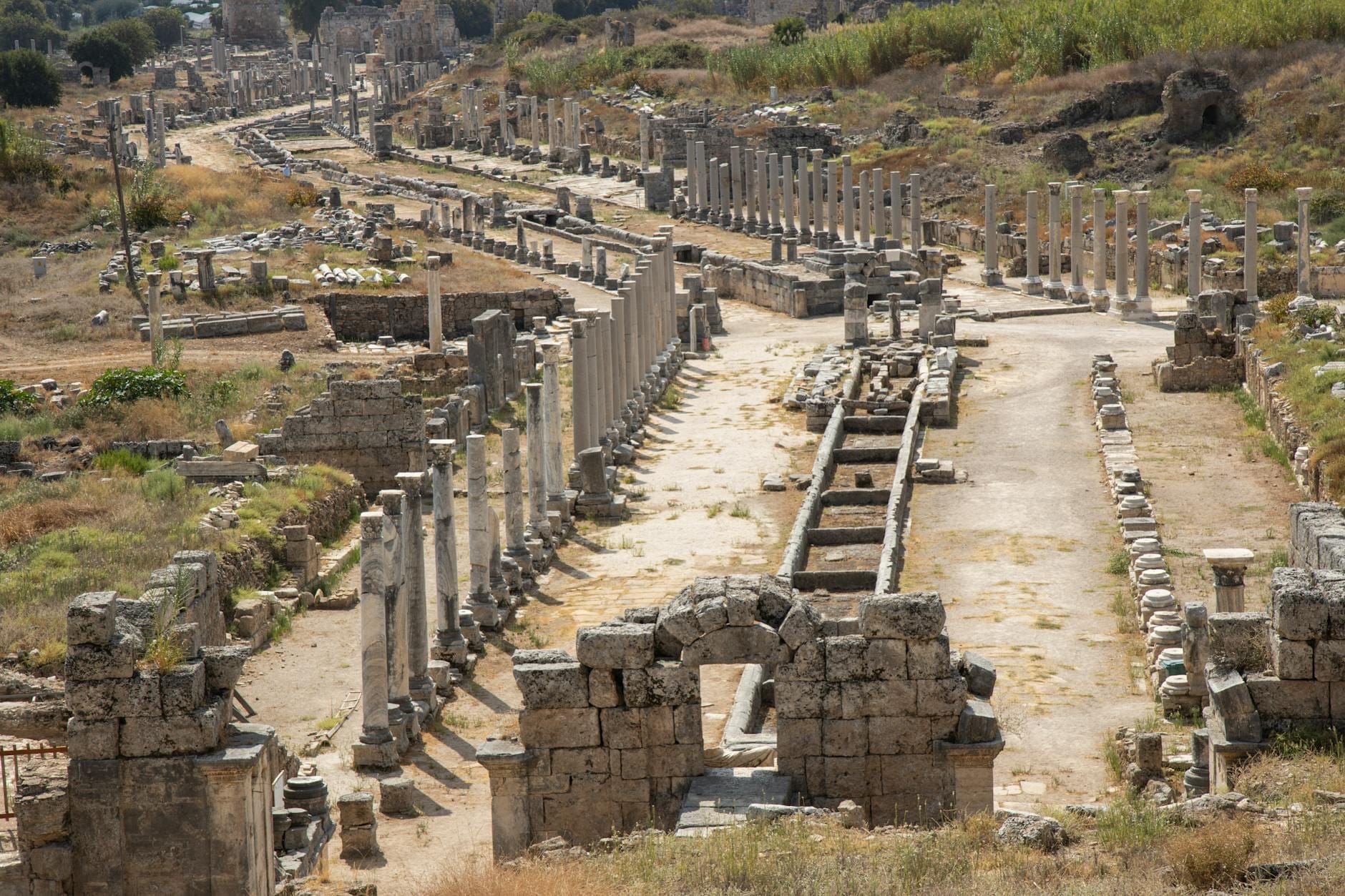
Perge Ancient City (Perge Antik Kenti in Turkish, also known as the Archaeological Site of Perge) is a large open-air ruin complex in the Aksu district, roughly 17 to 18 km east of Antalya. It is not a single monument but an entire city laid out across flat, sun-bleached terrain, where you can walk the original Roman colonnaded street, stand inside a theatre that once held around 15,000 spectators, and trace the outline of a stadium. The scale is genuinely surprising, especially if your only reference point for ancient ruins is a single arch or a reconstructed temple facade.
The site has been under systematic excavation by Istanbul University since 1946, and it has been protected under Turkish cultural heritage law since 1981. What makes Perge distinctive is not just the scale but the continuity of human use: the area shows evidence of settlement from the Late Chalcolithic Age, with permanent occupation established during the Early Bronze Age. The city that visitors walk through today, however, largely reflects the Roman imperial period, particularly the 2nd century CE, when Perge was one of the most prosperous cities in the region of Pamphylia.
💡 Local tip
Arrive before 10 AM in summer. The site is almost entirely exposed, with very little shade. By midday, the stone surfaces radiate heat intensely, and most of the midday visitors are already retreating to their cars. Early morning light also makes the marble columns photograph far better than flat midday sun.
The History Beneath the Stone
Perge's origins go back to roughly the 12th century BCE, when Greek colonists are believed to have established a presence here. The city occupies the UNESCO Tentative World Heritage List, and the case for that designation rests on the exceptional preservation of its urban plan: streets, drainage channels, water distribution, public baths, religious structures, and commercial spaces all remain legible in the landscape.
The city reached its peak during the Roman imperial period, particularly in the 2nd century CE, when wealthy local patrons funded major construction projects. The most famous of these benefactors was Plancia Magna, a woman of remarkable civic standing who financed the ornate triple-arched gateway still visible at the site. This kind of civic euergetism, where private wealth funded public monuments, shaped much of what survives at Perge today. It is worth noting that the best sculptures and decorative reliefs from the site are not here at all: they are housed in the Antalya Museum, which holds one of the richest collections of Greek and Roman sculpture in Turkey.
If you plan to visit both Perge and the museum on the same trip, consider doing the museum first. Seeing the carved figures and inscriptions up close in the Antalya Museum before walking the site gives you a much sharper sense of what the city looked like when it was inhabited. The stones make more sense once you have seen the faces they once framed.
Tickets & tours
Hand-picked options from our booking partner. Prices are indicative; availability and final rates are confirmed when you complete your booking.
Selge Ancient City, Mini Cappadocia, Safari, and Rafting in Turkey
From 65 €Instant confirmationFree cancellationHalf-Day Perge and Antalya Museum with Private Guide
From 342 €Instant confirmationFree cancellationPerge, Aspendos and Kursunlu Waterfall tour with lunch
From 49 €Instant confirmationFree cancellationTazı Kanyon, Safari, Rafting, Buggy Safari, and Zipline in Turkey
From 65 €Instant confirmationFree cancellation
Walking the Site: What You Will Actually See
Entering through the main ticket area, the approach takes you past the stadium first, a long narrow structure whose tiered seating banks are still largely intact on both sides. with an estimated length of 234 meters, it is one of the best-preserved stadiums in the ancient world. Walk along its exterior and peer through the arched passageways at ground level to appreciate the engineering: the seating tiers were supported on a series of vaulted chambers, some of which were used as shops during antiquity.
Beyond the stadium, the theatre rises on a natural slope. With a capacity of around 15,000, it follows the standard Roman plan: a semicircular cavea (seating area) cut into the hillside, a stage building (scaenae frons) that once had multiple stories of decorative columns and niches, and a central performance space (orchestra). Much of the stage building has collapsed, but the seating tiers survive in remarkably good condition. Climbing to the upper rows gives you a strong sense of the city's overall layout: the colonnaded street stretches away to the north, the baths and gates are visible beyond, and the flat Pamphylian plain extends to the sea in the distance.
The colonnaded main street is one of Perge's most photographed features. Two parallel rows of columns, some still upright with their capitals, line a wide avenue that once had a water channel running down its center. You can still see the channel carved into the stone pavement. The effect, even now, is of a proper urban boulevard, and it makes it easier to imagine merchants, philosophers, and officials moving through this space. Side streets branch off at intervals, some still paved, with thresholds and column bases intact.
At the northern end of the colonnaded street stands the Hellenistic gate complex and, beyond it, the Roman gate with the arched entrance financed by Plancia Magna in the 2nd century CE. The nymphaeum, a monumental fountain dedicated to the water gods, stands nearby and would have marked a focal point of public life. The baths complex, though partially ruinous, still conveys the ambition of Roman urban infrastructure: rooms of different temperatures, underfloor heating systems, and elaborate plasterwork.
ℹ️ Good to know
Wear sturdy, closed-toe shoes. The paving stones are uneven, the rubble between structures is rough, and some of the stadium passages involve low clearances and loose ground. Sandals will make the walk uncomfortable and increase the risk of a twisted ankle.
How the Site Changes by Time of Day
Perge is an outdoor site with almost no artificial shade. In summer months (June through August), the difference between an 8 AM visit and a noon visit is stark. Early morning, the air is still relatively cool, the light catches the columns at a low angle that emphasizes texture and depth, and the site feels genuinely quiet. By 11 AM, tour groups from Antalya's resort hotels begin arriving in organized buses, and the main colonnaded street in particular becomes crowded. By 1 PM in July, the heat is severe enough to make extended walking uncomfortable even for well-prepared visitors.
In spring (April to May) and autumn (October to early November), the calculus changes. The temperatures are moderate, the light is softer throughout the day, and the site is far less crowded. These are genuinely the best months to visit: you can take your time at each structure, linger in the stadium without overheating, and photograph the site without managing crowds in the frame. Winter visits are possible and very quiet, but occasional rain and shorter daylight hours limit what you can cover.
Perge pairs naturally with a broader exploration of the region's ancient sites. The nearby theatre at Aspendos is significantly better preserved and more dramatic in scale, while the hilltop ruins at Termessos offer a harder hike but even more extraordinary atmosphere. A well-planned day trip can combine two of these sites without feeling rushed. See the guide to ancient ruins near Antalya for route options and timing advice.
Getting There and Practical Planning
Perge is located in the Aksu district, about 15 km east of Antalya city center. The site is roughly 15 km northeast of Antalya Airport, making it a realistic first or last stop on a trip if you have a few hours before a late flight. The most practical way to get there is by taxi, rental car, or organized tour. There is no direct public transit route that drops visitors at the site entrance, though local dolmuş (shared minibus) services run toward Aksu town and can reduce the distance for travelers comfortable navigating connections.
Parking is available near the entrance. Taxis from Antalya city center typically take 30 to 40 minutes depending on traffic, and from the airport around 20 minutes. If you are basing yourself in Antalya for several days, renting a car for the day makes it easy to combine Perge with Aspendos (about 30 km further east) or to continue on toward Side, which is roughly 60 km from Perge.
For those relying on organized tours, many operators in Kaleiçi and the main resort areas run day trips that combine Perge with Aspendos and sometimes the Lower Düden Waterfalls. These tours can save logistics but typically allow only 45 to 60 minutes at each site, which is tight for Perge. If the ruins are your primary interest, a self-guided visit gives you much more flexibility.
⚠️ What to skip
Admission fees and opening hours at Turkish archaeological sites change periodically and are not always reliably listed on third-party platforms. Check the official Turkish e-ticketing system (muze.gov.tr) or confirm at the site before visiting, especially if traveling outside peak season.
Photography, Accessibility, and Honest Limitations
Perge is a strong photography destination, particularly for architectural and landscape composition. The colonnaded street offers long lines and repeating column rhythms that work well in both wide-angle and telephoto shots. The stadium's exterior arches are best in the golden hour after sunrise. The theatre gives elevated views of the plain and surrounding structures. Bring a wide-angle lens if you want to capture full sections of the colonnaded street, and a telephoto if you want details of column capitals or carved blocks.
On accessibility: the site is not well suited for visitors with mobility limitations. The ground is largely uneven stone paving and rubble, and there are no paved accessible paths through the main features. The entrance area and first stretch of the main street are the most navigable, but reaching the theatre, stadium interior, or northern gates involves considerable walking over rough terrain. This is a structural limitation of the site, not a staffing issue, and it should factor into planning for travelers with mobility considerations.
It is also worth being direct about one common disappointment: Perge lacks the dramatic vertical presence of Aspendos or the romantic decay of Termessos. The ruins are mostly low and wide, spread across flat ground. Visitors who expect a cinematic ancient-city experience may find the visual impact more muted than photographs suggest. What Perge delivers instead is spatial completeness: the legible plan of an entire Roman city, where you can trace the relationship between theatre, baths, market, and street in a way few sites allow.
That completeness is why Perge appears on the UNESCO Tentative World Heritage List and why Istanbul University has maintained continuous excavations here since 1946. For anyone following a day trip itinerary from Antalya, it deserves its place as one of the region's most significant archaeological sites.
Insider Tips
- Visit the Antalya Museum before coming to Perge. Many of the site's best sculptures, including pieces from the theatre's stage building and the nymphaeum, are displayed there. Knowing what you are looking for at the site makes the empty niches and carved bases far more meaningful.
- The stadium at Perge is one of the best-preserved in the ancient Mediterranean world, but most visitors walk straight past it toward the theatre and colonnaded street. Spend at least 20 minutes here: walk the full length of the exterior and enter through one of the ground-level arched passages to see the vaulted chambers beneath the seating.
- If you are visiting in summer and want to combine Perge with Aspendos in one day, do Perge first and leave for Aspendos by 10 AM. The Aspendos theatre has partial shade from its tall stage wall, making it more tolerable in midday heat than Perge's fully exposed open ground.
- There is usually a small café and basic facilities near the entrance, but food options are limited. Bring water in larger quantities than you think you need, particularly from June to September. Two liters per person is not excessive for a full site walk in summer.
- If you are traveling with children, the stadium is the most engaging structure at the site: the scale is easy to grasp and the vaulted passages are genuinely interesting to explore. The theatre's upper tiers also offer sweeping views that hold most kids' attention better than detailed architectural inspection.
Who Is Perge Ancient City For?
- History and archaeology enthusiasts who want to understand Roman urban planning at scale
- Photographers looking for ancient architecture with strong geometric lines and minimal crowds in the early morning
- Travelers combining multiple ancient sites in a single day trip from Antalya
- Adults who prefer self-guided exploration over guided group tours
- Anyone who has visited the Antalya Museum and wants to see the landscape that produced its sculpture collection
Nearby Attractions
Combine your visit with:
- Altınbeşik Cave
Altınbeşik Cave (Altınbeşik Mağarası) in the mountains above Manavgat is one of Turkey's most extraordinary natural sites. A horizontal cave system with three levels contains an underground river, Europe's third-largest underground lake, and a boat tour that floats visitors through cathedral-scale chambers of stalactites. It takes planning to reach, but nothing else in the Antalya region comes close to this experience.
- Aspendos Opera and Ballet Festival
Annually, typically in late summer, the 2,000-year-old Aspendos Ancient Theatre becomes the stage for one of Turkey's most distinctive performing arts events. The International Aspendos Opera and Ballet Festival draws productions from Turkish and international companies to a venue where the acoustics are so precise, no amplification is needed. Around 70 percent of the audience travels from abroad to attend.
- Aspendos Theater
Built between 161 and 169 CE, the Roman Theatre of Aspendos stands 40 km east of Antalya as one of the most complete ancient theaters on earth. Its 41 tiers, towering two-story stage wall, and exceptional acoustics draw both history enthusiasts and opera-goers every summer.
- Köprülü Canyon
Köprülü Canyon National Park stretches 14 kilometres through the Taurus Mountains northeast of Antalya, combining serious natural scenery with a genuine Roman road, two ancient bridges, and the Köprülü River. Most visitors come for the rafting; the history and hiking are just as rewarding for those who stay longer.