Aspendos Opera and Ballet Festival: Classical Performance Inside a Roman Theater
Annually, typically in late summer, the 2,000-year-old Aspendos Ancient Theatre becomes the stage for one of Turkey's most distinctive performing arts events. The International Aspendos Opera and Ballet Festival draws productions from Turkish and international companies to a venue where the acoustics are so precise, no amplification is needed. Around 70 percent of the audience travels from abroad to attend.
Quick Facts
- Location
- Aspendos Ancient Theatre, Serik, Antalya Province (47 km east of Antalya city center)
- Getting There
- Drive via D400 highway (45-60 min); or bus from Antalya Otogar to Serik then taxi; festival shuttles often organized separately
- Time Needed
- 2.5 to 3.5 hours per performance; allow extra time for travel and arrival
- Cost
- Ticket prices vary by performance and seat tier; check Turkish State Opera and Ballet (devletoparabale.gov.tr) for current pricing
- Best for
- Classical music lovers, architecture enthusiasts, travelers looking for a culturally significant evening event
- Official website
- www.devletoparabale.gov.tr
What the Aspendos Festival Actually Is
The International Aspendos Opera and Ballet Festival, known in Turkish as the Uluslararası Aspendos Opera ve Bale Festivali, is an annual performing arts festival held annually in late summer inside the Aspendos Ancient Theatre near Antalya. The festival is organized by the Turkish State Opera and Ballet and has been running since 1994, gaining international status in 1998. It became a member of the European Festivals Association in 2003, which places it alongside major European cultural institutions.
Performances typically include full-scale opera productions such as Verdi's Aida alongside classical and contemporary ballet. Productions are staged by Turkish State Opera and Ballet companies alongside invited international ensembles. The festival generally runs across several evenings throughout September, with a different production each night. No single performance repeats on consecutive nights, so your experience depends entirely on which date you attend.
💡 Local tip
Check the schedule well before September. Specific dates, productions, and ticket availability are announced via the Turkish State Opera and Ballet website (devletoparabale.gov.tr) and Operabase. Popular dates sell out weeks in advance, especially for Aida, which is the festival's signature production.
The Theater Itself: Why the Venue Matters
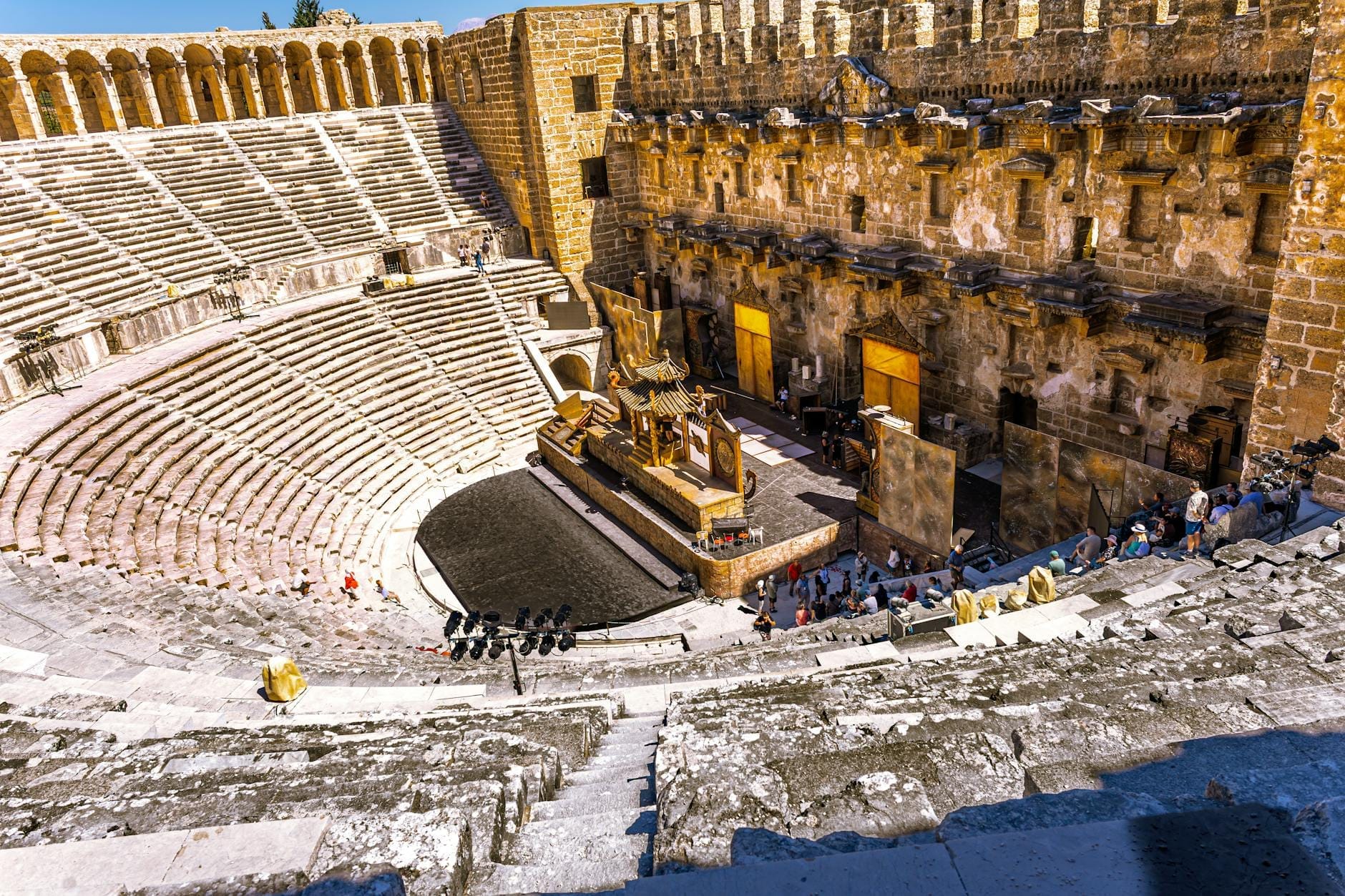
The Aspendos Ancient Theatre was built around 155 AD during the reign of Marcus Aurelius, designed by the architect Zeno. It is consistently cited as one of the best-preserved Roman theaters in existence. Its two-story stage building, the scaenae frons, still stands to its original height. The seating bowl, or cavea, holds approximately 2,400 spectators and retains its original stone tiers in near-complete form. Seeing it in daylight as a ruin is impressive. Sitting inside it at dusk as an orchestra tunes up is something else entirely.
The theater's acoustic design is the reason no microphones or amplification are used during festival performances. Sound travels from the stage to the upper rows with a clarity that surprises first-time attendees. This is not a modern retrofit — it is the original Roman engineering doing exactly what it was designed to do, nearly 1,900 years later. For more context on the theater's history and how to visit it independently outside the festival, see the full guide to Aspendos Theatre.
The theater sits within the broader ancient city of Aspendos, roughly 45 kilometers east of Antalya. On a clear September night, the sky above the open cavea is fully visible. The upper tiers catch the last light well into the performance as the sun sets behind the surrounding hills. By the second act, the theater is lit entirely by the stage and the stars overhead. It is a genuinely distinctive combination of setting and performance that very few venues in the world can replicate.
Tickets & tours
Hand-picked options from our booking partner. Prices are indicative; availability and final rates are confirmed when you complete your booking.
Perge, Aspendos and Kursunlu Waterfall tour with lunch
From 49 €Instant confirmationFree cancellationTazı Kanyon, Safari, Rafting, Buggy Safari, and Zipline in Turkey
From 65 €Instant confirmationFree cancellationAntalya guided city tour with lunch
From 45 €Instant confirmationFree cancellationTraditional Turkish bath experience in Antalya
From 45 €Instant confirmationFree cancellation
Arriving at the Festival: What to Expect
Performances begin in the evening, typically after sunset or shortly before. Audiences begin arriving well in advance, and the approach road to the theater fills with cars, tour buses, and organized transport from around 6 PM onward. The parking area and ticketing zone can get crowded, so arriving 45 to 60 minutes early is advisable if you want to find your seat, buy a program, and take in the theater before the lights change.
The seating is original Roman stone, unpadded and steep. Many attendees bring a thin cushion or folded jacket for the duration of a two to three hour performance. Some vendors sell simple seat cushions near the entrance. The steps between tiers are irregular in height and worn smooth in places, so footwear with grip matters more than style. Heels are a poor choice for this venue.
⚠️ What to skip
September nights in the Antalya region can still be warm early in the evening but cool noticeably after 9 PM once the sun is down. A light layer is worth packing even if the afternoon felt like summer. The theater offers no shelter from wind or unexpected weather.
The audience demographic at Aspendos is notably international. A large portion of attendees come from outside Turkey, drawn by the unique venue and the prestige of seeing full productions staged in a Roman theater. This creates an atmosphere closer to a major European opera house opening than a regional cultural event. Dress is typically smart casual, though no strict code is enforced. You will see everything from linen trousers to evening wear.
Getting There from Antalya
Driving is the most convenient option. The D400 highway runs east from Antalya city center toward Serik, and Aspendos is clearly signposted from the main road. The journey takes 45 to 60 minutes depending on traffic, which can be slow on festival evenings when tour buses and private cars converge on the same road. Parking is available near the site but fills quickly. If you are staying in Kaleiçi or the city center, hiring a taxi for the evening is straightforward and removes any parking complications.
Public buses from Antalya's main bus terminal (Otogar) run to Serik, from where you can take a taxi to the theater. This works but requires coordination around performance times. On major festival nights, organized coach transfers are sometimes available through hotels and local tour operators — worth asking about when booking accommodation. The return journey after a late performance can be complicated on public transport, so confirm your plan before attending without a car.
If the festival fits into a broader itinerary around the region, the ancient city of Perge is located on the same road between Antalya and Aspendos and makes an excellent daytime visit before an evening performance. Many travelers combine the two sites into a single day, arriving at Perge mid-morning and reaching Aspendos in the afternoon to see the theater before the crowds and the evening light arrives.
Tickets and Booking
Tickets are sold through the Turkish State Opera and Ballet's official channels. Prices vary by performance and seating section, with the best-positioned central seats in the lower cavea commanding higher prices. Historically, ticket prices have been accessible relative to comparable European festival events, though this should be verified against current exchange rates and annual pricing before booking.
There is no single dedicated festival website. The most reliable sources for current programming are the Turkish State Opera and Ballet at devletoparabale.gov.tr and the Operabase listing for the festival. Hotel concierges in Antalya are often well-connected to ticket availability and can sometimes assist with purchases. Booking at least two to three weeks ahead is strongly recommended for the most sought-after productions.
ℹ️ Good to know
The festival has no fixed daily opening hours — it is an event series, not a permanent attraction. If you are planning a trip specifically around attending, confirm that year's schedule before finalizing travel dates. Some editions span two weeks, others are more condensed.
Photography, Accessibility, and Practical Notes
Photography of the theater before the performance is generally permitted and encouraged. The late afternoon light on the scaenae frons produces excellent photographs from the upper cavea. Once the performance begins, flash photography is not appropriate and may not be allowed depending on the production's terms. Check on arrival. A wide-angle lens captures the scale of the venue; a zoom lens handles the stage detail from upper rows.
The theater presents real accessibility challenges. The seating tiers are steep stone steps with no lifts or ramps. Wheelchair users and travelers with limited mobility will find the venue very difficult to navigate. There is no modern accessible infrastructure built into the ancient structure. This is worth knowing clearly before purchasing tickets if mobility is a consideration for you or your group.
The Aspendos Festival is the headline cultural event in a region with a strong concentration of ancient sites and outdoor attractions. If you are building a broader itinerary, the guide to ancient ruins near Antalya covers Aspendos, Perge, and several other sites that fit naturally around a festival visit. For travelers planning the wider trip, the Antalya Aspendos Festival guide provides detailed logistics and context.
Who Should Skip This
The festival is not a casual evening out. Performances are full-length classical opera and ballet productions, typically running two to three hours with an intermission. Travelers without interest in classical performing arts will not find the event rewarding simply because of the venue. If you want to see Aspendos Theatre as a historical site, you can visit during the day year-round without attending the festival — and daytime visits to the ruins are arguably better for taking in the architecture.
Families with young children should think carefully. Long evening performances on hard stone seats in an outdoor setting make for a difficult experience for restless children, and the late end time is a real consideration. The festival is best experienced by adults who genuinely want to see the productions performed.
Insider Tips
- Sit in the central section of the lower cavea for the best acoustic experience — even without amplification, sound reaches upper rows well, but the central stalls give you the full effect of the Roman design.
- Arrive before sunset even if the performance starts later. The shift from golden hour to blue dusk inside the theater, with the stage building lit progressively, is worth the extra time.
- Bring a small backpack with a water bottle, a light layer for after 9 PM, and a thin cushion or folded scarf for the stone seating. The intermission is a good time to refill water from the vendors inside.
- If you are combining this with a daytime visit to the ruins, note that the festival entrance and the daytime archaeological site have separate ticketing. A festival ticket does not cover a separate daytime archaeological visit.
- For Aida performances specifically, arrive very early — this production consistently draws the largest crowds and the atmosphere during the processional scenes inside a Roman theater is the closest thing the festival has to a signature moment.
Who Is Aspendos Opera and Ballet Festival For?
- Opera and classical music lovers seeking an extraordinary performance setting
- Architecture and history enthusiasts who want to experience ancient spaces as living venues
- Couples looking for a high-impact cultural evening during a wider Antalya trip
- Travelers who have already seen Aspendos in daylight and want a completely different perspective
- Cultural tourists building an itinerary around Turkey's ancient sites and performing arts
Nearby Attractions
Combine your visit with:
- Altınbeşik Cave
Altınbeşik Cave (Altınbeşik Mağarası) in the mountains above Manavgat is one of Turkey's most extraordinary natural sites. A horizontal cave system with three levels contains an underground river, Europe's third-largest underground lake, and a boat tour that floats visitors through cathedral-scale chambers of stalactites. It takes planning to reach, but nothing else in the Antalya region comes close to this experience.
- Aspendos Theater
Built between 161 and 169 CE, the Roman Theatre of Aspendos stands 40 km east of Antalya as one of the most complete ancient theaters on earth. Its 41 tiers, towering two-story stage wall, and exceptional acoustics draw both history enthusiasts and opera-goers every summer.
- Köprülü Canyon
Köprülü Canyon National Park stretches 14 kilometres through the Taurus Mountains northeast of Antalya, combining serious natural scenery with a genuine Roman road, two ancient bridges, and the Köprülü River. Most visitors come for the rafting; the history and hiking are just as rewarding for those who stay longer.
- Kurşunlu Waterfall
Kurşunlu Waterfall drops 18 meters into a series of seven turquoise ponds inside a 586.5-hectare nature park in the Aksu district. Ancient water mills, dense pine cover, and resident wildlife make this one of the more rewarding half-day escapes from Antalya's coast.