Kurşunlu Waterfall: The Forest Cascade Worth the Drive from Antalya
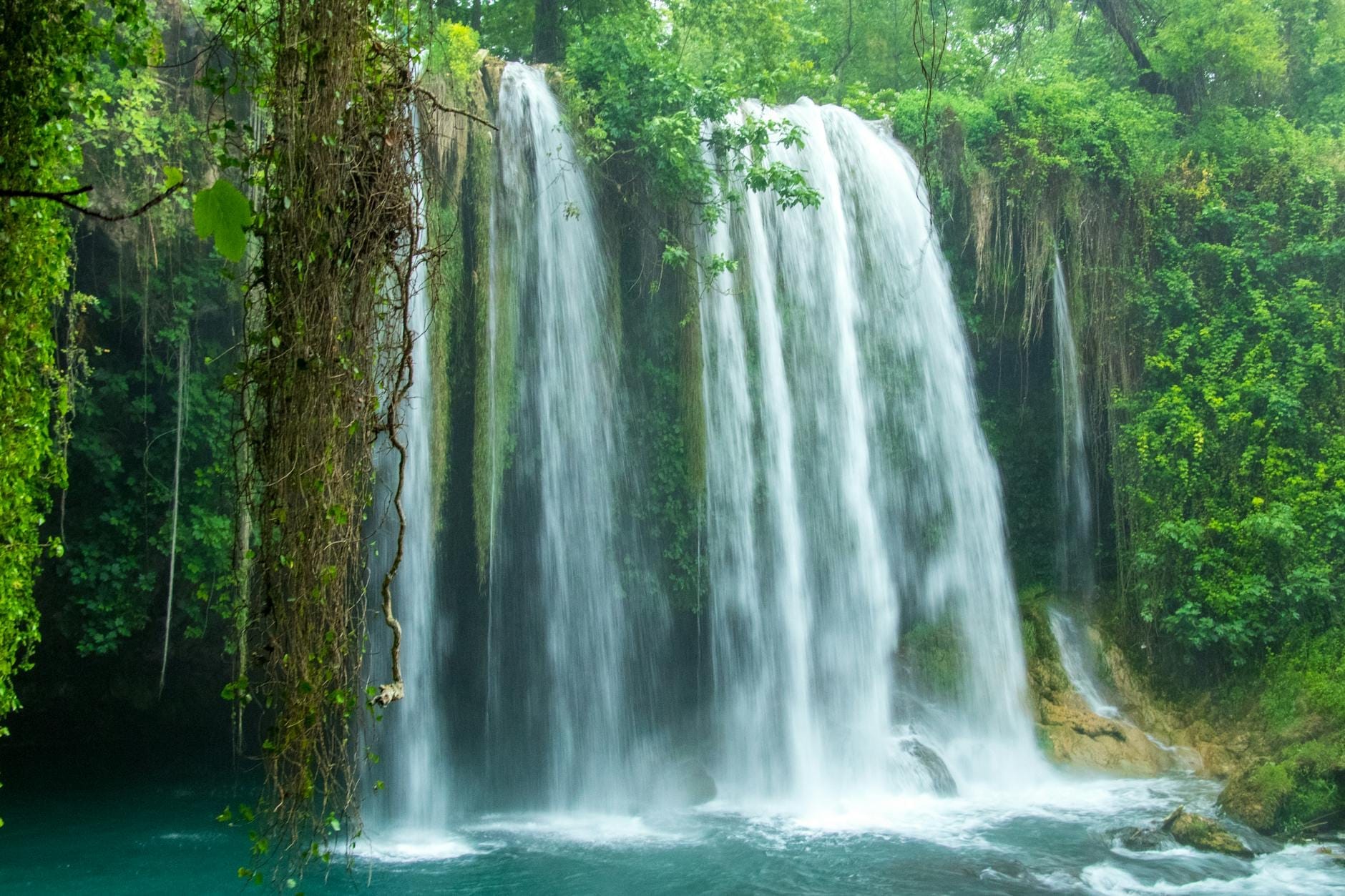
Kurşunlu Waterfall drops 18 meters into a series of seven turquoise ponds inside a 586.5-hectare nature park in the Aksu district. Ancient water mills, dense pine cover, and resident wildlife make this one of the more rewarding half-day escapes from Antalya's coast.
Quick Facts
- Location
- Aksu District, ~20 km northeast of Antalya city center
- Getting There
- Aksu minibuses (MK81) from Antalya Bus Terminal or tram to Aksu station; by car via D400 or Antalya-Mersin highway toward Aksu
- Time Needed
- 2 to 3 hours
- Cost
- Adults 28₺ / Students 16₺ (verify current pricing before visiting)
- Best for
- Nature walks, family picnics, photography, escaping city heat
- Official website
- www.ktb.gov.tr/EN-99778/antalya---kursunlu-waterfall.html
What Kurşunlu Waterfall Actually Is
Kurşunlu Waterfall (Turkish: Kurşunlu Şelale) sits roughly 20 kilometers northeast of Antalya city center, tucked inside a narrow canyon at the edge of the Taurus Mountains. The main cascade drops 18 meters into a pool of startlingly clear water, which then feeds a chain of seven small ponds connected by shorter falls and wooden footbridges. The surrounding nature park covers 586.5 hectares, opened to visitors in 1986, and was officially designated a Natural Park in 1991.
The park draws thousands of visitors annually, a number that sounds large until you realize most arrive in concentrated summer bursts on weekends. On a Tuesday morning in spring, the trails can feel genuinely quiet. The combination of moving water, dense canopy, and relatively cool air makes Kurşunlu feel like a different climate zone compared to the sun-baked coast just a short drive away.
💡 Local tip
Admission fees listed here are subject to change. Always verify current pricing at the park entrance or through the official Turkish Ministry source before visiting.
The Walk: What You'll See on the Ground
The main walking loop is short and manageable for most fitness levels. From the entrance, a shaded path descends gradually toward the sound of rushing water, passing through a canopy of cluster pine, laurel, wild olive, carob, and myrtle. The scent shifts as you move deeper into the trees: pine resin gives way to damp earth and moss near the water's edge. The air drops noticeably in temperature within the first few minutes of walking.
The 4-century-old water mills along the route are worth pausing at. The stonework is mostly intact, and the mills give a concrete sense of how this water system was used by local communities long before it became a park attraction. They are easy to walk past without noticing, so slow down at the signs pointing toward them.
The main waterfall itself is the visual centerpiece. The drop is clean and forceful, especially from late winter through spring when snowmelt from the Taurus peaks pushes the flow to its maximum. In summer, the volume reduces but the setting remains photogenic. Seven to eight ponds at varying elevations create a layered composition, with small wooden bridges allowing you to cross between viewpoints. The water is cold, clear, and green-tinted from the surrounding vegetation.
ℹ️ Good to know
The trails are paved or compacted gravel in most sections and manageable with a stroller, though some slopes near the lower ponds require care. Visitors with significant mobility limitations may find the descent toward the main falls challenging.
Tickets & tours
Hand-picked options from our booking partner. Prices are indicative; availability and final rates are confirmed when you complete your booking.
Perge, Aspendos and Kursunlu Waterfall tour with lunch
From 49 €Instant confirmationFree cancellationTazı Kanyon, Safari, Rafting, Buggy Safari, and Zipline in Turkey
From 65 €Instant confirmationFree cancellationAntalya guided city tour with lunch
From 45 €Instant confirmationFree cancellationTraditional Turkish bath experience in Antalya
From 45 €Instant confirmationFree cancellation
Time of Day and Seasonal Differences
The park opens at 8:00 AM daily. Arriving within the first hour gets you the best light and the fewest people. By 10:30 AM on weekends from June onward, tour groups and family outings begin filling the picnic areas, and the paths near the main waterfall become noticeably congested. Midday on a summer weekend is the worst time to visit: the picnic zones are at capacity, the path to the falls is slow, and the novelty wears off fast.
April through June is the strongest window for the waterfall itself: peak water flow, moderate temperatures, and the park's flora at its greenest. October and November also deliver excellent conditions, with autumn color in the canopy and far thinner crowds. Winter visits are quiet but water flow is high, and the park's towering pines hold their color year-round, making a December or January morning walk surprisingly pleasant.
Summer afternoons, particularly July and August, are the one period where the experience can disappoint. The heat outside the park is intense, and while the canopy helps, the number of visitors clustered around the main viewpoints competes with any sense of natural calm. If summer is your only option, arrive at opening time and plan to leave by 10 AM.
Wildlife and Ecology
The forest is home to squirrels, foxes, wild boars, rabbits, turtles, and bats, though most casual visitors will only spot squirrels with any regularity. Turtles are sometimes visible in the calmer ponds; move quietly near the water's edge and look carefully before assuming the rocks are inanimate. Bats emerge around dusk, which falls close to the park's closing time.
The botanical mix is more interesting than it first appears. Cluster pine dominates the canopy, but the understorey has beech, myrtle, carob, and wild olive growing in unusual proximity. This reflects the transition zone between the Mediterranean coastal strip and the cooler mountain interior, which makes Kurşunlu ecologically richer than a typical resort-area park.
Getting There and Practical Logistics
By car, take the Antalya-Mersin highway (D400) toward Aksu, then follow local signage. Look for signage indicating the nature park and turn left. From that turn, the drive to the park entrance takes 10 to 15 minutes. Parking is available near the waterfall. An alternative route runs via the Antalya-Aksu Highway, turning north and following a 7-kilometer road to the entrance. For day-trip planning in the region, day trips from Antalya is worth consulting.
By public transport, Aksu minibuses run from Antalya Bus Terminal. The service covers the general Aksu direction, though you should confirm the current stop closest to the park before departure, as services and timetables shift seasonally.
Kurşunlu is often paired with the Upper Düden Waterfalls in a single day, since both are northeast of the city center and accessible via the same general corridor. The two sites are distinct enough in character that combining them is worthwhile rather than repetitive. Düden is more dramatic in scale; Kurşunlu is more immersive as a forest walk.
⚠️ What to skip
There is no reliable taxi rank at Kurşunlu. If arriving by minibus, confirm return services before you go in. Rideshare coverage in this area is inconsistent. Without a car, being stranded at closing time is a genuine risk.
Facilities and What to Bring
The park has picnic areas with shade, playgrounds for children, and basic facilities. Food vendors and small cafes operate near the entrance, particularly on weekends. The level of service from these vendors varies by season, so bringing water and snacks is the safer approach, especially for early morning or late afternoon visits.
Wear shoes with grip. The paths near the waterfall and the lower ponds are stone and can be wet and slippery even on dry days. Sandals are manageable on the upper sections but become a liability near the falls themselves. A light layer is useful even in summer given the temperature differential in the canyon.
If this is part of a broader Antalya trip, the Antalya waterfalls guide covers all major cascade sites in the region with comparative detail, which helps prioritize if time is short.
Photography Notes
The main waterfall photographs best in the morning, when soft light filters through the pine canopy from the east and lands directly on the falls. By midday, the canyon is partially shaded and contrast becomes difficult to manage. Wide-angle lenses work well for the multi-pond sequences; a polarizing filter helps cut the glare on the pond surfaces and reveals the green-blue color of the water more accurately.
The old water mills are underrated subjects: the weathered stone, the overhanging branches, and the sound of water running through the millrace create a more layered image than the main falls, which can feel busy with visitors in the frame. Early arrivals get clean compositions before the crowds fill the viewpoints.
Honest Assessment: Who Should Think Twice
Kurşunlu is a pleasant, well-maintained nature park. It is not a wilderness experience. The paths are groomed, the facilities are conventional, and on peak summer weekends it functions more as a family recreation area than a natural attraction. Travelers looking for dramatic scenery on the scale of, say, the Lower Düden Waterfalls will find Kurşunlu smaller and quieter, which is either a feature or a disappointment depending on expectations.
Anyone who has difficulty on sloped, occasionally wet terrain should approach with caution. The main viewpoints are accessible, but the full loop includes sections that require sure footing. Visitors with very limited mobility may not be able to reach the lower ponds comfortably.
For travelers focused purely on ancient history or urban culture, Kurşunlu adds little to an itinerary. Those interests are better served by sites like Perge Ancient City, which is also northeast of Antalya and could be combined with Kurşunlu in a single day if you start early.
Insider Tips
- Arrive at or before 8:00 AM on weekends in summer. By 10:30 AM the picnic areas are full and the main viewpoints have queues.
- The four-century-old water mills are marked by signs but easy to walk past. Slow down on the lower section of the trail and read the panels; the mills are in better condition than most visitors expect.
- Turtles are more common than signs suggest. Walk quietly near the calmer ponds on the lower loop and check the edges before assuming they are empty.
- The canyon air is significantly cooler than the surrounding landscape. In late April or October, a light jacket is useful even if the drive over felt warm.
- Combine with Perge Ancient City for a full day northeast of Antalya: Perge in the morning, Kurşunlu in the afternoon. Both are in the Aksu direction and work well together without backtracking.
Who Is Kurşunlu Waterfall For?
- Families with children who want outdoor space beyond the beach
- Photographers looking for forest waterfall compositions away from crowds
- Travelers needing a cool, shaded break from Antalya's summer heat
- Nature walkers who prefer well-maintained trails over rough terrain
- Day-trippers combining natural and historical sites in the Aksu corridor
Nearby Attractions
Combine your visit with:
- Altınbeşik Cave
Altınbeşik Cave (Altınbeşik Mağarası) in the mountains above Manavgat is one of Turkey's most extraordinary natural sites. A horizontal cave system with three levels contains an underground river, Europe's third-largest underground lake, and a boat tour that floats visitors through cathedral-scale chambers of stalactites. It takes planning to reach, but nothing else in the Antalya region comes close to this experience.
- Aspendos Opera and Ballet Festival
Annually, typically in late summer, the 2,000-year-old Aspendos Ancient Theatre becomes the stage for one of Turkey's most distinctive performing arts events. The International Aspendos Opera and Ballet Festival draws productions from Turkish and international companies to a venue where the acoustics are so precise, no amplification is needed. Around 70 percent of the audience travels from abroad to attend.
- Aspendos Theater
Built between 161 and 169 CE, the Roman Theatre of Aspendos stands 40 km east of Antalya as one of the most complete ancient theaters on earth. Its 41 tiers, towering two-story stage wall, and exceptional acoustics draw both history enthusiasts and opera-goers every summer.
- Köprülü Canyon
Köprülü Canyon National Park stretches 14 kilometres through the Taurus Mountains northeast of Antalya, combining serious natural scenery with a genuine Roman road, two ancient bridges, and the Köprülü River. Most visitors come for the rafting; the history and hiking are just as rewarding for those who stay longer.