Upper Düden Waterfalls: Antalya's Cave-Behind Cascade Worth the Drive
The Upper Düden Waterfalls sit 12 kilometers north of central Antalya in the Kepez district, where the Düden River emerges from a karstic source and plunges 15 to 22 meters into a wooded gorge. What separates this site from a standard waterfall viewpoint is the network of natural caves carved into the rock face, letting visitors step behind the curtain of falling water. Entry costs 70 TL for tourists and the park opens daily year-round.
Quick Facts
- Location
- Şelale Mahallesi, Kepez District, Antalya (approx. 12 km north of city center)
- Getting There
- Taxi from city center (~30 min); taxi stands near the parking lot. Public bus options exist but routes change — confirm locally.
- Time Needed
- 1 to 2 hours for a relaxed visit including the cave path and picnic area
- Cost
- 70 TL for tourists (approx. €1.90); discounted rates for Turkish residents with ID
- Best for
- Nature lovers, families, photographers, travelers wanting a break from coastal crowds
What Upper Düden Waterfalls Actually Is
The Upper Düden Waterfalls, known in Turkish as Yukarı Düden Şelalesi and sometimes called Alexander Falls or Alexander Waterfall, are one of two distinct waterfall sites formed by the Düden River in the Antalya region. While the Lower Düden Waterfalls pour directly into the Mediterranean Sea on the city's eastern cliffs, the upper site is an inland park in the Kepez district, about 12 kilometers north of Kaleiçi.
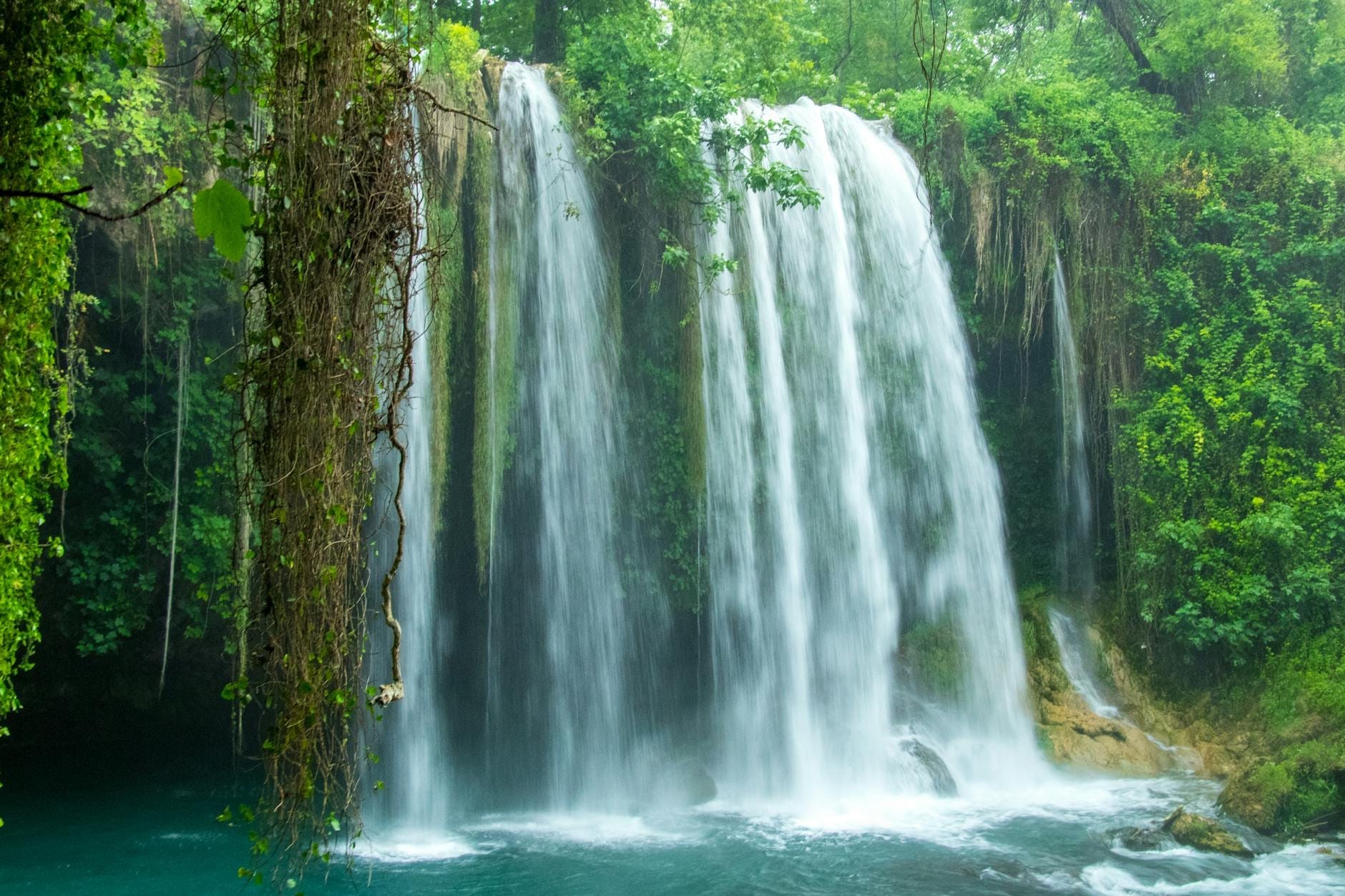
The Düden River has a geologically unusual character. It disappears underground at the Bıyıklı Sinkhole roughly 18 kilometers upstream, travels through limestone karst beneath the Taurus foothills, and reappears at this park as a full-bodied river that almost immediately drops 15 to 22 meters over a curved rock ledge into a deep green pool. The sound hits you before you see it: a low, steady roar that grows louder as the path curves through mature plane trees and oleander toward the falls.
💡 Local tip
The cave passages behind the waterfall involve uneven, slippery rock. Wear closed-toe shoes with grip — sandals and flip-flops are a bad idea here, whatever the season.
The Experience: What You See and Feel
From the park entrance on 21. Cd. road, a paved path leads through a shaded picnic area with wooden benches and tea gardens before opening onto a platform-level view of the cascade. At this angle, the waterfall appears broad and relatively accessible, framed by mossy cliff walls on either side. The pool at the base reflects greens and grays depending on cloud cover, and a persistent mist keeps the surrounding vegetation cool even in July heat.
The more interesting experience is behind the waterfall itself. Natural cave passages, carved by centuries of water erosion into the limestone and basalt rock face, allow visitors to walk to a position directly behind the falling water. From inside the cave, you look outward through a curtain of white water at the lit opening beyond. The sound inside is amplified and physical, felt more than just heard. The air is noticeably cooler, the rock surfaces dark and wet, and the light that filters through the cascade shifts constantly.
Children find the cave section genuinely thrilling rather than simply pleasant, which makes this park more memorable for families than a standard viewpoint. Adults traveling without children often spend time on the benches beside the pool, where the sound level drops enough to hold a conversation.
Tickets & tours
Hand-picked options from our booking partner. Prices are indicative; availability and final rates are confirmed when you complete your booking.
Tazı Kanyon, Safari, Rafting, Buggy Safari, and Zipline in Turkey
From 65 €Instant confirmationFree cancellationAntalya guided city tour with lunch
From 45 €Instant confirmationFree cancellationTraditional Turkish bath experience in Antalya
From 45 €Instant confirmationFree cancellationTurkiye village small group guided tour from Side or Belek
From 39 €Instant confirmationFree cancellation
How the Waterfall Changes by Time of Day
Morning visits, particularly between 08:00 and 10:00, offer the clearest light. Sun angles in from the east, hitting the mist directly and occasionally producing short rainbow arcs in front of the cascade. The park is quiet at this hour, with a few local families and the occasional jogger. Photographers specifically after that light should arrive as close to opening as possible.
Midday brings the highest foot traffic, especially on weekends when Antalya residents use the park for family picnics. The park is managed and clean, but the picnic areas do fill up, and the cave path can involve a short wait to navigate safely past other visitors. If you visit in summer between noon and 15:00, the heat outside the cave is considerable; the cave itself provides genuine relief.
Late afternoon, roughly 16:00 to closing, is often the quietest window of the day. The light softens, crowds thin, and the sound of the waterfall seems more present without competing noise. In spring and early autumn, late afternoon visits are particularly pleasant: the temperature is comfortable, the river volume tends to be higher after seasonal rains, and the surrounding trees catch golden light.
⚠️ What to skip
The cave area gets wet from spray regardless of weather. Camera equipment, bags, and phones should be protected before you enter. A small dry bag or a zip-lock sleeve is worth carrying.
History and the Alexander Connection
Local tradition holds that Alexander the Great watered his horses at this site during his conquest of the region in 334 to 333 BC, which accounts for the waterfall's alternative name: Alexander Falls. This story is plausible in geographic terms, since Alexander's campaign through Pamphylia brought him through the Antalya plain, and the Düden's water source would have been a logical stop. Whether the horses actually drank here is unverifiable, but the name has stuck through centuries of local use.
The geological story underneath the name is equally compelling. The Düden River's disappearance into sinkholes and reappearance at this park is a textbook example of karst hydrology, common throughout the Taurus limestone belt that backs the entire Antalya coastline. The cave system behind the falls is a direct product of this same process: water finding weaknesses in the rock over millennia. Understanding that context makes the cave feel less like a novelty and more like evidence of a very long geological process.
The broader Antalya region is dense with sites shaped by similar geological and historical forces. The ancient city of Perge, for example, sits on the same Pamphylian plain that Alexander crossed. See the Perge Ancient City guide if you want to combine a waterfall visit with a deeper historical detour on the same day.
Practical Walkthrough: Getting There and Around the Park
The Upper Düden Waterfalls park is approximately 20-25 minutes by taxi from Kaleiçi or the city center. Taxi stands are available near the parking lot at the park entrance, so returning by taxi is straightforward without pre-booking. Some visitors arrange a driver to wait, particularly if combining the site with other stops. The address is on 21. Cd. road in Şelale Mahallesi, Kepez District, which is recognizable in most navigation apps.
Public bus options exist from central Antalya but routes and stop locations change seasonally and are best confirmed locally or at the information office before travel. The park phone number is 0 242 229 1984 if you need to check conditions or get directions in advance.
Opening hours follow a seasonal schedule: summer from 09:00 to 19:30 and winter from 09:00 to 18:00. The park is open daily with no weekly closures noted. Admission is 70 TL for tourists (approximately €1.90), with discounted rates for Turkish residents presenting a valid ID card.
The park is self-contained with picnic areas, benches, and a small tea garden. If you are planning a fuller day in the Antalya area that includes water-based attractions, the Kursunlu Waterfall is another natural park worth comparing, with a different character: smaller cascade, more forested trails, and a slightly easier path for very young children.
Who This Park Works For, and Who It Does Not
Upper Düden Waterfalls works well for travelers who want a break from the coast and the cultural circuit of central Antalya without committing to a long day trip. The park rewards about an hour of unhurried exploration, and the cave passage provides a genuinely distinct experience rather than just a view of falling water from a railing.
Travelers with serious mobility limitations should know that while the main platform viewpoint is reachable on paved paths, the cave route involves irregular stone surfaces and low clearance in places. The cave section is not wheelchair accessible. The picnic area and main waterfall platform, however, are usable for most visitors.
Those expecting a dramatic, remote wilderness experience may find the managed park format underwhelming: this is a landscaped urban green space with tea gardens and maintenance staff, not a backcountry hike. It is also worth noting that the waterfall volume drops noticeably in late summer when the river runs lower. A visit in late August will show a narrower cascade than the same visit in April or May after spring rainfall.
Travelers looking for a full day of outdoor activity near Antalya might consider pairing this with a Lower Düden Waterfalls boat tour along the coastal cliffs, or extending further into the mountains with the Köprülü Canyon for rafting and canyon scenery. The two Düden sites together make a logical same-day combination since they represent the river's two most dramatic public moments.
ℹ️ Good to know
The park does not currently have an official website. For real-time conditions or group visit inquiries, call 0 242 229 1984 before arrival.
Photography at Upper Düden
The waterfall photograph most visitors leave with is the front-on view from the main platform, with the full drop framed between canyon walls. To get the rainbow effect in the mist, position yourself on the platform in morning light with the sun behind and slightly to one side. A polarizing filter, if you shoot with interchangeable-lens gear, cuts through the mist and recovers color in the pool below.
Inside the cave, the exposure challenge is real: the cave interior is dark while the waterfall itself is bright, producing a high-contrast scene that tricks automatic modes. Shoot in manual or use exposure compensation to protect the highlight of the falls while accepting some shadow in the cave walls. A wide-angle lens captures the full curtain of water and the rough cave ceiling in a single frame.
For context on how to build an efficient sightseeing route around sites like this, the Antalya waterfalls guide covers the region's waterfall sites together with practical routing advice.
Insider Tips
- Visit on a weekday morning if possible. The cave passage gets awkwardly crowded when groups arrive simultaneously, and weekday mornings before 10:00 are noticeably quieter.
- Spring runoff (March to May) produces the highest water volume. The cascade is significantly wider and louder during this period compared to late summer visits when the Düden River runs lower.
- The tea garden inside the park serves çay and simple snacks at reasonable prices. It is a genuinely pleasant place to sit after the cave walk rather than an afterthought.
- If you are combining both Düden waterfalls in one day, visit the Upper site first in the morning, then take a boat tour past the Lower Düden sea cliffs in the afternoon when the light hits the coast from the west.
- Bring a light layer even in summer: the cave interior and the constant mist near the pool drop the temperature noticeably, and standing still while photographing can get cold quickly despite heat outside.
Who Is Upper Düden Waterfalls For?
- Families with children who will enjoy the cave-behind-the-waterfall experience
- Photographers chasing morning light and mist rainbow conditions
- Travelers wanting a half-day nature break that does not require a long drive
- History-minded visitors interested in Alexandrian geography and karst geology combined
- Budget travelers: at roughly €1.90 entry, this is one of Antalya's lowest-cost outdoor experiences
Nearby Attractions
Combine your visit with:
- Altınbeşik Cave
Altınbeşik Cave (Altınbeşik Mağarası) in the mountains above Manavgat is one of Turkey's most extraordinary natural sites. A horizontal cave system with three levels contains an underground river, Europe's third-largest underground lake, and a boat tour that floats visitors through cathedral-scale chambers of stalactites. It takes planning to reach, but nothing else in the Antalya region comes close to this experience.
- Aspendos Opera and Ballet Festival
Annually, typically in late summer, the 2,000-year-old Aspendos Ancient Theatre becomes the stage for one of Turkey's most distinctive performing arts events. The International Aspendos Opera and Ballet Festival draws productions from Turkish and international companies to a venue where the acoustics are so precise, no amplification is needed. Around 70 percent of the audience travels from abroad to attend.
- Aspendos Theater
Built between 161 and 169 CE, the Roman Theatre of Aspendos stands 40 km east of Antalya as one of the most complete ancient theaters on earth. Its 41 tiers, towering two-story stage wall, and exceptional acoustics draw both history enthusiasts and opera-goers every summer.
- Köprülü Canyon
Köprülü Canyon National Park stretches 14 kilometres through the Taurus Mountains northeast of Antalya, combining serious natural scenery with a genuine Roman road, two ancient bridges, and the Köprülü River. Most visitors come for the rafting; the history and hiking are just as rewarding for those who stay longer.