Altınbeşik Cave: Exploring Turkey's Largest Underground Lake
Altınbeşik Cave (Altınbeşik Mağarası) in the mountains above Manavgat is one of Turkey's most extraordinary natural sites. A horizontal cave system with three levels contains an underground river, Europe's third-largest underground lake, and a boat tour that floats visitors through cathedral-scale chambers of stalactites. It takes planning to reach, but nothing else in the Antalya region comes close to this experience.
Quick Facts
- Location
- Ürünlü Village, Manavgat District, Antalya Province — approx. 120 km from Antalya city center, 55 km north of Manavgat
- Getting There
- No public transport; car or organized tour required. Approx. 45 min from Side or Manavgat by car, then a 1-hour hike from Ürünlü Village to the cave entrance
- Time Needed
- Half day minimum (including hike and boat tour); full day recommended with the national park surroundings
- Cost
- Vehicle entry and boat tour fees vary; check current prices as fees change seasonally. Check current prices as fees change seasonally
- Best for
- Nature lovers, geology enthusiasts, families with older children, anyone escaping summer heat
What Altınbeşik Cave Actually Is
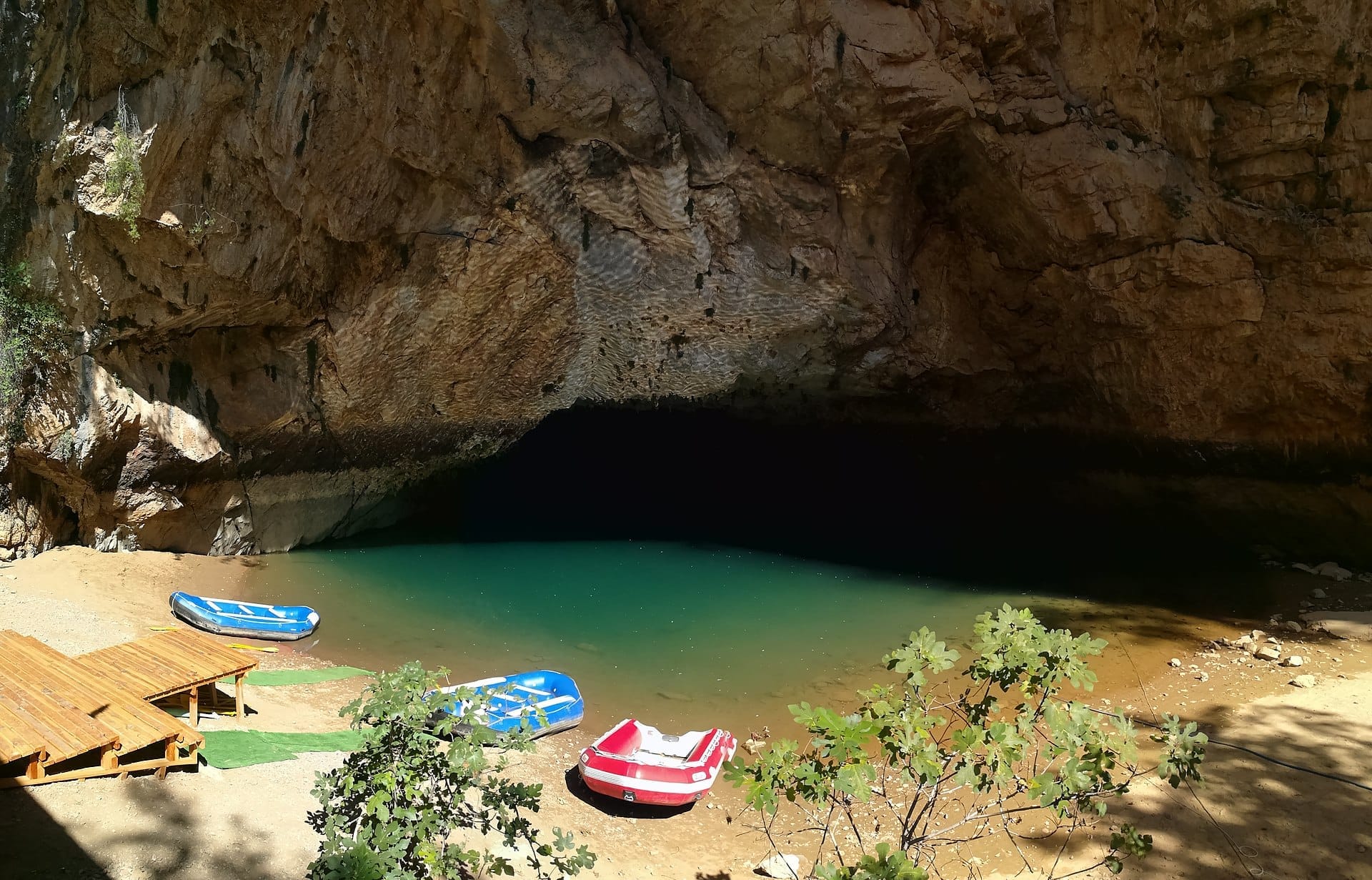
Altınbeşik Mağarası, which translates roughly as 'Golden Cradle Cave', is a horizontal, partly active cave system carved into the limestone slopes of the Manavgat River Valley. The cave has three distinct levels. The lowest of these is alive, fed by an underground river that fills Turkey's largest underground lake, a water body stretching 2,200 meters through the rock. That same lake ranks as the third-largest underground lake in Europe, a fact that puts this site in a genuinely rare category.
The cave maintains a constant temperature of 16°C year-round. In July, when the Antalya coast is baking at 38°C, that detail becomes more than a footnote. Stepping into the entrance passage is an immediate, physical contrast — cool air, the faint mineral smell of damp limestone, and the sound of water echoing from somewhere below.
The site was discovered by geologist Dr. Temucin Aygen, and Altınbeşik Cave National Park was formally established on August 31, 1994. Despite its international geological significance, it receives a fraction of the visitors that more accessible Antalya attractions attract, which is both its greatest appeal and its practical challenge.
⚠️ What to skip
The cave closes for the entire winter and early spring period, typically November through March, due to flooding risk from seasonal rain. Confirm the cave is open before making the trip. Opening season generally begins in April.
The Hike In: What to Expect Before You Reach the Entrance
The drive to Ürünlü Village via the Antalya-İbradi road already signals you have left resort territory. The road climbs through pine forest and passes limestone outcrops. The village itself is small and quiet. From here, the path to the cave entrance takes approximately one hour on foot, and this is the detail that filters out casual visitors.
The trail follows the Manavgat River valley, and the sound of moving water is a near-constant companion. In the morning, light cuts through the forest canopy at steep angles and the path feels genuinely remote. By midday, the forest cover means it never gets uncomfortably hot. Wear proper walking shoes with grip — the path includes uneven rock sections and it can be slippery near the riverbank areas.
Carry water and a light layer regardless of the season. The 16°C cave interior feels refreshing in summer but cool enough to need a jacket in spring or autumn, especially during the boat tour where you sit still for 20 minutes on the water.
💡 Local tip
Start early. Arriving at Ürünlü by 8:30 AM means you begin hiking as the day is cool, reach the cave before tour groups arrive, and have time to linger rather than rushing back to beat the heat on the return trail.
Tickets & tours
Hand-picked options from our booking partner. Prices are indicative; availability and final rates are confirmed when you complete your booking.
Tazı Kanyon, Safari, Rafting, Buggy Safari, and Zipline in Turkey
From 65 €Instant confirmationFree cancellationAntalya guided city tour with lunch
From 45 €Instant confirmationFree cancellationTraditional Turkish bath experience in Antalya
From 45 €Instant confirmationFree cancellationTurkiye village small group guided tour from Side or Belek
From 39 €Instant confirmationFree cancellation
Inside the Cave: The Boat Tour and the Formations
The primary visitor experience at Altınbeşik is the boat tour across the underground lake. Small flat-bottomed boats carry groups through the illuminated passages, floating above water that in some sections appears almost transparent, in others an opaque blue-grey depending on the light angle. The tour lasts approximately 20 minutes.
The cave's stalactite and stalagmite formations dominate the upper chambers. Some of the larger stalactites have formed over thousands of years and hang in dense clusters from ceilings that in places reach several meters overhead. The cave lighting is functional rather than theatrical — this is not the laser-show experience of some commercial caves. The formations speak without embellishment.
Because the lowest level contains an active river system, the cave is still being shaped. The sound of water dripping and flowing is present throughout. At quieter moments, between tour groups, the acoustic quality of the space becomes apparent: even a whispered conversation carries strangely across the underground lake.
Photography inside the cave is possible but results vary sharply depending on your equipment. Smartphone cameras struggle with the low-light conditions and produce noise-heavy images. A camera with strong low-light capability and ideally a wide lens gives far better results. Flash photography on the boat disturbs other visitors and does not flatter the formations. For photographers who want more time, Upper Düden Waterfalls and the surrounding national park landscape offer better natural-light shooting conditions earlier in the morning.
Getting There: Logistics Explained Honestly
There is no direct public transport to Altınbeşik Cave. This is a genuine logistical barrier, not something that can be worked around easily. Your options are: renting a car, joining an organized day tour departing from Antalya, Side, or Manavgat, or arranging a private transfer.
From Side or Manavgat, the drive to Ürünlü Village takes approximately 45 minutes, rising north into the mountains. From Antalya city center, allow around two hours. If you are based in Side, this is one of the most rewarding day trips you can take without crossing into a different region entirely.
Day tours typically combine Altınbeşik with other inland sites such as Köprülü Canyon or the Oymapınar Dam, which makes sense geographically and gives better value for the travel time involved. If you are self-driving, build in time for the park surroundings as well — the national park extends well beyond the cave entrance and the river scenery justifies the journey on its own.
ℹ️ Good to know
The vehicle entry fee (105₺) is charged at the national park barrier before you reach the village parking area. The boat tour fee (100₺) is paid separately at the cave. Fees are time-sensitive and subject to change; verify current amounts locally before arrival.
When to Go and When to Stay Away
The cave is open from April through October, and the sweet spots are May, June, and September. In May, the mountain vegetation is lush from winter rain, the river is full, and temperatures on the trail are ideal. The cave's 16°C interior feels neither too cold nor dramatically different from the outside air at this time of year.
July and August bring significantly more visitors, though Altınbeşik still never approaches the crowd levels of coastal attractions. The heat on the trail outside becomes the main issue in peak summer, which reinforces the argument for an early start. Afternoons in August can feel punishing on the exposed sections of the hike.
Autumn, particularly October, is arguably the finest month: crowds thin, the air cools, and the forest transitions into amber and gold tones that make the hike in genuinely scenic. If you are planning a broader trip around natural sites in the region, the Antalya waterfalls guide covers how to combine this type of outing with other inland natural attractions across the province.
Who This Attraction Is Right For — and Who Should Reconsider
Altınbeşik rewards visitors who are prepared for a half-day commitment and don't need constant amenities around them. There are no coffee shops at the cave entrance, limited facilities in Ürünlü Village, and the return hike will feel longer if you arrive poorly shod or unprepared for the terrain.
Visitors with limited mobility should know that the hike to the entrance is genuinely demanding and not wheelchair accessible. The boat tour itself requires stepping in and out of a low vessel on the water. Families with young children can manage the trip, but the one-hour hike each way means younger children need to be comfortable walkers. Families looking for easier, no-hike nature experiences in the region might prefer the Lower Düden Waterfalls near Antalya city first.
For travelers whose primary interest is history and architecture rather than natural landscapes, the time investment here may not match their priorities. The ancient theater at Aspendos or the ruins at Perge Ancient City are more accessible and offer a different, equally compelling kind of depth.
That said, for anyone drawn to geology, caving, underground landscapes, or simply experiences that feel genuinely off the tourist trail, Altınbeşik is one of the strongest options in the entire province. If you want context for planning a wider itinerary around natural and archaeological sites, the day trips from Antalya guide covers how this fits into a longer trip.
Insider Tips
- Bring a fleece or thin jacket specifically for the boat tour — sitting still on the underground lake for 20 minutes at 16°C after hiking feels colder than expected, especially in the shoulder months.
- If you are self-driving, fill the tank before leaving Manavgat. The road through İbradi is scenic but fuel stops are sparse once you leave the main highway.
- The national park vehicle entry barrier can have queues on peak summer weekends. Arriving before 9 AM almost always avoids any wait and puts you at the cave before the first organized tour groups arrive.
- Combine the trip with Oymapınar Dam, which you pass on the road. The dam reservoir seen from the overlook is photographically striking and adds only 20 minutes to the day.
- The cave phone contact (+90-242-691-20-04) is worth calling during spring if you are unsure whether the season has opened — local staff can confirm conditions far more reliably than online information, which often lags weeks behind.
Who Is Altınbeşik Cave For?
- Geology and cave enthusiasts who want a technically significant site, not just a pretty tourist cave
- Travelers visiting in peak summer heat who want a full half-day at a natural 16°C
- Hikers and nature lovers based in Side or Manavgat looking for a serious inland day trip
- Families with children aged 8 and above who are comfortable with a one-hour trail hike
- Photographers with low-light camera equipment seeking unusual interior landscapes
Nearby Attractions
Combine your visit with:
- Aspendos Opera and Ballet Festival
Annually, typically in late summer, the 2,000-year-old Aspendos Ancient Theatre becomes the stage for one of Turkey's most distinctive performing arts events. The International Aspendos Opera and Ballet Festival draws productions from Turkish and international companies to a venue where the acoustics are so precise, no amplification is needed. Around 70 percent of the audience travels from abroad to attend.
- Aspendos Theater
Built between 161 and 169 CE, the Roman Theatre of Aspendos stands 40 km east of Antalya as one of the most complete ancient theaters on earth. Its 41 tiers, towering two-story stage wall, and exceptional acoustics draw both history enthusiasts and opera-goers every summer.
- Köprülü Canyon
Köprülü Canyon National Park stretches 14 kilometres through the Taurus Mountains northeast of Antalya, combining serious natural scenery with a genuine Roman road, two ancient bridges, and the Köprülü River. Most visitors come for the rafting; the history and hiking are just as rewarding for those who stay longer.
- Kurşunlu Waterfall
Kurşunlu Waterfall drops 18 meters into a series of seven turquoise ponds inside a 586.5-hectare nature park in the Aksu district. Ancient water mills, dense pine cover, and resident wildlife make this one of the more rewarding half-day escapes from Antalya's coast.