Side sits on a narrow peninsula 78 km east of Antalya city, where Roman columns rise from the sand and temple ruins overlook the sea. It is one of Turkey's most significant classical sites and, simultaneously, a full-scale beach resort — a combination that makes it unlike anywhere else on the coast.
Side is where antiquity and the beach holiday collide head-on: a compact peninsula packed with Roman-era ruins, a working harbor, and resort hotels that share walls with ancient stone. It is 78 km from Antalya city center, technically part of the Manavgat district, and it operates on a completely different rhythm from the rest of the coast.
Orientation: A Peninsula at the Edge of the Ancient World
Side occupies a small, roughly rectangular peninsula on Turkey's southern Mediterranean coast, extending about 1 km from north to south and no more than 400 m across at its widest point. Everything within the old town sits inside this narrow strip of land, bounded by water on three sides and by the monumental entrance gate to the ancient city on the north. Outside that gate, the modern resort development spreads inland and along both flanks of beach.
Administratively, Side belongs to the Manavgat district of Antalya Province, not to Antalya city itself. This distinction matters for transport: you are not dealing with Antalya's urban bus network here. The nearest town with services, banks, and transport connections is Manavgat, roughly 6 km to the north. Antalya city center is 78 km to the west along the D400 coastal highway. The ancient Eurymedon, associated with the modern Köprüçay and the Aspendos-Serik area, lies to the west.
Visitors staying in Antalya often reach Side as a day trip, and it pairs logically with other Pamphylian sites to the east. For context on how Side fits into a broader itinerary, the day trips from Antalya guide covers the logistics in detail. The beach geography is divided between the west beach (broader, calmer, more family-oriented) and the east beach (narrower, with stronger wave action), with the old town peninsula running between them.
Character & Atmosphere: Two Towns in One
Walking through Side's old town in the early morning, before the tour buses arrive, gives you the clearest sense of what makes it unusual. The streets are narrow and paved with ancient stone, and temple columns are simply part of the streetscape, not roped off behind fences. Local cats sleep on Roman masonry. The light at this hour is flat and cool, and the harbor smells of salt and diesel from the fishing boats.
By mid-morning, the dynamic changes completely. Tour groups arrive from resorts along the coast, the souvenir stalls open, and the main pedestrian artery through the old town fills with slow-moving foot traffic. This is the street that runs roughly north to south from the monumental gate toward the harbor, lined with jewelry shops, carpet sellers, and restaurants. In July and August, it becomes genuinely congested by early afternoon.
After sunset, the character shifts again. Day-trippers leave, the light turns golden over the temple of Apollo, and the restaurants along the harbor fill with guests from the surrounding resort hotels. The atmosphere becomes noticeably more relaxed. Evenings are warm from June through September, and most of the dining happens outdoors. The old town is safe to walk at night; the streets are well-lit and active until around midnight in high season.
Outside the old town, the resort zone surrounding the peninsula is generic in the way that large Turkish coastal resorts tend to be: hotel complexes behind walls, beach clubs, and multi-lane roads. This part of Side has little character worth exploring on foot, but it is where most accommodation is actually located.
💡 Local tip
Arrive at the Apollo Temple or the archaeological museum before 9 AM if you want the ruins largely to yourself. By 10:30 AM in summer, group tours dominate the site.
What to See & Do
The name Side is thought to derive from a word meaning pomegranate, and the settlement's long history runs through ancient Anatolian, Greek, Roman, Byzantine, and later Ottoman-era layers before eventual abandonment. In the late 19th century, Muslim immigrants from Crete resettled the ruins and renamed the place Selimiye, building homes directly over ancient foundations. That layering of history, a Cretan-Turkish village on top of a Hellenistic-Roman city, explains why the ruins appear in such unexpected places: in courtyards, under stairs, behind shop walls.
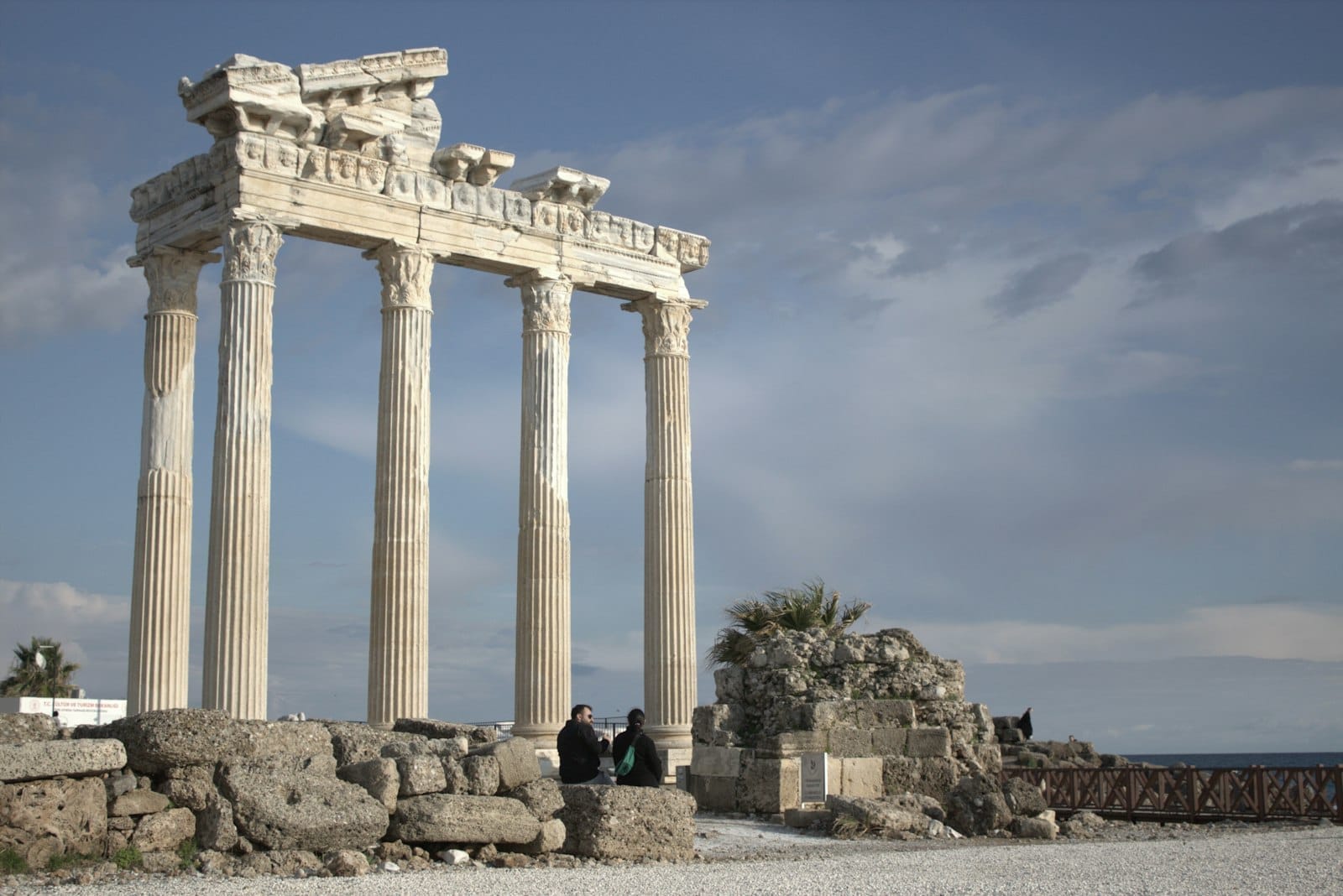
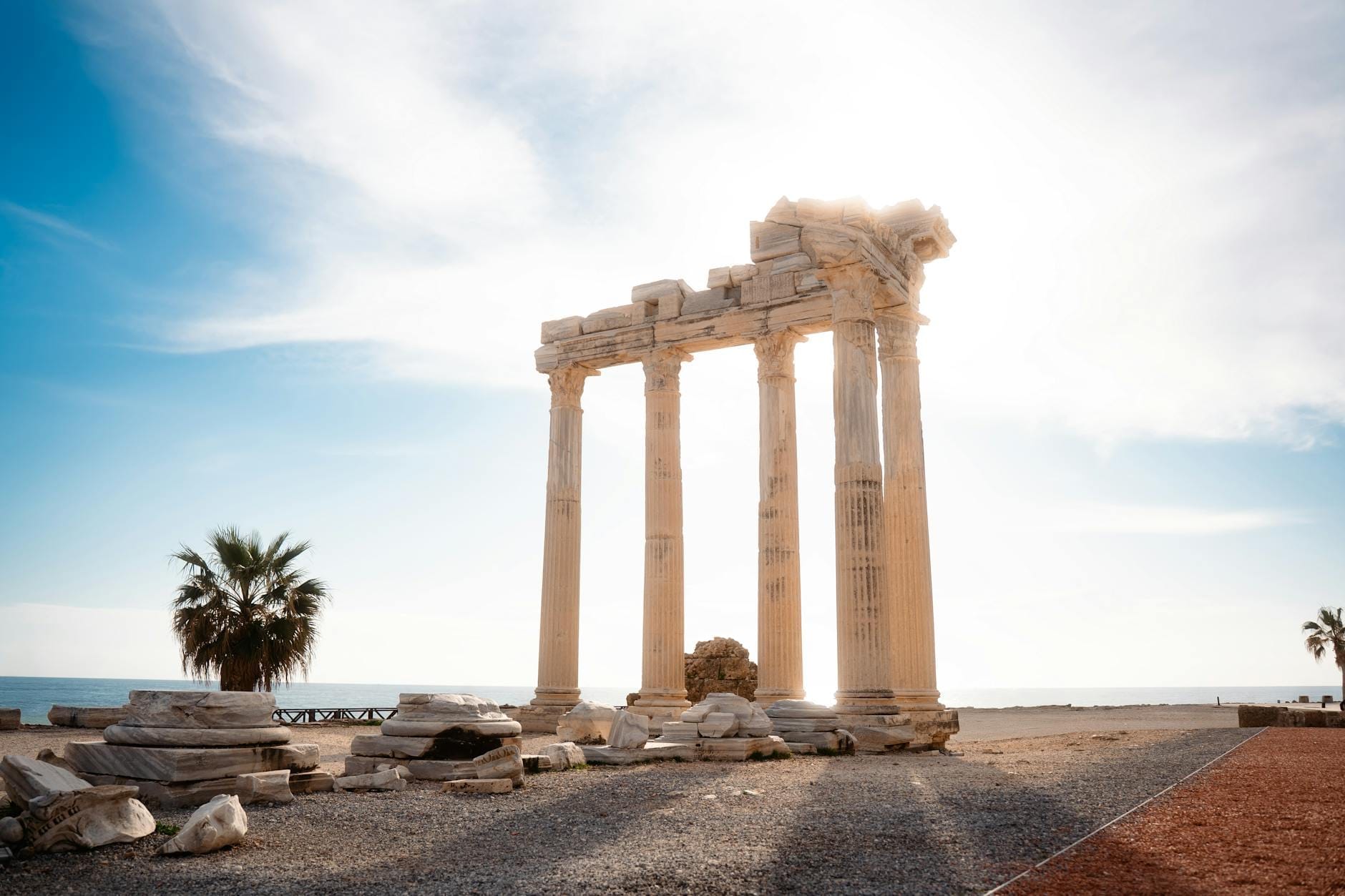
The Temple of Apollo is the image most associated with Side: five standing Corinthian columns on the southwestern tip of the peninsula, with the sea directly below. At sunset the columns glow orange and the photo opportunities are obvious, which is precisely why this spot draws large crowds. The temple dates to the 2nd century AD and sits immediately next to the ruins of a Temple of Athena.
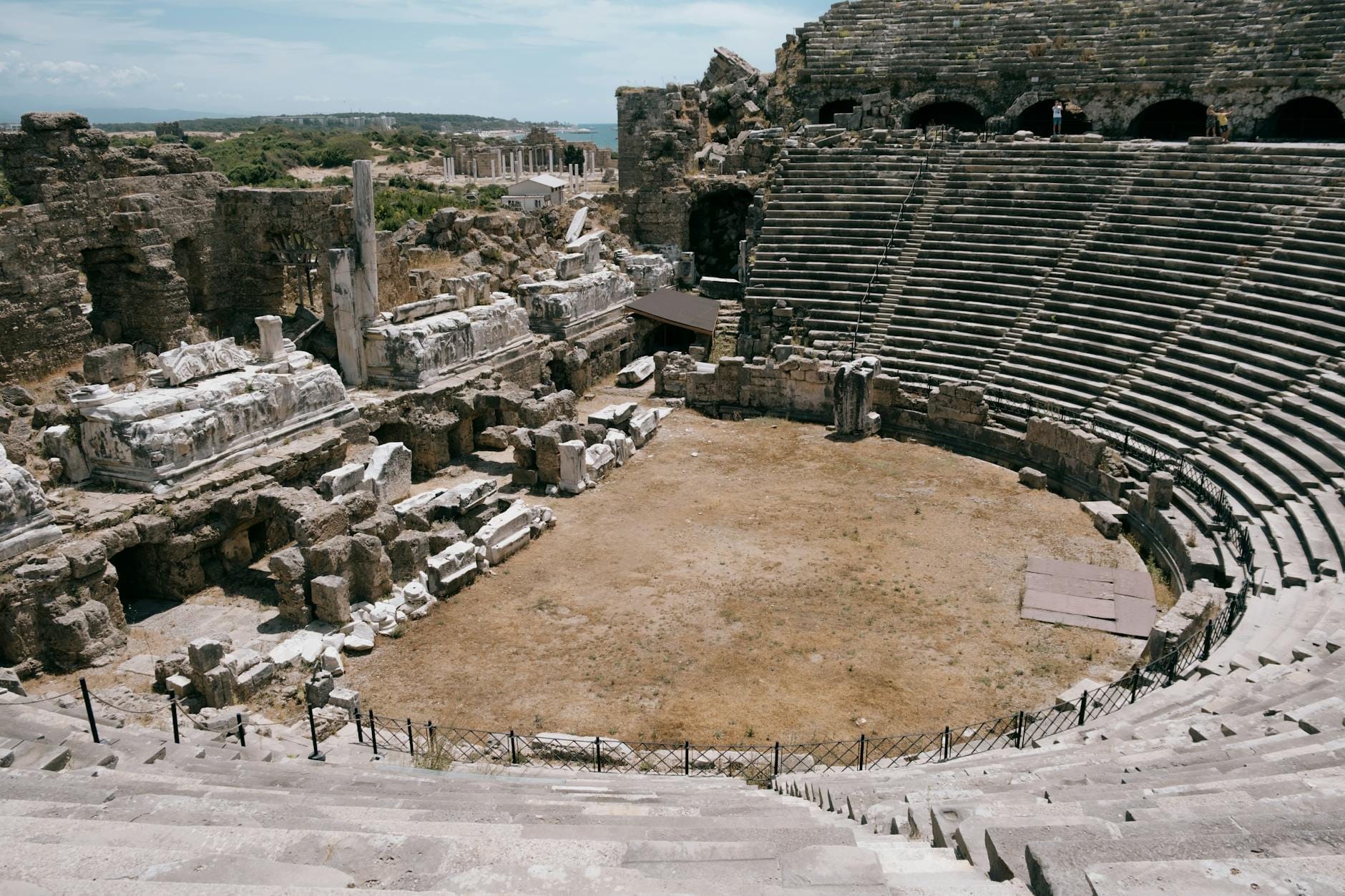
The Side Theater is one of the largest in Asia Minor, with a capacity estimated at around 15,000 to 17,000 spectators. Unlike Aspendos, which is better preserved and still hosts regular performances, Side's theater is partially ruined but still impressive in scale. It sits just inside the monumental gate at the northern edge of the peninsula, making it one of the first things you see when entering the old town.
The Side Museum, housed in a 5th-century Roman bathhouse near the theater, holds a strong collection of Hellenistic and Roman sculpture recovered from local excavations. It is compact, well-curated, and typically uncrowded, which makes it one of the better-value museum experiences on the Antalya coast. Admission is paid separately from the theater.
Side also serves as a useful base for reaching the broader region's archaeological sites. The remarkably preserved Aspendos Theater, considered one of the finest surviving Roman theaters in the Mediterranean, is around 30 km west. The ancient city of Perge lies roughly 55 km to the west along the same Pamphylian plain. Both are covered in the guide to ancient ruins near Antalya.
Temple of Apollo and Temple of Athena: southwest tip of the peninsula
Side Theater: northern entrance, near the monumental gate
Side Museum: Roman bathhouse converted to display Hellenistic sculpture
The ancient agora (market area): central peninsula, partially excavated
City walls and harbor fortifications: eastern and southern edges
West and East beaches: flanking the peninsula, both swimmable
Eating & Drinking
The food scene in Side's old town is firmly oriented toward tourists, which means prices are higher than in nearby Manavgat and quality varies widely. The main pedestrian street and the harbor front are lined with restaurants offering Turkish standards: grilled fish, kebabs, mezes, and pide. Most menus are translated into multiple European languages, and pushy front-of-house staff beckoning from doorways is common along the main drag.
That said, the harbor-front restaurants serve genuinely fresh fish. Ordering by weight at a fish restaurant is standard practice: the waiter shows you the fish before cooking, quotes a price per kilogram, and you agree or move on. Prices fluctuate with season and catch. Sea bass (levrek) and sea bream (çipura) are the most common options. A full fish dinner with mezes, bread, and drinks for two will run significantly more expensive here than in Antalya city.
For cheaper, more local eating, walk or take a short dolmuş ride north to Manavgat town, where lokanta-style lunch restaurants, börek shops, and tea houses cater to residents rather than visitors. The guide to what to eat in Antalya covers regional dishes worth seeking out, including the tangy citrus-marinated fish preparations common along this stretch of coast.
Cafés and bars in the old town stay open late in summer, with rooftop terraces and harbor-view terraces the most desirable spots. Turkish çay (tea) is available everywhere at low prices. The resort hotels outside the old town operate all-inclusive packages that keep guests eating and drinking within their compounds, which is one reason the old town restaurants can feel quiet on weekday lunches despite the surrounding hotel density.
⚠️ What to skip
Check prices before sitting down at harbor-front restaurants. Some establishments add service charges or quote prices that change at the table. Asking to see the menu before ordering is standard practice and expected.
Getting There & Around
From Antalya city, the standard approach is to take a bus to Manavgat and then transfer to a dolmuş (shared minibus) to Side. Long-distance coaches and regional bus services run from Antalya's main otogar (bus terminal) to Manavgat regularly throughout the day, with the journey taking approximately 1.5 to 2 hours depending on traffic. From Manavgat's small bus terminal, dolmuşes depart frequently to Side during daylight hours in summer, with the ride taking around 15 to 20 minutes.
Taxis from Manavgat to Side are also available and appropriate if you have luggage or are arriving after dark when dolmuş frequency drops. From Antalya Airport, taxis and private transfers are the most direct option; shared shuttle services are available but less frequent to Side specifically than to the main resort zones closer to Antalya.
For broader context on transport logistics along the Antalya coast, the getting around Antalya guide explains the dolmuş network and regional bus options in detail. Renting a car at Antalya Airport and driving east along the D400 is also practical for those planning multiple stops along the Pamphylian coast.
Within Side itself, the old town peninsula is pedestrian-only for most of its length. Everything worth seeing is within easy walking distance once you are inside the gate. The main attractions are compact enough that you can walk from the theater at the north end to the Apollo Temple at the south tip in about 15 minutes at a moderate pace, though exploring side streets and ruins slows that down considerably.
ℹ️ Good to know
Motorized vehicles are restricted inside Side's old town during peak daytime hours. If you are driving, park near the main gate at the north end and continue on foot. Parking fills quickly in July and August by late morning.
Where to Stay
Accommodation in Side splits into two very different categories. Inside the old town peninsula, there are small boutique hotels, pansiyons, and guesthouses, often occupying old stone buildings with courtyard gardens. These are quieter at night than you might expect given the daytime crowds, and they put you within a few minutes' walk of the Apollo Temple and the harbor. They are the better choice for visitors who are primarily interested in the archaeological site.
Outside the old town, particularly along the west beach and north toward the resort zone, large all-inclusive hotels dominate. These are high-capacity, high-turnover resorts with pools, animation programs, and beach access. They are aimed primarily at package holiday travelers from Northern and Central Europe. For a full overview of this type of accommodation across the Antalya coast, the Antalya all-inclusive resorts guide covers what to expect in terms of facilities and pricing.
Couples seeking a quieter, more atmospheric stay will find the old town guesthouses more rewarding. Families, or those whose priority is beach time over ruins, tend to be happier in the resort zone. The broader question of where to stay along the Antalya coast is addressed in the where to stay in Antalya guide, which compares Side with Belek, Konyaaltı, Lara, and Kaleiçi.
Honest Assessment: Who Side Is For
Side is genuinely impressive in a way that few coastal resorts are. The Apollo Temple at sunset, the scale of the theater, and the experience of walking through a functioning Roman street grid are real, not manufactured. If ancient history is part of your reason for visiting Turkey, Side deserves serious time.
The honest drawbacks: the old town's main shopping street is packed with jewellery shops, souvenir stalls, and restaurant touts and tourist-facing in a way that can feel relentless in peak season. Prices for food and souvenirs reflect a captive audience. The resort zone outside the old town is architecturally undistinguished. And if you are visiting purely for beach quality, the beaches at Side are decent but not exceptional by Turkish coast standards.
Side works best as part of a wider itinerary that includes at least one other major site nearby. The 3 days in Antalya itinerary places Side in context alongside Aspendos and Perge for travelers with limited time.
TL;DR
Side is a Roman-era peninsula 78 km east of Antalya, combining significant ancient ruins with a fully developed beach resort.
Best for: history-focused travelers, couples wanting atmosphere, day-trippers from Antalya or nearby resorts.
The Apollo Temple, Side Theater, and Side Museum are the core attractions; allow at least half a day, a full day if combining with a beach afternoon.
The old town is walkable and pedestrian-friendly; getting there requires a bus to Manavgat plus a dolmuş, or a private transfer.
High season (July-August) brings significant crowds to the main street; early morning visits to ruins are strongly recommended.
Not ideal for: travelers seeking an undiscovered or purely local experience, or those prioritizing beach quality over historical interest.
Three days is enough time to cover Antalya's best layers: Roman gates and Ottoman lanes in Kaleiçi, world-class ruins at Aspendos and Perge, pebble beaches, dramatic waterfalls, and west-coast viewpoints over the bay. This itinerary is built around smart sequencing so you spend less time backtracking and more time actually seeing things.
Antalya sits at the heart of ancient Pamphylia, surrounded by some of the Mediterranean world's most remarkable ruins. This guide covers the best Roman theaters, Greek temples, mountain citadels, and archaeological sites within reach of the city.
Antalya has hundreds of properties marketed as all-inclusive, from basic meal-plan hotels to full ultra all-inclusive resorts on Lara Beach. This guide cuts through the marketing to explain what you actually get, which resorts deliver value, and when going all-inclusive makes sense in Antalya.
The Aspendos International Opera and Ballet Festival is one of the world's most extraordinary performance settings: grand opera and classical ballet staged inside a 2,000-year-old Roman theatre near Antalya. This guide explains when the festival usually runs, how to verify the current schedule, how to get tickets, and how to handle transport on performance nights.
Antalya's coastline stretches from urban pebble beaches backed by the Taurus Mountains to remote sandy coves tucked between ancient ruins. This guide covers the best beaches in and around Antalya, with honest notes on what each one actually offers.
Everything you need to navigate Antalya city with confidence. From the Roman walls of Kaleiçi to the tram lines connecting the coast, this guide covers neighborhoods, transport, seasonal planning, and the practical details most travel sites skip.
Antalya is far more than a beach resort. This guide breaks down the most rewarding romantic experiences for couples, from Kaleiçi's Roman-era streets and boat tours on turquoise bays to waterfall hikes, ancient theatre evenings, and canyon adventures. Practical, specific, and honest about what actually delivers.
Belek, Turkey's golf capital, packs more than 15 championship courses into a compact stretch of Mediterranean coastline 30km east of Antalya city. This guide covers the standout courses, realistic costs, the best time to book, and what the brochures don't tell you.
Summer in Antalya means scorching heat, packed beaches, crystal-clear sea, and some of the best value sun holidays on the Mediterranean. This guide covers the weather reality, the best things to do in June, July, and August, how to handle the crowds, and what most visitors get wrong about a summer trip.
Antalya's after-dark scene spans ancient-walled cocktail bars in Kaleiçi, open-air mega-clubs at the marina, foam parties in Kemer, and sophisticated shisha lounges. This guide covers the best venues by district, what to expect in each season, dress codes, realistic drink prices, and smarter alternatives to the obvious tourist traps.
Kaleiçi is Antalya's Roman-era old town, packed with 2,000 years of layered history inside ancient walls. This self-guided walking tour covers the essential stops, the best route order, what to skip, and how to time your visit to avoid the worst of the crowds.
Antalya has a reputation as a luxury resort destination, but the reality is far more accessible. This guide breaks down exactly what budget travel looks like in Antalya, from hostel options and free attractions to transport hacks and the best time of year to keep costs down.
Antalya is one of Turkey's most-visited cities, and for good reason. But like any major tourist destination, it has its share of scams and petty pitfalls. This guide breaks down exactly what to watch for, where the real risks are, and how to travel confidently without being caught off guard.
The journey from Antalya to Cappadocia is one of Turkey's great cross-country trips, covering around 540-586 kilometers through Central Anatolia. This guide breaks down every transport option, what guided tours actually include, and how to make the most of the route whether you have two days or five.
Antalya sits at the edge of the Taurus Mountains, and the rivers rushing down from those peaks create some of the Mediterranean coast's most dramatic waterfalls. This guide covers the Upper and Lower Düden falls, the forested Kurşunlu nature park, and the best natural sites to pair them with for a full day outdoors.
Antalya is one of Turkey's most family-friendly destinations, with options ranging from massive water theme parks to free coastal waterfalls and Roman ruins. This guide covers the best things to do in Antalya with kids, broken down by age group, season, and budget — with honest assessments of what delivers and what disappoints.
Antalya delivers sun almost year-round, but timing your visit correctly makes a significant difference. This guide breaks down every season by temperature, crowds, cost, and what you can actually do — so you arrive at the right moment for your priorities.
A boat trip along the Turquoise Coast is one of the best things you can do in Antalya. This guide breaks down every tour type, realistic pricing, departure logistics, and honest advice on what's worth your money and what isn't.
Antalya sits at the center of one of Turkey's richest regions for day-tripping. Within two hours in any direction you'll find world-class Roman ruins, national parks, underground cave systems, and ancient seaside towns. This guide covers the best excursions, organized by type, with practical advice on timing and how long each takes.
Antalya Airport (AYT) is one of Europe's busiest summer gateways. This guide covers which airlines fly there, how the terminals work, how to get into the city, and how to avoid the most common arrival headaches.
Antalya rewards travelers who explore on foot. From a perfectly preserved Roman triumphal gate to clifftop parks overlooking the Mediterranean, the city's best experiences are largely free. This guide covers the top no-cost attractions across the old town, coastline, and beyond.
Antalya Airport (AYT) handles millions of arrivals each year, and getting from the terminal to your hotel shouldn't eat into your first day. This guide covers every realistic transport option — public buses, private transfers, trams, taxis — with honest cost comparisons and seasonal tips.
Antalya draws over 10 million tourists a year, but is it actually worth your time and money? This guide cuts through the resort-brochure hype to give you a clear-eyed look at what the city delivers, what it oversells, and who it suits best.
Köprülü Canyon is Antalya's top rafting destination, offering a 14 km run through a gorge up to 400 metres deep on the Köprüçay River. This guide covers everything from pricing and booking to what to pack, when to go, and how to avoid common mistakes.
Antalya rewards shoppers who know where to look. This guide covers the best markets and bazaars, the most worthwhile things to buy, honest price expectations, and the practical details that help you shop smarter across one of Turkey's most visited coastal cities.
Antalya packs ancient ruins, dramatic waterfalls, world-class beaches, and serious adventure into one destination on Turkey's Mediterranean coast. This guide cuts through the noise to show you exactly what's worth your time, what to skip, and how to plan it all without overpaying.
Antalya has a distinct food culture that goes well beyond kebabs and baklava. This guide covers the city's signature dishes, where locals actually eat, what things cost, and which spots to skip. Whether you have one meal or two weeks, eat like you know what you're doing.
Antalya's food scene runs deeper than the all-inclusive buffet. This guide breaks down the best neighborhoods to eat in, specific restaurants worth your time, what dishes to order, and which spots to skip — so you eat well every meal.
Choosing where to stay in Antalya shapes your entire trip. This guide breaks down the four main areas, their real trade-offs, current price ranges, and exactly who each neighborhood suits best.