Getting Around Antalya: Airport Transfers, Trams, Taxis & More
Antalya Airport (AYT) handles millions of arrivals each year, and getting from the terminal to your hotel shouldn't eat into your first day. This guide covers every realistic transport option — public buses, private transfers, trams, taxis — with honest cost comparisons and seasonal tips.

Plan and book this trip
Tools from our partner Travelpayouts help you compare flights and hotels. If you book through them, we may earn a commission at no extra cost to you.
Flights
Hotels map
TL;DR
- Antalya Airport (IATA code: AYT) is the main gateway, served by buses, taxis, and private transfers.
- Public bus Route 600 is the cheapest option to the city center; private transfers from around $32/group are often comparable to or cheaper than metered taxis for resort destinations like Belek or Side.
- The AntRay tramway connects the airport area to the city center and key attractions — use it for daytime city travel.
- In summer (June to September), pre-booking transfers is strongly recommended as demand spikes and prices rise.
- Once in the city, Kaleiçi (the old quarter) is best explored on foot; buses and trams cover broader routes efficiently.
Antalya Airport (AYT): What to Know Before You Land
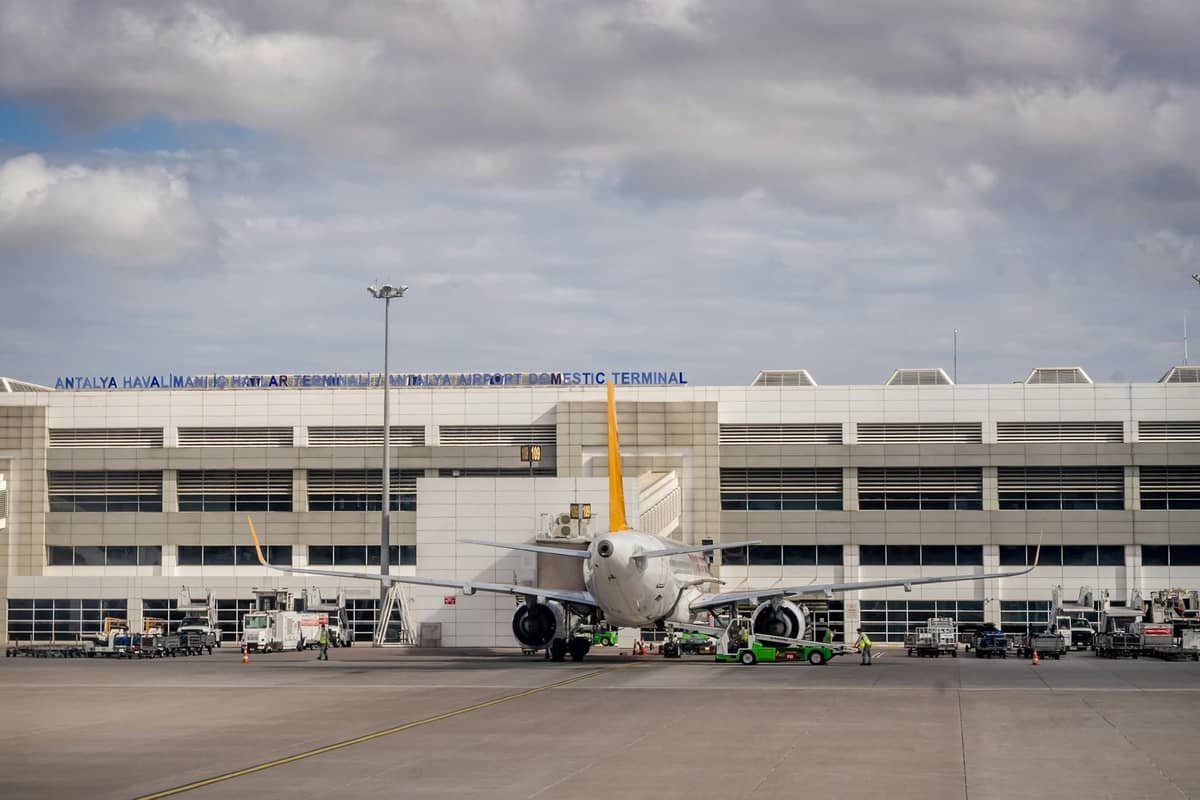
Antalya Airport, with the IATA code AYT, is one of Turkey's busiest international airports, processing millions of arrivals annually. It has three terminals: two international terminals (Terminal 1 and Terminal 2) and a domestic terminal. A free shuttle runs between them every 20 minutes, departing from the front of each terminal, so connections between the two are straightforward. The airport sits roughly 10-13 km northeast of the city center, which translates to around 20-35 minutes by road depending on traffic and your final destination.
English is widely spoken at the airport's transport desks and taxi stands. Official taxi drivers carry ID cards and display their fares at the stand — if a driver approaches you inside the arrivals hall before you reach the official stand, that's a red flag worth acting on. The transport options laid out below range from the very cheap (public bus) to the very convenient (pre-booked private transfer), and the right choice depends on your group size, luggage, and destination.
⚠️ What to skip
Avoid unofficial taxi touts inside the arrivals hall. Use only the official taxi ranks outside the terminal exits, where drivers are registered and fares are regulated. Unofficial drivers frequently quote inflated flat rates to tourists.
Airport to City Center: Every Option Compared
There is no single 'best' way to get from AYT to the city — each option has a clear use case. Here is how they stack up in practical terms.
- Public Bus (Route 600) The most budget-friendly option. Route 600 runs to the main intercity bus terminal (otogar) roughly every 30 minutes. Route 800 serves the Lara district but runs only every 2 hours, so timing matters. Fares are paid in Turkish Lira (TRY) and cost a fraction of a taxi. Expect the journey to take 30-50 minutes depending on traffic and stops.
- Tram (AntRay) The AntRay tramway connects the airport area to the city center, passing key stops including access points for Perge Ancient City. It is reliable, inexpensive, and avoids road traffic during peak hours. Not ideal if you have large luggage, but excellent for solo travelers or couples traveling light.
- Official Taxi Taxis wait at official stands in front of both terminals. Drivers use meters, and fares to central Antalya typically fall in the range of 250-400 TRY depending on traffic and destination (verify current rates, as TRY fluctuates). For short distances to nearby hotels, this is often the most convenient choice.
- Pre-Booked Private Transfer A meet-and-greet driver, fixed price regardless of traffic, 24/7 availability, and door-to-door service. Transfers start from around $32 per group for routes like AYT to Lara (approximately 30 minutes). For longer routes to Belek, Side, Kemer, or Alanya, pre-booked transfers frequently cost the same as or less than metered taxis for groups of 3-4. Platforms include GetYourGuide, Viator, SIXT ride, Bizim Transfer, and Uber (verify current availability in the region).
✨ Pro tip
For groups of 3 or more traveling to resort areas like Belek or Side, a pre-booked private transfer is almost always the best value. Split between passengers, the per-person cost is often lower than the bus once you factor in connection time and luggage handling.
Getting to the Resorts: Side, Belek, Kemer, and Alanya

The distances from AYT vary significantly depending on your resort. BelekLara is roughly 30-40 km east of the airport and takes around 30-40 minutes. SideBelek is approximately 75 km east, typically a 60-75 minute drive. Kemer sits around 40-50 km southwest of the airport. Alanya is 130 km east of Antalya city — a transfer there takes roughly 90-120 minutes by road.
For these resort destinations, public buses are technically possible but involve changes at the main bus terminal and significantly longer journey times. Private transfers or shared shuttles are the practical choice for most visitors arriving with luggage, particularly families. If you have booked an all-inclusive property, confirm whether a complimentary shuttle is included before paying separately for a transfer.
If you are spending multiple days exploring the wider region — including day trips to ruins or waterfalls — it helps to understand your base early. Our guide to where to stay in Antalya breaks down each area by type of traveler, from beach-focused Lara to culture-heavy Kaleiçi.
ℹ️ Good to know
Antalya Airport has an Uber pickup zone, but availability and surge pricing in Turkey can be inconsistent. Pre-booked fixed-price services like SIXT ride or Bizim Transfer often offer more predictable pricing, especially during the summer high season.
Getting Around Antalya City: Trams, Buses, and Taxis

Once you are in Antalya, the city is larger than it looks on a map. The sprawling coastal zone means you will likely need transport to move between the main beach areas, the old town, and cultural sites. Here is what works.
The AntRay tramway is the backbone of city transport. It runs from the suburban area through the city center, connecting major neighborhoods and allowing access to sites like Perge Ancient City with a change at the otogar. Buy an AntalyaKart (rechargeable transport card) for discounted fares across buses and trams. Single journeys paid without the card cost more, so if you are staying more than two or three days, the card pays for itself quickly.
City buses cover routes the tram does not, including coastal roads toward Lara Beach and Konyaaltı. Services are frequent during the day but thin out after 10pm. For late-night travel — especially after a night out — a taxi or ride-hailing app is the realistic option.
- AntalyaKart: Rechargeable card for buses and trams, available at major stops and kiosks
- Taxis: Metered, widely available; always confirm the meter is running at the start of the trip
- Ride-hailing: BiTaksi is the main regulated app in Turkey; Uber operates in some areas but verify availability
- Dolmuş (shared minibuses): Cheap, frequent, and useful for shorter routes — ask locals or your hotel for the right line
- Car rental: Practical for day trips to Termessos, Aspendos, or rural areas; major agencies operate from both the airport and city center
Kaleiçi, the Roman-walled old quarter, is best navigated entirely on foot. Streets are narrow, cobbled, and largely car-free. Most of the key sites — Hadrian's Gate, the Yivli Minaret, and the old harbor — are within easy walking distance of each other. Bring comfortable shoes and avoid overpacking your day bag.
Seasonal Considerations and Booking Timing
Transport in Antalya is not equally smooth year-round. Between June and September, the city handles its peak tourist load: flights are full, taxis are in demand, and private transfer prices tick upward. If you are arriving in July or August without a pre-booked transfer, expect queues at the taxi rank and possible unavailability on short-notice booking platforms.
Spring (April to May) and autumn (September to October) offer the most comfortable travel conditions overall, with shorter queues, lower transfer prices, and more availability across accommodation. For a fuller picture of how the season affects your trip, see our best time to visit Antalya guide.
Winter (November to March) is low season for beach tourism but not for the city itself. Transfers are easy to find, prices drop, and the airport is far less chaotic. The Mediterranean climate keeps winters relatively mild, though rain is common.
Day Trips and Getting Further Afield

Antalya's position on the Turkish Riviera makes it a practical base for a wide range of excursions. Most travelers use a mix of organized tours and car rental to reach sites like Termessos, the ancient theater at Aspendos, or the Düden Waterfalls. Many of these are difficult or time-consuming to reach by public bus, particularly if you want to combine multiple stops in a single day.
For organized excursions with transport included, guided day trips are worth considering. Check our day trips from Antalya guide for the best options, distances, and realistic timings. Car rental is widely available at AYT and gives you the most flexibility, though driving standards on rural roads can require adjustment if you are used to Western Europe or North America.
FAQ
What is the IATA airport code for Antalya Airport?
Antalya Airport's IATA code is AYT. It is the main international gateway to the Turkish Riviera and one of Turkey's busiest airports, particularly during the summer season.
How do I get from Antalya Airport to the city center cheaply?
The cheapest option is public bus Route 600, which runs to the main bus terminal roughly every 30 minutes. The AntRay tram is another affordable and reliable option for reaching central Antalya. Both cost a fraction of a taxi fare.
Is a private transfer from Antalya Airport worth it?
For groups of 3 or more, or for longer routes to resorts like Side, Belek, or Alanya, a pre-booked private transfer often works out cheaper per person than a metered taxi once you split the cost. The main advantage is a fixed price and a driver waiting for you on arrival, which removes the stress of queuing for transport after a long flight.
Is there a direct tram or train from Antalya Airport to the city?
The AntRay tramway serves the airport area and connects into the city tram network, though some terminals or final destinations may require a short walk, shuttle, bus, or tram change. There is no high-speed rail link from AYT. For many city-center destinations, the tram is a practical and inexpensive option if you are traveling without heavy luggage.
What is the best way to get around Antalya once I am there?
The AntRay tram and city buses cover most major areas efficiently. An AntalyaKart (rechargeable transport card) gives you discounted fares on both. Within Kaleiçi, walking is the only practical option given the narrow streets. For day trips to ancient sites or waterfalls, car rental or an organized tour with transport included is usually the most efficient approach.