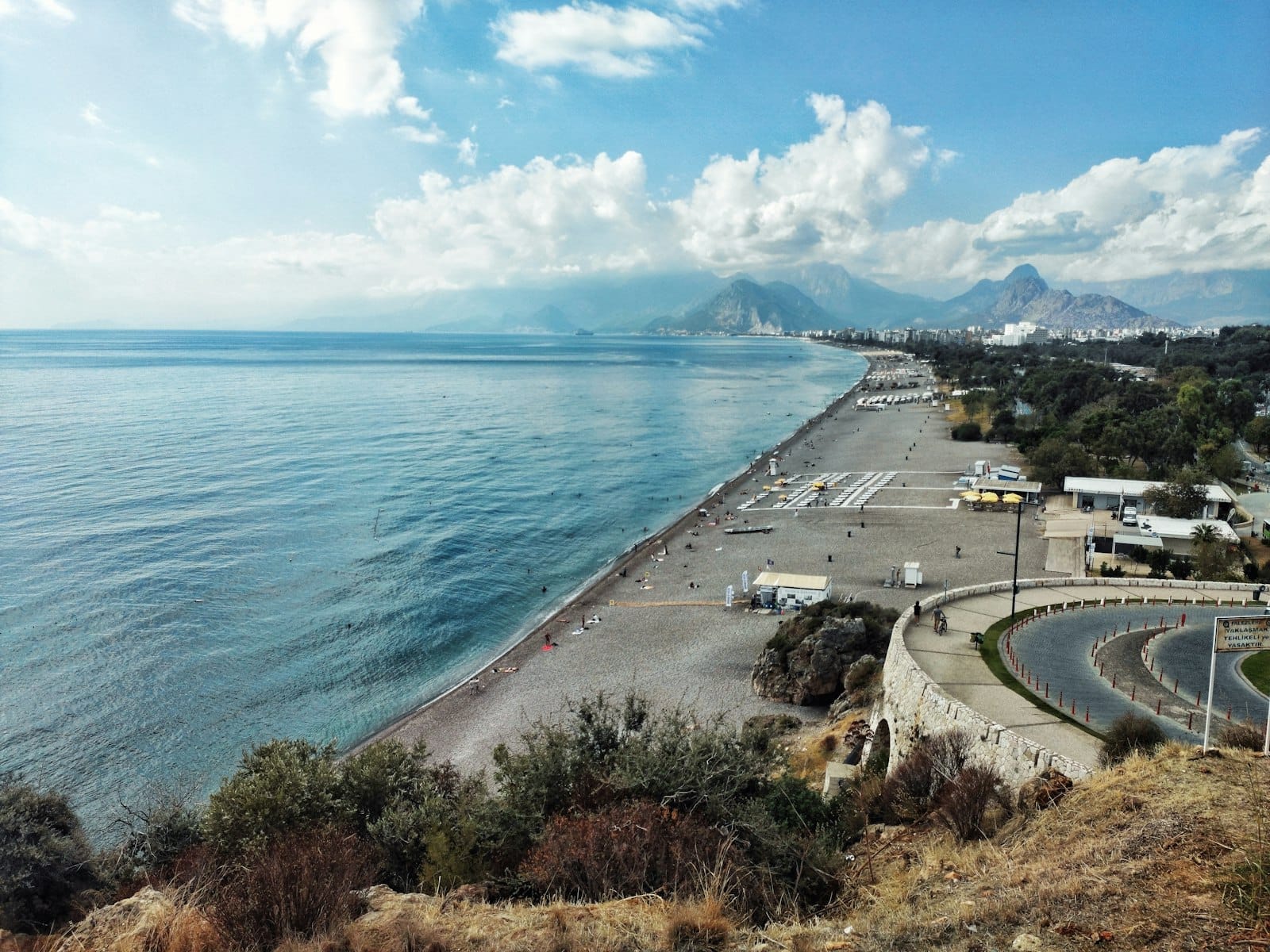
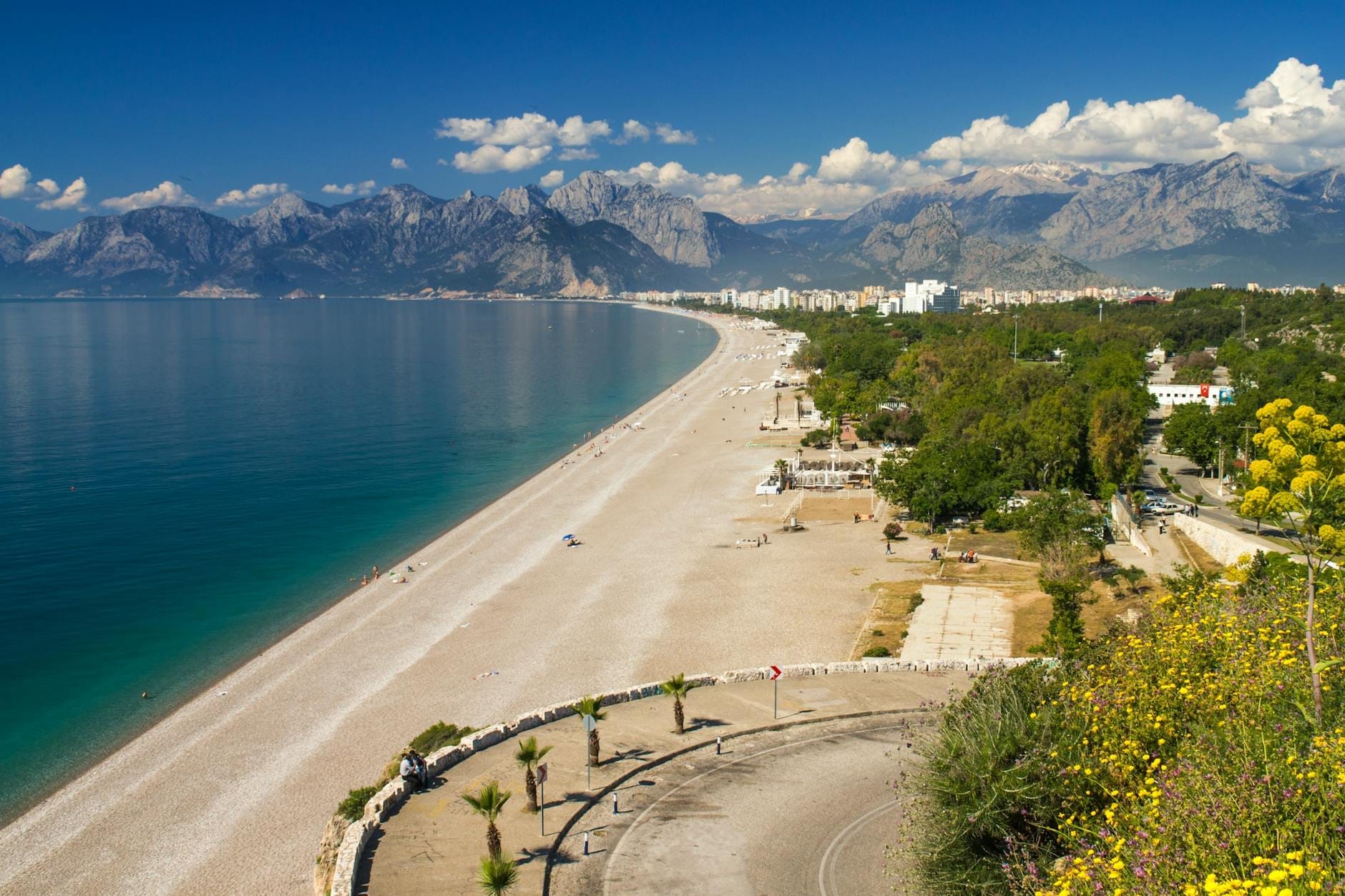
Lara is Antalya's most polished coastal neighborhood, built around a long stretch of fine sandy beach east of the city center. It draws visitors looking for large resort hotels, water sports, and convenient airport proximity, rather than the historic texture found in Kaleiçi or the local beach culture of Konyaaltı.
Lara sits along the Mediterranean coast about 10 kilometers east of Antalya's old town, functioning as the city's premium resort corridor. It is where large all-inclusive hotels line the shore, the beach runs wide and groomed, and the pace of life is shaped almost entirely by tourism from late spring through autumn.
Orientation: Where Lara Fits in Antalya
Lara is a mahalle (micro-district) within Muratpaşa, Antalya's central administrative district, positioned at roughly 36°52'N, 30°52'E along the Mediterranean coast. The neighborhood stretches eastward from the urban core of Antalya, with the coastline as its southern boundary and increasingly residential streets spreading north toward the D400 highway.
To understand where Lara sits mentally: imagine Kaleiçi, Antalya's old town, with its Roman walls and narrow lanes, sitting about 10 kilometers to the west. Between the two lies a stretch of modern Antalya: wide boulevards, apartment blocks, shopping centers, and the kind of infrastructure that supports a wider metropolitan province of more than 2.6 million people. Lara is where that urban sprawl meets the sea, and where the resort industry took hold most forcefully.
The neighborhood's most useful reference point for visitors is Lara Beach itself, a broad sandy strip running several kilometers along the coast. North of the beach road, the character shifts quickly from hotel compounds to residential streets lined with schools, clinics, and local shops. TerraCity mall and the Deepo Outlet Center sit within easy reach to the north and west, offering recognizable retail anchors for orientation.
Antalya Airport (AYT) sits just 10 kilometers from Lara, making it one of the most airport-proximate neighborhoods in the city. For travelers on early or late flights, or those who want to minimize transfer time at the start and end of a beach holiday, this proximity is a genuine practical advantage.
Character and Atmosphere
Lara does not try to be anything it is not. This is a purpose-built resort district, and the rhythms of daily life here are set by the tourism calendar. From May through October, the main beach road fills with coaches transferring guests between the airport and hotel lobbies, while the beach itself draws a dense mix of European and Russian visitors to sun loungers arranged in hotel-controlled rows.
In the early morning, before the heat settles in, Lara has a quieter quality that is easy to miss if you spend your days inside a resort compound. Local residents walk the beach road before breakfast. Vendors set up fruit stands near the residential blocks to the north. The sea, viewed before the sun climbs high, has a stillness that the midday crowds will completely erase.
By late morning through the afternoon, the beach is at full volume: jet skis cutting arcs offshore, parasailing boats motoring slowly parallel to the coast, beach bars doing steady trade in cold drinks. The light falls hard and flat on the sand during the peak summer hours, and the lack of shade trees on the beach itself means midday requires either a sun lounger with an umbrella or a strategic retreat to the water. The sea is warm and calm here, sheltered slightly by the curve of the coastline.
After dark, Lara shifts gear rather than winds down. The hotel bars fill up, open-air restaurant terraces along the beach road get lively, and the clubs that operate from the larger resort properties run late into the night during summer. This is not the historic evening stroll culture you find around Kaleiçi's marina: it is more likely to involve poolside cocktail hours and organized entertainment at large hotels than wandering between small independent venues.
ℹ️ Good to know
Lara is one of the more internationally diverse neighborhoods in Antalya. Russian, German, British, and Eastern European visitors make up a large share of the summer crowd, and English is widely spoken at hotels and most tourist-facing businesses.
What to See and Do
The primary draw is Lara Beach, one of Antalya's finest stretches of sand. The beach runs wide and the sand is coarser than the pebbled shores found at Konyaaltı to the west. Water clarity here is generally good, and the beach is well-maintained through the summer season. Large sections are controlled by adjacent hotels, but public access points exist and the beach itself is public by Turkish law.
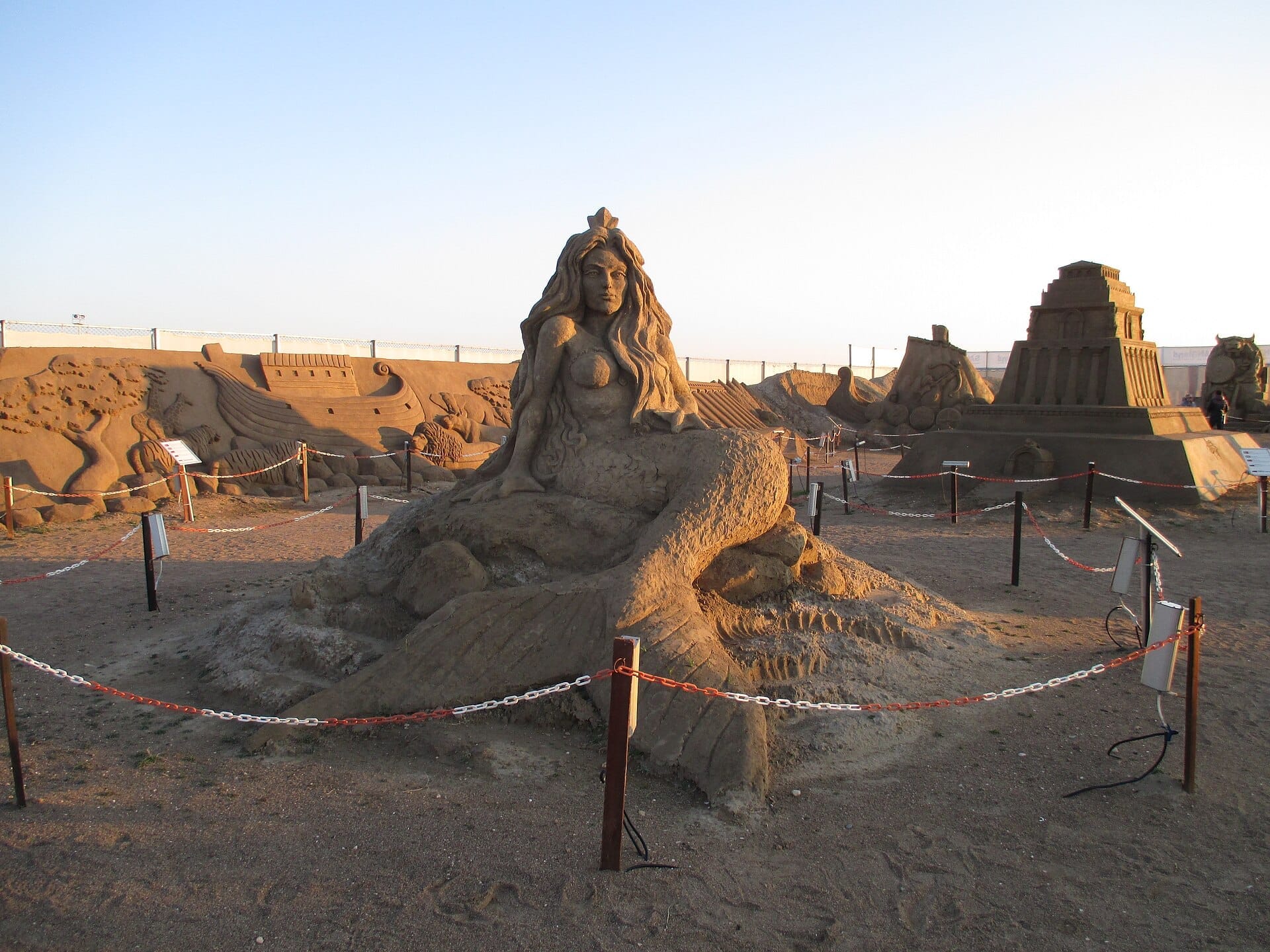
Lara Beach Park, the public green space behind part of the shoreline, hosts an annual sand sculpture exhibition that draws considerable attention during summer. Large-scale sculpted figures are created in themed groupings, changed each season, and lit at night. It is a genuinely unusual attraction: free to walk around, well-lit in the evenings, and popular with families. The park also includes playgrounds and picnic areas that give it a different feel from the hotel beach zones.
Water sports dominate the active options directly on the beach: jet skiing, parasailing, banana boat rides, and paddleboarding are all available from operators along the shore. For something more ambitious, boat tours departing from Antalya Marina are within easy reach and offer a different perspective on the coastline. Day trips by boat along the cliffs west of the city are a worthwhile contrast to beach days.
The ancient sites near Antalya are some of the most impressive in Turkey, and Lara's position east of the city actually puts you marginally closer to sites like Perge Ancient City and Aspendos Theater. Both are accessible as half-day trips and offer a strong counterpoint to beach days. Aspendos in particular is remarkable: a Roman theater in extraordinary condition, still used for performances.
Lara Beach: swimming, sun loungers, water sports operators
Lara Beach Park sand sculpture exhibition (seasonal, summer)
Water sports: jet ski, parasailing, paddleboard rentals along the beach
TerraCity shopping mall: cinema, dining, retail (10-15 minutes north by taxi)
Deepo Outlet Center: fashion brands at reduced prices
Day trips to Perge, Aspendos, and surrounding ancient sites
💡 Local tip
If you are staying in Lara for more than two nights, budget at least one full day for the ancient sites to the east. Perge and Aspendos together form a logical circuit and can both be covered in a single day with a taxi or rental car, giving the trip real cultural depth beyond the beach.
Eating and Drinking
The honest picture of eating in Lara is this: if you are staying all-inclusive, you may never leave your hotel's dining room. That is how the neighborhood is designed. Many of the larger resorts run elaborate buffet spreads with multiple cuisines, evening themed dinners, and poolside snack service, and guests are given little reason to venture out.
For those who do leave the hotel, the beach road and surrounding streets have a range of restaurants aimed primarily at tourists. Menus lean toward grilled seafood, Turkish kebabs, and international staples. Prices at these establishments are higher than you would pay in the city center, and quality is variable. The key is to look for restaurants with Turkish families eating in them rather than those with multilingual menus and aggressive touts at the entrance.
For a better read on Antalya's actual food culture, the neighborhoods around the city center and Kaleiçi offer a wider range. Our guide to eating in Antalya covers the full spread, from street food markets to waterfront restaurants. From Lara, it is a 20-minute taxi ride to reach those options.
Cafés in the residential streets north of the beach road serve strong Turkish tea and filter coffee at local prices and provide a glimpse of the neighborhood beyond the resort layer. These spots are easy to find if you walk inland past the hotel compounds, away from the beach road. Patisseries, bakeries, and small supermarkets are also dotted through this zone, useful for stocking up before beach days.
Nightlife is concentrated within the larger hotels rather than in independent venues. Open-air bars and clubs run from hotel properties along the beach during peak season. For a more varied bar scene or the kind of rooftop venue with city and sea views that Antalya does well, the city center is the better destination.
Getting There and Around
Lara is one of the easiest neighborhoods in Antalya to reach from the airport. Antalya Airport (AYT) is approximately 10 kilometers away, and the journey by taxi takes 15 to 20 minutes depending on traffic. Transfer services and shuttle buses serving the major hotels are widely available and can be booked in advance. For more detailed options on getting around the city, see the complete guide to getting around Antalya.
Public buses connect Lara to the city center and to other coastal neighborhoods. The routes are functional but can be slow in summer traffic, and the bus stops are not always conveniently located relative to large hotel compounds. Taxis are plentiful and the metered fare to the city center is reasonable. Ride-hailing via BiTaksi operates in Antalya and can be more straightforward than flagging taxis on the street.
Within the neighborhood itself, the distances between points of interest are walkable along the beach road in the cooler parts of the day. In midsummer, walking more than a few hundred meters at midday is uncomfortable, and the beach road lacks shade. A bicycle rental provides a good middle ground, allowing you to cover the length of the beach zone and reach the public park without relying on taxis for short hops.
For day trips east to Perge, Aspendos, or the Side area, a rental car or organized tour from your hotel are the practical options. The D400 highway running north of Lara connects efficiently to the main sites. Dolmuş (shared minibus) services also operate toward Aksu and points east, though schedules require local knowledge to use efficiently.
⚠️ What to skip
Lara's layout is designed around large hotel compounds rather than walkable streets, which means distances between points can be deceptive. What looks like a short walk on a map may involve crossing the beach road, navigating hotel service entrances, or walking along unshaded stretches with no footpath. Use taxis or bikes for anything beyond the immediate beach zone.
Where to Stay
Lara is almost synonymous with large all-inclusive resort hotels, and this is the accommodation model that dominates the neighborhood. Properties here tend to be high-capacity, with extensive beach frontage, multiple pools, entertainment programs, and spa facilities. Antalya's all-inclusive resort scene is well-developed in Lara, and for travelers who want everything in one place, the quality of the large properties is generally high.
The best positions within Lara for accommodation are the properties with direct beach access. There is a meaningful difference between a hotel on the beach side of the road and one set back a few streets: the latter requires either a hotel beach shuttle or a walk across traffic to reach the sand. When booking, direct beachfront access is worth confirming specifically.
Lara suits certain travelers very well: families with young children who want the ease of an all-inclusive property, couples looking for a relaxed beach holiday without much city exploration, and anyone prioritizing short airport transfers. It is less suited to travelers who want to explore Antalya's urban culture, history, or independent restaurant scene. For those visitors, staying in Kaleiçi puts you within walking distance of the historic sites and a wider range of independent restaurants and cafés.
Budget accommodation is thin on the ground in Lara. The neighborhood has not developed a hostel or guesthouse scene. If you are traveling on a tight budget, Antalya on a budget covers the neighborhoods and accommodation types that serve cost-conscious travelers better.
Honest Assessment: Who Lara Is For
Lara is not trying to be a culturally rich neighborhood or an independently minded local quarter. It is a resort destination that does what it does with efficiency: good sand, warm water, high-capacity hotels, and easy airport logistics. If that matches what you are looking for, it delivers reliably.
The risk with Lara is that the all-inclusive format, the high hotel walls, and the distance from the city center can make Antalya feel smaller than it is. The Roman walls of Kaleiçi, the Antalya Museum with its extraordinary collection of ancient sculpture, the cliffside parks above the harbor: none of these are accessible on foot from Lara. They require intentional planning and a taxi ride or bus journey.
For those who want the beach holiday convenience but also some cultural context, a day trip into the old town costs little and takes 20 to 30 minutes by taxi. The Kaleiçi walking tour is a practical half-day from Lara and gives the trip a broader shape. Similarly, the ancient ruins near Antalya, accessible via the D400 from Lara, represent some of the most underrated day trip options in Turkey.
TL;DR
Best for: Families, couples, and groups wanting all-inclusive beach holidays with short airport transfers.
Key draw: Long sandy beach, large resort hotels, water sports, and easy logistics.
Key limitation: Limited walking culture, few independent restaurants or cafés, weak public transport links to city sights.
Day trips: Perge and Aspendos ancient sites are within 40-60 minutes east; Kaleiçi old town is 20-30 minutes west by taxi.
Skip if: You want to explore Antalya's history, street food culture, or independent nightlife — Kaleiçi or the city center serves those priorities better.
Three days is enough time to cover Antalya's best layers: Roman gates and Ottoman lanes in Kaleiçi, world-class ruins at Aspendos and Perge, pebble beaches, dramatic waterfalls, and west-coast viewpoints over the bay. This itinerary is built around smart sequencing so you spend less time backtracking and more time actually seeing things.
Antalya sits at the heart of ancient Pamphylia, surrounded by some of the Mediterranean world's most remarkable ruins. This guide covers the best Roman theaters, Greek temples, mountain citadels, and archaeological sites within reach of the city.
Antalya has hundreds of properties marketed as all-inclusive, from basic meal-plan hotels to full ultra all-inclusive resorts on Lara Beach. This guide cuts through the marketing to explain what you actually get, which resorts deliver value, and when going all-inclusive makes sense in Antalya.
The Aspendos International Opera and Ballet Festival is one of the world's most extraordinary performance settings: grand opera and classical ballet staged inside a 2,000-year-old Roman theatre near Antalya. This guide explains when the festival usually runs, how to verify the current schedule, how to get tickets, and how to handle transport on performance nights.
Antalya's coastline stretches from urban pebble beaches backed by the Taurus Mountains to remote sandy coves tucked between ancient ruins. This guide covers the best beaches in and around Antalya, with honest notes on what each one actually offers.
Everything you need to navigate Antalya city with confidence. From the Roman walls of Kaleiçi to the tram lines connecting the coast, this guide covers neighborhoods, transport, seasonal planning, and the practical details most travel sites skip.
Antalya is far more than a beach resort. This guide breaks down the most rewarding romantic experiences for couples, from Kaleiçi's Roman-era streets and boat tours on turquoise bays to waterfall hikes, ancient theatre evenings, and canyon adventures. Practical, specific, and honest about what actually delivers.
Belek, Turkey's golf capital, packs more than 15 championship courses into a compact stretch of Mediterranean coastline 30km east of Antalya city. This guide covers the standout courses, realistic costs, the best time to book, and what the brochures don't tell you.
Summer in Antalya means scorching heat, packed beaches, crystal-clear sea, and some of the best value sun holidays on the Mediterranean. This guide covers the weather reality, the best things to do in June, July, and August, how to handle the crowds, and what most visitors get wrong about a summer trip.
Antalya's after-dark scene spans ancient-walled cocktail bars in Kaleiçi, open-air mega-clubs at the marina, foam parties in Kemer, and sophisticated shisha lounges. This guide covers the best venues by district, what to expect in each season, dress codes, realistic drink prices, and smarter alternatives to the obvious tourist traps.
Kaleiçi is Antalya's Roman-era old town, packed with 2,000 years of layered history inside ancient walls. This self-guided walking tour covers the essential stops, the best route order, what to skip, and how to time your visit to avoid the worst of the crowds.
Antalya has a reputation as a luxury resort destination, but the reality is far more accessible. This guide breaks down exactly what budget travel looks like in Antalya, from hostel options and free attractions to transport hacks and the best time of year to keep costs down.
Antalya is one of Turkey's most-visited cities, and for good reason. But like any major tourist destination, it has its share of scams and petty pitfalls. This guide breaks down exactly what to watch for, where the real risks are, and how to travel confidently without being caught off guard.
The journey from Antalya to Cappadocia is one of Turkey's great cross-country trips, covering around 540-586 kilometers through Central Anatolia. This guide breaks down every transport option, what guided tours actually include, and how to make the most of the route whether you have two days or five.
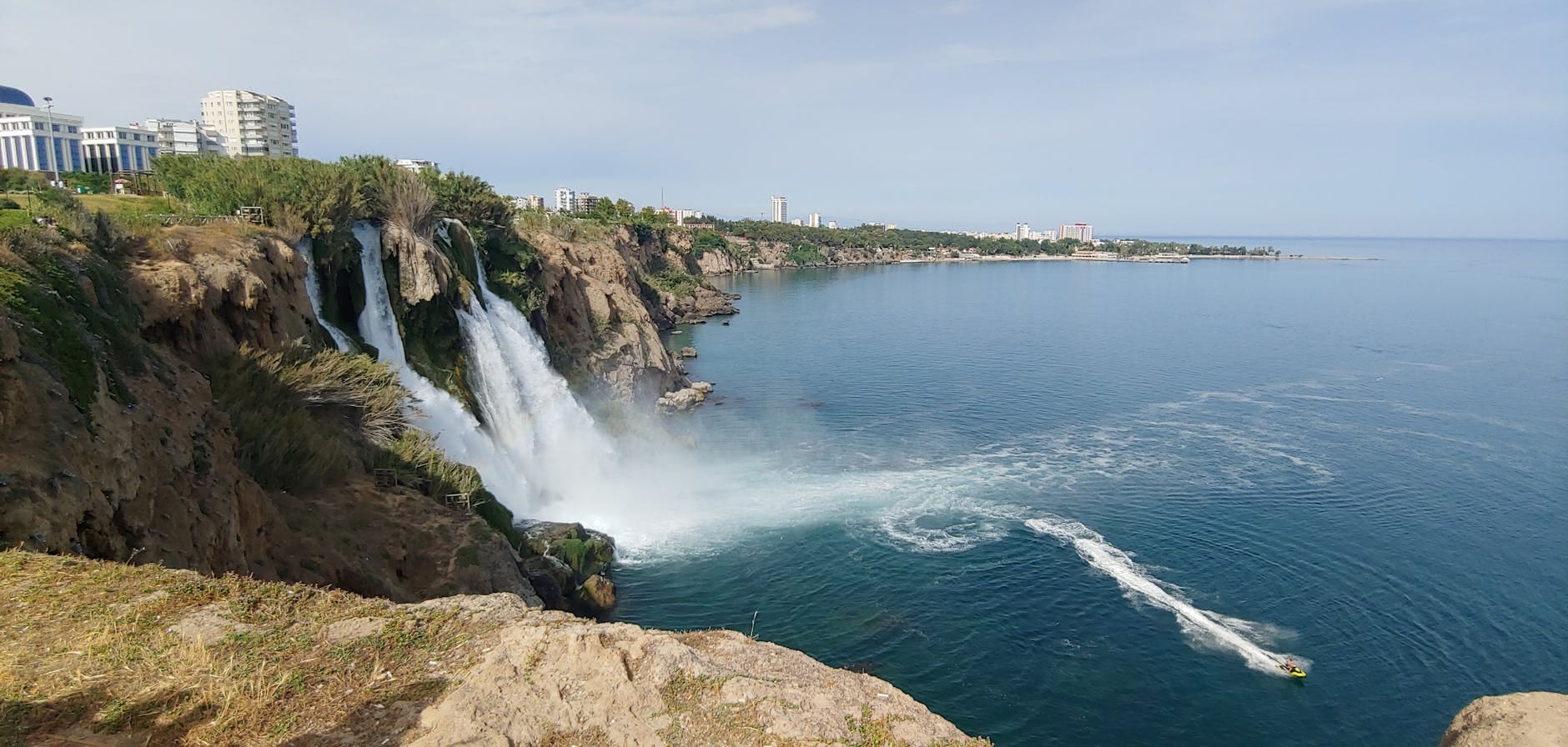
Antalya sits at the edge of the Taurus Mountains, and the rivers rushing down from those peaks create some of the Mediterranean coast's most dramatic waterfalls. This guide covers the Upper and Lower Düden falls, the forested Kurşunlu nature park, and the best natural sites to pair them with for a full day outdoors.
Antalya is one of Turkey's most family-friendly destinations, with options ranging from massive water theme parks to free coastal waterfalls and Roman ruins. This guide covers the best things to do in Antalya with kids, broken down by age group, season, and budget — with honest assessments of what delivers and what disappoints.
Antalya delivers sun almost year-round, but timing your visit correctly makes a significant difference. This guide breaks down every season by temperature, crowds, cost, and what you can actually do — so you arrive at the right moment for your priorities.
A boat trip along the Turquoise Coast is one of the best things you can do in Antalya. This guide breaks down every tour type, realistic pricing, departure logistics, and honest advice on what's worth your money and what isn't.
Antalya sits at the center of one of Turkey's richest regions for day-tripping. Within two hours in any direction you'll find world-class Roman ruins, national parks, underground cave systems, and ancient seaside towns. This guide covers the best excursions, organized by type, with practical advice on timing and how long each takes.
Antalya Airport (AYT) is one of Europe's busiest summer gateways. This guide covers which airlines fly there, how the terminals work, how to get into the city, and how to avoid the most common arrival headaches.
Antalya rewards travelers who explore on foot. From a perfectly preserved Roman triumphal gate to clifftop parks overlooking the Mediterranean, the city's best experiences are largely free. This guide covers the top no-cost attractions across the old town, coastline, and beyond.
Antalya Airport (AYT) handles millions of arrivals each year, and getting from the terminal to your hotel shouldn't eat into your first day. This guide covers every realistic transport option — public buses, private transfers, trams, taxis — with honest cost comparisons and seasonal tips.
Antalya draws over 10 million tourists a year, but is it actually worth your time and money? This guide cuts through the resort-brochure hype to give you a clear-eyed look at what the city delivers, what it oversells, and who it suits best.
Köprülü Canyon is Antalya's top rafting destination, offering a 14 km run through a gorge up to 400 metres deep on the Köprüçay River. This guide covers everything from pricing and booking to what to pack, when to go, and how to avoid common mistakes.
Antalya rewards shoppers who know where to look. This guide covers the best markets and bazaars, the most worthwhile things to buy, honest price expectations, and the practical details that help you shop smarter across one of Turkey's most visited coastal cities.
Antalya packs ancient ruins, dramatic waterfalls, world-class beaches, and serious adventure into one destination on Turkey's Mediterranean coast. This guide cuts through the noise to show you exactly what's worth your time, what to skip, and how to plan it all without overpaying.
Antalya has a distinct food culture that goes well beyond kebabs and baklava. This guide covers the city's signature dishes, where locals actually eat, what things cost, and which spots to skip. Whether you have one meal or two weeks, eat like you know what you're doing.
Antalya's food scene runs deeper than the all-inclusive buffet. This guide breaks down the best neighborhoods to eat in, specific restaurants worth your time, what dishes to order, and which spots to skip — so you eat well every meal.
Choosing where to stay in Antalya shapes your entire trip. This guide breaks down the four main areas, their real trade-offs, current price ranges, and exactly who each neighborhood suits best.