Visiting Antalya in Summer: What to Really Expect
Summer in Antalya means scorching heat, packed beaches, crystal-clear sea, and some of the best value sun holidays on the Mediterranean. This guide covers the weather reality, the best things to do in June, July, and August, how to handle the crowds, and what most visitors get wrong about a summer trip.
Plan and book this trip
Tools from our partner Travelpayouts help you compare flights and hotels. If you book through them, we may earn a commission at no extra cost to you.
Flights
Hotels map
TL;DR
- July and August temperatures regularly hit 33–38°C, with sea water around 28°C — the heat is real but the water is genuinely refreshing.
- Summer is peak season: hotels, flights, and beach loungers all cost more and book up faster than at any other time of year.
- Antalya's summer isn't just beaches — ancient ruins, waterfalls, and boat tours along the coastline make strong alternatives when midday sun is at its worst.
- Plan sightseeing before 10am or after 5pm — the afternoon heat in inland sites like Perge or Termessos is genuinely punishing.
- If summer crowds aren't your thing, read our best time to visit Antalya guide to see how May and October compare.
Summer Weather in Antalya: The Honest Picture
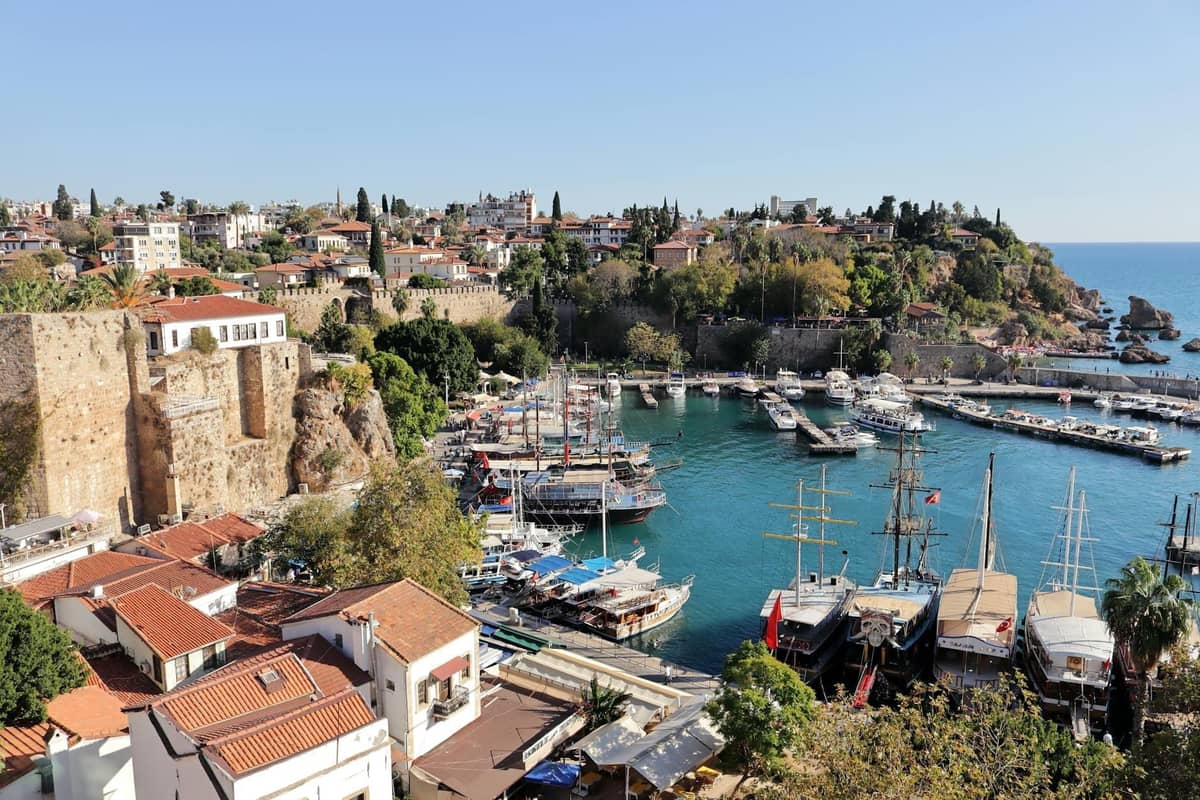
Antalya sits on Turkey's Mediterranean coast and follows a classic Mediterranean climate: hot, dry summers with almost no rain, and mild, wet winters. From June through August, daytime highs run between 31°C and 35°C, with July and August frequently pushing toward 38–40°C during heat waves. Nights cool slightly — typically 22–25°C — which makes open-air dining and evening walks genuinely pleasant. The sea sits around 27–28°C from late June through September, warm enough that even long swims feel comfortable.
Rain is almost nonexistent in summer. July averages fewer than 3 rainy days, and those are usually brief afternoon thunderstorms rather than full-day downpours. June can occasionally produce a surprise shower early in the month, a hangover from spring, but by mid-June conditions are reliably dry. The sky is intensely blue for weeks on end. If you're comparing this to resorts in Greece or Croatia, Antalya runs slightly hotter and noticeably drier.
⚠️ What to skip
The midday heat between 12pm and 4pm in July and August is not just uncomfortable — it can be dangerous, especially for children, older travellers, and anyone doing extended walking. UV index regularly hits 10–11 (extreme). Factor-50 sunscreen, a hat, and shade stops are not optional.
Beaches: Where to Go and What to Pay
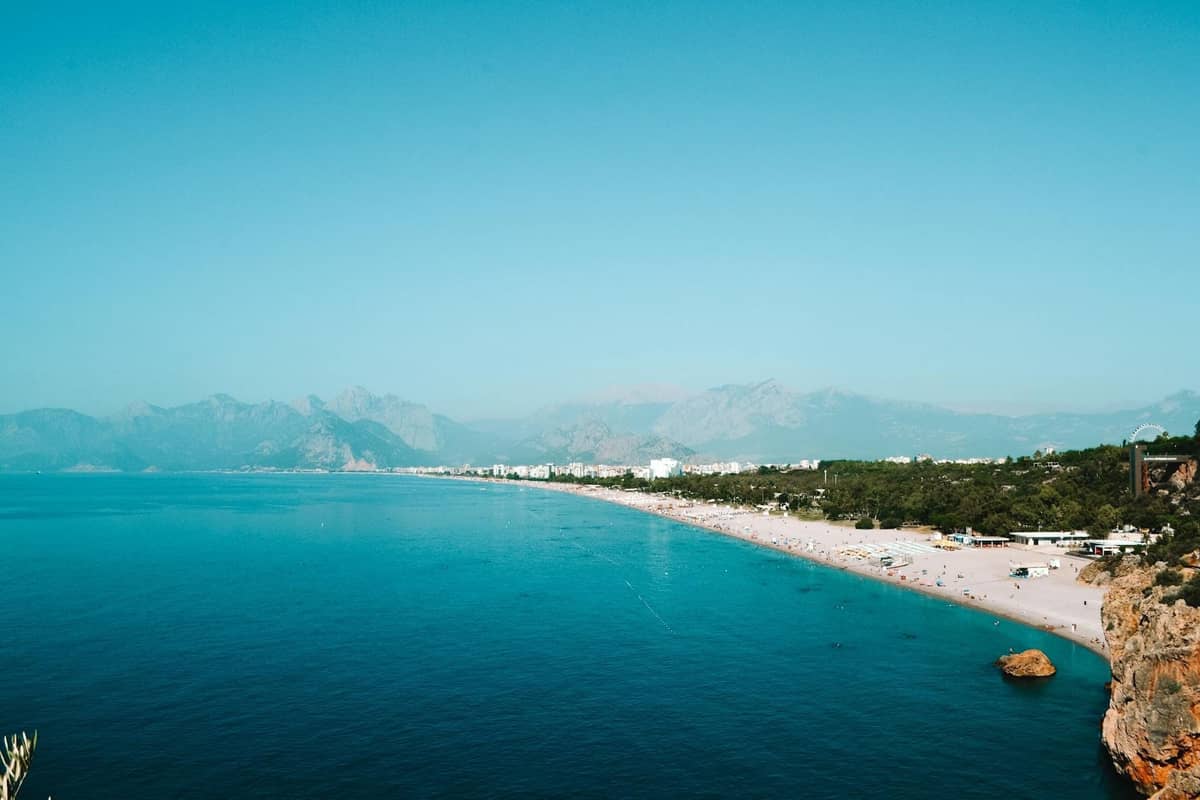
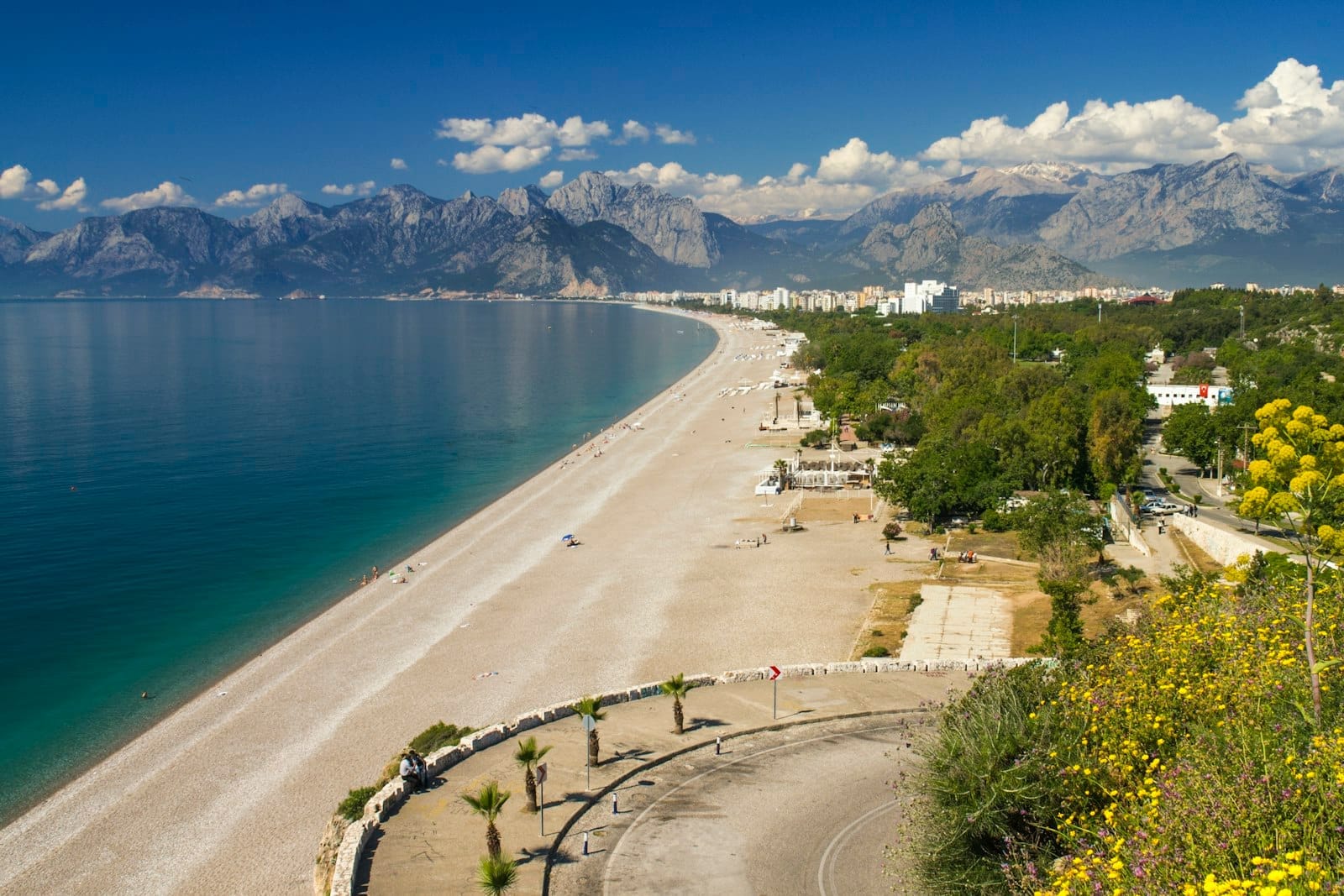
Antalya's two main city beaches sit at opposite ends of the urban seafront. Konyaaltı BeachKonyaaltı Beach stretches west of the city center for around 7km, backed by Bey Mountains that give it one of the more dramatic settings of any city beach on the coast. The eastern option, Lara BeachLara Beach has finer sand and calmer waters, and it sits in the same zone as most of the large all-inclusive resorts. Both beaches hold Blue Flag status and are well-organized with lifeguards, sunbed rentals, and beach bars.
Sunbed and umbrella hire at organized beach sections typically runs 150–300 Turkish Lira per set per day, depending on location and operator — prices at the front rows facing the water are always higher. Free public sections exist at both beaches but fill up early in summer; arriving after 10am in July means either paying for a sunbed or sitting on a towel on rocky ground. For families especially, paying for organized sections removes a lot of friction.
- Konyaaltı Beach Long, pebbly-to-sandy stretch with mountain backdrop. Good for watersports hire, kayaking, and paddle boarding. Gets very crowded from late June. Tram access makes it easy to reach from the city center.
- Lara Beach Finer sand, calmer waves, and more resort infrastructure. Good for families. Adjacent to the large all-inclusive hotel strip. Public sections exist but organized paid areas dominate in summer.
- Kaputaş Beach (day trip) Around 180km west near Kaş, this small turquoise cove is one of the most photographed spots on the coast. Worth the drive for a day trip, but go mid-week to avoid weekend crowds from both Antalya and Fethiye.
💡 Local tip
If you're staying in a Belek or Lara all-inclusive resort, the private beach infrastructure is usually excellent — sunbeds, shade, and service are included in your rate. Heading to public beaches on top of that is rarely worth the hassle in peak July or August.
Things to Do Beyond the Beach
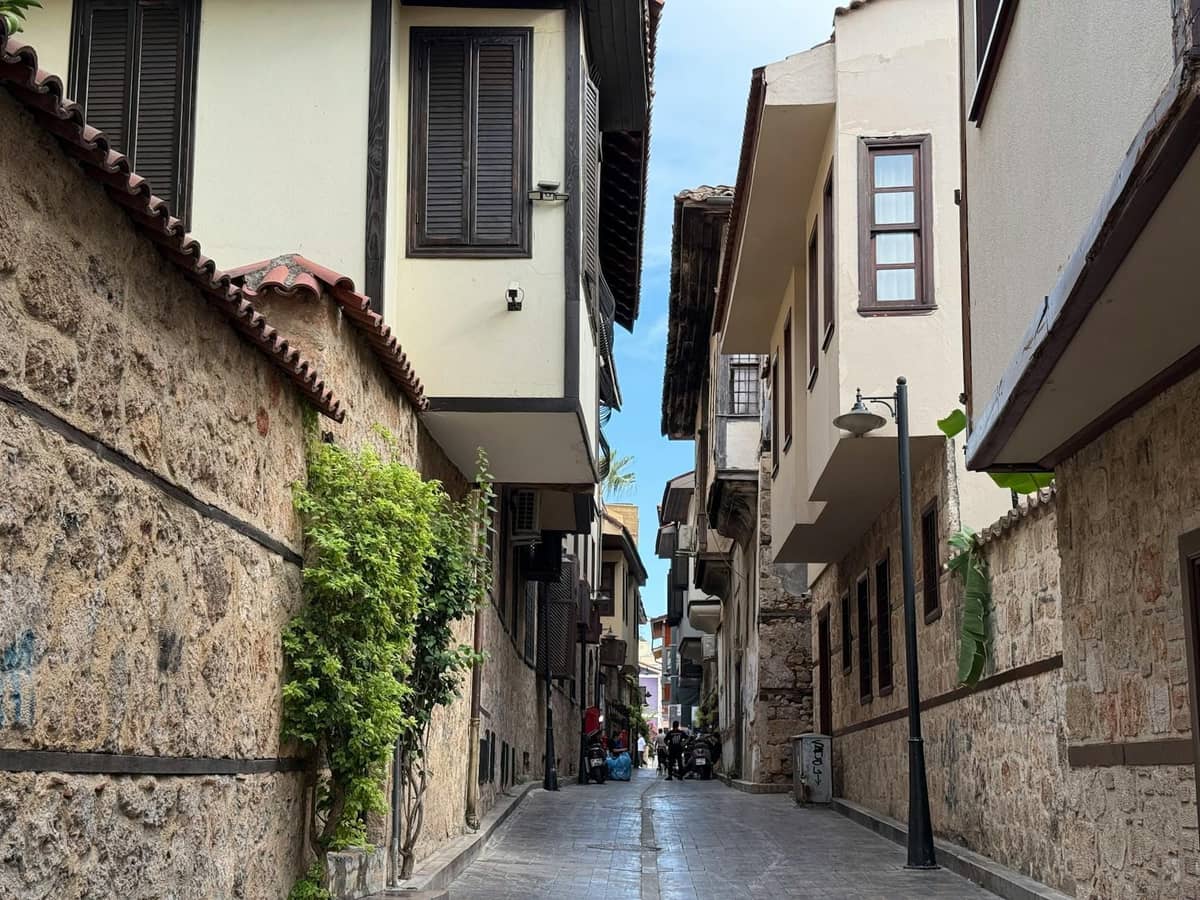
One of the most common mistakes in summer Antalya is spending all day on the beach and nothing else. The city and its surroundings have serious historical depth. Kaleiçi, the old townKaleiçi is walkable in the early morning before heat builds — narrow Ottoman-era lanes, Roman-period walls, and the iconic Hadrian's Gate are all within a compact area. Aim to explore Kaleiçi before 10am; by noon, the stone-paved streets trap heat and the tourist density triples.
For ancient ruins, Perge Ancient City is roughly 18km east of the city center and is one of the best-preserved Hellenistic and Roman sites in Turkey. The site is large and exposed; visiting in summer means starting no later than 8:30am. Bring at minimum 1.5 liters of water per person. The site has limited shade. Entry fees apply and are subject to change — check the Turkish Ministry of Culture and Tourism website for current pricing.
The waterfalls are an underrated summer option. The Upper Düden Waterfalls sit in a park about 12km north of the city and are significantly cooler than the coast — the spray and tree cover make a real difference on a 37°C day. The Lower Düden Waterfalls cascade directly into the sea and are best viewed from a boat. Combining both in a half-day trip, with the park in the morning and a boat tour in the afternoon, is a practical and cooler alternative to peak-hour beach exposure.
- Antalya Museum: Air-conditioned, world-class collection of statues and artifacts from Perge and other Lycian sites. One of Turkey's best archaeological museums. Budget 2-3 hours.
- Boat tours along the coast: Half-day and full-day trips leave from Antalya Marina in the morning. The sea breeze makes these far more comfortable than inland sightseeing in summer.
- Aspendos Theatre: 2,000-year-old Roman amphitheater east of the city. Best visited early morning. The Aspendos Opera and Ballet Festival has recently run in September and October — check the official programme for current dates.
- Kursunlu Waterfall: Smaller, forested cascade around 36km from the city. Less visited than Düden, genuinely cooler in the trees, and good for families.
- Tünek Tepe viewpoint: The hill west of the city has sunset views over the bay, but the cable car has been closed in recent periods — verify reopening before planning around it.
Crowds, Costs, and Booking Reality in Peak Season
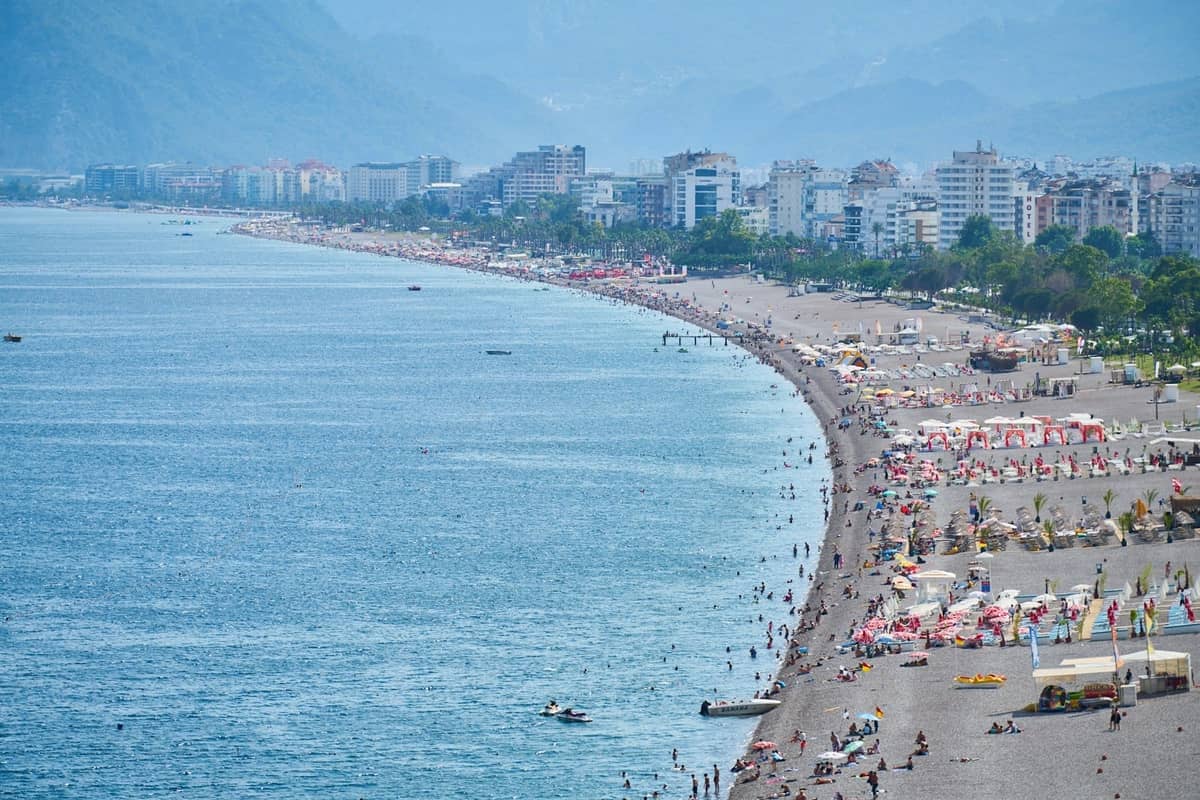
Summer is unambiguously peak season in Antalya. The city receives millions of visitors between June and August, with July and the first two weeks of August being the most congested period. Antalya Airport (AYT) handles a significant volume of charter flights from across Europe during this window — primarily from the UK, Germany, Russia, and Scandinavia. Flight prices from major European cities are at their annual high during these weeks.
Hotel rates follow the same pattern. A room that costs €50–70 per night in May might cost €90–140 for the same dates in late July. All-inclusive resorts around Belek and Lara are particularly popular with European families and often sell out months in advance for peak weeks. Booking 3–4 months ahead for July travel is not overcautious — it's standard practice. Last-minute availability in August is genuinely tight.
Budget travellers are not shut out of summer Antalya, but they need to work harder. Budget options in Antalya include guesthouses and pansiyons in Kaleiçi, where a basic but clean double can still be found for €30–55 per night. Eating at lokanta-style lunch restaurants (traditional Turkish cafeteria dining) keeps meal costs well under €10 per person. The city's public tram (AntRay) is cheap and covers the main coastal stretch efficiently.
Practical Tips for Surviving (and Enjoying) the Heat
The single most effective adjustment for summer Antalya is shifting your schedule. Turkish locals follow a sensible rhythm: active mornings, a long slow midday break, then a productive late afternoon and evening. Tourists who fight this rhythm — trying to do ruins tours at 2pm or walking Kaleiçi at 1pm — have a miserable time. Adjust your expectations: lunch at a shaded restaurant between noon and 3pm is not wasted time, it's correct strategy.
- Water: Tap water is not recommended for drinking in tourist areas — buy bottled water and carry at least 1 liter at all times when walking outdoors.
- Sun protection: Factor 50 sunscreen, a wide-brimmed hat, and UV-blocking sunglasses are standard kit. Reapply sunscreen after swimming.
- Clothing: Lightweight, loose linen or cotton. At mosques and religious sites, shoulders and knees must be covered — a light scarf or sarong in your bag solves this without extra weight.
- Payment: Turkish Lira is needed for most transactions; many beach vendors and smaller restaurants don't take cards. ATMs are widely available but check foreign transaction fees with your bank.
- Electricity and plugs: Turkey uses Type C and F plugs at 230V. Bring a universal adapter if you're coming from the UK or North America.
- Emergency number: 112 covers police, ambulance, and fire services across Turkey.
✨ Pro tip
Evening is when Antalya genuinely comes alive in summer. The marina area, the old town harbor, and the clifftop promenade at Karaalıoğlu Park all cool down significantly after 7pm. Save your social and exploratory energy for after sunset — restaurants fill up from 8pm, and outdoor seating stays comfortable until midnight.
Common Misconceptions About Summer in Antalya
The most persistent myth is that summer heat makes Antalya unbearable. It is genuinely hot, and that deserves honest acknowledgment, but 'unbearable' overstates it for most travellers. The sea temperature means even a 30-minute swim provides real relief, and the near-zero humidity of a Mediterranean summer is far more manageable than tropical heat at the same temperature. Compare it to, say, Dubai at the same time of year and Antalya feels positively mild.
A second misconception is that Antalya in summer is only for beach resorts and has no cultural substance. That's simply wrong. The old town walking tour covers 2,000-plus years of layered history in a compact area. The Antalya Museum is one of the finest archaeological museums in the country. And the surrounding region — with sites like Termessos set dramatically in the mountains above the city — rewards those who look beyond the shoreline.
Finally, some travellers avoid summer entirely because they've heard about overtourism. The crowds are real, but Antalya is a large, well-organized destination that handles high season reasonably well. The problems are concentrated: beach access at popular spots in late July, restaurant queues in Kaleiçi on Saturday evenings, and taxi waits at the airport after large flight arrivals. These are manageable with a bit of planning, not reasons to cancel the trip.
FAQ
Is Antalya too hot in July and August?
Temperatures regularly reach 35–38°C in July and August, which is genuinely hot. However, the sea temperature of around 28°C provides real relief, and humidity is low compared to tropical destinations. Shifting sightseeing to mornings and evenings makes the heat manageable for most travellers. Those with heat sensitivity or very young children may find May, June, or September more comfortable.
How crowded does Antalya get in summer?
Summer, especially mid-July to mid-August, is peak season. Beaches, popular restaurants in Kaleiçi, and boat tours all see high demand. Book accommodation 2–4 months in advance for July travel. Arriving at attractions before 9am significantly reduces wait times and crowd density.
What is the sea temperature in Antalya in summer?
The Mediterranean along the Antalya coast reaches around 27–28°C in July and August — warm enough for long, comfortable swims. The water stays above 25°C from late June through September.
Are there things to do in Antalya in summer besides the beach?
Yes, a lot. Early morning ruins visits to Perge or the old town, the Antalya Museum (air-conditioned), Düden Waterfalls, boat tours, and evening dining at the marina are all strong options. The Aspendos Opera and Ballet Festival has recently shifted toward September and October, so check the current programme rather than assuming summer dates.
Is summer a good time to visit Antalya on a budget?
Summer is the most expensive time to visit: hotels and flights cost more than in shoulder season. That said, budget travel is still possible with Kaleiçi guesthouses, public transport, and local lokantas for meals. The biggest costs to watch are beachside sunbed hire and organized tour mark-ups targeted at package tourists.