Best Time to Visit Antalya: A Season-by-Season Breakdown
Antalya delivers sun almost year-round, but timing your visit correctly makes a significant difference. This guide breaks down every season by temperature, crowds, cost, and what you can actually do — so you arrive at the right moment for your priorities.
Plan and book this trip
Tools from our partner Travelpayouts help you compare flights and hotels. If you book through them, we may earn a commission at no extra cost to you.
Flights
Hotels map
TL;DR
- The best time to visit Antalya for most travelers is mid-April to mid-June or September to October: mild temperatures, manageable crowds, and lower prices than peak summer.
- Summer (June–September) is ideal for beach holidays but expect 35°C+ heat, packed resorts, and premium prices — check the Antalya beaches guide to plan your coastal time.
- Winter (December–March) is mild by European standards (10–18°C) and excellent for culture, ruins, and spas at bargain rates — but most beach infrastructure closes down.
- Antalya enjoys roughly 300 sunny days per year, so a complete washout is rare regardless of when you travel.
- Budget travelers get the best deals from November through early March — see how to visit Antalya on a budget for more cost-cutting strategies.
Understanding Antalya's Climate
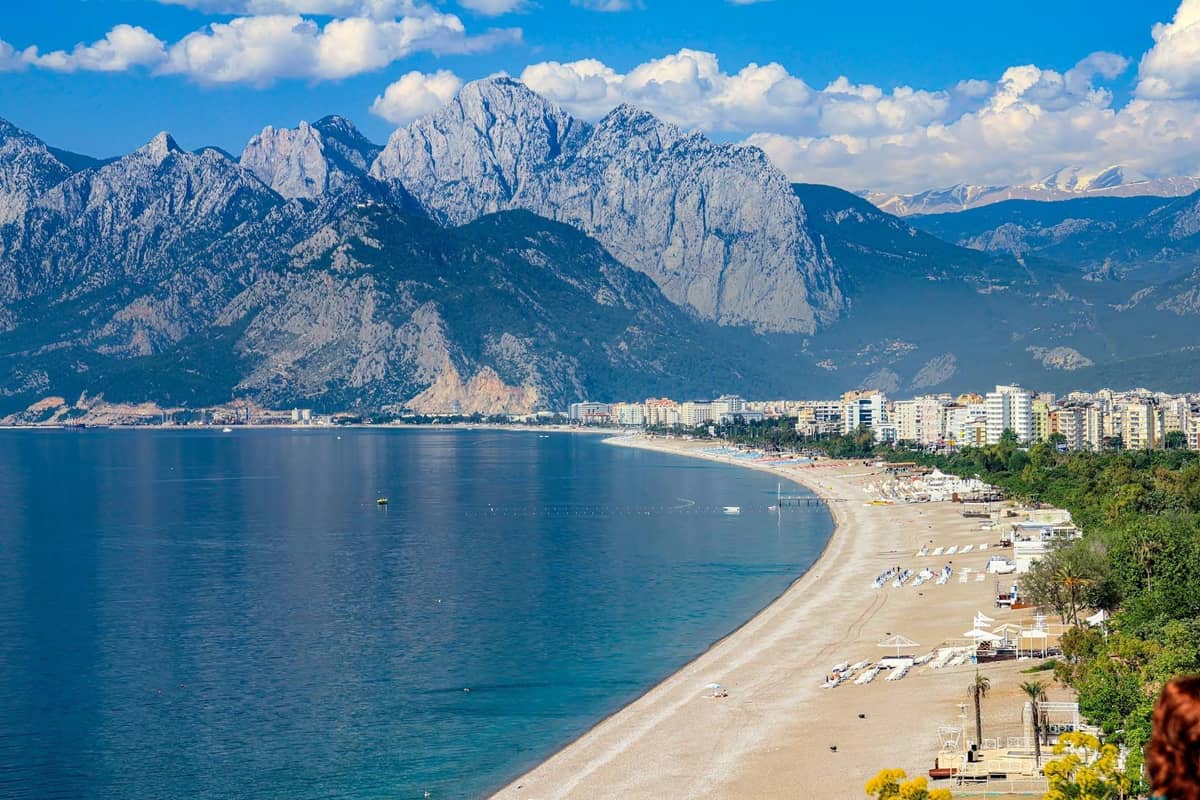
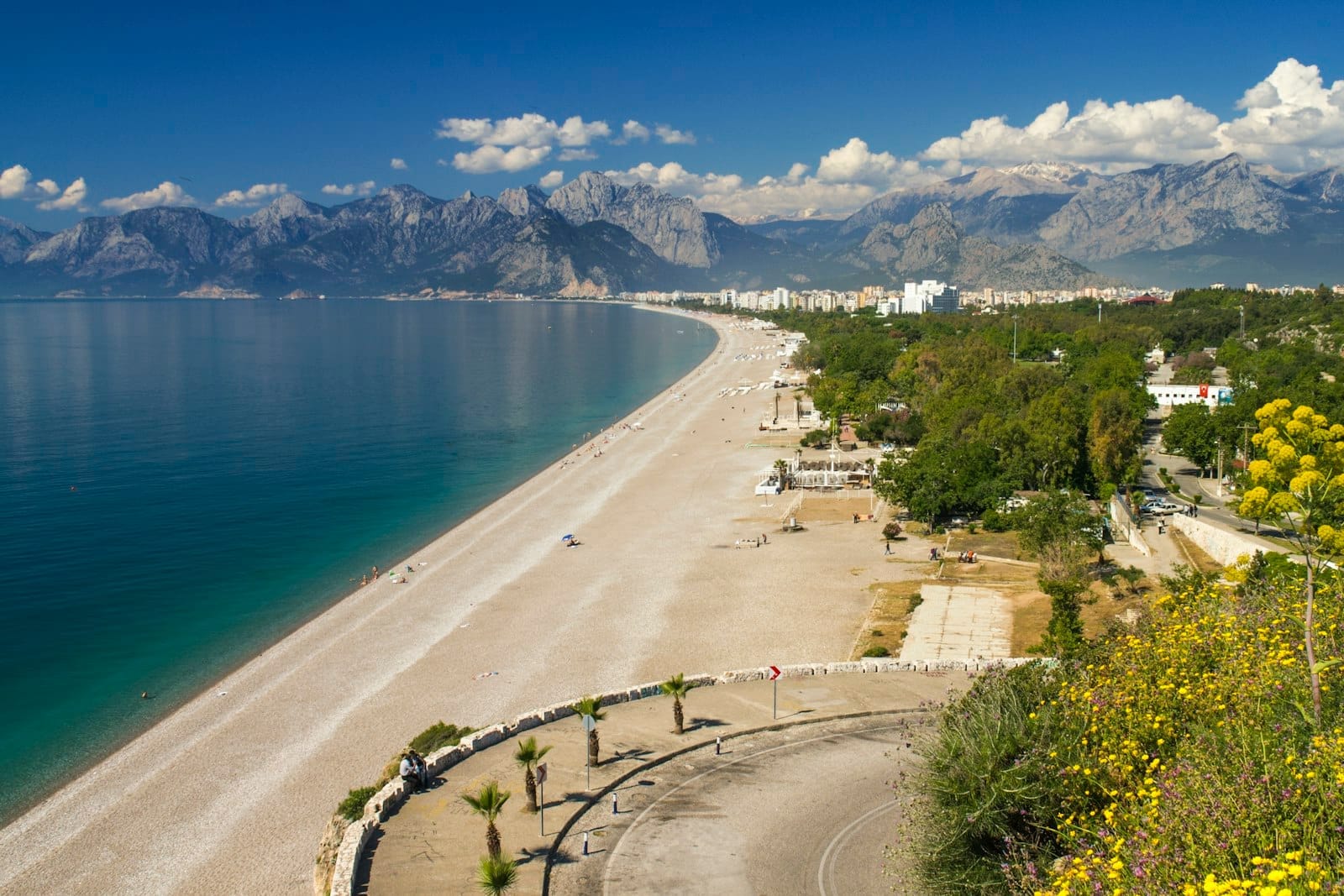
Antalya, capital of Antalya Province on Turkey's Mediterranean coast, has a classic subtropical Mediterranean climate: hot and dry from June through September, then mild and occasionally rainy from October through March. The city averages around 300 sunny days per year, which sounds appealing until you experience a July afternoon pushing 38°C in the old quarter. Heat is the main variable that shapes when visitors should go, not rain.
Summer temperatures regularly hit 30–38°C inland and in the city center, while the coast benefits from sea breezes. The Mediterranean stays warm enough to swim from late May through November, peaking at around 28°C in August and September. Winters are genuinely mild compared to northern Europe — daytime temperatures of 15–18°C are typical from December to February — but rain is frequent, and some coastal businesses operate reduced hours or close entirely.
ℹ️ Good to know
Antalya receives most of its annual rainfall between November and March. Summer months (June, July, August) see almost no rain at all. This dry season reliability is one reason the Turkish Riviera attracts package tourists in such large numbers.
Spring (March to May): The Standout Sweet Spot
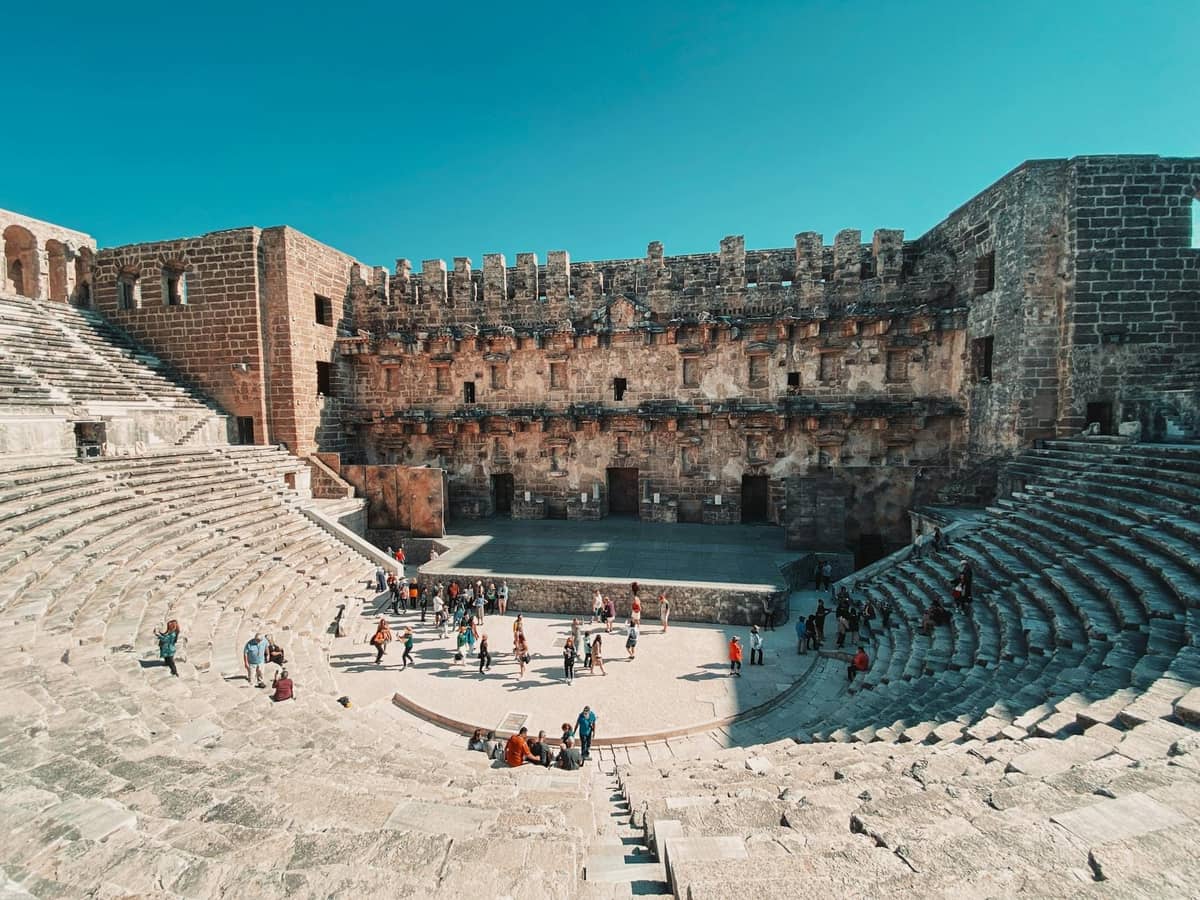
Spring is widely considered the best time to visit Antalya if you want to explore seriously: ruins, waterfalls, national parks, and the city itself. Temperatures range from 18°C in early March to 28°C by late May, making outdoor activity comfortable. The Taurus Mountains behind the city are still green, wildflowers are in bloom, and the crowds that define July and August simply aren't there yet. Sites like Termessos and Aspendos Theatre are far more rewarding to visit when you're not competing with tour buses in 35°C heat.
The sea warms slowly through spring. By April it's around 18–20°C — cool but manageable for a swim. By late May it's genuinely comfortable at 22–24°C. If beach swimming is your priority, wait for late May or accept that April swimming requires some determination.
- March Nevruz (Persian New Year) celebrations in mid-March. Cooler evenings (12–16°C). Good for hiking and ruins. Sea still cold (~16°C).
- April Ideal sightseeing weather (18–24°C). Hotels at 60–70% of peak rates. Sea swimmable for the hardy. Waterfalls at peak flow after winter rains.
- May Antalya hosts the Sand Sculpture Festival and various cultural events. Temperatures climb toward 28°C. Sea hits 22–24°C. This is arguably the single best month — warm enough for beach days, cool enough for ruins.
💡 Local tip
Visit the Upper and Lower Düden Waterfalls in April or early May. Winter rains feed the falls to their most dramatic flow, and the surrounding parkland is lush green. By August, water levels drop noticeably.
Summer (June to September): Peak Season Reality Check

June through September is peak season, and the numbers reflect it: Antalya Airport handles millions of arrivals during this window, and beach resorts along the coast operate at capacity. The sea is at its warmest (26–28°C in August), the sun sets late, and beach infrastructure is fully operational. If a classic sun-and-sea holiday is the goal, this is when the city delivers on its promise.
The honest drawback is the heat. Mid-summer afternoons in Kaleiçi (the old town) are genuinely exhausting — narrow lanes trap heat, and exploring ruins like Perge at noon in July is not pleasant. Experienced travelers in summer front-load sightseeing before 10am, retreat to the pool from noon to 4pm, then head back out in the early evening.
Prices in July and August are at their annual peak. Hotels that cost 60 euros in April can hit 150–200 euros for the same room in peak summer. Flights follow the same pattern. Budget travelers who insist on July should book three to four months ahead or accept last-minute scraps.
⚠️ What to skip
If you are visiting with young children or elderly travelers, July and August heat (regularly 35–38°C) can be genuinely difficult. September offers almost identical beach conditions with temperatures dropping to a much more manageable 28–32°C.
Autumn (September to November): The Underrated Window

September is the month that regular Antalya visitors often keep quiet about, and for good reason. The sea is at its warmest of the entire year — often 27–28°C — temperatures pull back from summer highs to a comfortable 25–30°C, and the crowds begin to thin noticeably after the first week. It combines the best of summer's beach conditions with spring's relative calm.
October continues this pattern: sea temperatures hold at 22–24°C through mid-month, daytime air temperatures settle around 22–26°C, and hotel rates drop 20–30% from August peaks. The Aspendos Opera and Ballet Festival runs in September, making it one of the best months for culture alongside the beach. Check the Aspendos Festival guide for scheduling and ticket details.
November is where it gets more nuanced. Air temperatures drop to 15–20°C and rain starts appearing. The sea stays warmer than the air for much of the month — a strange but pleasant phenomenon that locals are fond of pointing out — but most all-inclusive resorts start winding down operations. If your trip is about archaeological sites, day trips, and the city itself rather than beach time, November still works. If you want a beach holiday, wrap up by late October.
Winter (December to March): Who Should Actually Consider It

Winter in Antalya is genuinely underrated for a specific type of traveler. Daytime temperatures of 14–18°C from December through February are cold by beach holiday standards but entirely comfortable for walking, sightseeing, and eating your way through the city. The citrus harvest fills markets with cheap, extraordinary oranges and grapefruits from December onward. Hotels drop to their annual low rates — sometimes less than half of summer prices for comparable rooms.
The ancient sites are particularly rewarding in winter. You can walk through the ruins of Termessos or explore Kaleiçi with a fraction of the summer crowds, and the light in winter is softer and better for photography. The Antalya Museum — one of Turkey's best archaeological collections — makes perfect sense on a rainy afternoon.
- Beach infrastructure: largely closed November through March. Don't count on sun loungers or beach clubs operating.
- Rainfall: concentrated in December, January, and February. Expect some multi-day rainy stretches.
- Skiing day trip: The Saklikent ski resort is about 50km from the city center and operates December–March — swimming in the morning and skiing in the afternoon is genuinely possible on good days.
- All-inclusive resorts in Belek and Lara largely close or operate at skeleton capacity in winter.
- City restaurants, markets, and the old town operate normally through winter.
Quick Comparison: Best Month for Each Travel Style
- Beach holidays and swimming Late June through September. September hits the sweet spot of warm sea without extreme heat.
- Sightseeing and ancient ruins April, May, and October. Comfortable temperatures, manageable crowds, full site access.
- Budget travel November through early March. Lowest hotel rates, cheap flights, sites mostly open.
- Families with children Late May, June, or September. Warm sea plus tolerable heat.
- Hiking and outdoor activity April through June and October. The Taurus Mountains are green and temperatures are hiking-friendly.
- Festivals and events May (Sand Sculpture Festival), September (Aspendos Opera and Ballet Festival), October (Republic Day).
For couples looking for a romantic visit, April and May offer the most complete experience: good weather, quiet beaches, open ruins, and the city at its least frantic. The Antalya for couples guide covers the best spots and experiences to plan around.
✨ Pro tip
If you're flying from northern Europe, compare prices for mid-May versus early June before assuming June is the obvious beach month. May often offers cheaper flights, cooler temperatures for non-beach activities, and a sea that's perfectly swimmable by mid-month — without the school holiday premium.
Regardless of when you visit, Antalya rewards travelers who plan beyond the beach. The day trips from Antalya options are extensive in every season, from canyon rafting to ancient cities to mountain villages that most package tourists never reach.
FAQ
What is the best time to visit Antalya for good weather?
Mid-April through June and September through mid-October offer the most balanced weather: warm enough for swimming, cool enough for sightseeing and day trips. July and August are the hottest and most crowded months, with temperatures regularly exceeding 35°C.
Is Antalya worth visiting in winter?
Yes, for the right traveler. Daytime temperatures of 14–18°C are comfortable for walking the old town, visiting museums and ancient sites, and exploring at a relaxed pace. Beach infrastructure is largely closed, but hotel rates are at their annual lowest and the city itself operates normally.
When is the cheapest time to visit Antalya?
November through early March offers the lowest hotel rates and cheapest flights. December and January are the quietest months. If budget is the priority and beach swimming is not, this window gives excellent value.
Is September a good time to visit Antalya?
September is arguably the best single month for a combined beach and sightseeing holiday. The sea is at its warmest (27–28°C), summer heat begins to ease, crowds thin after the first week, and hotel prices start dropping from August peaks. The Aspendos Opera and Ballet Festival also runs in September.
How hot does Antalya get in July and August?
Very hot. Daytime temperatures of 33–38°C are typical in July and August, with occasional spikes above that. The city center and ruins trap heat significantly. Most experienced visitors doing sightseeing in summer start before 10am and avoid outdoor activity between noon and 4pm.