Best Ancient Ruins Near Antalya: Theaters, Temples & Lost Cities
Antalya sits at the heart of ancient Pamphylia, surrounded by some of the Mediterranean world's most remarkable ruins. This guide covers the best Roman theaters, Greek temples, mountain citadels, and archaeological sites within reach of the city.
Plan and book this trip
Tools from our partner Travelpayouts help you compare flights and hotels. If you book through them, we may earn a commission at no extra cost to you.
Flights
Hotels map
Few regions in the Mediterranean rival the concentration of ancient history around Antalya. Within a two-hour drive, you can stand inside a Roman theater that still hosts opera performances, walk the colonnaded streets of a Greco-Roman city, and climb to a mountain fortress that Alexander the Great is said never to have taken. The ruins here span Greek, Roman, Lycian, and Pisidian civilizations, and many sites remain genuinely uncrowded. Before planning your itinerary, check the day trips from Antalya guide for practical transport options, and consider pairing ruins visits with the Kaleiçi walking tour to cover the ancient monuments right in the city center. Spring and autumn are ideal for outdoor sites, when temperatures stay below 30°C and the light is at its best for photography.
💡 Local tip
Carry cash in Turkish Lira for site entry fees. Most ancient ruins charge separately and card readers are unreliable. Arrive early at Aspendos and Perge in summer — both get hot and crowded by midday.
The Big Two: Aspendos & Perge
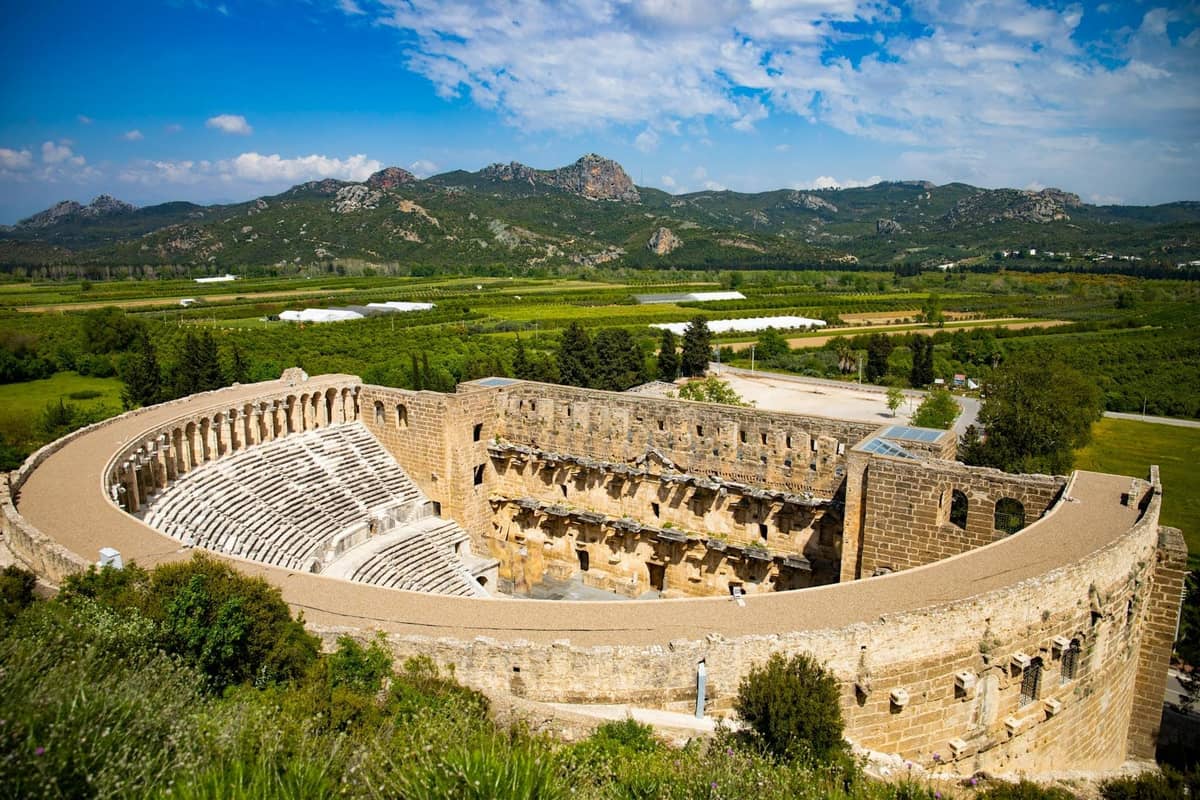
These are the anchor ruins of the Antalya region and the sites most first-time visitors prioritize. Both are east of the city, roughly 40-50 minutes apart by road, making them natural companions for a single full-day trip. Aspendos has the more dramatic centerpiece; Perge rewards those who want to wander an entire ancient city. Many of the sculptures excavated at Perge are now displayed in the Antalya city center at the renowned Antalya Museum, so combining both in one day gives you the full picture.
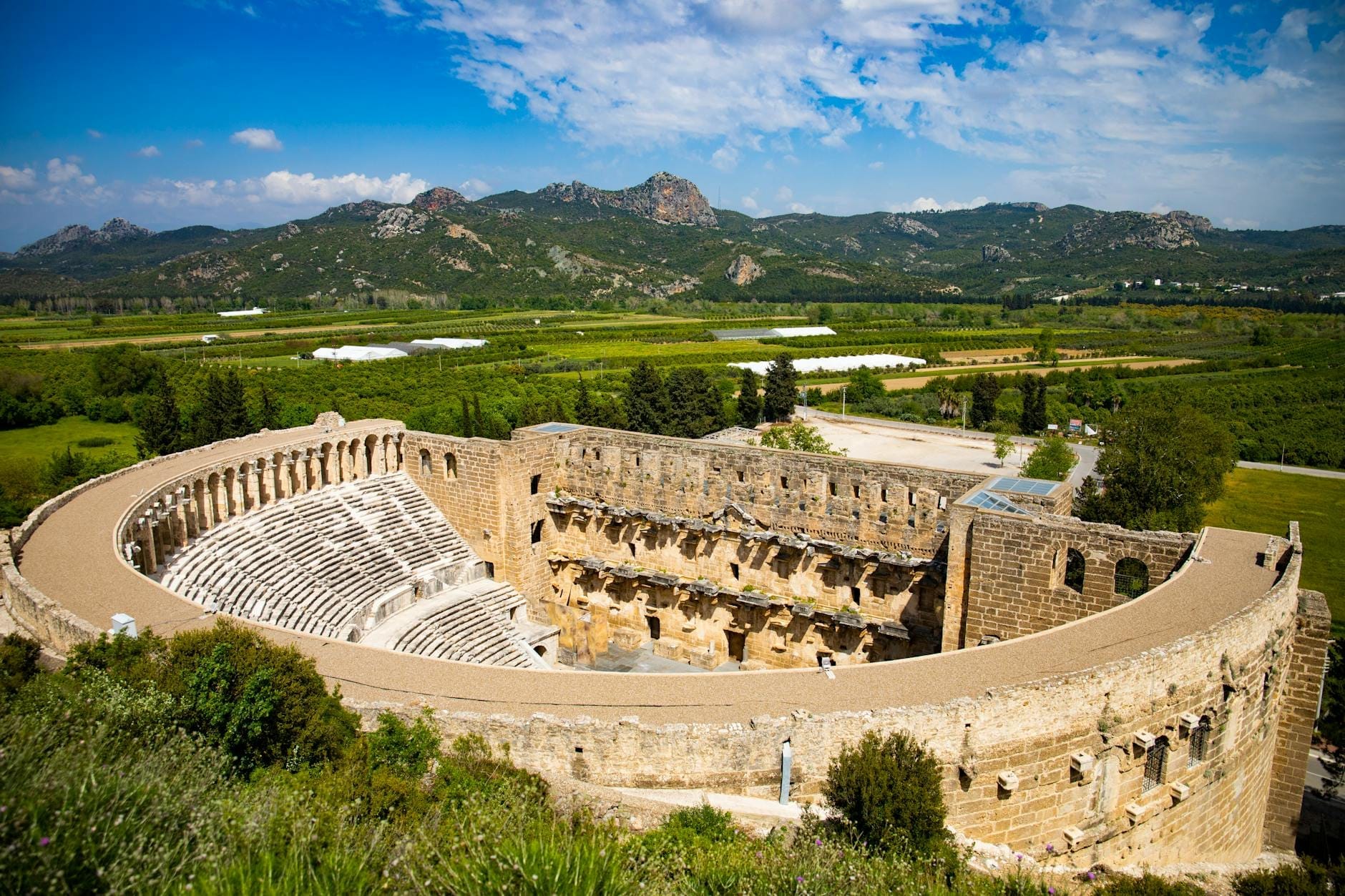
1. Walk Inside One of the Mediterranean's Best-Preserved Roman Theaters at Aspendos
Built in 155 AD and still structurally intact, Aspendos Theater retains its original stage building and seats roughly 12,000-15,000 depending on the estimate. At 47 km east of Antalya, it is the region's single most impressive ancient monument. Allow 2 hours to explore the theater and surrounding ruins.
Explore1. Walk Inside One of the Mediterranean's Best-Preserved Roman Theaters at Aspendos
Built in 155 AD and still structurally intact, Aspendos Theater retains its original stage building and seats roughly 12,000-15,000 depending on the estimate. At 47 km east of Antalya, it is the region's single most impressive ancient monument. Allow 2 hours to explore the theater and surrounding ruins.
Explore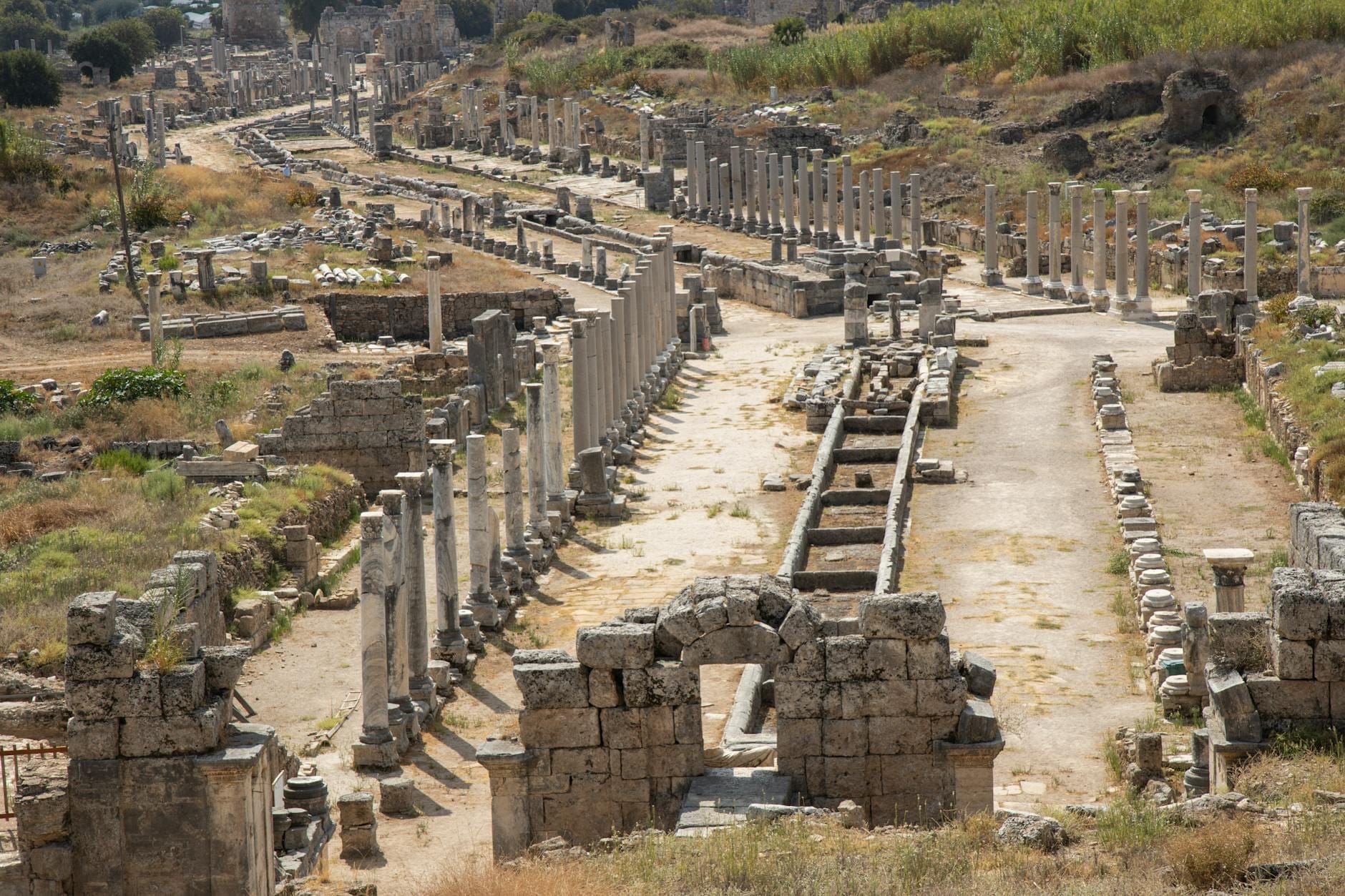
2. Explore the Colonnaded Streets and Stadium of Perge Ancient City
One of ancient Pamphylia's great cities, Perge sits 17km east of Antalya with colonnaded boulevards, a 12,000-seat stadium, Roman baths, and Hellenistic gates still standing. Plan 2-3 hours here. Much of its finest sculpture is now in the Antalya Museum.
Explore2. Explore the Colonnaded Streets and Stadium of Perge Ancient City
One of ancient Pamphylia's great cities, Perge sits 17km east of Antalya with colonnaded boulevards, a 12,000-seat stadium, Roman baths, and Hellenistic gates still standing. Plan 2-3 hours here. Much of its finest sculpture is now in the Antalya Museum.
Explore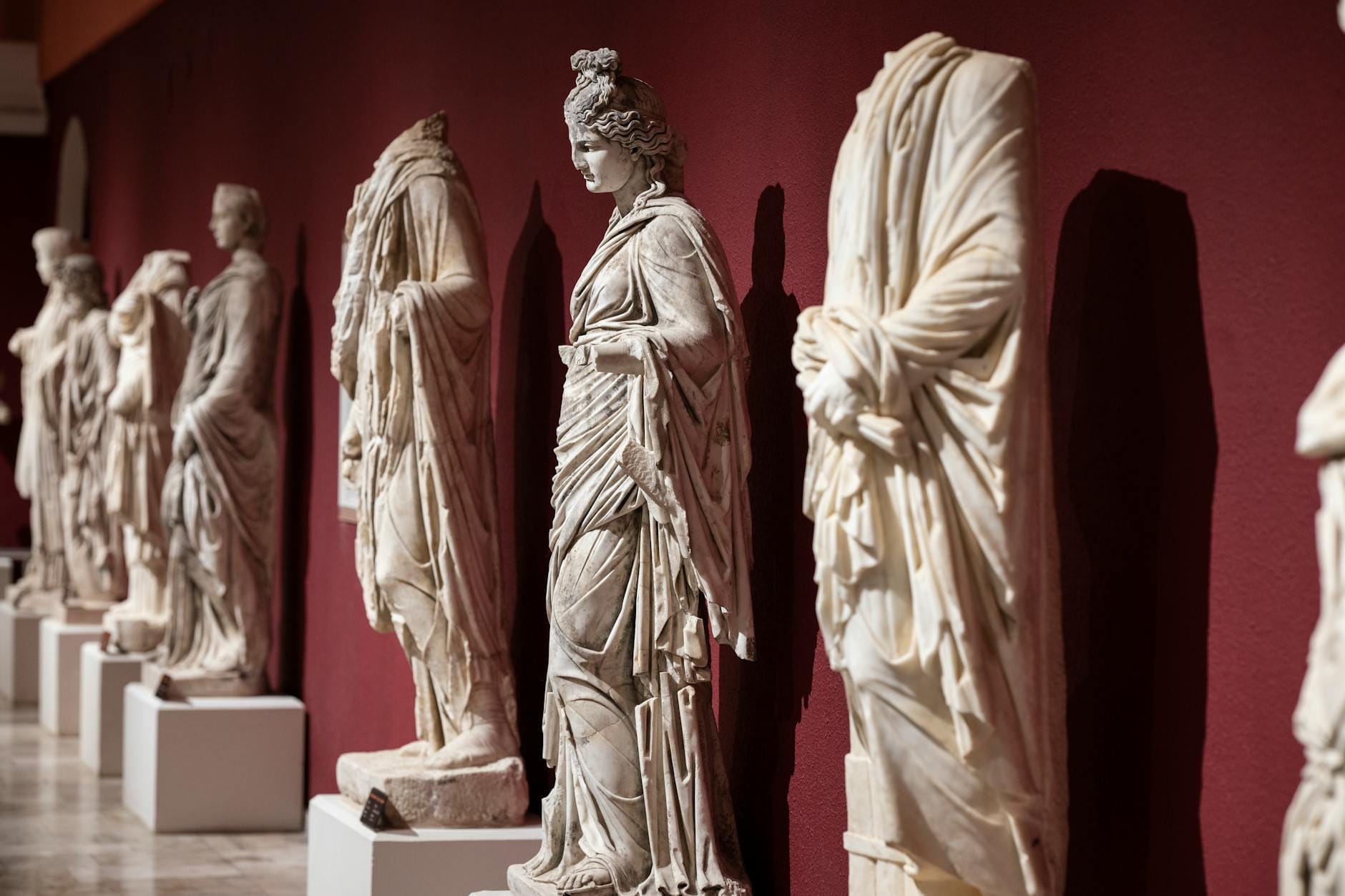
3. See the Sculptures of Perge and Aspendos at Antalya Museum
Turkey's finest regional archaeological museum holds galleries of Greco-Roman statuary, sarcophagi, and artifacts from the surrounding ancient cities. The Hall of Gods and the emperors' portrait gallery alone justify a visit before or after any ruins day trip.
Explore3. See the Sculptures of Perge and Aspendos at Antalya Museum
Turkey's finest regional archaeological museum holds galleries of Greco-Roman statuary, sarcophagi, and artifacts from the surrounding ancient cities. The Hall of Gods and the emperors' portrait gallery alone justify a visit before or after any ruins day trip.
ExploreSide: Temples and Theater by the Sea
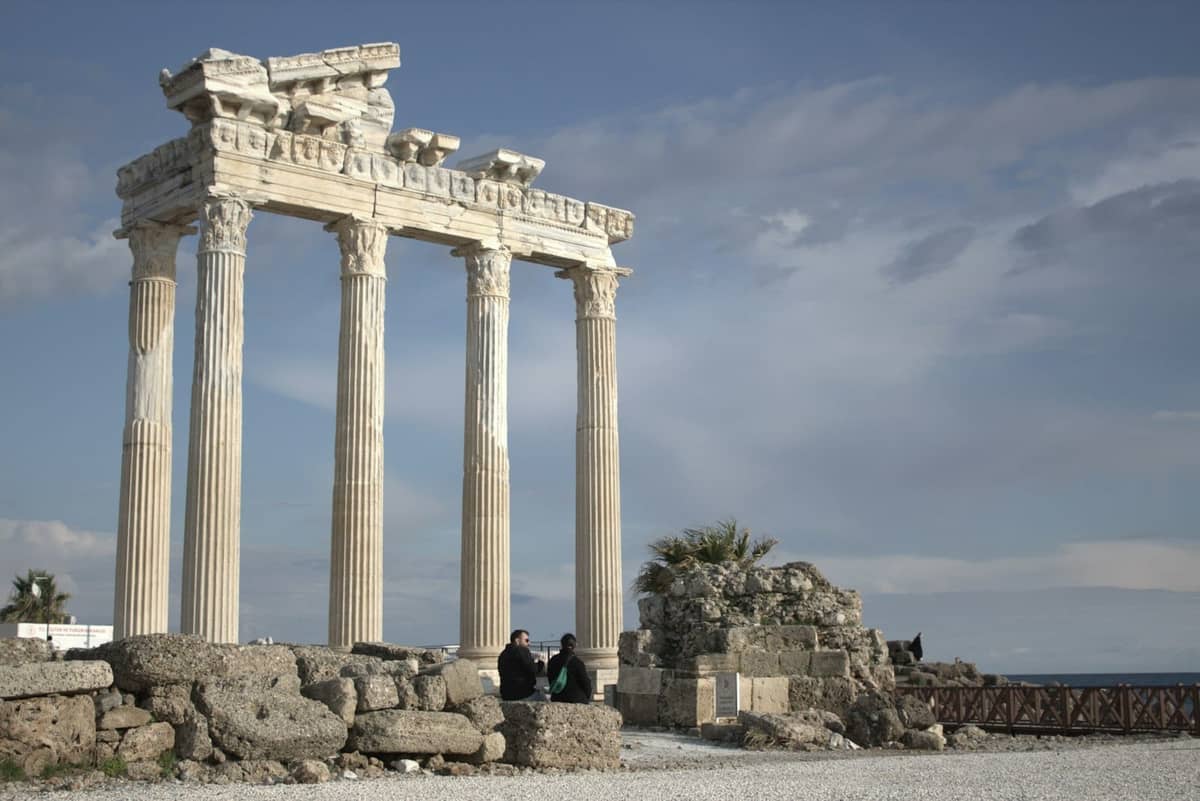
The ancient city of Side occupies a compact peninsula about 75km east of Antalya, making it easy to visit multiple monuments in a single afternoon. Unlike the inland sites, Side integrates ruins directly into a working seaside town, so you walk past Roman columns between restaurants and shops. It pairs naturally with a stop at Side beach for a swim after sightseeing.
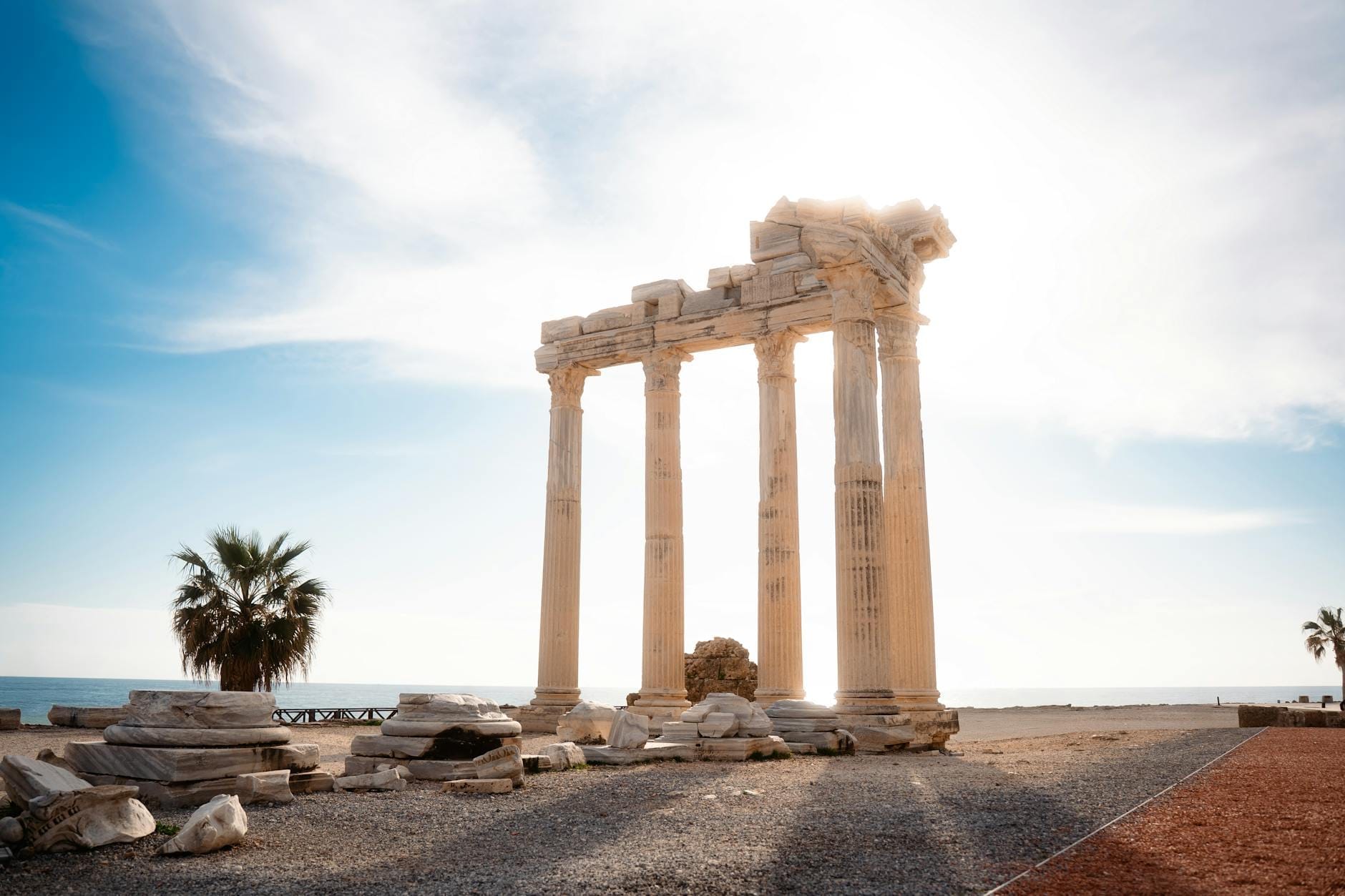
4. Photograph the Iconic Columns of the Temple of Apollo at Sunset
Five Corinthian columns on a clifftop platform overlooking the sea are the enduring image of Side. This 2nd-century Roman temple is best visited at golden hour, when the light turns the marble amber. The site stays open late and entrance is straightforward from the town center.
Explore4. Photograph the Iconic Columns of the Temple of Apollo at Sunset
Five Corinthian columns on a clifftop platform overlooking the sea are the enduring image of Side. This 2nd-century Roman temple is best visited at golden hour, when the light turns the marble amber. The site stays open late and entrance is straightforward from the town center.
Explore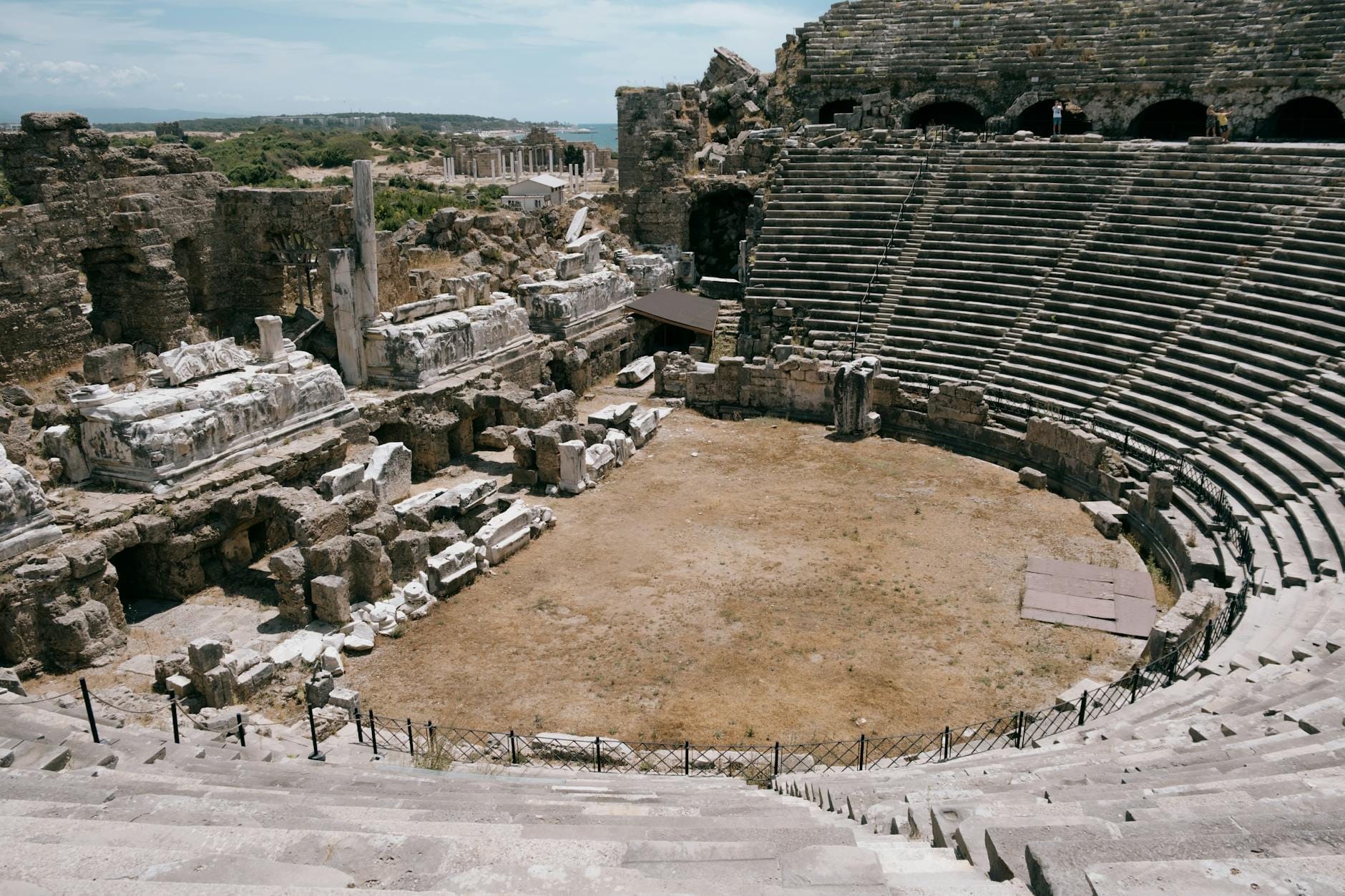
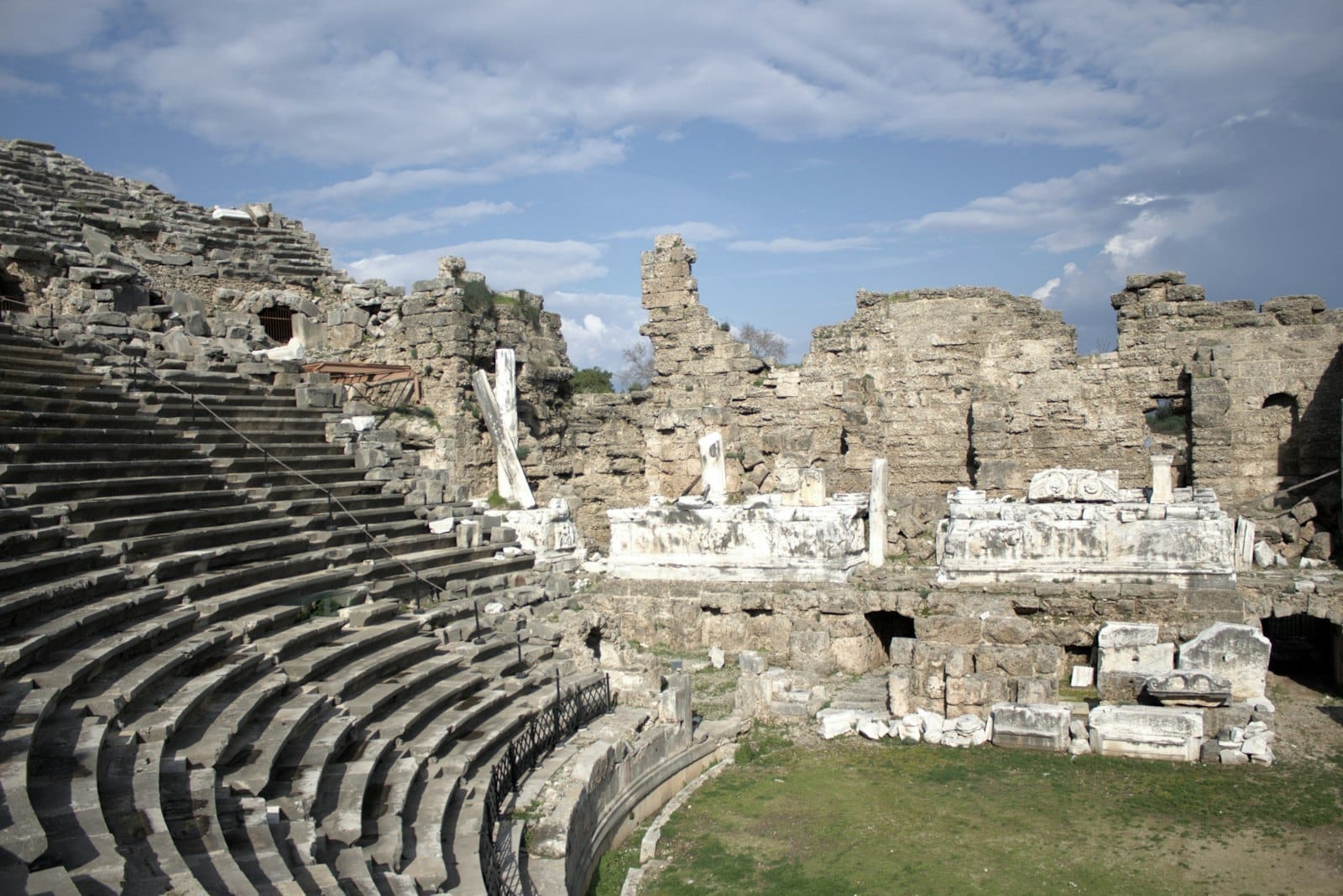
5. Climb the Tiers of Side's Massive Roman Theater
One of ancient Pamphylia's largest theaters, Side's Roman venue held 15,000 spectators and features unusually elaborate arched galleries at its base. The upper tiers give clear views over the surrounding ruins and the sea. Budget 45-60 minutes and combine with the nearby agora.
Explore5. Climb the Tiers of Side's Massive Roman Theater
One of ancient Pamphylia's largest theaters, Side's Roman venue held 15,000 spectators and features unusually elaborate arched galleries at its base. The upper tiers give clear views over the surrounding ruins and the sea. Budget 45-60 minutes and combine with the nearby agora.
ExploreTermessos: The Mountain Fortress Alexander Did Not Take
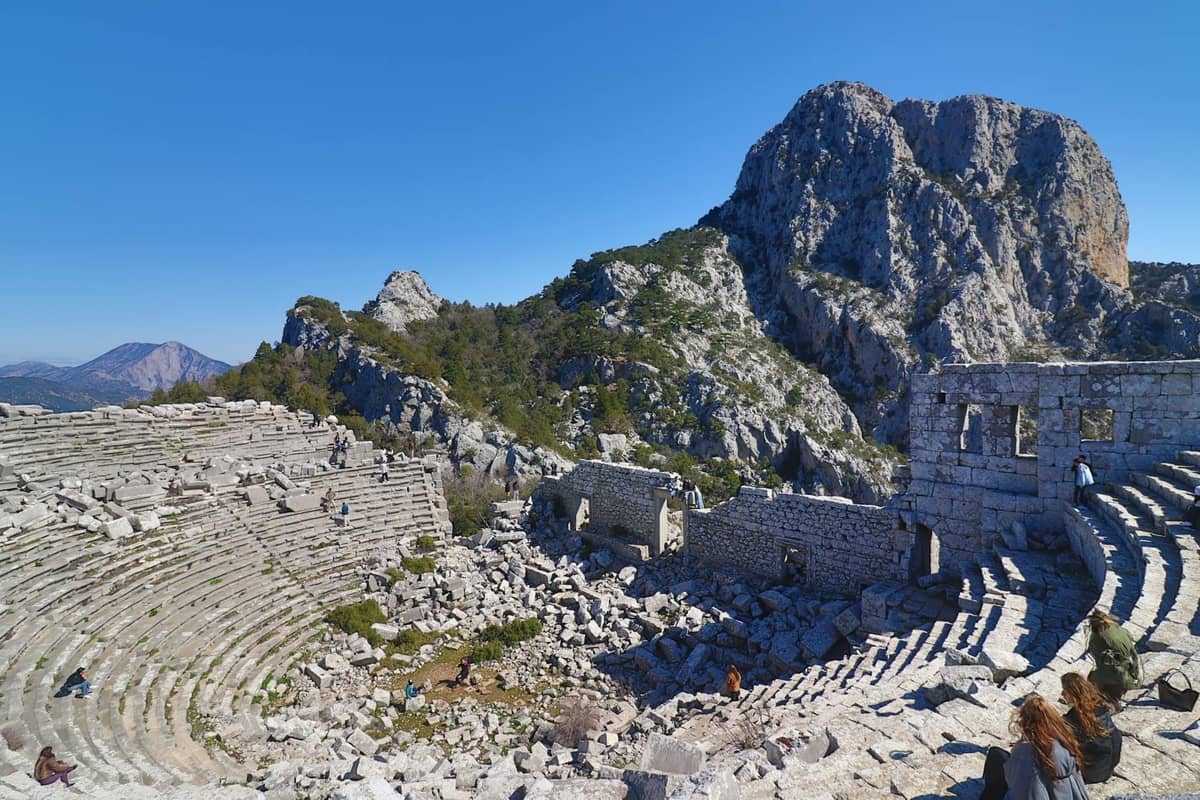
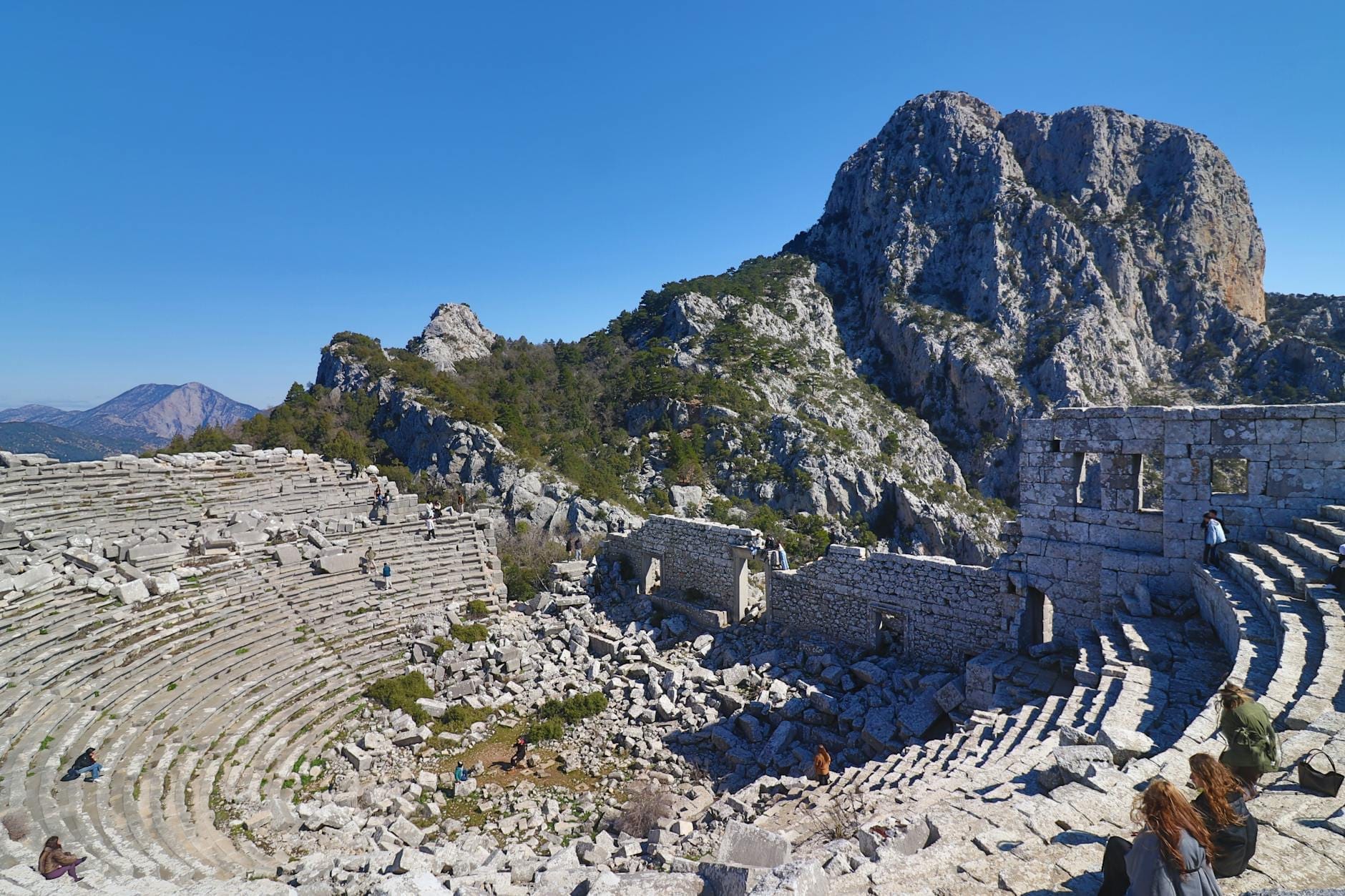
Termessos is the most demanding and rewarding ancient site near Antalya. Located inside a national park in the Taurus Mountains 34km northwest of the city, it requires a steep uphill walk to reach the ruins but delivers scenery and atmosphere that no lowland site can match. This is the quiet alternative for travelers who find Aspendos and Perge too crowded. Check the things to do in Antalya guide for how to combine it with other excursions.
6. Hike to the Mountain Citadel That Repelled Alexander the Great
Termessos sits at 1,050 meters in the Taurus Mountains with a theater, necropolis, and city walls still standing amid pine forest. The 45-minute uphill trail is steep but rewarding. Go early in summer to beat heat, and allow a full half-day. Crowds here are a fraction of Aspendos.
Explore6. Hike to the Mountain Citadel That Repelled Alexander the Great
Termessos sits at 1,050 meters in the Taurus Mountains with a theater, necropolis, and city walls still standing amid pine forest. The 45-minute uphill trail is steep but rewarding. Go early in summer to beat heat, and allow a full half-day. Crowds here are a fraction of Aspendos.
ExploreAncient Monuments Inside Antalya's Old Town
You do not need to leave the city to encounter ancient history. The old quarter of Kaleiçi contains Roman, Seljuk, and Ottoman monuments within walking distance of each other, and several are genuinely significant rather than merely decorative. A morning walking the old town before heading to an outlying site makes excellent use of the cooler morning hours.
7. Pass Through the Roman Triumphal Arch Built for Emperor Hadrian
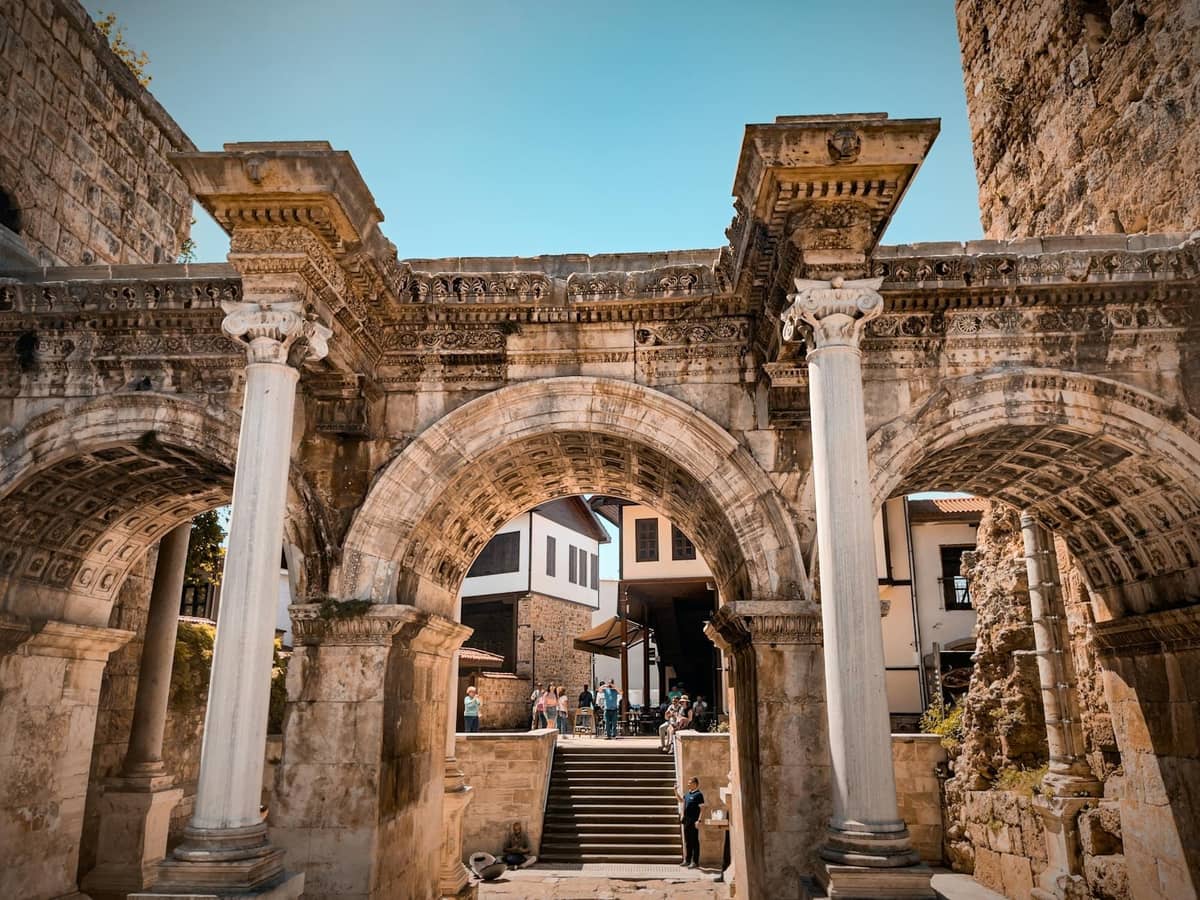
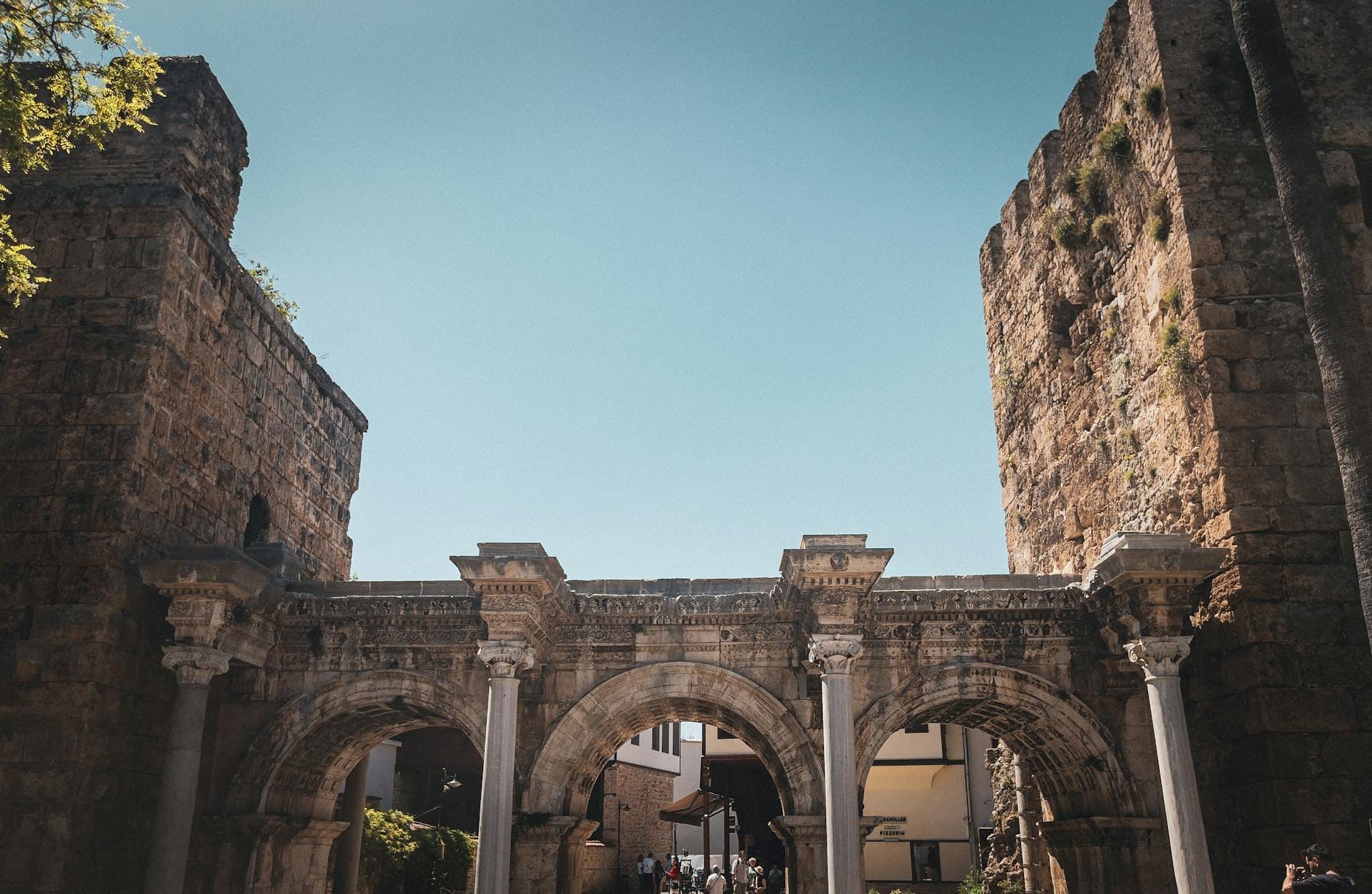
Erected in 130 AD to mark Emperor Hadrian's visit to the city, this triple-arched marble gate is one of Turkey's best-preserved Roman monuments. The carved coffered ceilings are intact and detailed. It takes minutes to see but rewards slow inspection of the carved stone surfaces.
Explore7. Pass Through the Roman Triumphal Arch Built for Emperor Hadrian
Erected in 130 AD to mark Emperor Hadrian's visit to the city, this triple-arched marble gate is one of Turkey's best-preserved Roman monuments. The carved coffered ceilings are intact and detailed. It takes minutes to see but rewards slow inspection of the carved stone surfaces.
Explore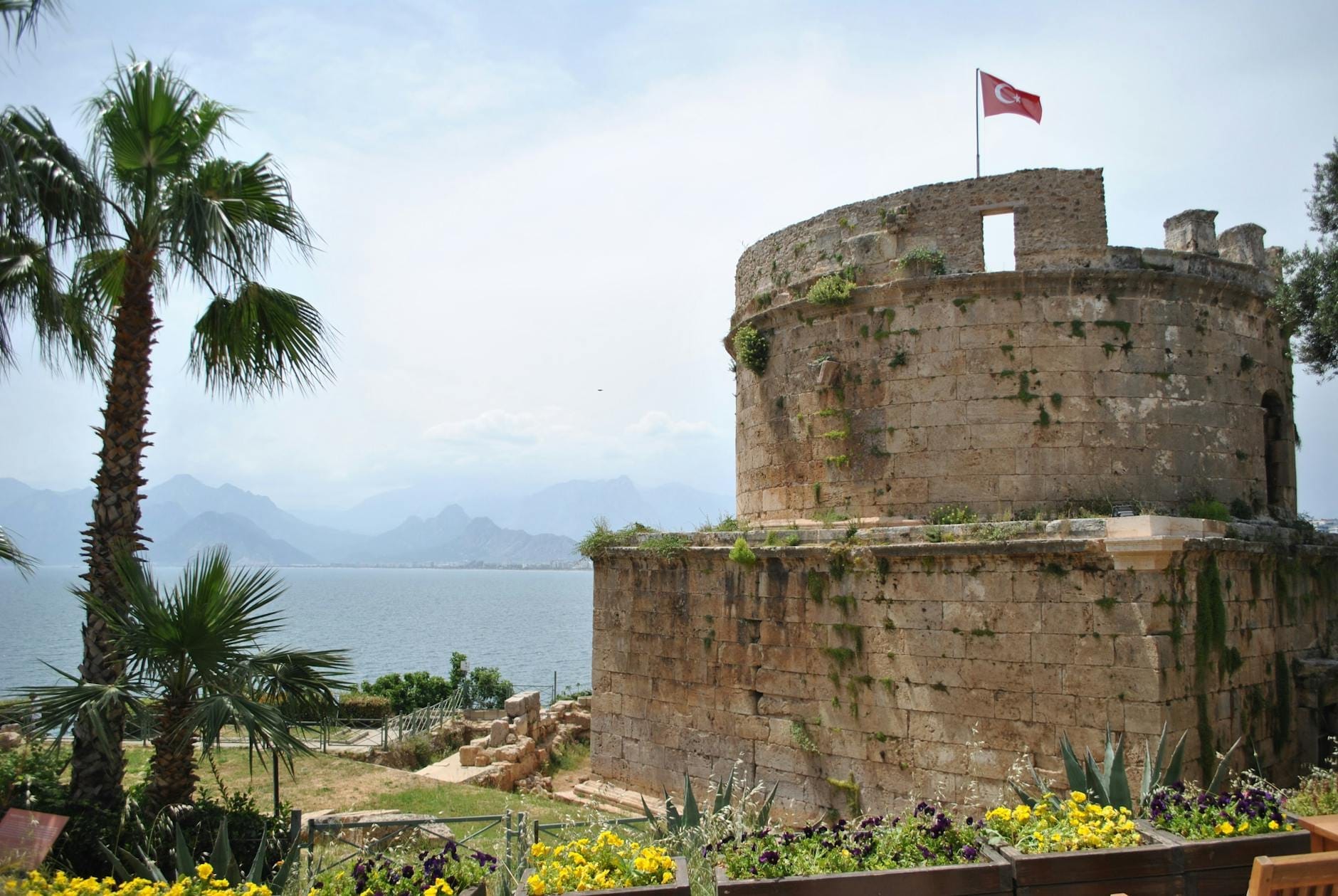
8. Examine the 2nd-Century Roman Tower at the Edge of the Old Harbor
This squat circular tower on the cliffs of Kaleiçi dates to the 2nd century AD, likely serving as a watchtower or tomb. Its clifftop position gives sweeping views over the Roman harbor below. Combine with Karaalioğlu Park directly adjacent for a scenic 30-minute stop.
Explore8. Examine the 2nd-Century Roman Tower at the Edge of the Old Harbor
This squat circular tower on the cliffs of Kaleiçi dates to the 2nd century AD, likely serving as a watchtower or tomb. Its clifftop position gives sweeping views over the Roman harbor below. Combine with Karaalioğlu Park directly adjacent for a scenic 30-minute stop.
Explore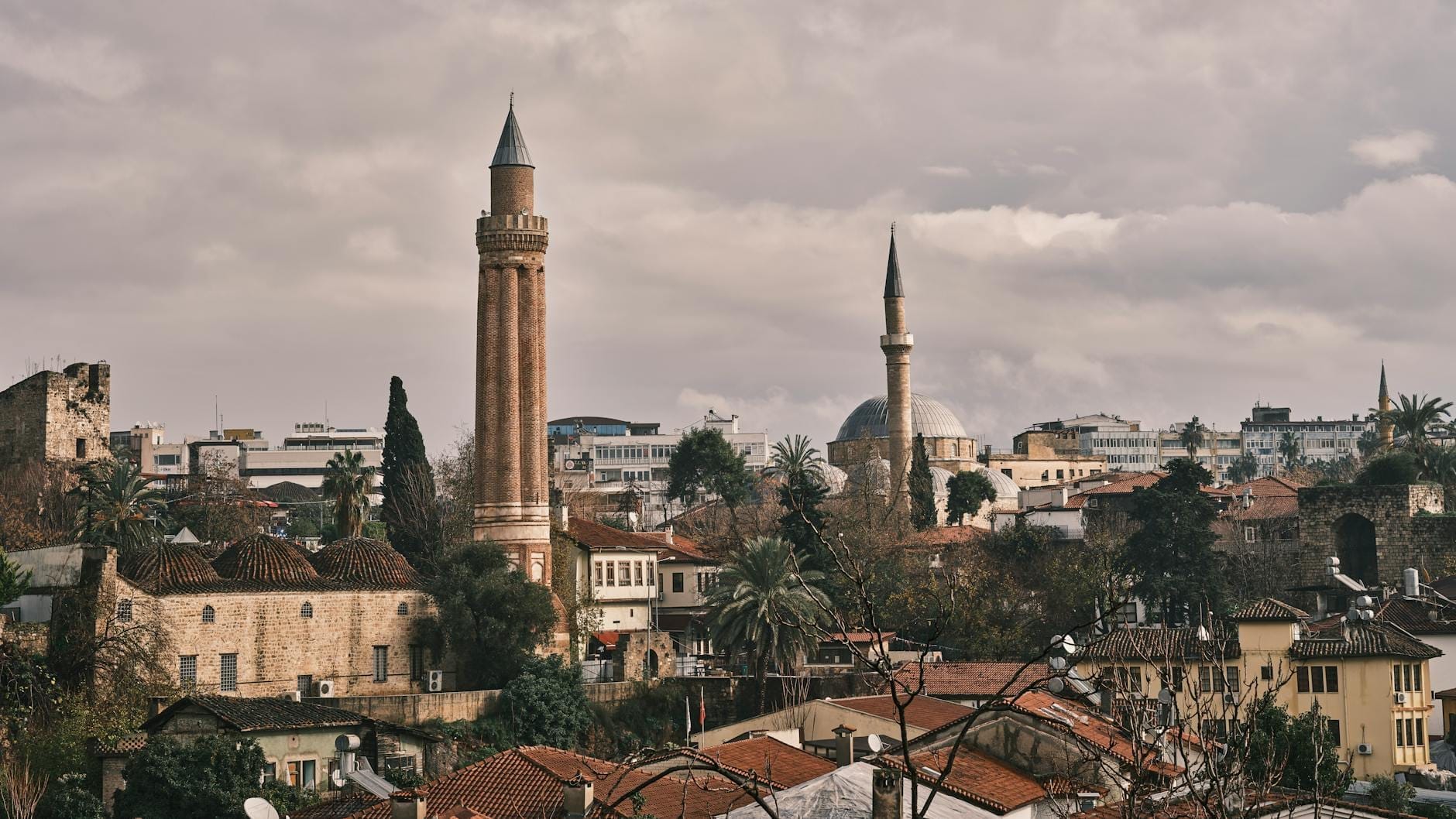
9. Trace the Seljuk Reuse of Roman Materials at Yivli Minaret
Built in the 13th century on the foundations of a Byzantine church, the fluted Yivli Minaret is Antalya's skyline symbol. The adjacent mosque complex incorporates spolia from earlier Roman structures, making it a useful example of how medieval builders repurposed the ancient city.
Explore9. Trace the Seljuk Reuse of Roman Materials at Yivli Minaret
Built in the 13th century on the foundations of a Byzantine church, the fluted Yivli Minaret is Antalya's skyline symbol. The adjacent mosque complex incorporates spolia from earlier Roman structures, making it a useful example of how medieval builders repurposed the ancient city.
Explore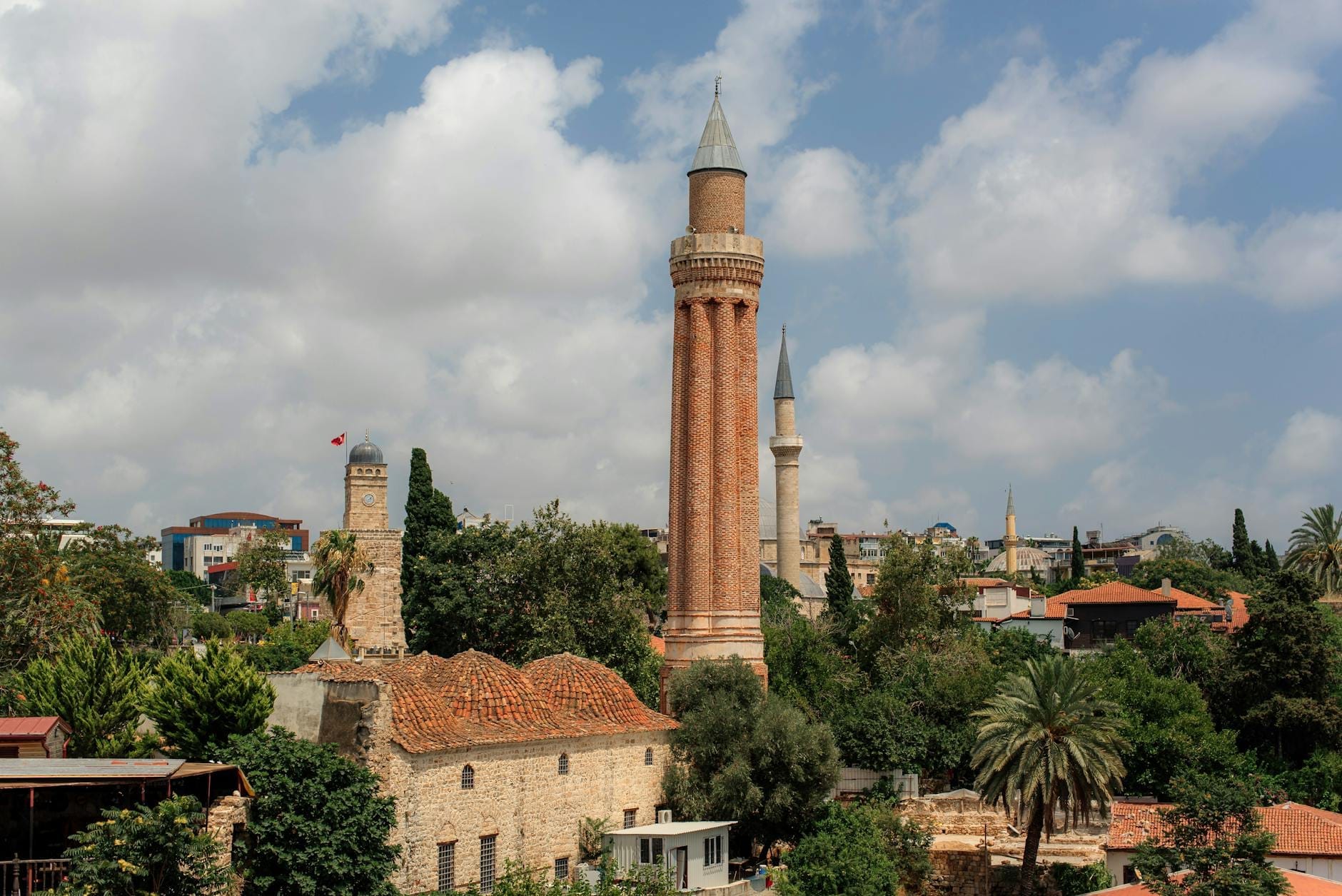
10. See Roman Columns Reused Inside a 13th-Century Seljuk Mosque
Built under Sultan Alaaddin Keykubad, this mosque in Kaleiçi incorporates ancient Roman columns directly into its interior, creating a tangible link between classical antiquity and medieval Islamic architecture. It takes 15 minutes to visit and is rarely crowded even in peak season.
Explore10. See Roman Columns Reused Inside a 13th-Century Seljuk Mosque
Built under Sultan Alaaddin Keykubad, this mosque in Kaleiçi incorporates ancient Roman columns directly into its interior, creating a tangible link between classical antiquity and medieval Islamic architecture. It takes 15 minutes to visit and is rarely crowded even in peak season.
Explore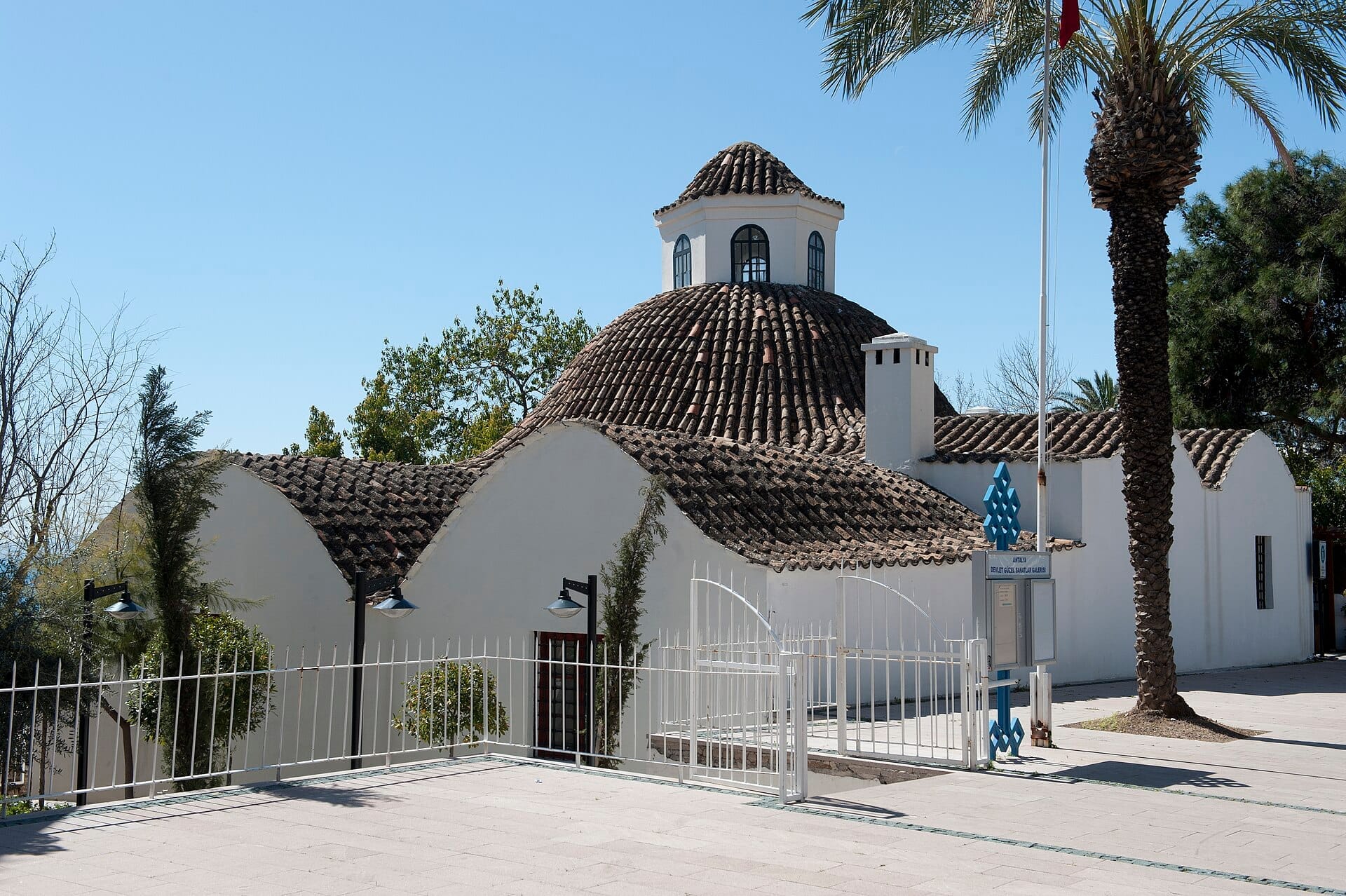
11. Visit the Restored 13th-Century Seljuk Dervish Lodge in Kaleiçi
This Ottoman-era lodge built on Seljuk foundations in Kaleiçi now displays Sufi ceremonial objects and architectural fragments from earlier periods. The building itself is historically significant, and the small museum provides useful context for the broader Islamic history layered over ancient Antalya.
Explore11. Visit the Restored 13th-Century Seljuk Dervish Lodge in Kaleiçi
This Ottoman-era lodge built on Seljuk foundations in Kaleiçi now displays Sufi ceremonial objects and architectural fragments from earlier periods. The building itself is historically significant, and the small museum provides useful context for the broader Islamic history layered over ancient Antalya.
ExploreAncient Sites with Natural Settings
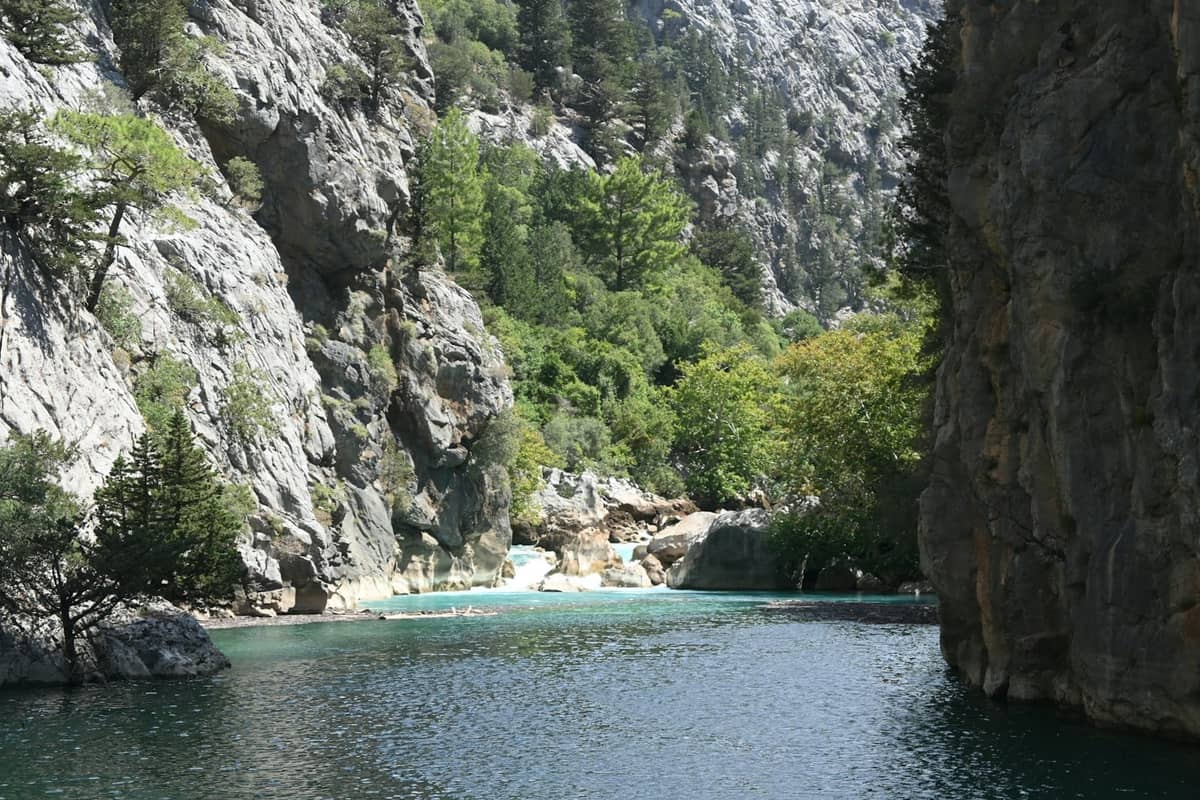
Some of the best ruins near Antalya are inseparable from their landscapes. Termessos combines ancient monuments with mountain forest, but the region offers other sites where archaeology and nature reinforce each other. Köprülü Canyon is the standout for this, containing a Roman bridge amid one of Turkey's most dramatic river gorges.
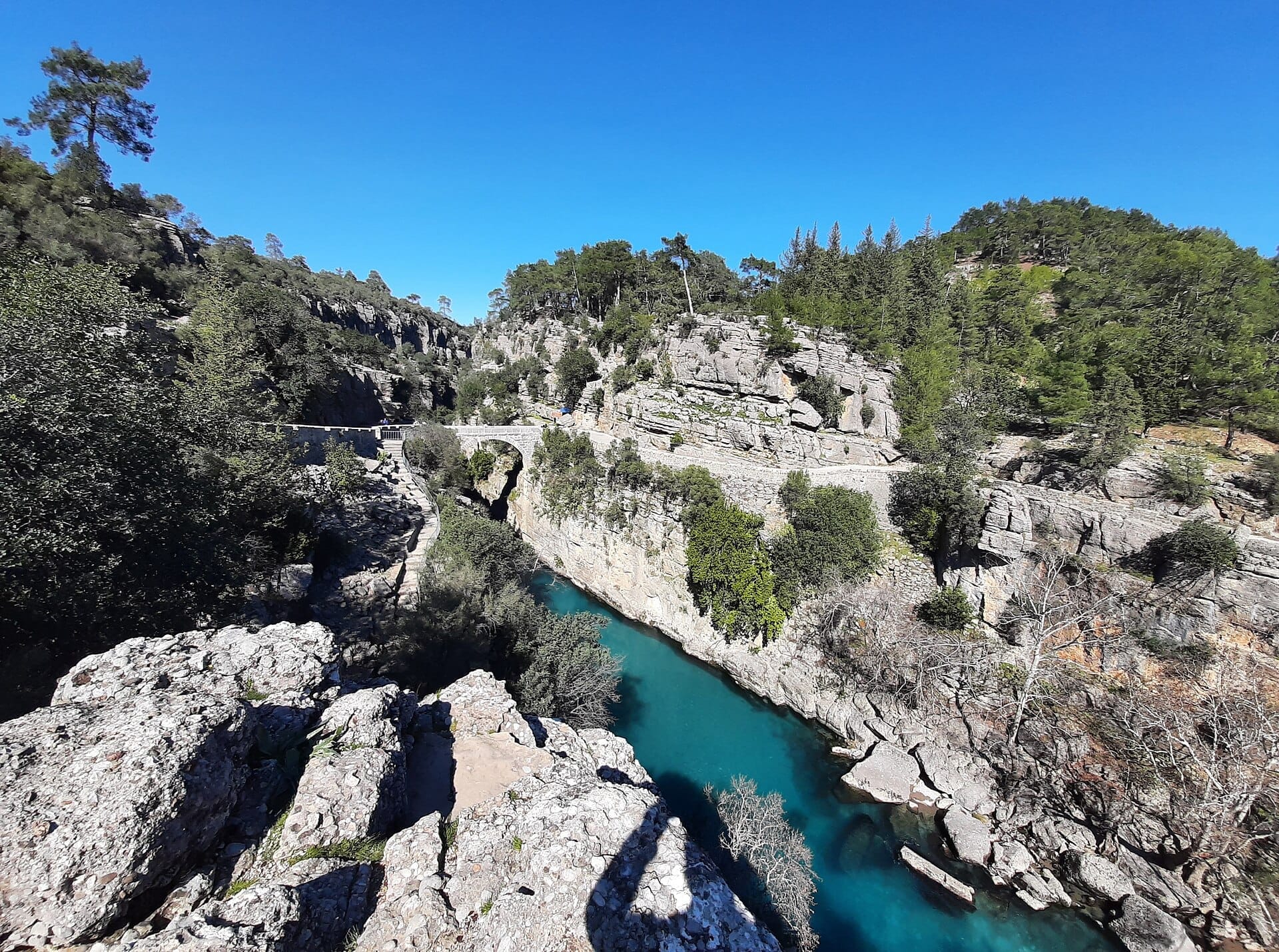
12. Cross a Roman Bridge Still in Use Inside Köprülü Canyon National Park
Köprülü Canyon 80km from Antalya contains two intact Roman bridges spanning the Köprüçay River, still used by pedestrians and vehicles today. The setting inside a forested gorge is spectacular. Rafting operators run trips through the canyon, making it easy to combine history with outdoor adventure.
Explore12. Cross a Roman Bridge Still in Use Inside Köprülü Canyon National Park
Köprülü Canyon 80km from Antalya contains two intact Roman bridges spanning the Köprüçay River, still used by pedestrians and vehicles today. The setting inside a forested gorge is spectacular. Rafting operators run trips through the canyon, making it easy to combine history with outdoor adventure.
Explore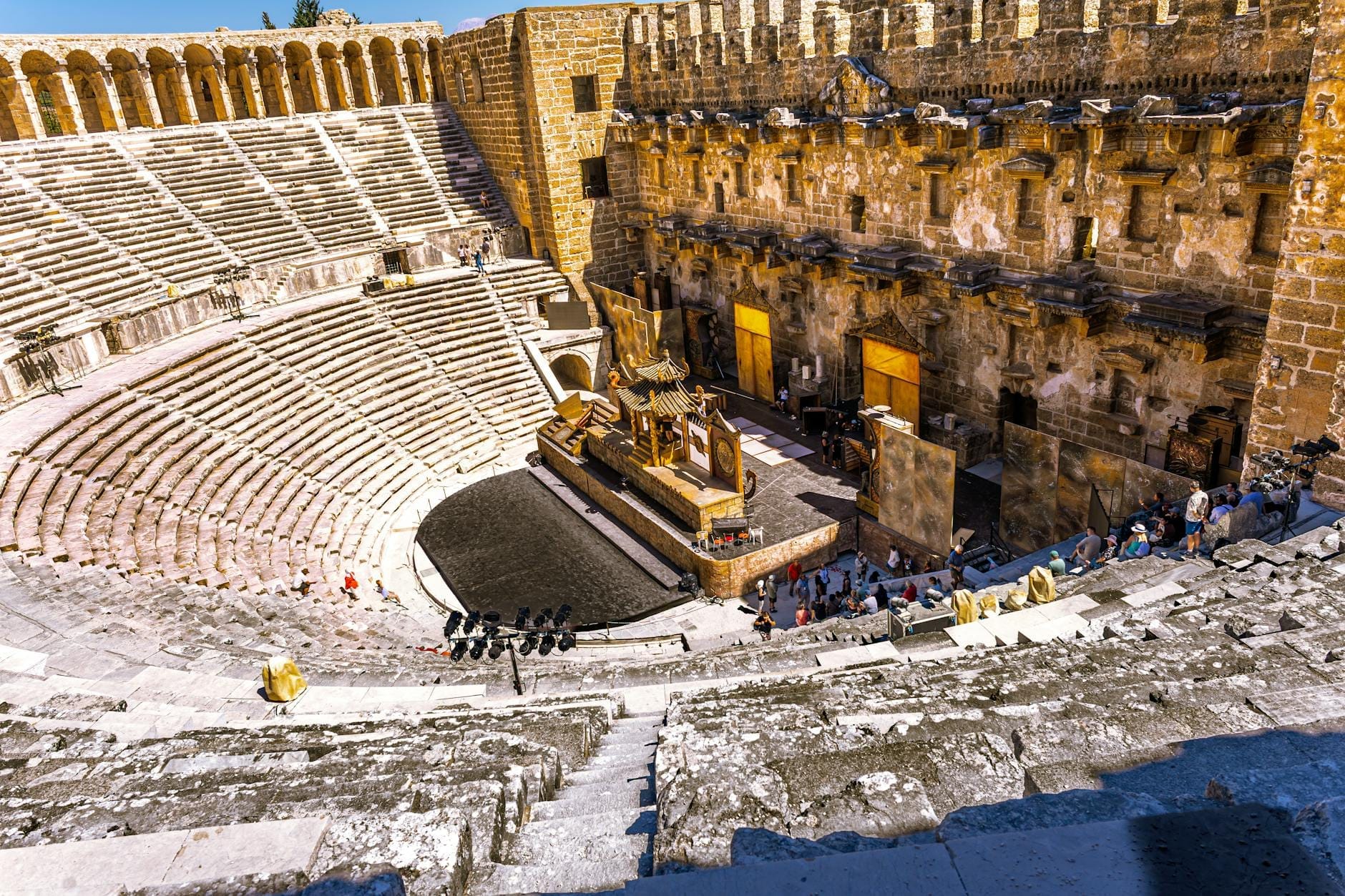
13. Attend an Opera or Ballet Performance Inside the Aspendos Theater
Each summer, world-class opera and ballet companies perform inside the 2nd-century Aspendos Theater under open sky. Watching a live performance in a 155 AD Roman venue is a rare experience. Tickets sell out, so book through the festival's official channels weeks in advance.
Explore13. Attend an Opera or Ballet Performance Inside the Aspendos Theater
Each summer, world-class opera and ballet companies perform inside the 2nd-century Aspendos Theater under open sky. Watching a live performance in a 155 AD Roman venue is a rare experience. Tickets sell out, so book through the festival's official channels weeks in advance.
Explore✨ Pro tip
The Roman bridge at Köprülü Canyon sits near the main rafting launch point. Even if you skip rafting, the bridge is accessible on foot and makes for an atmospheric lunch stop at the riverside restaurants that have operated there for decades.
FAQ
Which ancient ruins near Antalya are easiest to visit without a car?
Perge and Aspendos are both reachable by dolmuş (shared minibus) from Antalya's main bus terminal, making them the most practical for independent travelers without a rental car. Organized day tours covering both sites depart daily from the city center and Kaleiçi. Termessos requires a taxi or rental car as public transport does not serve the national park.
Can you visit Aspendos and Perge in the same day?
Yes, and most organized tours combine both. Perge is 18km east of Antalya and Aspendos is 48km east, so the logical order is Perge first, then Aspendos. Allow 2 hours at each site plus travel time. Starting by 9am gives you enough daylight without rushing. Add Side if you want a third stop, though that makes for a long day.
What is the best time of year to visit the ancient ruins near Antalya?
April to June and September to October offer the best conditions: temperatures are mild, daylight is long, and most sites are not at peak crowding. July and August are hot (regularly above 35°C at Aspendos and Perge), so early morning visits are essential. Termessos is more manageable in summer due to its elevation. Winter is quiet and most sites remain open, though some close earlier.
Is Termessos worth visiting compared to Aspendos and Perge?
Termessos and Aspendos are complementary rather than competing. Aspendos has the single most impressive monument in the theater; Termessos offers an entire ancient city in a wild mountain setting with almost no crowds. The hike is steep but manageable for reasonably fit travelers. If you have time for only one outlying site, first-timers usually prefer Aspendos for the visual impact; returning visitors often rate Termessos higher.
Are there ancient ruins you can see for free in Antalya?
Yes. Hadrian's Gate, the Hıdırlık Tower, and the Yivli Minaret in Kaleiçi are all free to view from outside and accessible on any walk through the old town. The Sultan Alaaddin Mosque can typically be entered free of charge outside prayer times. Entry fees apply to Aspendos, Perge, Termessos, and Side's main monuments.