Sultan Alaaddin Mosque: Antalya's Oldest Seljuk Landmark in Kaleiçi
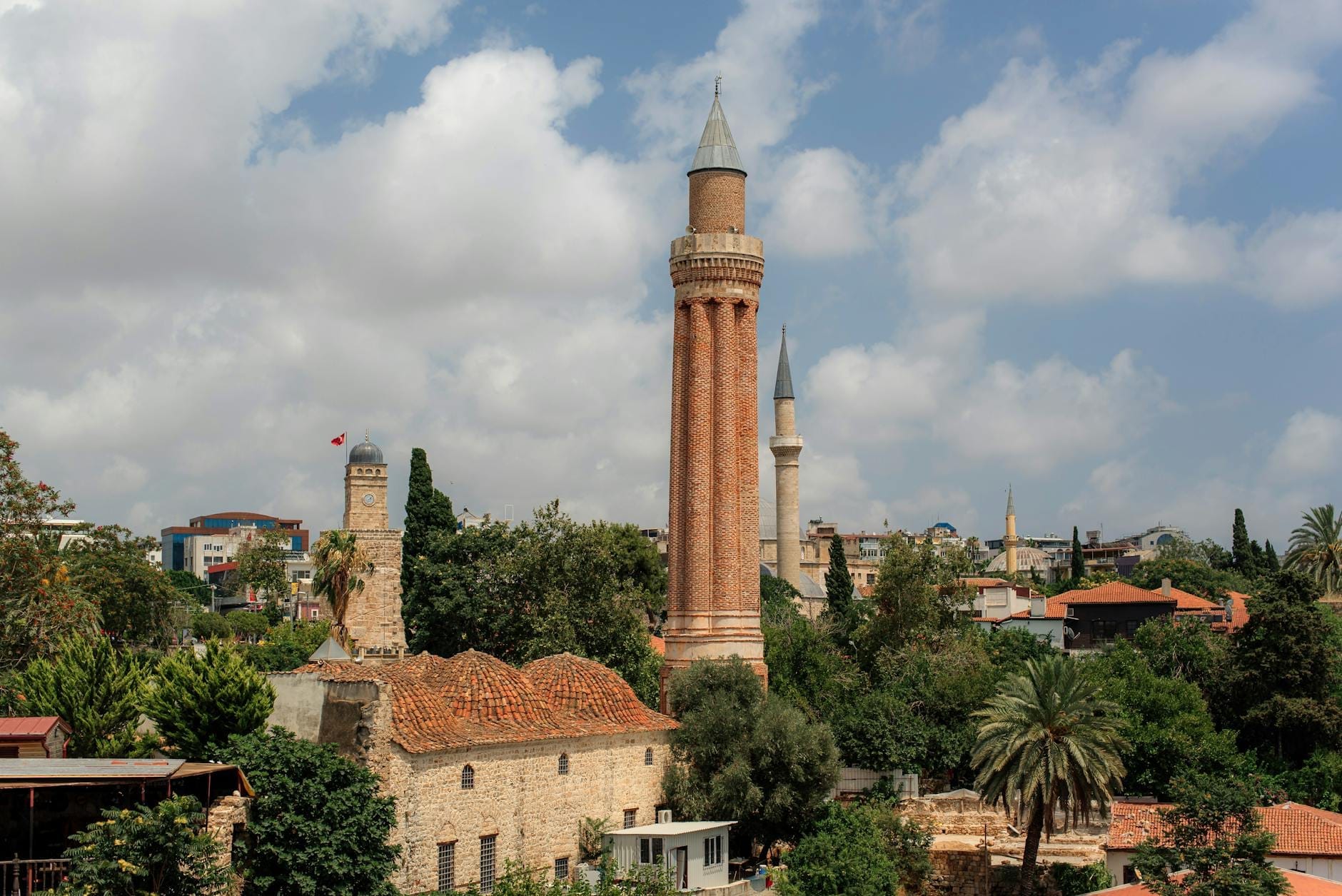
Built around 1230 during the reign of Seljuk Sultan Alaaddin Keykubad I, this six-domed mosque is the religious and architectural heart of Kaleiçi old town. Its 38-metre fluted minaret is the most recognizable silhouette on Antalya's skyline. Entry is free, and the atmosphere shifts dramatically between prayer times and the quiet hours in between.
Quick Facts
- Location
- Hesapçı Street No. 45, Kaleiçi (Kılınçarslan Neighborhood), Muratpaşa, Antalya
- Getting There
- Walkable from Kalekapısı Square; accessible by city tram or bus to Antalya city centre, then a short walk into Kaleiçi
- Time Needed
- 20–40 minutes for the mosque itself; allow extra time to explore the surrounding Kaleiçi streets
- Cost
- Free entry
- Best for
- History, Islamic architecture, photography, quiet reflection
What Is the Sultan Alaaddin Mosque?
The Sultan Alaaddin Mosque, known in Turkish as Sultan Alaeddin Camii, is the oldest standing mosque in Antalya. It is also referred to as Yivli Minare Camii (Fluted Minaret Mosque) or simply Ulu Cami, and its iconic minaret is the defining feature of the old town skyline. The mosque sits just off Cumhuriyet Street near Kalekapısı Square, placing it at the very threshold between the modern city and the ancient streets of Kaleiçi.
This is an active place of worship, not a museum or monument frozen in time. Locals come here for daily prayers, and that lived religious function gives the space a gravity that purely touristic sites rarely achieve. Visitors are welcome outside prayer times, and the experience of standing inside this centuries-old structure while it remains in continuous use is quietly powerful.
ℹ️ Good to know
The mosque is open to visitors generally from dawn to dusk, with access limited during the five daily prayers. Modest dress is required: shoulders and knees covered, shoes removed at the entrance. Women should bring a headscarf.
History: From Byzantine Church to Seljuk Mosque
The mosque's origin traces to around 1230, when Antalya was under the control of the Anatolian Seljuk Sultanate. Sultan Alaaddin Keykubad I, who ruled from 1220 to 1237 and was one of the most capable rulers of the Rum Seljuks, ordered its construction . The church itself was likely already centuries old at that point, meaning the ground beneath your feet holds layers of religious history that predate the mosque by many hundreds of years.
The original Seljuk structure was destroyed, and the mosque was substantially rebuilt in 1373, this time with six domes that replaced an earlier single-dome layout. That rebuilding is largely what you see today. The six domes are arranged in two rows of three and rest on five interior columns, creating a low, horizontal interior that feels more intimate than grand.
The fluted minaret that gives the mosque one of its popular names was built separately and is considered one of the finest examples of Seljuk decorative architecture in the region. It stands 38 metres tall, with a base height of 6.5 metres and a width of 5.5 metres. The exterior is clad in deep turquoise and dark blue tiles arranged in vertical flutes, a style almost unique in Turkish mosque architecture. At certain hours of the afternoon, the light catches those glazed tiles and the minaret seems to glow against the pale limestone of the old town walls.
The mosque and its minaret are part of Antalya's wider historic urban fabric, which appears on UNESCO's Tentative World Heritage List. For more context on the surrounding old quarter, see the Kaleiçi walking tour guide.
Tickets & tours
Hand-picked options from our booking partner. Prices are indicative; availability and final rates are confirmed when you complete your booking.
Lake Beyşehir and Esrefoglu Mosque Tour from Antalya, Belek, Side
From 99 €Instant confirmationFree cancellationPasha and sultan spa package with pickup from Side
From 29 €Instant confirmationFree cancellationTazı Kanyon, Safari, Rafting, Buggy Safari, and Zipline in Turkey
From 65 €Instant confirmationFree cancellationAntalya guided city tour with lunch
From 45 €Instant confirmationFree cancellation
What to Expect When You Visit
Approaching the mosque from Kalekapısı Square, you will hear the city traffic fade almost immediately as you step into the narrow lanes of Kaleiçi. The mosque courtyard is shaded by mature trees, and there are stone benches where visitors and locals rest during the day. The contrast between the courtyard's calm and the noise of the main road just fifty metres away is striking.
Inside, the prayer hall is covered by six shallow domes supported on short stone columns. The interior is whitewashed and simply decorated, with geometric patterns around the mihrab (the prayer niche indicating the direction of Mecca). Natural light enters through narrow windows near the base of each dome. The space is cool even in summer, partly because of the thick stone walls and partly because of the shade cast by the surrounding buildings.
The minaret is not open for climbing. Its visual impact is best appreciated from the small open area in front of the mosque, or from the elevated terrace near Hadrian's Gate a few minutes' walk away. Early morning light hits the turquoise tiles from a low angle, which is when they appear most vivid. By midday the tiles look flatter and less dramatic.
💡 Local tip
Visit between 8:00 and 10:00 AM on weekdays for the quietest experience. Weekend mornings attract more visitors. Avoid arriving at prayer times (dawn, midday, afternoon, sunset, night) if you want uninterrupted time inside the prayer hall.
The Minaret and Its Architectural Significance
The fluted minaret is the reason many visitors make their way specifically to this mosque rather than simply passing it on the way to somewhere else. The cylindrical shaft is divided into eight vertical sections by raised ribs, and between those ribs the surface is covered in alternating turquoise and dark blue glazed bricks. The technique and color palette show clear Central Asian Seljuk influence, distinct from the later Ottoman minarets that dominate most Turkish cities.
The minaret was built before the current prayer hall and may have served an earlier mosque or even a converted church on the same site. This chronological ambiguity makes it an interesting subject for anyone interested in the architectural archaeology of the region. Whatever its precise origin, the structure has survived earthquakes, occupations, and centuries of urban change and remains intact.
The minaret is also the visual anchor for the entire Kaleiçi old town and appears in virtually every photograph taken from the harbor or the surrounding cliffs. If you are visiting the Antalya Marina, look upward and you will see it rising above the old walls.
Practical Walkthrough: How to Get There and What to Bring
The mosque is fully walkable from most points within Kaleiçi. From Kalekapısı Square, take Hesapçı Street heading south; the mosque courtyard will be on your right within a few minutes. If you are coming from the harbor side, follow the lane upward past the old bazaar and you will reach the courtyard from below.
There is no formal ticketing or entry system. You simply remove your shoes at the entrance, leave them on the racks provided, and enter. Shoe racks are located to the right of the main door. The floor inside is carpeted and clean. Photography is generally permitted in the courtyard and from the doorway, though it is courteous to avoid pointing a camera directly at people at prayer.
Antalya's summer heat (June to August) can make midday visits uncomfortable. Bring water. If you are combining this with a broader old town walk, check the best time to visit Antalya guide for seasonal advice on timing your trip.
Wheelchair and pushchair access is limited. The entrance involves a step up from the courtyard, and the surrounding streets in Kaleiçi are cobblestone and uneven. The courtyard itself is manageable on foot but requires care.
Honest Assessment: Is It Worth Your Time?
The Sultan Alaaddin Mosque is not a large or elaborate building. Travelers expecting the scale of Istanbul's Blue Mosque or the ornament of Ottoman-period mosques will find this one modest. Its appeal lies in age, authenticity, and context rather than spectacle. It is the kind of place that rewards visitors who approach it with some prior knowledge of Seljuk history or who are already absorbed in the texture of Kaleiçi.
If you are already walking through Kaleiçi, this is an obvious and worthwhile stop that takes no real detour. If you are coming specifically for the mosque and have no interest in the surrounding old town, the visit alone may feel brief. The minaret is genuinely impressive up close. The interior is calming but spare.
Travelers who find religious architecture more interesting when combined with historical context should also plan time at Yivli Minaret and the nearby Tekeli Mehmet Paşa Mosque, which together form a clear architectural timeline through Antalya's Islamic history.
⚠️ What to skip
This is an active mosque. Loud conversations, photography during prayer, or entering in inappropriate clothing will cause genuine disruption to worshippers. The mosque is not a tourist attraction in the conventional sense — it functions as a place of worship first.
Insider Tips
- The best view of the minaret's glazed tiles is from the small open area directly in front of the mosque just after sunrise, when low-angle light catches the turquoise surface before the surrounding buildings cast shadow over it.
- If you want to photograph the minaret without people in the frame, arrive on a weekday morning before 9:00 AM. By 10:30 AM the courtyard fills with tour groups.
- The stone benches in the courtyard are a good rest stop on a longer Kaleiçi walk. Locals use them throughout the day, and sitting for ten minutes gives a more accurate sense of how the space is actually used than a quick walk-through.
- The mosque's six domes are easier to appreciate from a slight distance. Cross to the opposite side of the lane and look back at the roofline to see the dome arrangement clearly.
- Note the difference in stone color and texture between the minaret base and the prayer hall walls — the minaret's darker stone is noticeably older, a physical record of the building's reconstruction history.
Who Is Sultan Alaaddin Mosque For?
- Travelers interested in Seljuk architecture and the pre-Ottoman Islamic history of Anatolia
- Photographers focusing on Islamic architectural detail, particularly tile work and decorative brickwork
- Visitors exploring Kaleiçi on foot who want to understand the neighborhood's layered history
- Travelers looking for free, low-key cultural stops that don't require booking or queuing
- Anyone staying in Kaleiçi who wants to experience the neighborhood at dawn, when the call to prayer from this mosque resonates through the old town streets
Nearby Attractions
Other things to see while in Kaleiçi (Old Town):
- Antalya Marina
Kaleiçi Yat Limanı, known to visitors as Antalya Marina, is a semi-circular harbor carved into the limestone cliffs of the old town. Built during the Hellenistic period and used continuously through Roman, Byzantine, Seljuk, and Ottoman times, it now anchors a strip of seafood restaurants, craft shops, and boat tour operators. Admission is free, and the harbor is open around the clock.
- Antalya Boat Tours
Departing from the ancient Kaleiçi Marina, Antalya boat tours take you along dramatic limestone cliffs and into clear turquoise bays. Whether you want a full-day swim-and-lunch cruise or a shorter evening sail, here is everything you need to decide if it is worth your time.
- Clock Tower
Standing at the edge of Antalya's ancient walls, the Saat Kulesi is a 14-metre Ottoman clock tower built in 1901 with a pentagonal stone base dating back to the 9th century. Free to visit at any hour, it marks the gateway between the modern city and the cobbled lanes of Kaleici's old quarter.
- Hadrian's Gate
Built in 130 CE to honor Emperor Hadrian's visit to the ancient city of Attaleia, Hadrian's Gate is a triple-arched Roman triumphal monument in white marble and granite. Free to enter at any hour, it marks the main threshold between Atatürk Boulevard and the winding lanes of Kaleiçi old town.