3 Days in Antalya: The Perfect Itinerary
Three days is enough time to cover Antalya's best layers: Roman gates and Ottoman lanes in Kaleiçi, world-class ruins at Aspendos and Perge, pebble beaches, dramatic waterfalls, and west-coast viewpoints over the bay. This itinerary is built around smart sequencing so you spend less time backtracking and more time actually seeing things.
Plan and book this trip
Tools from our partner Travelpayouts help you compare flights and hotels. If you book through them, we may earn a commission at no extra cost to you.
Flights
Hotels map
TL;DR
- Day 1 is best spent in Kaleiçi old town, the Antalya Museum, and Konyaalti Beach — all within easy reach of each other.
- Day 2 is for ancient sites: combine Perge and Aspendos on a single day trip east of the city, or join a guided ruins day trip from Antalya to avoid logistics headaches.
- Day 3 covers the Düden Waterfalls, west-coast viewpoints around Konyaaltı and Sarısu, and the Old Bazaar — a varied mix that closes the trip on a high note.
- Spring (April-May) and autumn (September-October) are the strongest windows: temperatures are manageable and crowds at ruins are thinner.
- Antalya is far more than a beach resort. Its museum ranks among Turkey's finest, and sites like Termessos are genuinely world-class.
How to Approach 3 Days in Antalya
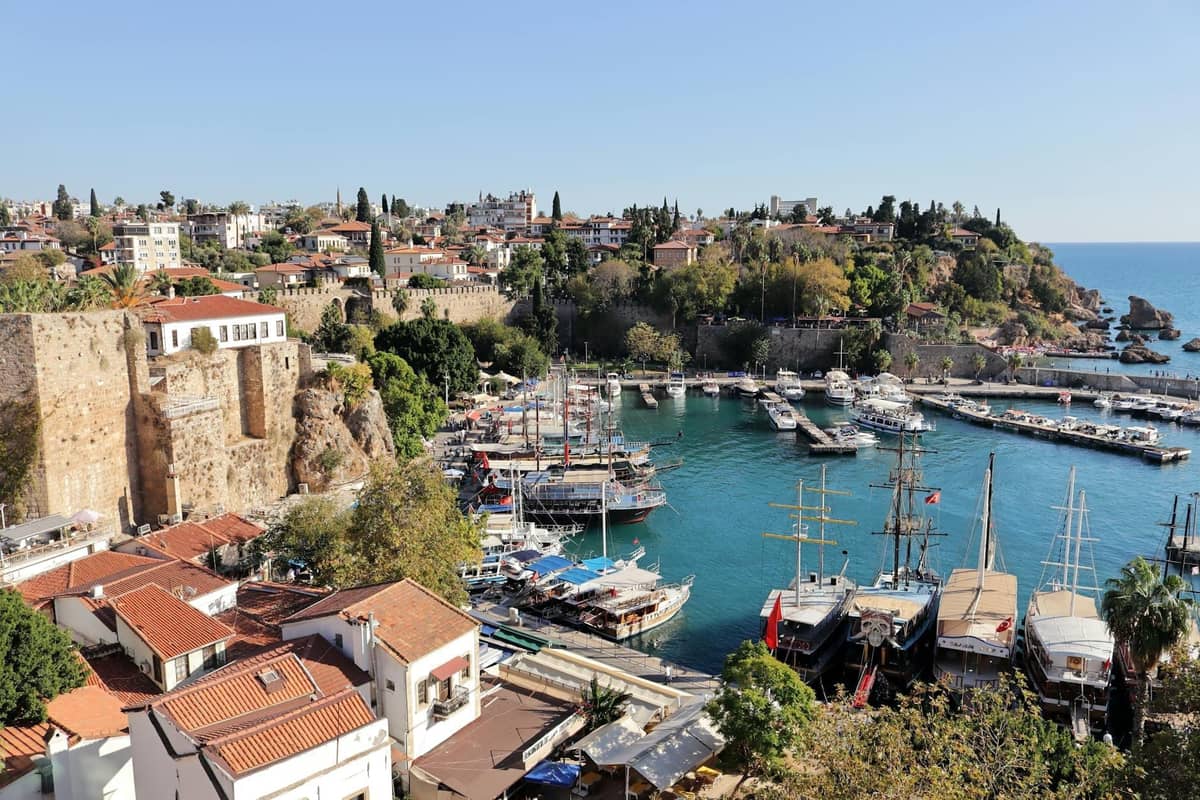
Antalya is the capital of Antalya Province on Turkey's Mediterranean coast, and its tourism infrastructure is built around sun-seekers staying at all-inclusive resorts in Belek or Lara. If that's not you — if you want to actually explore the city — the itinerary logic here is different. Sequence the days by geography to minimise backtracking, then adjust each day around your own priorities.
The historic core, Kaleiçi, sits on a low cliff above the marina and contains the bulk of Day 1. The ancient sites of Perge and Aspendos are roughly 18-47 km east along the D400 highway, making them a natural Day 2 pairing. The waterfalls, west-coast viewpoints, and bazaar fill Day 3 without requiring a hire car. This structure avoids the classic mistake of committing an afternoon to Aspendos and then doubling back through city traffic to reach a beach.
ℹ️ Good to know
Antalya Airport (AYT) is roughly 13 km northeast of the city center. A taxi to Kaleiçi usually takes around 20-30 minutes outside peak traffic. Public buses and tram connections are cheaper but slower with luggage; check current routes before arrival because airport services and stop patterns change.
Day 1: Kaleiçi, the Antalya Museum, and the Beach
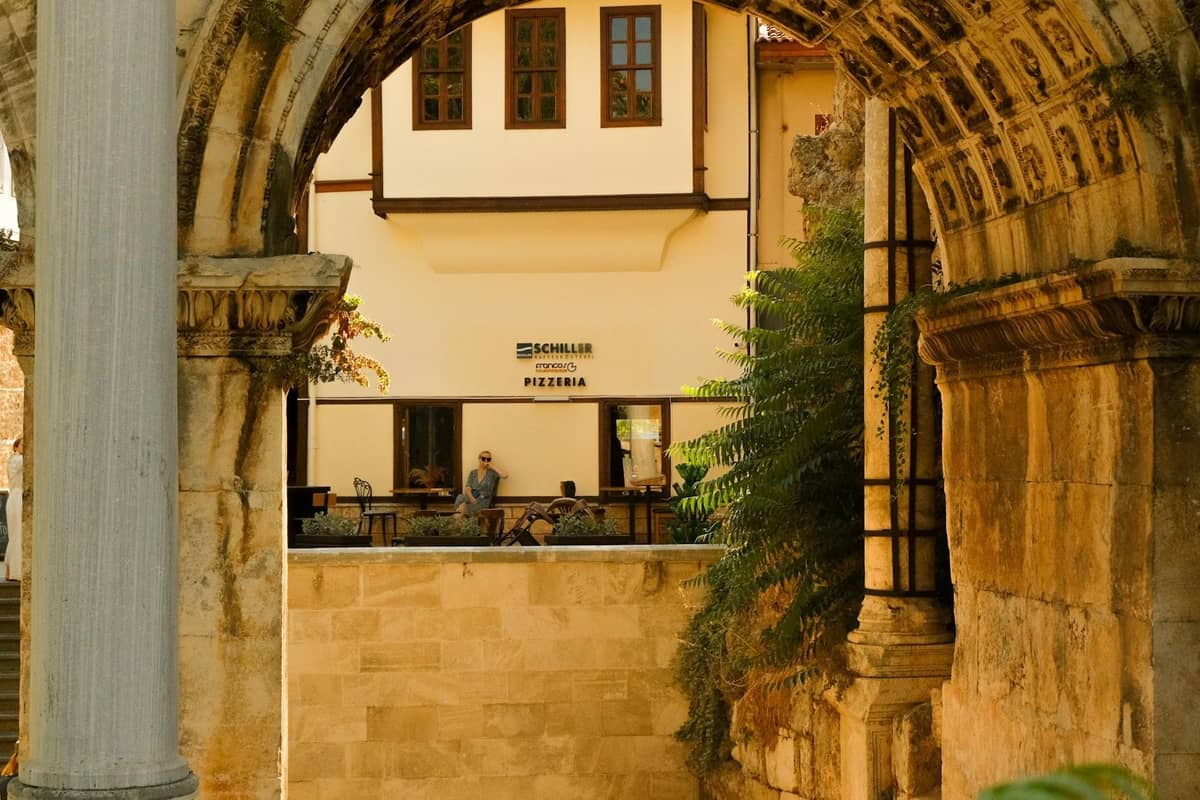
Start at Hadrian's Gate, the triple-arched Roman triumphal gate built around 130 AD for the Emperor's visit. It's the clearest single marker of how long Antalya has been a significant city. From there, walk north through the stone-paved lanes of Kaleiçi, past Ottoman-era houses with wooden upper floors and the Yivliminare Mosque, a 13th-century Seljuk landmark that defines the old town skyline. The Clock Tower and Tekeli Mehmet Paşa Mosque are both within a five-minute walk and worth pausing at.
Allow 90 minutes to two hours for a proper Kaleiçi walking tour before heading to the Antalya Museum. The museum is about 2.5 km west of the old town — a short taxi or tram ride. Check current prices and opening hours on muze.gov.tr before visiting, as museum fees and schedules in Turkey change frequently. Budget 90 minutes to two hours. The Hellenistic and Roman sculpture galleries are the strongest sections; the sarcophagus hall is genuinely impressive by any international standard.
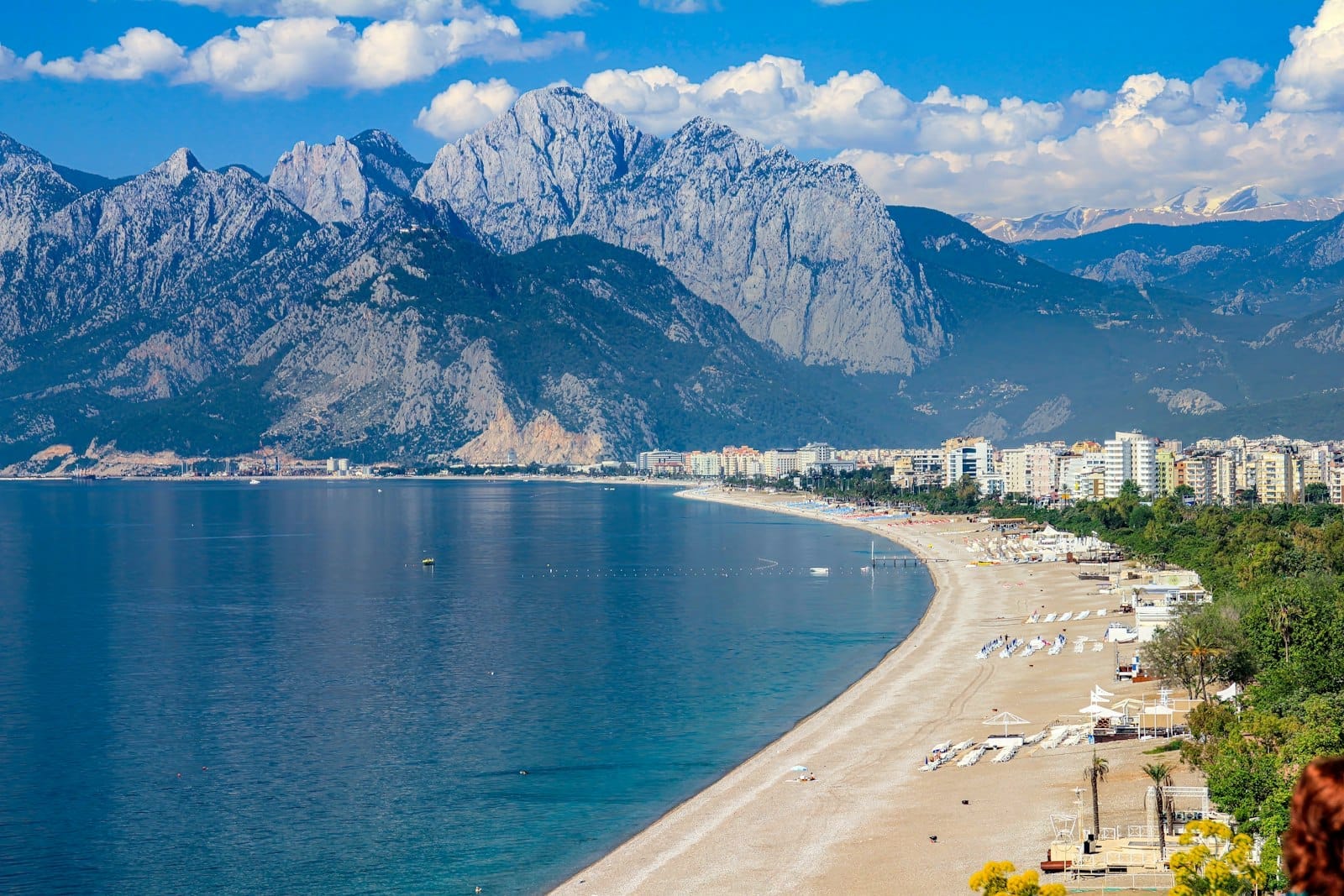
After the museum, Konyaalti Beach is a five-minute walk. It's a pebble beach, not sand — worth knowing if you're sensitive to that distinction. The water is clean, the backdrop is the Bey Mountains, and there are café bars along the promenade where you can have a meal and watch the light change on the cliffs. If you're visiting in peak summer (June-August), arrive by mid-afternoon when the worst heat is starting to ease.
💡 Local tip
The Antalya Marina is a pleasant evening walk after the beach. The harbor is lined with tour boats, cafes, and the Hidirlik Tower — a 2nd-century Roman tower with good sunset views over the water. It costs nothing to walk around and the atmosphere is far more local than the main tourist strip.
Day 2: Ancient Ruins East of the City
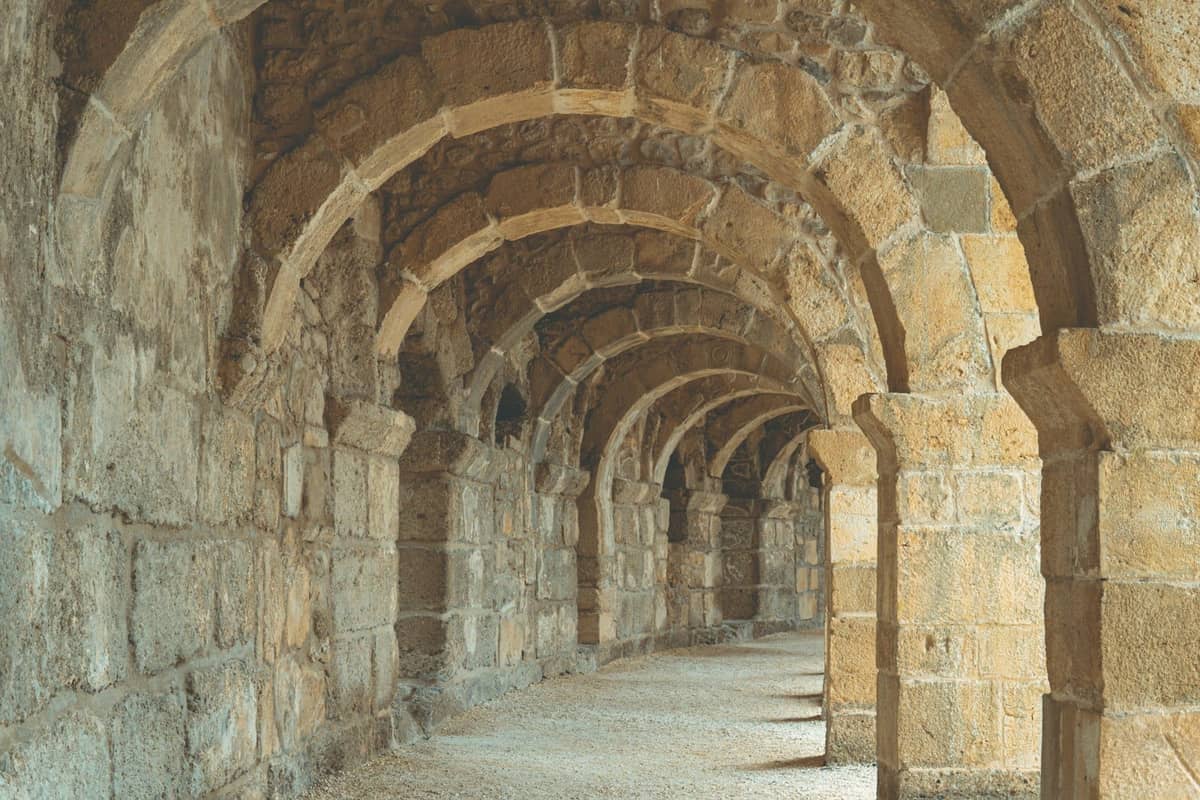
Perge and Aspendos are the two non-negotiable ancient sites near Antalya, and combining them on Day 2 makes geographic sense. Perge is about 18 km east of the city center. It was a major Hellenistic and Roman city, and the remains include a colonnaded main street, a large theater, baths, and city gates. Allow 90 minutes here. It gets hot by midday, so an early start, around 9 AM, makes a real difference.
Aspendos Theater is 47 km east of the city and is among the best-preserved Roman theaters in the Mediterranean. The 2nd-century structure seats roughly 12,000-15,000 depending on the estimate and is still used for performances during the Aspendos Opera and Ballet Festival, which has recently run in September and October rather than June. Verify current opening hours and ticket prices on official sources before visiting. The theater alone justifies the drive. Note: the interior can feel overwhelming with tour groups between 10 AM and noon — early or late afternoon visits are quieter.
- Getting to the ruins independently Rent a car from Antalya city center (from around €20-30/day) or take a dolmuş (shared minibus) from the Doğu Garajı bus terminal. Taxis for the full day run roughly 600-900 TRY depending on negotiation and whether you include side stops.
- Joining a guided tour Half-day and full-day tours from Antalya that combine Perge and Aspendos are widely available through GetYourGuide and Viator, typically running 6-8 hours with hotel pickup. These remove all logistics and often include an English-speaking guide who provides genuine historical context.
- Adding Termessos If ancient history is your main interest, Termessos is a separate 30 km drive northwest of Antalya. It's a different day entirely — steep hiking terrain, no large tour buses, and remarkable preservation. Don't try to fit it with Perge and Aspendos in one day.
⚠️ What to skip
Perge and Aspendos are exposed sites with minimal shade. In July and August, midday temperatures regularly exceed 38°C. Bring at least 1.5 liters of water per person, wear a hat, and time your visit to start before 9:30 AM. Tap water in Turkey is not recommended for drinking; buy sealed bottles.
Day 3: Waterfalls, Konyaaltı Viewpoints, and the Old Bazaar
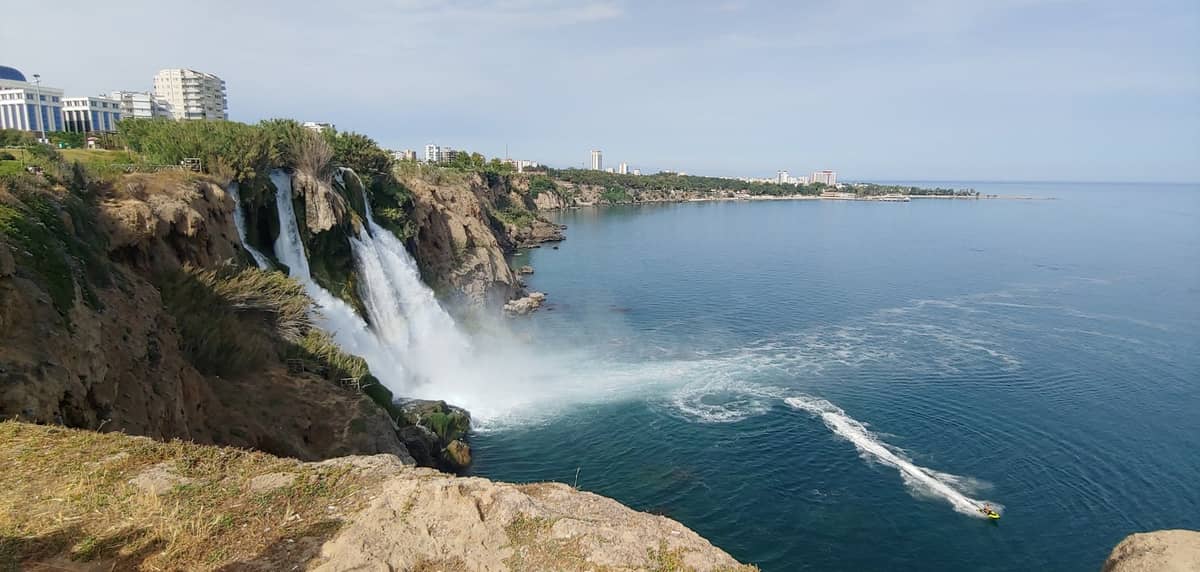
The Duden Waterfalls split into two sections worth knowing about. The Upper Düden Falls are about 12 km north of the city center in a park setting — accessible by dolmuş or taxi, with walking trails and tea gardens nearby. The Lower Duden Falls drop directly into the sea from clifftops east of Lara Beach. You can view them from above on land, but the best perspective is from the water: several boat tours from Antalya Marina pass the falls as part of a coastal loop, typically running 4-6 hours.
After the waterfalls, the Tunektepe Cable Car is normally the classic elevated view over the region: the bay, the city, the Taurus Mountains behind it, and on clear days the cliffs stretching toward Kemer. The lower station is above Sarısu on the western side of Konyaaltı, not near Lara, but the line is currently closed; verify reopening before planning around it. If it is still closed, use the Konyaaltı promenade, Sarısu coast, or the clifftop parks near the old town for late-afternoon sea views instead.
Close the day at the Old Bazaar in Kaleiçi. It's more relaxed than Istanbul's Grand Bazaar, less aggressive in approach, and genuinely good for Turkish textiles, ceramics, and spices. Prices are negotiable. The area around the bazaar has some of the best small restaurants in the city for a final dinner — look for places serving piyaz (white bean salad) and fresh grilled fish rather than the tourist menus on the main pedestrian strips.
Practical Information for Getting This Right
The best months for this three-day itinerary are April to May and September to October. For a full breakdown of seasonal trade-offs, see the best time to visit Antalya guide. Summer works if you're beach-focused or have young children, but the heat genuinely limits how much you can do at outdoor ruins. Winter is quiet, affordable, and fine for Kaleiçi and the museum, but some boat tours operate on reduced schedules.
- Currency: Turkish Lira (TRY). Credit cards accepted at most hotels and larger restaurants; carry cash for bazaar vendors, small cafes, and dolmuş fares.
- Language: Turkish is official, but English is widely spoken in tourist areas of Kaleiçi, Konyaalti, and Lara. Learning basic Turkish phrases (teşekkürler = thank you, ne kadar = how much) is appreciated and occasionally gets you a better price.
- Dress code: Beachwear stays at the beach. Cover shoulders and knees when entering mosques like the Sultan Alaaddin Mosque or the Tekeli Mehmet Paşa Mosque. Most sites have no dress requirements, but carry a light scarf or layer.
- Getting around: AntRay serves the airport area and central Antalya, and passes near the museum, but Konyaaltı usually requires a bus, taxi, or a longer walk from the nearest tram stop. For Kaleiçi, taxis or rideshares work better with luggage. For day trips, either a rental car or a guided tour.
- Emergency number: 112. Country code: +90.
For accommodation decisions, the where to stay in Antalya guide breaks down Kaleiçi boutique hotels, Konyaalti mid-range options, and Lara all-inclusives by budget and travel style. Staying in Kaleiçi puts Day 1 literally outside your door, which is worth the slight premium over cheaper chain hotels near the airport.
✨ Pro tip
If you have any flexibility in your schedule, add a half-day for Kursunlu Waterfall, located about 19 km east of the city in a forested nature park. It's far less visited than Duden, the trail is shaded, and the pool below the falls is genuinely beautiful. It pairs well with the Perge day trip since it's in the same direction.
What to Skip (and Why)
With only three days, you have to make cuts. Antalya Aquarium is large and moderately impressive but takes two to three hours and is priced accordingly. It works well for families with young children — for everyone else, it's a questionable use of limited time when Aspendos exists 47 km away. Land of Legends, the theme park in Belek, is a full-day commitment and designed for resort guests staying nearby. Don't build a Belek day trip around it unless it's your priority.
Pamukkale is frequently marketed as a day trip from Antalya. The drive is around 3.5 hours each way, which means a minimum 10-12 hour day for roughly 2 hours at the site. It's not worth it in a three-day window. Save Pamukkale for a separate trip or fly into Izmir instead. Similarly, a full day trip from Antalya to places like Side or Kaş works better as an extension of a longer stay rather than a slot in a tight three-day schedule.
FAQ
Is 3 days enough for Antalya?
Three days is enough to cover the essential highlights: Kaleiçi old town, the Antalya Museum, one beach, the key ancient ruins, and the waterfalls. You won't exhaust everything — there are strong arguments for adding Termessos, Kaş, or Side — but three focused days give a genuinely complete picture of what makes Antalya worth visiting.
Do I need a car to do this itinerary?
Not strictly. Day 1 and Day 3 are manageable by tram, taxi, and on foot. Day 2 (Perge and Aspendos) is harder without a car unless you join a guided tour or are comfortable with dolmuş connections and local buses from Doğu Garajı terminal. A rental car gives you more timing flexibility, especially for early starts at the ruins.
When is the best time to visit Antalya for a 3-day trip?
April-May and September-October are ideal. The temperature is comfortable for walking ruins and exploring Kaleiçi, the sea is warm enough for swimming (particularly in September-October), and crowds at major sites are noticeably thinner. July and August work if you prioritize beach time, but outdoor ruins become genuinely punishing by midday.
How much does a 3-day trip to Antalya cost?
Budget travelers staying in Kaleiçi guesthouses and using public transport can manage on roughly €40-60 per day including accommodation, food, and entry fees. Mid-range travelers spending on a boutique hotel, guided tours, and restaurant meals should budget €100-150 per day. Entry fees at individual sites are relatively modest — the bigger costs are accommodation and any car rental or private tours.
Is Antalya safe for tourists?
Antalya has a strong track record as a tourist destination and the main areas — Kaleiçi, Konyaalti, Lara — are generally safe. Standard travel precautions apply: watch for overcharging in unmarked taxis, be cautious with unsolicited offers of 'free' tours or carpet shop invitations, and keep valuables secure in crowded bazaar areas. For a fuller picture of what to watch for, check the Antalya scams and safety tips guide.